Slideshow · Travel
25 Highest Mountain Peaks in the Contiguous United States, Ranked
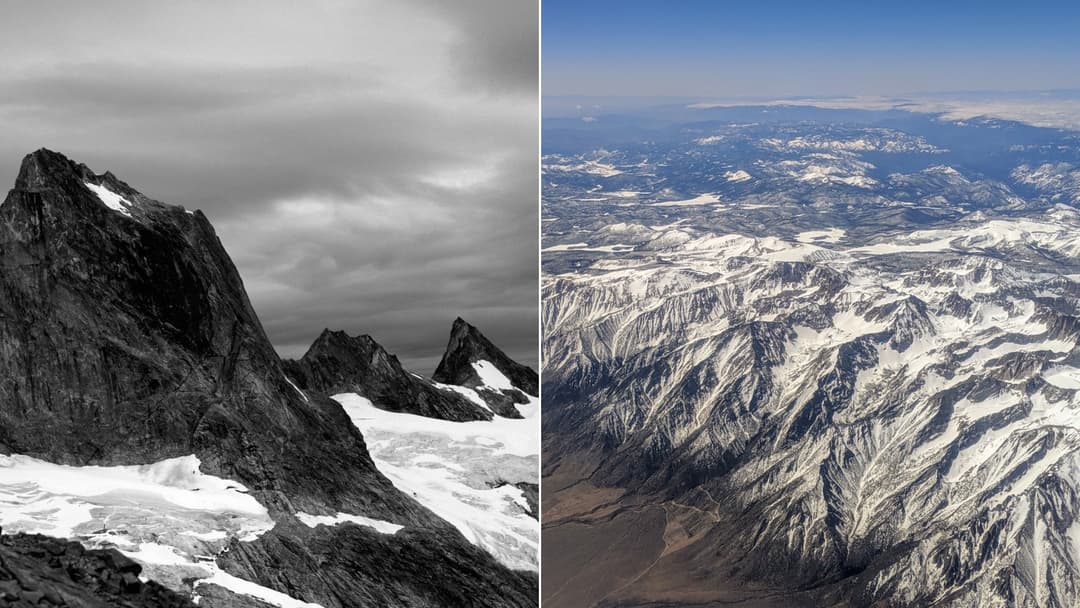
Ranked by official summit elevation from U.S. Geological Survey records, these 25 colossal peaks soar above 14,000 feet across Colorado, California, and Washington. Based on official U.S. Geological Survey topographic data, fifty-three summits in the Lower 48 rise above 14,000 feet.
By Most Viral Today
16 min ago

The 25 Highest Mountain Peaks in the Contiguous United States 
25. Mount Belford 
24. Crestone Needle 
23. Mount Princeton - AdvertisementSwipe or tap ▶ to continue countdown

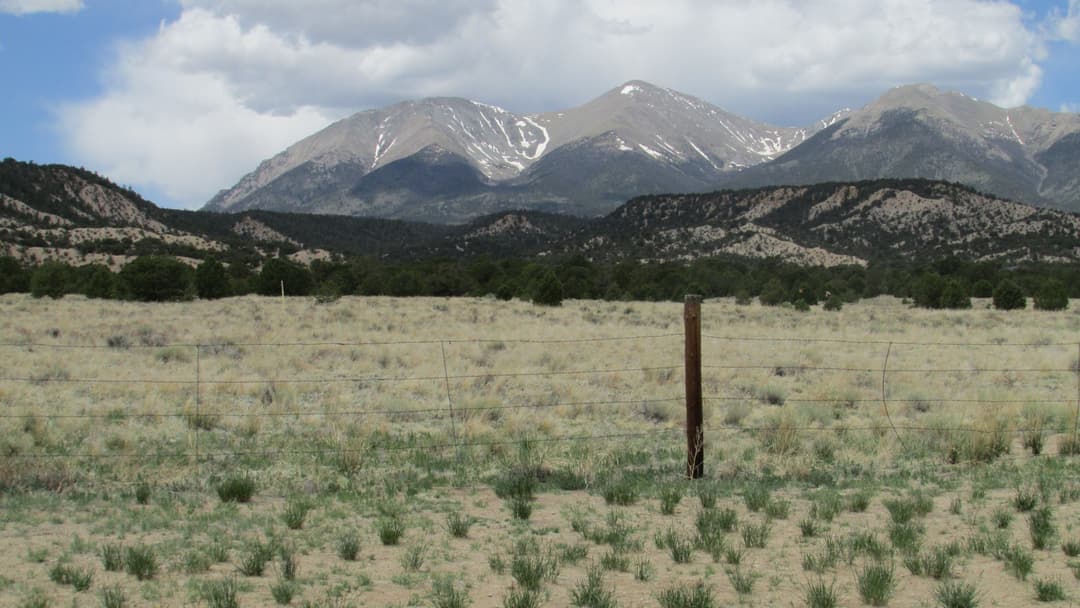
22. Mount Shavano 
21. North Palisade 
20. White Mountain Peak 
19. Mount Wilson - AdvertisementSwipe or tap ▶ to continue countdown

18. Longs Peak 
17. Mount Blue Sky 
16. Quandary Peak 
15. Torreys Peak - AdvertisementSwipe or tap ▶ to continue countdown

14. Mount Antero 
13. Grays Peak 
12. Castle Peak 
11. Mount Lincoln - AdvertisementSwipe or tap ▶ to continue countdown

10. Crestone Peak 
9. Uncompahgre Peak 
8. La Plata Peak 
7. Blanca Peak - AdvertisementSwipe or tap ▶ to continue countdown

6. Mount Williamson 
5. Mount Rainier 
4. Mount Harvard 
3. Mount Massive - AdvertisementSwipe or tap ▶ to continue countdown

2. Mount Elbert 
1. Mount Whitney - Advertisement🔥 UP NEXT IN THIS SERIES◫ 21 Slides

20 Most Advanced Airports That Redefine Air Travel
Experience the future of flight at 20 airports redefining air travel through AI.
Based on official U.S. Geological Survey topographic data, fifty-three summits in the Lower 48 rise above 14,000 feet. Here are the 25 highest mountain peaks across Colorado, California, and Washington, ranked by elevation. Ranked by official summit elevation from U.S.
Swipe or tap ▶ to begin the countdown
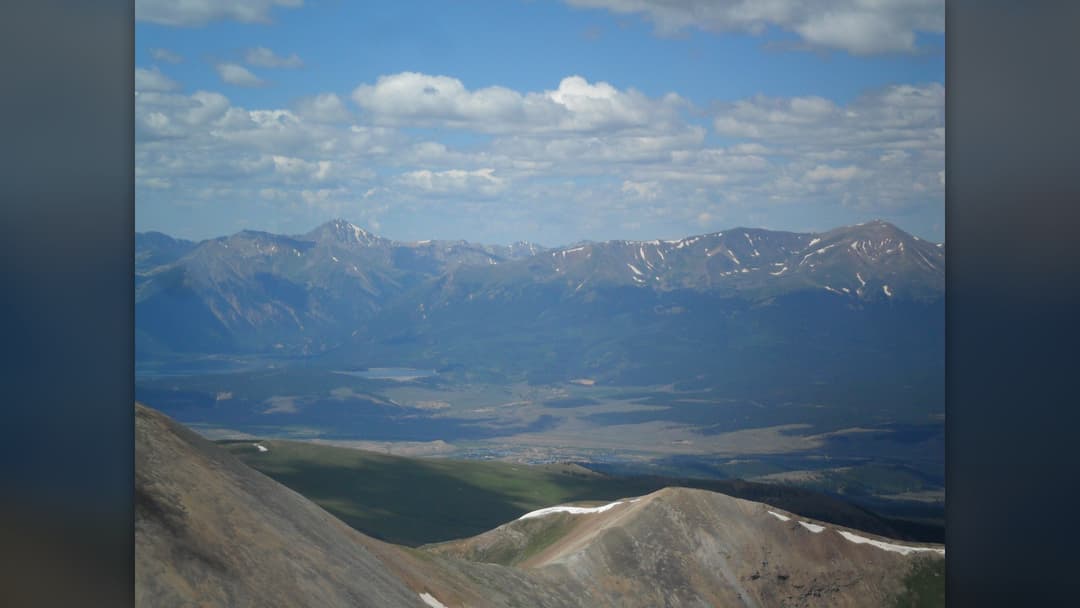
©Wikimedia / Godot13 & Wikimedia / Dicklyon
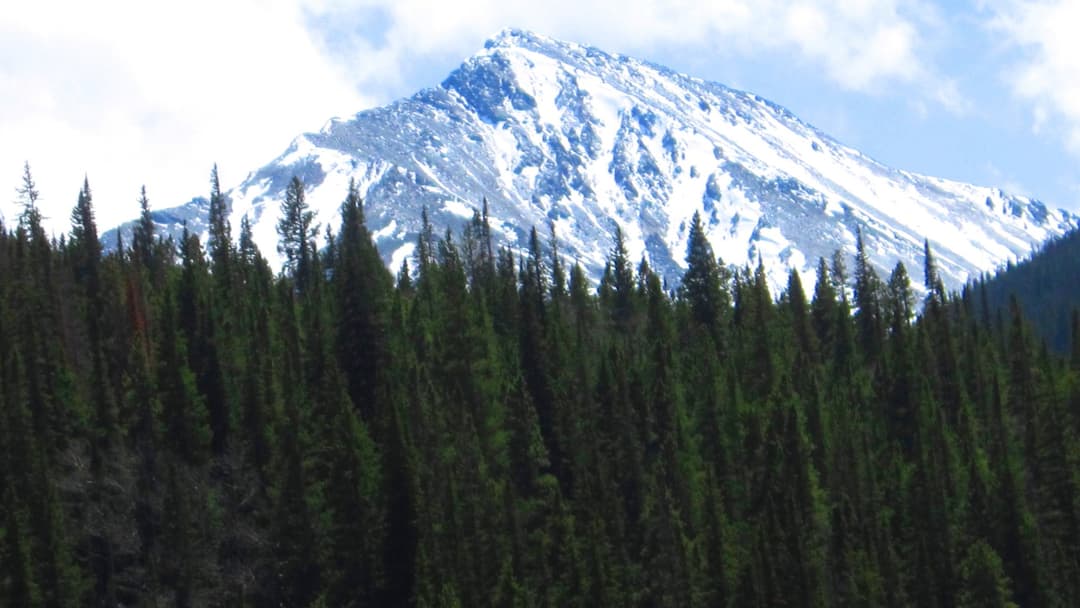
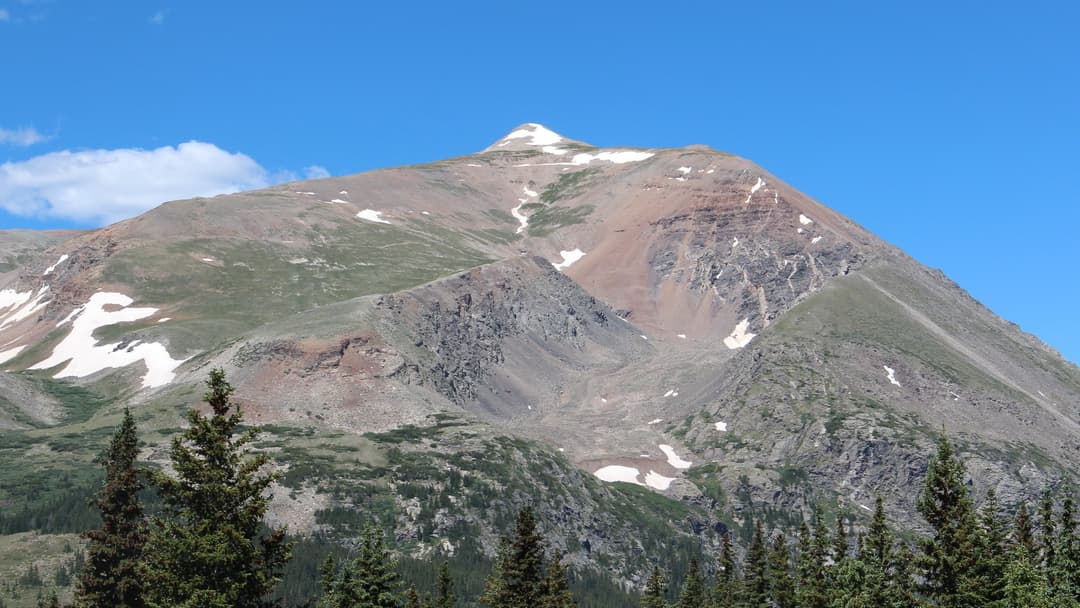
25. Mount Belford
Mount Belford tops out at 14,203 feet. Hikers climb steep switchbacks directly up its northwest ridge from Missouri Gulch, gaining over 4,500 vertical feet. Many hikers combine it with nearby Mount Oxford.
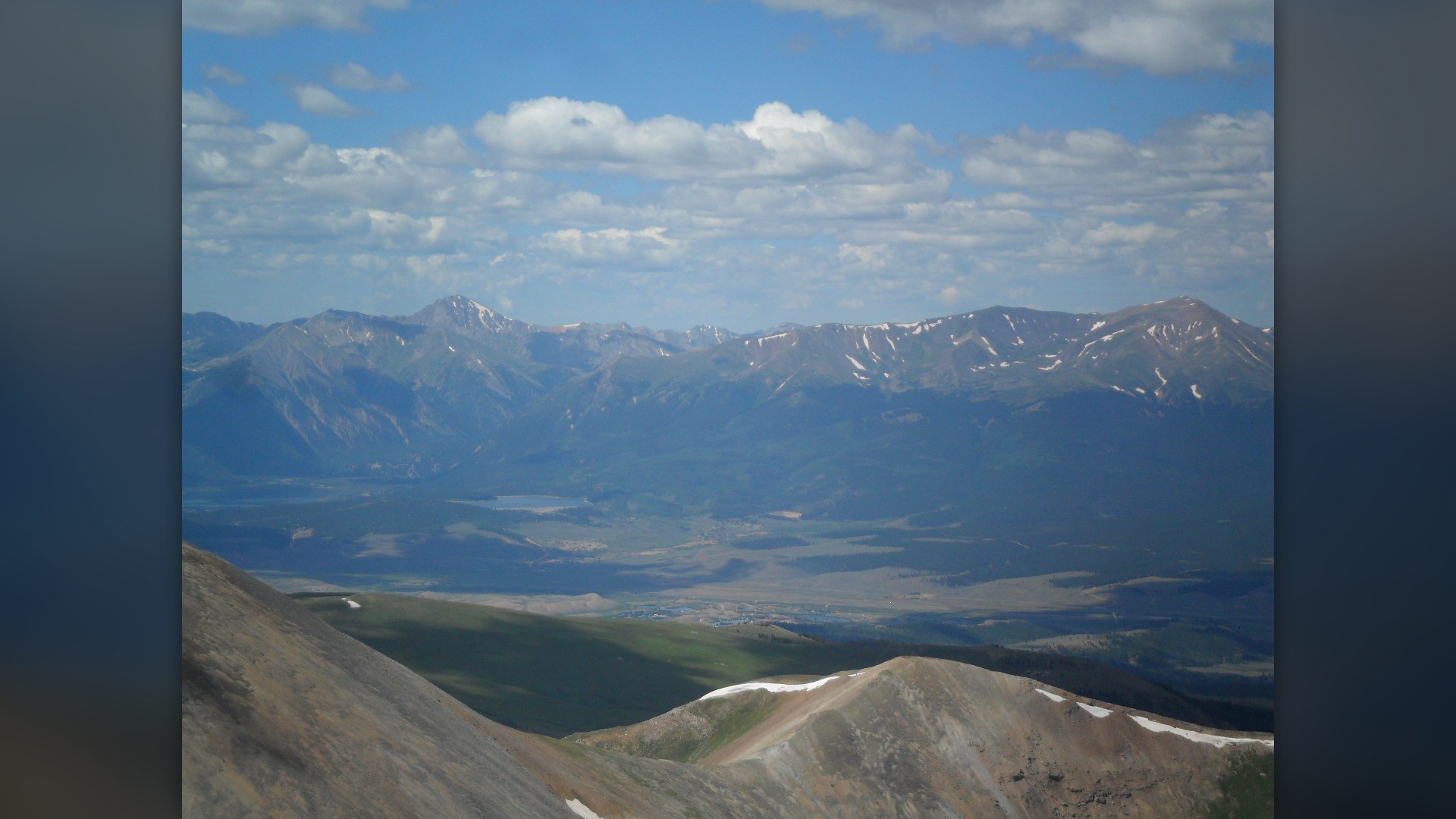
©Wikimedia / Hogs555
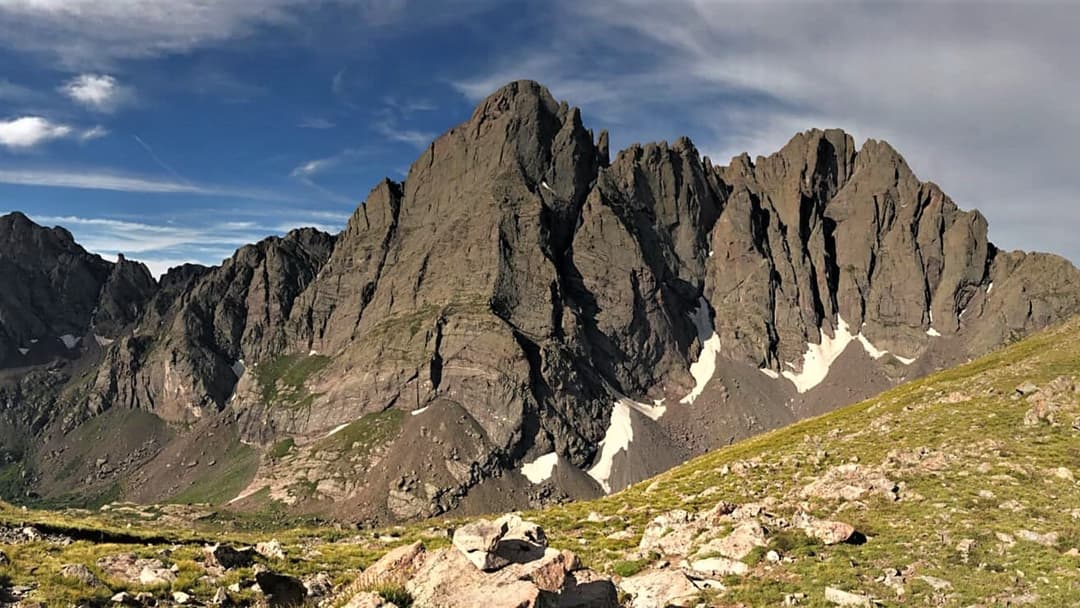
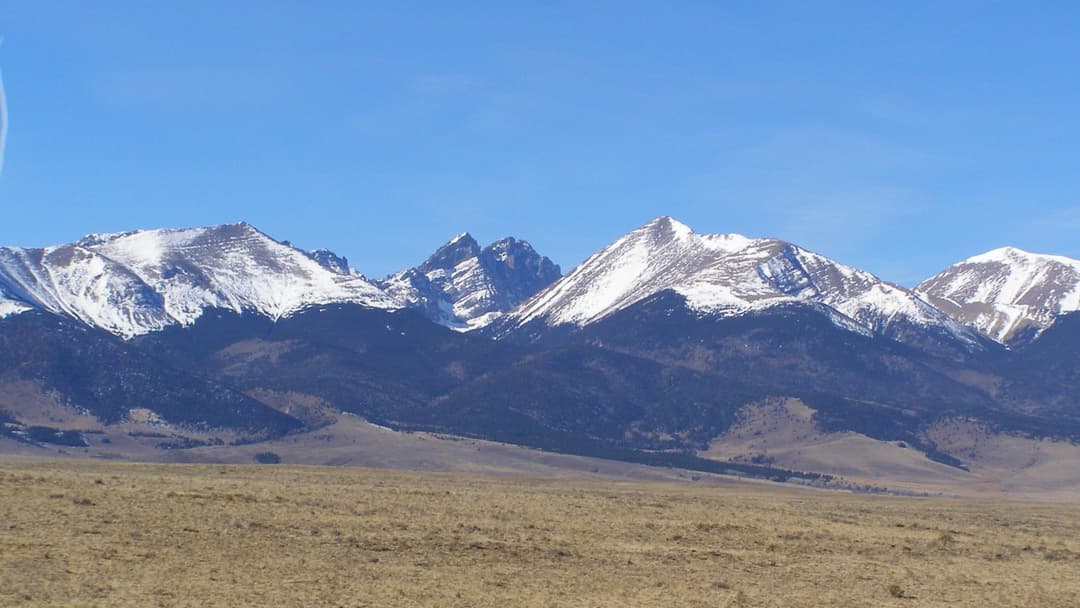
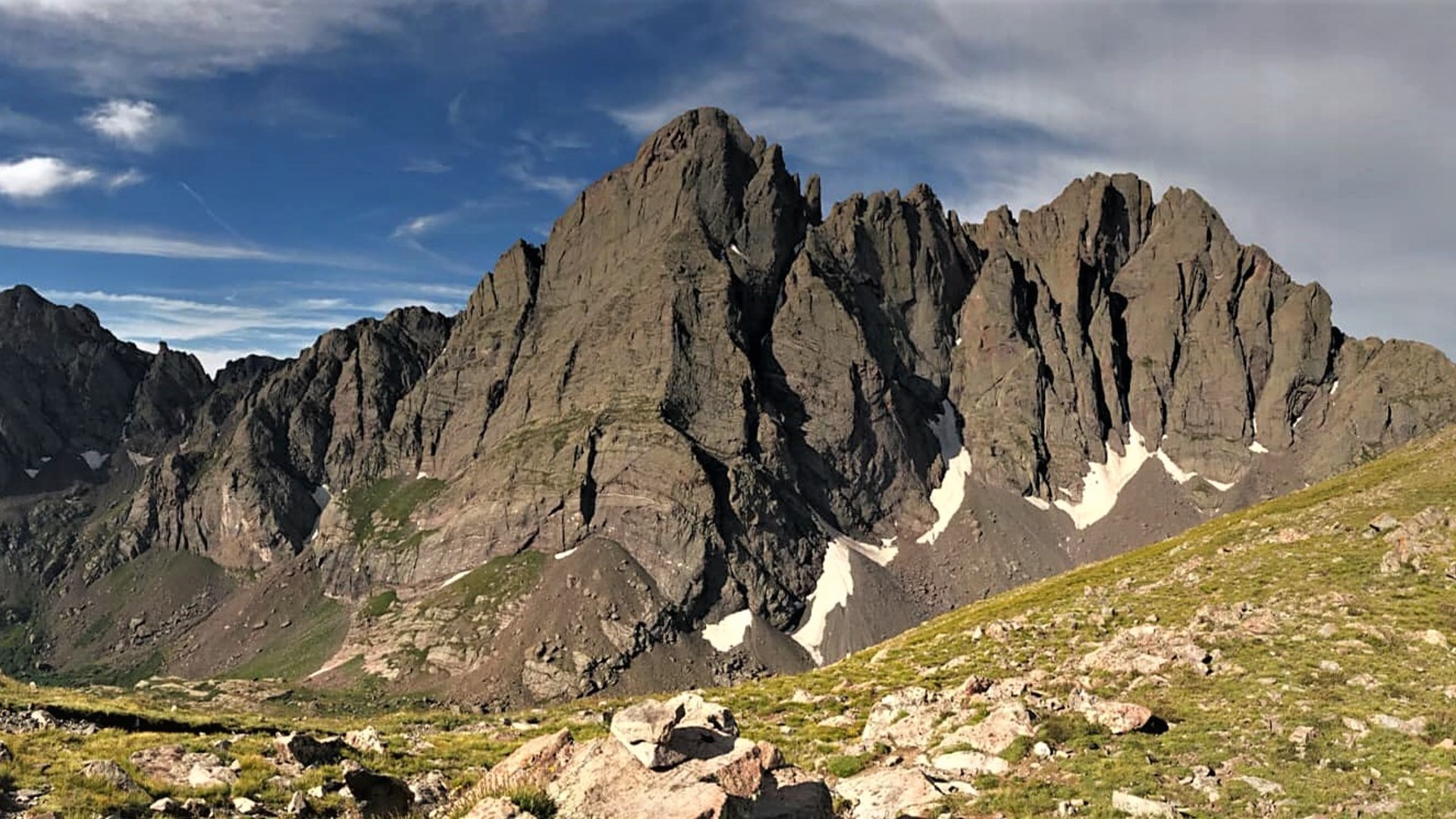
24. Crestone Needle
Crestone Needle reaches 14,203 feet. Climbers consider it one of Colorado's toughest fourteeners due to steep conglomerate couloirs and narrow ledges that require careful route-finding. Snow lingers in its gullies well into July.
©Wikimedia / GeoCupcakes
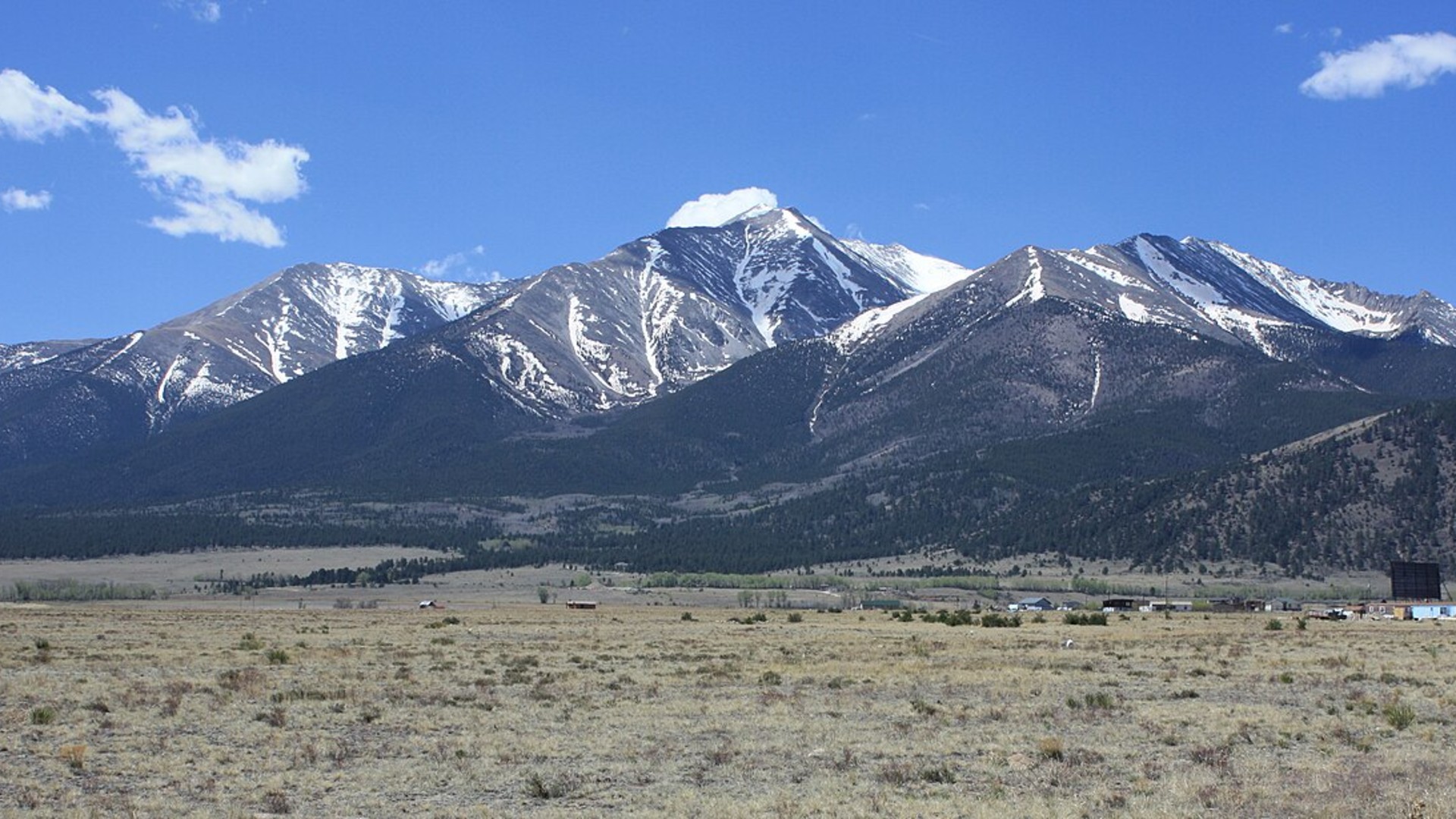
23. Mount Princeton
Mount Princeton rises to 14,204 feet. Its chalky granite slopes dominate the Arkansas River Valley, making it visible for dozens of miles along Highway 285. Old mining roads climb past tree line.
©Wikimedia / David Herrera from Albuquerque, NM
Advertisement
Swipe or tap ▶ to resume the countdown.
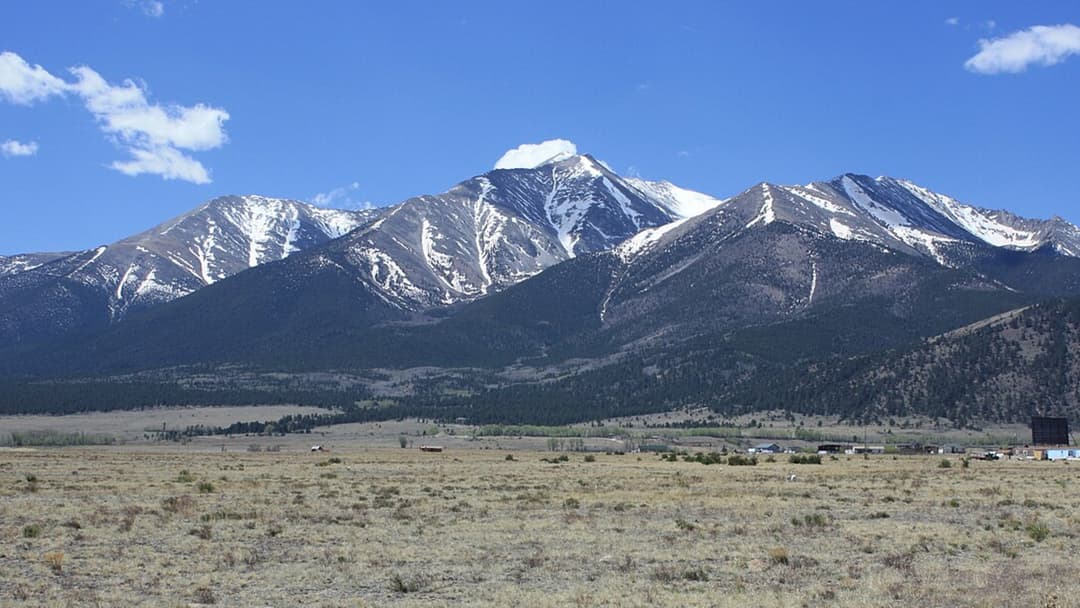
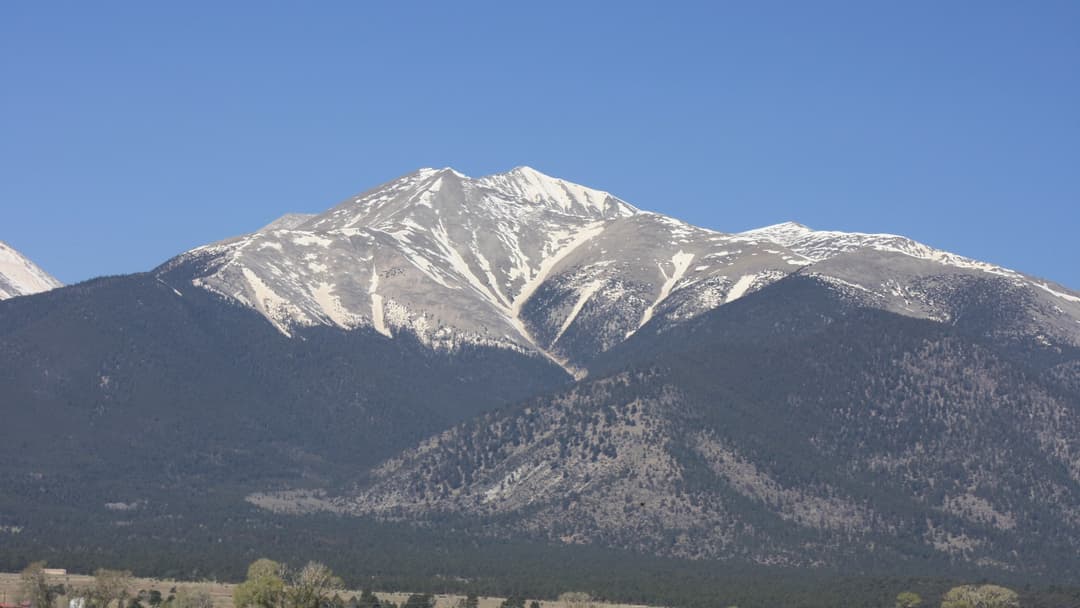
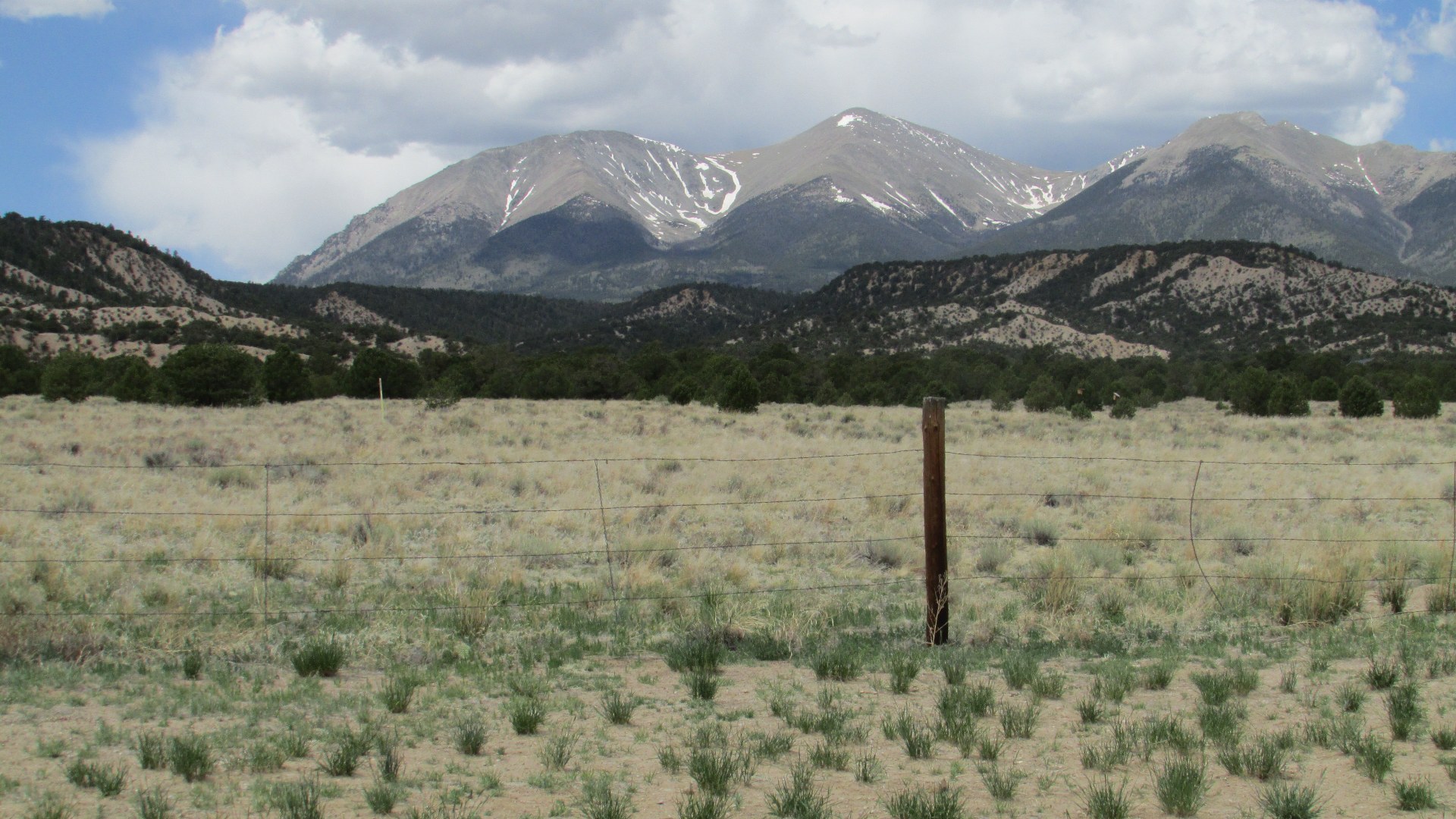
22. Mount Shavano
Mount Shavano summits at 14,235 feet. Melting spring snow forms the famous Angel of Shavano on its eastern face, drawing photographers and mountaineers from across Colorado. The summit offers views of the San Luis Valley.
©Wikimedia / Chris Light
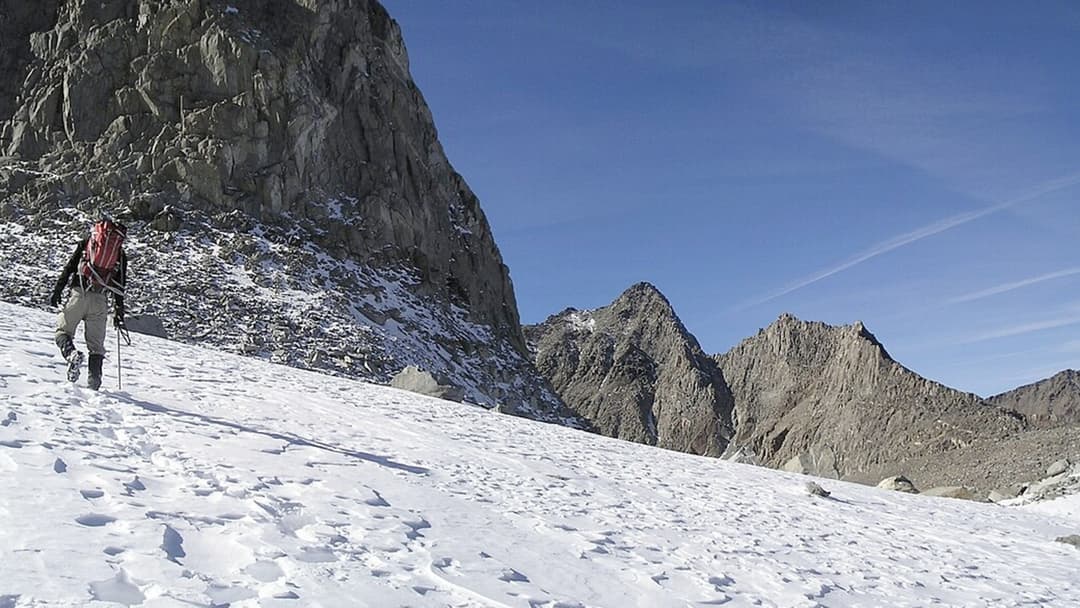
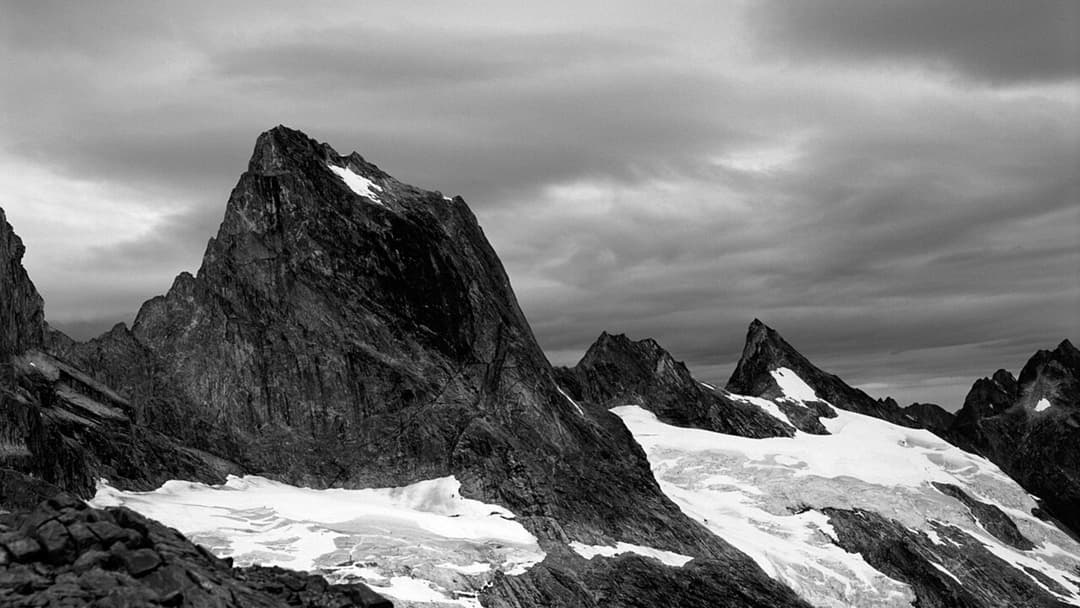
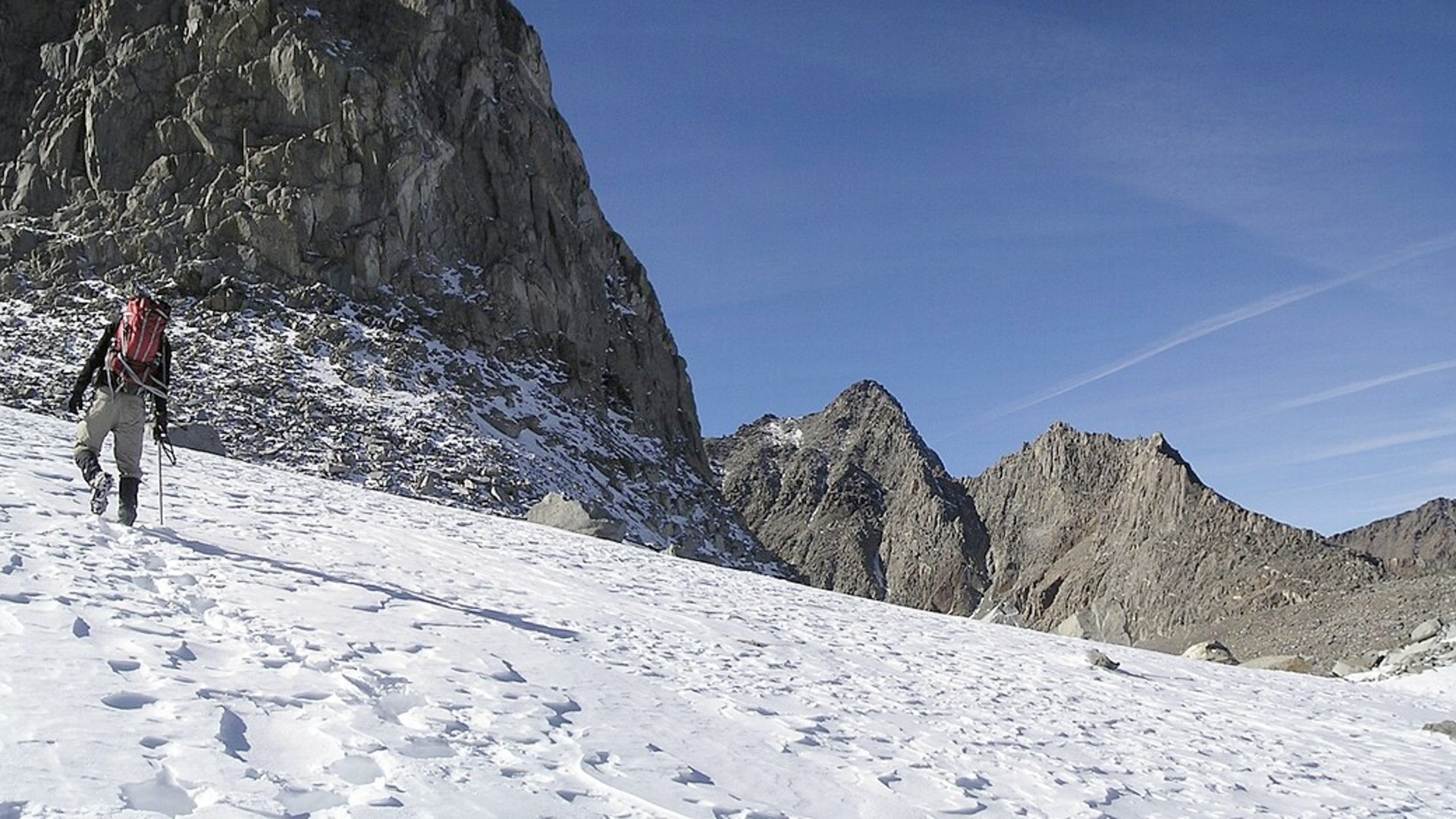
21. North Palisade
North Palisade climbs to 14,248 feet. It serves as the dramatic centerpiece of the Palisades group, cradling California's largest remaining glacier below its north wall. Summit routes require technical scrambling.
©Wikimedia / Jonathan Fox
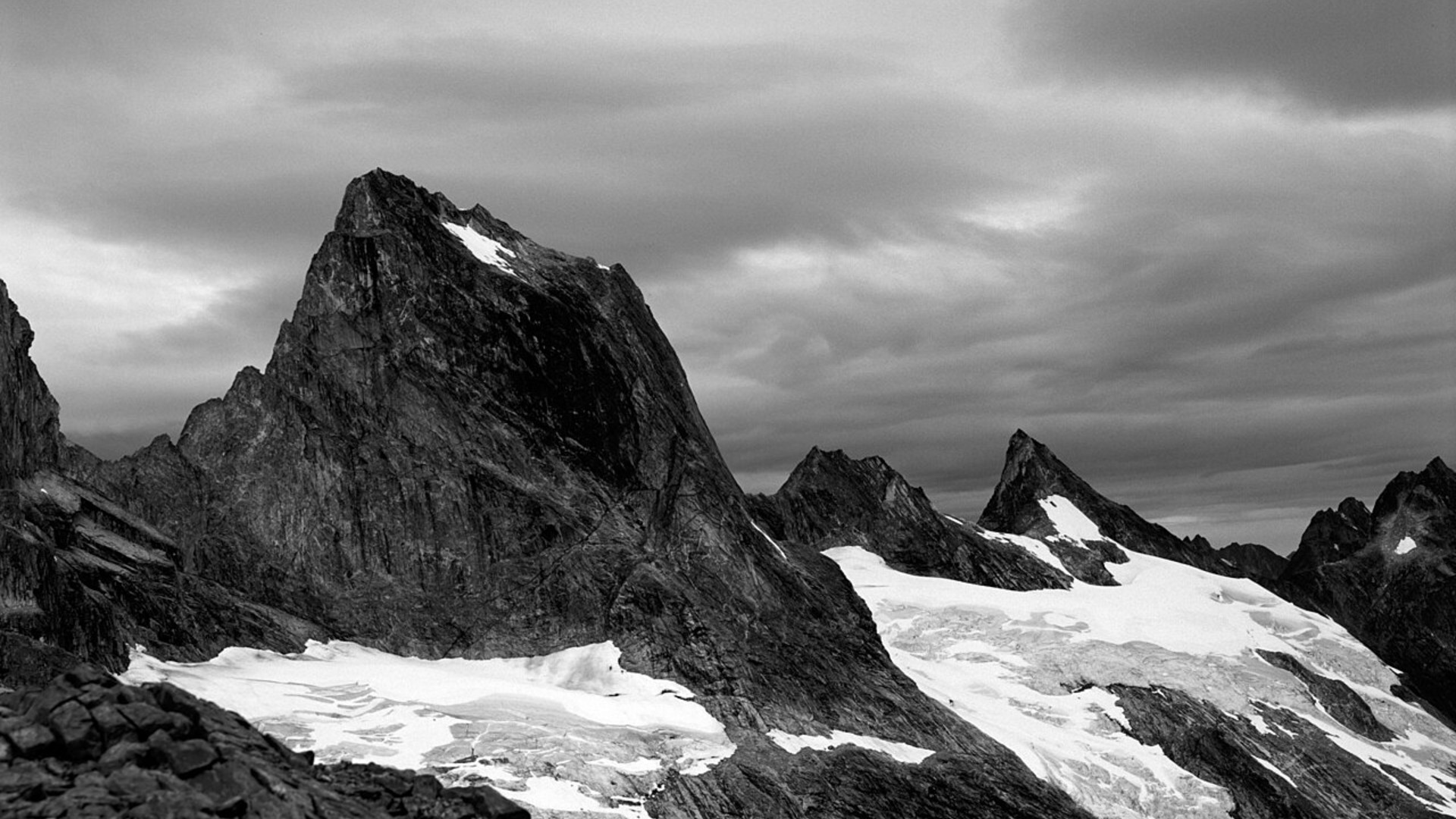
20. White Mountain Peak
White Mountain Peak reaches 14,252 feet. Located in the desert White Mountains, it receives sparse precipitation and hosts ancient bristlecone pine groves on lower slopes. The University of California operates a high-altitude laboratory near the top.
©Wikimedia / Godot13
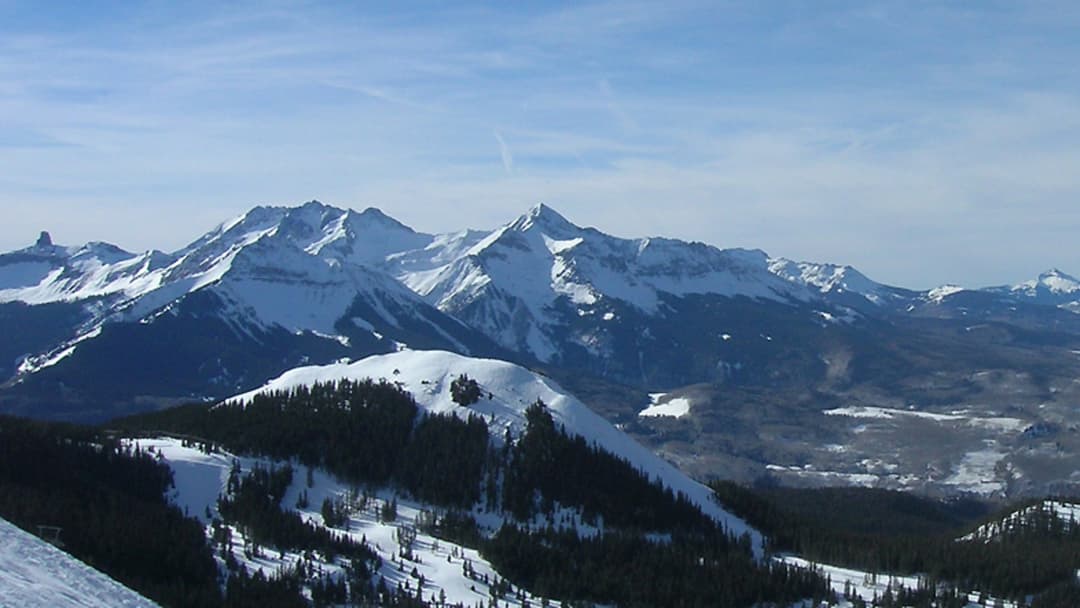
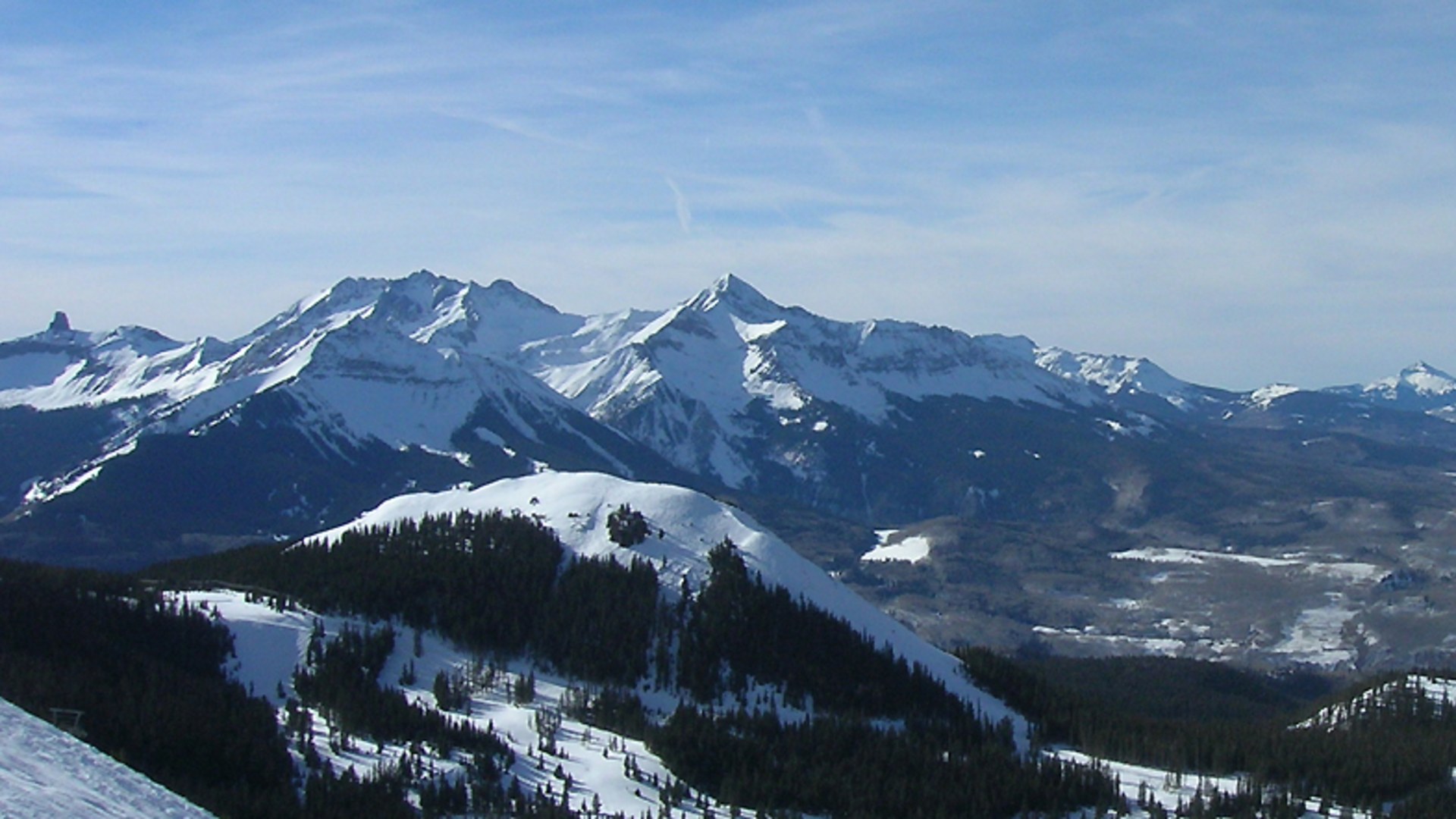
19. Mount Wilson
Mount Wilson ascends to 14,252 feet. Located near Telluride, its jagged volcanic spires require class 4 scrambling across loose rock and exposed knife-edge ridges. Mining camps dotted its lower basins during the 1890s.
©Wikimedia / Debivort at en.wikipedia
Advertisement
Swipe or tap ▶ to resume the countdown.
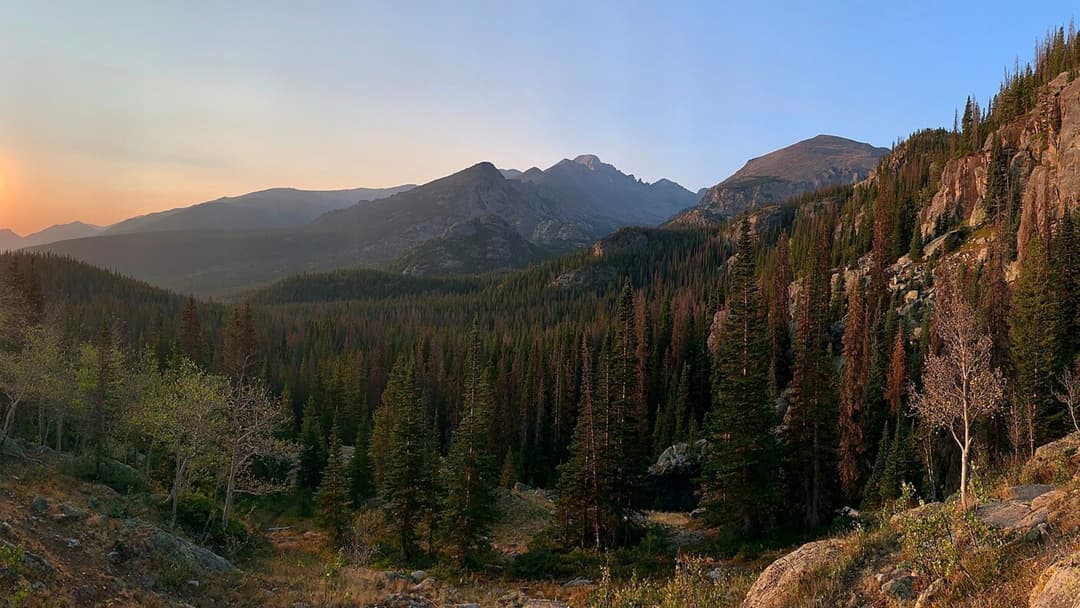
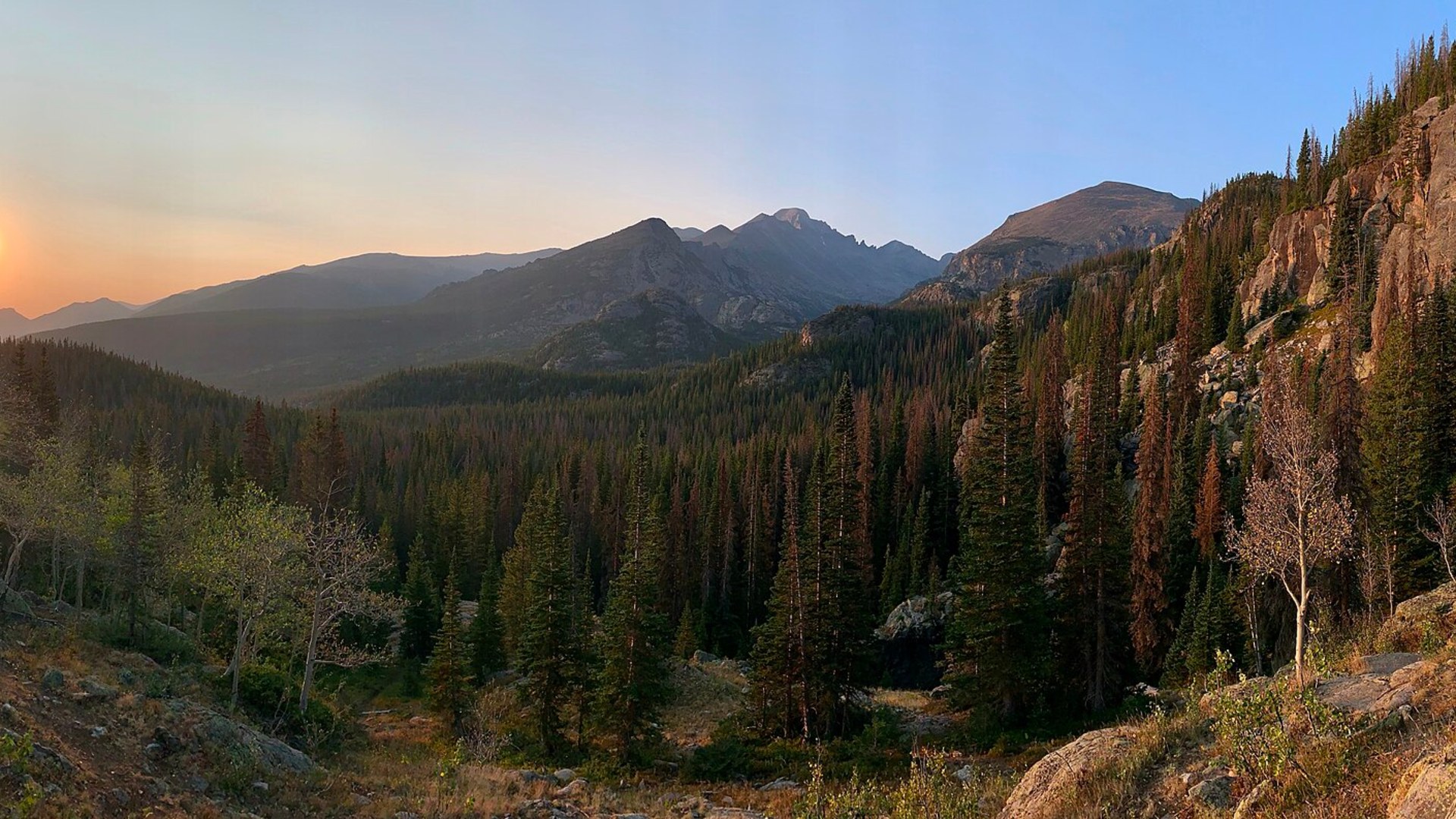
18. Longs Peak
Longs Peak rises to 14,259 feet. Its sheer eastern cliff, known as the Diamond, towers nearly a thousand vertical feet above Chasm Lake. The Keyhole Route draws thousands of hikers every summer.
©Wikimedia / OKJaguar
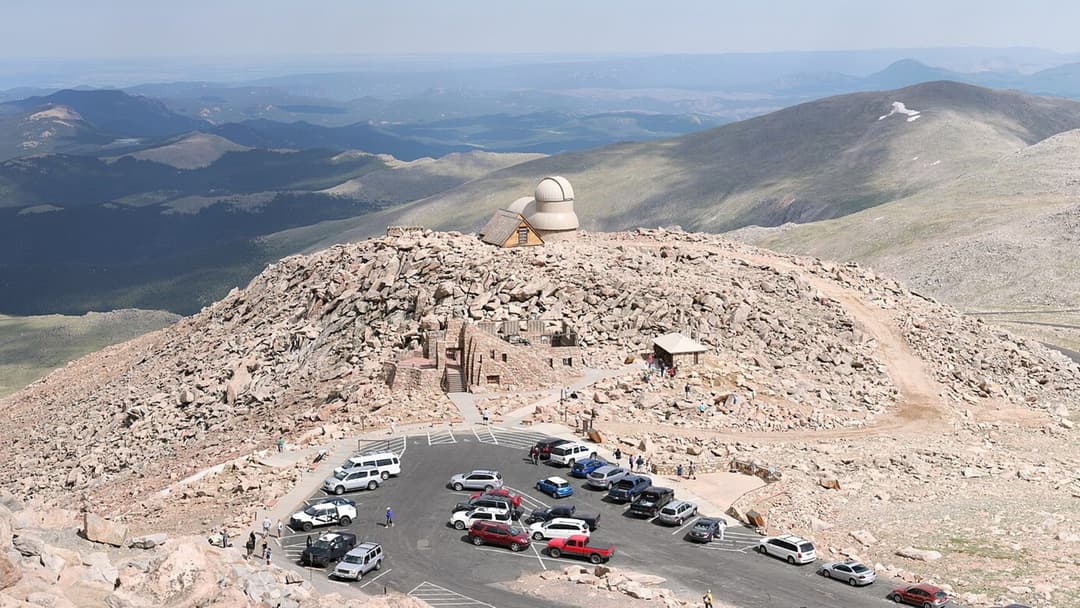
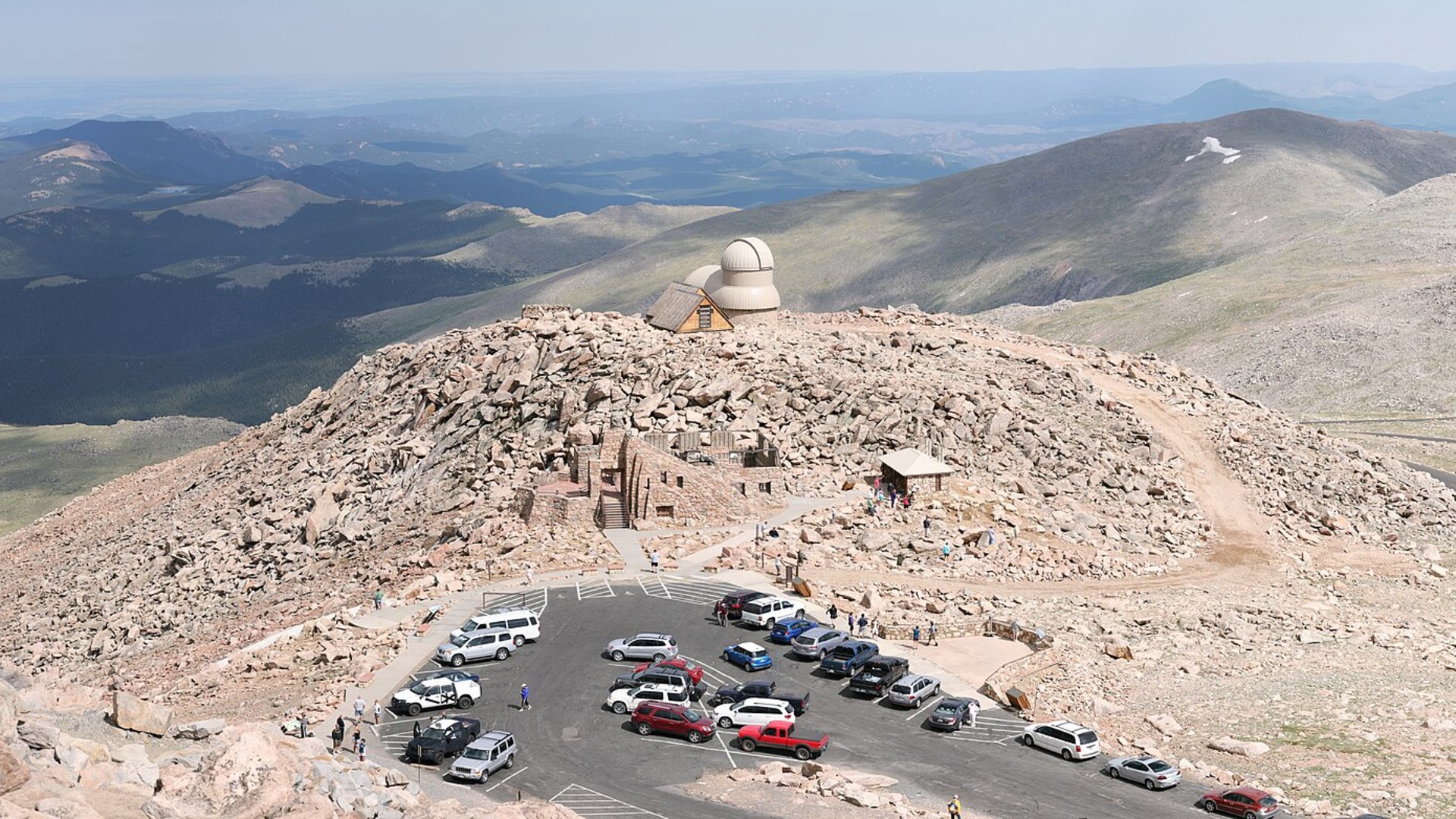
17. Mount Blue Sky
Mount Blue Sky reaches 14,265 feet. The Mount Blue Sky Scenic Byway carries motorists to within 130 feet of the rocky summit, passing herds of bighorn sheep. The summit ridge shelters arctic-alpine tundra.
©Wikimedia / Daniel Schwen
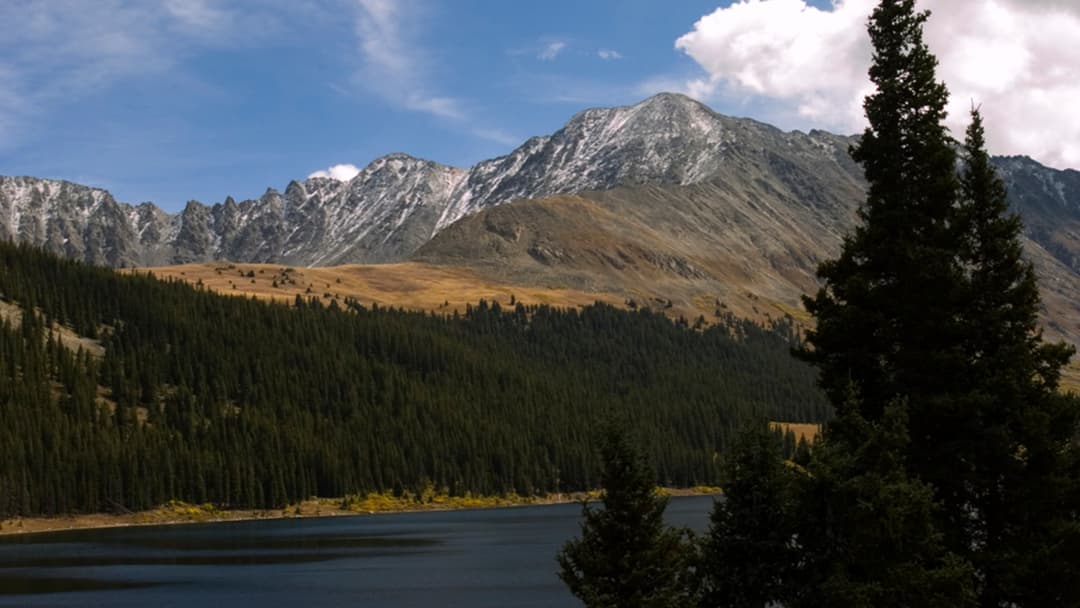
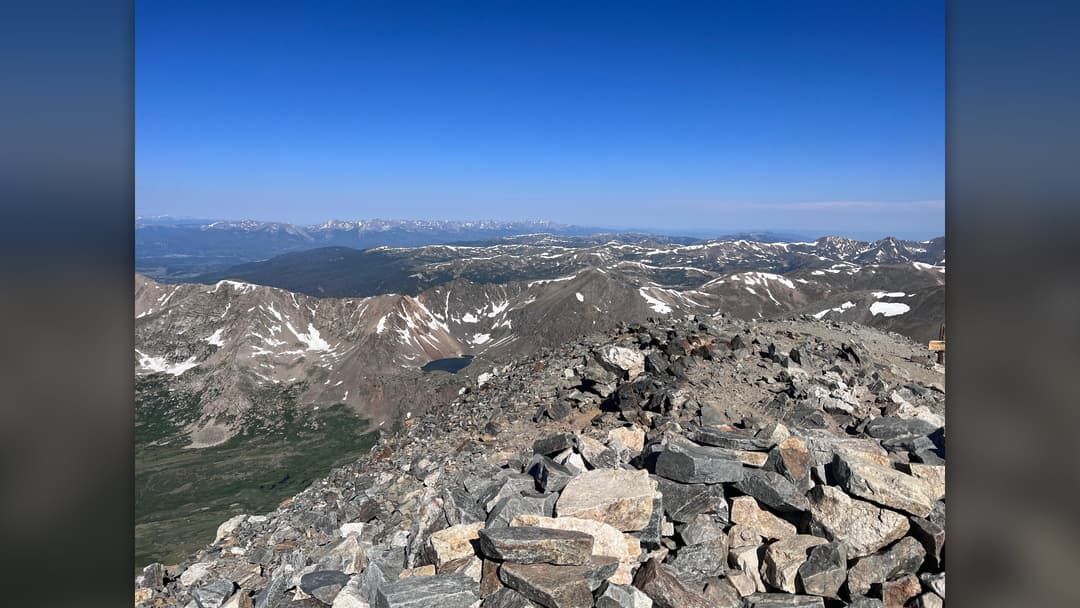
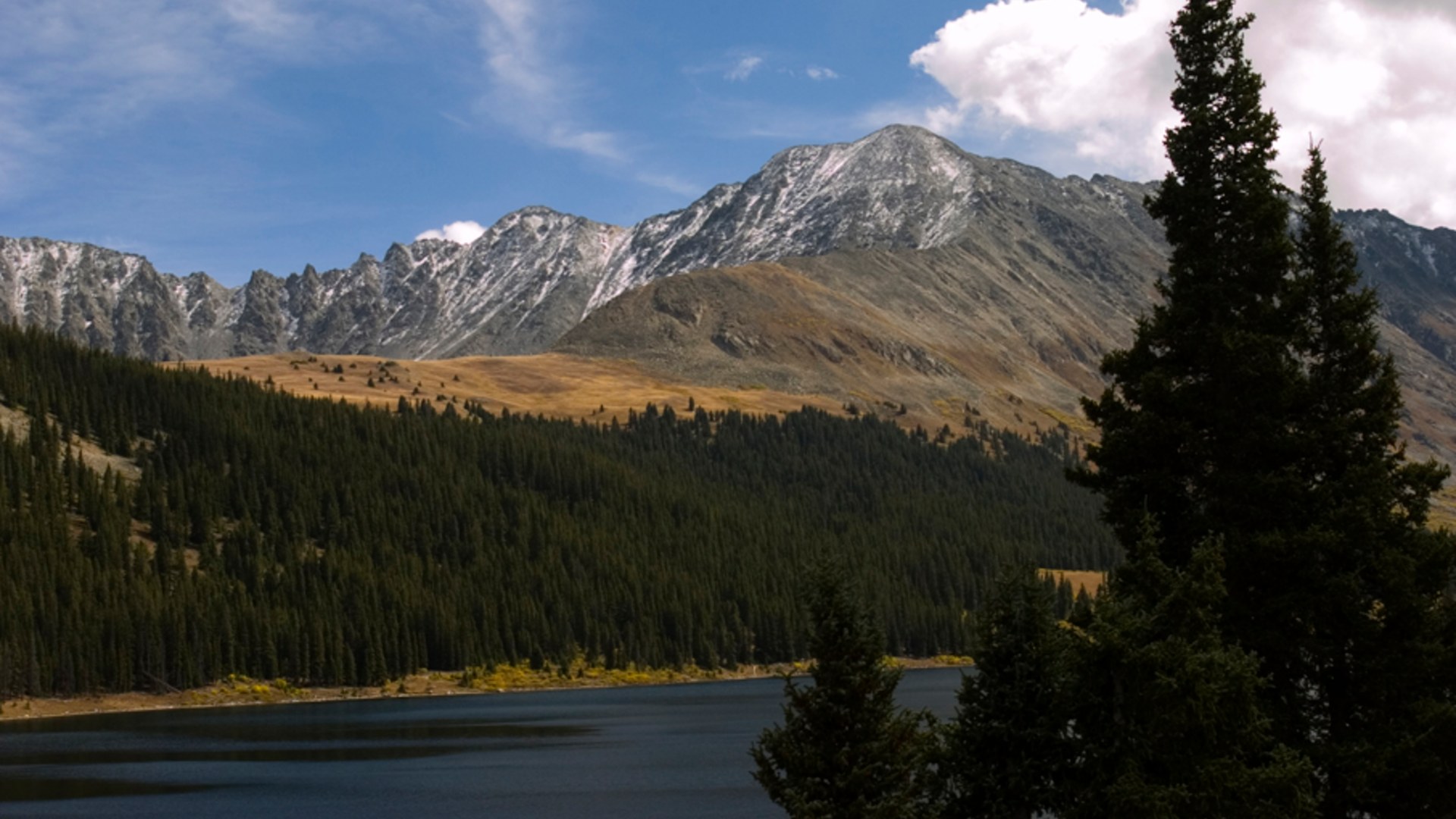
16. Quandary Peak
Quandary Peak tops out at 14,271 feet. Located just south of Breckenridge, its straightforward east ridge hike makes it extremely popular for first-time summit attempts. Mountain goats regularly wander across the scree.
©Wikimedia / Wayne L. Bart
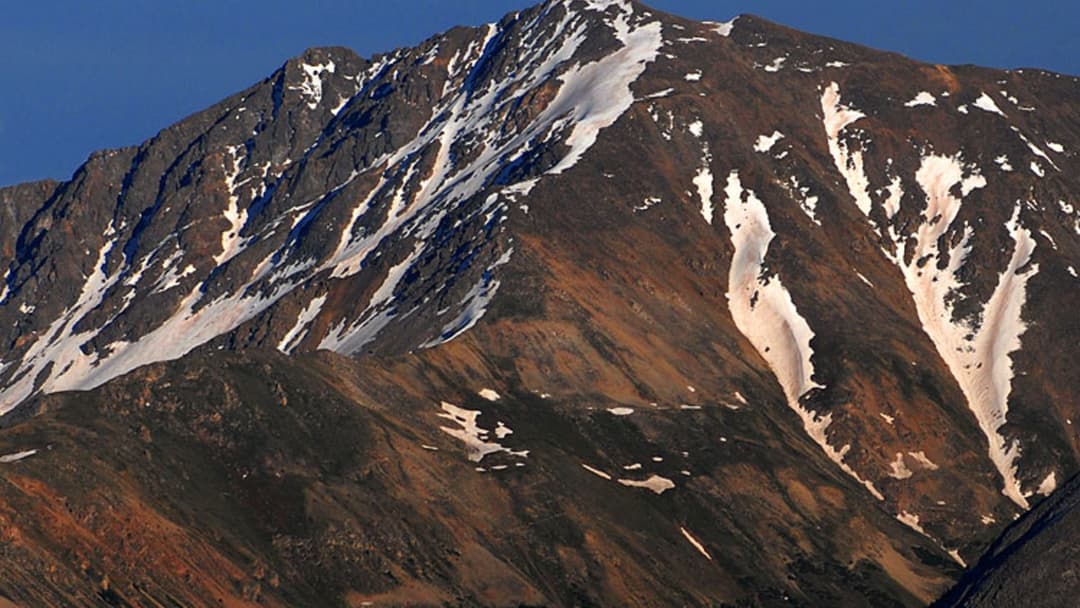
15. Torreys Peak
Torreys Peak ascends to 14,274 feet. A narrow saddle connects it to twin summit Grays Peak, allowing hikers to tag both Continental Divide summits in a single morning. Snow stays trapped in the northern Tuning Fork couloir.
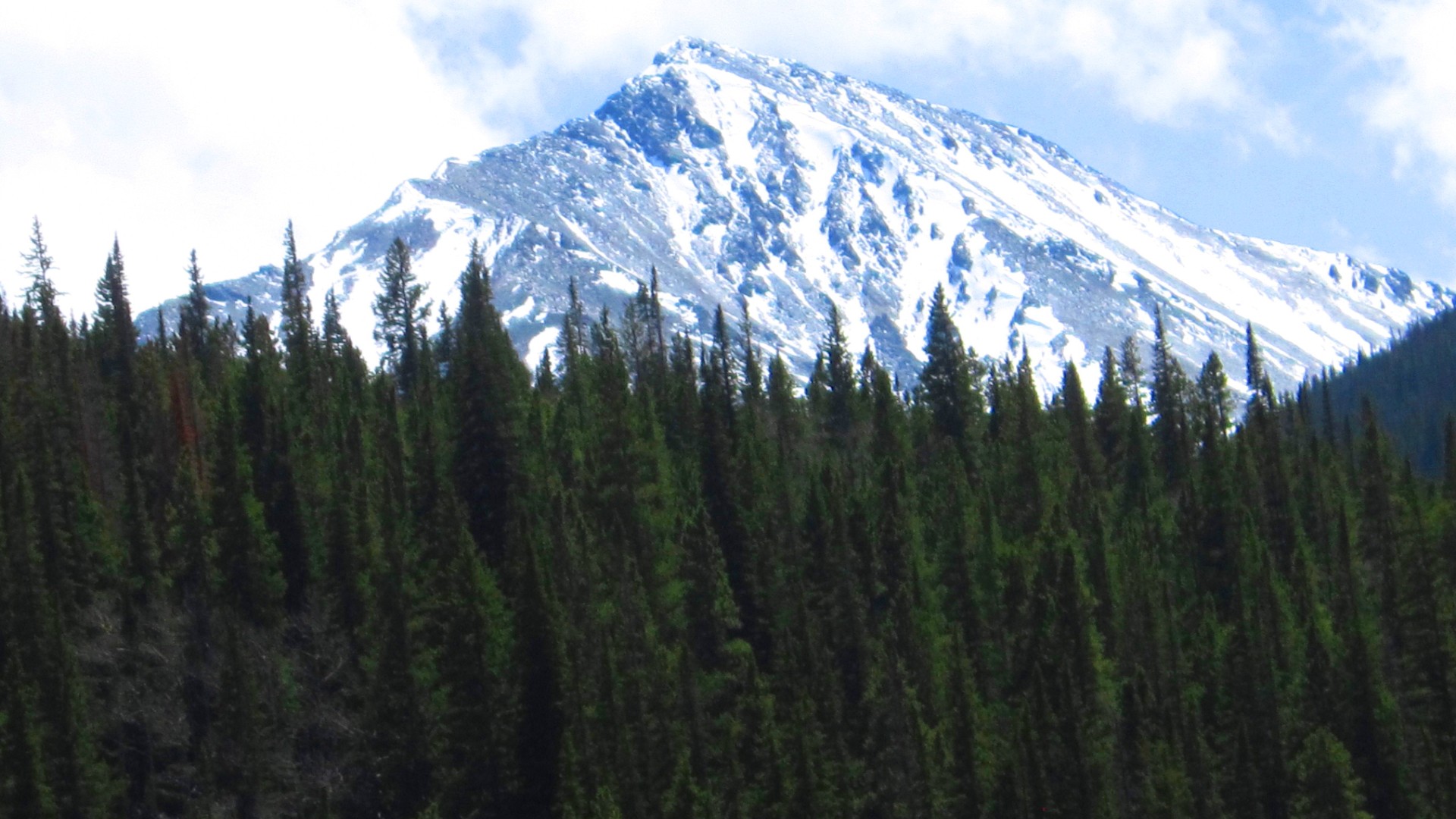
©Wikimedia / Torreys Peak
Advertisement
Swipe or tap ▶ to resume the countdown.
14. Mount Antero
Mount Antero tops out at 14,276 feet. Commercial miners have extracted world-class aquamarine crystals and blue beryl from its granite pockets since the late 19th century. A rough 4x4 road climbs over 13,000 feet.
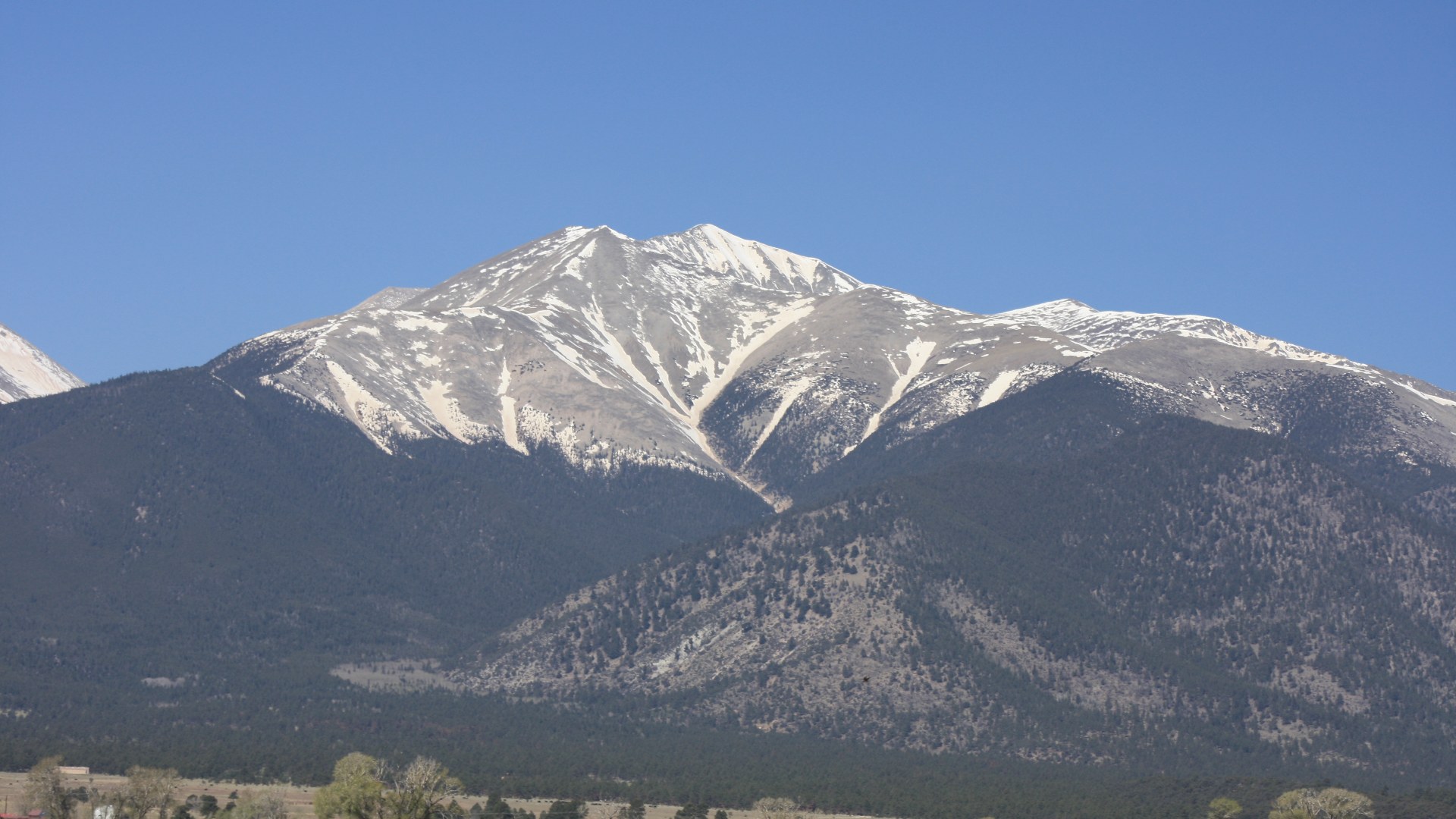
©Wikimedia / David Herrera from Albuquerque, NM, Bernalillo
13. Grays Peak
Grays Peak stands at 14,278 feet. It marks the highest elevation reached by the Continental Divide across the entire Western Hemisphere, separating Pacific and Atlantic watersheds. Botanist Charles Christopher Parry named it in 1861.
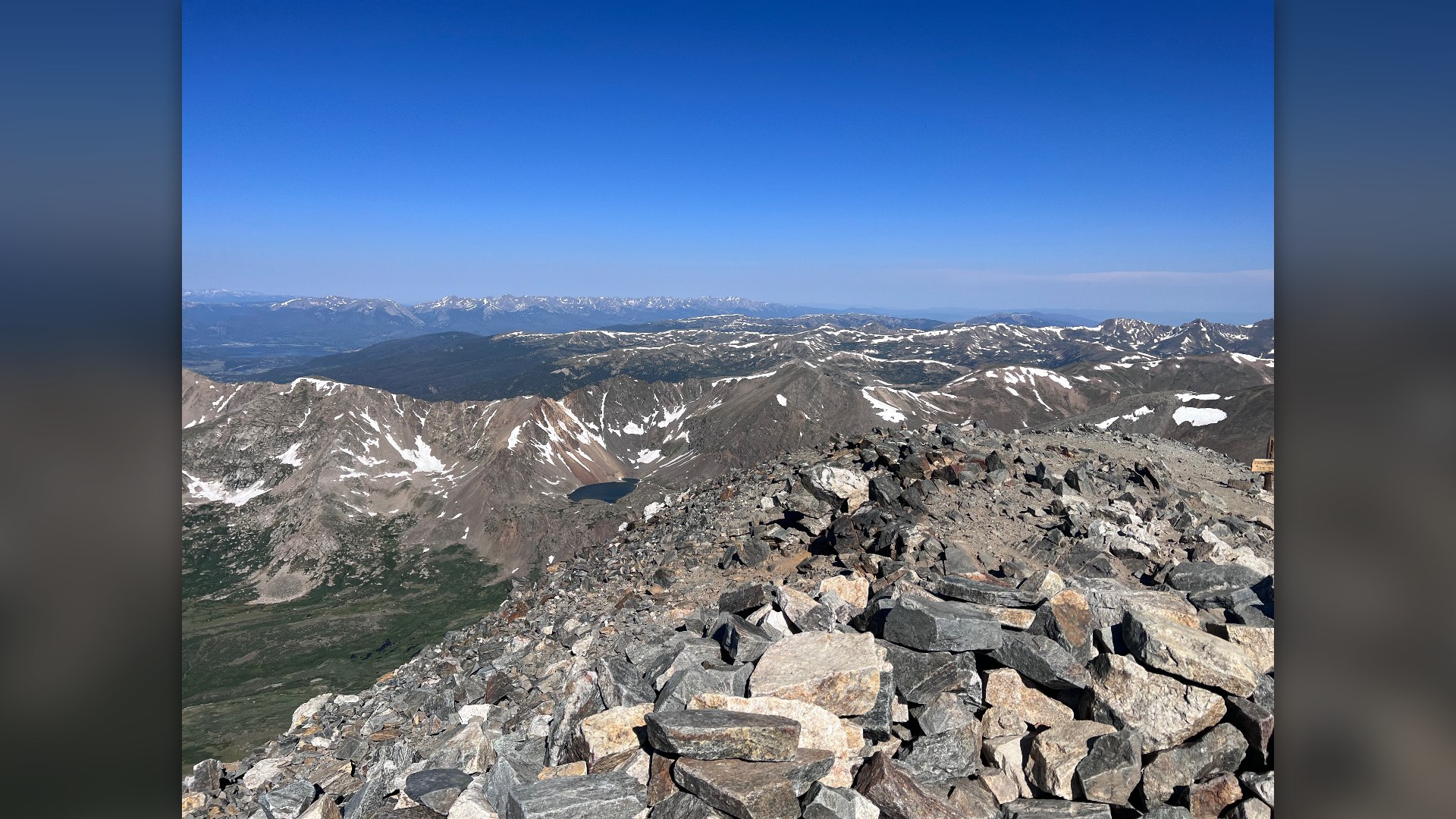
©Wikimedia / shaqdad34
12. Castle Peak
Castle Peak reaches 14,279 feet. Its jagged turrets and buttresses resemble a ruined medieval fortress above Castle Creek Valley, requiring travel across steep talus and loose scree fields. Glaciers shaped its massive northeast cirque.
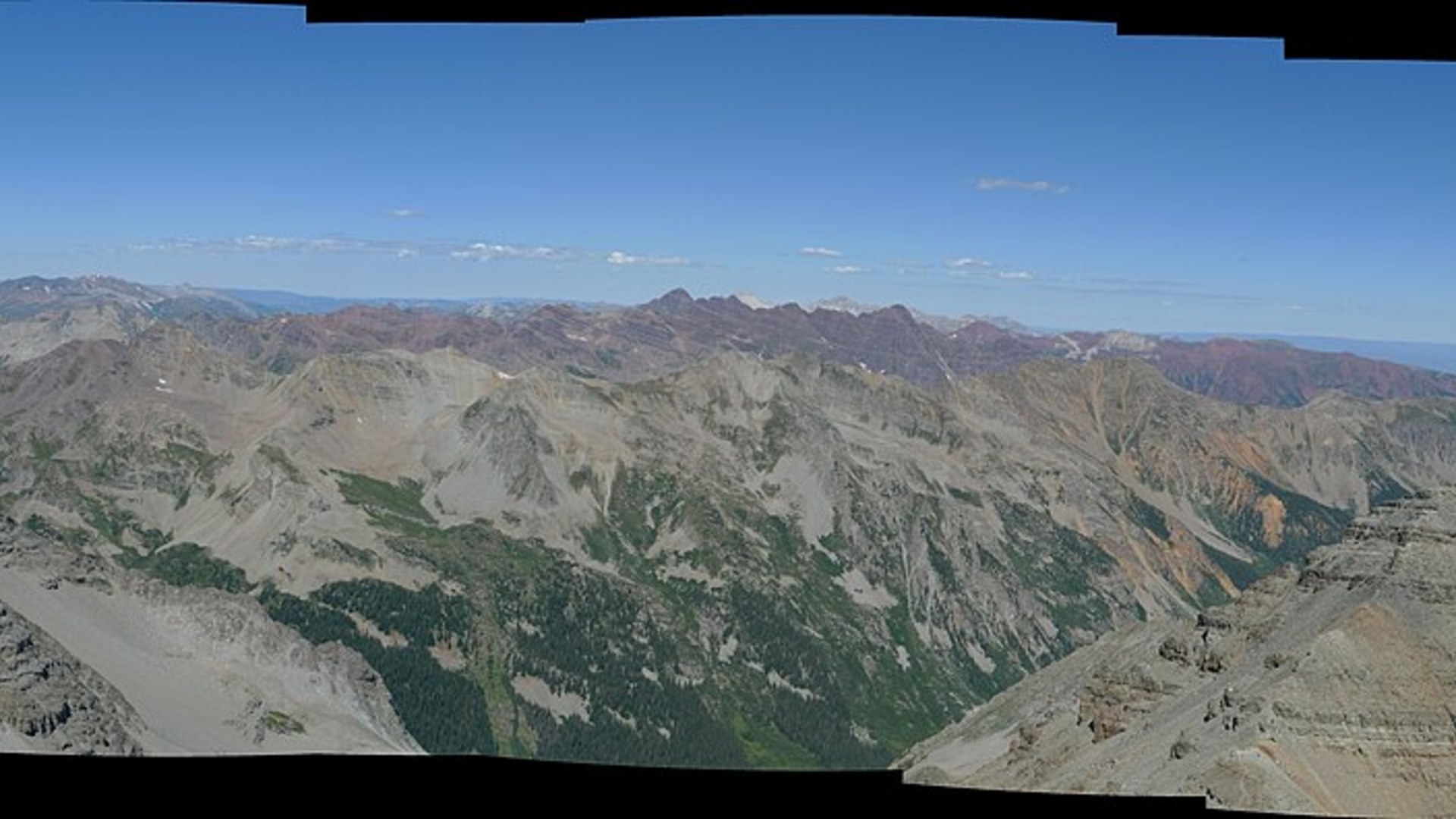
©Wikimedia / Jeremiah LaRocco
11. Mount Lincoln
Mount Lincoln peaks at 14,293 feet. Named in 1861 to honor President Abraham Lincoln, its upper flanks hold historic silver mine shafts that operated into the mid-20th century. High winds frequently sweep the flat summit plateau.
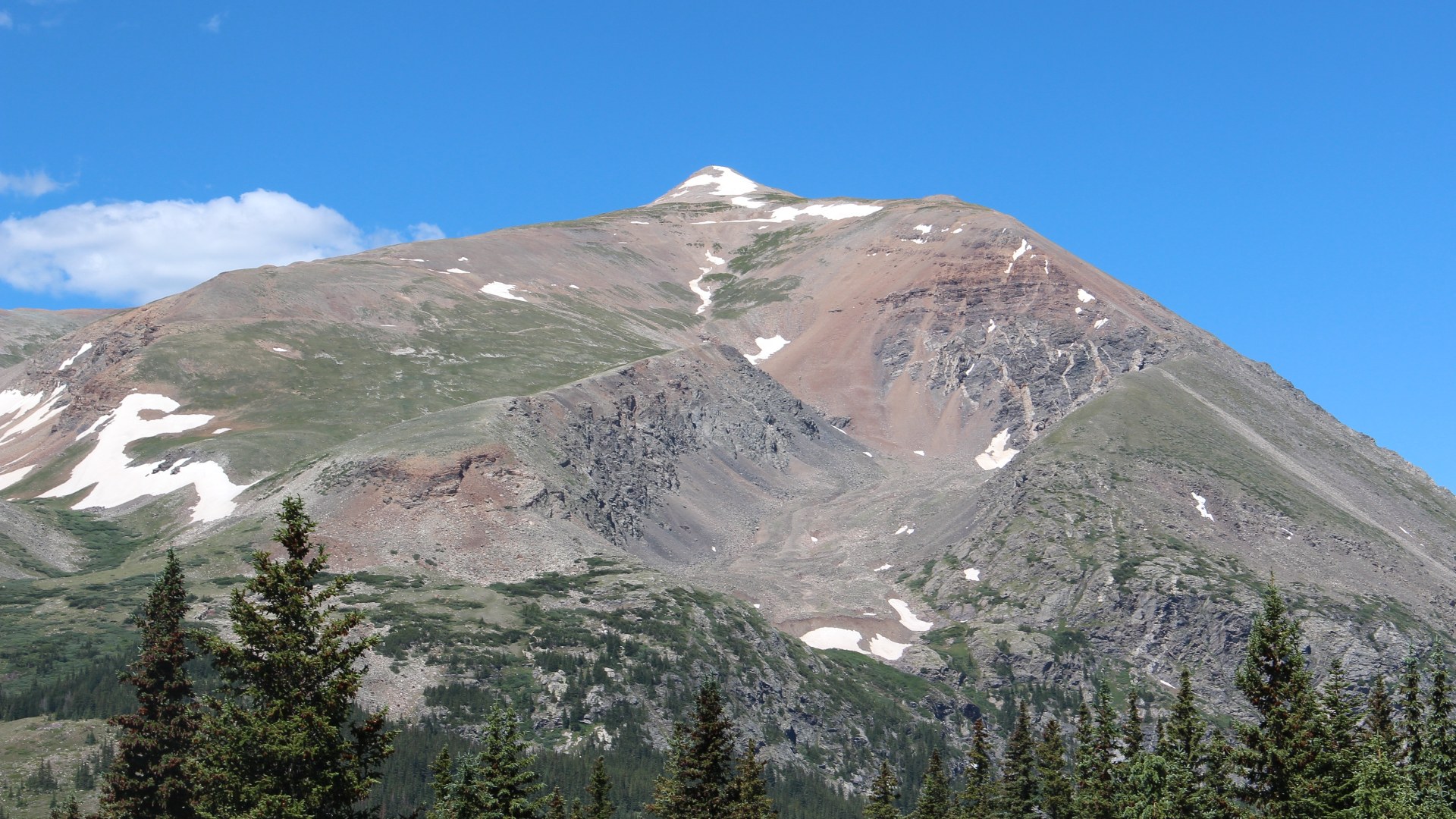
©Wikimedia / Thomson200
Advertisement
Swipe or tap ▶ to resume the countdown.
10. Crestone Peak
Crestone Peak summits at 14,300 feet. The rugged peak consists of solid conglomerate rock, requiring ascents through a steep red couloir that challenges mountaineers with falling rock hazards. Dense piñon pines frame its desert base.
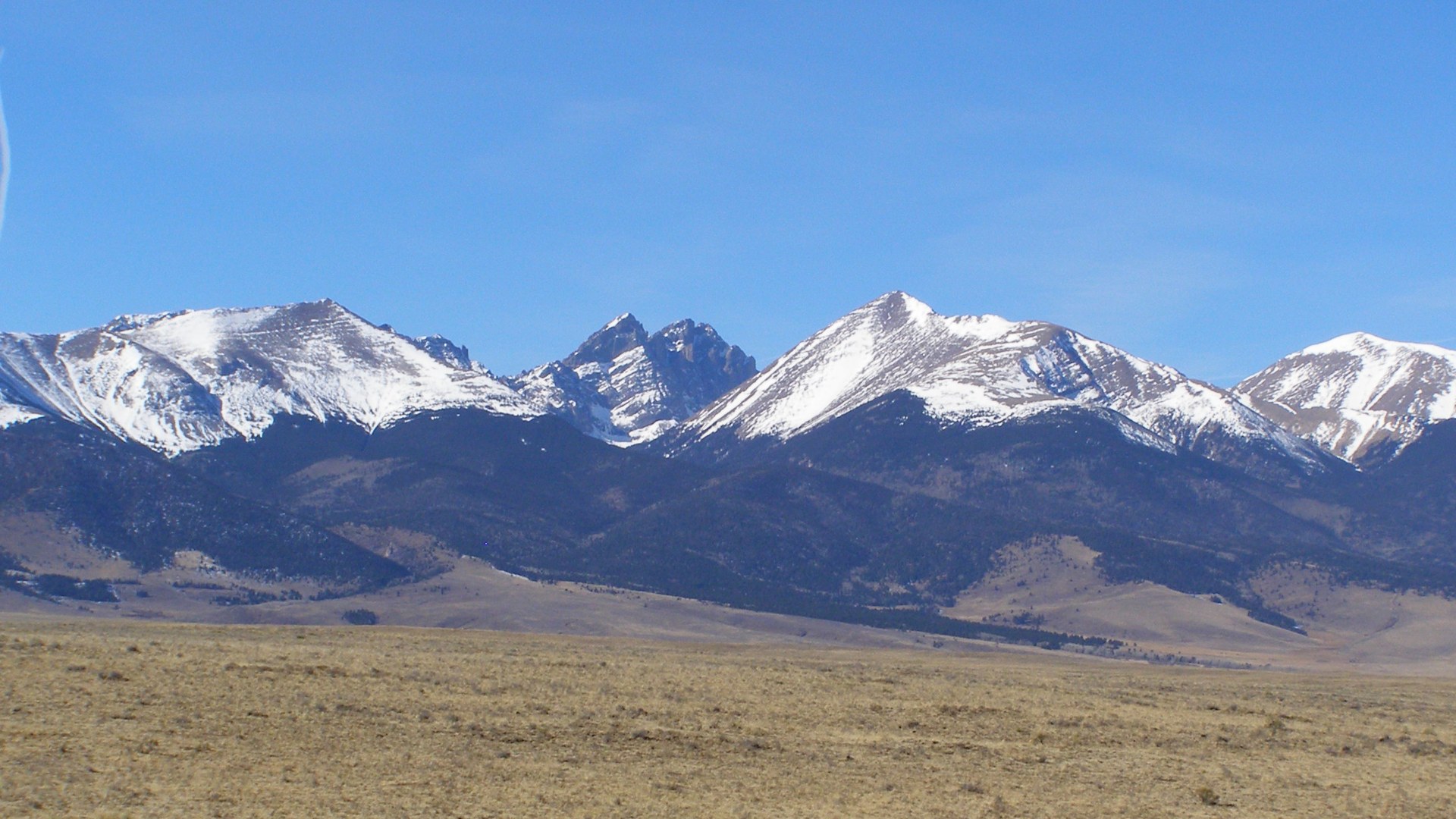
©Wikimedia / David Herrera from Albuquerque, NM, Bernalillo
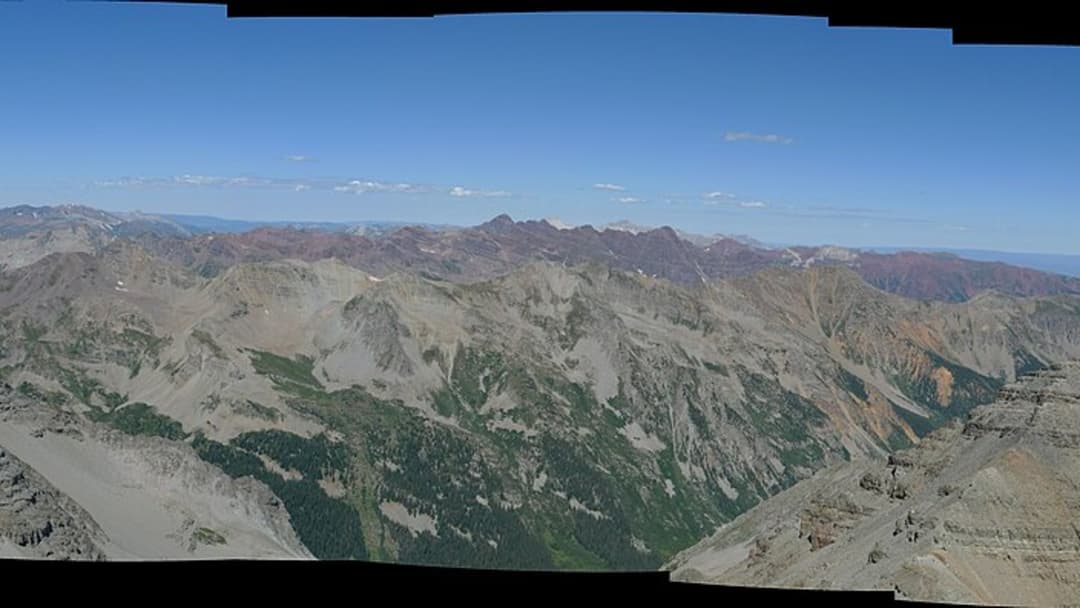
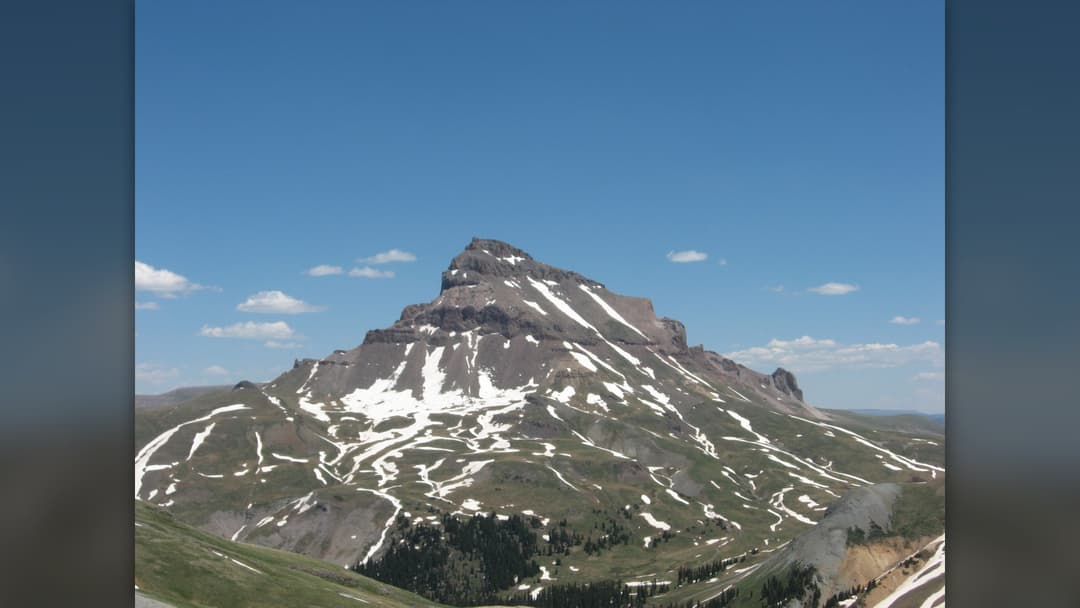
9. Uncompahgre Peak
Uncompahgre Peak tops 14,321 feet. Its broad volcanic tabletop contrasts with deep surrounding canyons, making it visible across the Uncompahgre Wilderness for over forty miles. Bighorn sheep browse its alpine meadows.
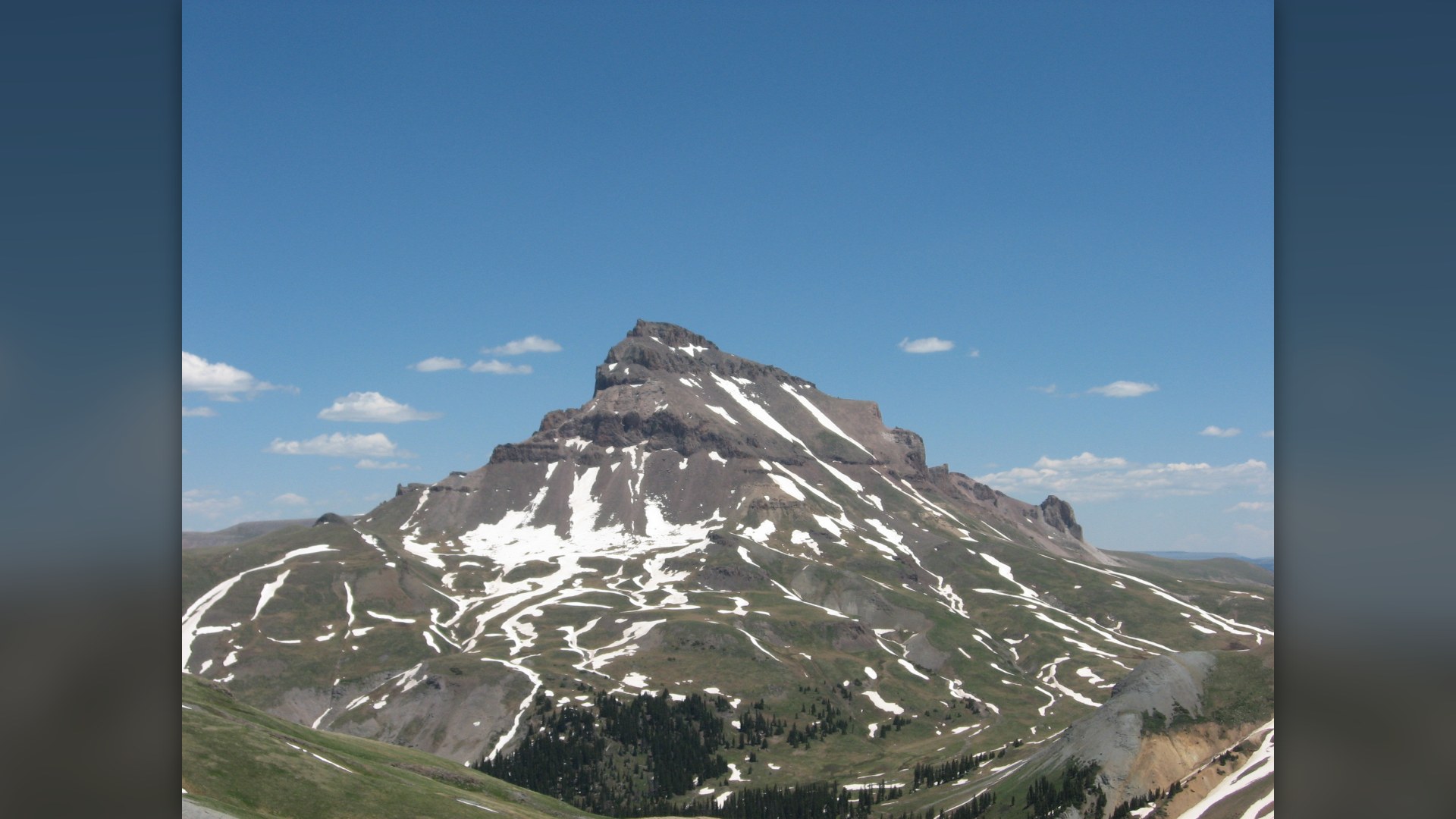
©Wikimedia / Gregstoner88 (talk · contribs)
8. La Plata Peak
La Plata Peak rises to 14,343 feet. Glacial valleys carve deep troughs into all sides of the mountain, feeding rushing streams that flow into Twin Lakes Reservoir. Its summit affords views of Mount Elbert.
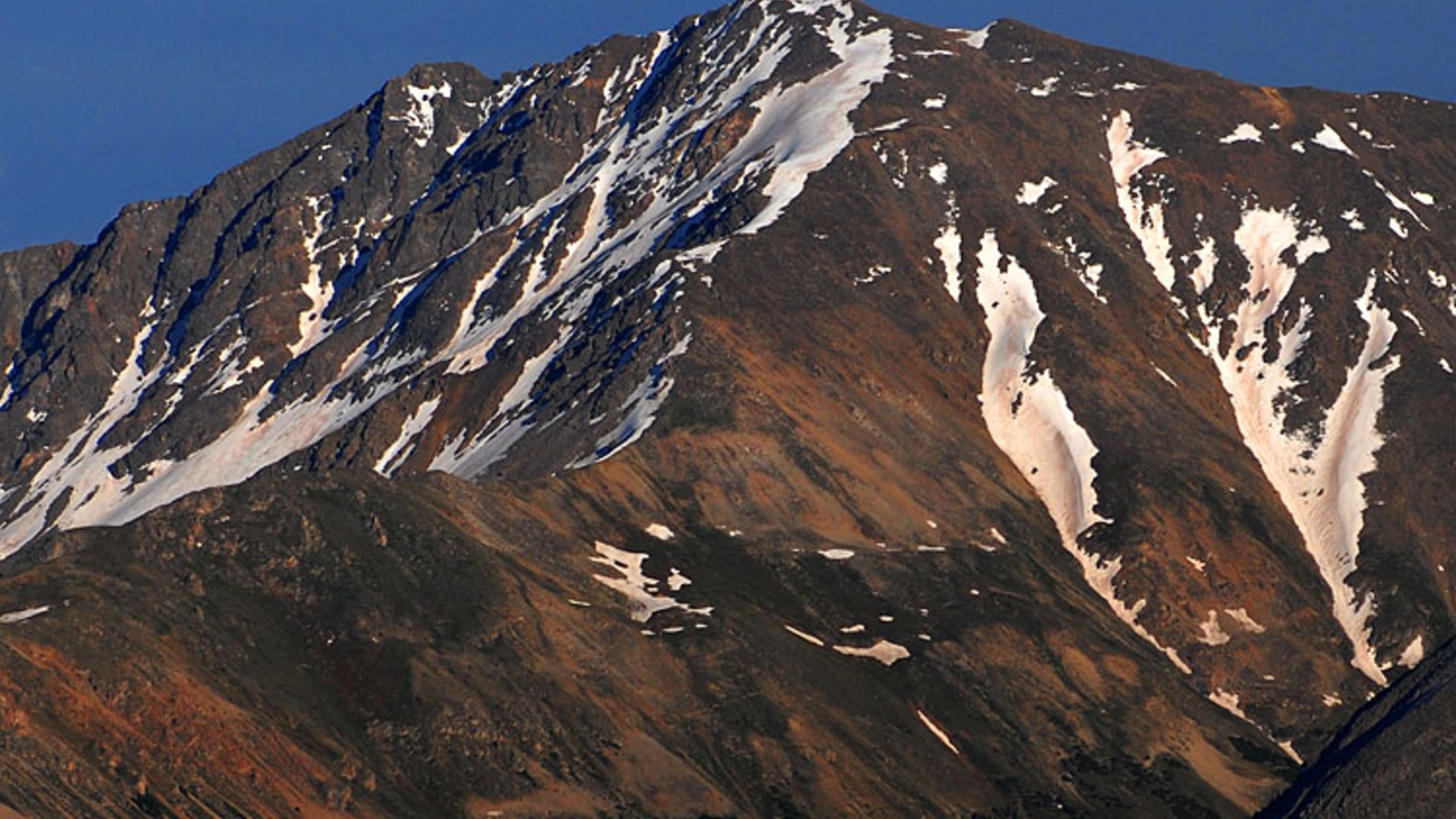
©Wikimedia / Robertbody at English Wikipedia
7. Blanca Peak
Blanca Peak ascends to 14,351 feet. It marks the sacred eastern boundary peak of the Navajo people, who revere it as Sisnaajiní. Massive granite ridges drop over 6,000 feet directly into the San Luis Valley basin.
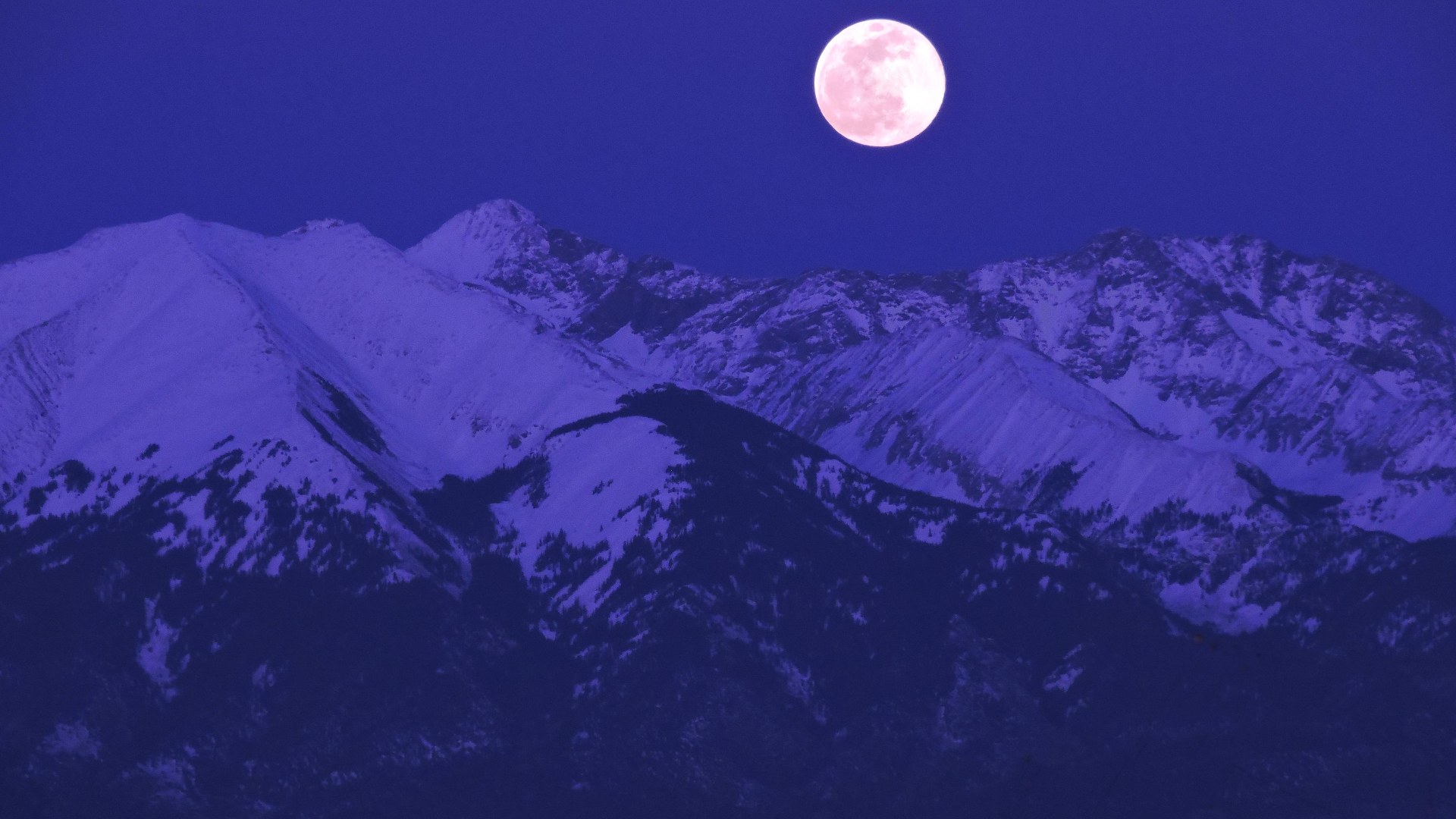
©Wikimedia / Great Sand Dunes National Park and Preserve
Advertisement
Swipe or tap ▶ to resume the countdown.
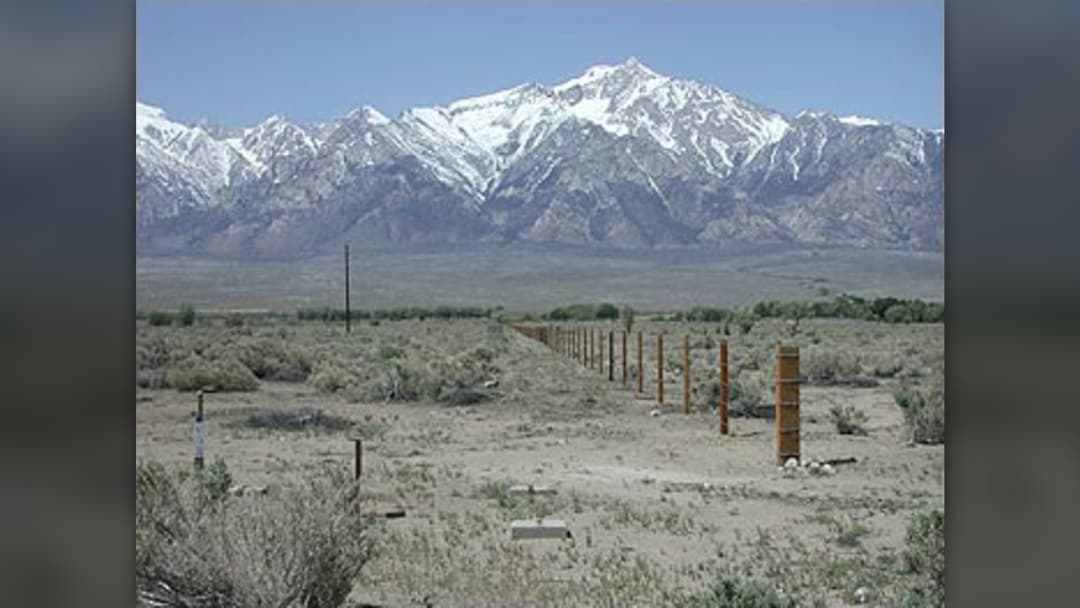
6. Mount Williamson
Mount Williamson tops 14,379 feet. Rising over 9,000 vertical feet directly from the desert floor in just four miles, its east face forms one of the steepest continuous escarpments in North America. The Williamson Bowl holds giant talus fields.
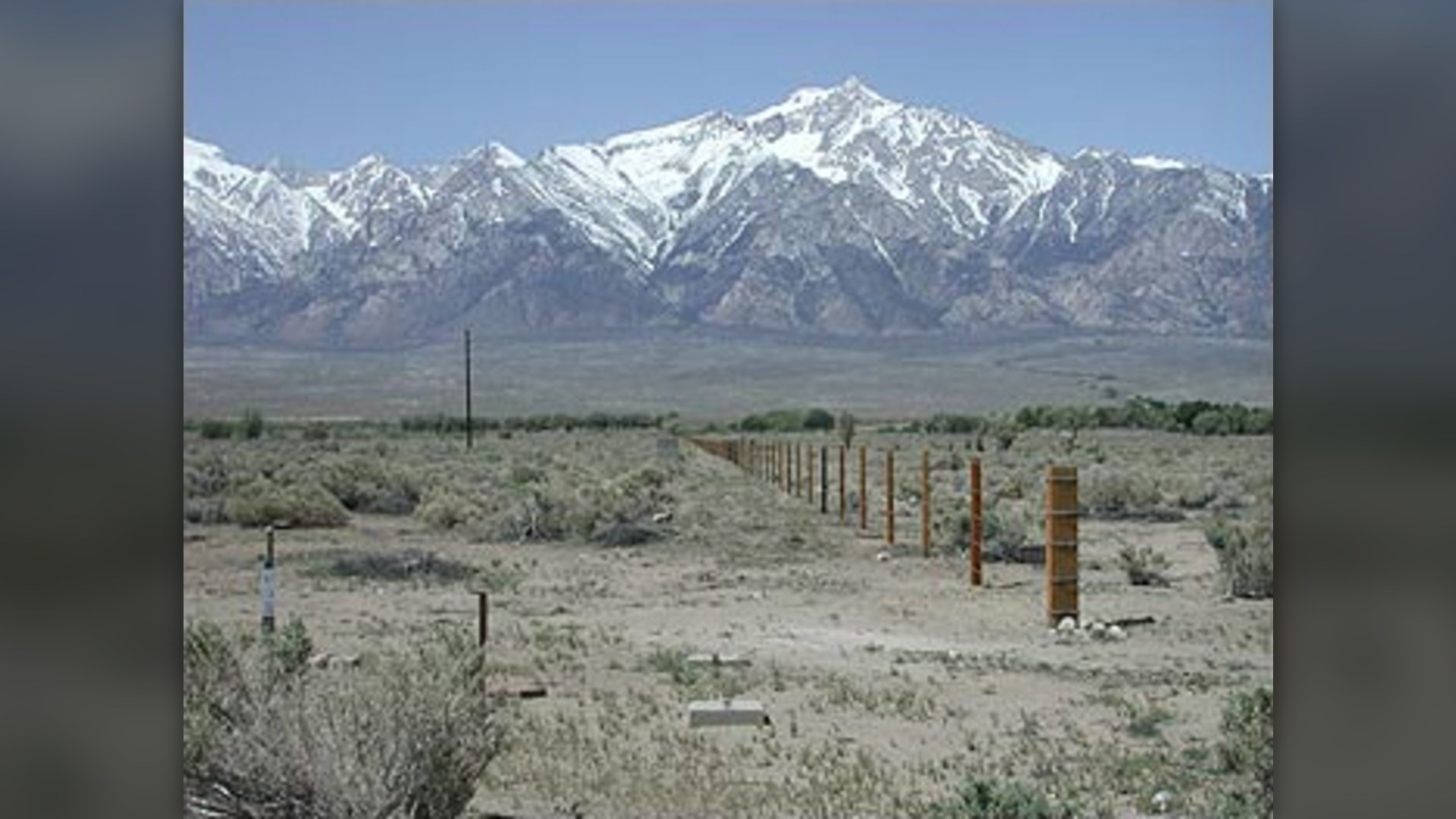
©Wikimedia / Jeffrey Burton, National Park Service
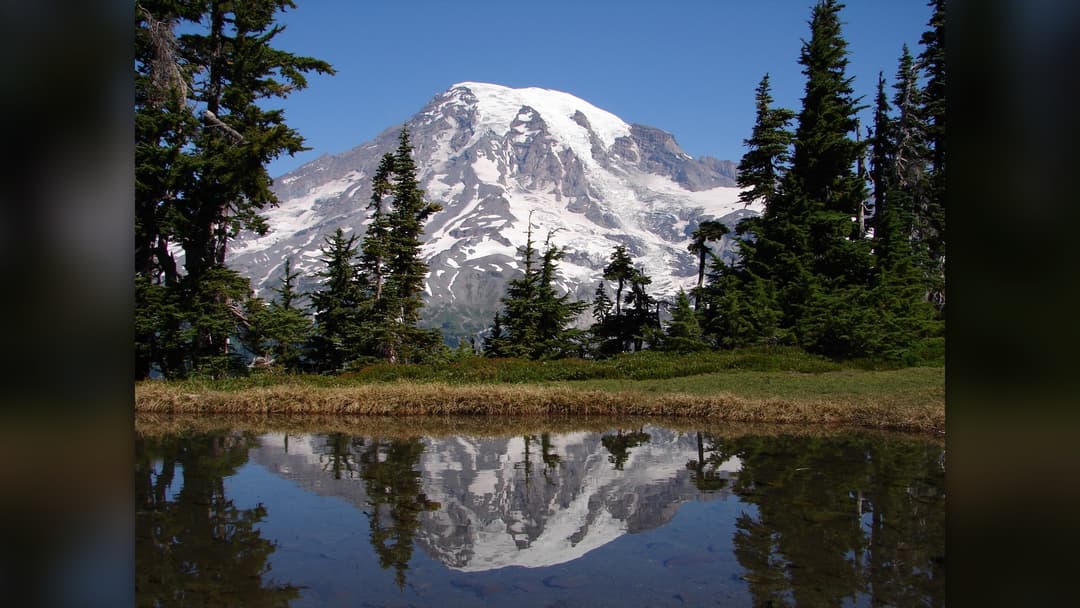
5. Mount Rainier
Mount Rainier reaches 14,417 feet. With 26 major glaciers holding more ice than all other Cascade peaks combined, this colossal stratovolcano dominates the western Washington skyline. Moisture from the Pacific creates massive winter snowpacks.
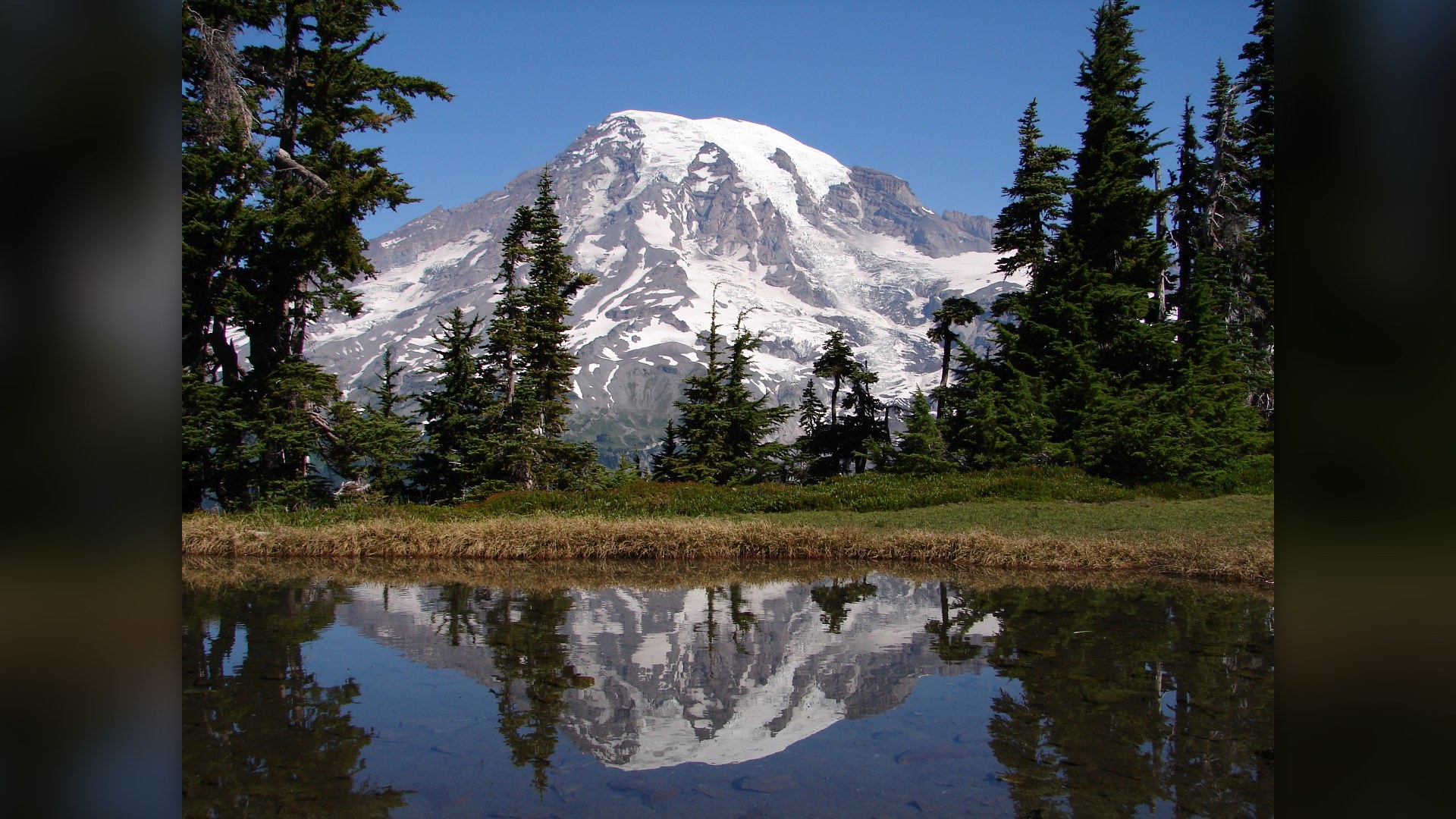
©Wikimedia / US National Park Service
4. Mount Harvard
Mount Harvard peaks at 14,421 feet. First surveyed by the Harvard Mining School in 1869, it ranks as Colorado's third-highest summit and features broad alpine tundra ridges. A rugged 2-mile traverse connects it to Mount Columbia.
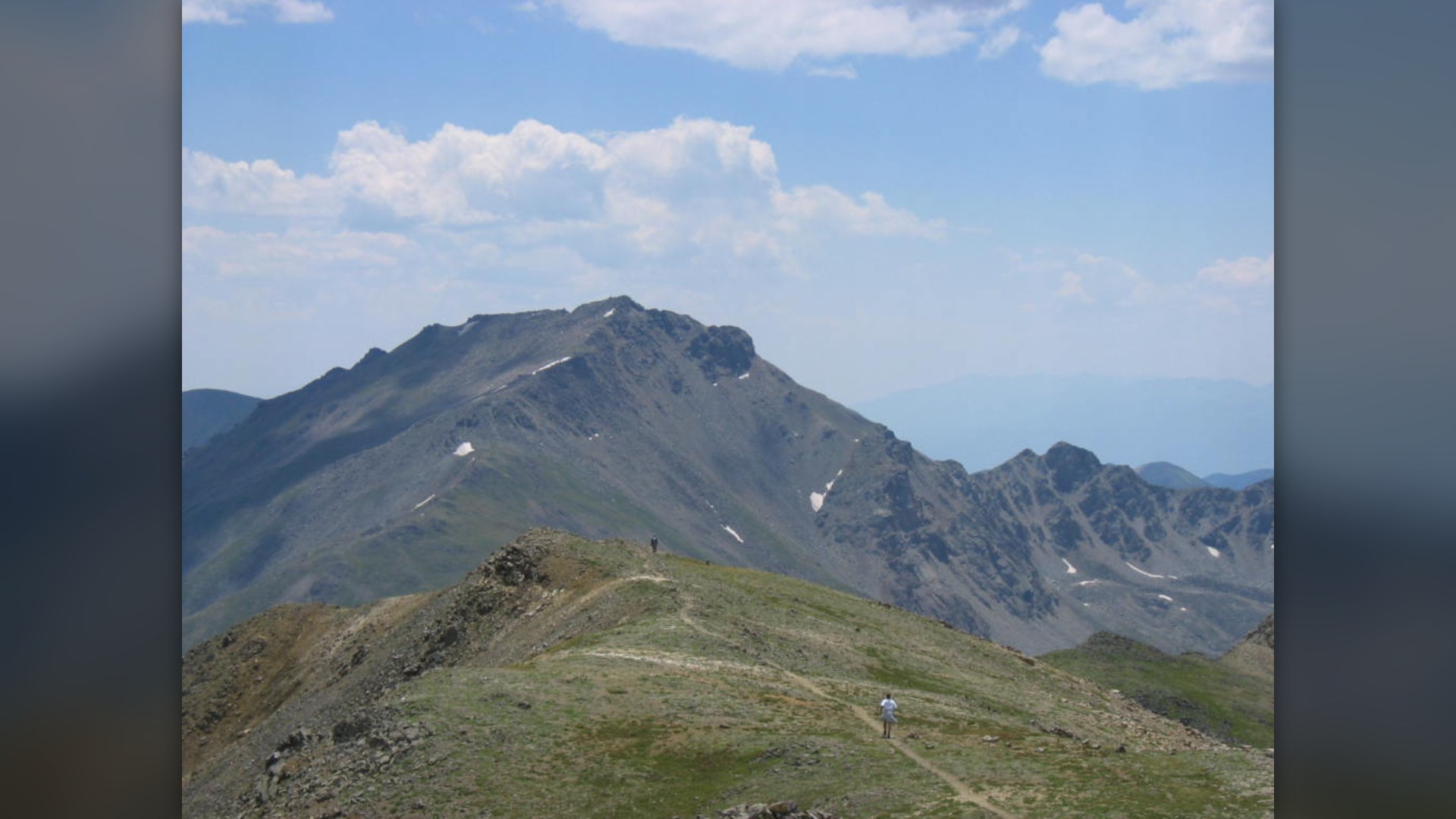
©Wikimedia / jokermanj
3. Mount Massive
Mount Massive stands at 14,428 feet. Its sprawling summit ridge stretches over three miles across five distinct points above 14,000 feet, giving it immense physical bulk. Glacial tarns dot its eastern cirques above Leadville.
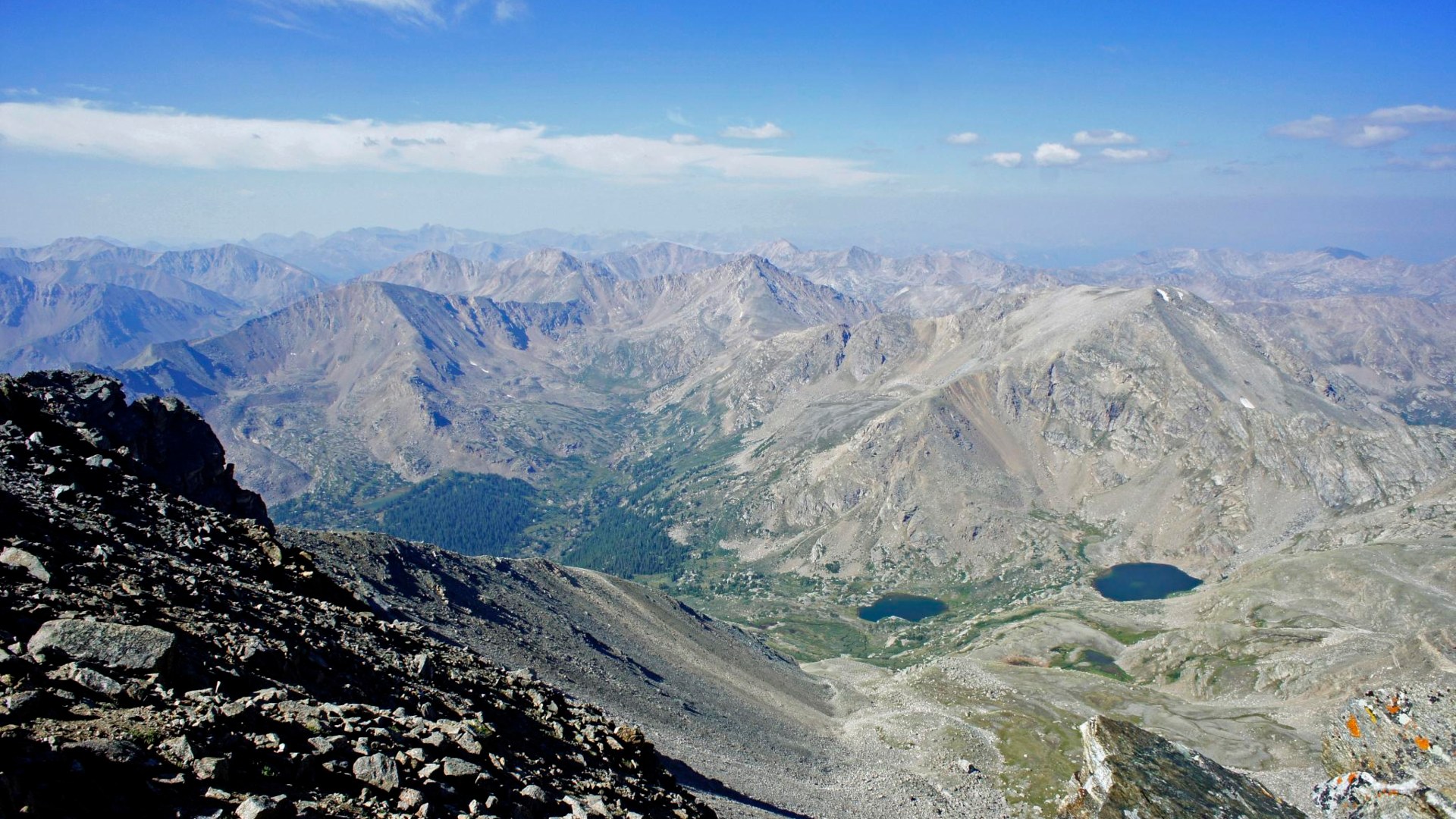
©Wikimedia / Brokentaco
Advertisement
Swipe or tap ▶ to resume the countdown.
2. Mount Elbert
Mount Elbert ascends to 14,440 feet. It forms the highest point across the entire Rocky Mountain chain stretching from New Mexico to northern Canada. Miners named the mountain in 1874 for territorial governor Samuel Hitt Elbert.
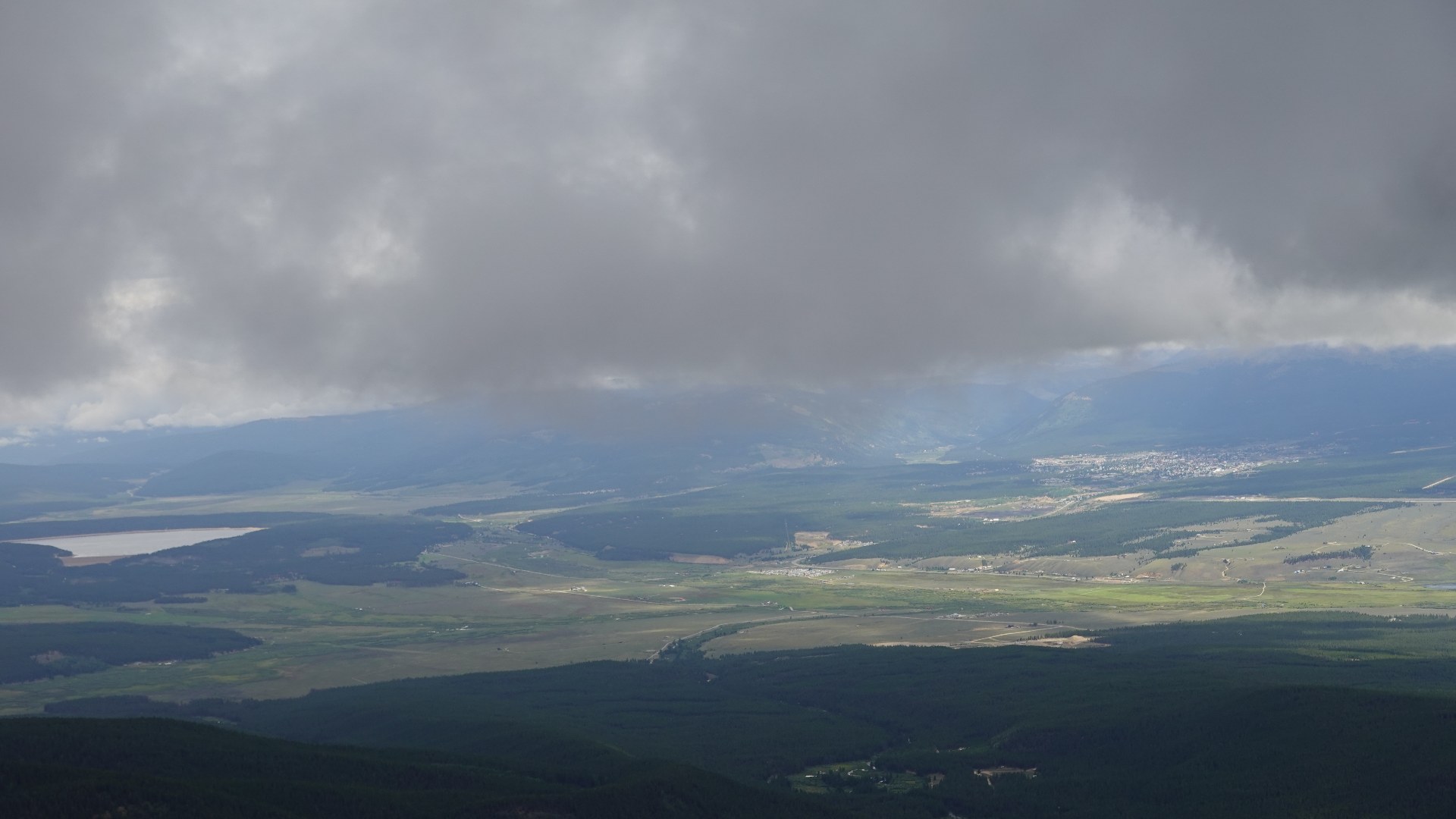
©Wikimedia / Khoshhat
1. Mount Whitney
Mount Whitney peaks at 14,505 feet. Situated in the southern Sierra Nevada, it stands as the tallest point in the contiguous United States, just 85 miles from North America's lowest point in Death Valley. The 211-mile John Muir Trail concludes here.
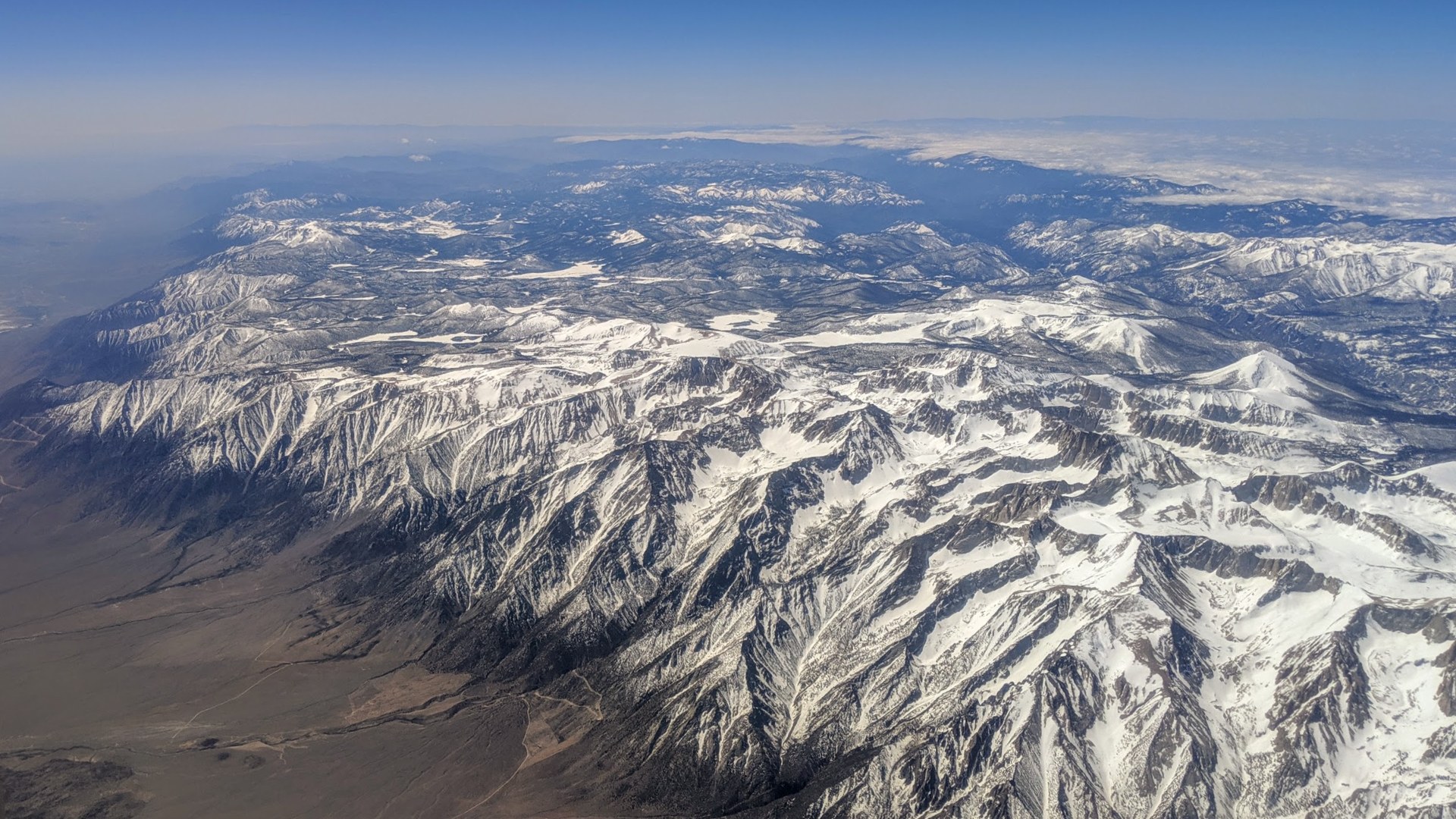
©Wikimedia / Dicklyon
Advertisement
You've reached the end of the story. Thanks for reading!

20 Most Advanced Airports That Redefine Air Travel
Experience the future of flight at 20 airports redefining air travel through AI.
All 25 Entries in this Story
25. Mount Belford
Mount Belford tops out at 14,203 feet. Hikers climb steep switchbacks directly up its northwest ridge from Missouri Gulch, gaining over 4,500 vertical feet. Many hikers combine it with nearby Mount Oxford.

24. Crestone Needle
Crestone Needle reaches 14,203 feet. Climbers consider it one of Colorado's toughest fourteeners due to steep conglomerate couloirs and narrow ledges that require careful route-finding. Snow lingers in its gullies well into July.

23. Mount Princeton
Mount Princeton rises to 14,204 feet. Its chalky granite slopes dominate the Arkansas River Valley, making it visible for dozens of miles along Highway 285. Old mining roads climb past tree line.

22. Mount Shavano
Mount Shavano summits at 14,235 feet. Melting spring snow forms the famous Angel of Shavano on its eastern face, drawing photographers and mountaineers from across Colorado. The summit offers views of the San Luis Valley.

21. North Palisade
North Palisade climbs to 14,248 feet. It serves as the dramatic centerpiece of the Palisades group, cradling California's largest remaining glacier below its north wall. Summit routes require technical scrambling.

20. White Mountain Peak
White Mountain Peak reaches 14,252 feet. Located in the desert White Mountains, it receives sparse precipitation and hosts ancient bristlecone pine groves on lower slopes. The University of California operates a high-altitude laboratory near the top.

19. Mount Wilson
Mount Wilson ascends to 14,252 feet. Located near Telluride, its jagged volcanic spires require class 4 scrambling across loose rock and exposed knife-edge ridges. Mining camps dotted its lower basins during the 1890s.

18. Longs Peak
Longs Peak rises to 14,259 feet. Its sheer eastern cliff, known as the Diamond, towers nearly a thousand vertical feet above Chasm Lake. The Keyhole Route draws thousands of hikers every summer.

17. Mount Blue Sky
Mount Blue Sky reaches 14,265 feet. The Mount Blue Sky Scenic Byway carries motorists to within 130 feet of the rocky summit, passing herds of bighorn sheep. The summit ridge shelters arctic-alpine tundra.

16. Quandary Peak
Quandary Peak tops out at 14,271 feet. Located just south of Breckenridge, its straightforward east ridge hike makes it extremely popular for first-time summit attempts. Mountain goats regularly wander across the scree.

15. Torreys Peak
Torreys Peak ascends to 14,274 feet. A narrow saddle connects it to twin summit Grays Peak, allowing hikers to tag both Continental Divide summits in a single morning. Snow stays trapped in the northern Tuning Fork couloir.

14. Mount Antero
Mount Antero tops out at 14,276 feet. Commercial miners have extracted world-class aquamarine crystals and blue beryl from its granite pockets since the late 19th century. A rough 4x4 road climbs over 13,000 feet.

13. Grays Peak
Grays Peak stands at 14,278 feet. It marks the highest elevation reached by the Continental Divide across the entire Western Hemisphere, separating Pacific and Atlantic watersheds. Botanist Charles Christopher Parry named it in 1861.

12. Castle Peak
Castle Peak reaches 14,279 feet. Its jagged turrets and buttresses resemble a ruined medieval fortress above Castle Creek Valley, requiring travel across steep talus and loose scree fields. Glaciers shaped its massive northeast cirque.

11. Mount Lincoln
Mount Lincoln peaks at 14,293 feet. Named in 1861 to honor President Abraham Lincoln, its upper flanks hold historic silver mine shafts that operated into the mid-20th century. High winds frequently sweep the flat summit plateau.

10. Crestone Peak
Crestone Peak summits at 14,300 feet. The rugged peak consists of solid conglomerate rock, requiring ascents through a steep red couloir that challenges mountaineers with falling rock hazards. Dense piñon pines frame its desert base.

9. Uncompahgre Peak
Uncompahgre Peak tops 14,321 feet. Its broad volcanic tabletop contrasts with deep surrounding canyons, making it visible across the Uncompahgre Wilderness for over forty miles. Bighorn sheep browse its alpine meadows.

8. La Plata Peak
La Plata Peak rises to 14,343 feet. Glacial valleys carve deep troughs into all sides of the mountain, feeding rushing streams that flow into Twin Lakes Reservoir. Its summit affords views of Mount Elbert.

7. Blanca Peak
Blanca Peak ascends to 14,351 feet. It marks the sacred eastern boundary peak of the Navajo people, who revere it as Sisnaajiní. Massive granite ridges drop over 6,000 feet directly into the San Luis Valley basin.

6. Mount Williamson
Mount Williamson tops 14,379 feet. Rising over 9,000 vertical feet directly from the desert floor in just four miles, its east face forms one of the steepest continuous escarpments in North America. The Williamson Bowl holds giant talus fields.

5. Mount Rainier
Mount Rainier reaches 14,417 feet. With 26 major glaciers holding more ice than all other Cascade peaks combined, this colossal stratovolcano dominates the western Washington skyline. Moisture from the Pacific creates massive winter snowpacks.

4. Mount Harvard
Mount Harvard peaks at 14,421 feet. First surveyed by the Harvard Mining School in 1869, it ranks as Colorado's third-highest summit and features broad alpine tundra ridges. A rugged 2-mile traverse connects it to Mount Columbia.

3. Mount Massive
Mount Massive stands at 14,428 feet. Its sprawling summit ridge stretches over three miles across five distinct points above 14,000 feet, giving it immense physical bulk. Glacial tarns dot its eastern cirques above Leadville.

2. Mount Elbert
Mount Elbert ascends to 14,440 feet. It forms the highest point across the entire Rocky Mountain chain stretching from New Mexico to northern Canada. Miners named the mountain in 1874 for territorial governor Samuel Hitt Elbert.

1. Mount Whitney
Mount Whitney peaks at 14,505 feet. Situated in the southern Sierra Nevada, it stands as the tallest point in the contiguous United States, just 85 miles from North America's lowest point in Death Valley. The 211-mile John Muir Trail concludes here.