Slideshow · Technology
10 'Impossible' Early Galaxies That Defy Cosmic Physics
The James Webb Space Telescope is capturing monster galaxies born mere moments after the Big Bang, shattering longstanding models of stellar evolution.
All 10 Entries in this Story
10. The Cosmic Vine
Spanning an astonishing 13 million light-years across deep time, this web filament was spotted at redshift 3.44. Standard astrophysics predicted structures this colossal needed billions of extra years of gravity to assemble.
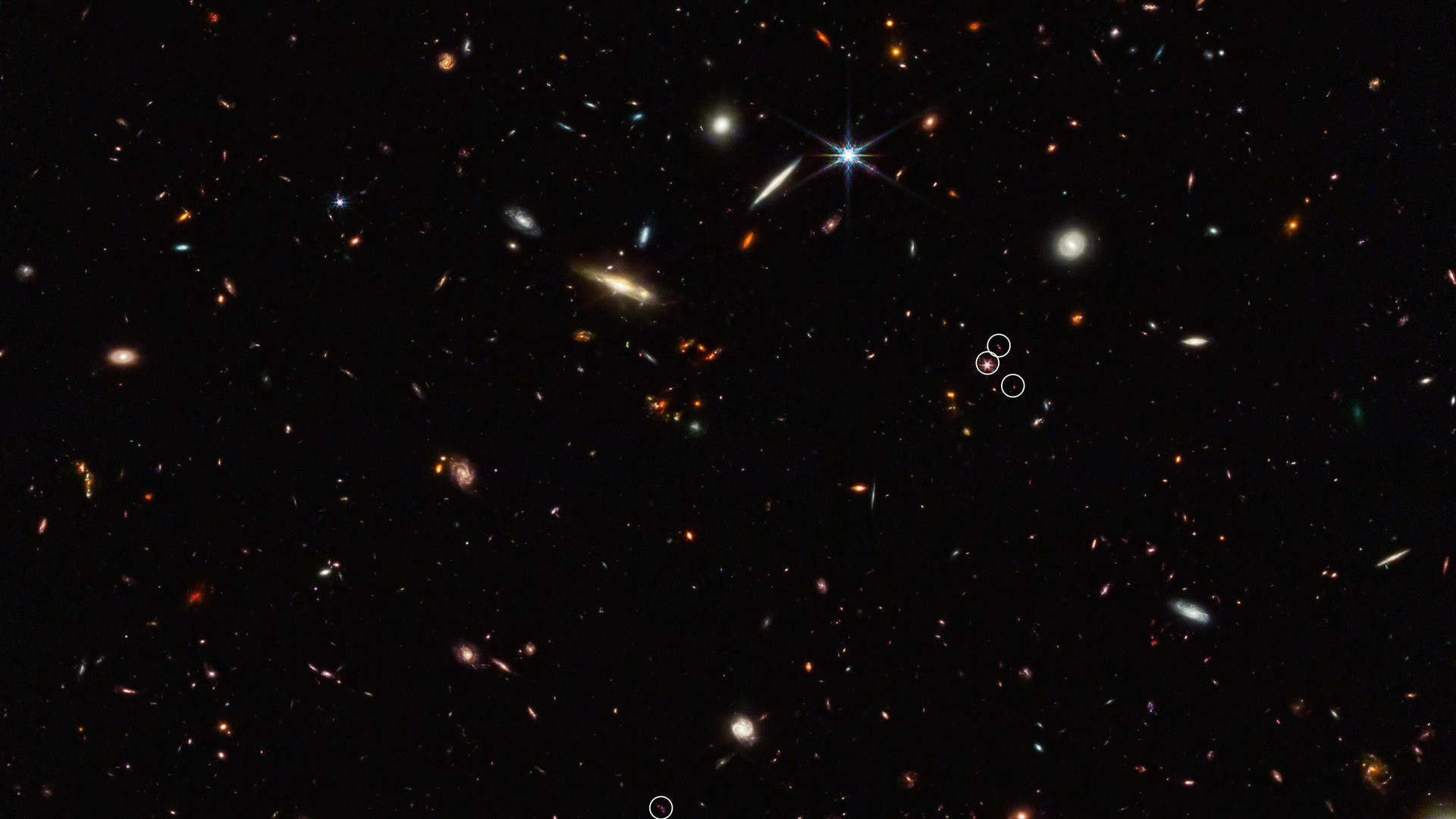
9. The Baffling Little Red Dots
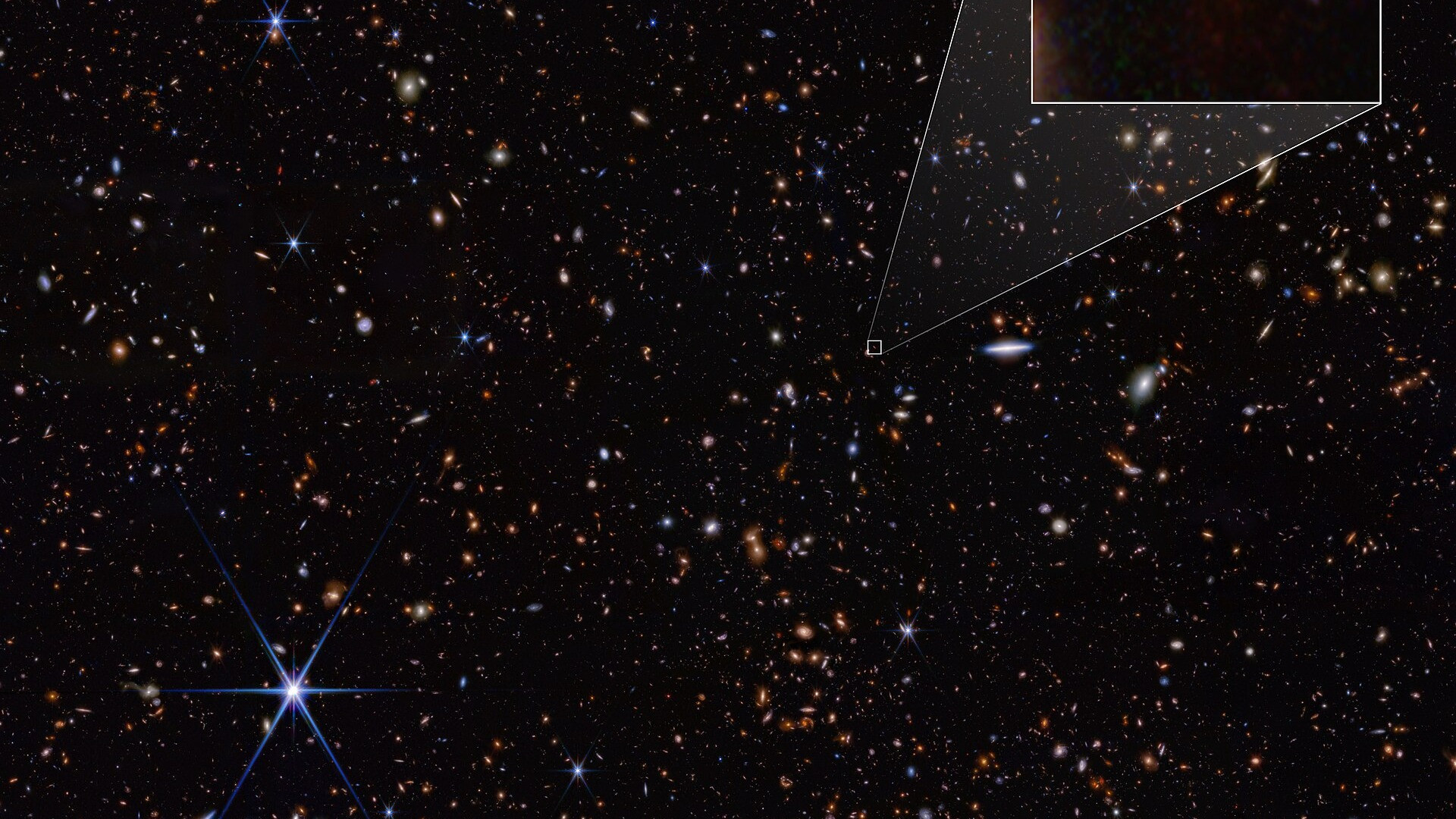
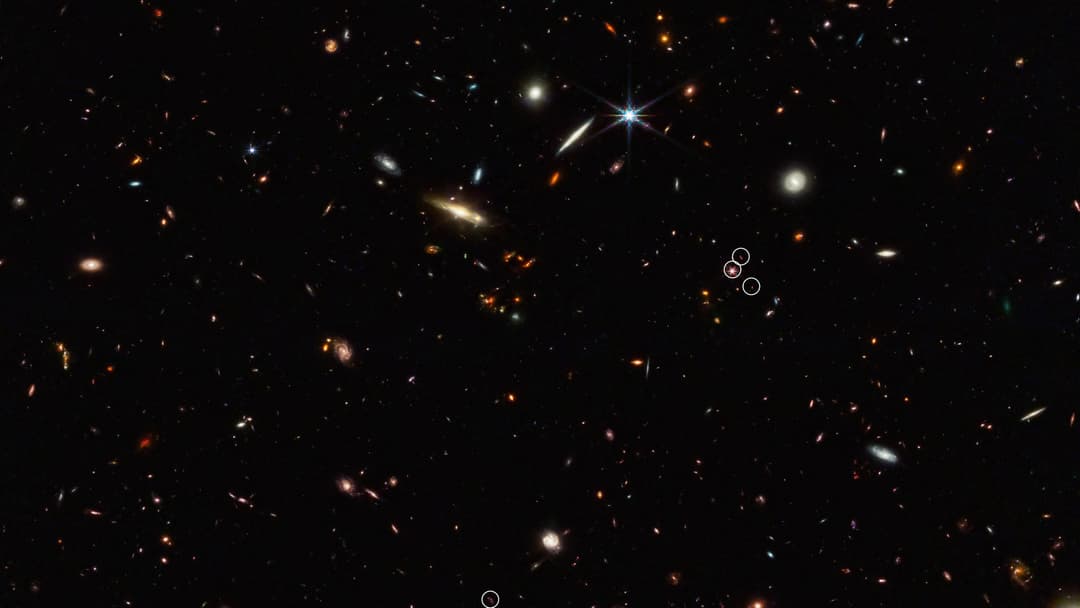
Sprinkled across Webb's deepest survey exposures are tiny crimson sparks that mystified astronomers. Spectroscopy proved they hide supermassive black holes millions of times the Sun's mass when the cosmos was barely newborn.
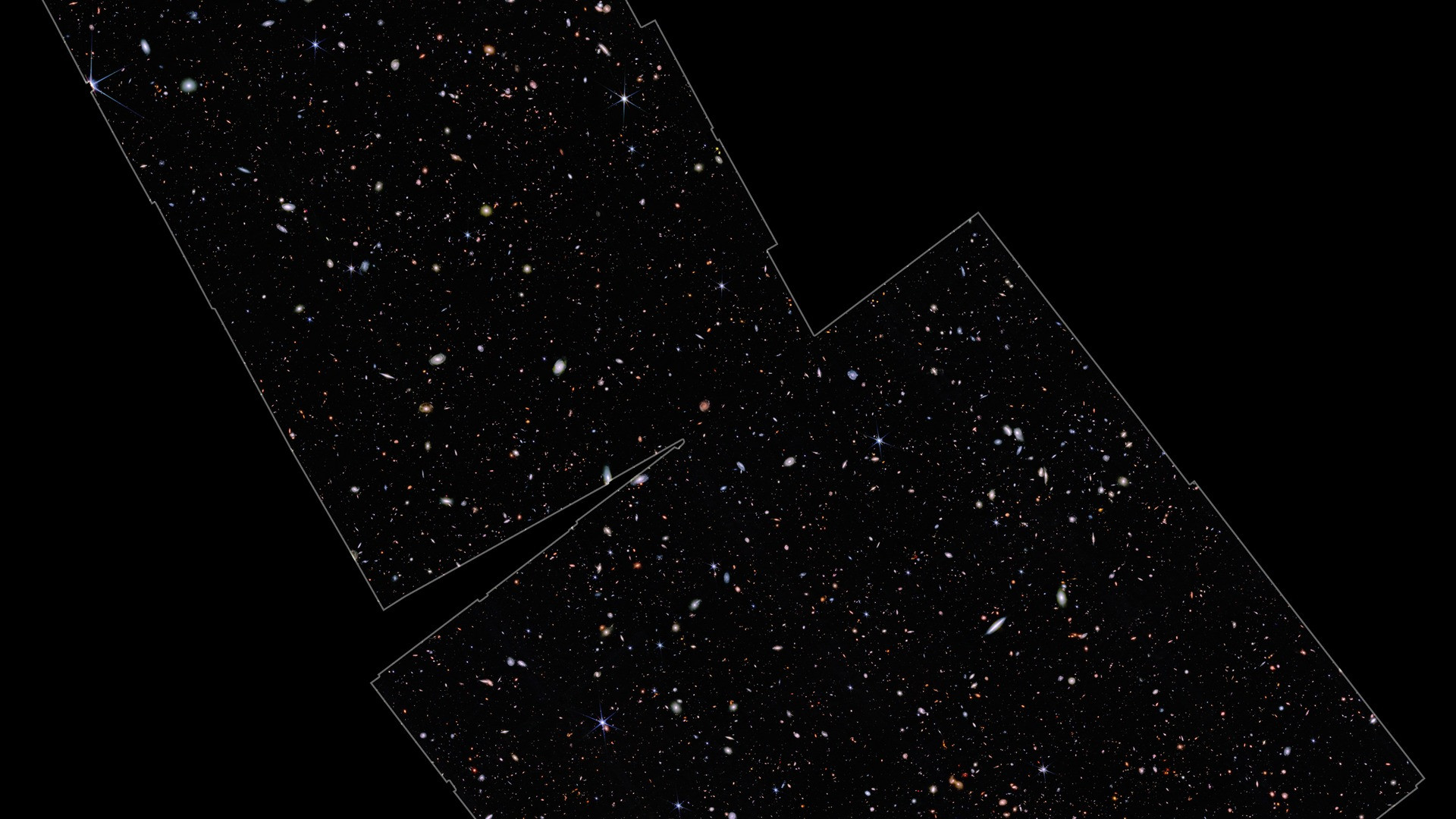
8. The Mirrored Infant MACS0647-JD
Split into three distinct mirages by the gravity of a foreground cluster, this 400-million-year-old relic stunned researchers. Rather than a chaotic gas cloud, Webb revealed two mature, interacting stellar cores.
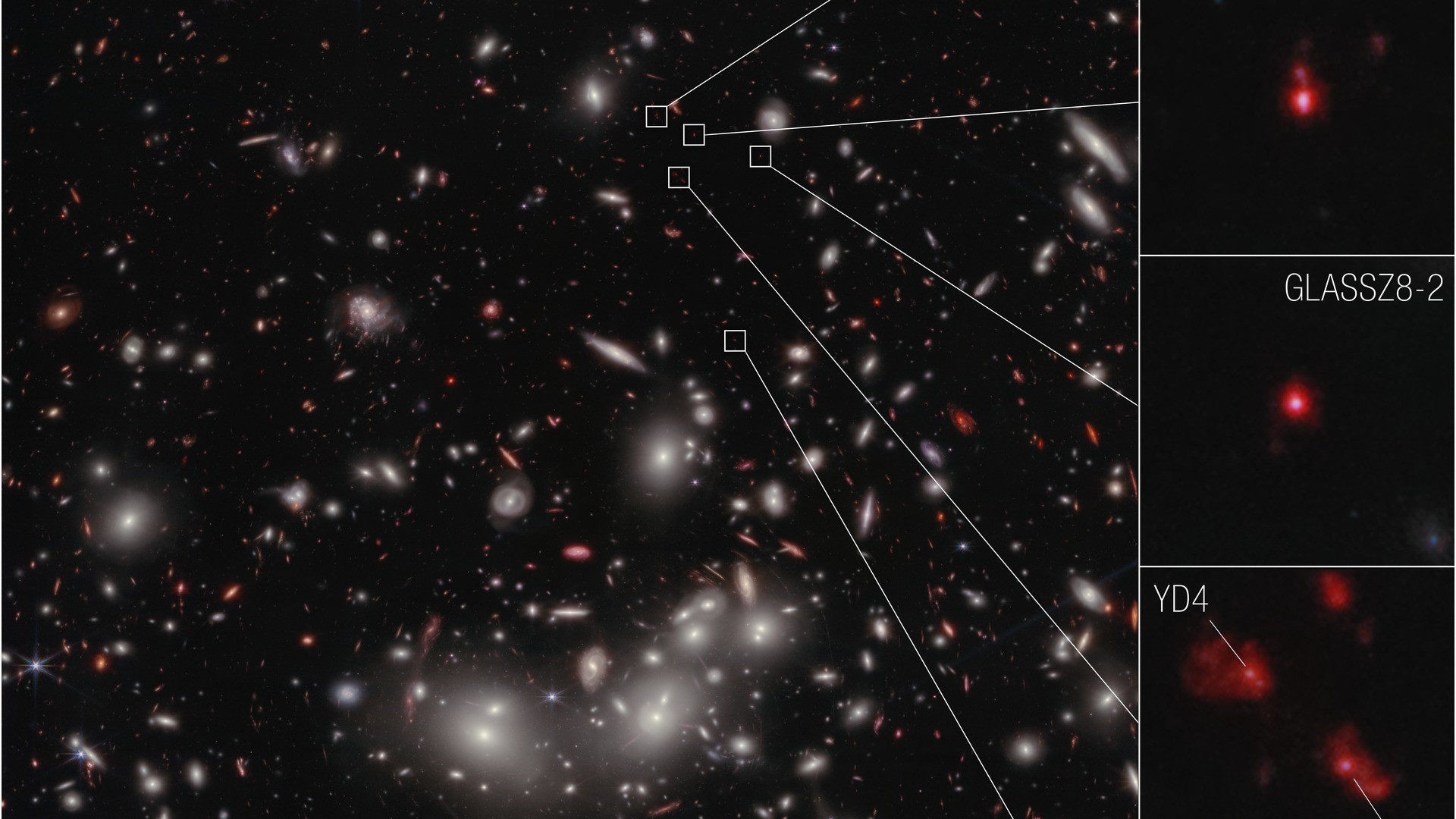
7. The Dead Titan ZF-UDS-7329
By age 800 million years, this galaxy had forged more stars than the modern Milky Way and gone completely cold. Theorists are baffled: standard dark matter halos couldn't gather enough gas to build a behemoth that quickly.
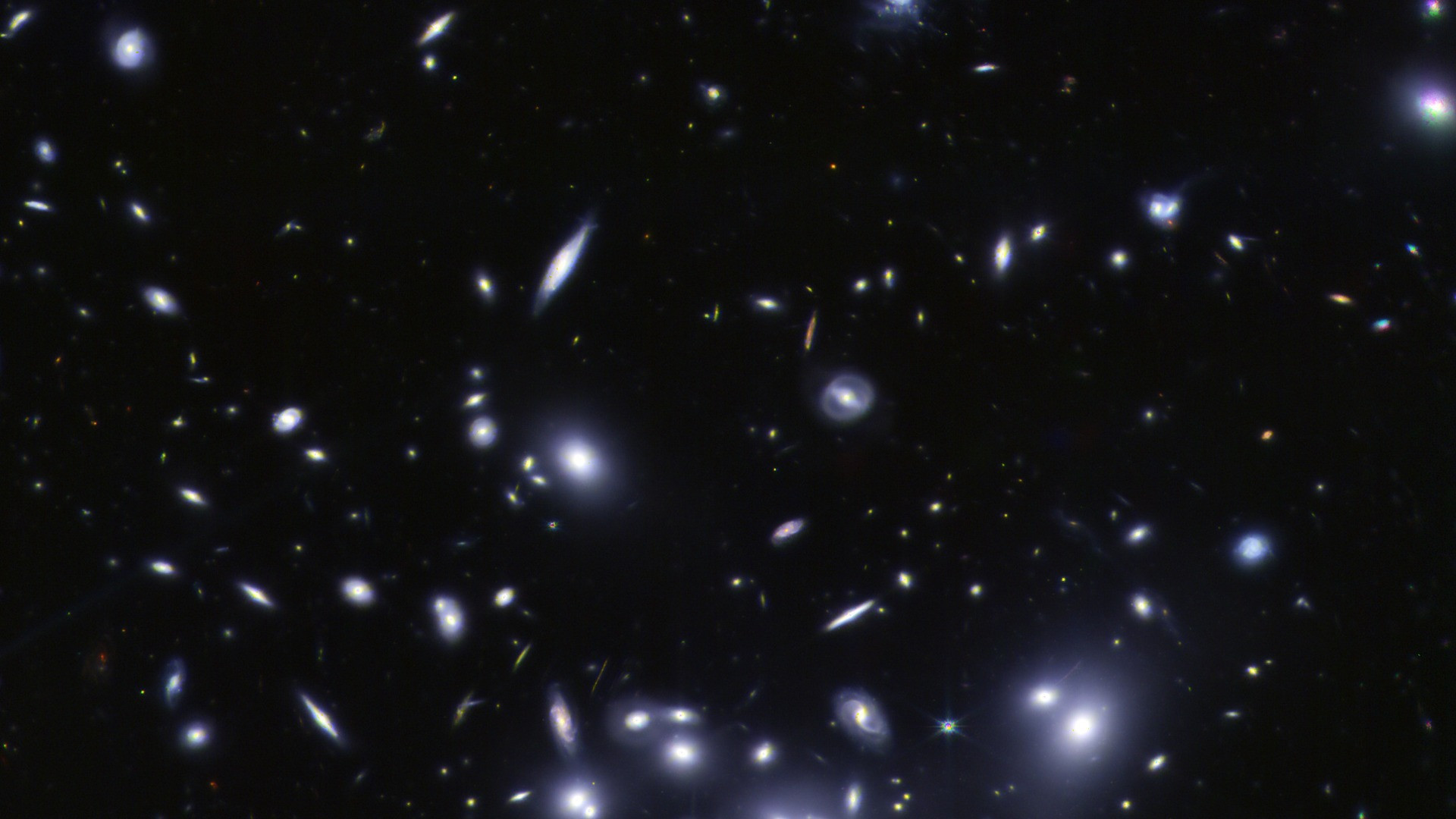
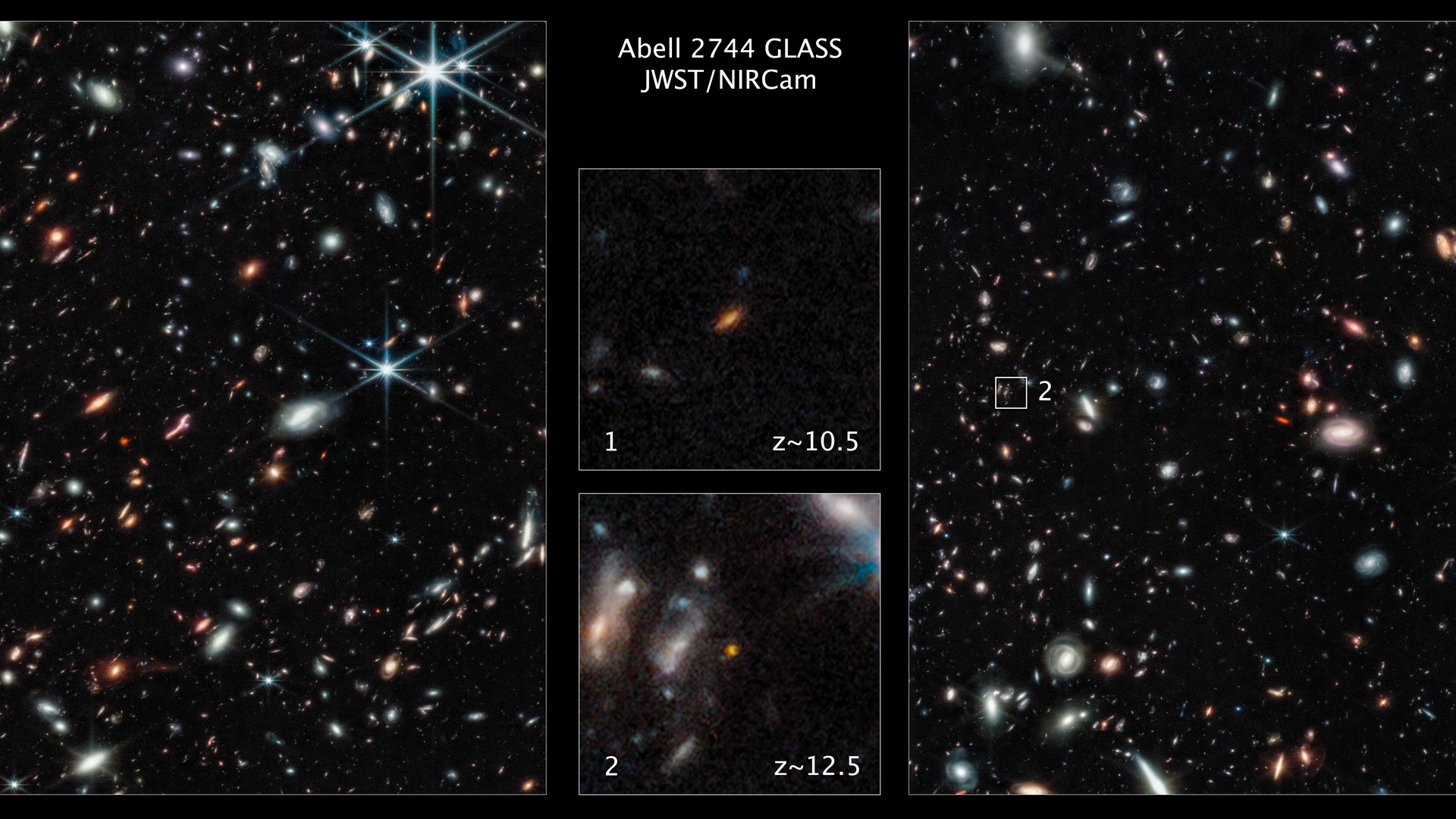
6. The Luminous Beacon GLASS-Z12
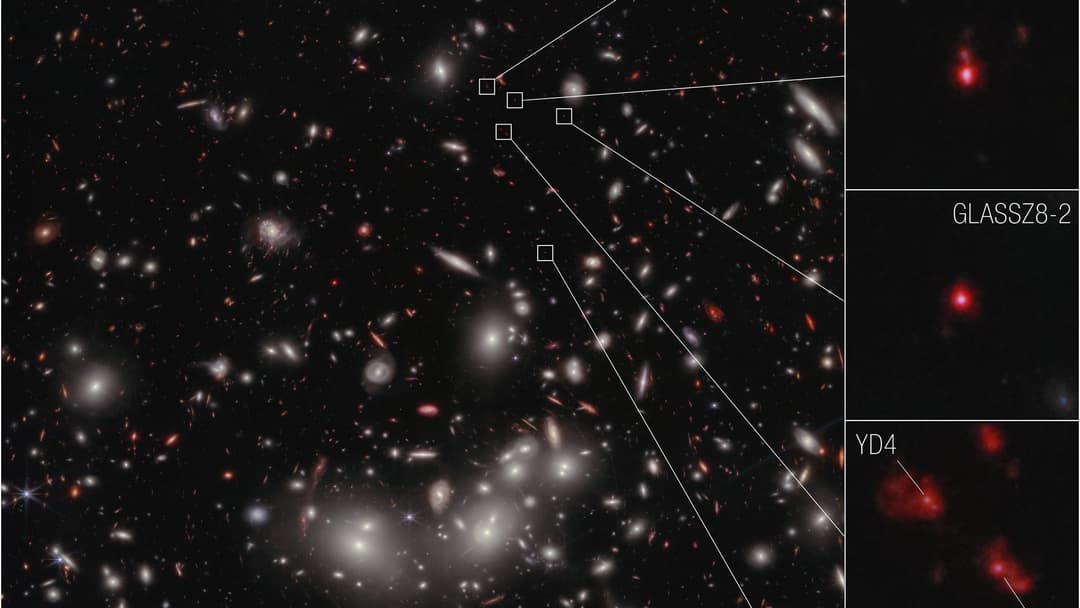
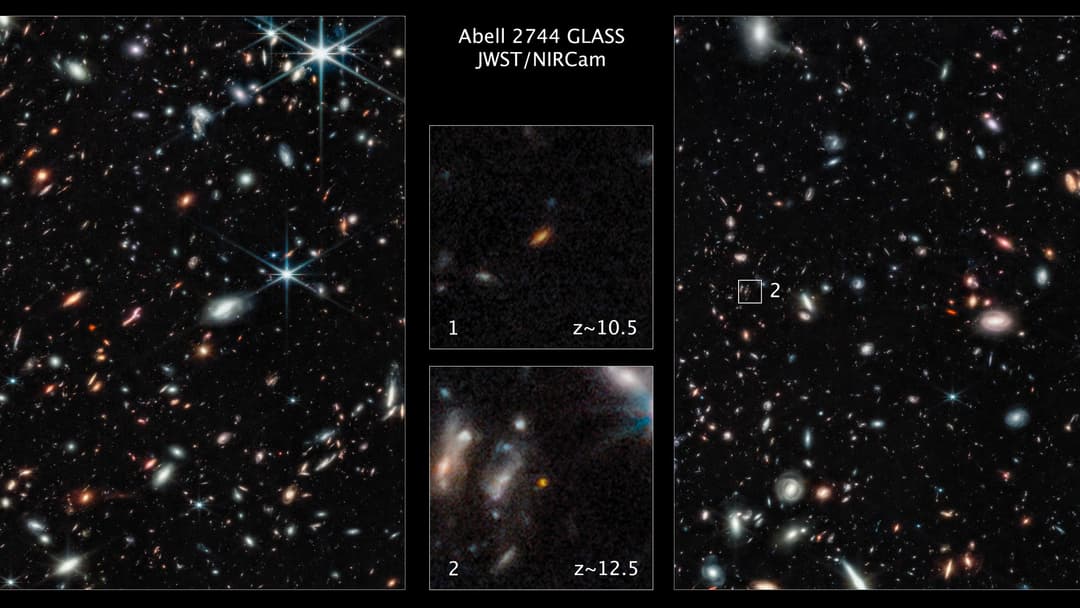
Dating back to just 350 million years after the Big Bang, this radiant jewel was among Webb's first bombshell finds. Its sheer brilliance proved the universe's first stellar furnaces ignited with astonishing, unexpected fury.
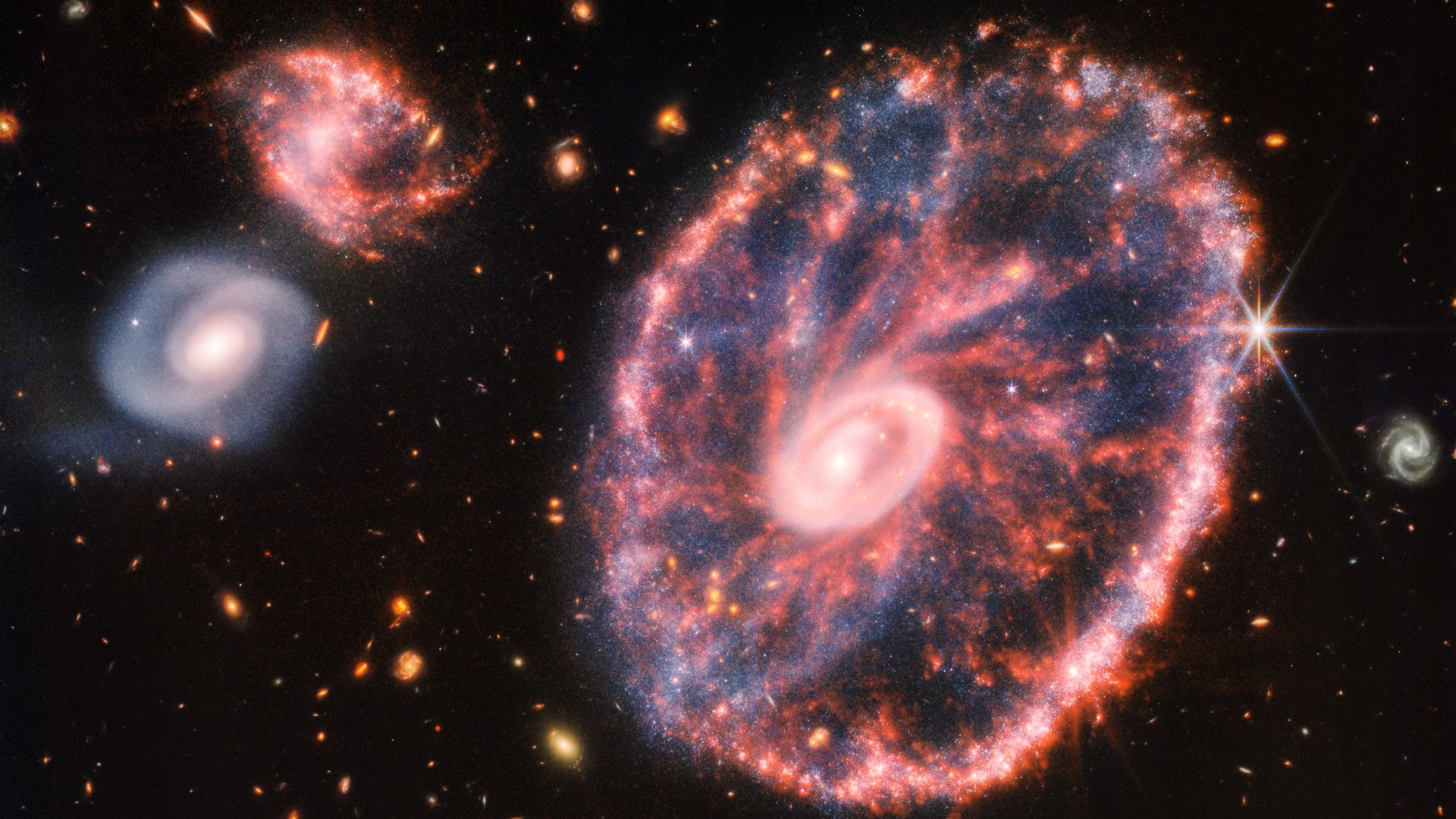
5. The FRESCO Red Monsters
Uncovered during the FRESCO survey, these three dust-cloaked monsters turned gas into stars at nearly 100% efficiency. Modern galaxies manage barely 20%, proving primordial environments supercharged stellar births.
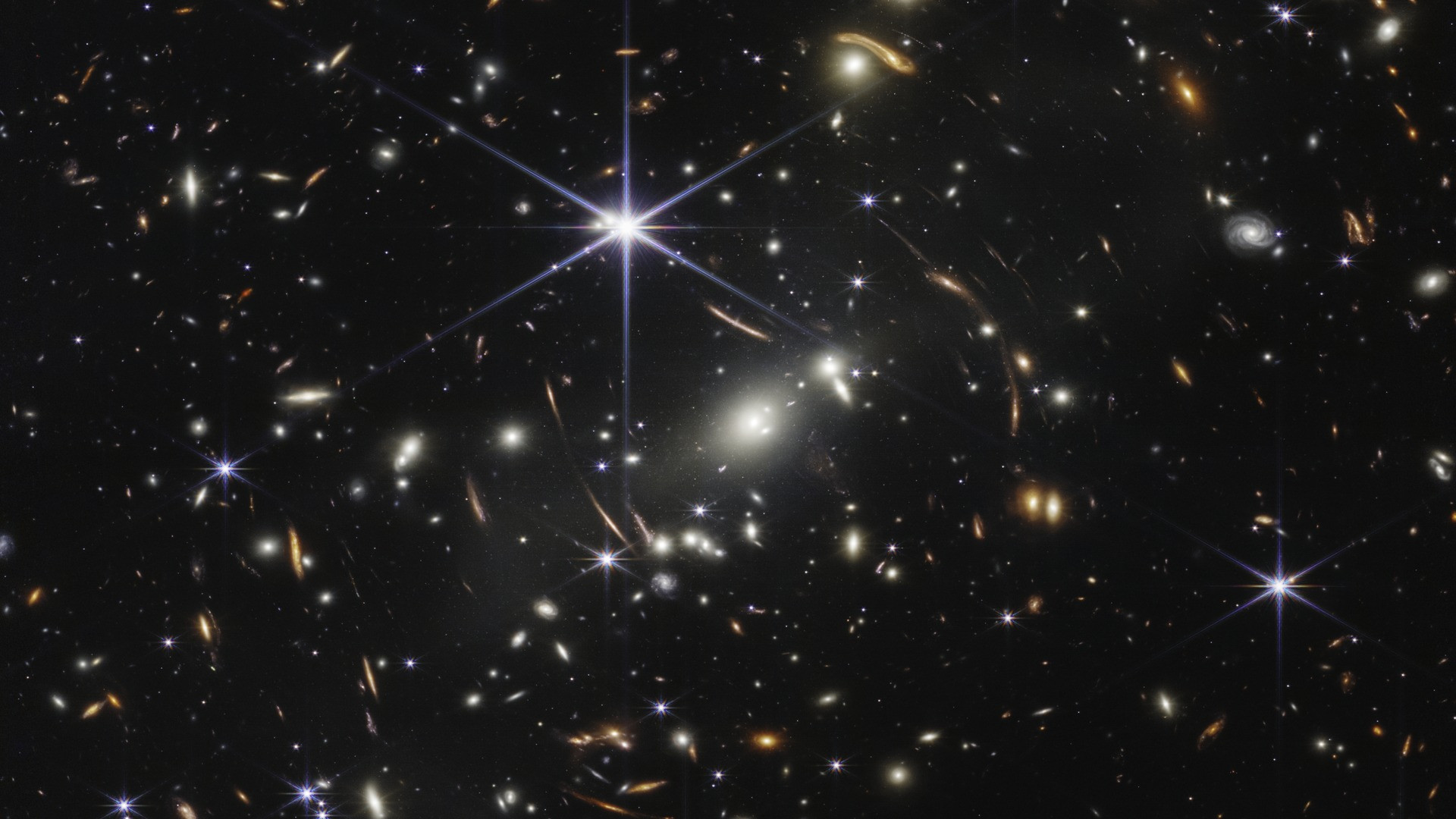
4. The SMACS 0723 Time Machine
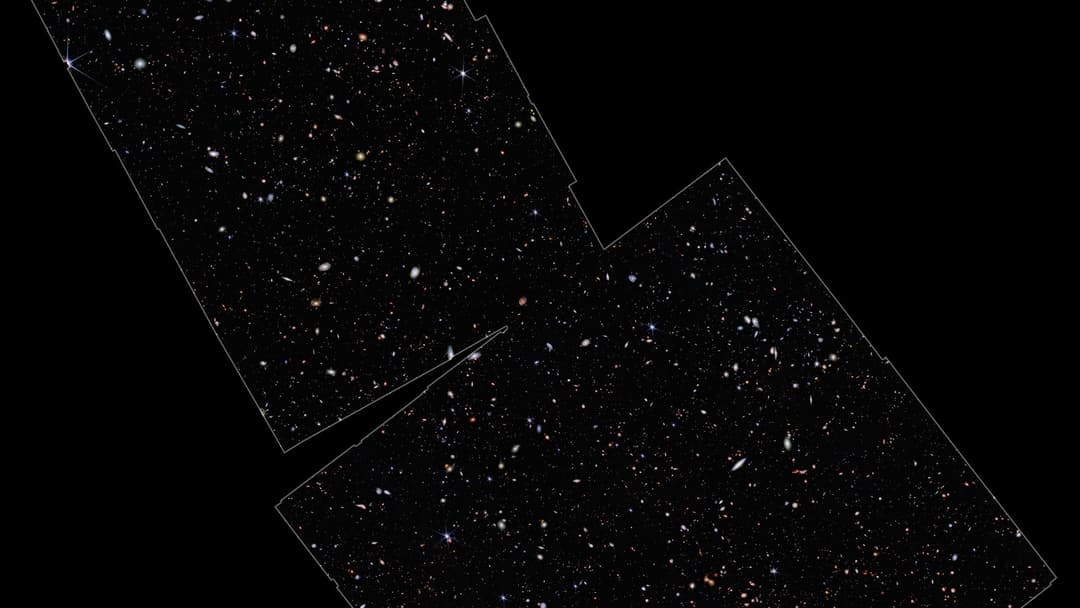
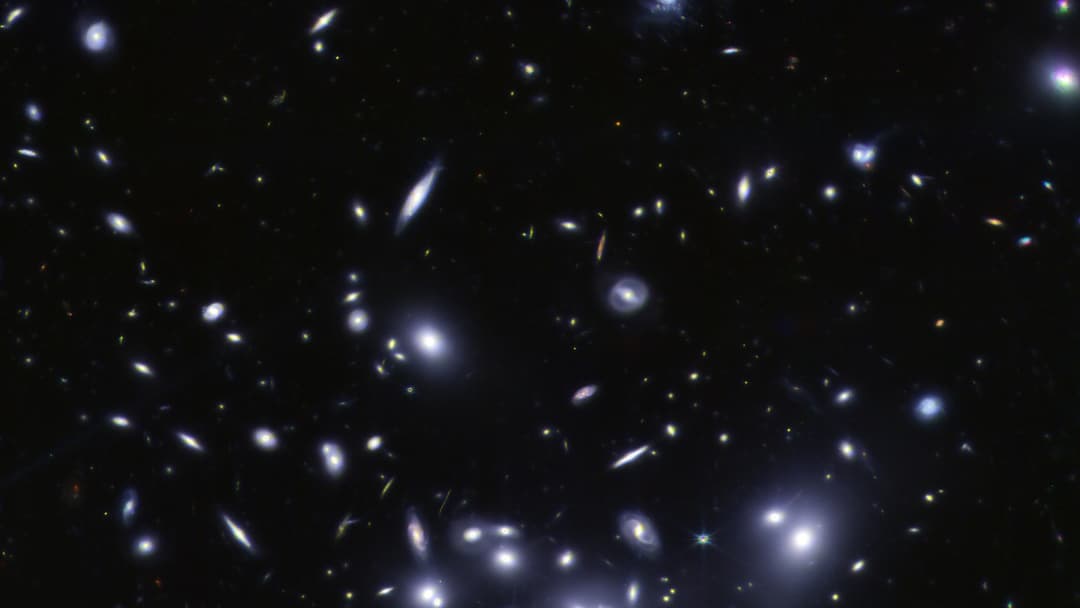
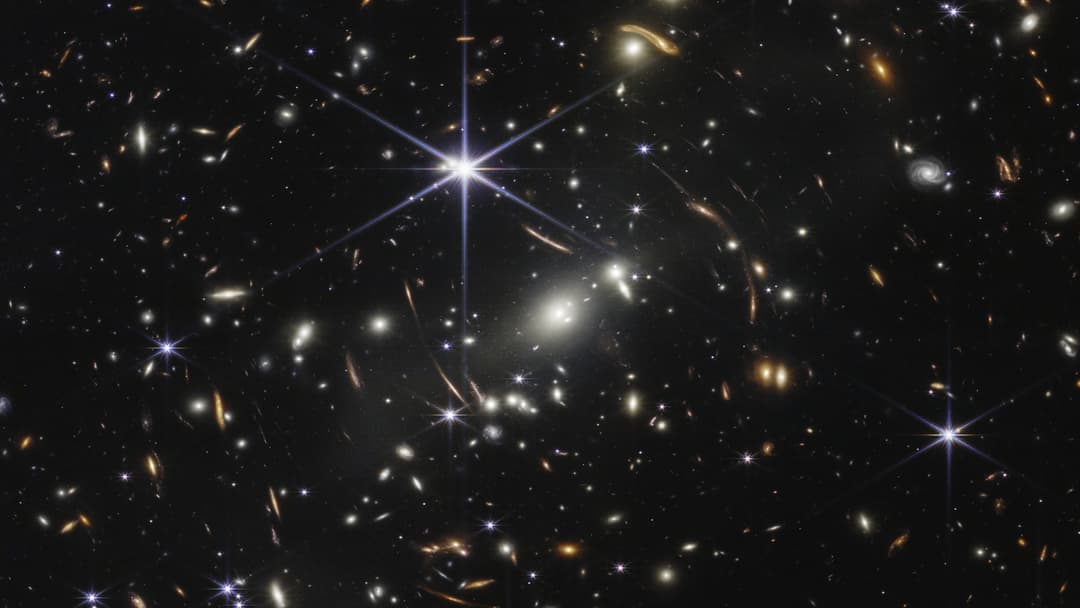
Covering a patch of sky you could blot out with a single grain of sand, this iconic view holds thousands of infant galaxies. Its warping gravity acted as a cosmic zoom lens, revealing light that traveled 13 billion years.
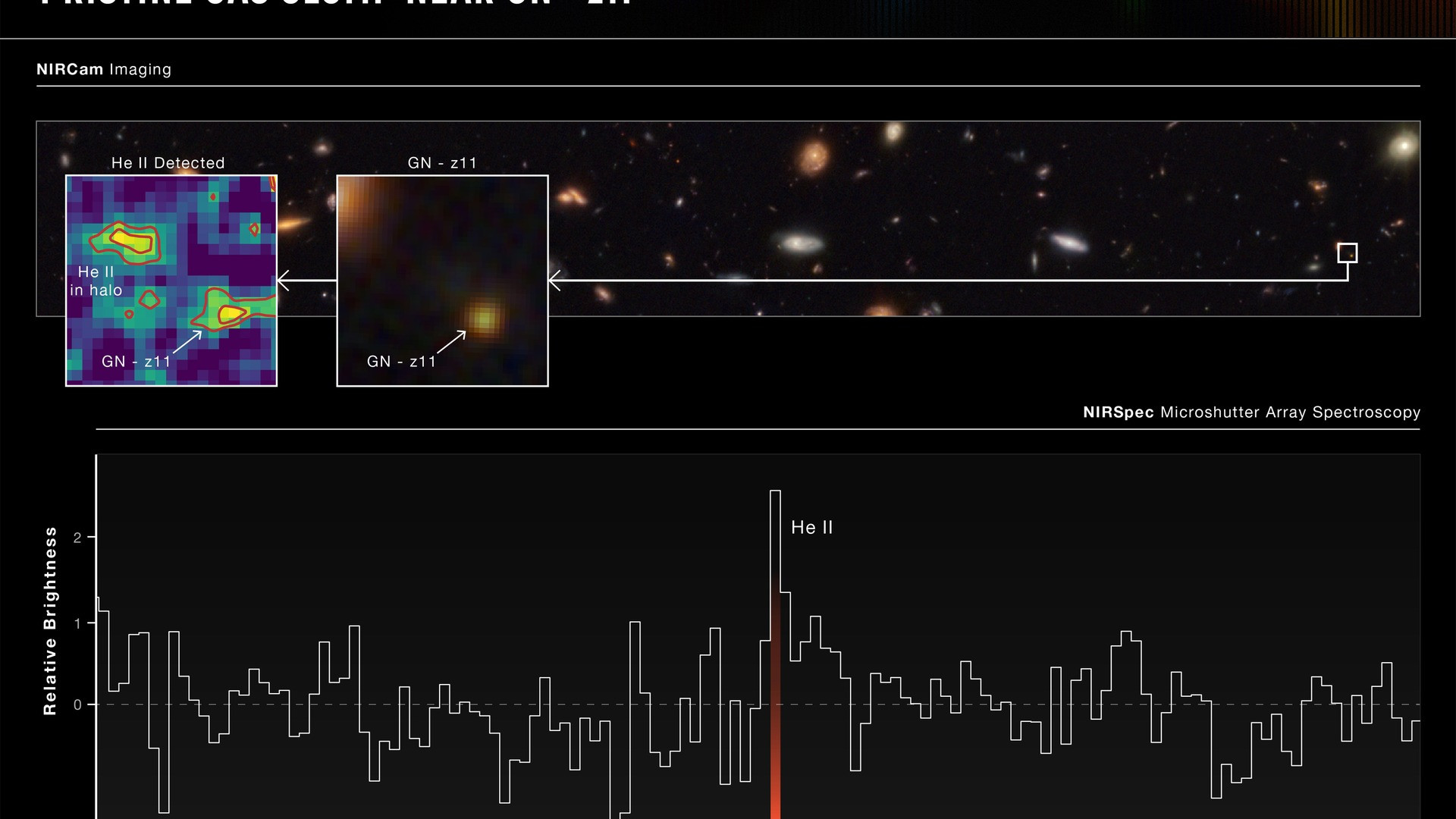
3. The Gluttonous Monster GN-Z11
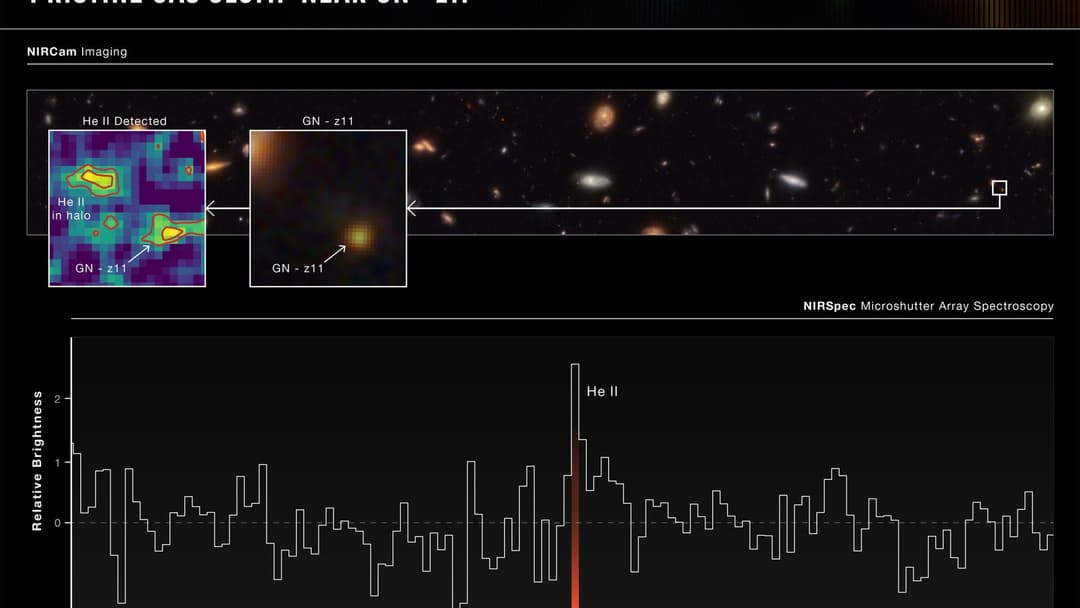
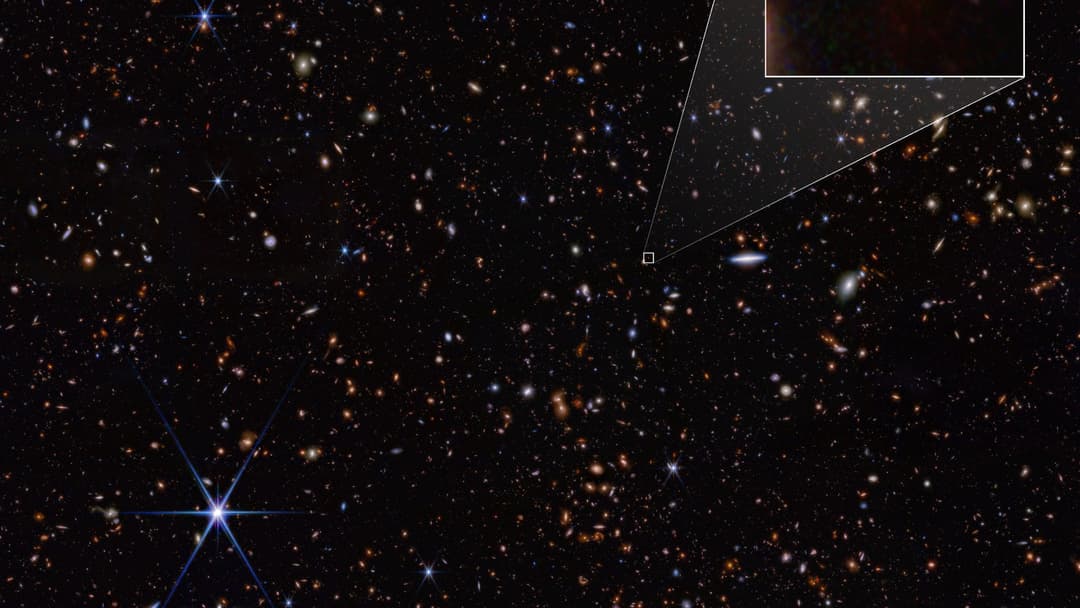
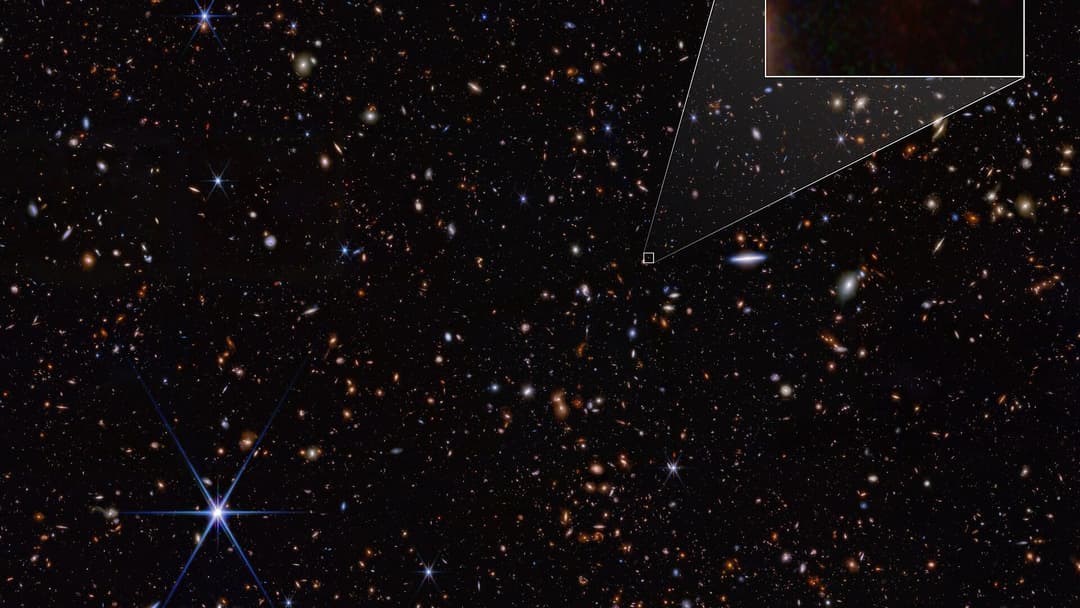
Once the outer boundary of Hubble's reach, Webb found GN-z11 harbors an insatiable supermassive black hole. It is vacuuming up gas at five times its theoretical limit, shredding textbooks on how fast black holes can grow.
2. The Cosmic Dawn Twin JADES-GS-Z14-1
Right next to the cosmic record holder, Webb discovered this companion giant blazing at redshift 13.90. Finding two titans in the exact same pocket proved early monster galaxies weren't isolated flukes—they were everywhere.
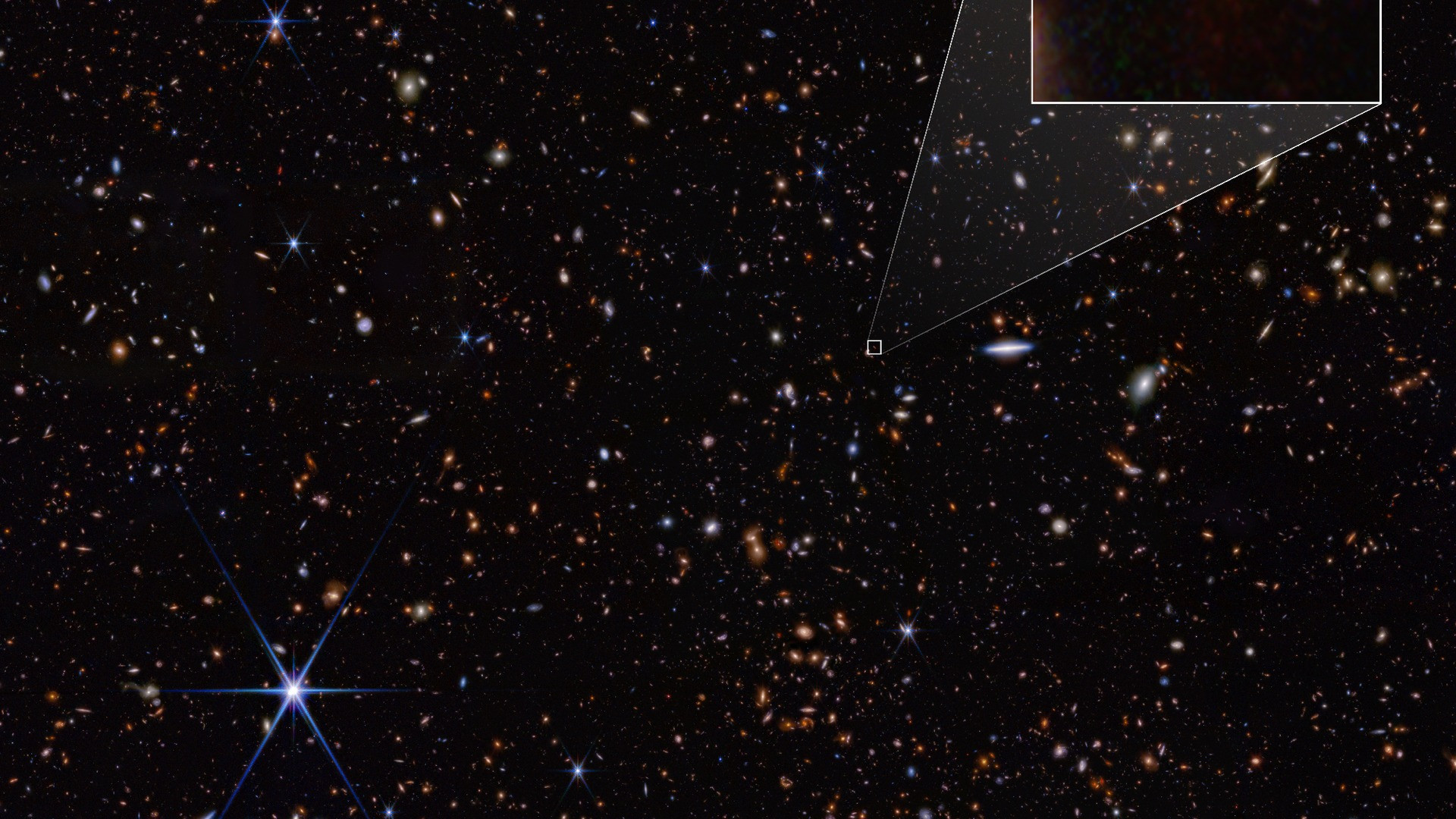
1. The Primordial Titan JADES-GS-Z14-0
Blazing at redshift 14.32 just 290 million years post-Big Bang, this colossus spans 1,600 light-years. Shockingly, Webb detected heavy oxygen inside it, proving entire star generations had already lived, died, and exploded.