Slideshow · Animals
These cute owls could be your next pets
With heart-shaped faces, bright yellow or fiery orange eyes, and feathery ear tufts, owls are some of the most charismatic birds on Earth. Here are 15 remarkable owl species ranked from 15 down to 1.
By Most Viral Today
3 Nov 2026

These cute owls could be your next pets 
15. Ural Owl (Strix Uralensis) 
14. Eastern Screech-Owl (Megascops Asio) 
13. Northern Saw-Whet Owl (Aegolius Acadicus) - AdvertisementSwipe or tap ▶ to continue countdown

12. Spotted Owlet (Athene Brama) 
11. Burrowing Owl (Athene Cunicularia) 
10. Crested Owl (Lophostrix Cristata) 
9. Blakiston's Fish Owl (Ketupa Blakistoni) - AdvertisementSwipe or tap ▶ to continue countdown

8. Oriental Bay Owl (Phodilus Badius) 
7. Long-Eared Owl (Asio Otus) 
6. Striped Owl (Asio Clamator) 
5. Great Grey Owl (Strix Nebulosa) - AdvertisementSwipe or tap ▶ to continue countdown

4. Eurasian Eagle-Owl (Bubo Bubo) 
3. Spectacled Owl (Pulsatrix Perspicillata) 
2. Barn Owl (Tyto Alba) 
1. Snowy Owl (Bubo Scandiacus) - Advertisement🔥 UP NEXT IN THIS SERIES◫ 26 Slides

25 Animals That May Detect Fear Through Scent and Body Language
From specialized olfactory receptors to airborne alarm pheromones, numerous species possess the extraordinary ability to detect chemical distress signals. Based on research from Live Science, National Geographic, and peer-reviewed biology journals, here are twenty-five animals that can smell and sense fear.
With heart-shaped faces, bright yellow or fiery orange eyes, and feathery ear tufts, owls are some of the most charismatic birds on Earth. Here are 15 remarkable owl species ranked from 15 down to 1.
Swipe or tap ▶ to begin the countdown
©Wikimedia / U.S. Fish and Wildlife Service
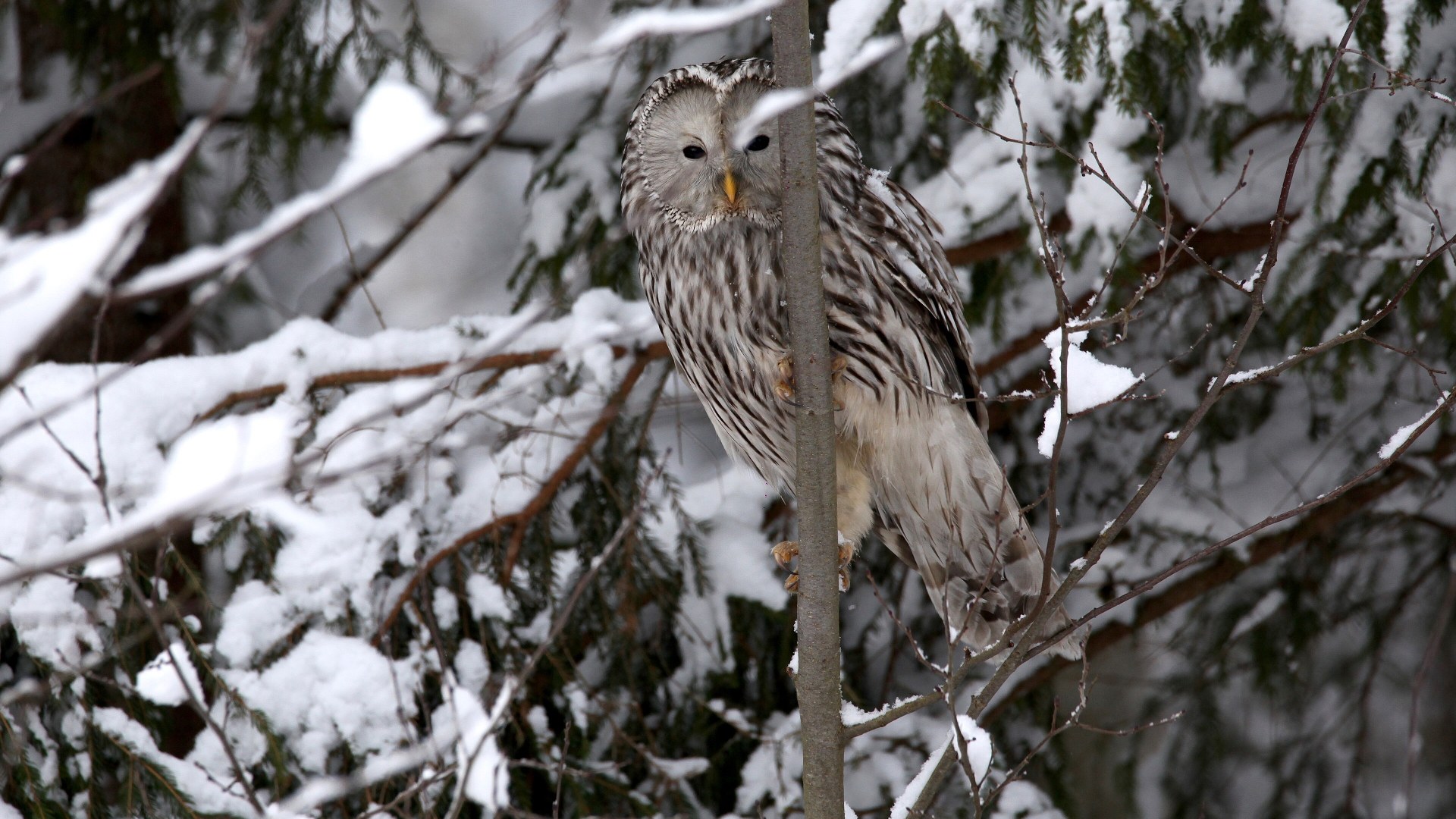
15. Ural Owl (Strix Uralensis)
Native to the boreal forests of Europe and northern Asia, the Ural Owl wears uniform pale grey plumage paired with long, barred tail feathers. Its soft, round grey facial disc has no dark markings at all, drawing attention to its small, dark, expressive eyes.
©Wikimedia / Sillerkiil
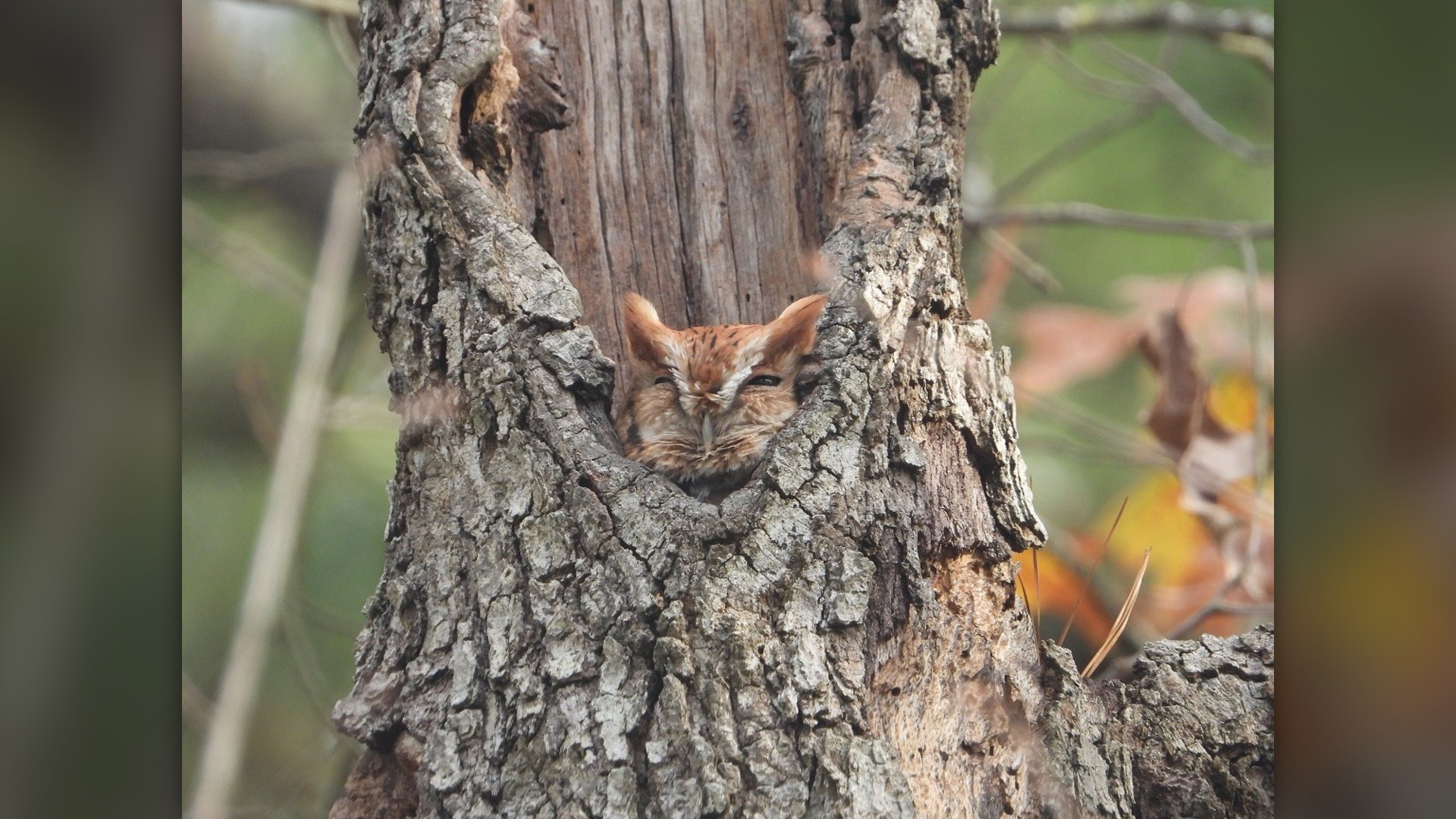
14. Eastern Screech-Owl (Megascops Asio)
Found across woods, parks, and orchards in eastern North America, the Eastern Screech-Owl occurs in two distinct color morphs: bright rufous-red and subtle ash-grey. Its complex, bark-like feather patterns let it vanish against tree trunks while resting in daytime cavities.
©Wikimedia / U.S. Fish and Wildlife Service
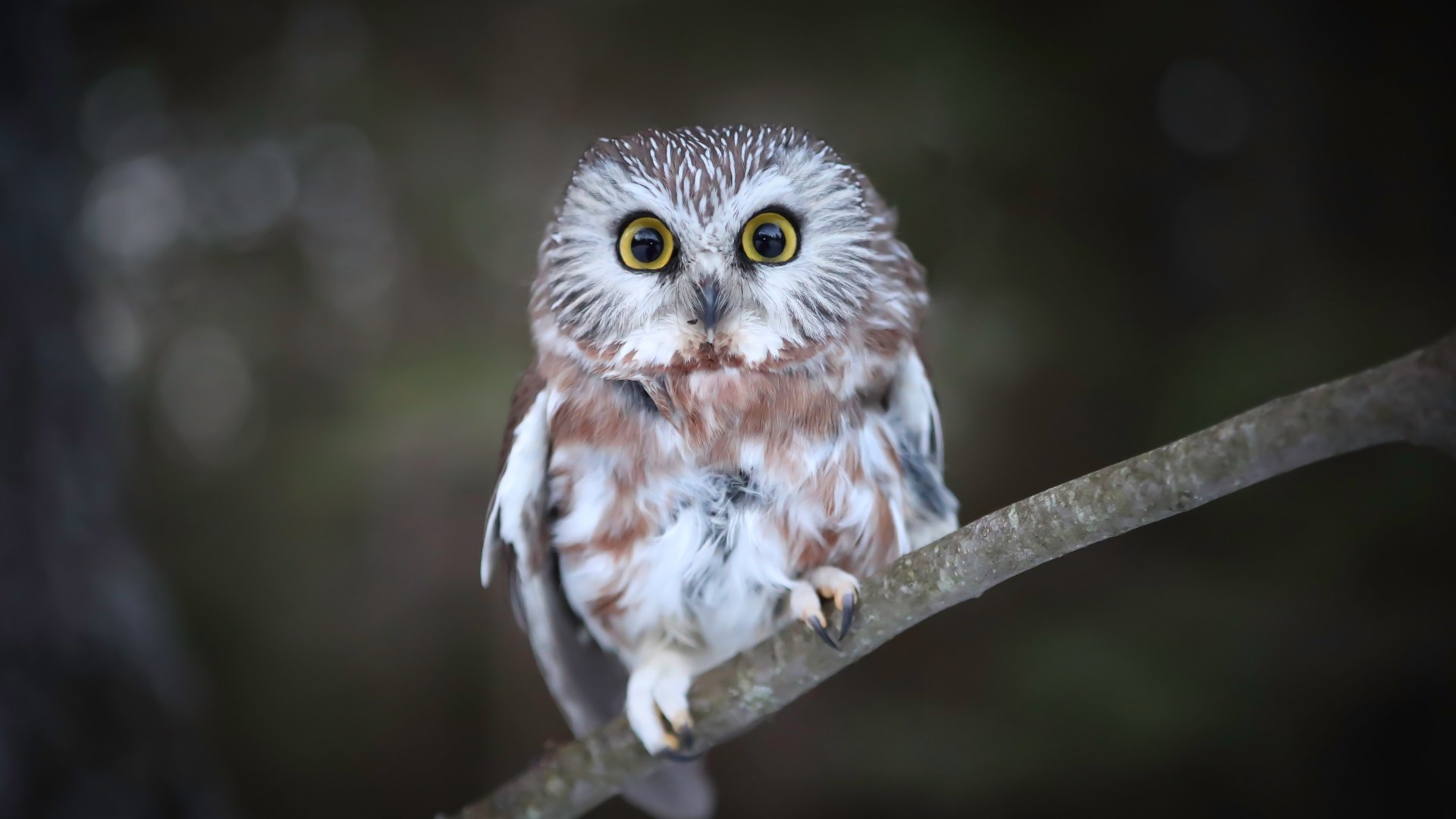
13. Northern Saw-Whet Owl (Aegolius Acadicus)
One of the smallest owls in North America, the Northern Saw-Whet Owl measures just 7 to 8 inches tall. Its oversized round head features reddish-brown plumage with radiating white streaks that form a crisp V above the beak, framing wide yellow eyes.
©Wikimedia / Andy Witchger
Advertisement
Swipe or tap ▶ to resume the countdown.
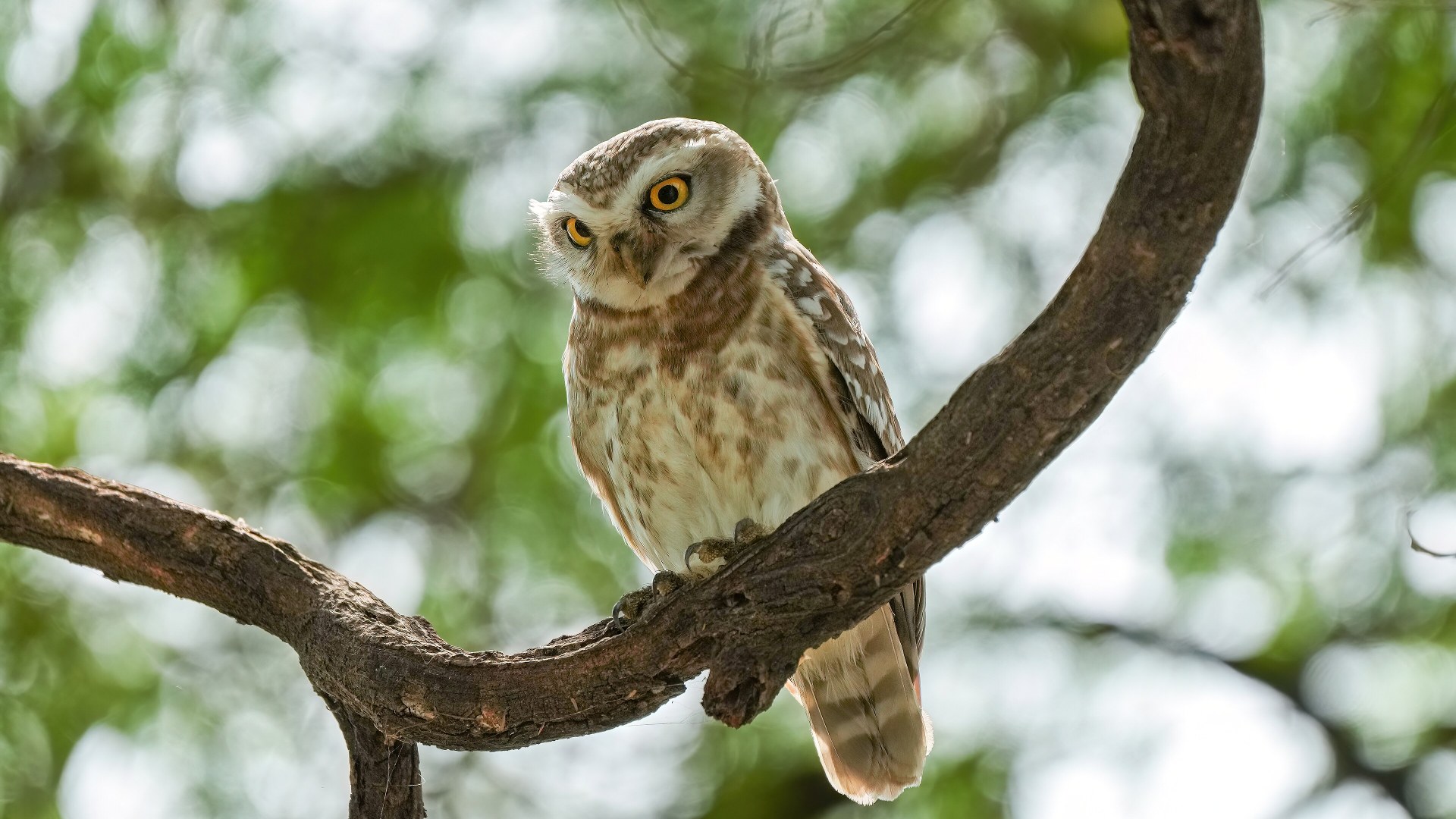
12. Spotted Owlet (Athene Brama)
Common across open woodlands, gardens, and cities in tropical Asia, the Spotted Owlet stands under 8 inches tall. Its grey-brown feathers are dotted with creamy white spots and a bright white collar, giving this small, social bird a lively and curious expression.
©Wikimedia / Giles Laurent
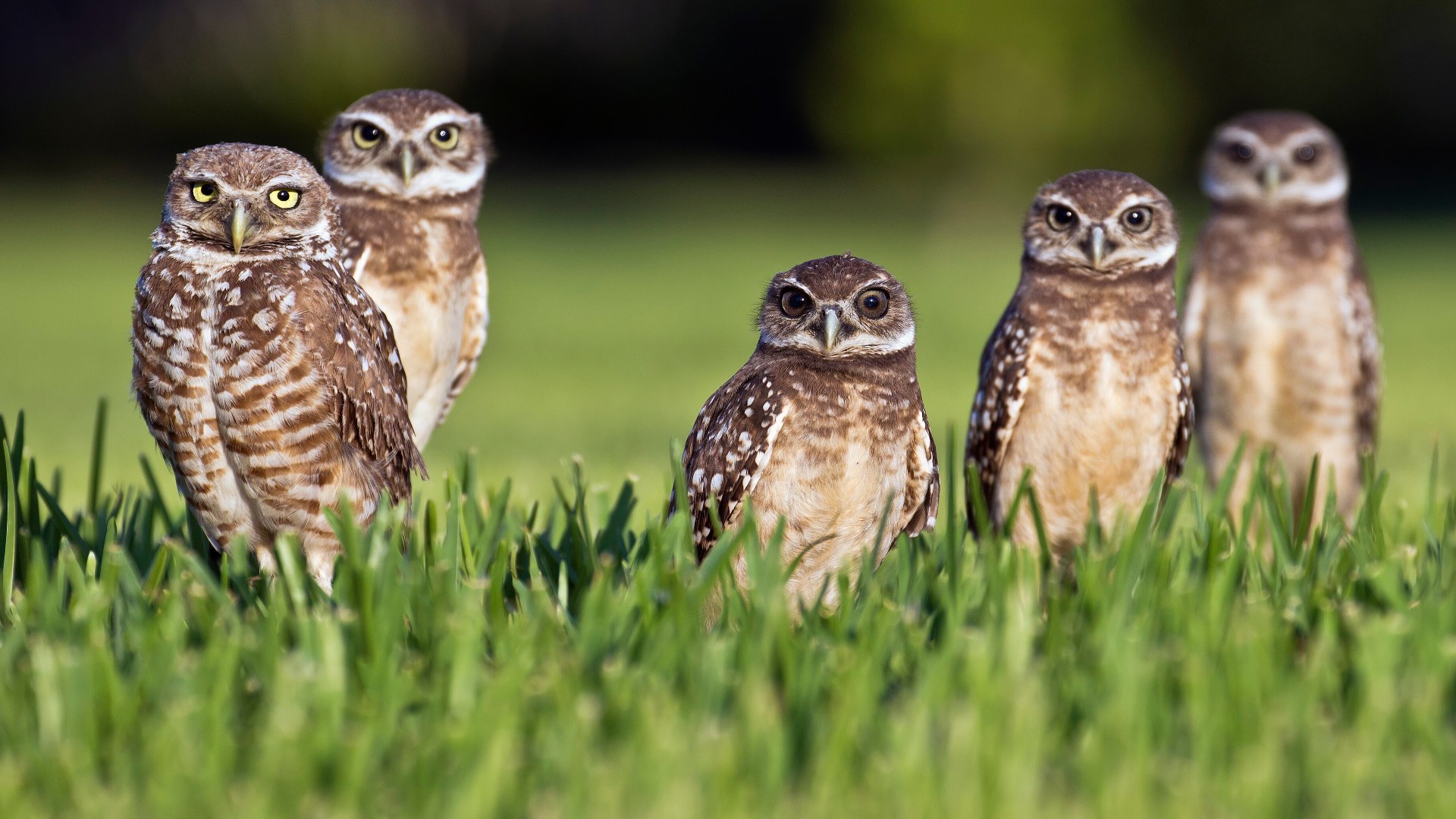
11. Burrowing Owl (Athene Cunicularia)
Unlike most owls that roost high in the canopy, the Burrowing Owl lives in underground burrows across the grasslands and deserts of North and South America. Active during the day, it stands tall on long, slender legs and watches its surroundings with unblinking yellow eyes.
©Wikimedia / travelwayoflife
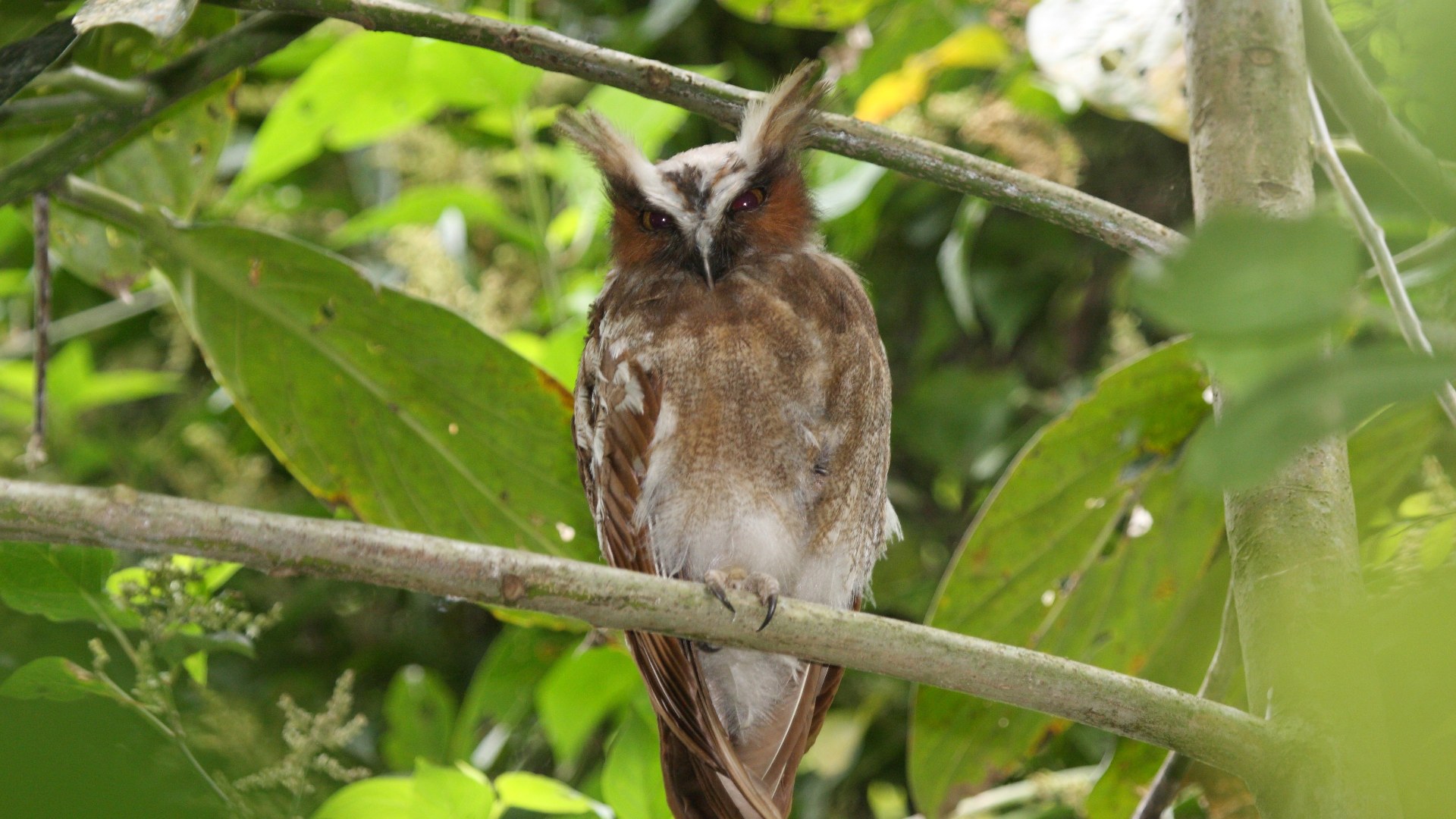
10. Crested Owl (Lophostrix Cristata)
Inhabiting the lowland rainforests of Central and South America, the Crested Owl has a dark chocolate and reddish-brown body contrasted by dramatic white eyebrow plumes. These long white feather crests sweep outward into prominent ear tufts above its dark eyes.
©Wikimedia / Dominic Sherony
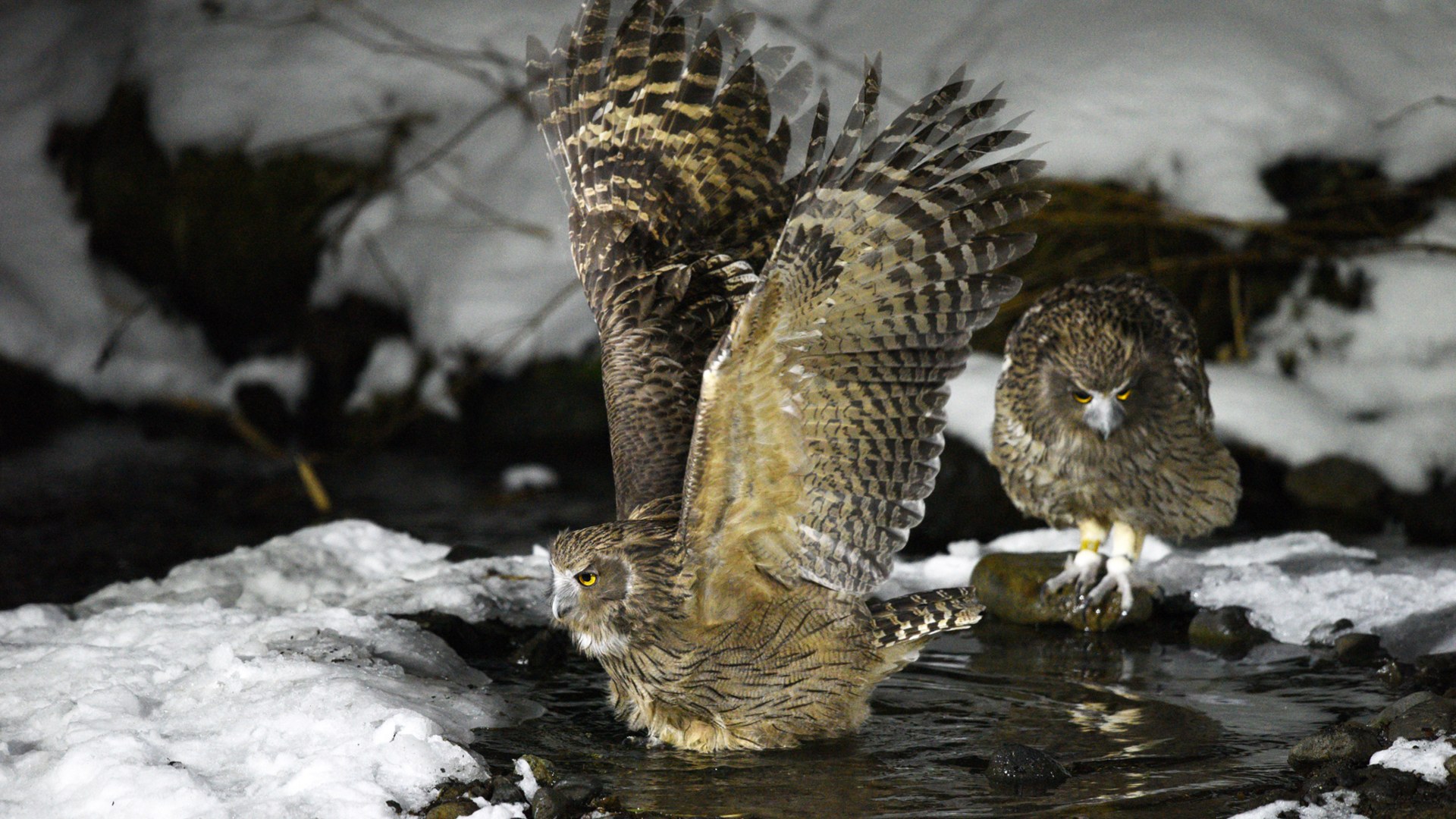
9. Blakiston's Fish Owl (Ketupa Blakistoni)
The largest living species of owl, Blakiston's Fish Owl hunts along icy, fast-flowing rivers in Hokkaido, Russia, and northeastern China. Built for subzero winters, its heavily streaked brown frame and ragged, horizontal ear tufts give it the appearance of a shaggy forest guardian.
©Wikimedia / Takashi Muramatsu
Advertisement
Swipe or tap ▶ to resume the countdown.
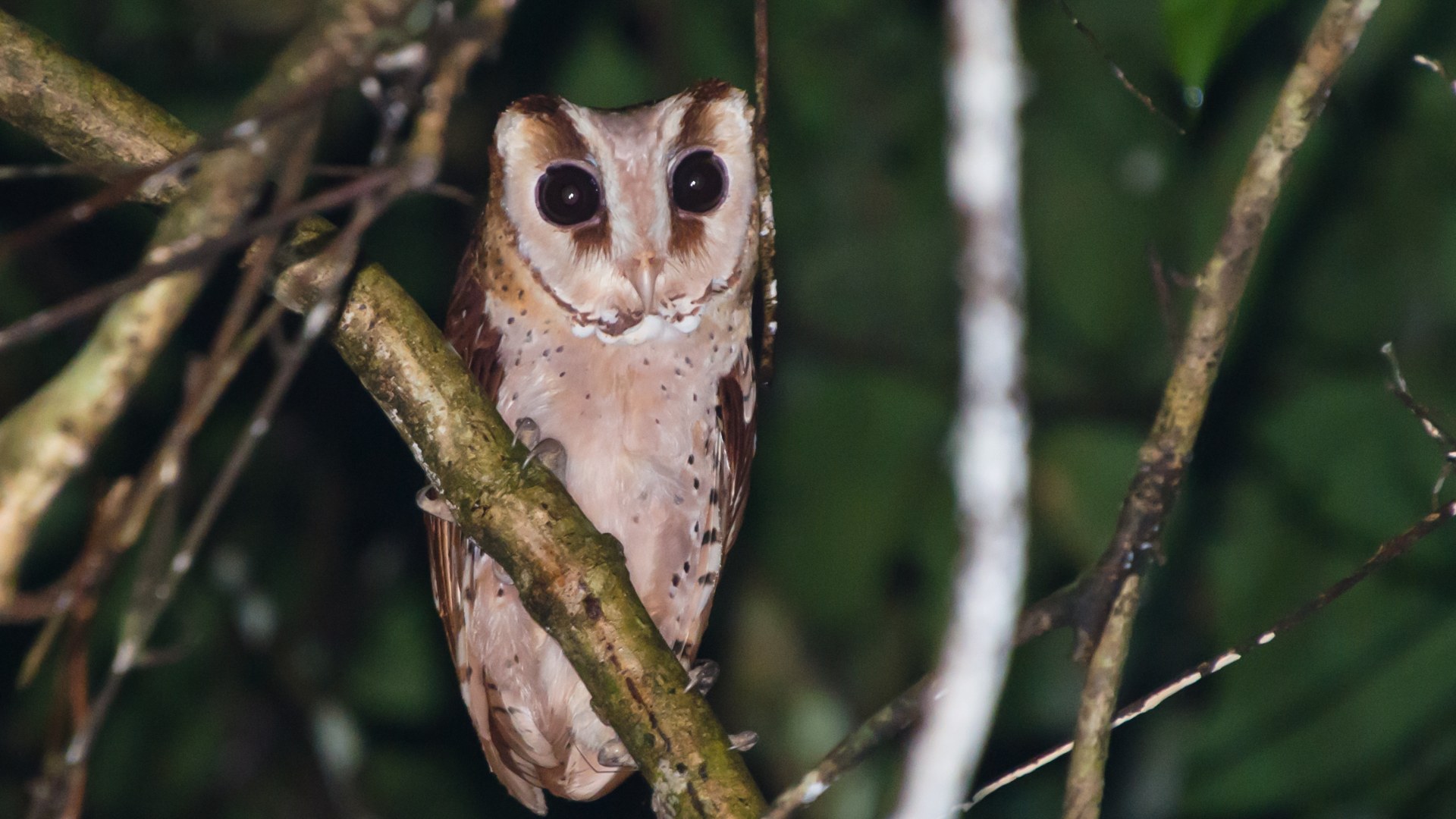
8. Oriental Bay Owl (Phodilus Badius)
Found in the dense lowland rainforests of Southeast Asia, the Oriental Bay Owl stands out for its angular, V-shaped facial disc that blends shades of rose, cream, and chestnut. Its large, dark eyes and patterned golden-brown wings help it hunt quietly under the forest canopy.
©Wikimedia / Rushenb
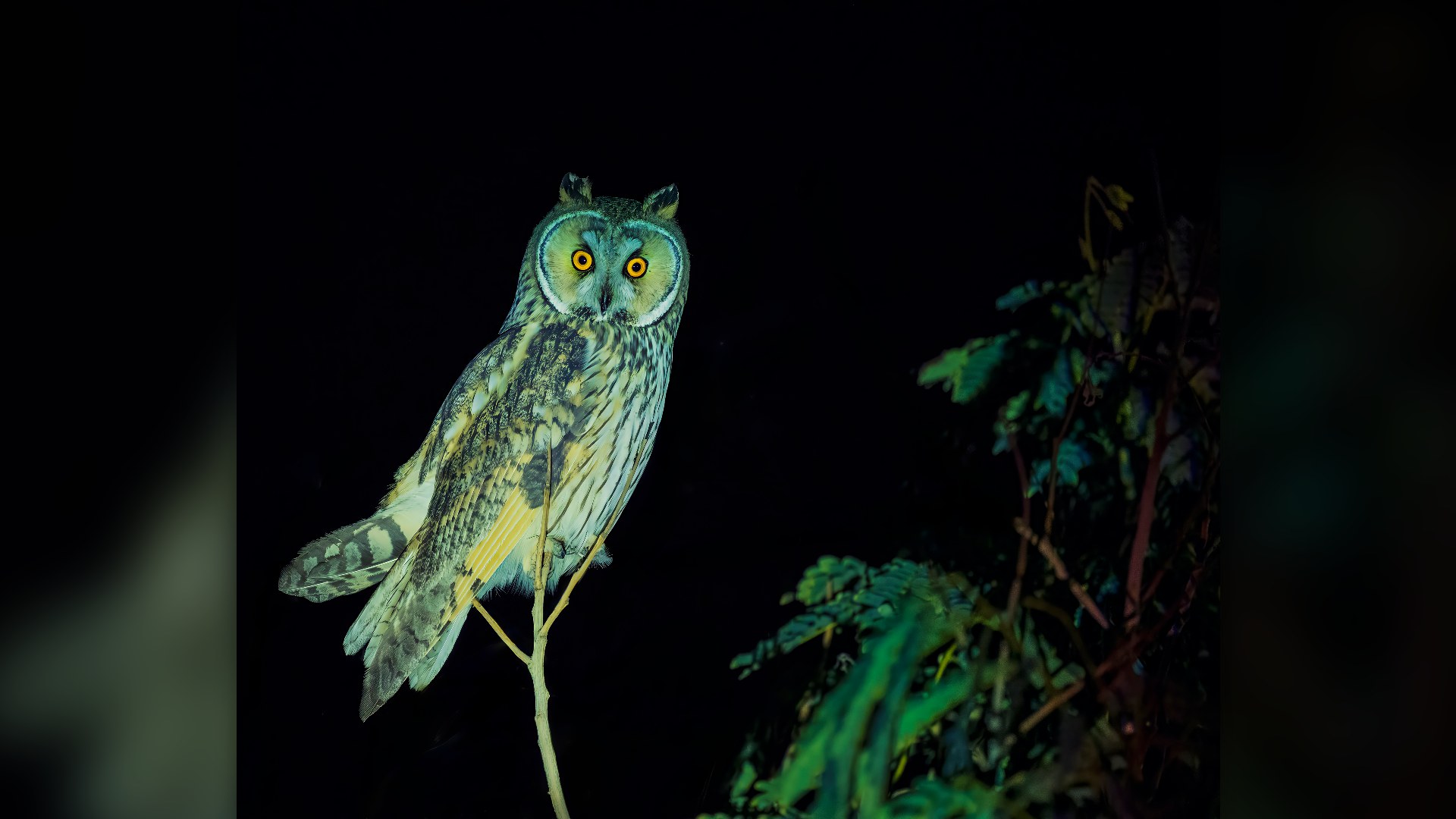
7. Long-Eared Owl (Asio Otus)
Roosting in dense coniferous forests across the Northern Hemisphere, the Long-Eared Owl has a slim profile and mottled orange-brown feathers. When alerted, it raises its long vertical ear tufts straight up above its orange facial disc to blend in with broken pine branches.
©Wikimedia / Manojkiri photography
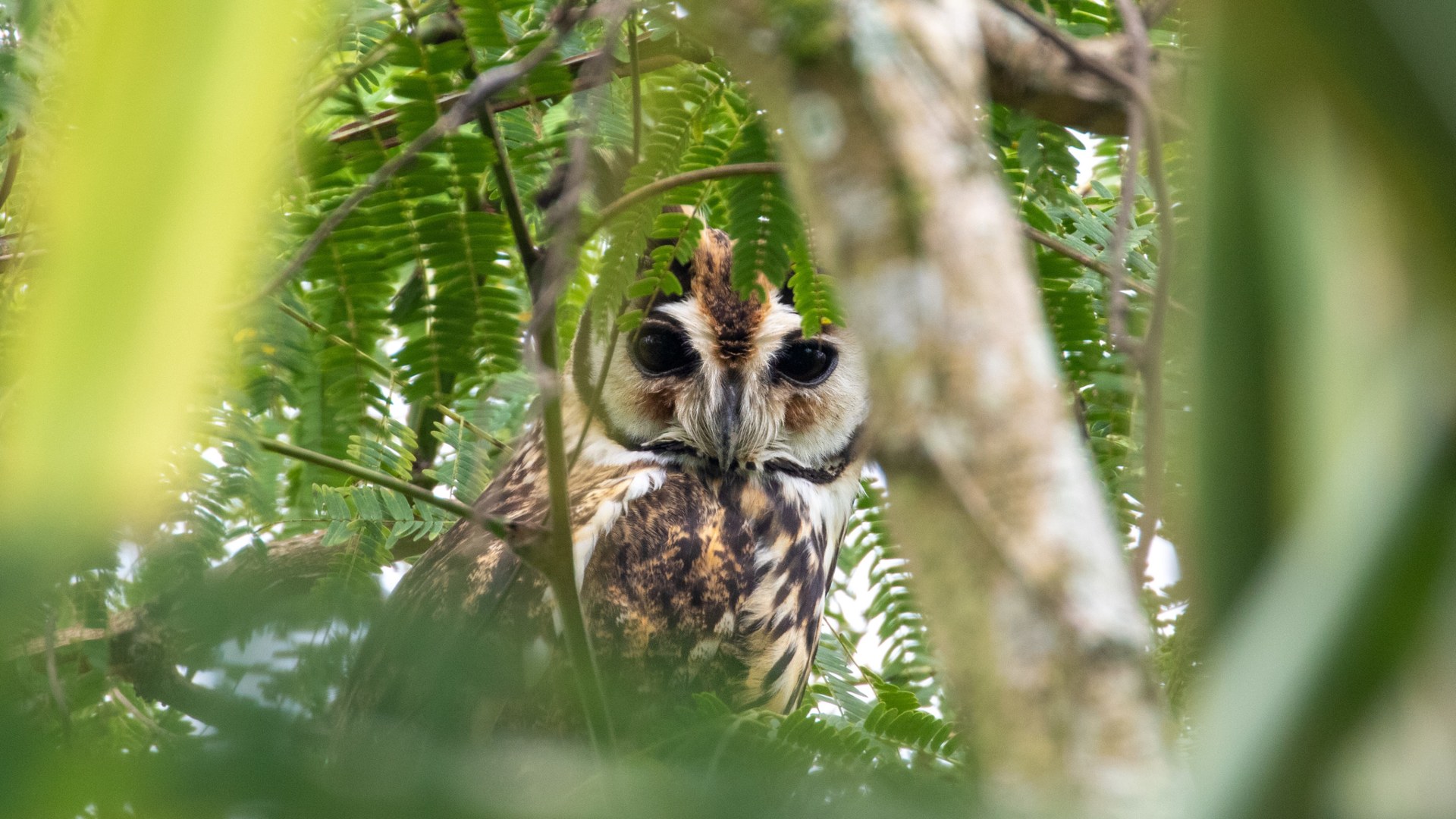
6. Striped Owl (Asio Clamator)
Native to the savannahs and open woodlands of Central and South America, the Striped Owl is instantly recognizable by its crisp white oval facial disc outlined in black. Bold vertical black stripes run down its warm buff chest, while long dark ear tufts crown its head.
©Wikimedia / thibaudaronson
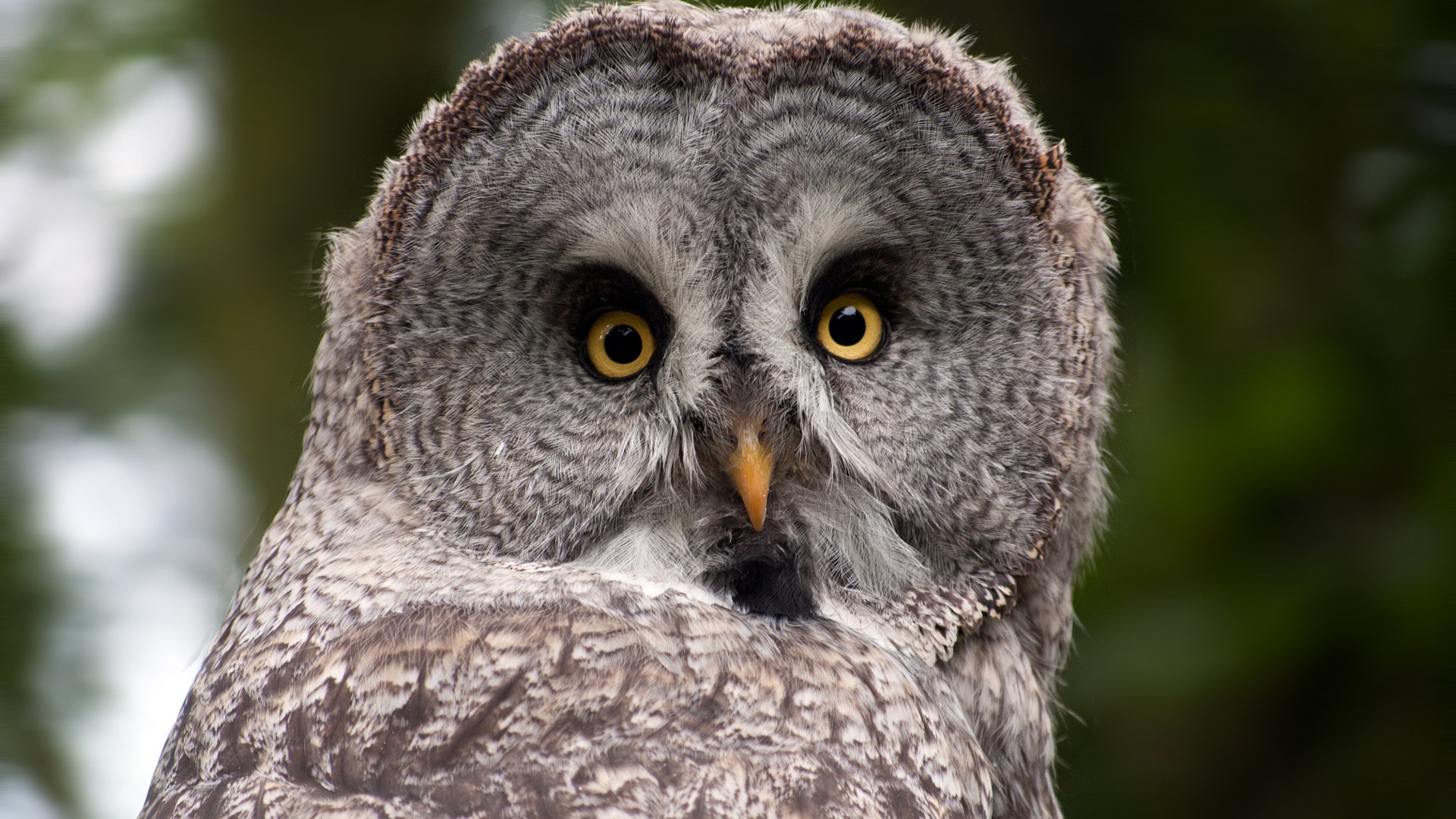
5. Great Grey Owl (Strix Nebulosa)
Stretching up to 33 inches in length across the boreal forests of North America and Eurasia, the Great Grey Owl has the largest concentric-ring facial disc of any bird of prey. Those dense, silvery-grey feathers act like a radar dish, funneling faint sounds beneath the snow to its ears.
©Wikimedia / Tobias H
Advertisement
Swipe or tap ▶ to resume the countdown.
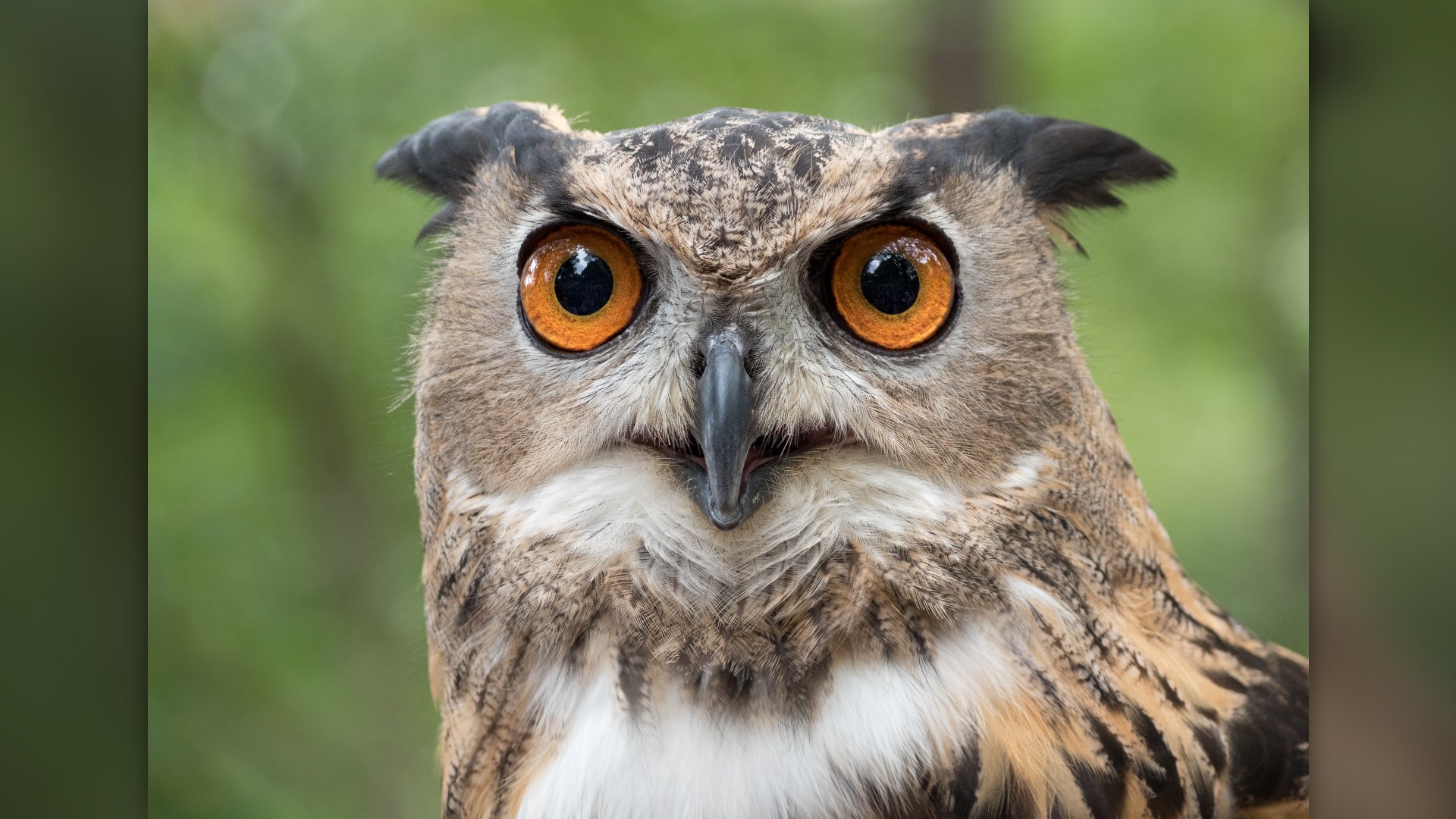
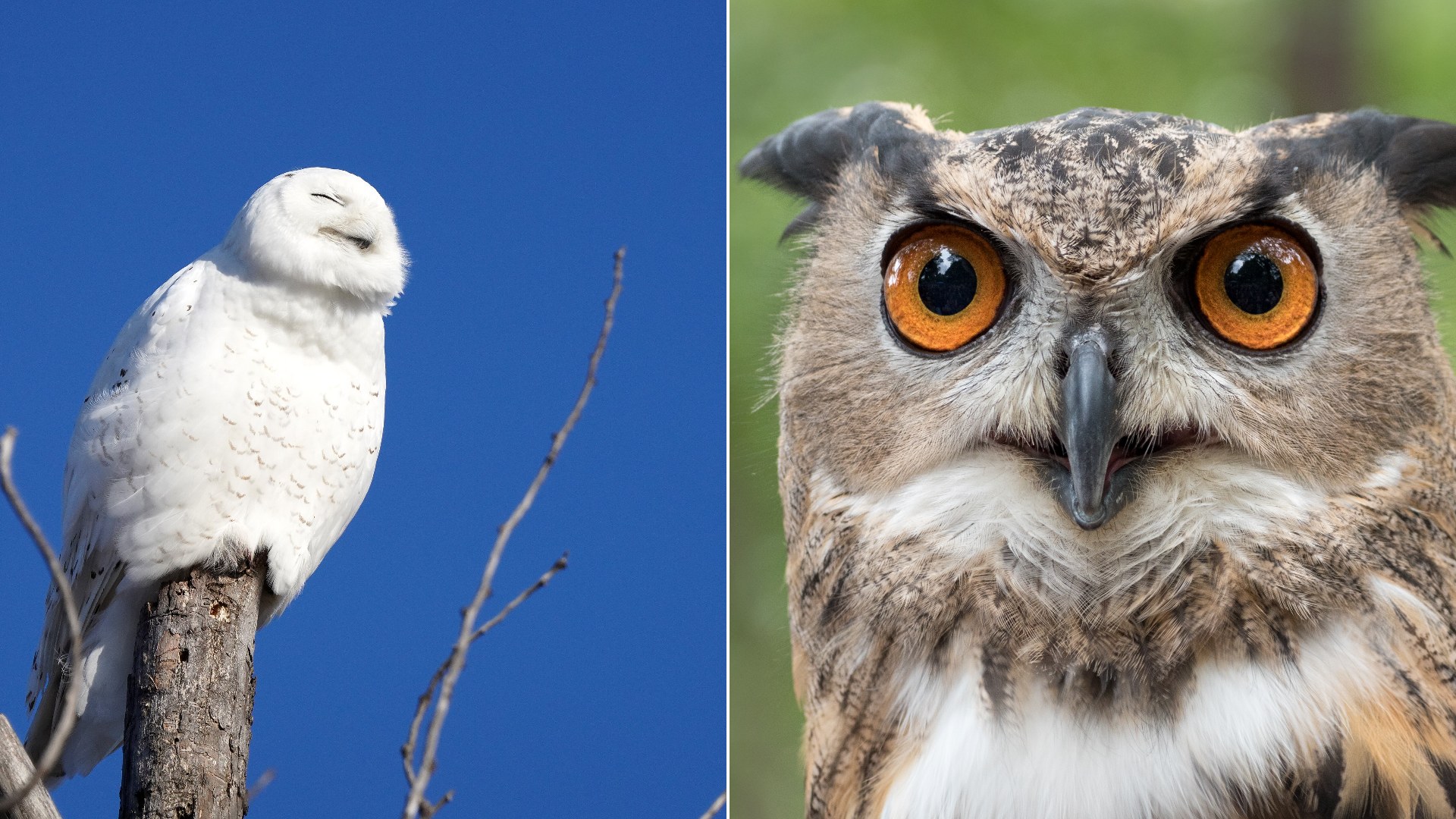
4. Eurasian Eagle-Owl (Bubo Bubo)
With a wingspan reaching over six feet, the Eurasian Eagle-Owl commands rocky cliffs and forests across Europe and Asia. Its rich mosaic of tawny, black, and cream feathers is matched by expressive ear tufts and large, glowing orange eyes.
©Wikimedia / Rhododendrites
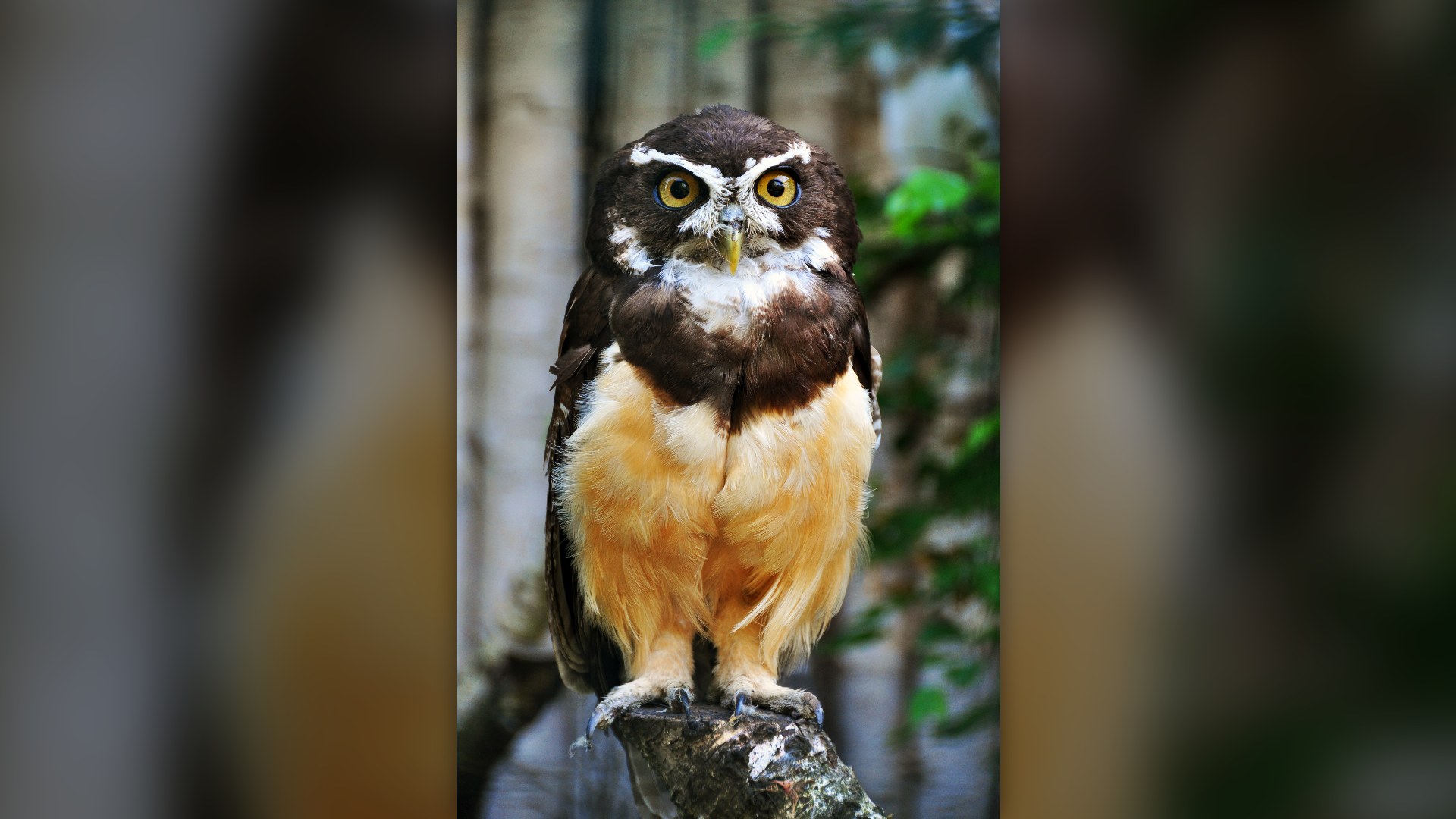
3. Spectacled Owl (Pulsatrix Perspicillata)
Perched in the rainforest canopies of Central and South America, the Spectacled Owl gets its name from the bright white feather rings that frame its yellow eyes like a pair of glasses. Its deep chocolate-brown hood contrasts with a warm, apricot-colored chest and belly.
©Wikimedia / Olaf Oliviero Riemer
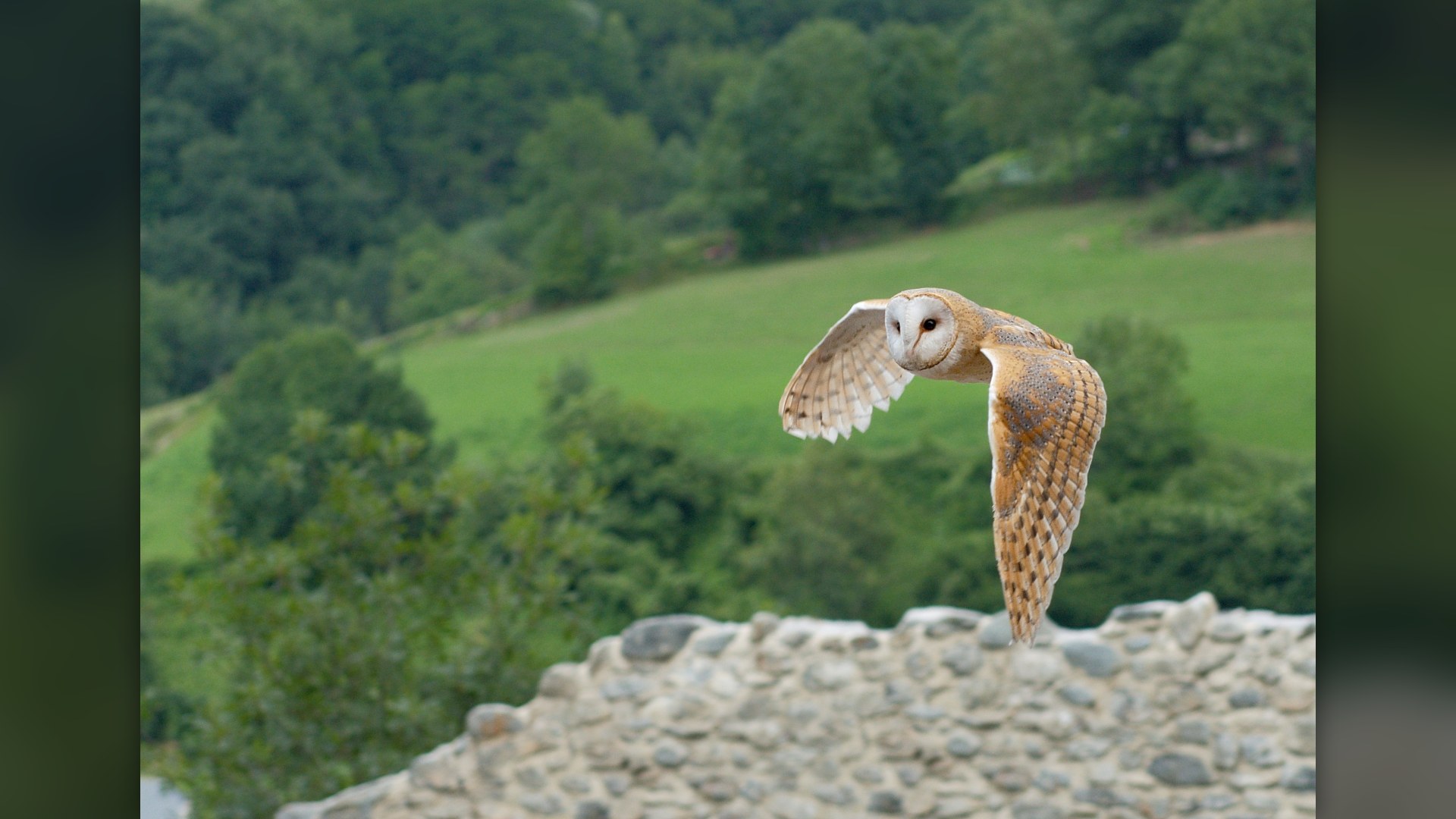
2. Barn Owl (Tyto Alba)
Found on almost every continent, the Barn Owl is famous for its clean, heart-shaped white facial disc and dark eyes. Its upper wings blend delicate shades of honey-gold and ash-grey over a ghost-white underbelly, allowing it to glide silently over open grasslands at dusk.
©Wikimedia / Luc Viatour
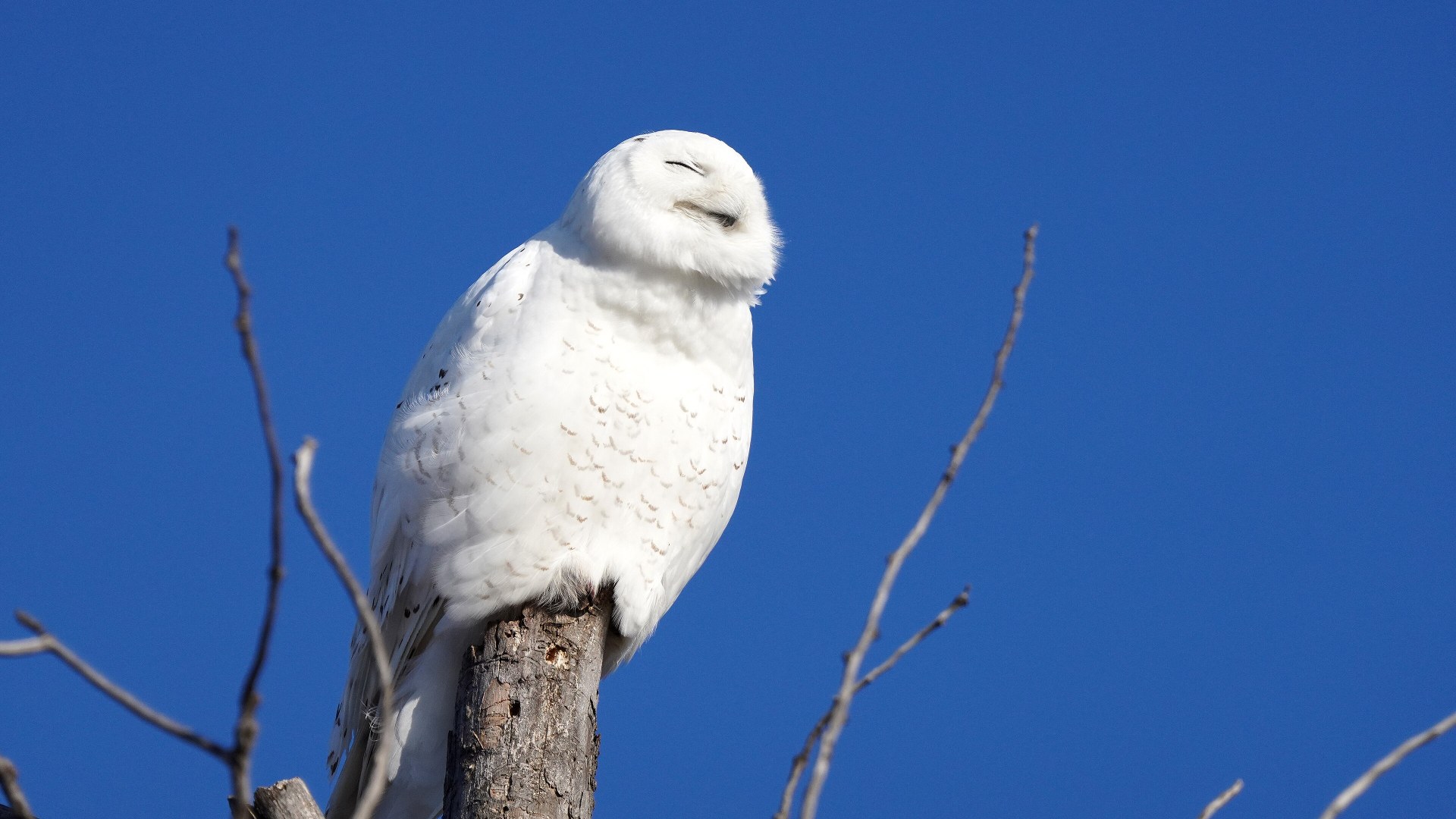
1. Snowy Owl (Bubo Scandiacus)
Built for life on the frozen Arctic tundra, the Snowy Owl is covered in thick, snow-white plumage accented by dark horizontal bars on females and younger birds. Even its legs and toes are wrapped in dense white feathers for insulation as it hunts across open snowfields in broad daylight.

©Wikimedia / U.S. Fish and Wildlife Service
Advertisement
You've reached the end of the story. Thanks for reading!

25 Animals That May Detect Fear Through Scent and Body Language
From specialized olfactory receptors to airborne alarm pheromones, numerous species possess the extraordinary ability to detect chemical distress signals. Based on research from Live Science, National Geographic, and peer-reviewed biology journals, here are twenty-five animals that can smell and sense fear.
All 15 Entries in this Story
15. Ural Owl (Strix Uralensis)
Native to the boreal forests of Europe and northern Asia, the Ural Owl wears uniform pale grey plumage paired with long, barred tail feathers. Its soft, round grey facial disc has no dark markings at all, drawing attention to its small, dark, expressive eyes.

14. Eastern Screech-Owl (Megascops Asio)
Found across woods, parks, and orchards in eastern North America, the Eastern Screech-Owl occurs in two distinct color morphs: bright rufous-red and subtle ash-grey. Its complex, bark-like feather patterns let it vanish against tree trunks while resting in daytime cavities.

13. Northern Saw-Whet Owl (Aegolius Acadicus)
One of the smallest owls in North America, the Northern Saw-Whet Owl measures just 7 to 8 inches tall. Its oversized round head features reddish-brown plumage with radiating white streaks that form a crisp V above the beak, framing wide yellow eyes.

12. Spotted Owlet (Athene Brama)
Common across open woodlands, gardens, and cities in tropical Asia, the Spotted Owlet stands under 8 inches tall. Its grey-brown feathers are dotted with creamy white spots and a bright white collar, giving this small, social bird a lively and curious expression.

11. Burrowing Owl (Athene Cunicularia)
Unlike most owls that roost high in the canopy, the Burrowing Owl lives in underground burrows across the grasslands and deserts of North and South America. Active during the day, it stands tall on long, slender legs and watches its surroundings with unblinking yellow eyes.

10. Crested Owl (Lophostrix Cristata)
Inhabiting the lowland rainforests of Central and South America, the Crested Owl has a dark chocolate and reddish-brown body contrasted by dramatic white eyebrow plumes. These long white feather crests sweep outward into prominent ear tufts above its dark eyes.

9. Blakiston's Fish Owl (Ketupa Blakistoni)
The largest living species of owl, Blakiston's Fish Owl hunts along icy, fast-flowing rivers in Hokkaido, Russia, and northeastern China. Built for subzero winters, its heavily streaked brown frame and ragged, horizontal ear tufts give it the appearance of a shaggy forest guardian.

8. Oriental Bay Owl (Phodilus Badius)
Found in the dense lowland rainforests of Southeast Asia, the Oriental Bay Owl stands out for its angular, V-shaped facial disc that blends shades of rose, cream, and chestnut. Its large, dark eyes and patterned golden-brown wings help it hunt quietly under the forest canopy.

7. Long-Eared Owl (Asio Otus)
Roosting in dense coniferous forests across the Northern Hemisphere, the Long-Eared Owl has a slim profile and mottled orange-brown feathers. When alerted, it raises its long vertical ear tufts straight up above its orange facial disc to blend in with broken pine branches.

6. Striped Owl (Asio Clamator)
Native to the savannahs and open woodlands of Central and South America, the Striped Owl is instantly recognizable by its crisp white oval facial disc outlined in black. Bold vertical black stripes run down its warm buff chest, while long dark ear tufts crown its head.

5. Great Grey Owl (Strix Nebulosa)
Stretching up to 33 inches in length across the boreal forests of North America and Eurasia, the Great Grey Owl has the largest concentric-ring facial disc of any bird of prey. Those dense, silvery-grey feathers act like a radar dish, funneling faint sounds beneath the snow to its ears.

4. Eurasian Eagle-Owl (Bubo Bubo)
With a wingspan reaching over six feet, the Eurasian Eagle-Owl commands rocky cliffs and forests across Europe and Asia. Its rich mosaic of tawny, black, and cream feathers is matched by expressive ear tufts and large, glowing orange eyes.

3. Spectacled Owl (Pulsatrix Perspicillata)
Perched in the rainforest canopies of Central and South America, the Spectacled Owl gets its name from the bright white feather rings that frame its yellow eyes like a pair of glasses. Its deep chocolate-brown hood contrasts with a warm, apricot-colored chest and belly.

2. Barn Owl (Tyto Alba)
Found on almost every continent, the Barn Owl is famous for its clean, heart-shaped white facial disc and dark eyes. Its upper wings blend delicate shades of honey-gold and ash-grey over a ghost-white underbelly, allowing it to glide silently over open grasslands at dusk.

1. Snowy Owl (Bubo Scandiacus)
Built for life on the frozen Arctic tundra, the Snowy Owl is covered in thick, snow-white plumage accented by dark horizontal bars on females and younger birds. Even its legs and toes are wrapped in dense white feathers for insulation as it hunts across open snowfields in broad daylight.