Slideshow · Viral
21 Artifacts From Hitler's Residences Now Held in Museums and Archives
When Allied forces and correspondents entered Adolf Hitler's retreats in May 1945, they found personal effects, lavish gifts and private collections. Based on records from the National Archives, Imperial War Museum and military registries, here are twenty-one objects documented inside his private residences.
By Most Viral Today
18 min ago

Uncovering the Relics Left Behind in Alpine and Bunker Retreats 
21. Monogrammed Silver Cutlery And Tableware 
20. Eva Braun's 16mm Home Movie Camera 
19. Seized Personal Photo Albums - AdvertisementSwipe or tap ▶ to continue countdown

18. Munich Hofbräuhaus Watercolor Painting 
17. Michaelerplatz Vienna Architectural Watercolor 
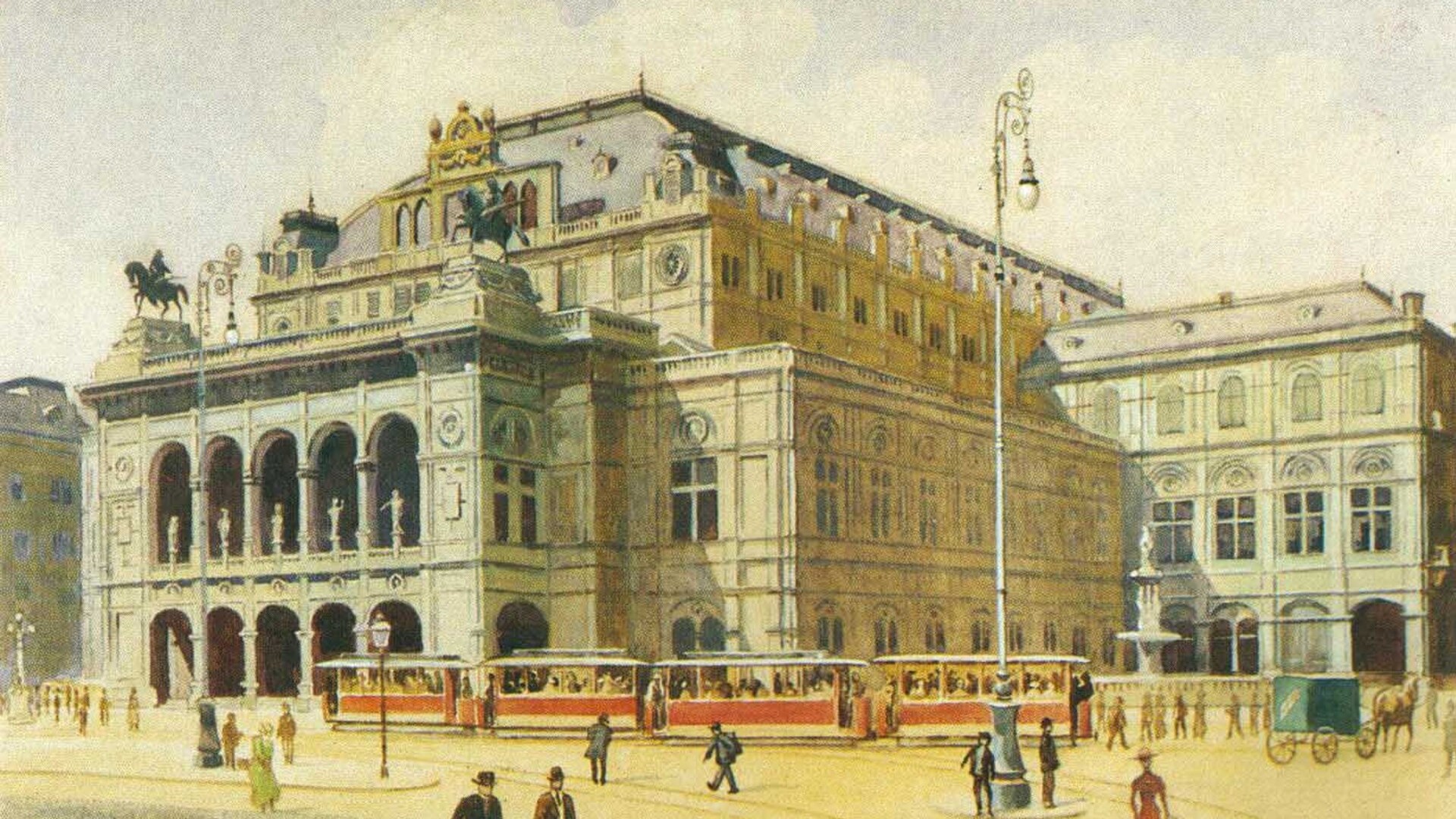
16. Vienna Opera House Watercolor 
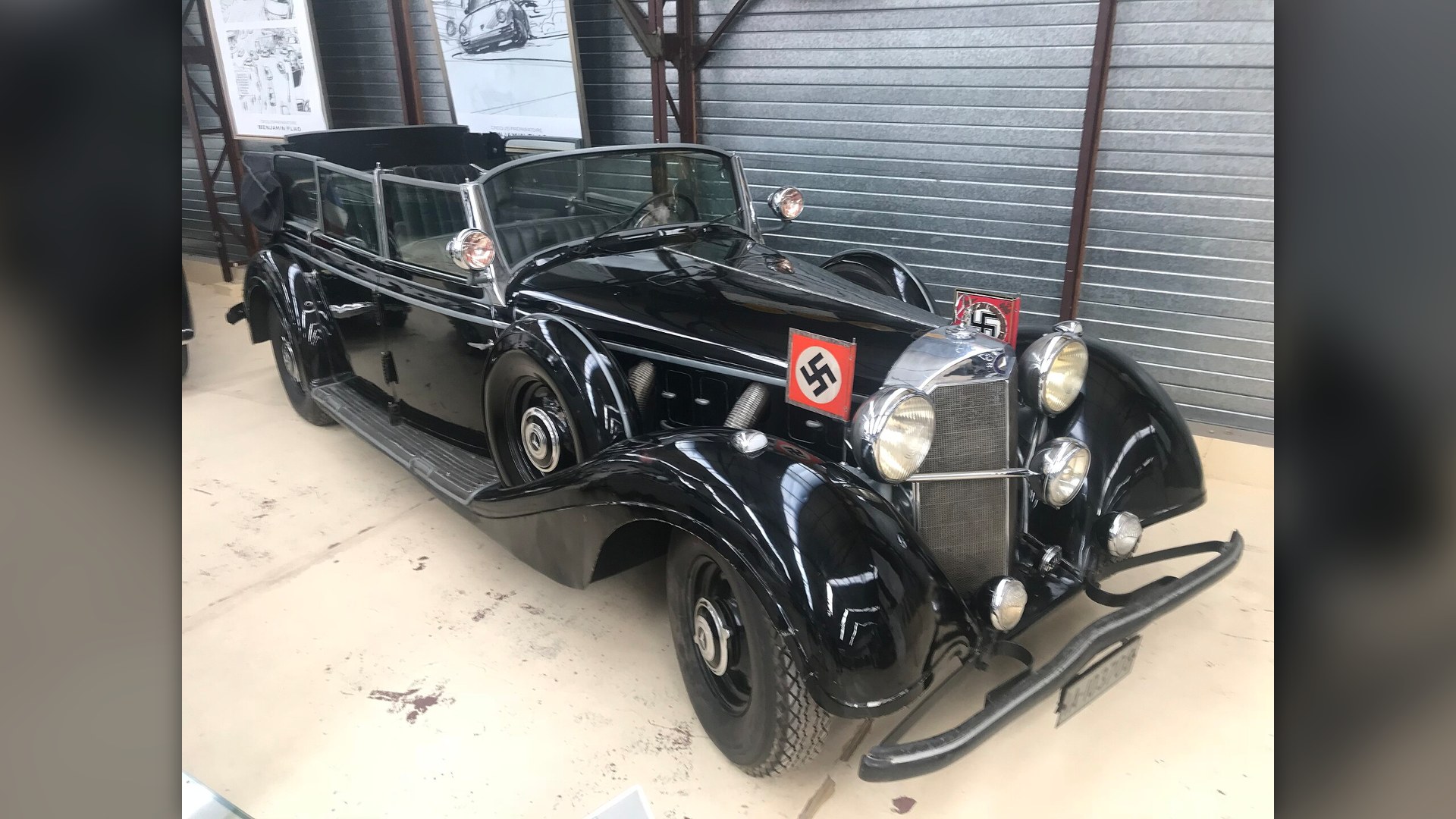
15. Armored Grosser Mercedes 770K Limousine - AdvertisementSwipe or tap ▶ to continue countdown

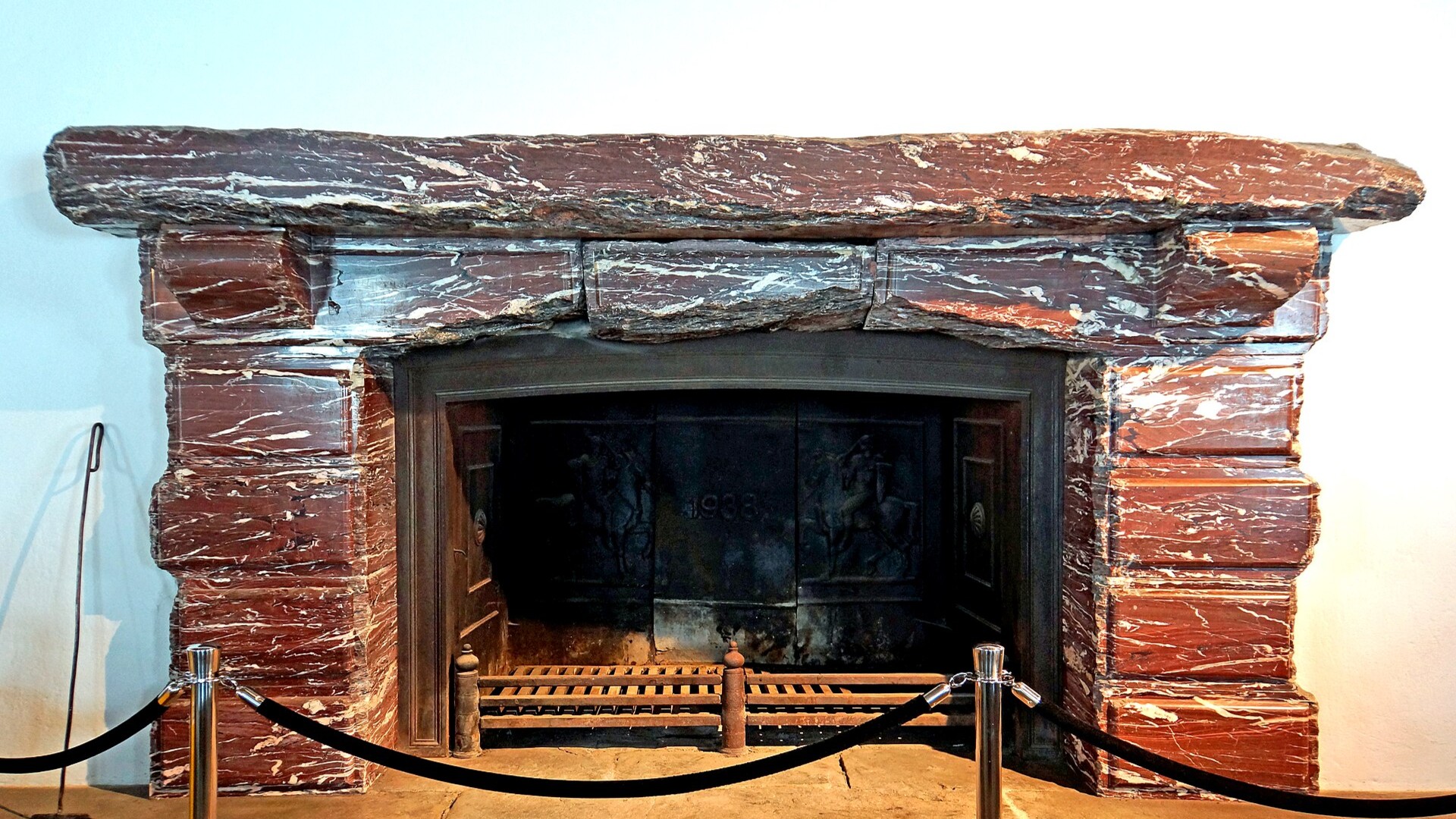
14. Mussolini's Red Marble Fireplace Gift 
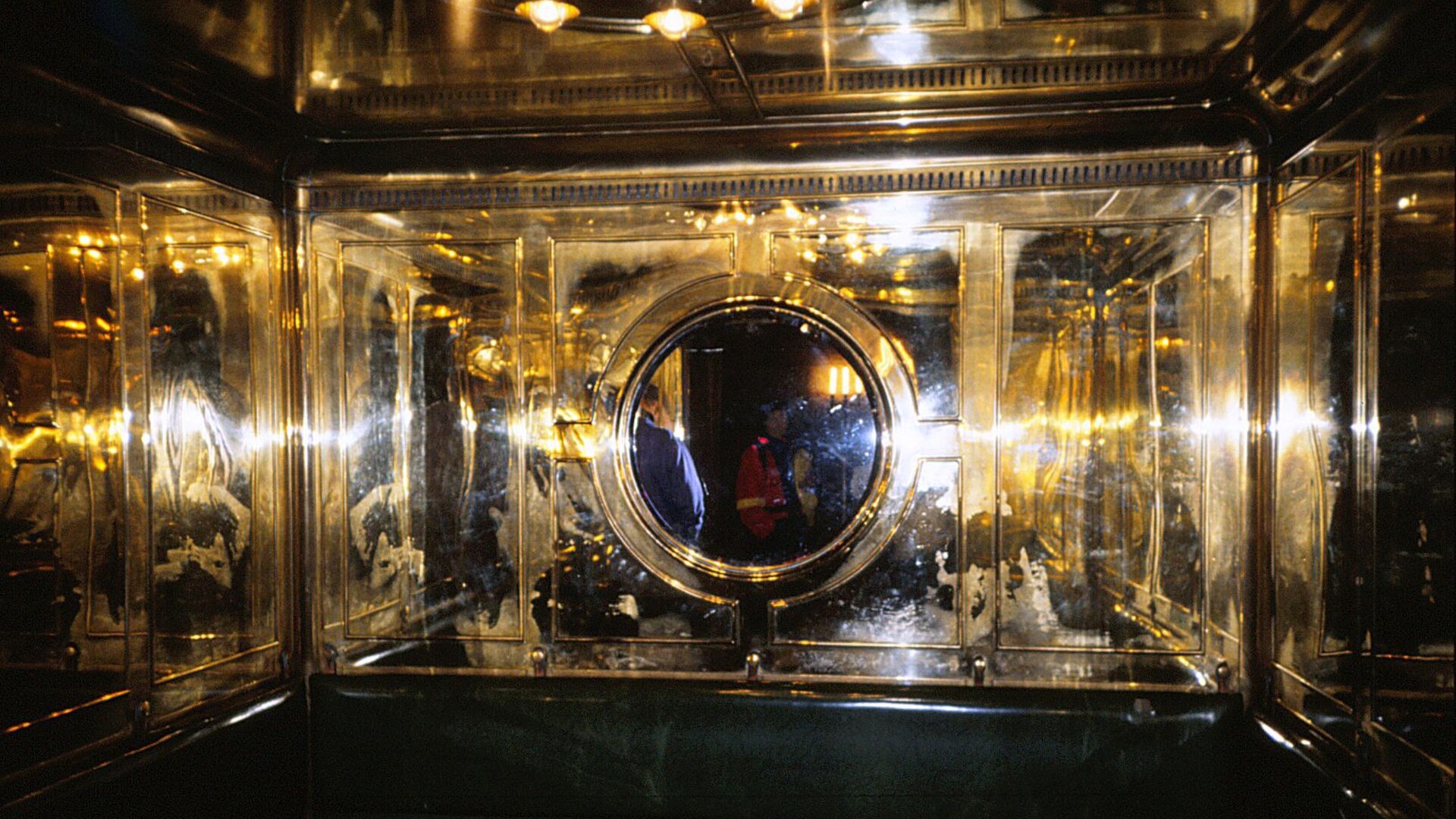
13. Polished Brass Mountain Elevator 
12. Underground Mountain Entrance Tunnel 
11. Formal Dining Room Banquet Sideboard - AdvertisementSwipe or tap ▶ to continue countdown

10. Stone Conference Room Furnishings 
9. 101st Airborne Berchtesgaden Souvenir Relics 
8. Captured Berchtesgaden Bronze Desk Eagle 
7. Engraved Eagle's Nest Pantry Crystal - AdvertisementSwipe or tap ▶ to continue countdown

6. Ceremonial Presentation Dagger 
5. Arno Breker Damaged Bronze Portrait Bust 
4. Captured 82nd Airborne Division Bronze Bust 
3. Ceremonial White Guard Visor Cap - AdvertisementSwipe or tap ▶ to continue countdown

2. Giant Columbus Desk Globe 
1. Massive Bronze Reich Chancellery Eagle - Advertisement🔥 UP NEXT IN THIS SERIES◫ 25 Slides

24 Unusual Objects Preserved From Nazi Germany
From secret cipher encoders and tracked demolition mines to experimental rocket interceptors, museums worldwide preserve curious artifacts from 1933 to 1945. Based on collections at the Smithsonian, Imperial War Museums, and Bletchley Park, this chronological survey uncovers unusual technological relics.
When Allied forces and correspondents entered Adolf Hitler's retreats in May 1945, they found personal effects, lavish gifts and private collections. Based on records from the National Archives, Imperial War Museum and military registries, here are twenty-one objects documented inside his private residences.
Swipe or tap ▶ to begin the countdown
©Wikimedia / Eva Braun
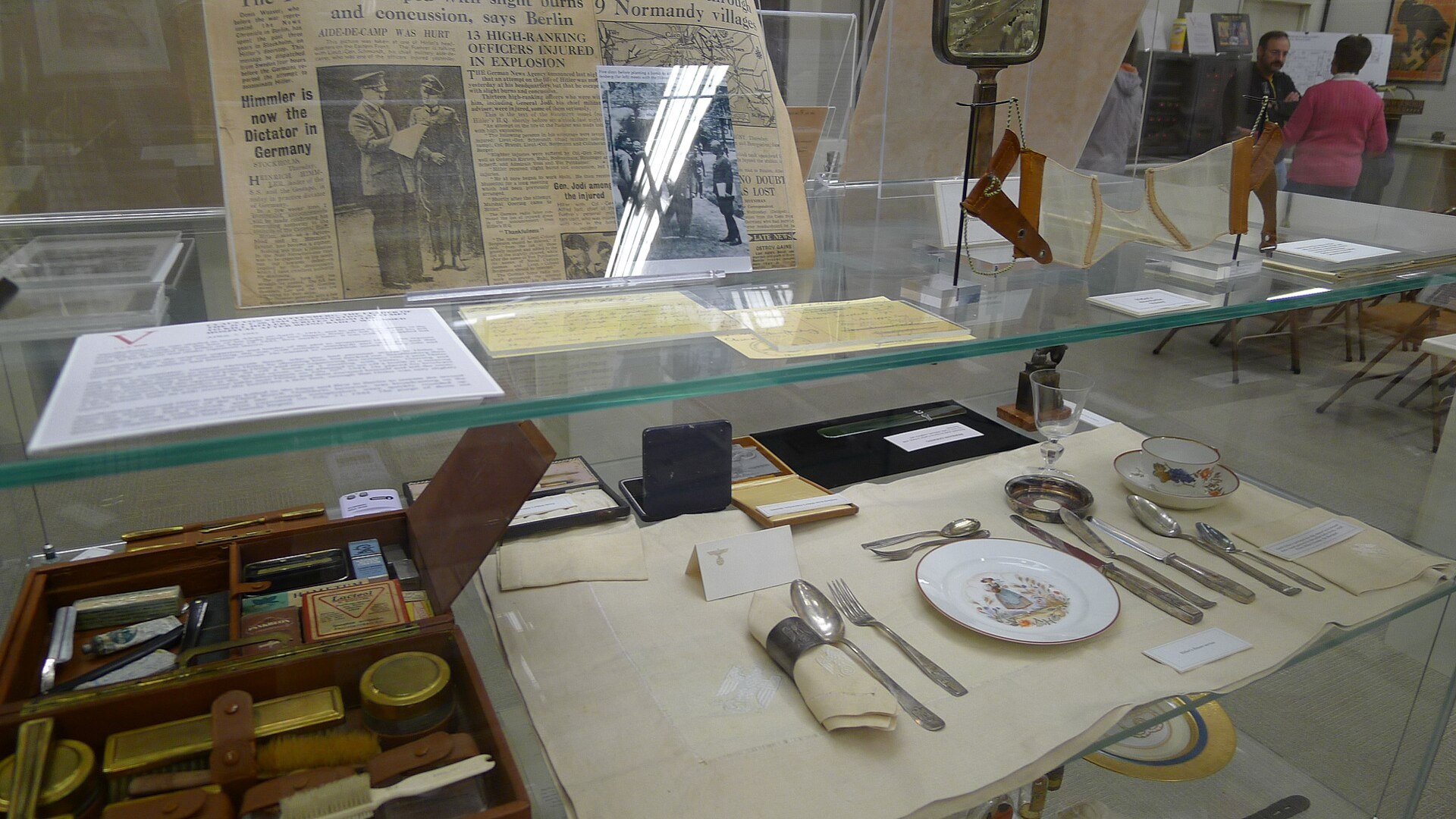
21. Monogrammed Silver Cutlery And Tableware
Allied inventory teams entering his alpine quarters documented formal silverware sets crafted by German silversmith Peter Bruckmann. Each piece featured an etched national eagle flanked by the initials AH. Preserved in collections like the Museum of World War II, these sets were reserved for official state dinners.
©Wikimedia / Lee Wright
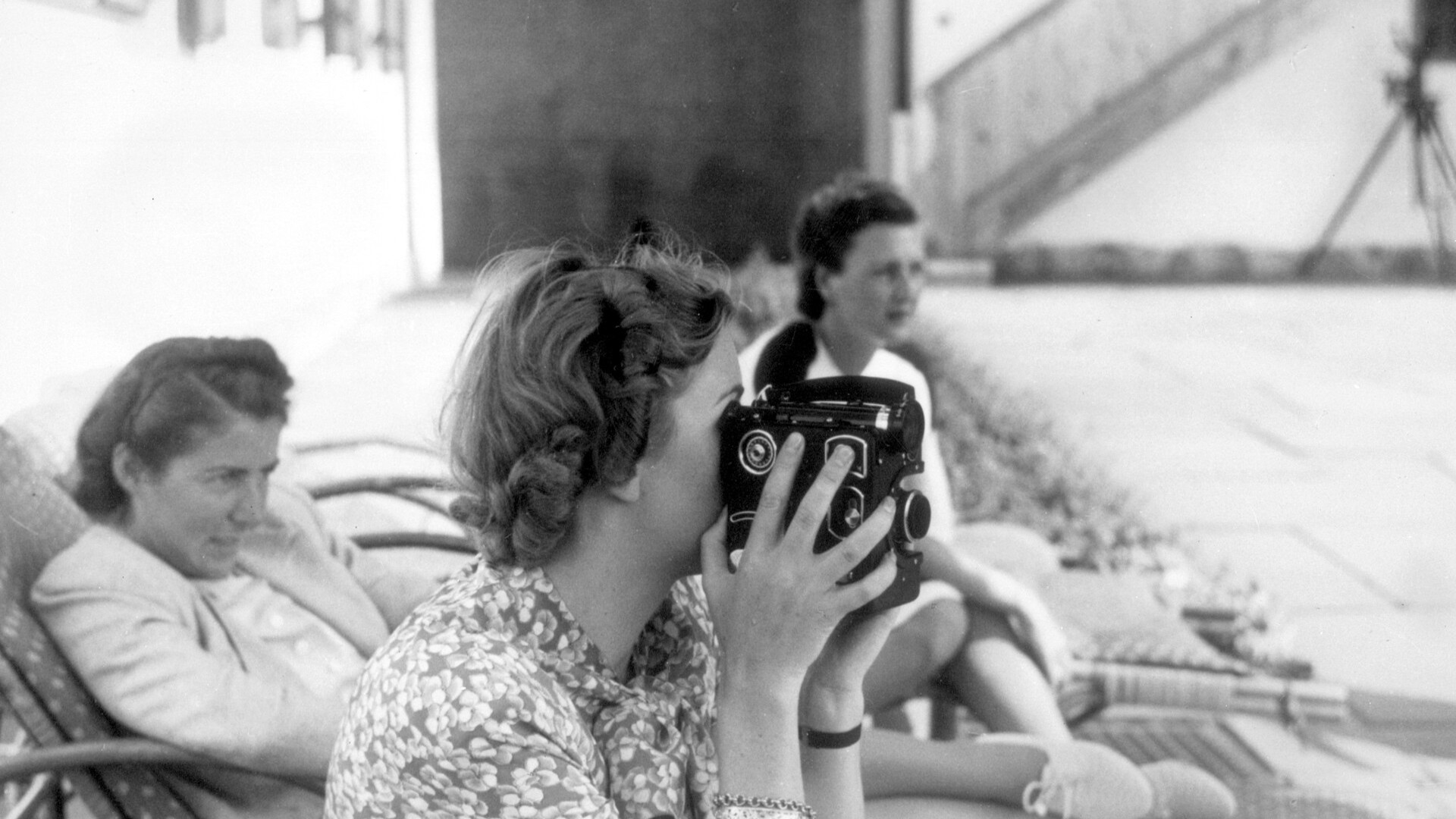
20. Eva Braun's 16mm Home Movie Camera
Intelligence recovered personal 16mm Bell and Howell movie equipment and color Agfacolor film rolls from household wardrobes. Kept today by the US National Archives under record group 242EB, these home recordings documented informal gatherings, visits by foreign officials, and private routines at Obersalzberg.
©Wikimedia / Eva Braun's albums available at U.S. NARA: (albu
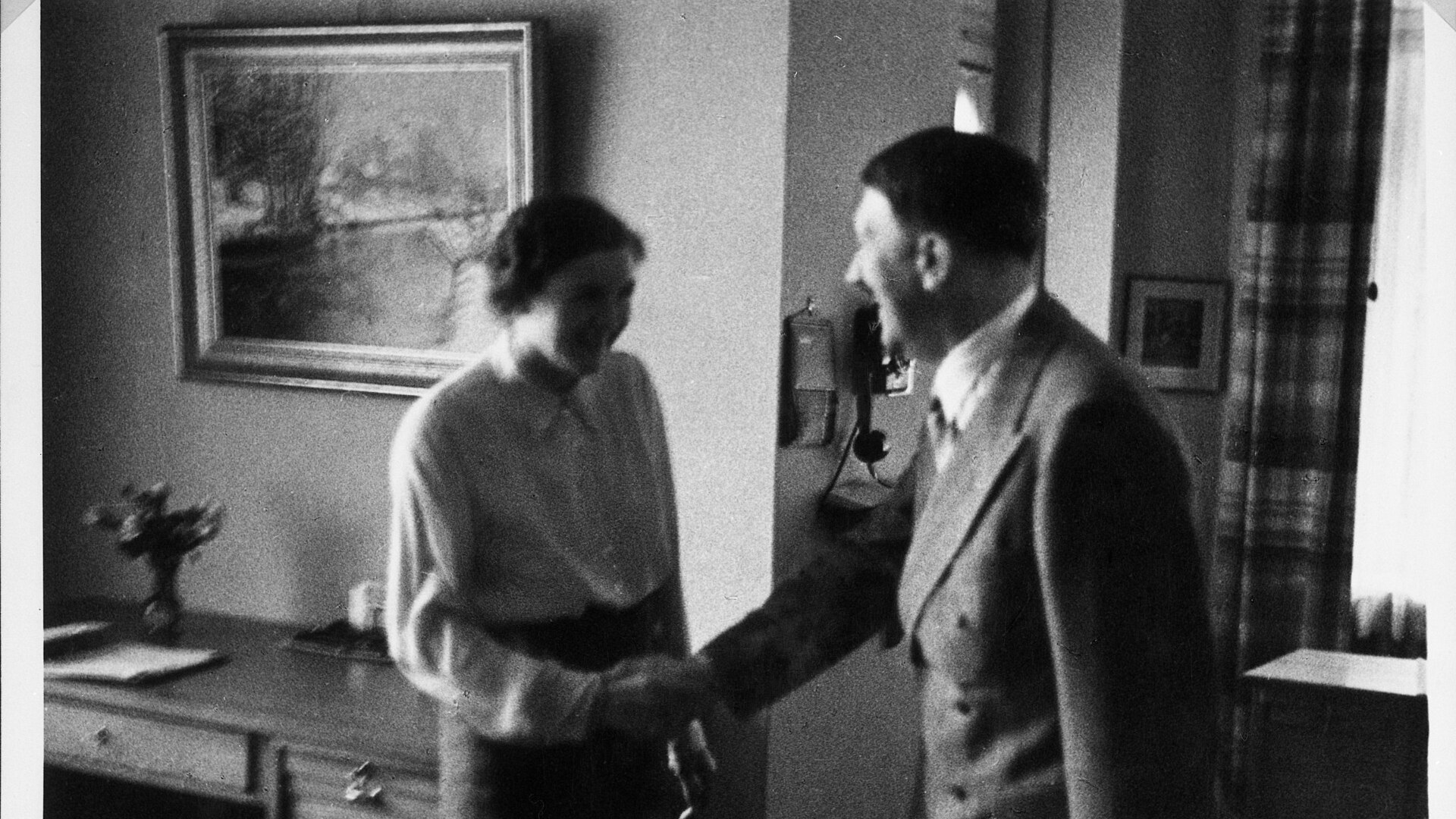
19. Seized Personal Photo Albums
Allied officers secured dozens of custom photo albums compiled by photographer Heinrich Hoffmann. Identified in military archives as collection 242-EB, the albums hold candid images from Munich studios and alpine verandas, offering intelligence analysts detailed visual inventories of household interiors and staff.
©Wikimedia / Eva Braun's albums: - album no. 4: - album no. 1
Advertisement
Swipe or tap ▶ to resume the countdown.
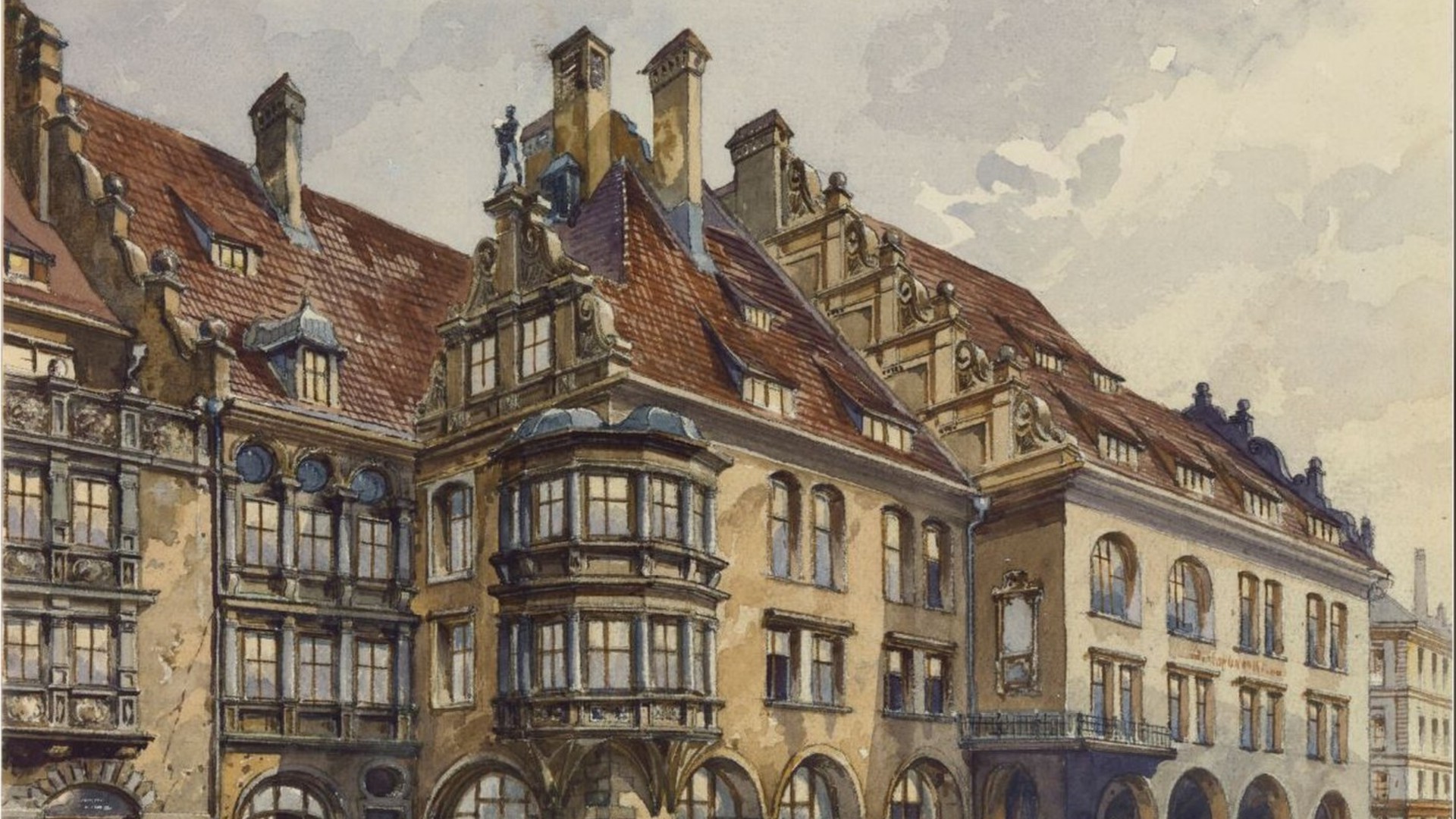
18. Munich Hofbräuhaus Watercolor Painting
Soldiers searching Bavarian residences cataloged original architectural watercolors created between 1913 and 1914. Bearing his handwritten signature, this depiction of the Munich Royal Hofbrauhaus remained part of his personal collection until US occupation authorities cataloged his private property in May 1945.
©Wikimedia / Painting is signed A. Hitler
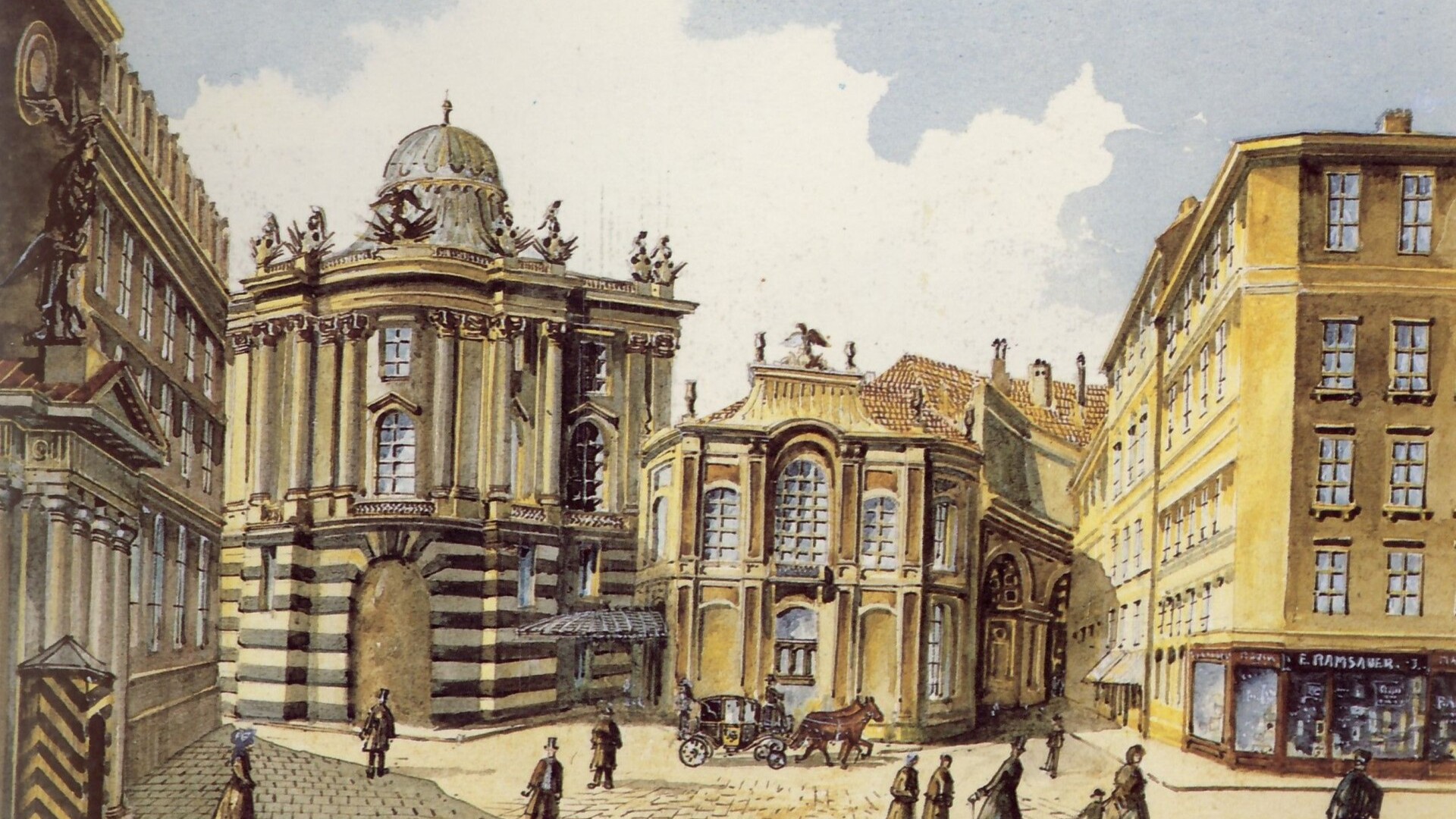
17. Michaelerplatz Vienna Architectural Watercolor
This precise perspective watercolor depicts Saint Michael Square in central Vienna, drafted during his early years in Austria. Seized among residential art holdings and analyzed by post-war provenance researchers, the painting illustrates his rigid draughtsmanship and fascination with monumental urban architecture.
©Wikimedia / Adolf Hitler
16. Vienna Opera House Watercolor
Found among protected residence crates, this historical watercolor highlights the ornate facade of the Vienna State Opera House. German federal and Allied restitution records confirmed the piece was personally retained in private residential storage rather than distributed to public municipal galleries across Germany.
©Wikimedia / Adolf Hitler
15. Armored Grosser Mercedes 770K Limousine
Stationed at private mountain garages, this armored Mercedes-Benz 770K Grosser limousine featured four-millimeter steel plating and forty-millimeter bullet-resistant glass. Captured by advancing Allied divisions in 1945 and later preserved in museum collections, the vehicle demonstrated extreme executive security.
©Wikimedia / HReuter
Advertisement
Swipe or tap ▶ to resume the countdown.
14. Mussolini's Red Marble Fireplace Gift
Italian dictator Benito Mussolini gifted this monumental red marble fireplace for the mountain salon in 1938. When American, French and British soldiers occupied the summit in May 1945, many chipped away small marble fragments as souvenirs and etched their division names directly into the surrounding stone mantle.
©Wikimedia / Dennis G. Jarvis
13. Polished Brass Mountain Elevator
To reach the 6,000-foot summit retreat, engineers bored a four-hundred-foot vertical shaft through solid rock to install an ornate elevator cab. Lined with polished sheet brass, venetian mirrors and green leather seating, the lift carried guests directly into the central reception lodge in under sixty seconds.
©Wikimedia / BKP
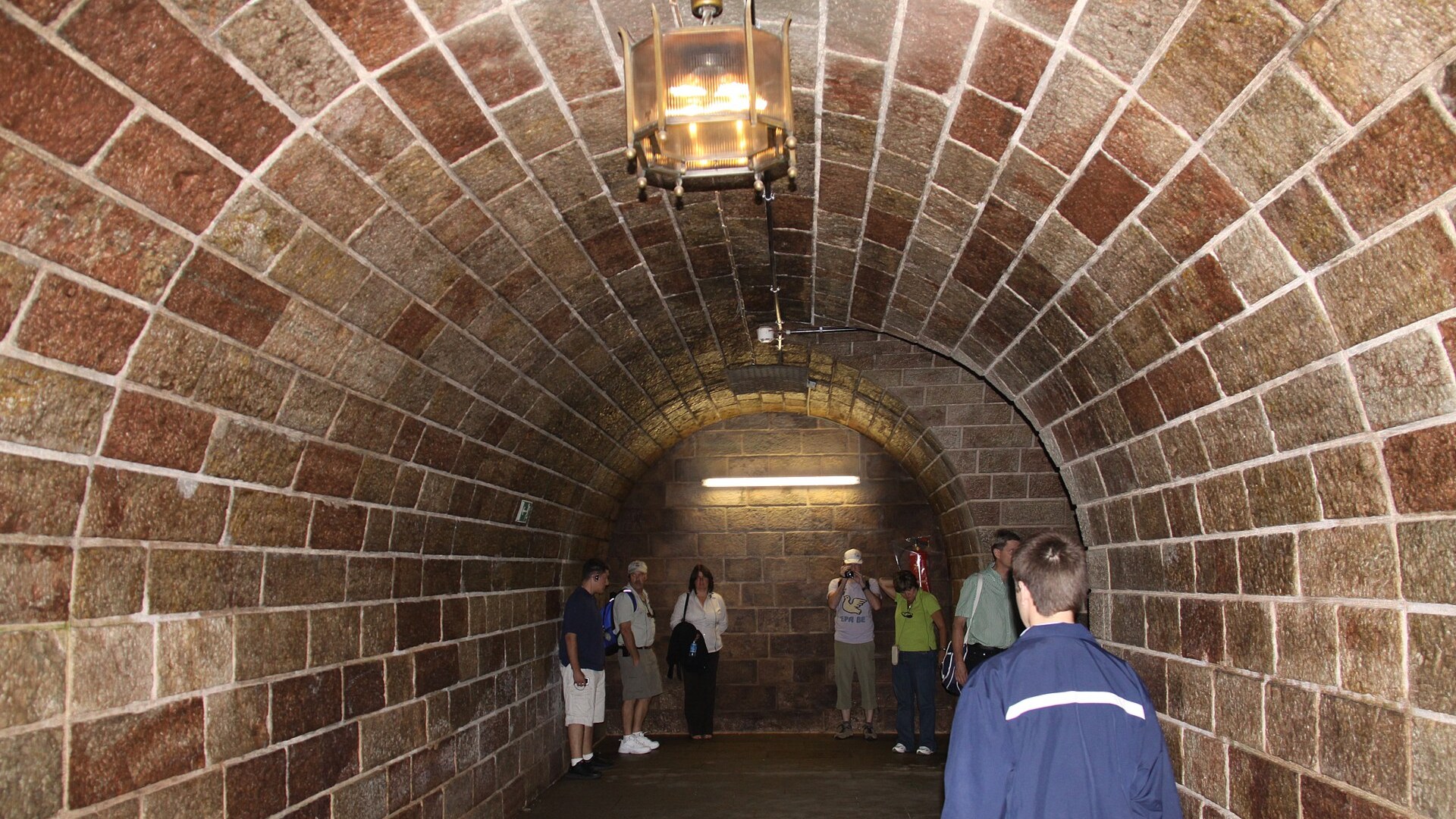
12. Underground Mountain Entrance Tunnel
Allied troops approached the alpine retreat through a four-hundred-foot subterranean stone tunnel carved directly into the mountain face. Built with ashlar marble masonry and heavy bronze doors, this fortified entrance was designed to protect occupants against aerial bombardment and extreme Bavarian winter storms.
©Wikimedia / Drrcs15
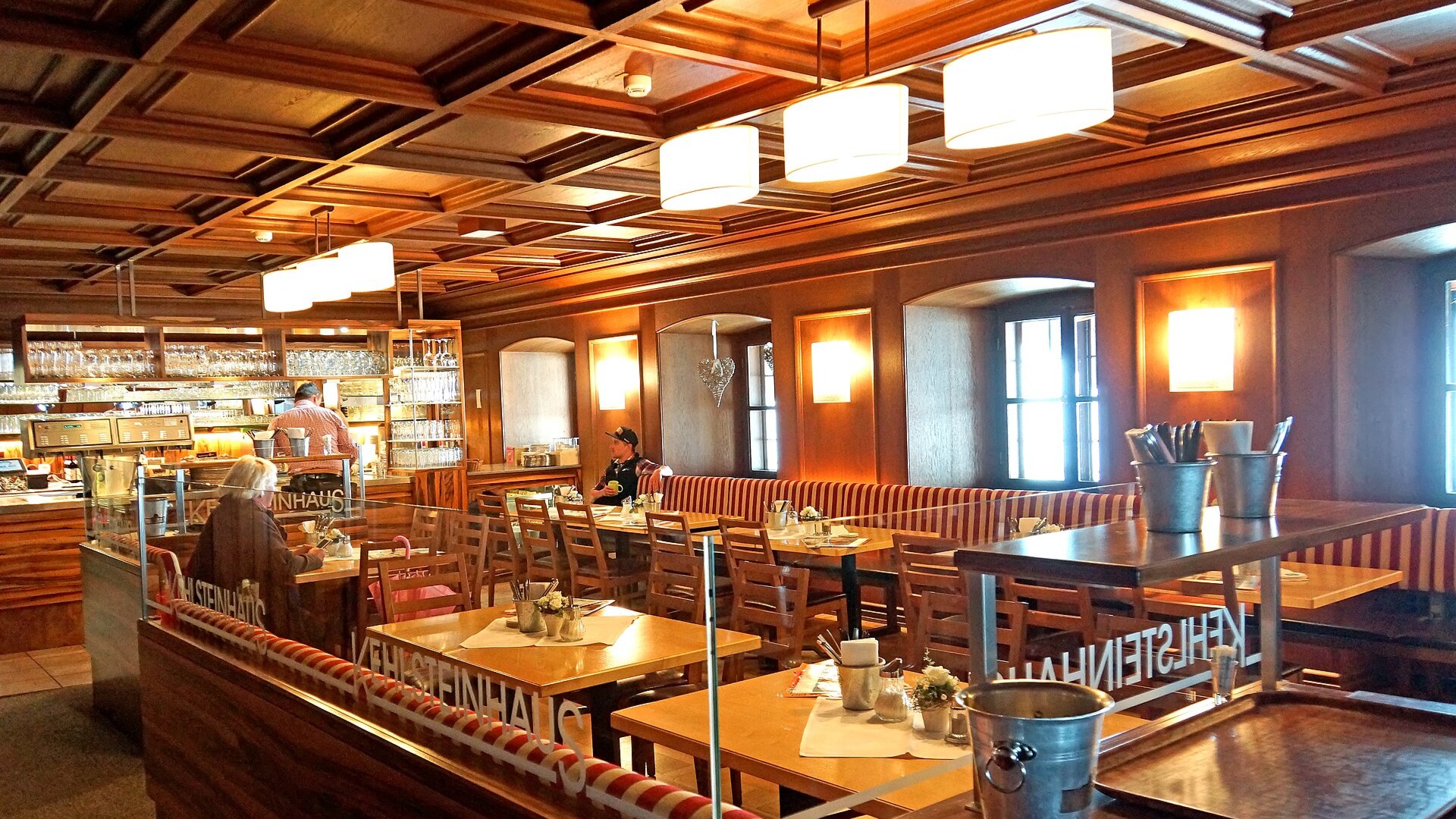
11. Formal Dining Room Banquet Sideboard
Inside the pine-paneled mountain dining room, search teams located the original long banquet table and heavy oak sideboard. Maintained in historical records and later repurposed for visiting allied personnel, this custom furniture hosted diplomatic receptions and private dinners during critical wartime conferences.
©Wikimedia / Dennis G. Jarvis
Advertisement
Swipe or tap ▶ to resume the countdown.
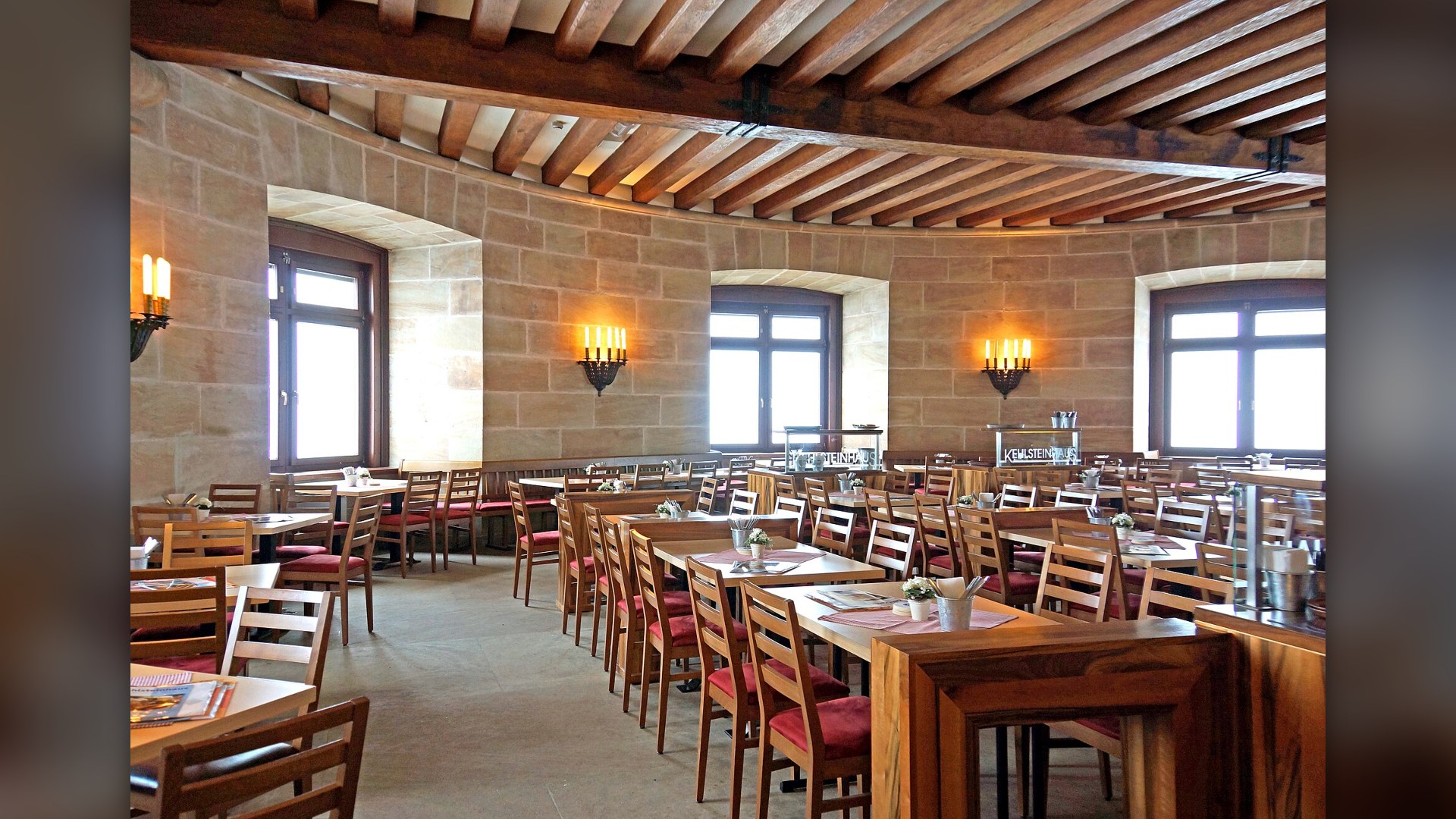
10. Stone Conference Room Furnishings
Located adjacent to the dining hall, the stone conference room contained massive hand-carved oak chairs, timber tables, and wrought-iron chandeliers. Allied inspection teams photographed the intact chamber in mid-1945, documenting where domestic staff and inner circle members gathered away from public view.
©Wikimedia / Dennis G. Jarvis
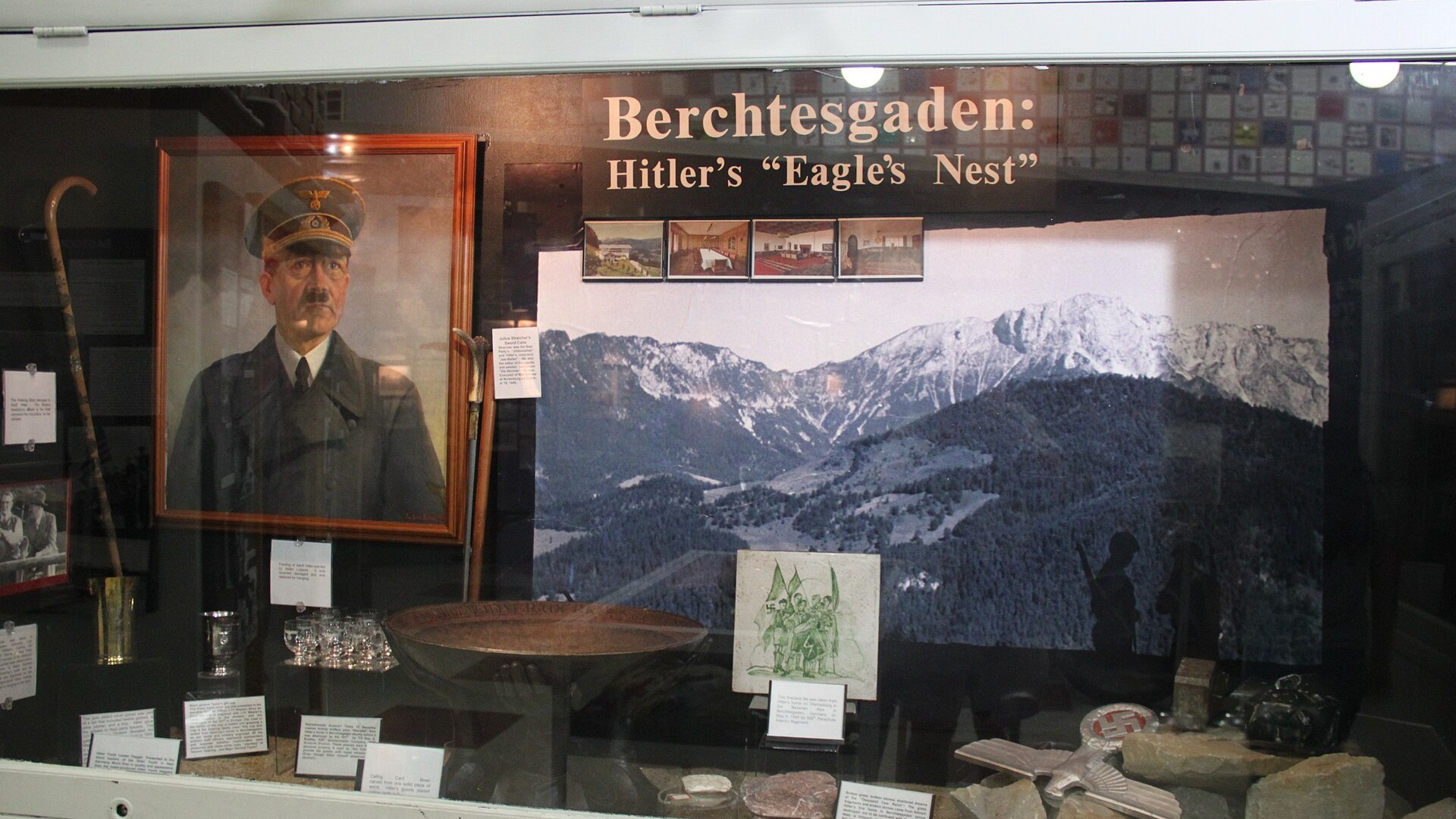
9. 101st Airborne Berchtesgaden Souvenir Relics
When soldiers of the 101st Airborne Division occupied Berchtesgaden in early May 1945, they gathered domestic tableware, stationery boxes and linen as historical evidence. Now displayed at the Don F. Pratt Memorial Museum at Fort Campbell, these cataloged items provide verified documentation of daily household life.
©Wikimedia / Gary Todd
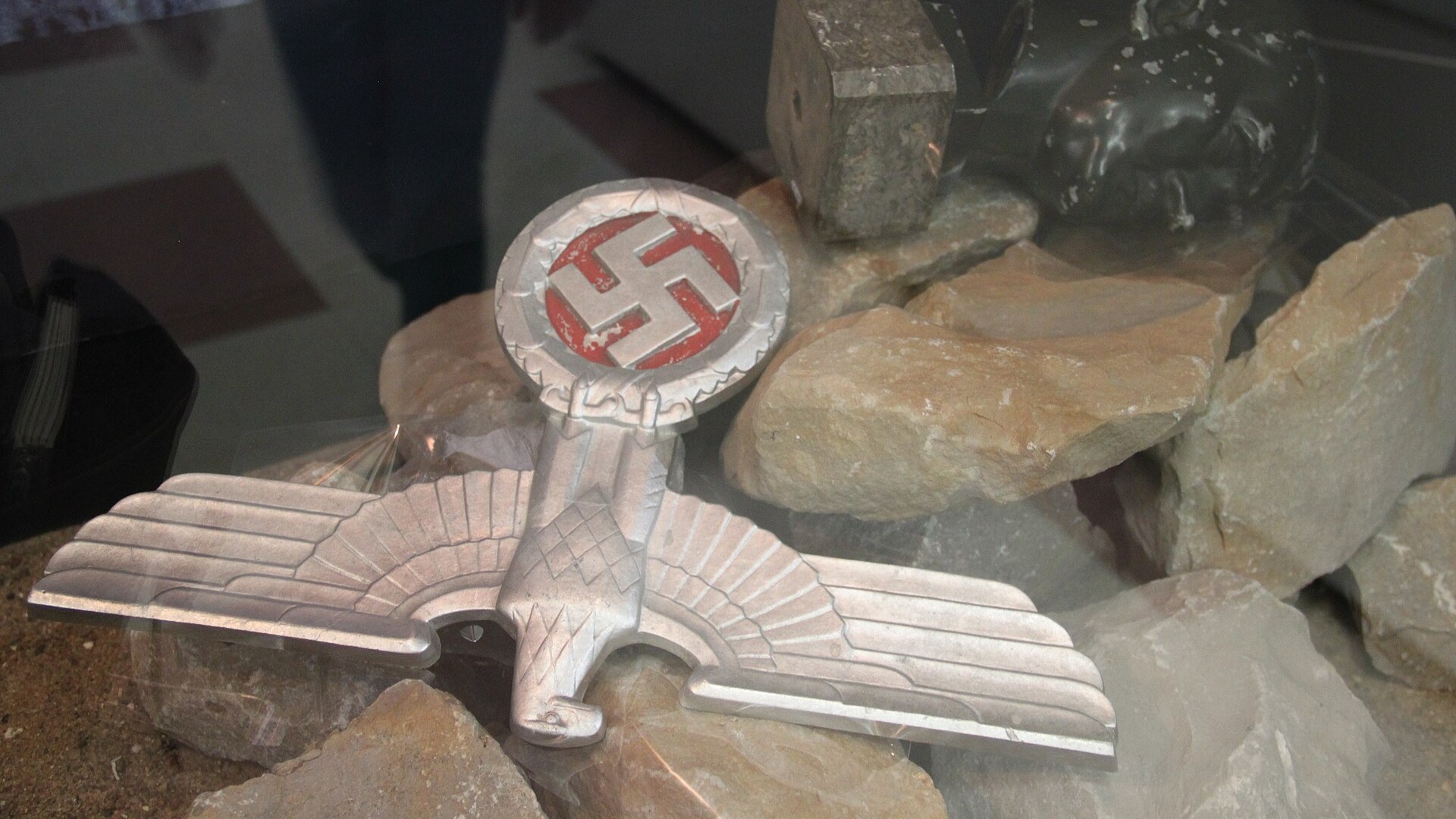
8. Captured Berchtesgaden Bronze Desk Eagle
Troopers inspecting mountain residence studies recovered this heavy bronze desk eagle, featuring spread wings and oak wreath detailing. Brought back to the United States as official military war trophies, the emblem was formally accessioned into airborne museum collections to document the defeat of the regime.
©Wikimedia / Gary Todd
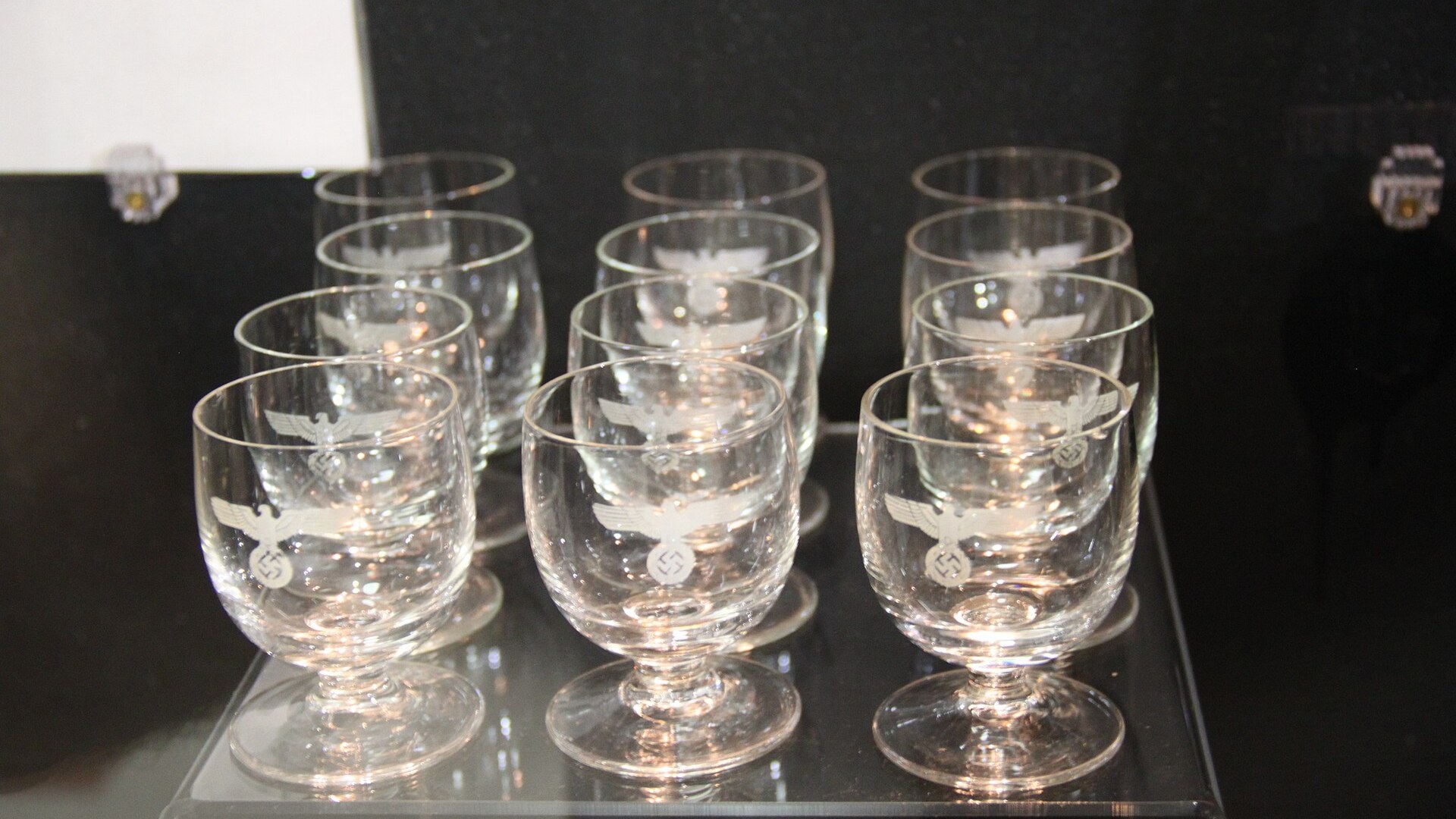
7. Engraved Eagle's Nest Pantry Crystal
American forces clearing residential pantry stores discovered crates of custom glassware, including etched crystal wine glasses and liquor carafes. Manufactured by premier German glassmakers, each piece carried subtle monogram detailing and was preserved in division archives to demonstrate estate extravagance.
©Wikimedia / Gary Todd from Xinzheng, China
Advertisement
Swipe or tap ▶ to resume the countdown.
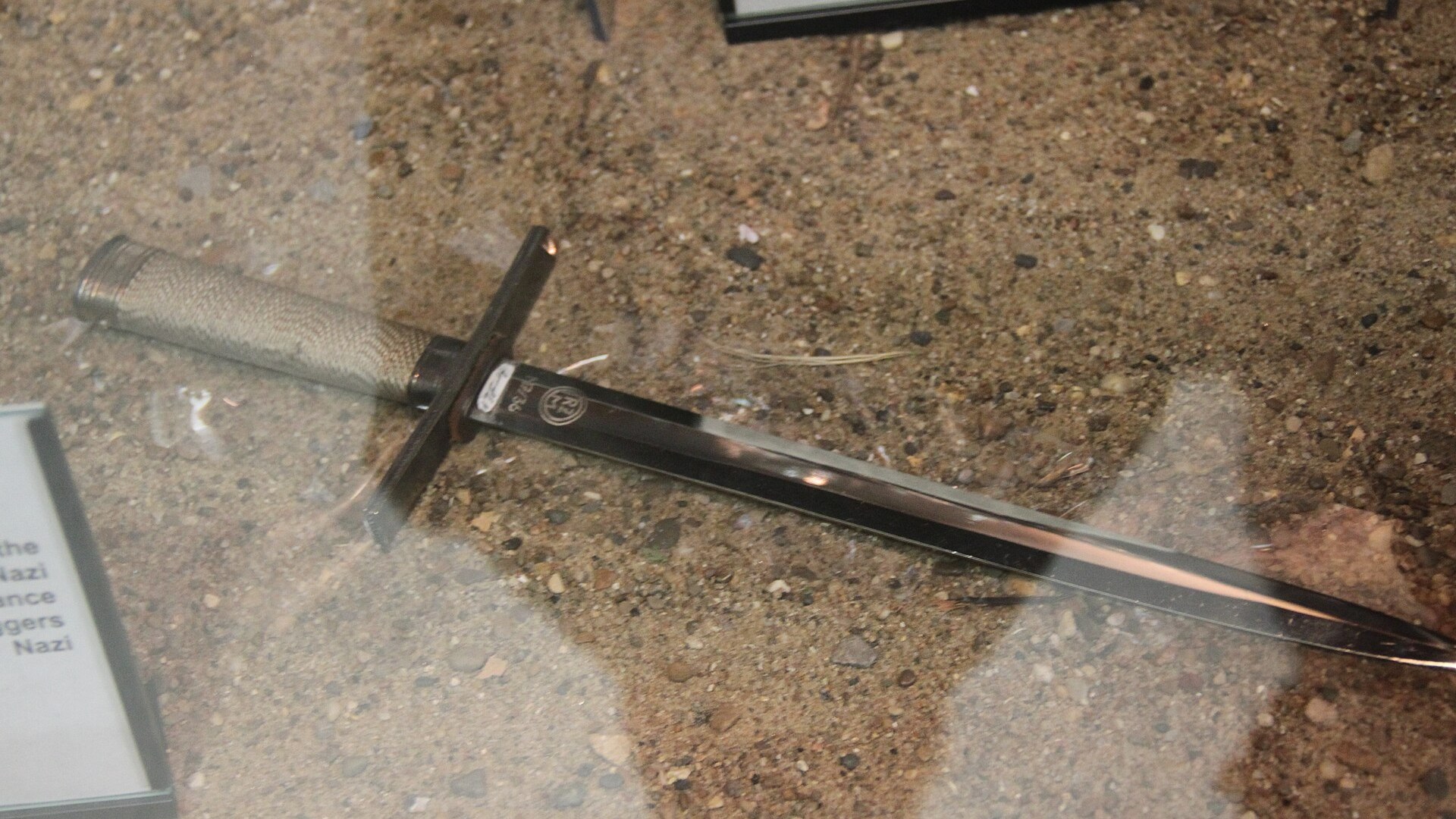
6. Ceremonial Presentation Dagger
Found among private gift rooms, this high-grade ceremonial presentation dagger featured silver wire grip wrapping and etched steel blade inscriptions. Recovered by intelligence scouts in May 1945 and cataloged in Kentucky museum collections, the weapon represented honorary gifts presented by regional party leaders.
©Wikimedia / Gary Todd from Xinzheng, China
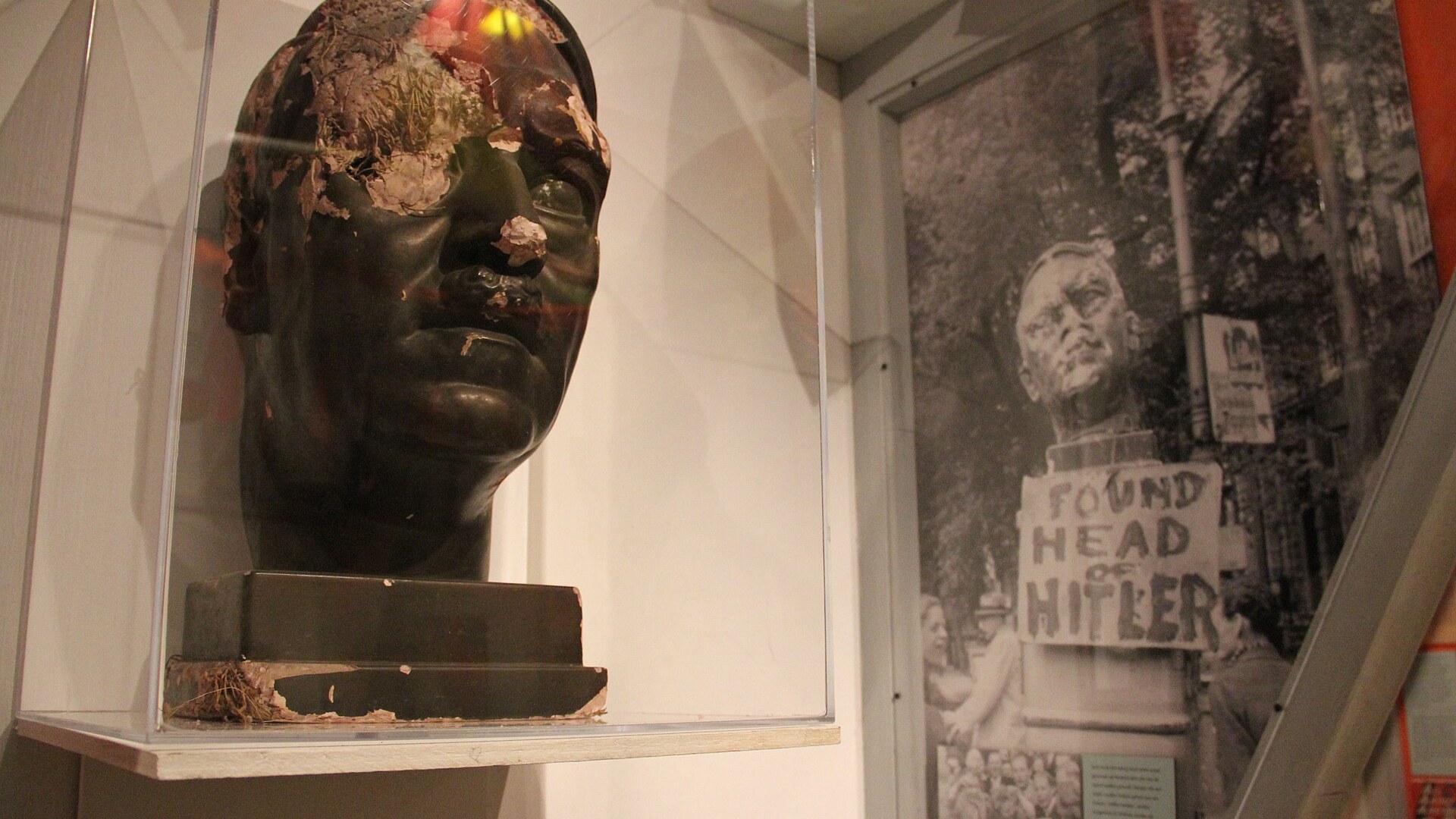
5. Arno Breker Damaged Bronze Portrait Bust
Sculpted by state artist Arno Breker for official residences, this bronze likeness was toppled and damaged during the final battle of Berlin. Later salvaged and placed on display at the Resistance Museum in Amsterdam, the scarred metal artifact stands today as an educational testament against authoritarian control.
©Wikimedia / Ana Paula Hirama
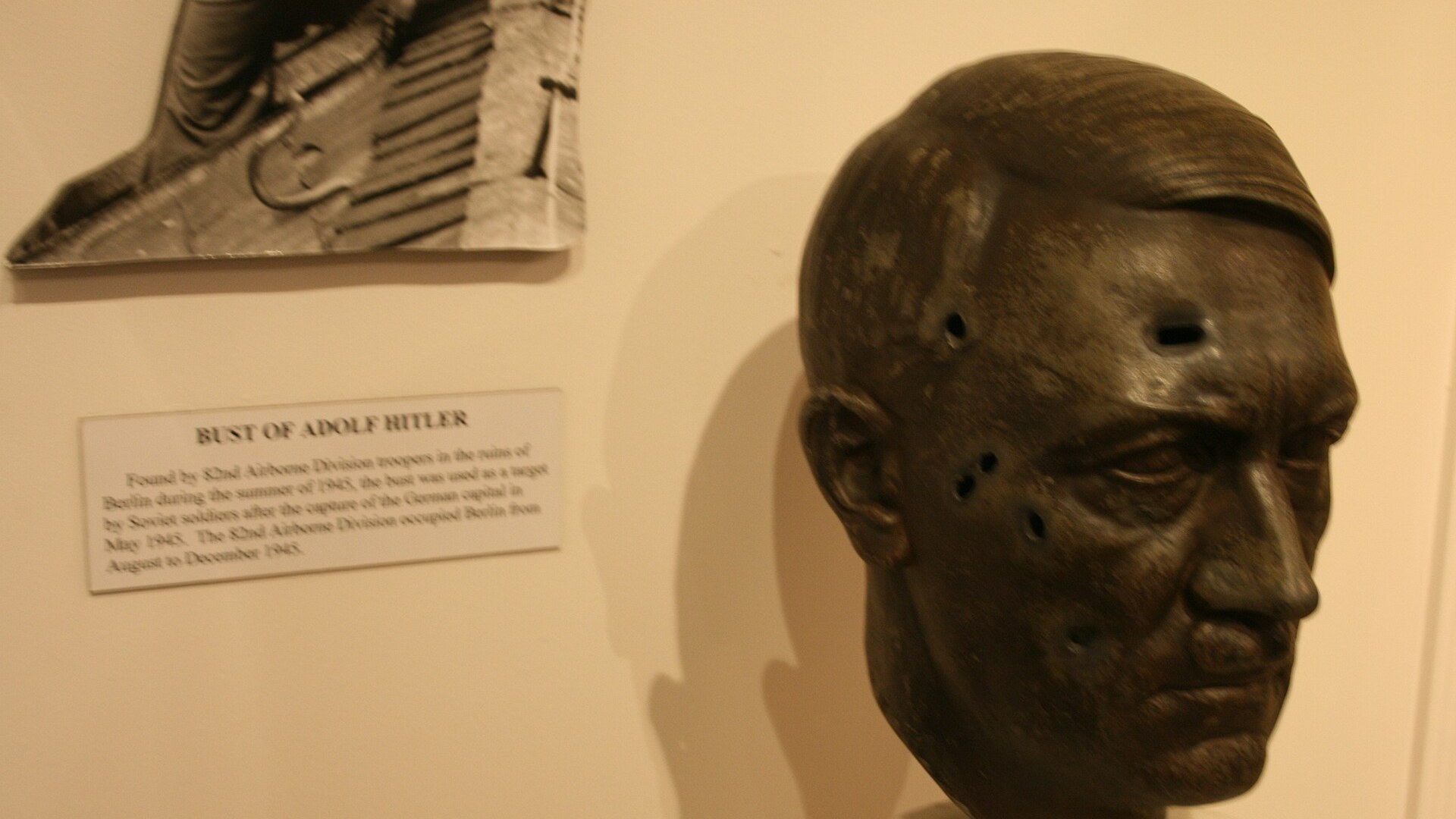
4. Captured 82nd Airborne Division Bronze Bust
Soldiers of the 82nd Airborne Division captured this heavy cast-bronze portrait bust during thorough searches of residential properties in 1945. Preserved today at the 82nd Airborne Division War Memorial Museum in Fort Liberty, North Carolina, the artifact is cataloged as an official military intelligence capture.
©Wikimedia / Gary Todd from Xinzheng, China
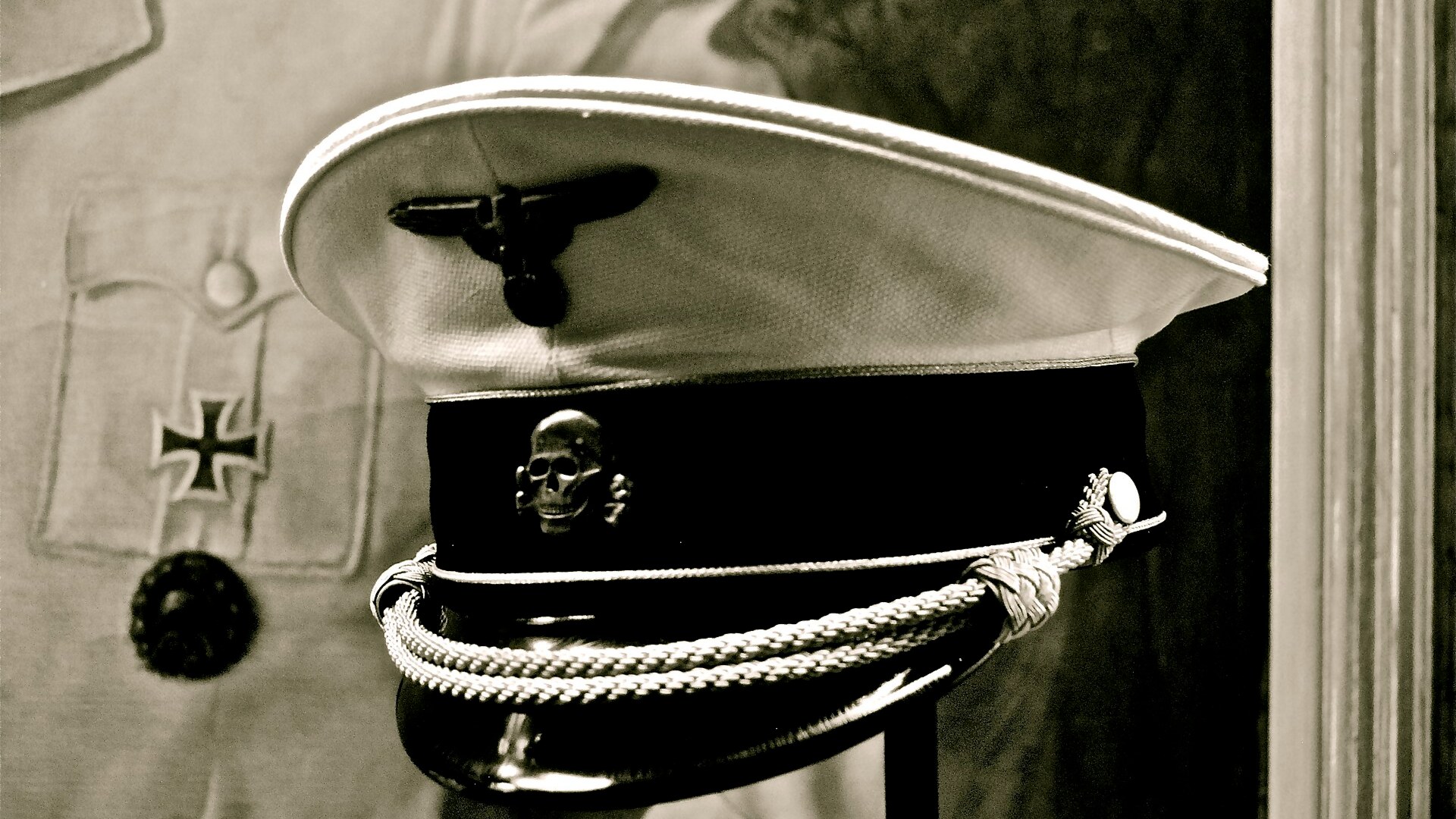
3. Ceremonial White Guard Visor Cap
Recovered from security wardrobe lockers at executive quarters, this white ceremonial visor cap belonged to residential honor guards. Preserved at the Imperial War Museum in London, the uniform headwear featured silver-wire bullion embroidery and distinct insignia worn during official head of state visits.
©Wikimedia / Jamie Davies
Advertisement
Swipe or tap ▶ to resume the countdown.
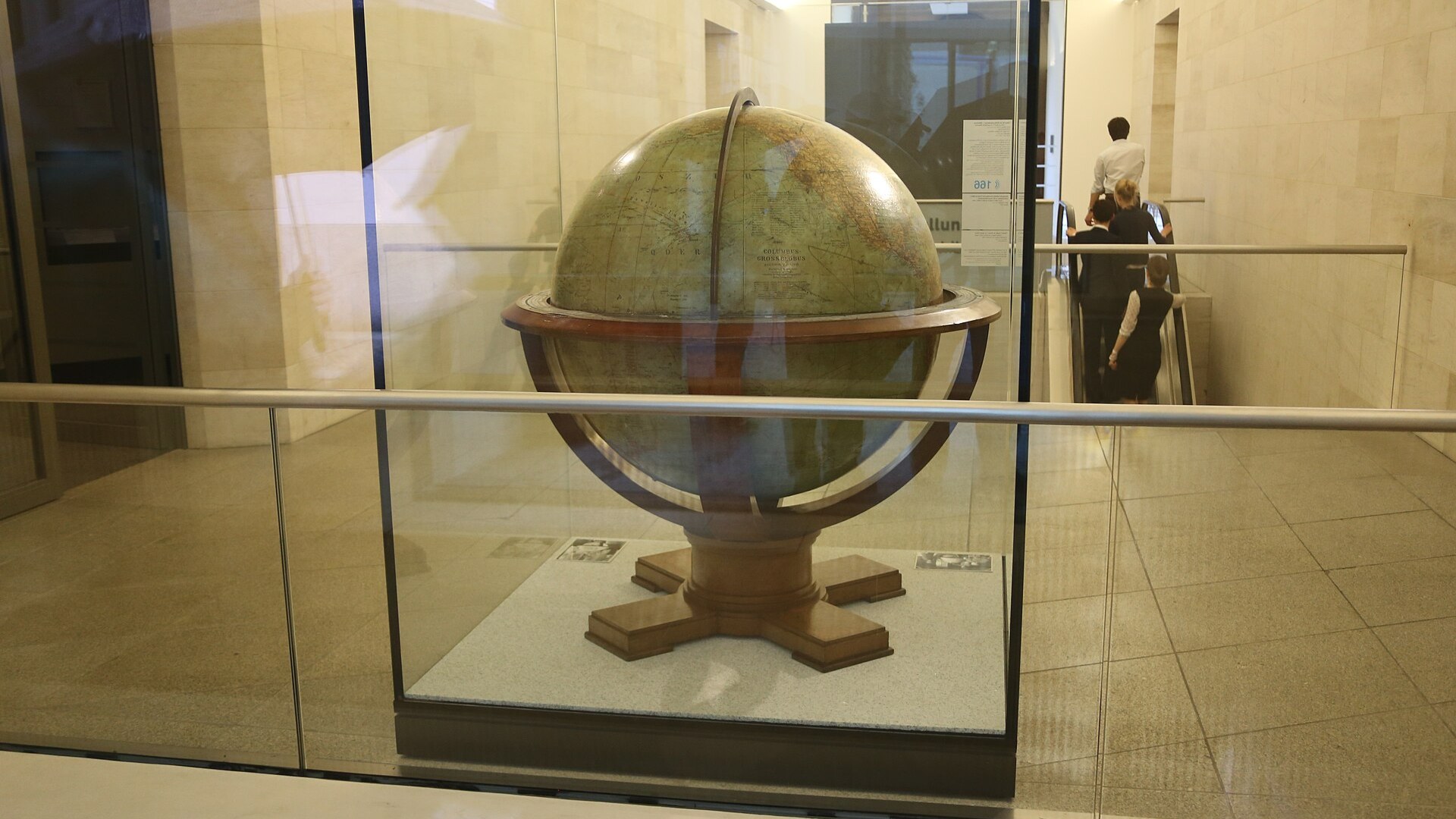
2. Giant Columbus Desk Globe
Search teams entering the executive study documented this massive Columbus globe for state and industry leaders, resting on a carved walnut base. Later displayed at the German Historical Museum in Berlin, the specialized globe became one of the most widely recognized geopolitical artifacts recovered from the ruins.
©Wikimedia / Drrcs15
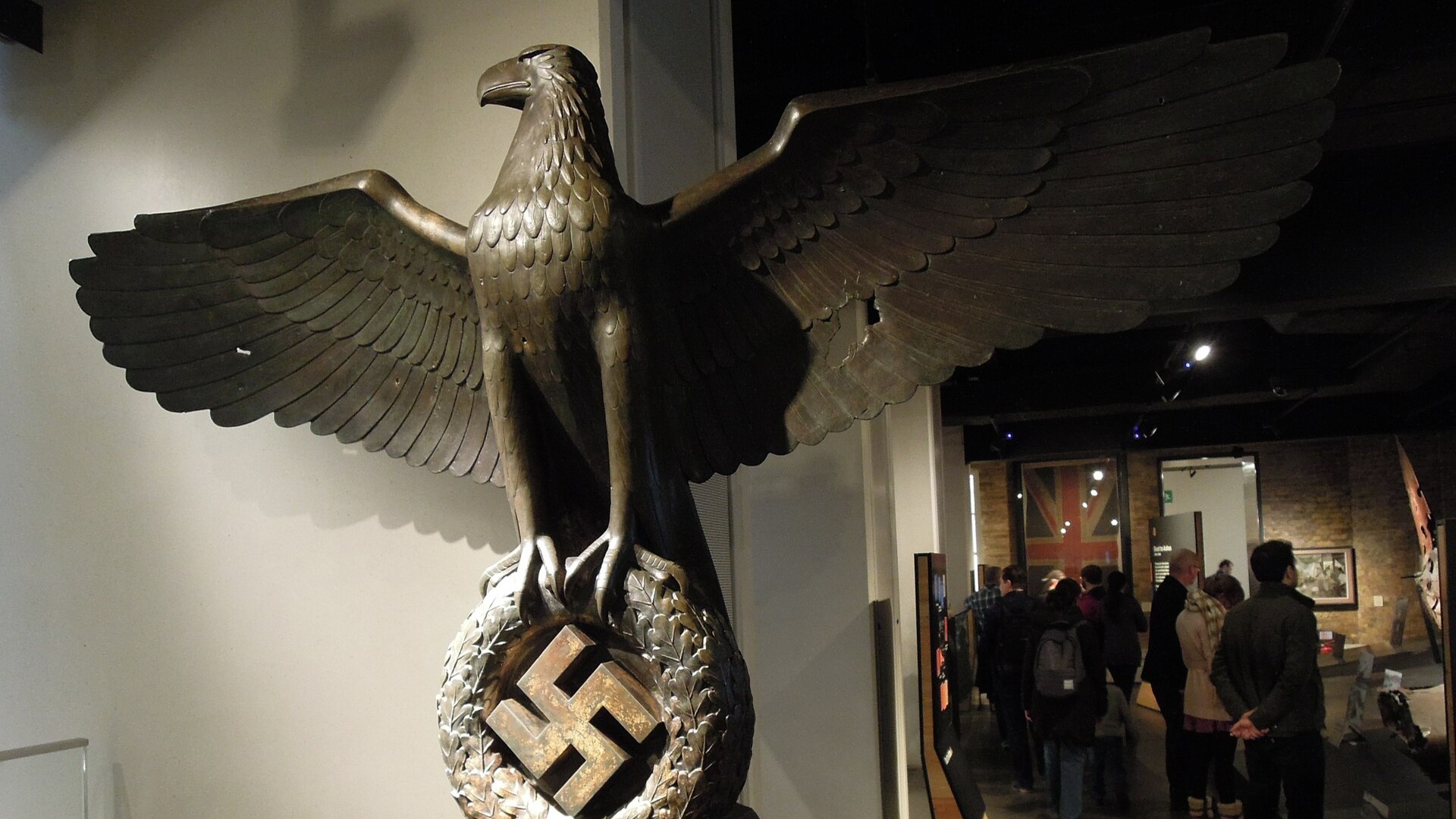
1. Massive Bronze Reich Chancellery Eagle
Lying shattered in the rear residence gardens in May 1945, this battle-damaged nine-foot bronze eagle was salvaged by British royal engineers. Transported to London and exhibited at the Imperial War Museum, the massive metal relic serves as one of the most prominent physical remnants of the ruined Berlin compound.
©Wikimedia / Aaron Bradley
Advertisement
You've reached the end of the story. Thanks for reading!

24 Unusual Objects Preserved From Nazi Germany
From secret cipher encoders and tracked demolition mines to experimental rocket interceptors, museums worldwide preserve curious artifacts from 1933 to 1945. Based on collections at the Smithsonian, Imperial War Museums, and Bletchley Park, this chronological survey uncovers unusual technological relics.
All 21 Entries in this Story
1. Monogrammed Silver Cutlery And Tableware
Allied inventory teams entering his alpine quarters documented formal silverware sets crafted by German silversmith Peter Bruckmann. Each piece featured an etched national eagle flanked by the initials AH. Preserved in collections like the Museum of World War II, these sets were reserved for official state dinners.

2. Eva Braun's 16mm Home Movie Camera
Intelligence recovered personal 16mm Bell and Howell movie equipment and color Agfacolor film rolls from household wardrobes. Kept today by the US National Archives under record group 242EB, these home recordings documented informal gatherings, visits by foreign officials, and private routines at Obersalzberg.

3. Seized Personal Photo Albums
Allied officers secured dozens of custom photo albums compiled by photographer Heinrich Hoffmann. Identified in military archives as collection 242-EB, the albums hold candid images from Munich studios and alpine verandas, offering intelligence analysts detailed visual inventories of household interiors and staff.

4. Munich Hofbräuhaus Watercolor Painting
Soldiers searching Bavarian residences cataloged original architectural watercolors created between 1913 and 1914. Bearing his handwritten signature, this depiction of the Munich Royal Hofbrauhaus remained part of his personal collection until US occupation authorities cataloged his private property in May 1945.

5. Michaelerplatz Vienna Architectural Watercolor
This precise perspective watercolor depicts Saint Michael Square in central Vienna, drafted during his early years in Austria. Seized among residential art holdings and analyzed by post-war provenance researchers, the painting illustrates his rigid draughtsmanship and fascination with monumental urban architecture.

6. Vienna Opera House Watercolor
Found among protected residence crates, this historical watercolor highlights the ornate facade of the Vienna State Opera House. German federal and Allied restitution records confirmed the piece was personally retained in private residential storage rather than distributed to public municipal galleries across Germany.

7. Armored Grosser Mercedes 770K Limousine
Stationed at private mountain garages, this armored Mercedes-Benz 770K Grosser limousine featured four-millimeter steel plating and forty-millimeter bullet-resistant glass. Captured by advancing Allied divisions in 1945 and later preserved in museum collections, the vehicle demonstrated extreme executive security.

8. Mussolini's Red Marble Fireplace Gift
Italian dictator Benito Mussolini gifted this monumental red marble fireplace for the mountain salon in 1938. When American, French and British soldiers occupied the summit in May 1945, many chipped away small marble fragments as souvenirs and etched their division names directly into the surrounding stone mantle.

9. Polished Brass Mountain Elevator
To reach the 6,000-foot summit retreat, engineers bored a four-hundred-foot vertical shaft through solid rock to install an ornate elevator cab. Lined with polished sheet brass, venetian mirrors and green leather seating, the lift carried guests directly into the central reception lodge in under sixty seconds.

10. Underground Mountain Entrance Tunnel
Allied troops approached the alpine retreat through a four-hundred-foot subterranean stone tunnel carved directly into the mountain face. Built with ashlar marble masonry and heavy bronze doors, this fortified entrance was designed to protect occupants against aerial bombardment and extreme Bavarian winter storms.

11. Formal Dining Room Banquet Sideboard
Inside the pine-paneled mountain dining room, search teams located the original long banquet table and heavy oak sideboard. Maintained in historical records and later repurposed for visiting allied personnel, this custom furniture hosted diplomatic receptions and private dinners during critical wartime conferences.

12. Stone Conference Room Furnishings
Located adjacent to the dining hall, the stone conference room contained massive hand-carved oak chairs, timber tables, and wrought-iron chandeliers. Allied inspection teams photographed the intact chamber in mid-1945, documenting where domestic staff and inner circle members gathered away from public view.

13. 101st Airborne Berchtesgaden Souvenir Relics
When soldiers of the 101st Airborne Division occupied Berchtesgaden in early May 1945, they gathered domestic tableware, stationery boxes and linen as historical evidence. Now displayed at the Don F. Pratt Memorial Museum at Fort Campbell, these cataloged items provide verified documentation of daily household life.

14. Captured Berchtesgaden Bronze Desk Eagle
Troopers inspecting mountain residence studies recovered this heavy bronze desk eagle, featuring spread wings and oak wreath detailing. Brought back to the United States as official military war trophies, the emblem was formally accessioned into airborne museum collections to document the defeat of the regime.

15. Engraved Eagle's Nest Pantry Crystal
American forces clearing residential pantry stores discovered crates of custom glassware, including etched crystal wine glasses and liquor carafes. Manufactured by premier German glassmakers, each piece carried subtle monogram detailing and was preserved in division archives to demonstrate estate extravagance.

16. Ceremonial Presentation Dagger
Found among private gift rooms, this high-grade ceremonial presentation dagger featured silver wire grip wrapping and etched steel blade inscriptions. Recovered by intelligence scouts in May 1945 and cataloged in Kentucky museum collections, the weapon represented honorary gifts presented by regional party leaders.

17. Arno Breker Damaged Bronze Portrait Bust
Sculpted by state artist Arno Breker for official residences, this bronze likeness was toppled and damaged during the final battle of Berlin. Later salvaged and placed on display at the Resistance Museum in Amsterdam, the scarred metal artifact stands today as an educational testament against authoritarian control.

18. Captured 82nd Airborne Division Bronze Bust
Soldiers of the 82nd Airborne Division captured this heavy cast-bronze portrait bust during thorough searches of residential properties in 1945. Preserved today at the 82nd Airborne Division War Memorial Museum in Fort Liberty, North Carolina, the artifact is cataloged as an official military intelligence capture.

19. Ceremonial White Guard Visor Cap
Recovered from security wardrobe lockers at executive quarters, this white ceremonial visor cap belonged to residential honor guards. Preserved at the Imperial War Museum in London, the uniform headwear featured silver-wire bullion embroidery and distinct insignia worn during official head of state visits.

20. Giant Columbus Desk Globe
Search teams entering the executive study documented this massive Columbus globe for state and industry leaders, resting on a carved walnut base. Later displayed at the German Historical Museum in Berlin, the specialized globe became one of the most widely recognized geopolitical artifacts recovered from the ruins.

21. Massive Bronze Reich Chancellery Eagle
Lying shattered in the rear residence gardens in May 1945, this battle-damaged nine-foot bronze eagle was salvaged by British royal engineers. Transported to London and exhibited at the Imperial War Museum, the massive metal relic serves as one of the most prominent physical remnants of the ruined Berlin compound.