Slideshow · Animals
How Long Do Hippos Live? 20 Other Facts About Hippos
From sixty-year lifespans to whale cousins, discover secrets of river giants
All 21 Entries in this Story
1. Lifespan Of Forty To Fifty Years
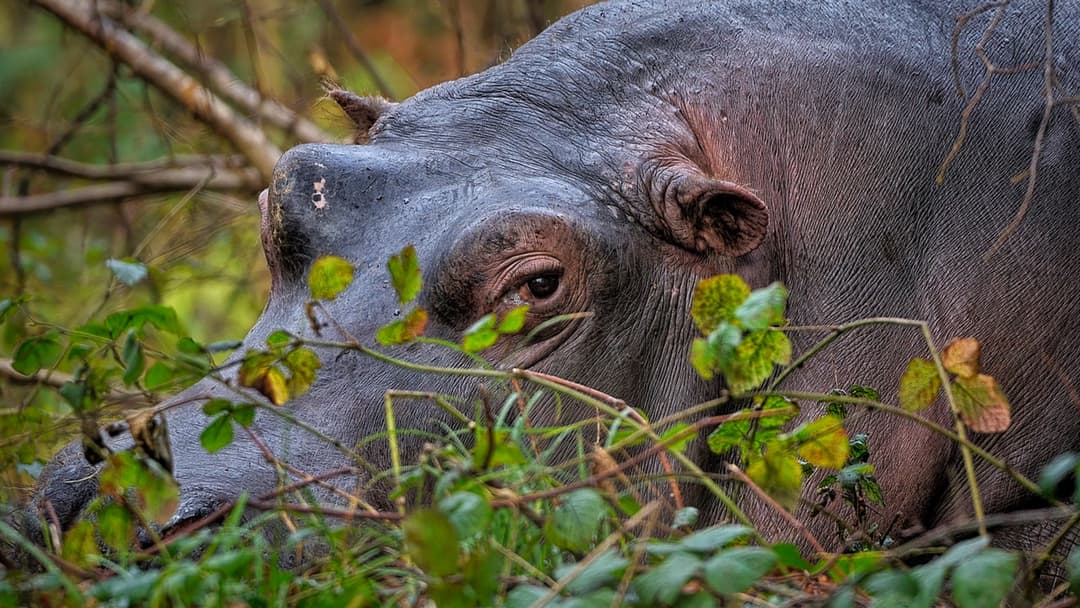
In wild habitats across sub-Saharan Africa, hippos typically live between 40 and 50 years. In managed zoological settings, protected individuals frequently surpass 50 years. The oldest recorded hippo in history was Bertha, who reached age 65 at the Manila Zoo before passing in 2017.
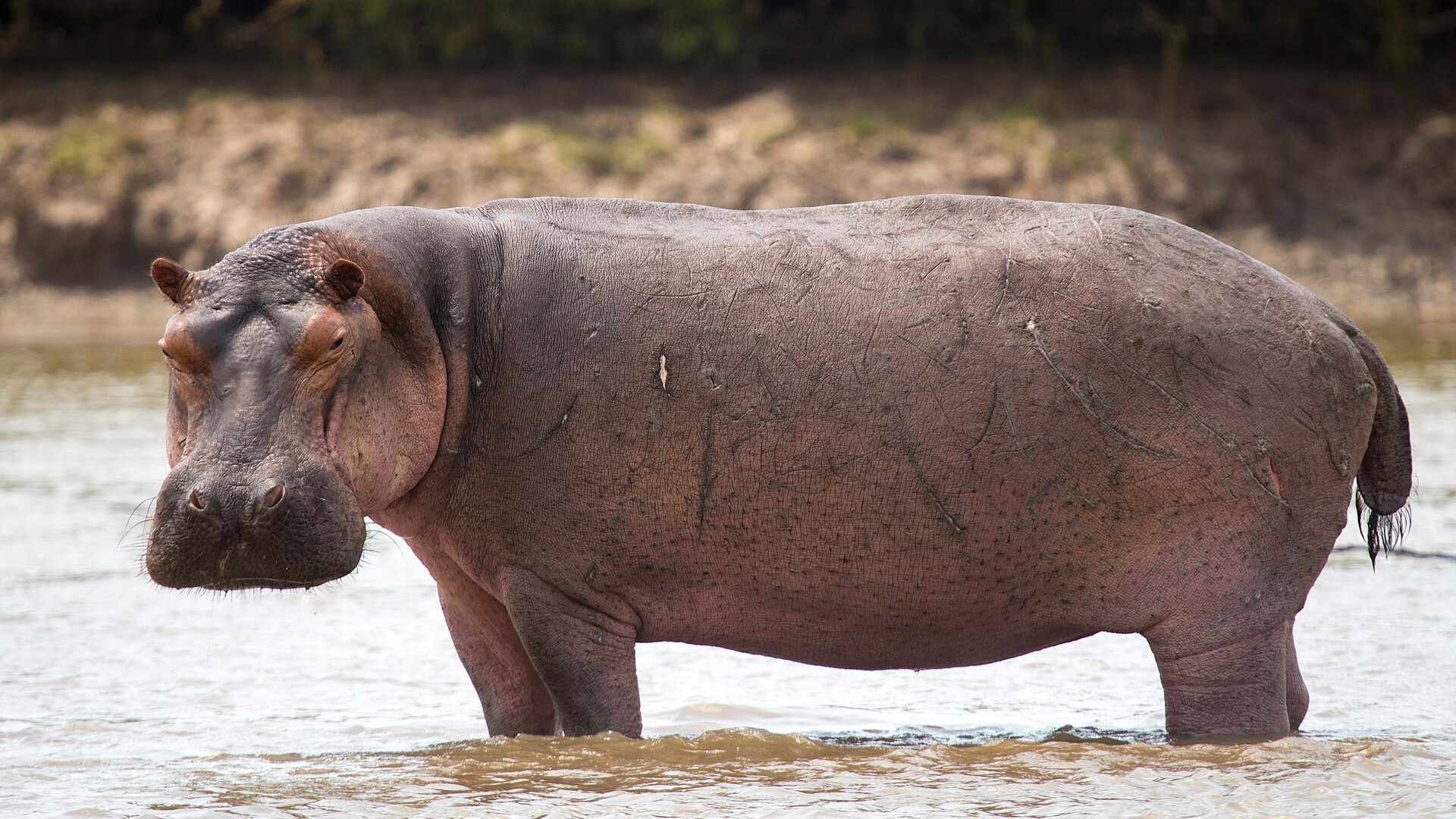
2. Hippos Cannot Actually Float Or Swim
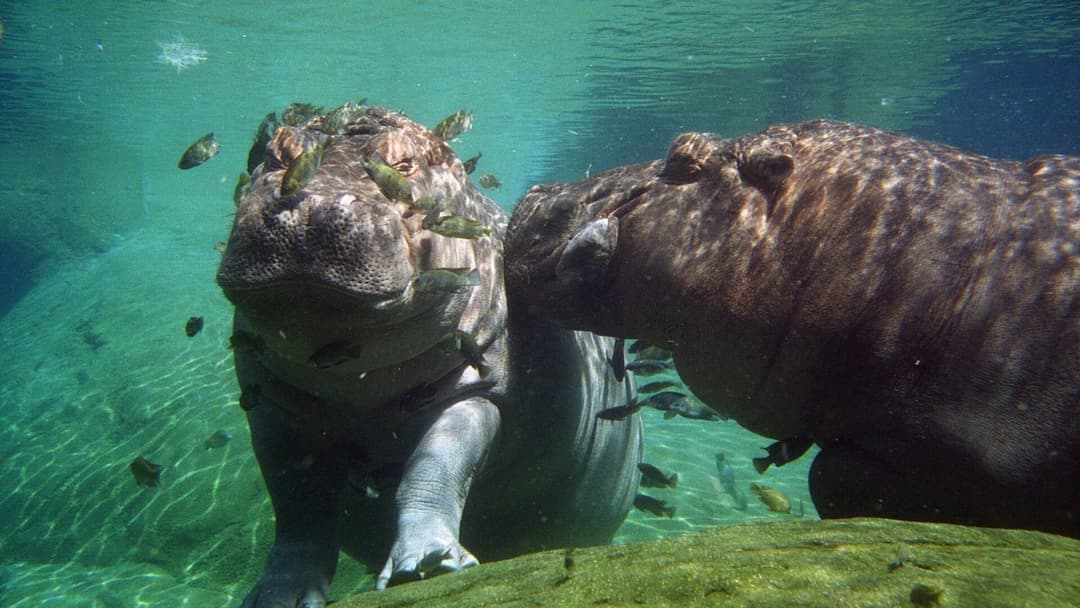
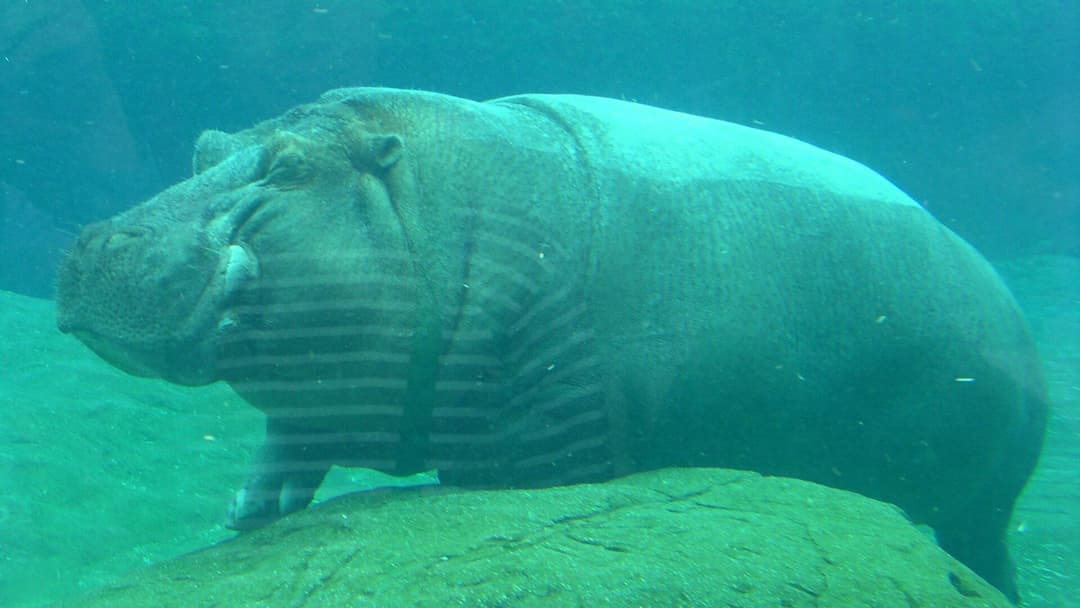
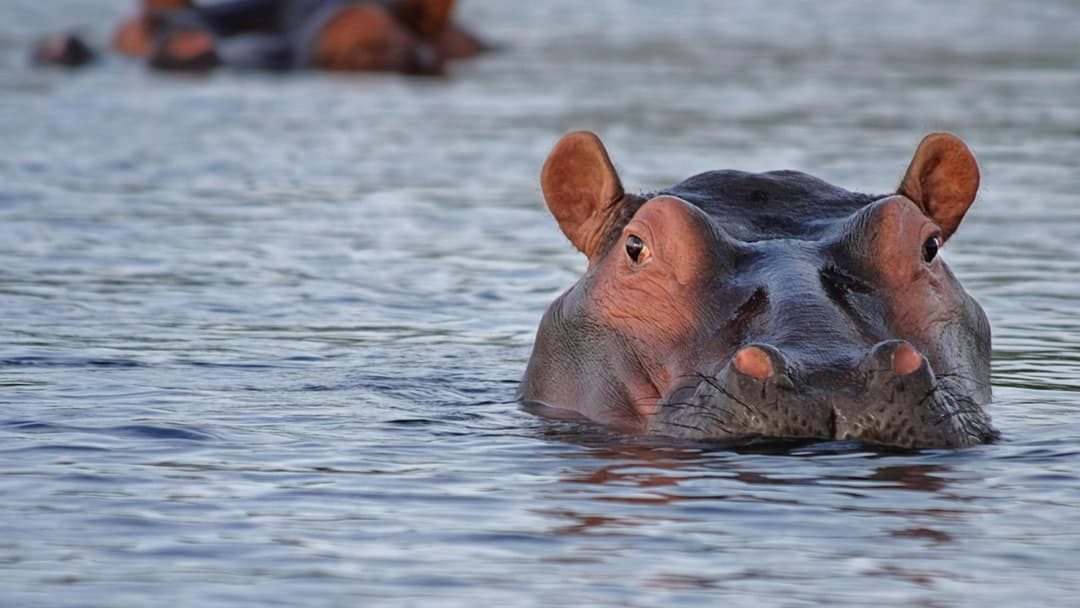
Despite spending sixteen hours a day in rivers and lakes, adult hippos cannot swim or float. Their dense, heavy skeletal structure causes them to sink straight to the bottom. Instead of paddling, they push off riverbeds to walk or bound along submerged channels.
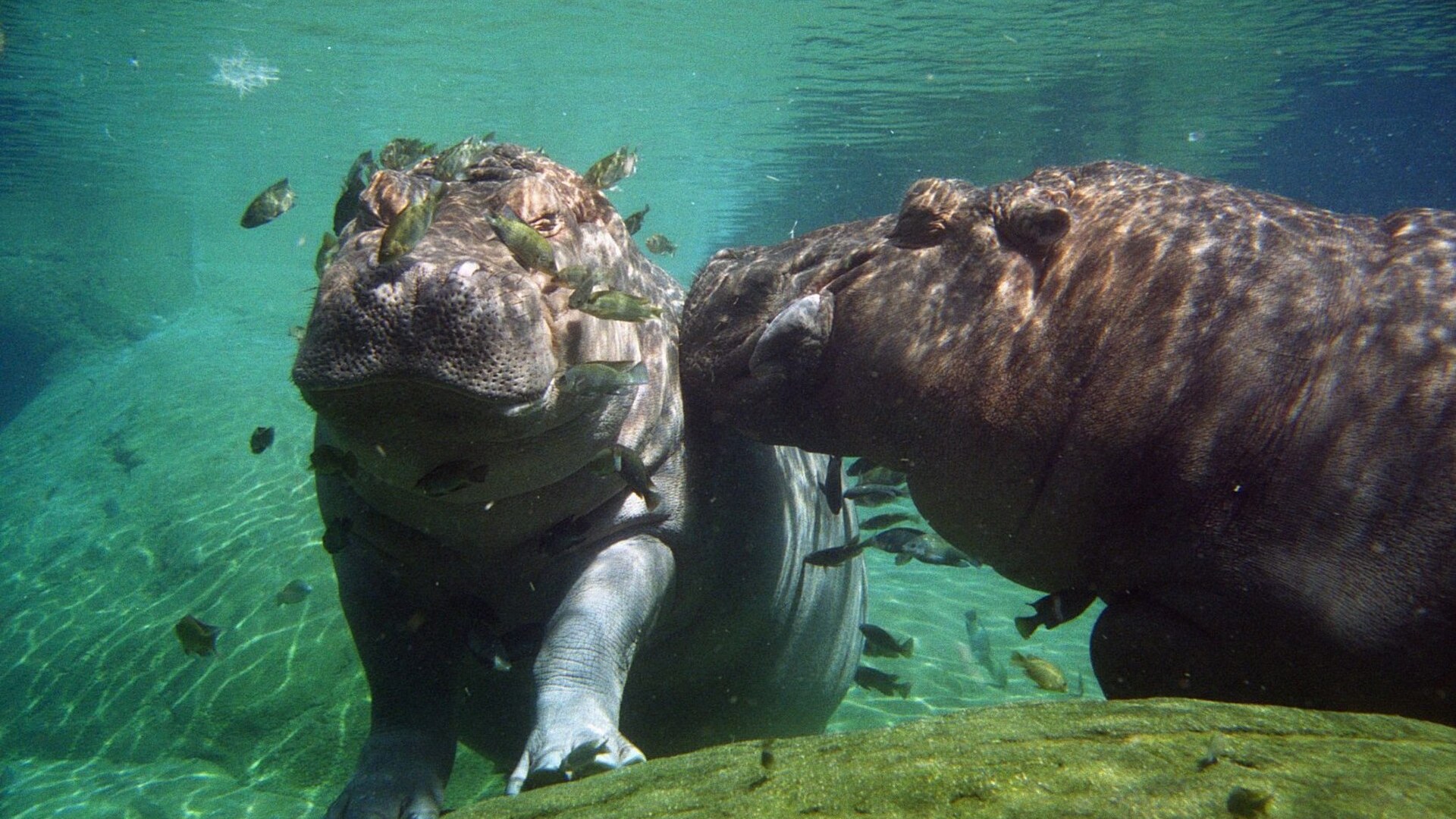
3. Natural Pink Blood Sweat Sunscreen
Hippos secrete an oily reddish-pink fluid from subdermal skin glands often nicknamed blood sweat. The chemical compound contains hipposudoric acid, which absorbs ultraviolet radiation like sunscreen. It also acts as a potent antibiotic against bacterial infections.
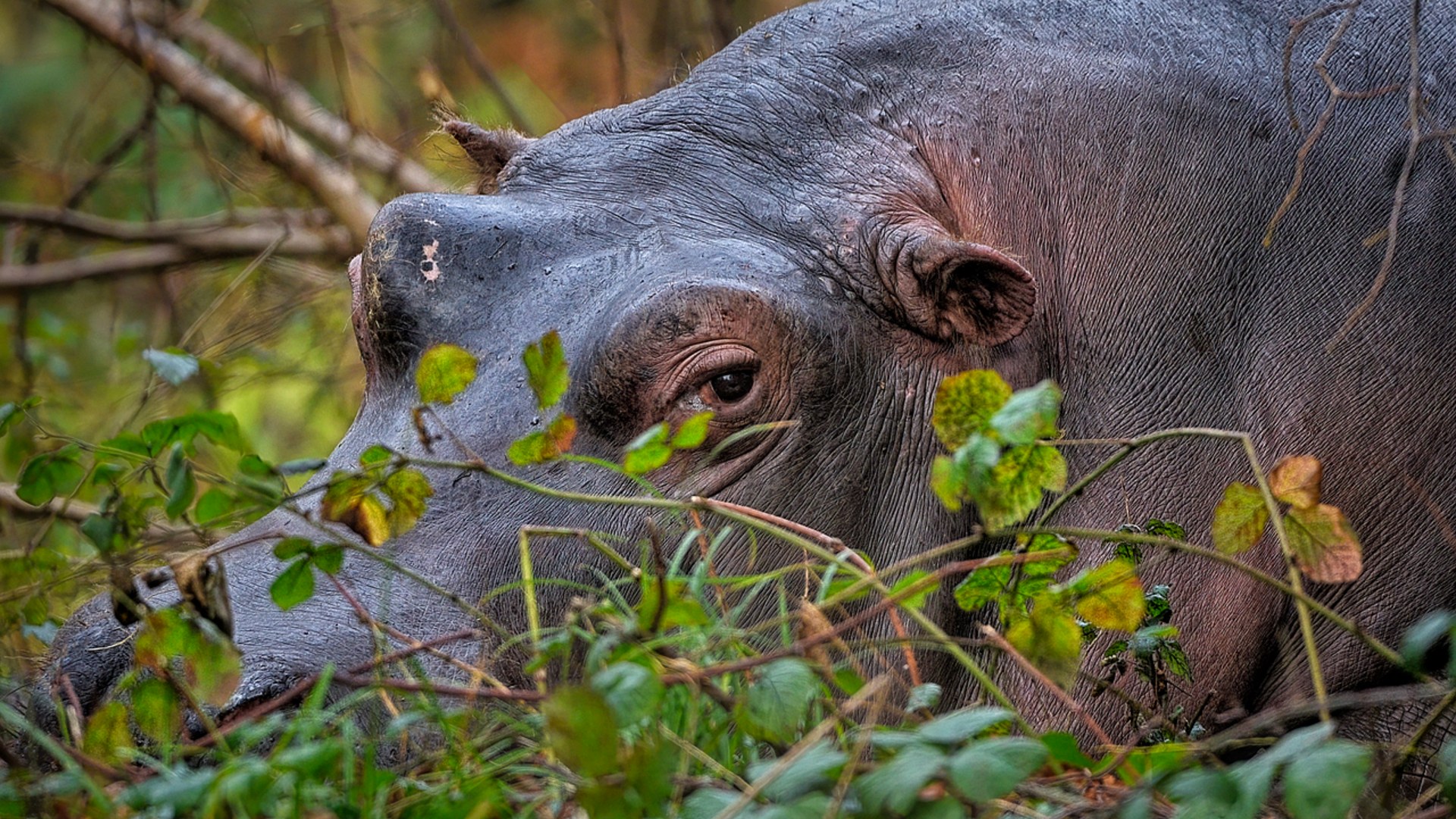
4. Crushing Bite Force Of 12600 Newtons
Female hippos deliver a measured bite force of 1,800 pounds per square inch, while adult bulls register even higher. This crushing force equals roughly 12,600 newtons, nearly triple the jaw power of a male lion. The impact can slice an adult crocodile in half with one snap.
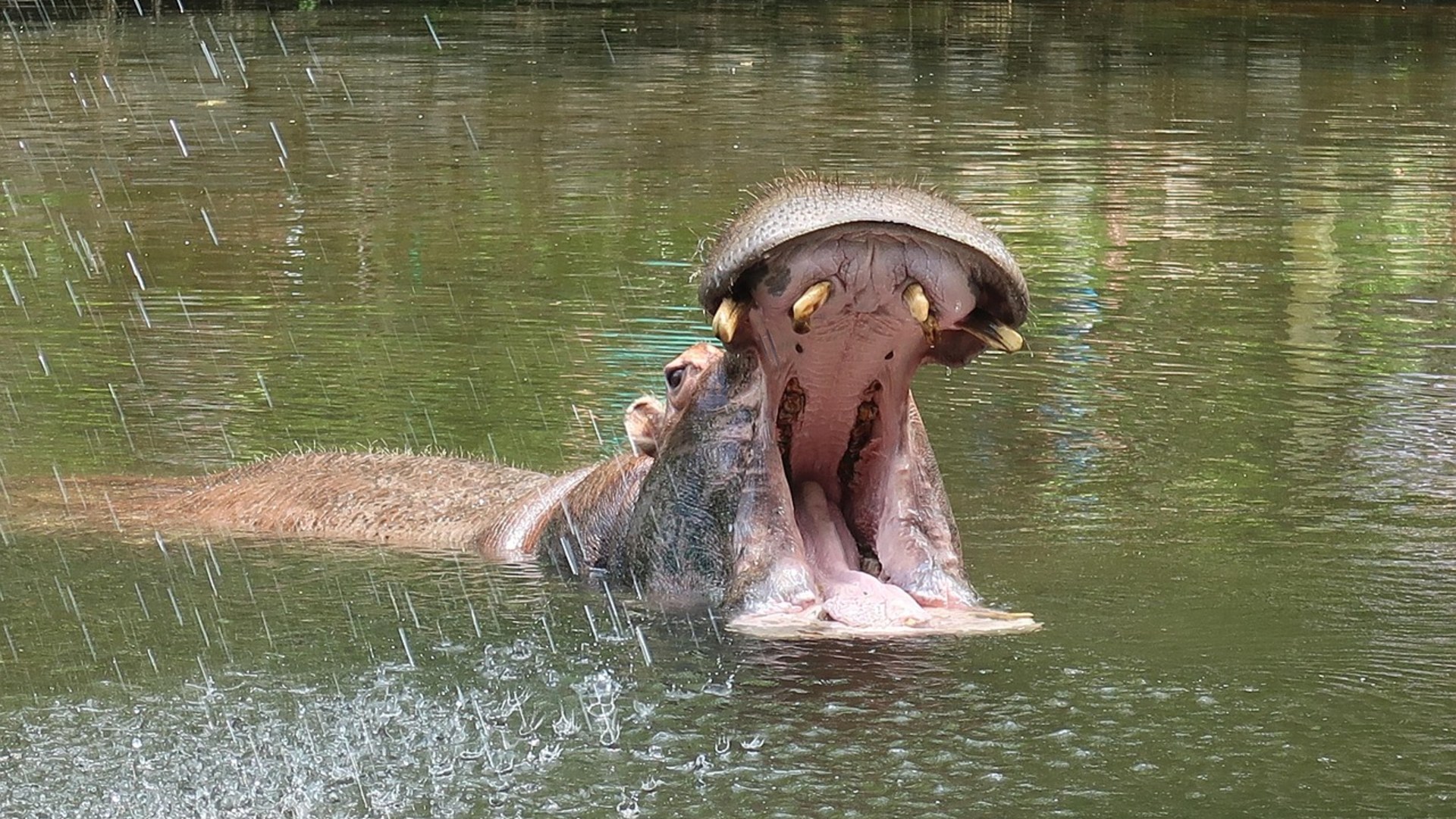
5. Giant Tusks That Continuously Grow
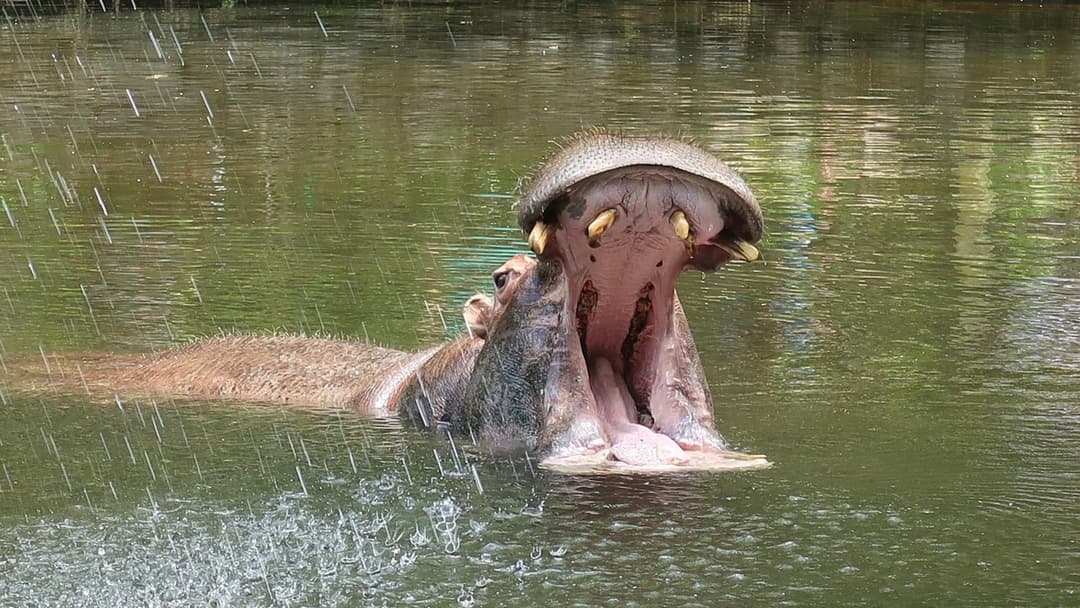
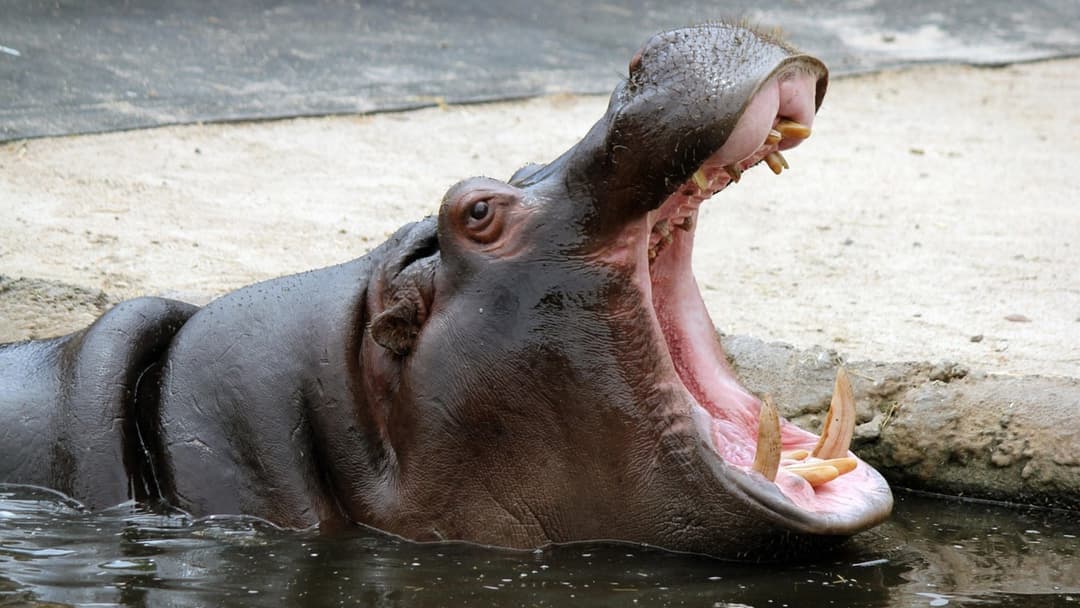
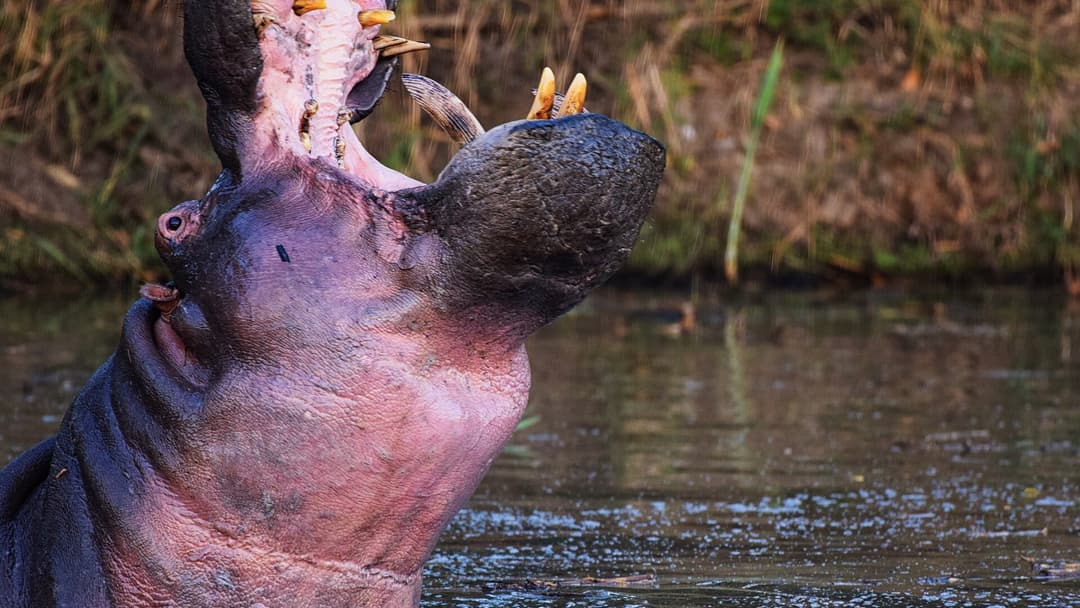
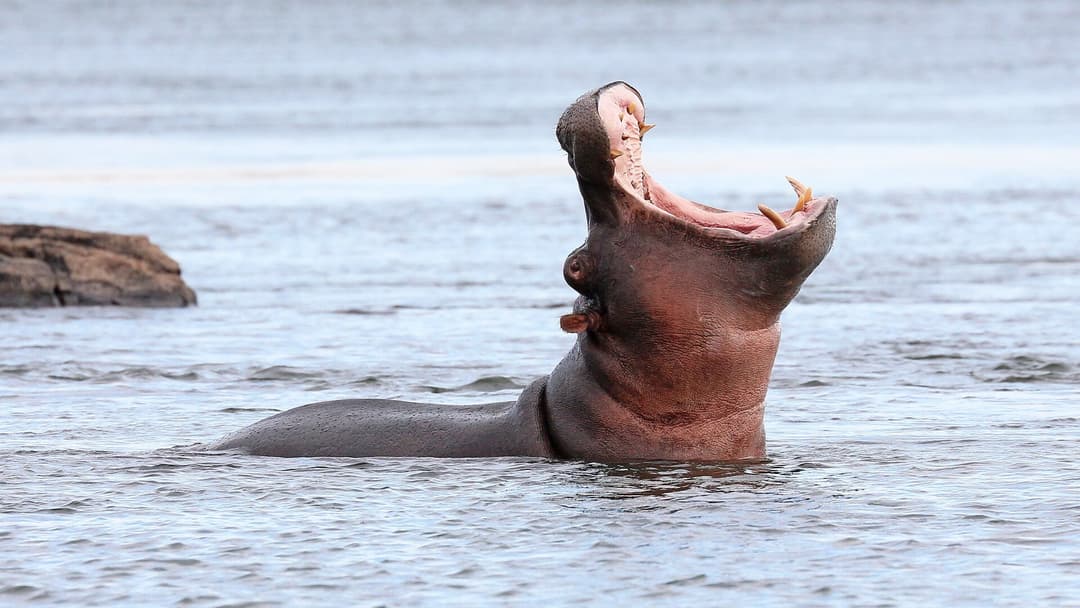
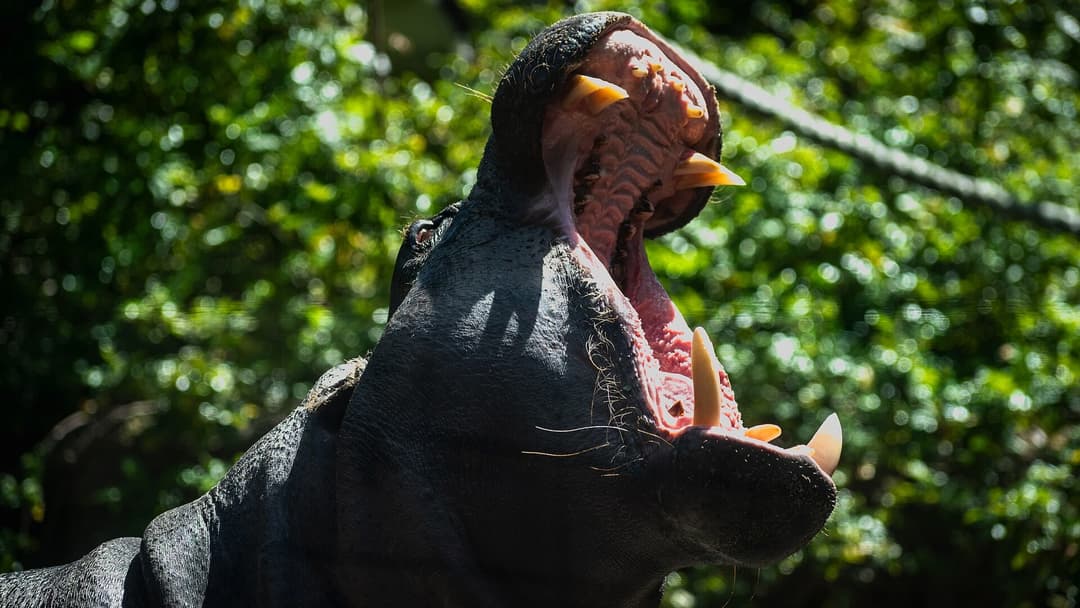
A bull hippo possesses lower canine tusks that can grow up to 20 inches (50 cm) long. These massive ivory teeth grow continuously throughout life and never stop. As the upper and lower teeth grind together during eating and yawning, they continuously self-sharpen.
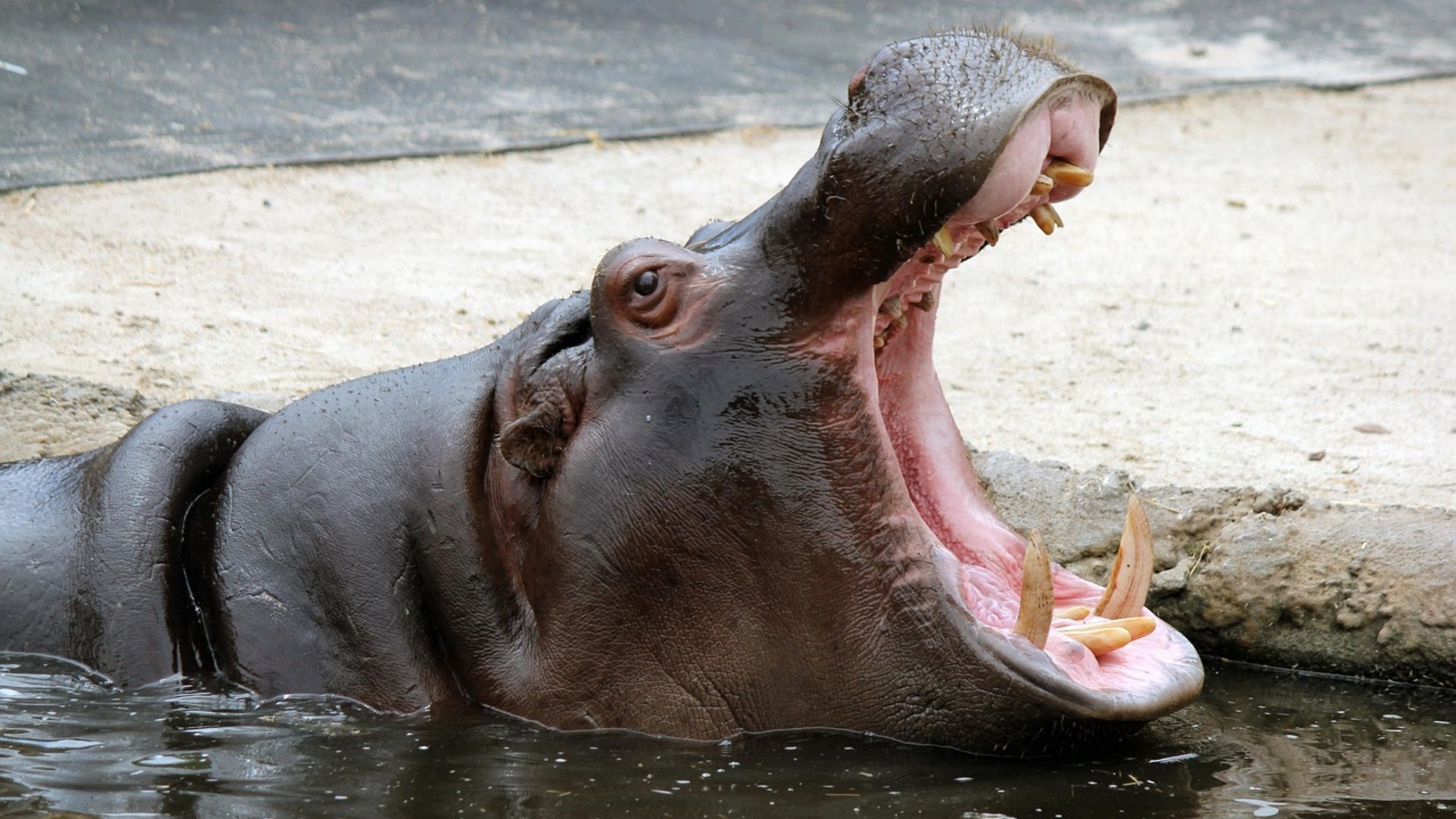
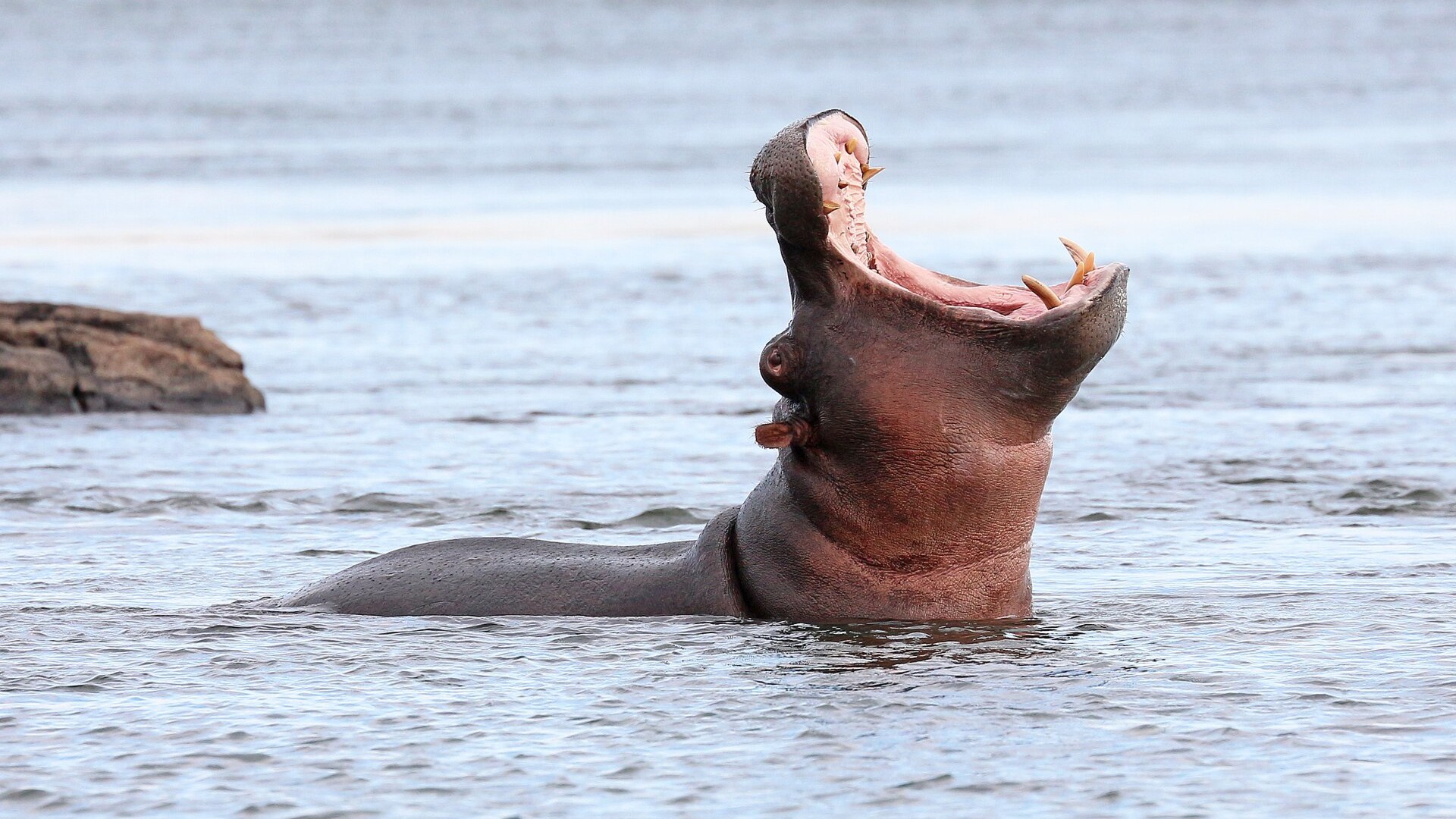
6. Massive 150-Degree Jaw Gape
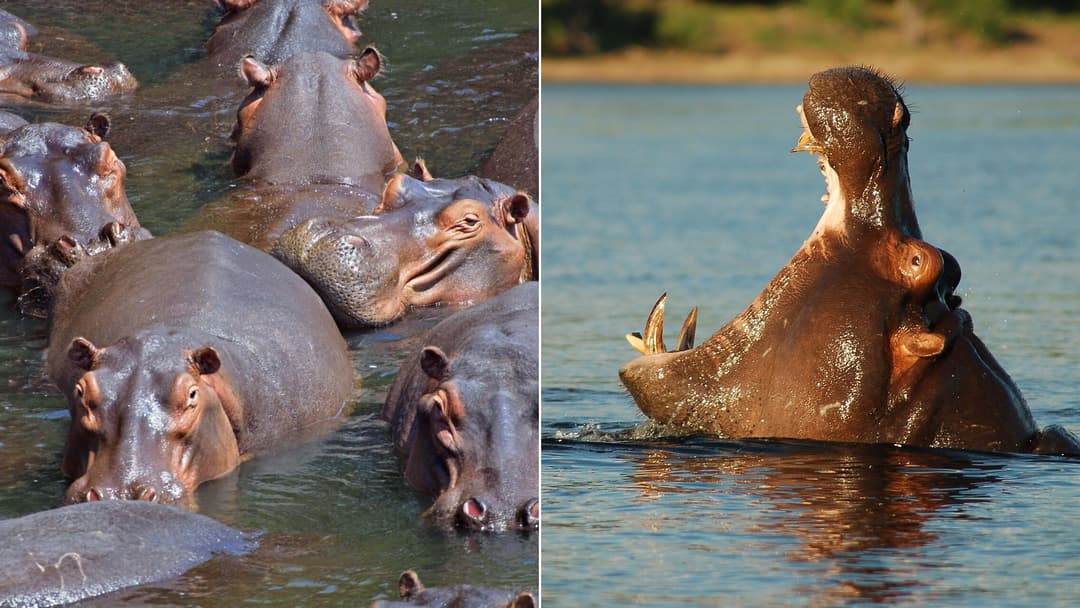
Hippos can open their mouths to an incredible 150-degree angle, spanning over four feet wide. While this display looks like a relaxed yawn, it is actually a fierce territorial threat display. Dominant males flash their tusks to warn competitors before engaging in physical clashes.
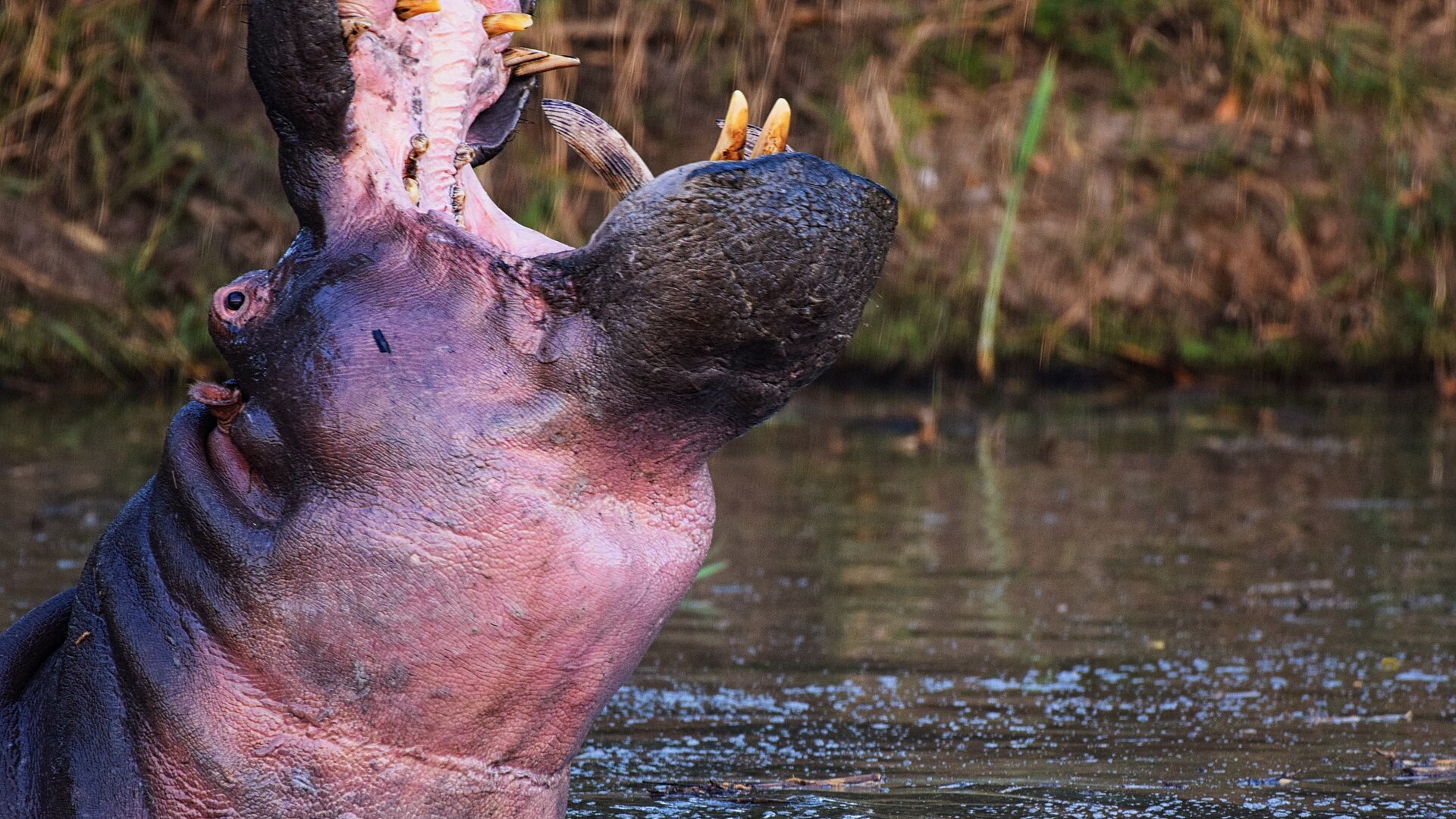
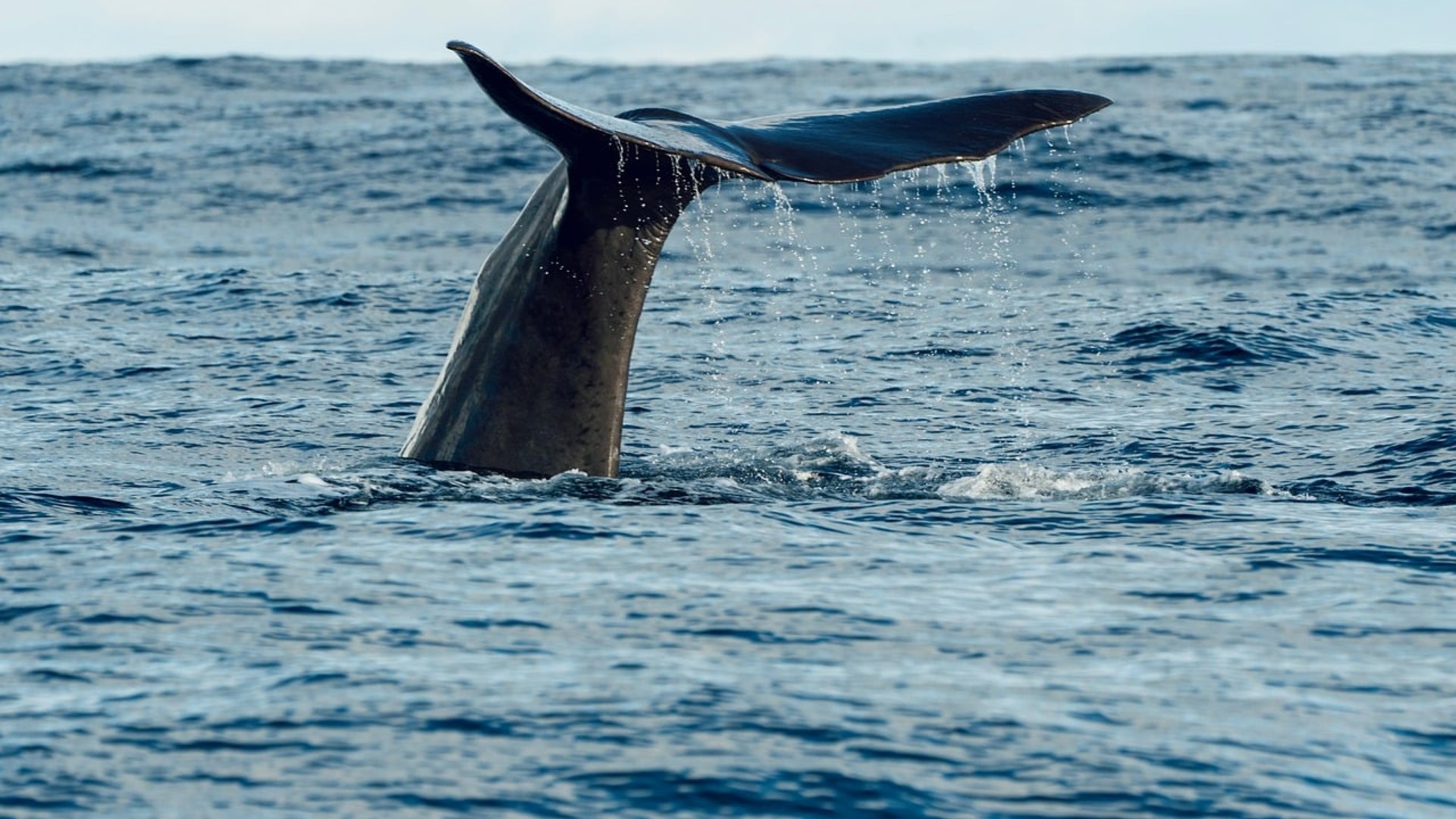
7. Closest Living Relatives Are Whales
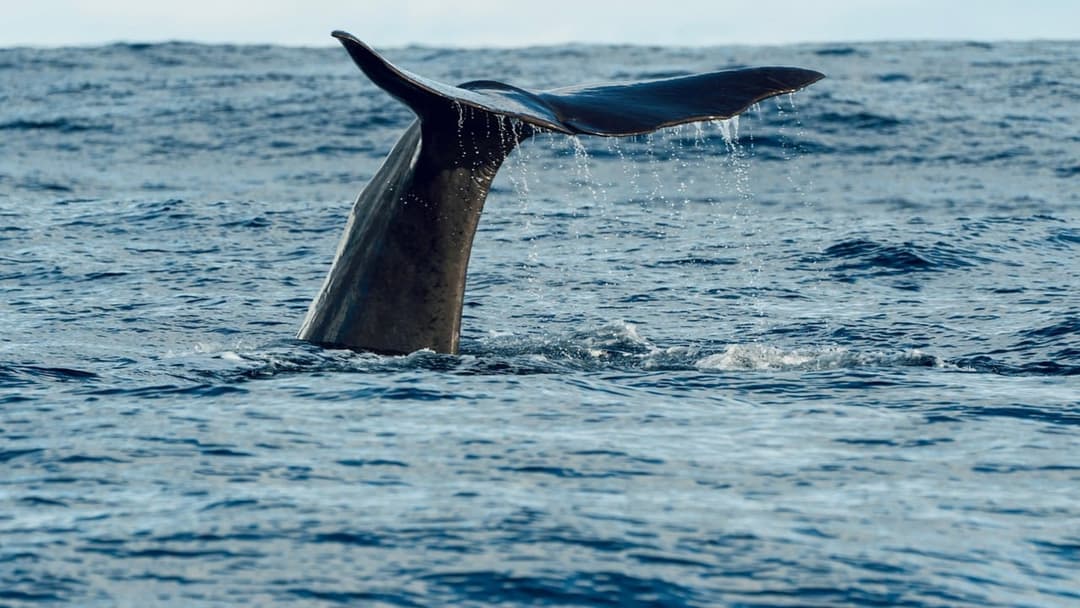
Although early zoologists grouped hippos alongside pigs, modern DNA sequencing proves their closest living relatives are whales and dolphins. The evolutionary lineage diverged roughly 55 million years ago, explaining shared traits like dense bones and underwater vocalizing.
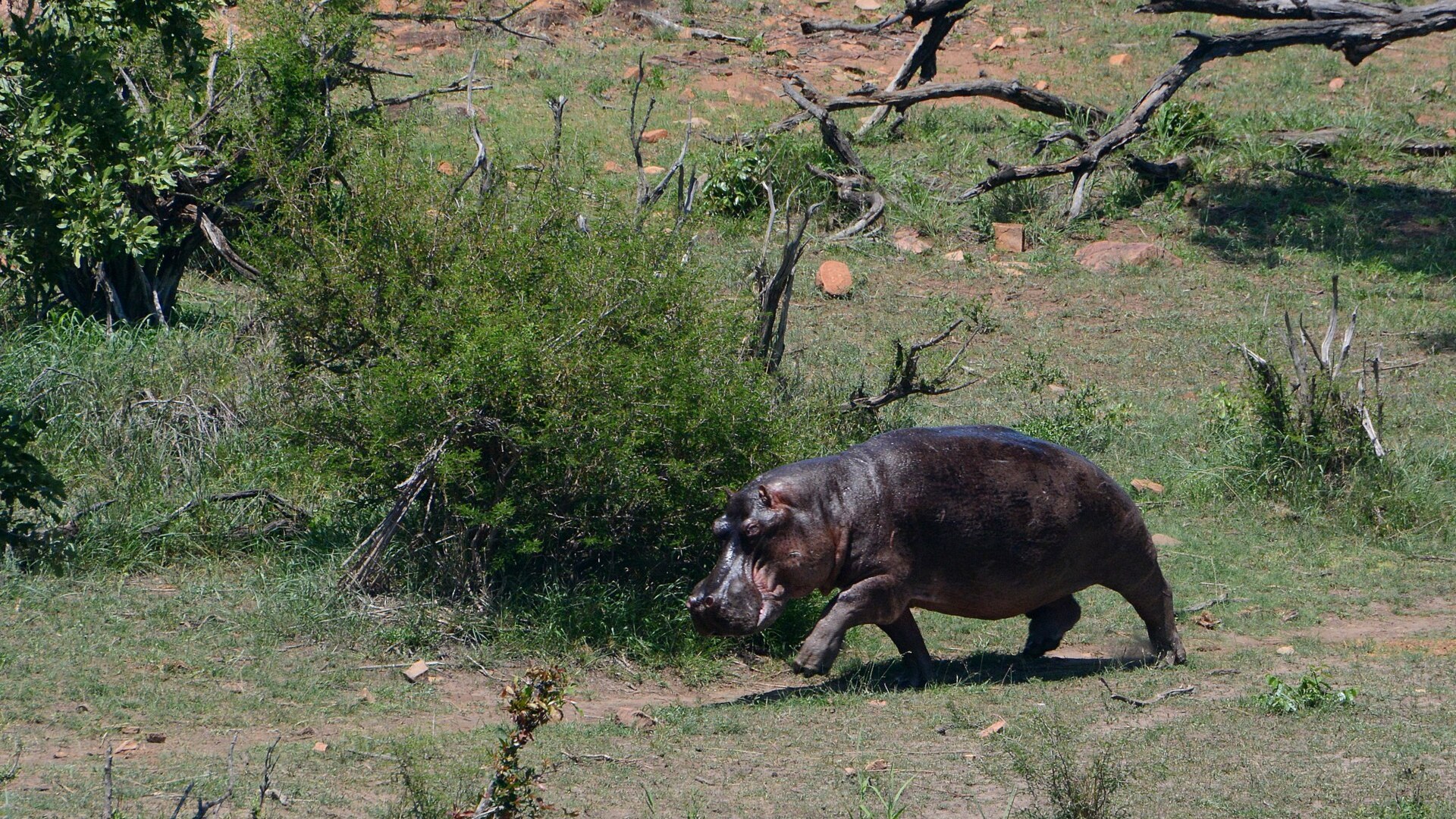
8. Surprising Land Speed Of 30 Km/h
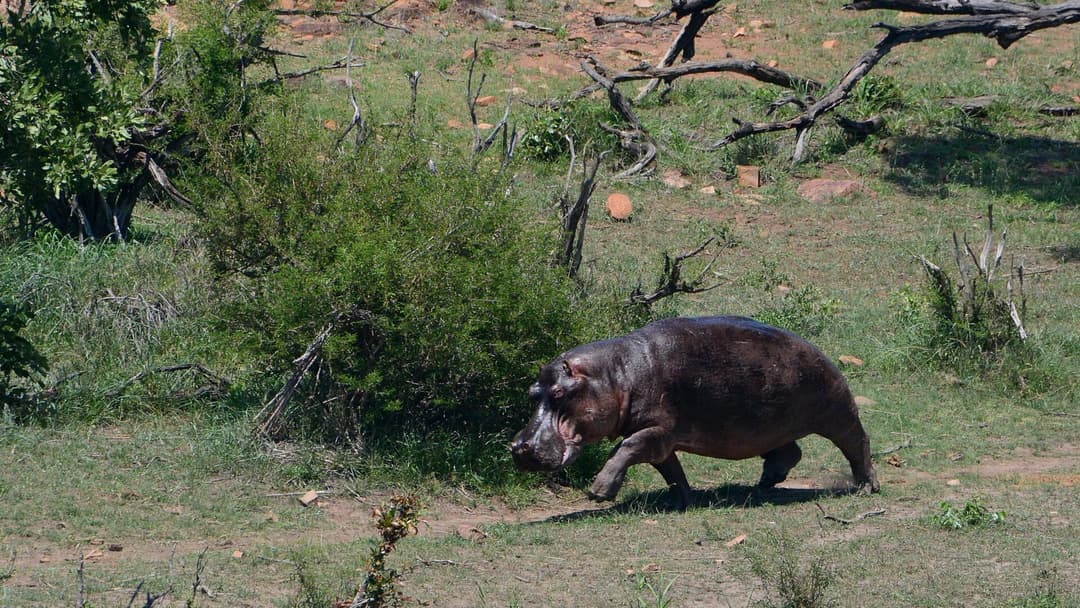
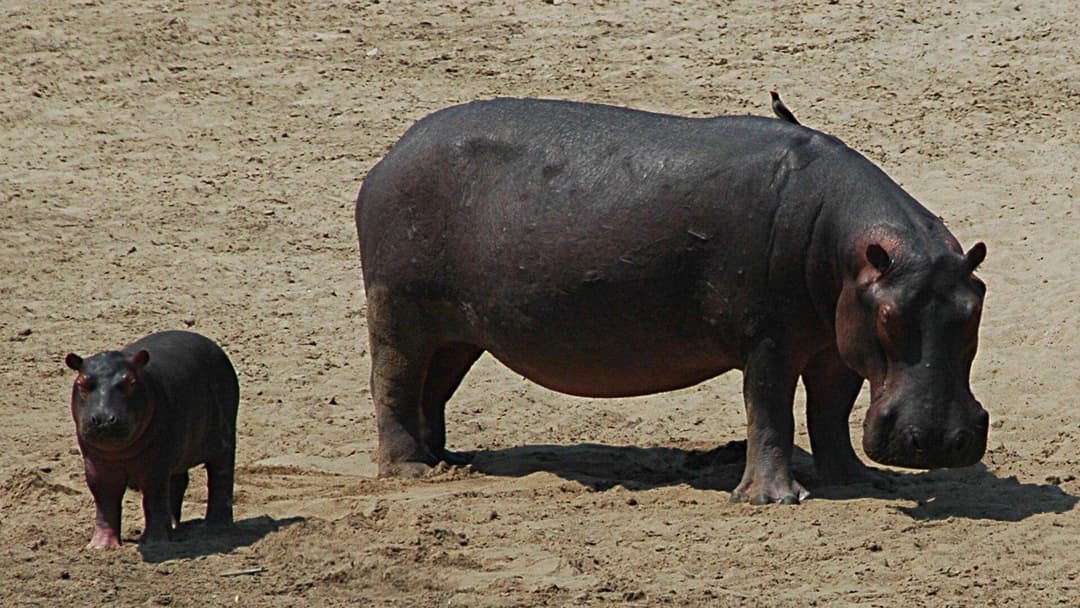
Despite weighing up to 4,000 pounds, a hippo can sprint across land at 19 mph (30 km/h) in short bursts. That speed outpaces an average human runner over flat distances. Their barrel-shaped bodies generate massive forward momentum during aggressive charges.
9. Bounding Riverbed Gallop
When moving through deep water channels, hippos do not use swimming strokes. They kick off underwater river gravel, performing a slow-motion bounding gallop at speeds up to 5 mph (8 km/h). Their streamlined bulk glides through currents with minimal physical effort.
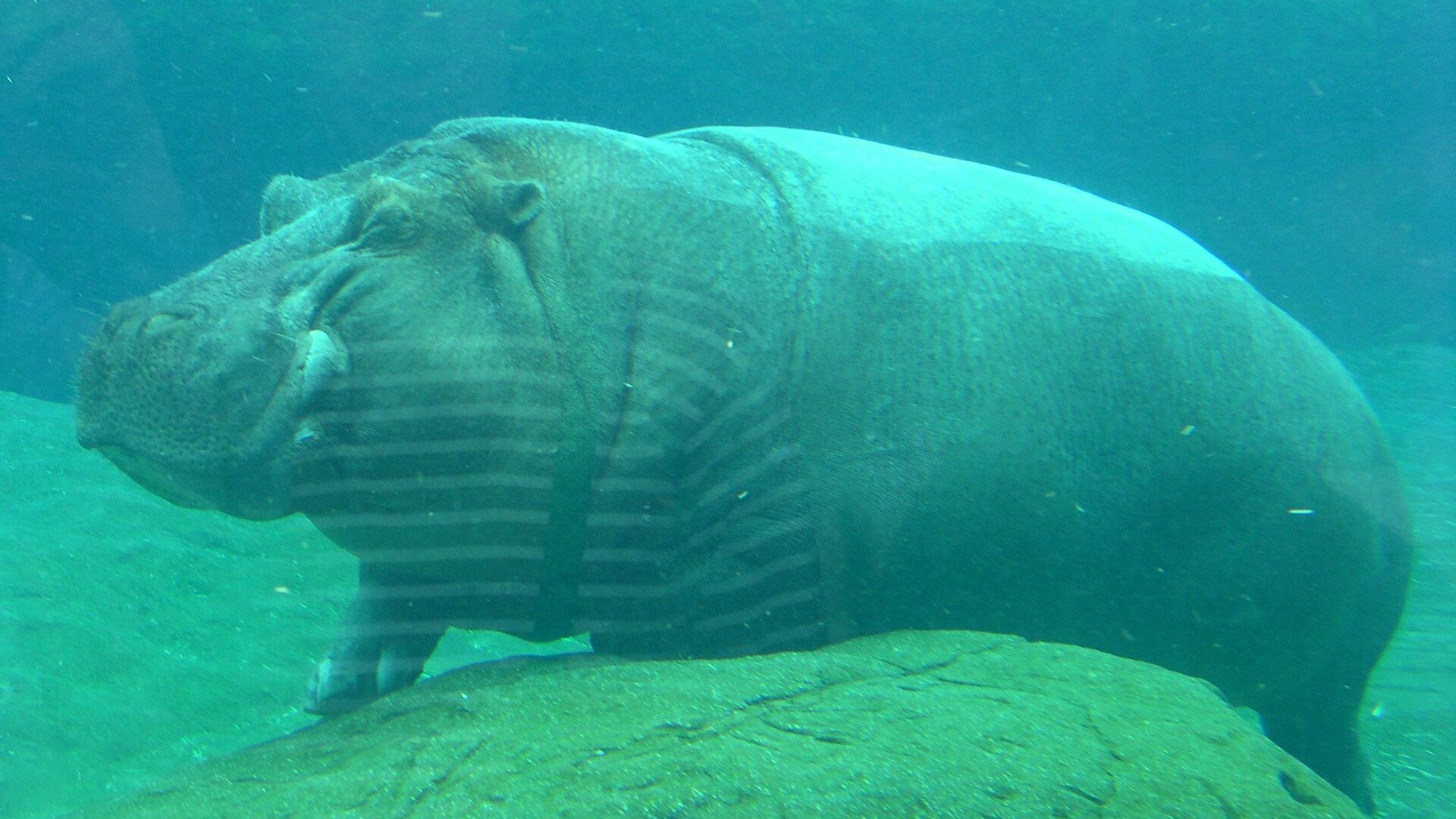
10. Automatic Breathing While Fully Asleep
Hippos can sleep completely submerged on the river floor thanks to an automatic neural reflex. Every three to five minutes, their bodies rise to the surface, exhale, inhale fresh oxygen, and sink back down. They complete this cycle repeatedly without conscious awareness.
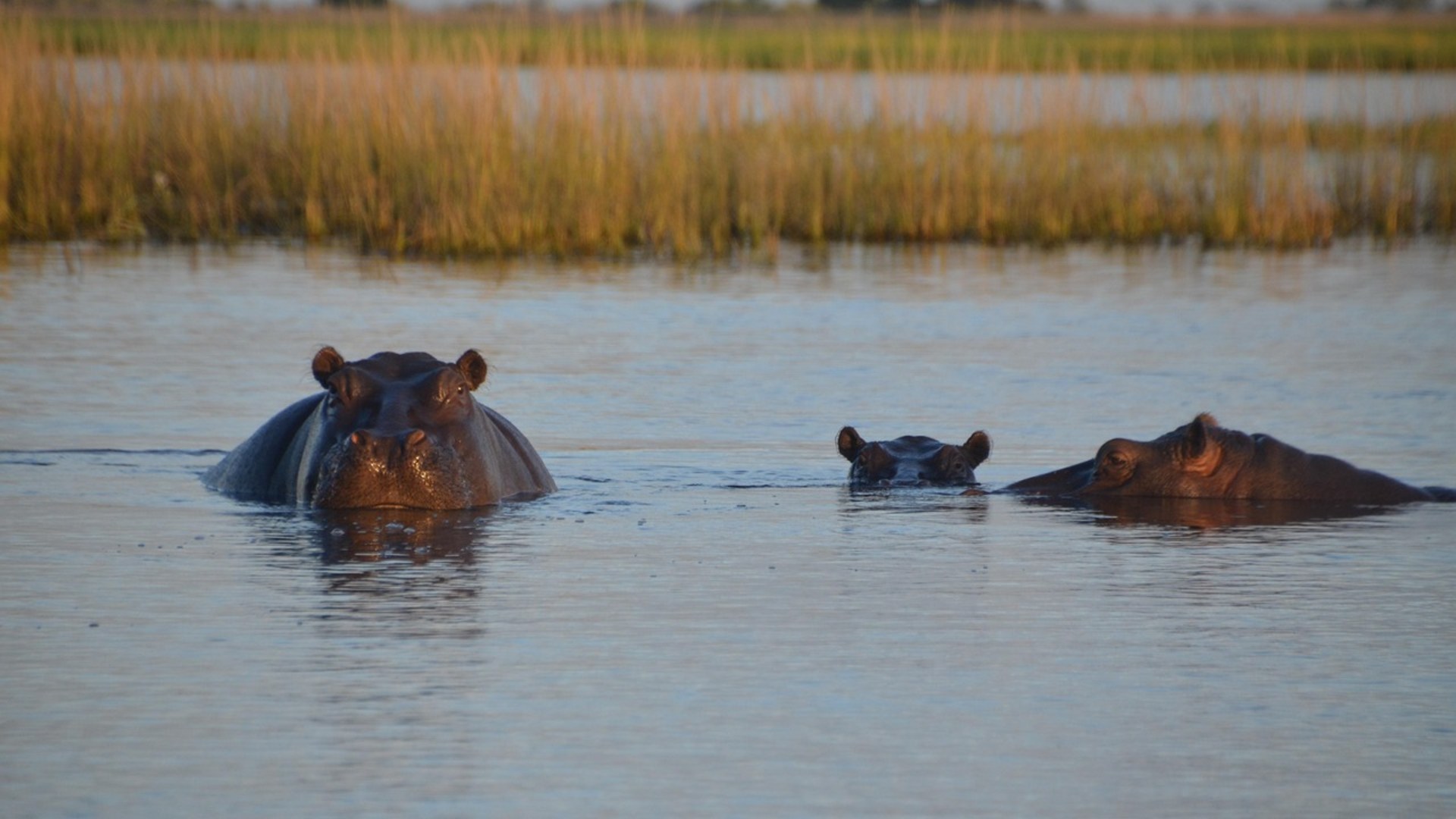
11. Five-Minute Submersion Limit
An adult hippo can stay underwater for up to five minutes during typical feeding and resting cycles. Muscular ring valves immediately pinch their nostrils and ears shut when their heads submerge. A clear membrane also protects their eyes while maintaining underwater vision.
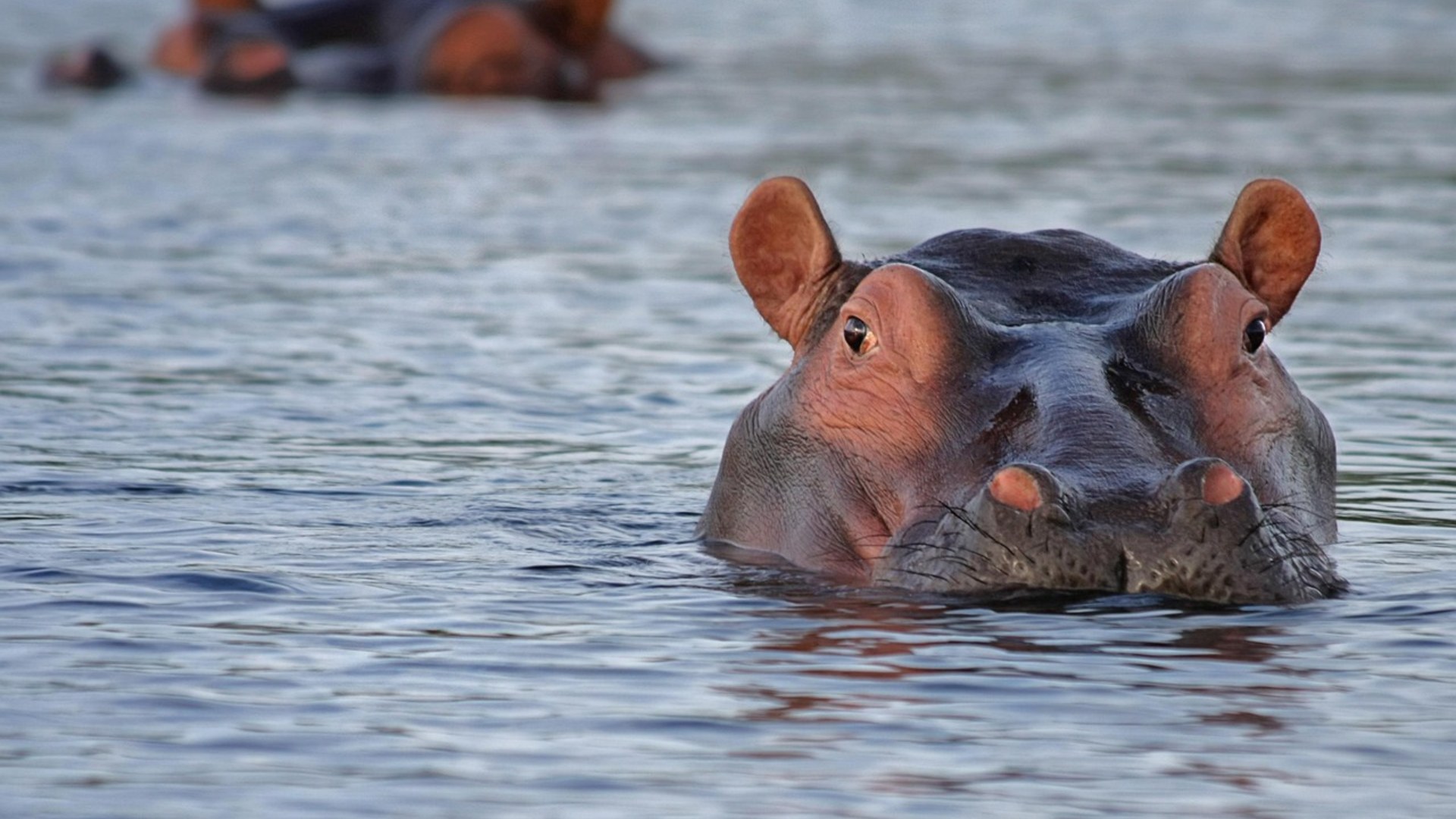
12. Grazing Eighty Pounds Of Grass Nightly
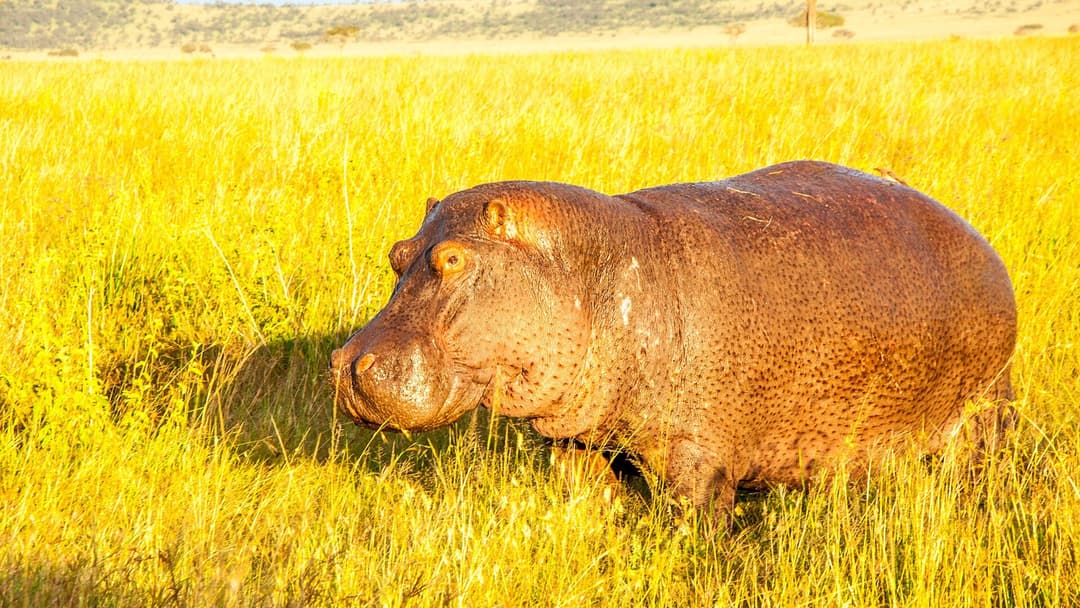
Hippos are nocturnal herbivores that leave rivers after twilight to graze on land. A single adult consumes 80 to 100 pounds (35 to 45 kg) of short vegetation in one night. They use wide, hardened lips rather than teeth to crop grass cleanly down to the soil.
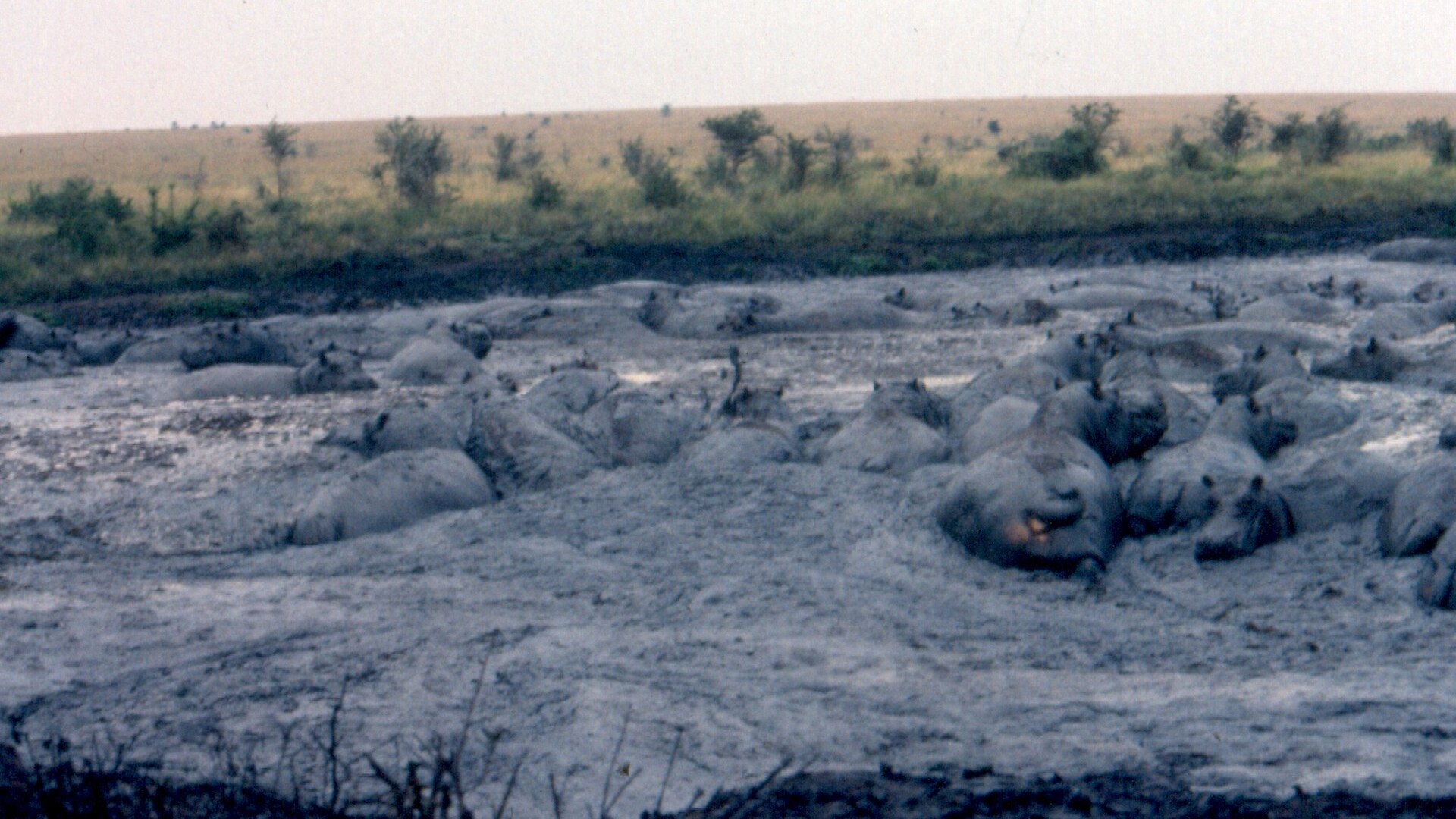
13. Six-Mile Nocturnal Treks
During dry seasons when vegetation near waterways thins out, hippos trek up to six miles (10 km) inland to feed. They follow traditional pathways called hippo highways, carving trenches into riverbanks. These deeply worn routes are shared by generations of local wildlife.
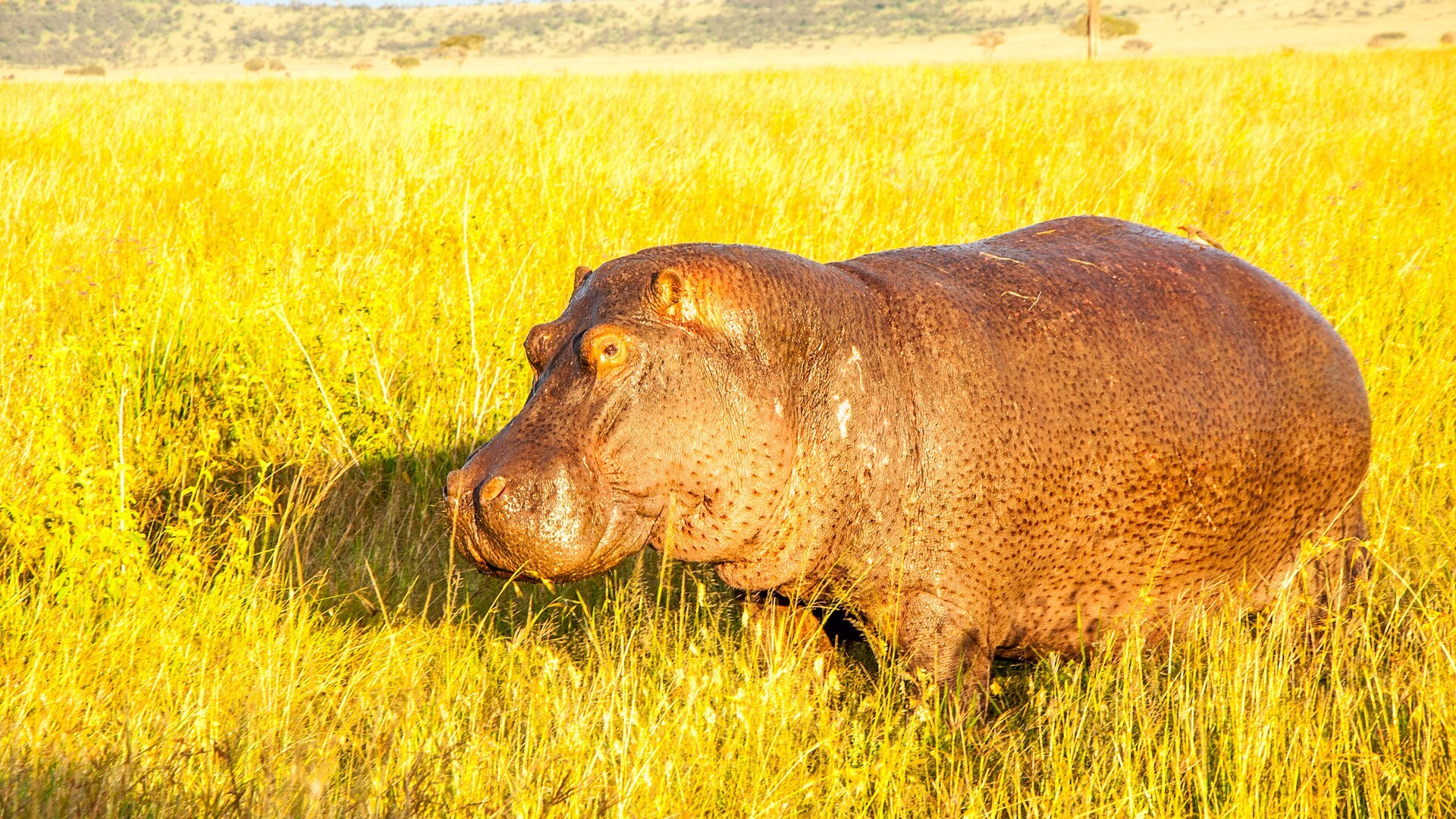
14. Propeller Dung Spraying Displays
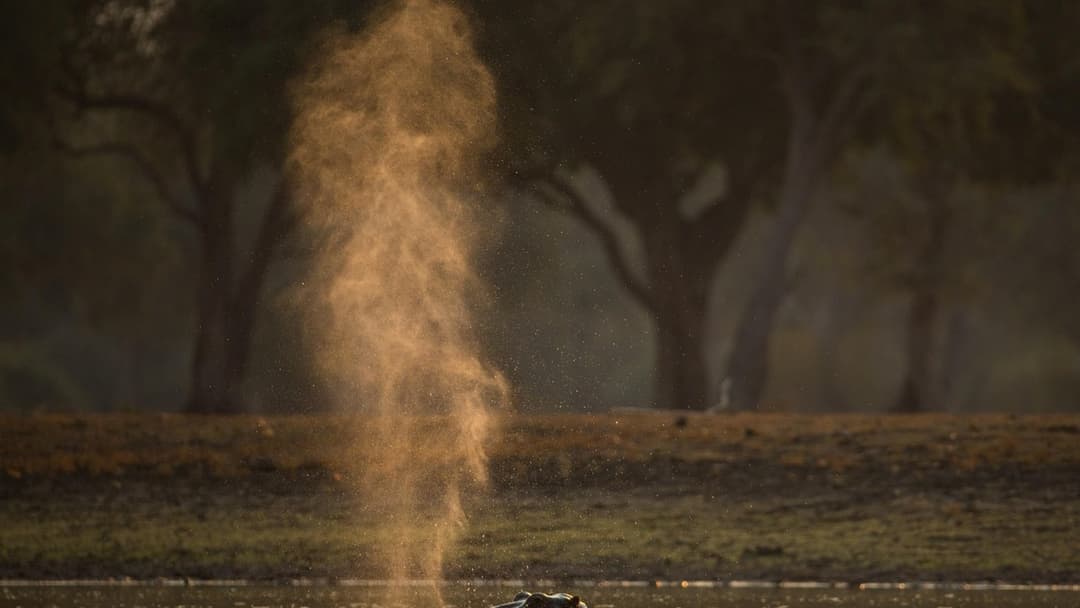
Dominant male hippos mark aquatic boundaries and walking trails by spraying dung in a rapid circular motion. They spin their short, paddle-shaped tails like propellers while defecating. This behavior launches feces several meters across riverbanks to signal dominance.
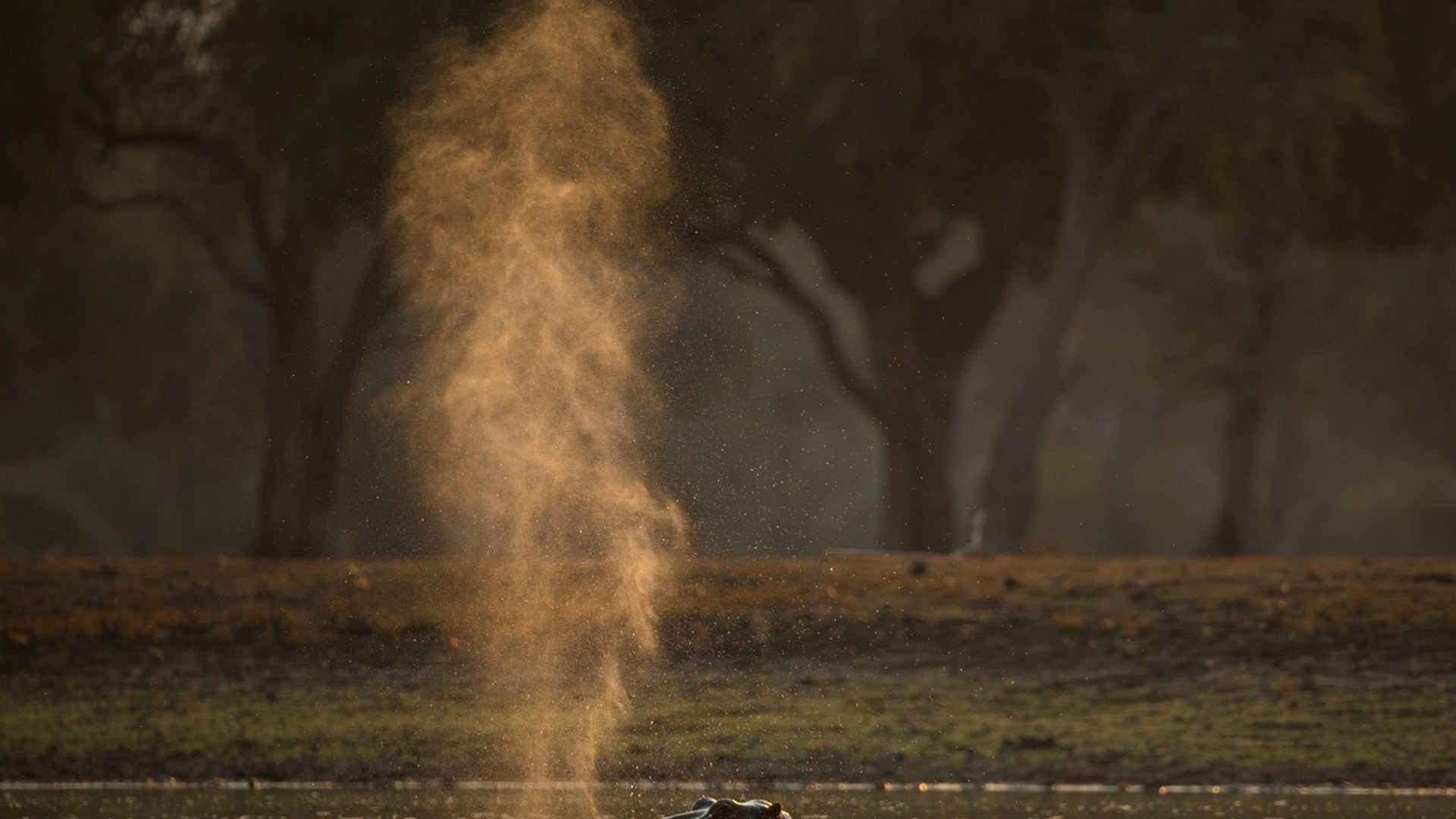
15. Essential River Ecosystem Engineers
Hippo dung deposits thousands of tons of organic carbon and dietary silica into African river channels each year. These nutrients nourish aquatic algae, insect larvae, and commercial fish species. Their constant movement also dredges open deep navigational channels.
16. Thunderous 115-Decibel Calls
Hippos produce a loud signature call called a wheeze-honk that registers at 115 decibels across waterways. Because their lower jawbones conduct sound vibrations, they can emit and receive acoustic signals simultaneously above and below the river surface.
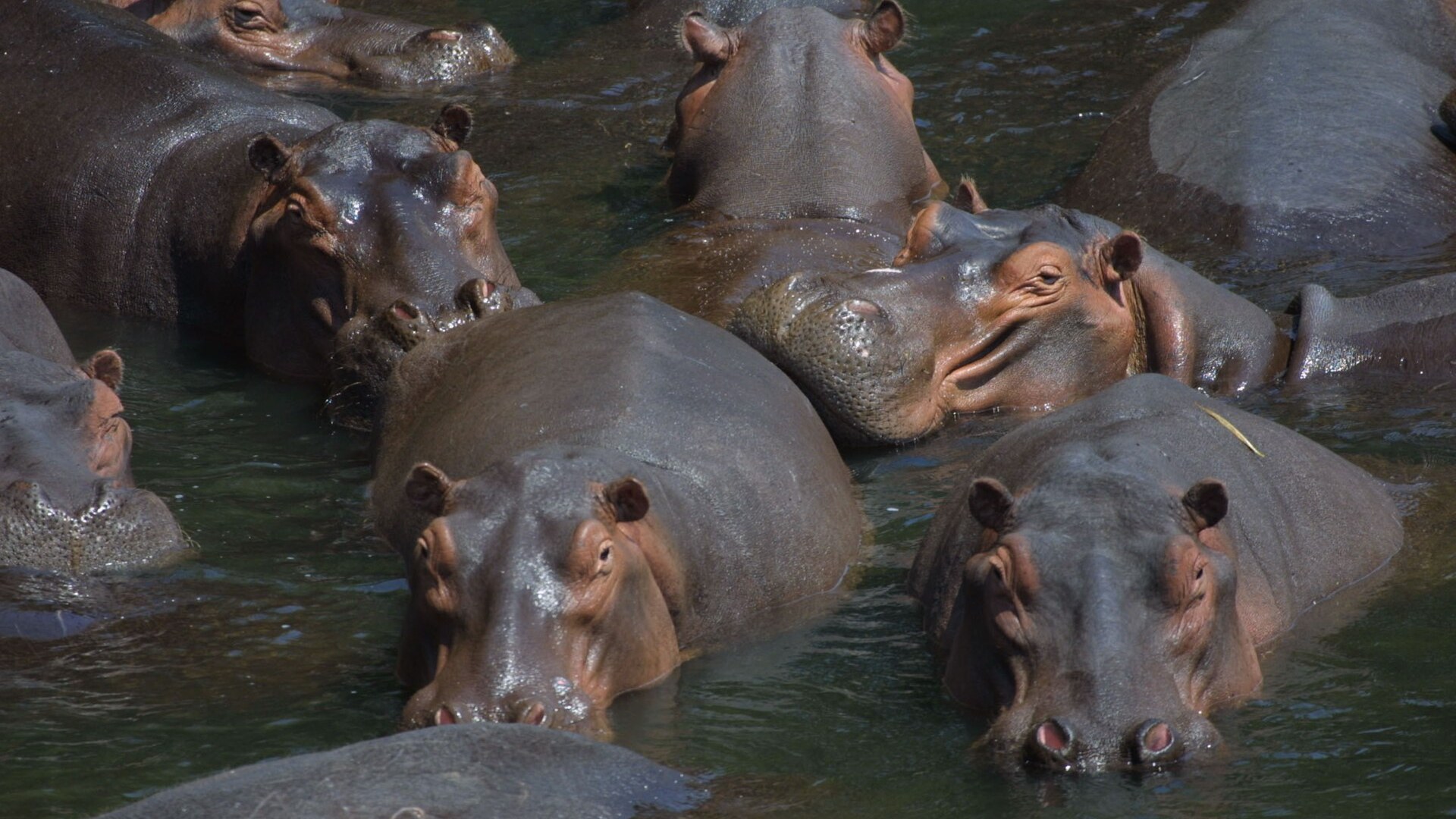
17. Social Water Pods, Solitary Night Feeders
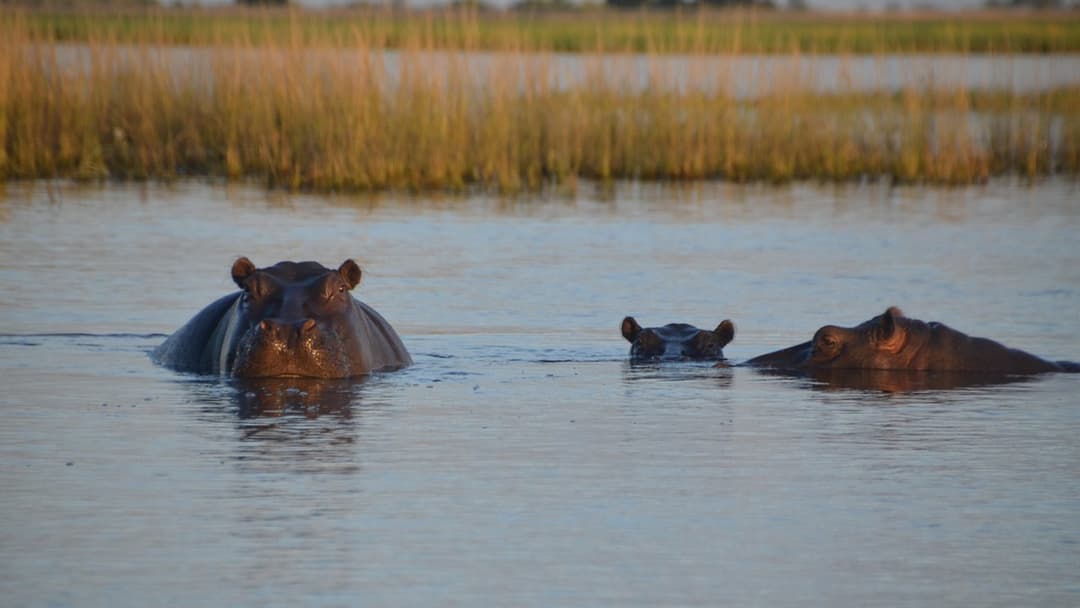
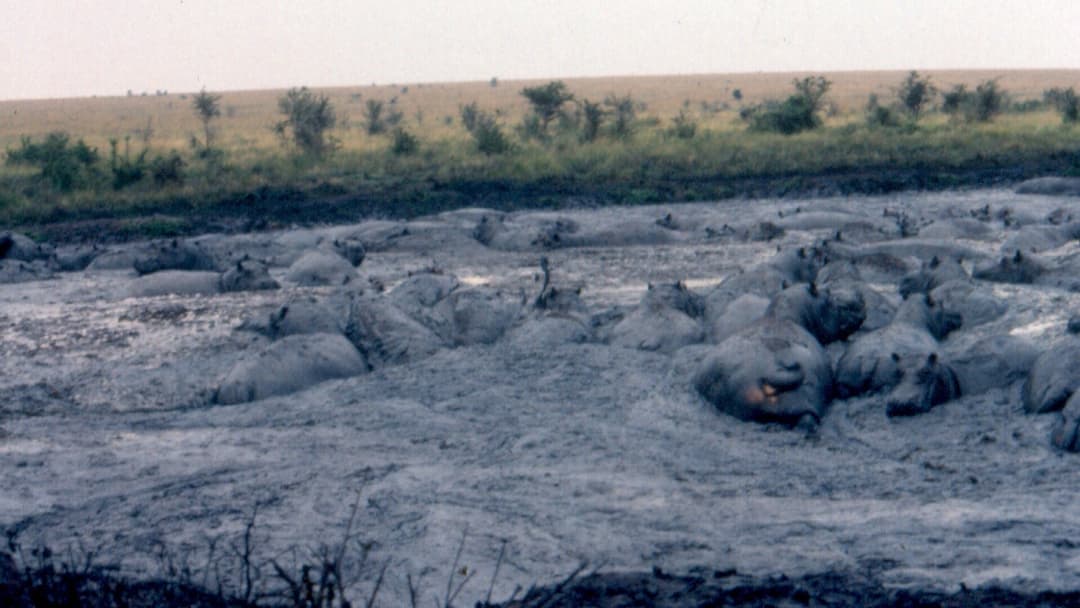
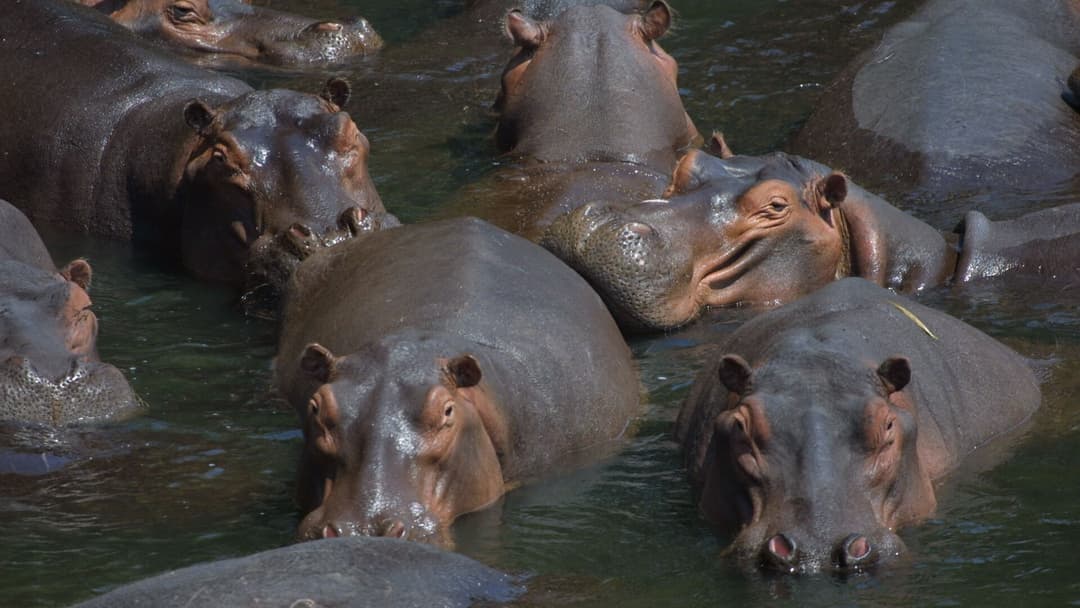
During daytime hours, hippos crowd together in tight river pods of twenty to one hundred individuals. However, they do not maintain social bonds while grazing on land. Once dusk settles, each animal separates to forage entirely alone across nearby grasslands.
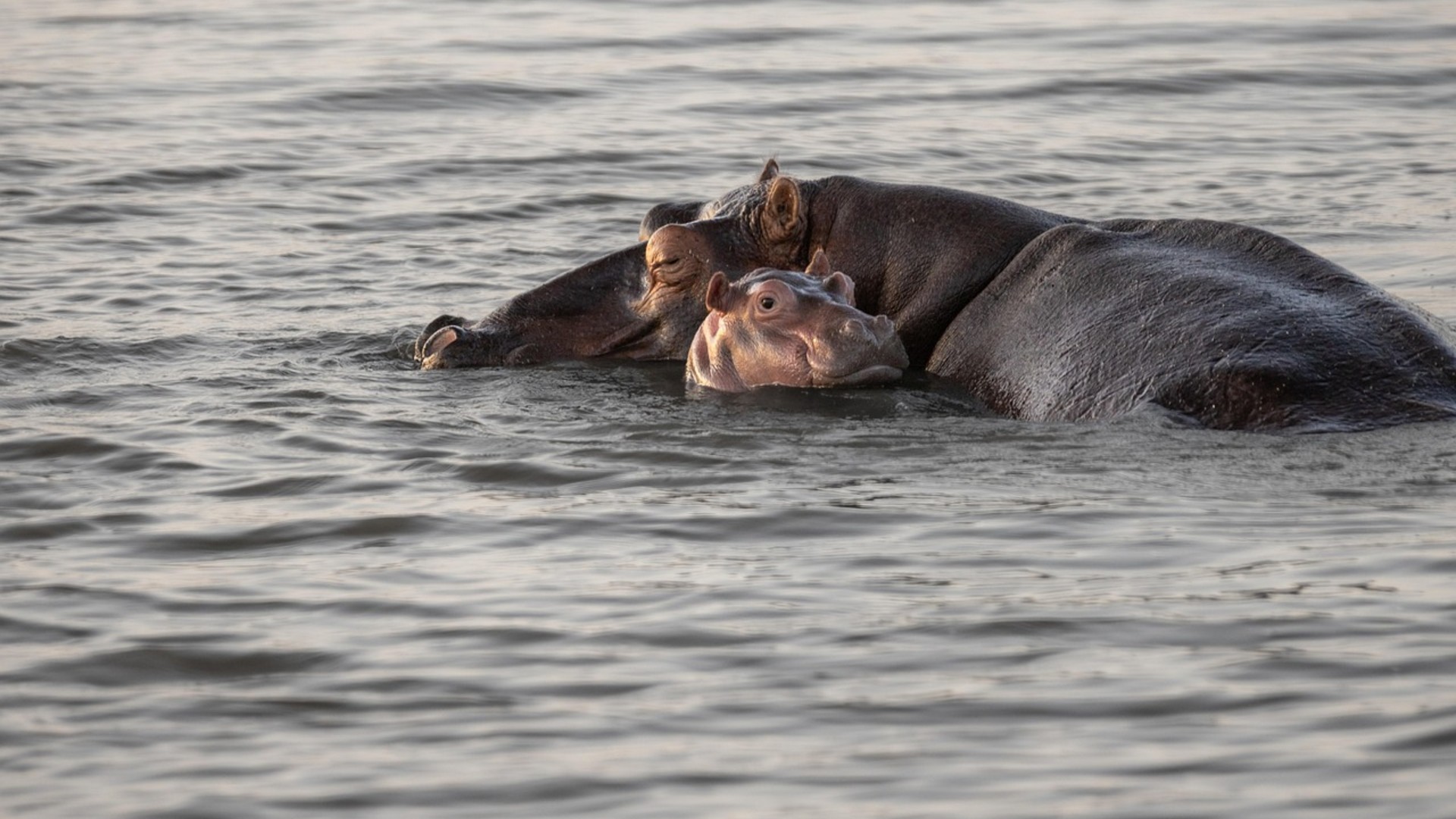
18. Underwater Calving And Nursing
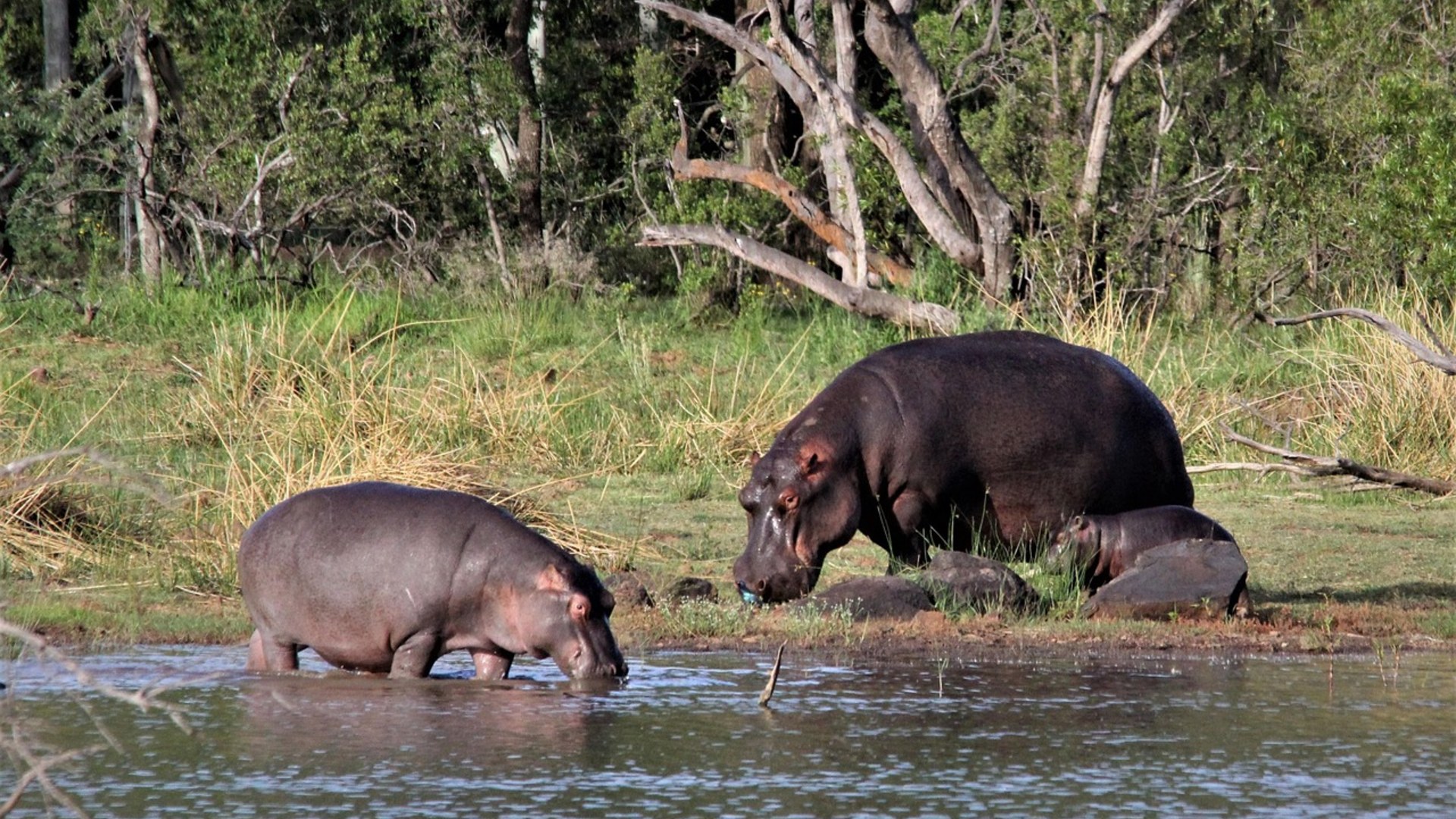
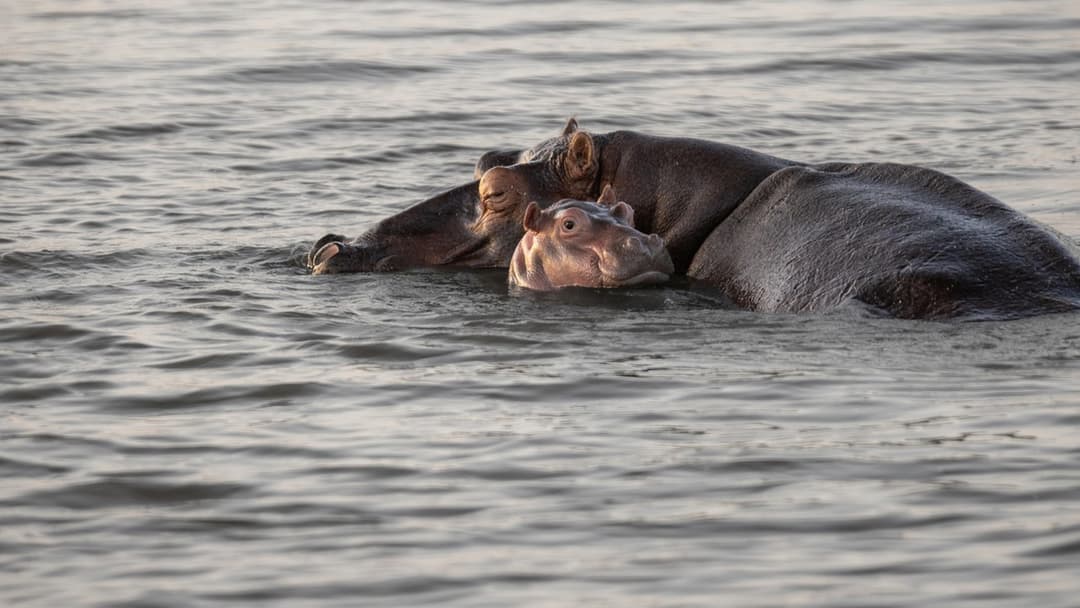
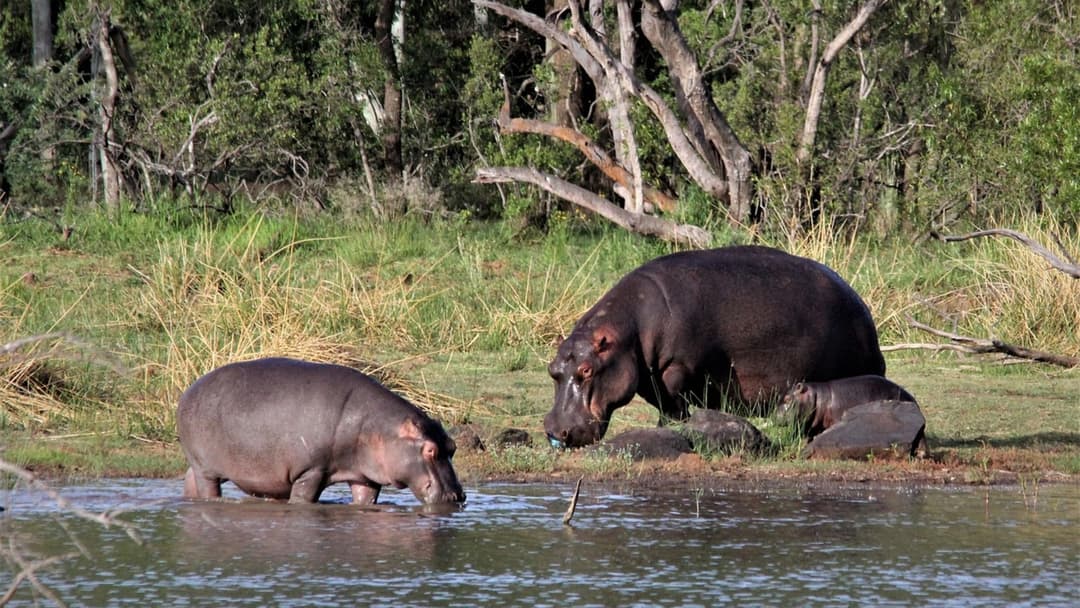
Female hippos give birth to a single calf after an eight-month gestation, either on land or in shallow water. Newborn calves nurse underwater by folding their ears and nostrils closed before suckling. Calves often ride on their mother's broad back to rest near the surface.
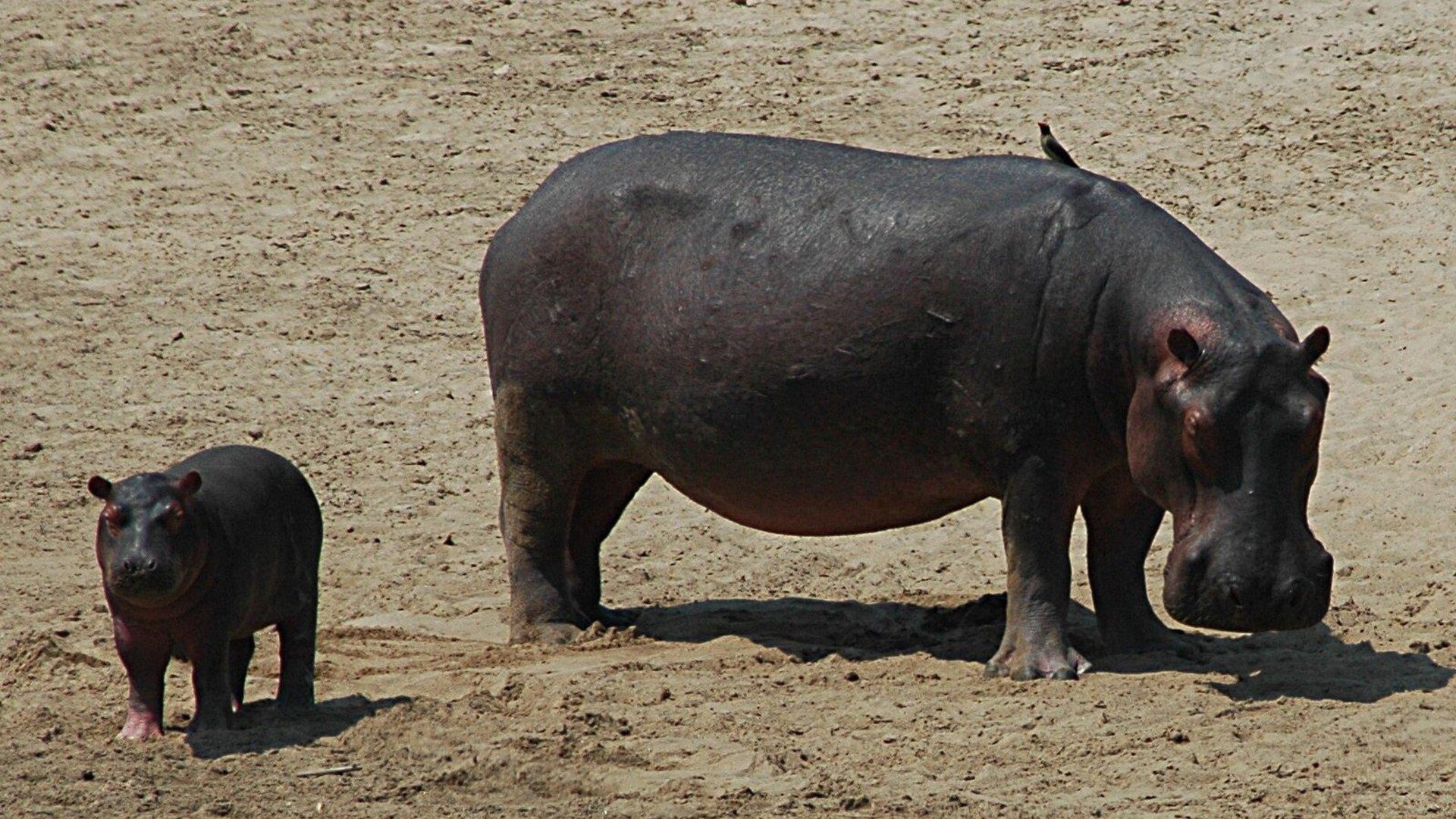
19. Skin Lacks Sweat Glands And Dehydrates Fast
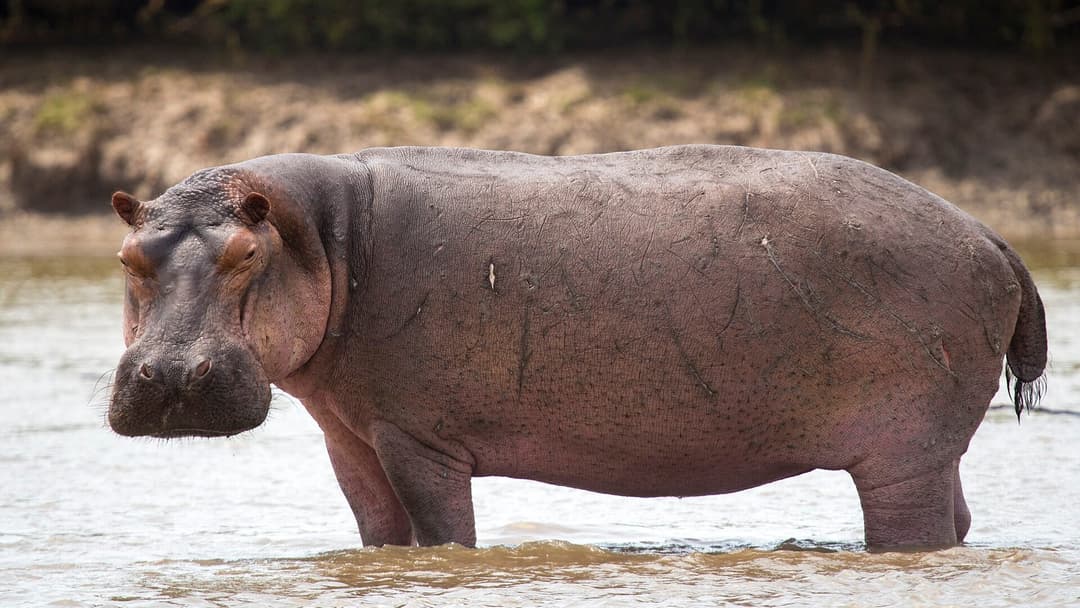
Although hippo hide measures up to two inches thick, it lacks true sweat and sebaceous glands. Their skin loses moisture three times faster than human skin when exposed to dry air. Without frequent mud wallowing or river submersion, their skin cracks painfully within hours.
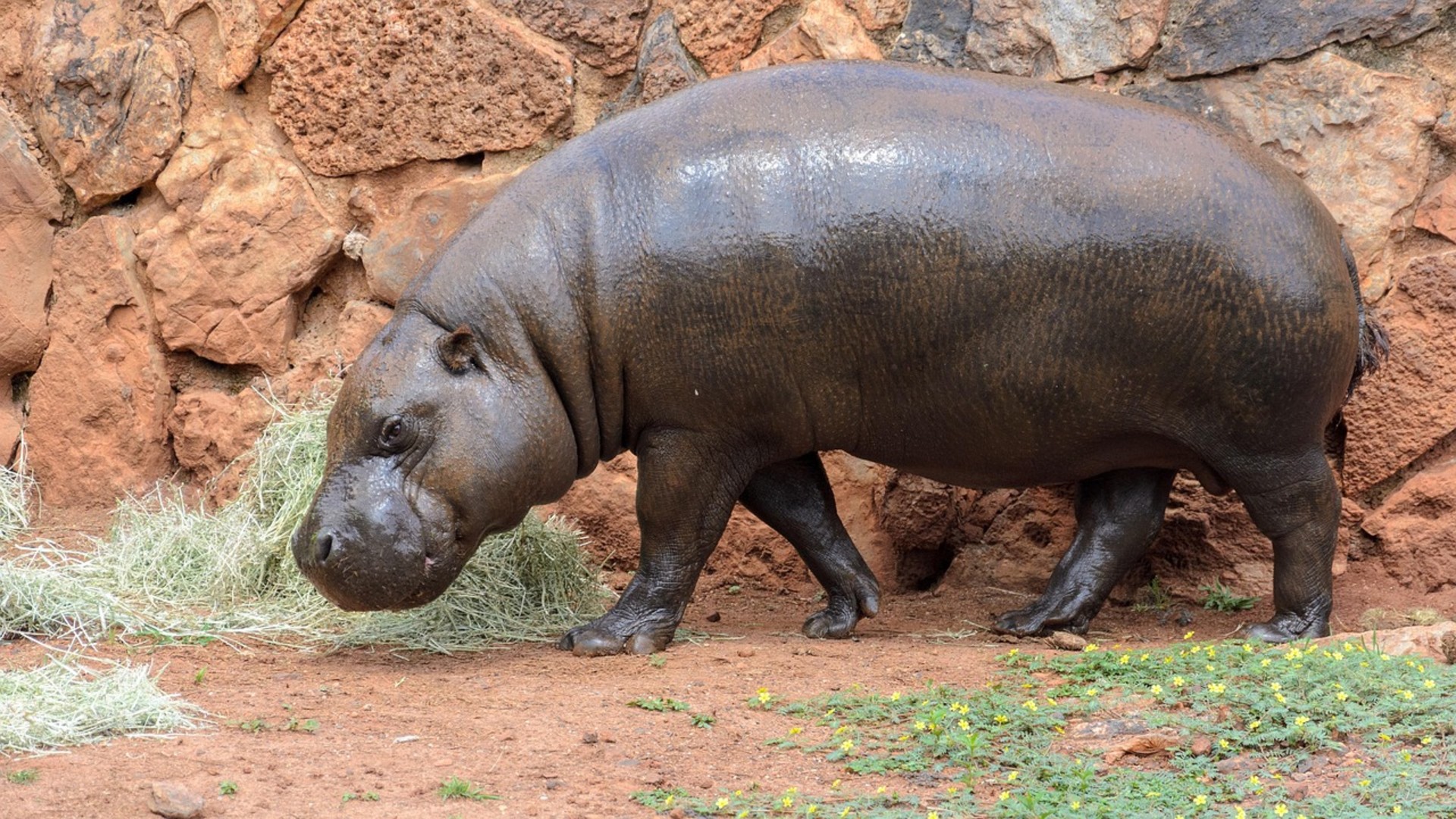
20. The Rare Pygmy Hippo Cousin
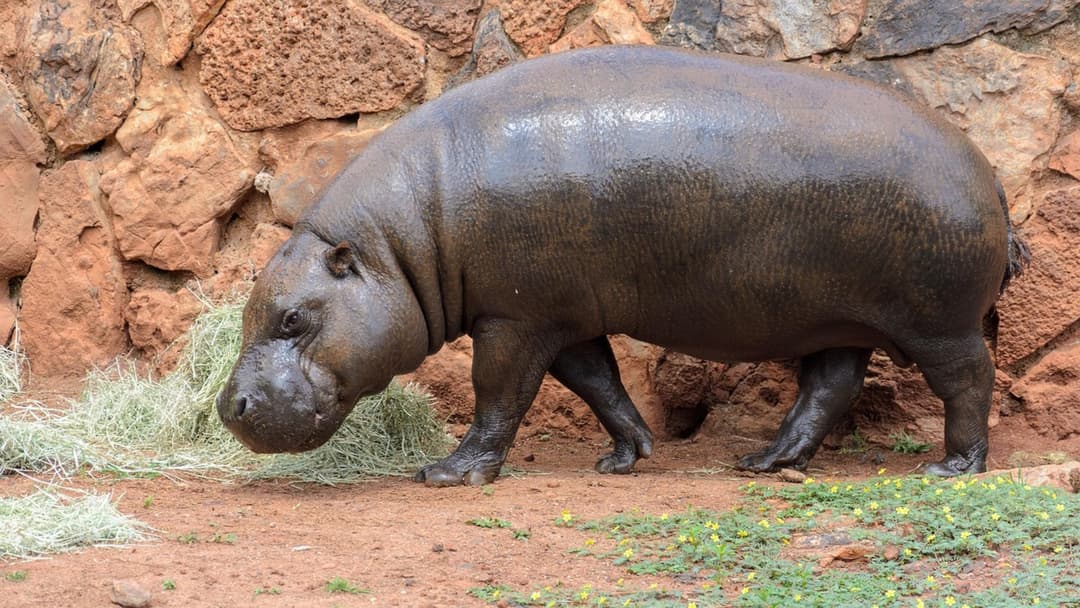
The only other living hippopotamid species is the pygmy hippo, native to dense West African rainforests. Weighing only 400 to 600 pounds, pygmy hippos are one-fifth the size of river hippos. They lead solitary nocturnal lives among swampy thickets rather than in river pods.
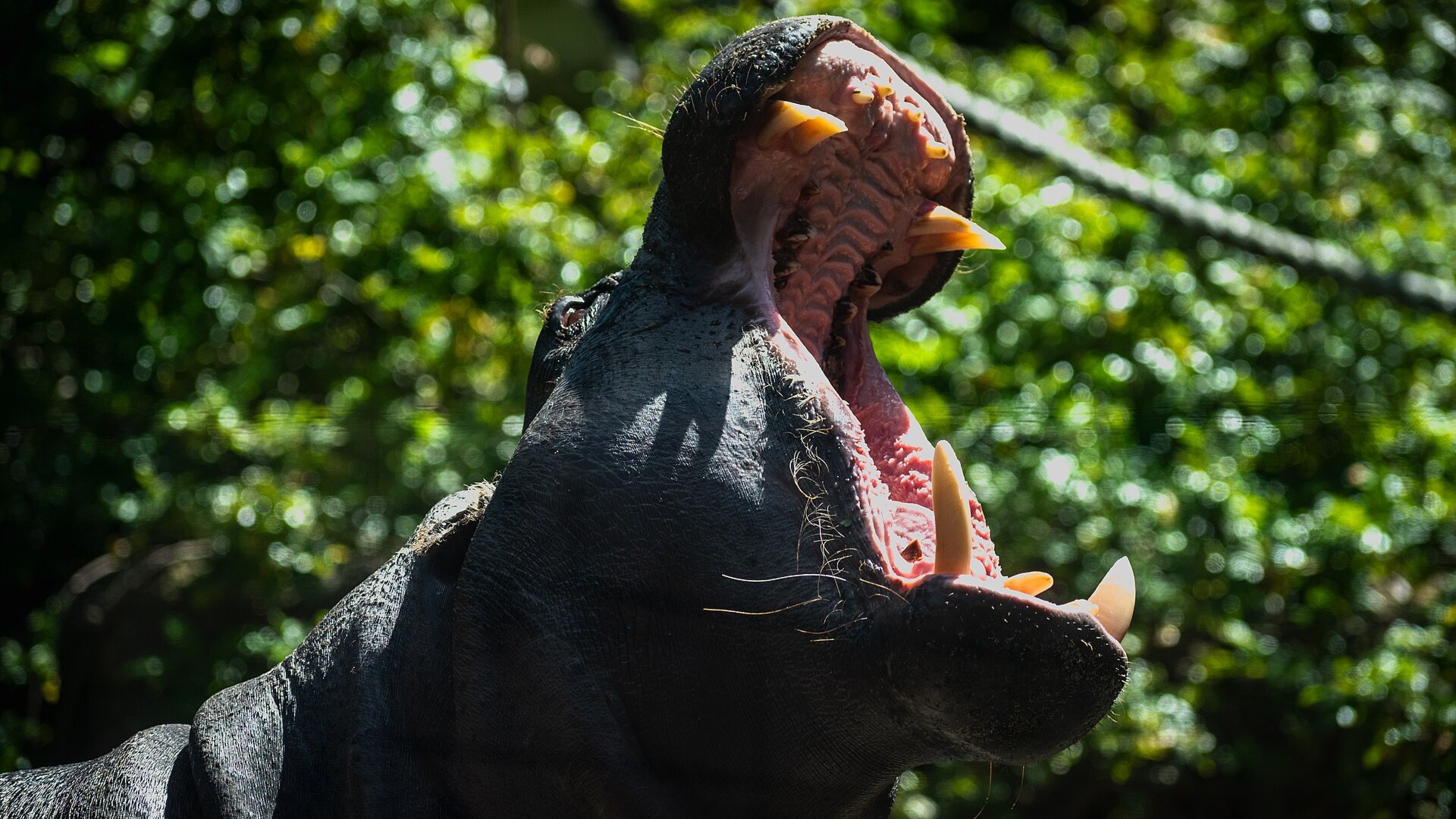
21. Vulnerable Conservation Status
The IUCN Red List classifies the common hippopotamus as Vulnerable, with roughly 115,000 to 130,000 individuals surviving in the wild. Key threats include river damming, drought, human-wildlife conflict, and illegal poaching for hippo canine ivory.