Slideshow · Science
Scientific Instruments That Changed How We Understand the World
Across two millennia of discovery, human curiosity has relied on precision hardware. These 35 microscopes, telescopes, early computers, measuring devices, and laboratory instruments revealed hidden wo

All 35 Entries in this Story
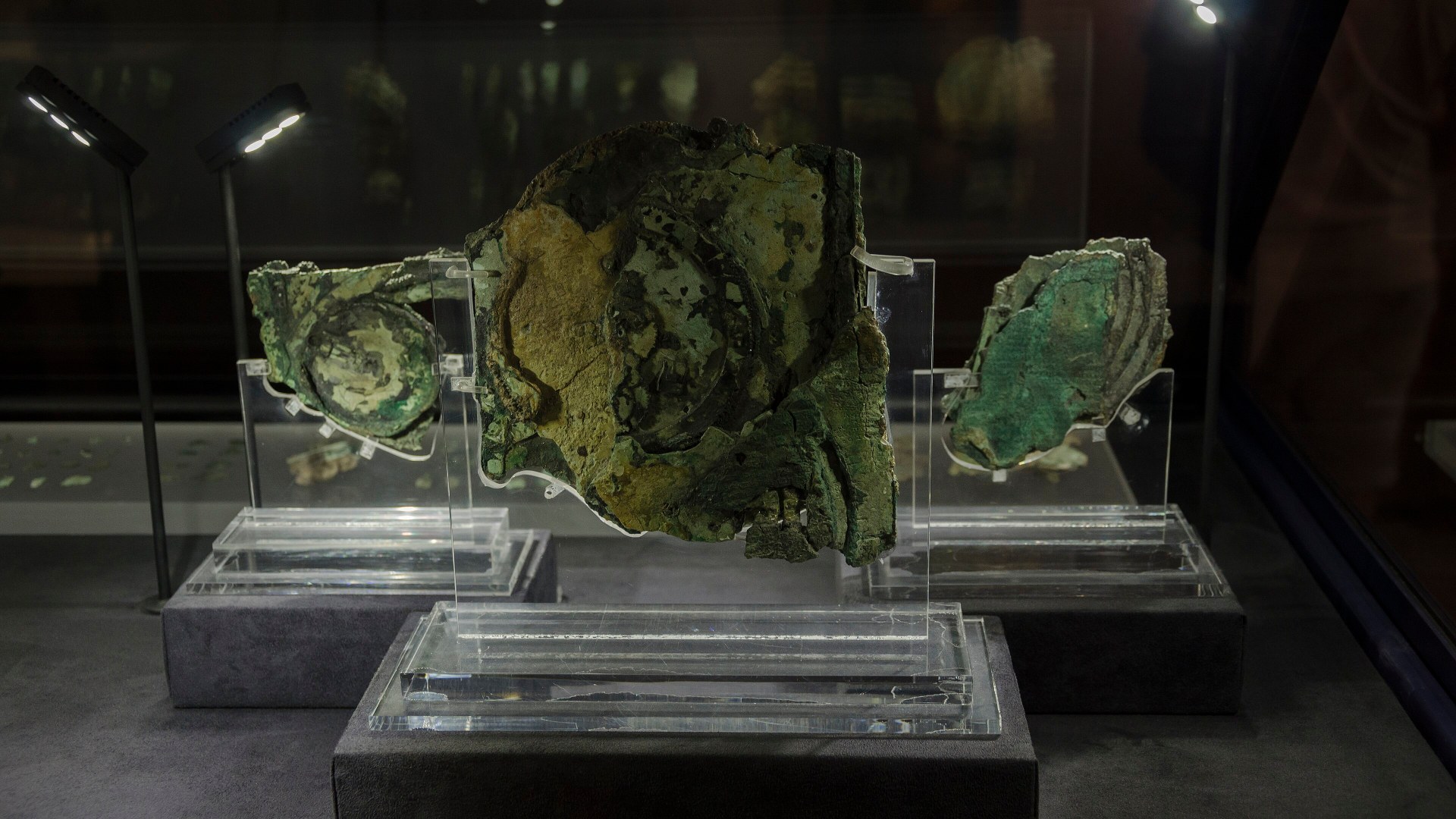
35. Antikythera Mechanism, Ancient Greek Geared Computer
Constructed between 150 and 100 BCE, the Antikythera Mechanism housed at least 30 interlocking bronze gear wheels inside a wooden case the size of a shoebox. X-ray tomography revealed epicyclic gearing that tracked lunar phases, solar and lunar eclipses, and the four-year cycle of the ancient Panhellenic games.
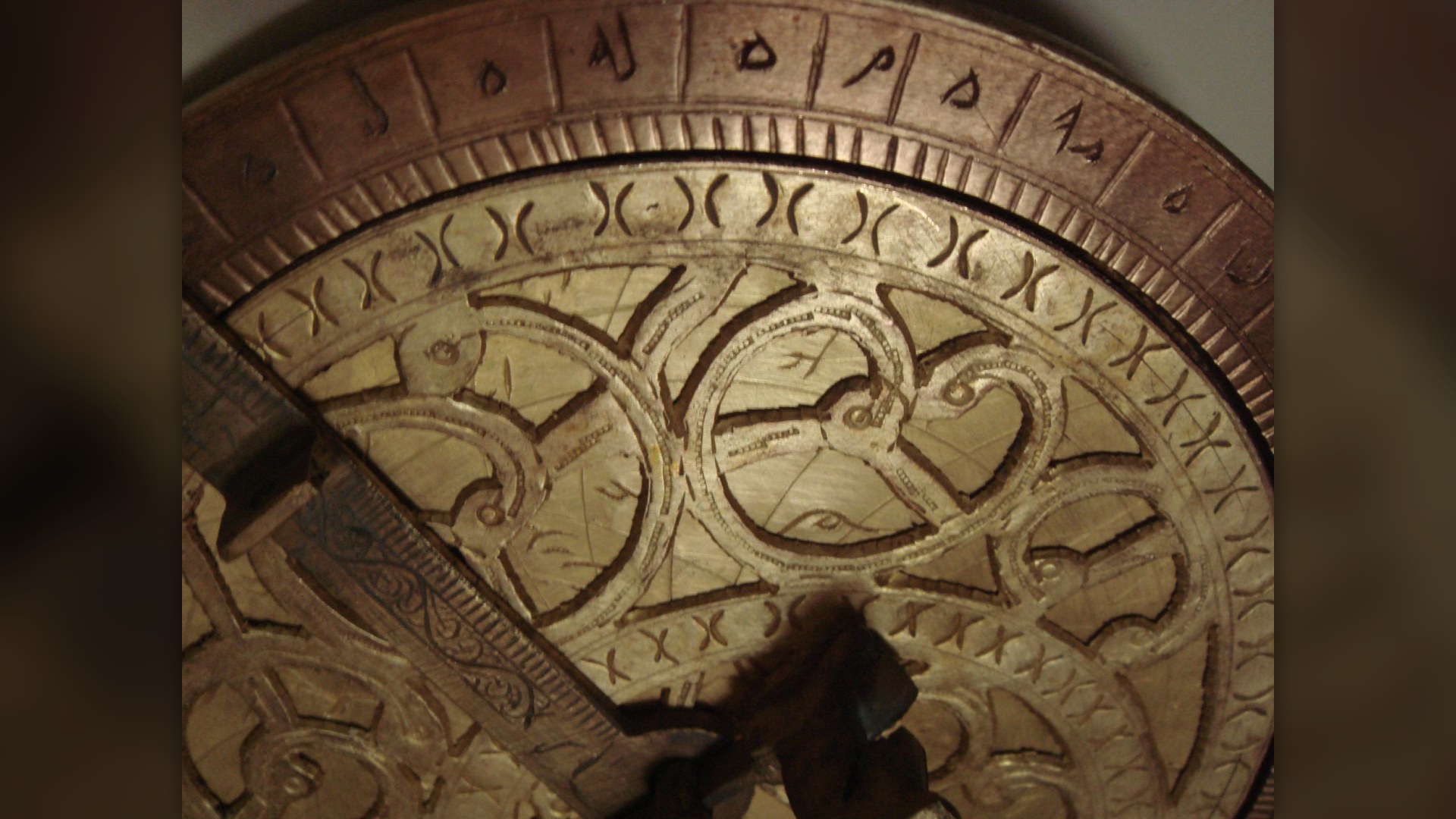
34. Brass Planispheric Astrolabe For Celestial Navigation
Refined by Islamic and European scholars from Hellenistic prototypes, the planispheric astrolabe projects the three-dimensional celestial sphere onto a flat brass plate. By sighting a star and aligning the rotating openwork rete over engraved altitude circles, users solved spherical astronomy problems in seconds.
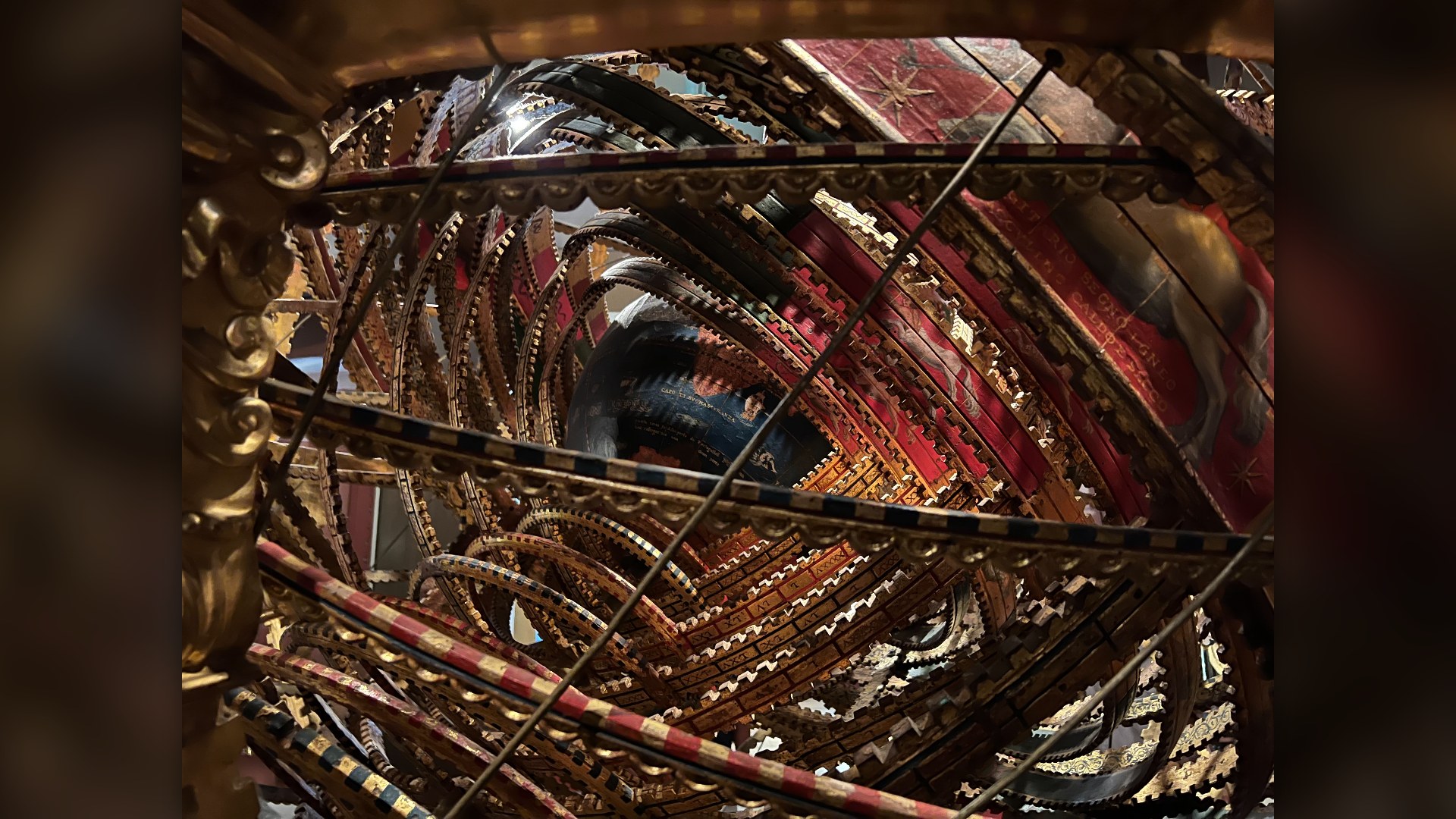
33. Geocentric Armillary Sphere At The Museo Galileo
Built in late 16th-century Italy by Antonio Santucci, this monumental gilded armillary sphere at the Museo Galileo in Florence represents the Aristotelian and Ptolemaic cosmos. Astronomers used smaller brass armillary rings to measure equatorial and ecliptic coordinates long before optical telescopes existed.
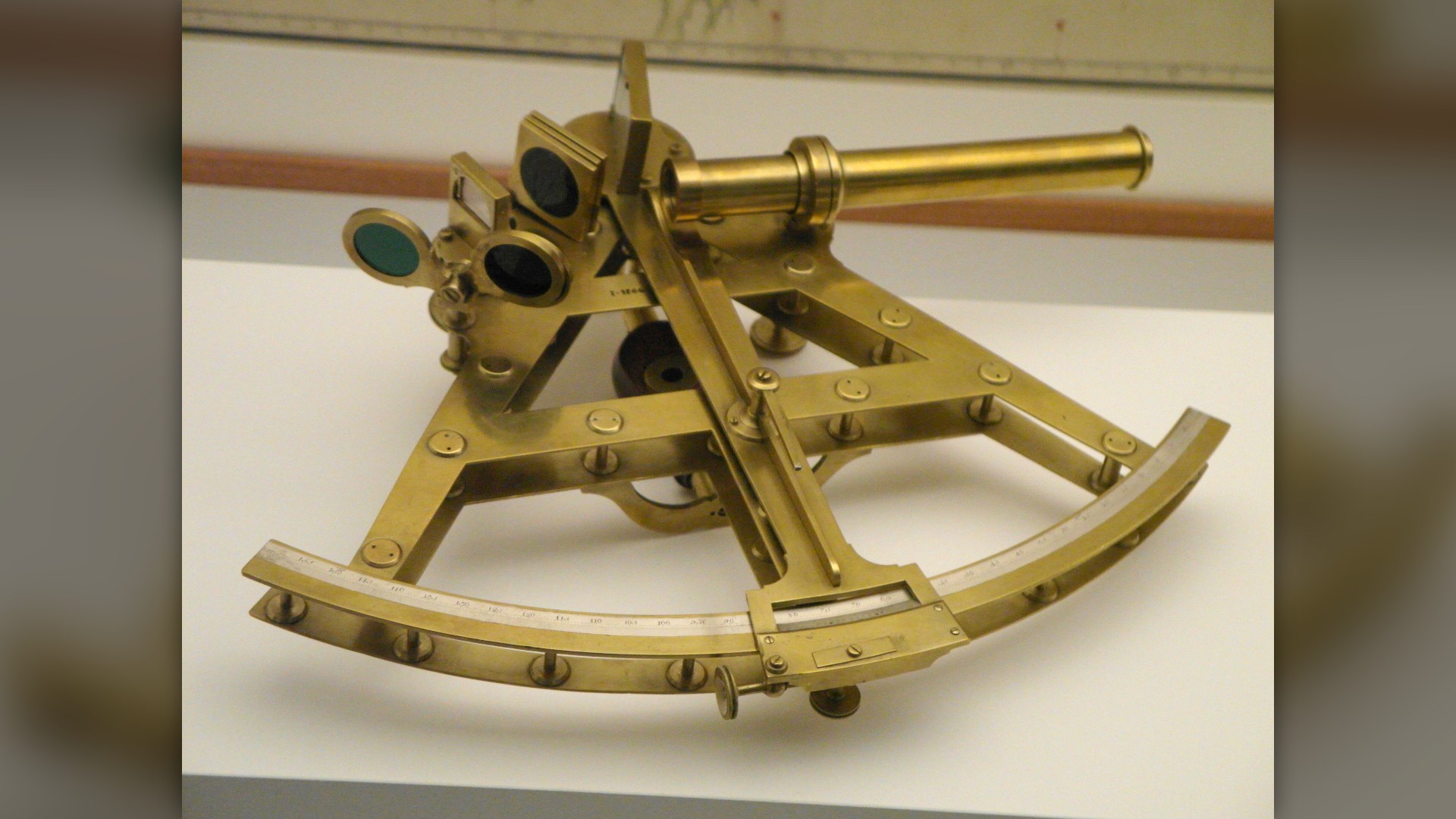
32. Eighteenth-Century Brass Naval Sextant
Based on the 1730 optical principle developed independently by John Hadley and Thomas Godfrey, the brass naval sextant superposed the reflected image of a celestial body onto the sea horizon. Equipped with dark solar shade filters and a vernier scale, it enabled accurate latitude and lunar-distance navigation at sea.
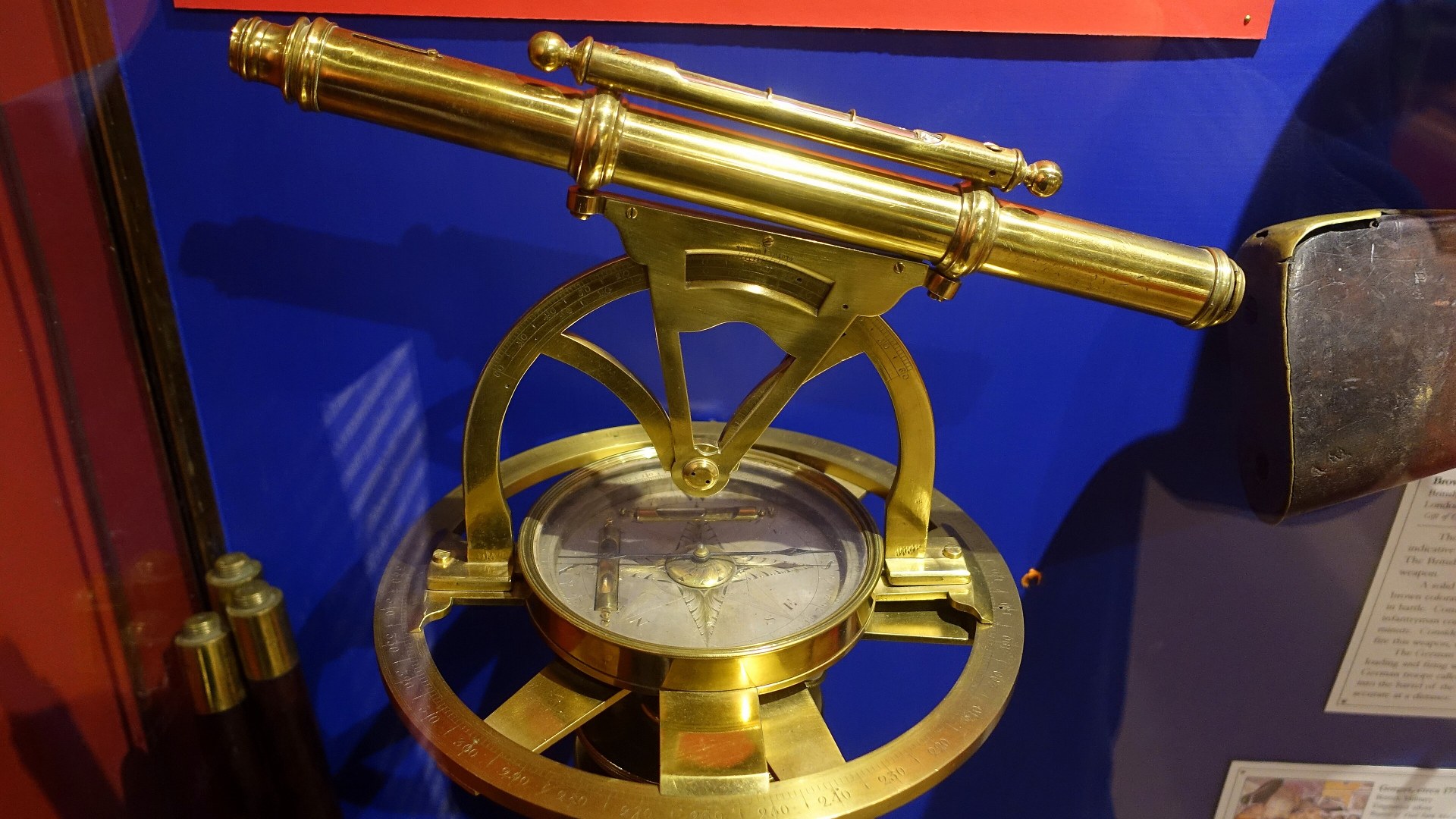
31. Brass Surveying Theodolite With Spirit Level And Compass
Crafted around 1750, this brass surveying theodolite integrates a central magnetic compass, spirit bubble levels, and a vertical altitude arc. Triangulation surveys using precision theodolites measured the curvature of the Earth, established national geodetic grids, and defined the original meter standard.
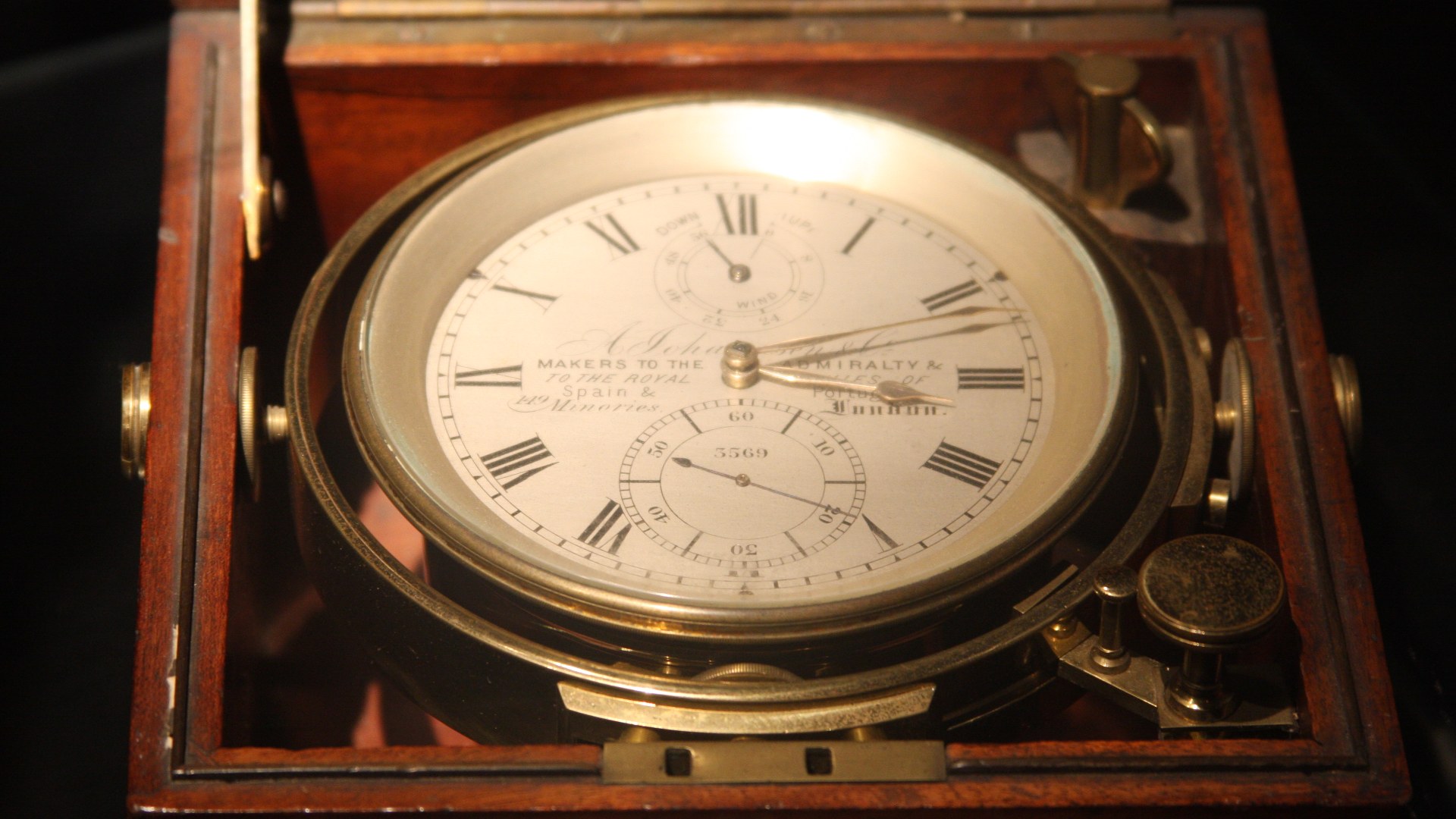
30. Gimballed Marine Chronometer For Longitude At Sea
Pioneered by English clockmaker John Harrison in the 1730s and refined by 19th-century makers, the marine chronometer kept Greenwich Mean Time within fractions of a second per day despite temperature swings and ship motion. Comparing local solar noon against chronometer time gave sailors their exact longitude.
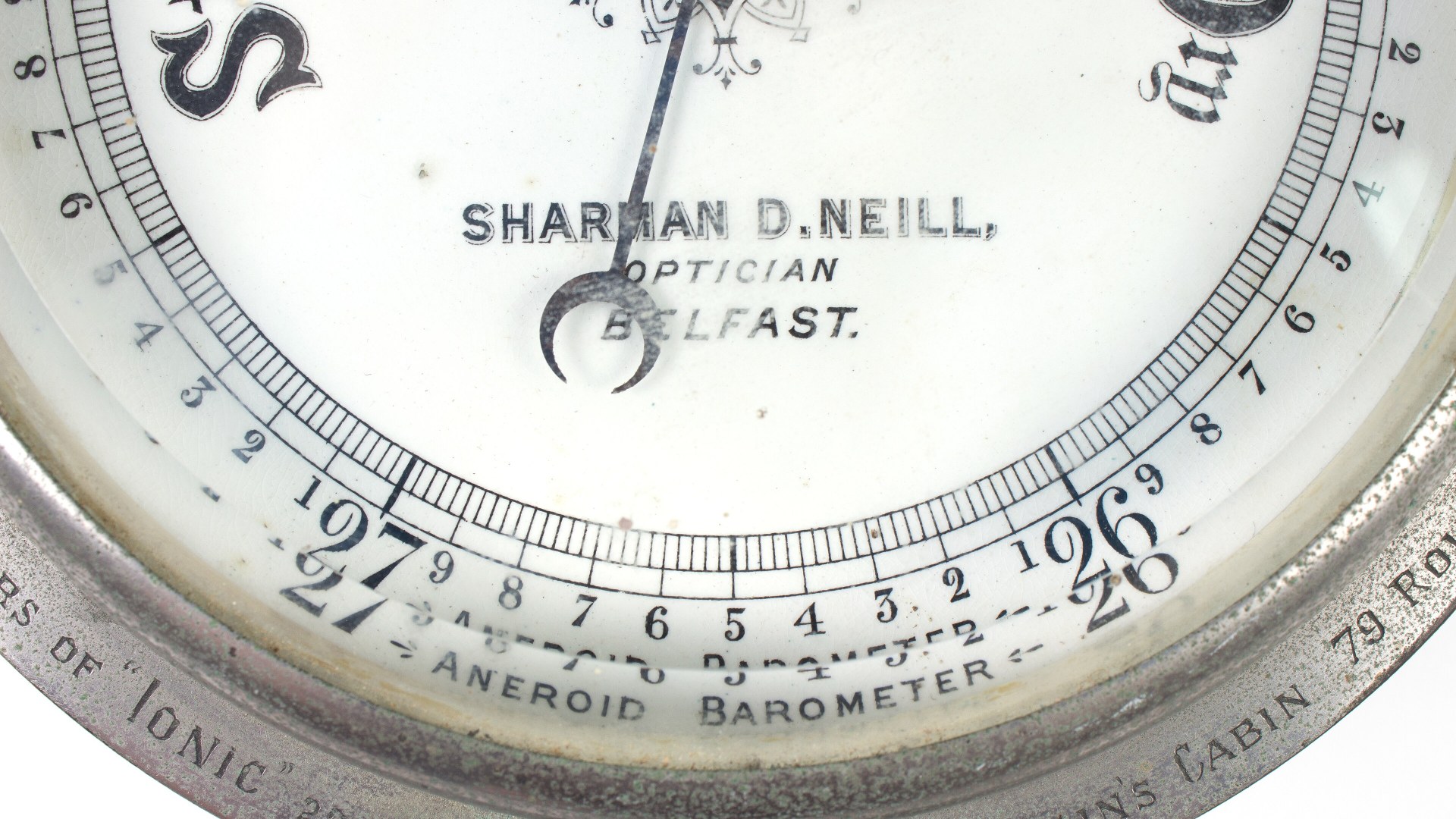
29. Precision Aneroid Barometer For Atmospheric Pressure
Invented by French physicist Lucien Vidi in 1844 as a mercury-free alternative to Evangelista Torricelli's 1643 glass barometer tube, the aneroid barometer uses a spring-loaded evacuated beryllium-copper cell. Mechanical levers amplify microscopic expansions of the cell to drive the pointer across the pressure scale.
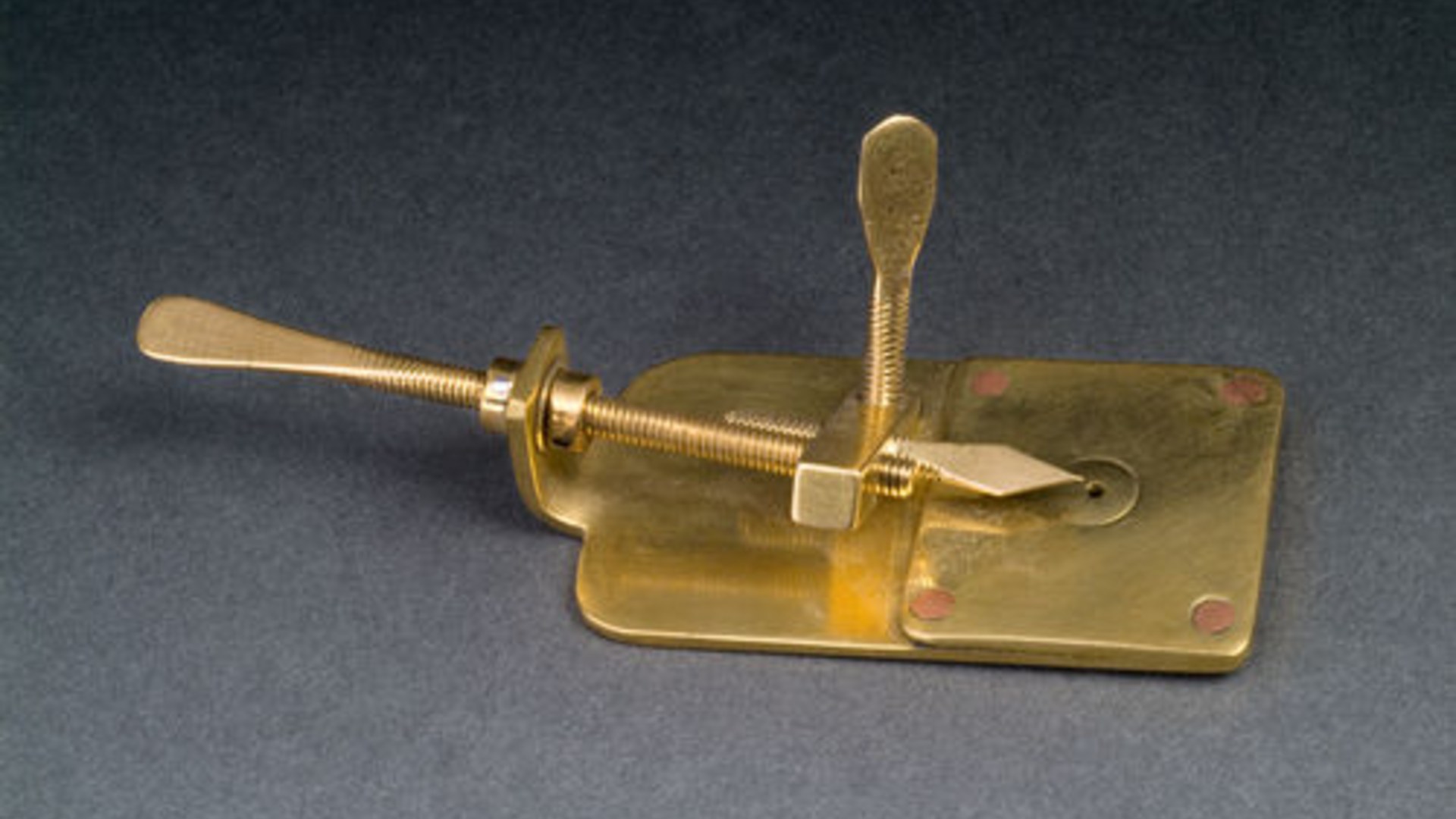
28. Single-Lens Brass Microscope
Working as a Dutch draper and self-taught lens grinder in Delft, Antonie van Leeuwenhoek crafted over 500 handheld single-lens microscopes capable of magnifying specimens up to 275 times. By turning threaded screws to position a sample pin before a millimeter-sized lens, he founded microbiology.
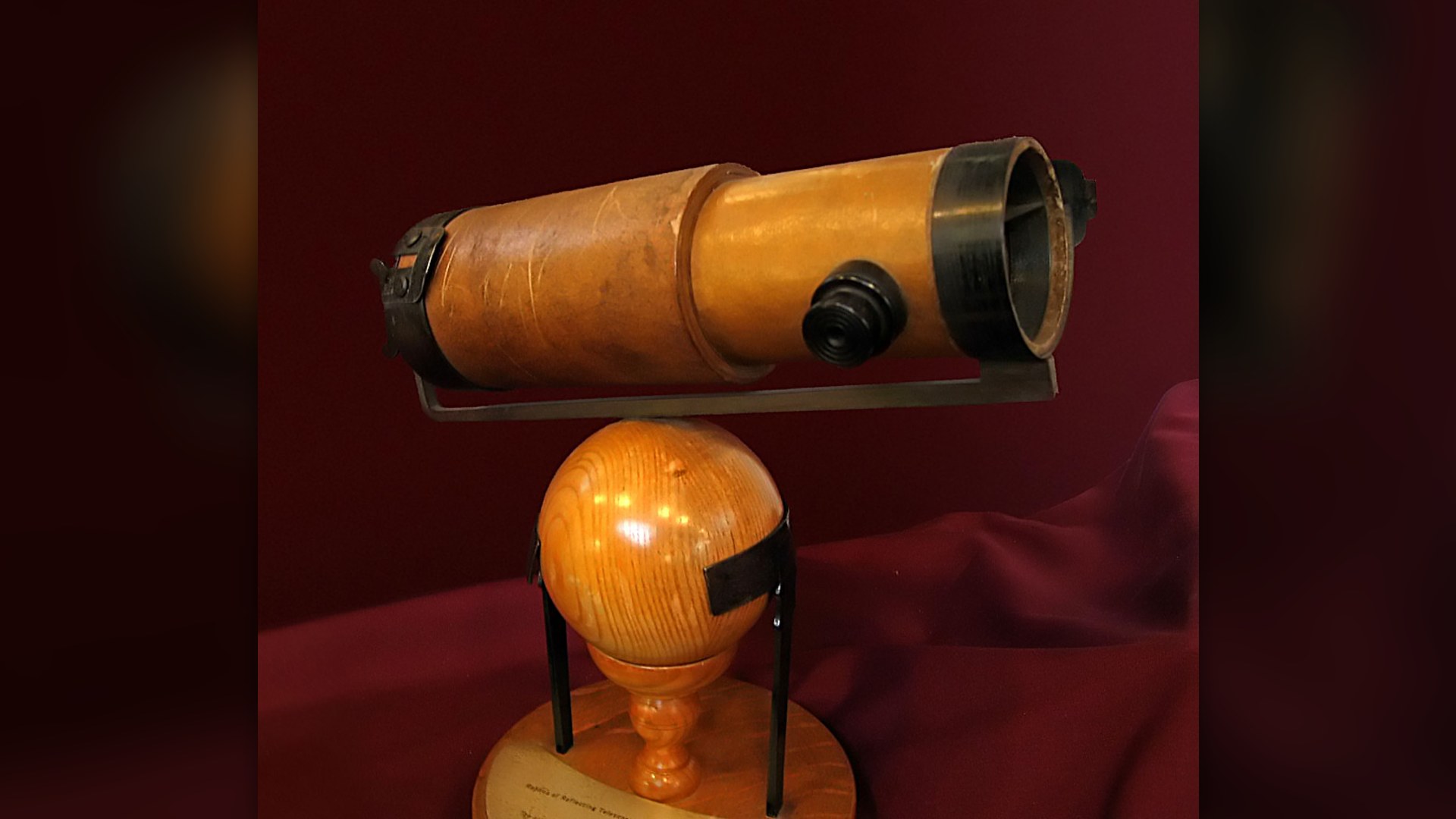
27. Isaac Newton's 1668 Reflecting Telescope
Built by Isaac Newton in 1668 and presented to the Royal Society in 1672, the Newtonian reflector used a concave primary mirror and a 45-degree flat secondary mirror to bounce light to a side eyepiece. Reflecting optics freed astronomers from chromatic aberration and enabled the giant mirrors of modern astronomy.
26. Piston Vacuum Pump And Magdeburg Hemispheres
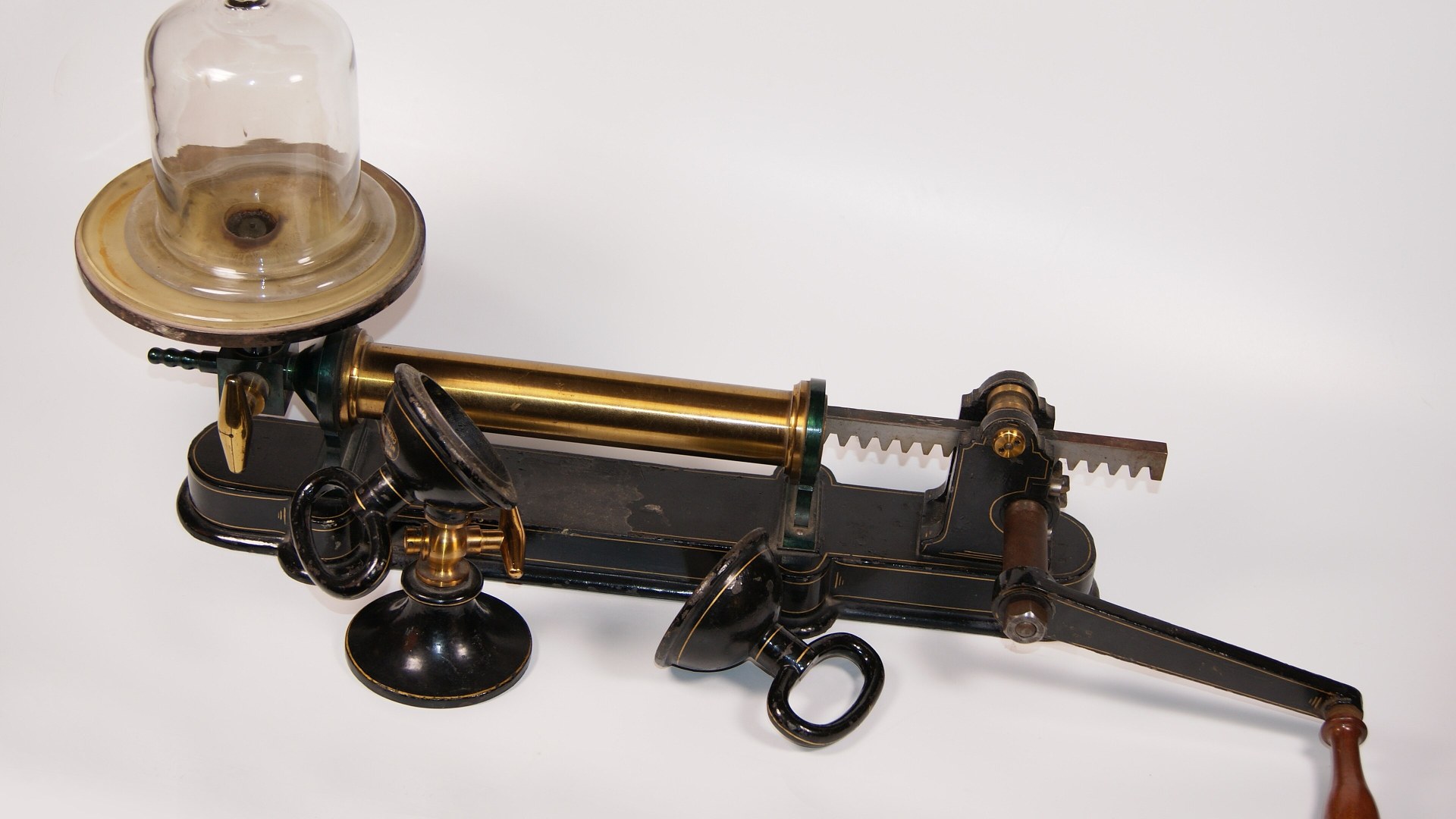
Inspired by Otto von Guericke's 1654 Magdeburg hemisphere demonstration and Robert Boyle's pneumatic experiments, this rack-and-pinion laboratory vacuum pump evacuated air from glass bell jars and paired iron shells. Studying evacuated chambers led directly to gas laws, steam engines, and vacuum electronics.
25. Ruhmkorff High-Voltage Induction Coil
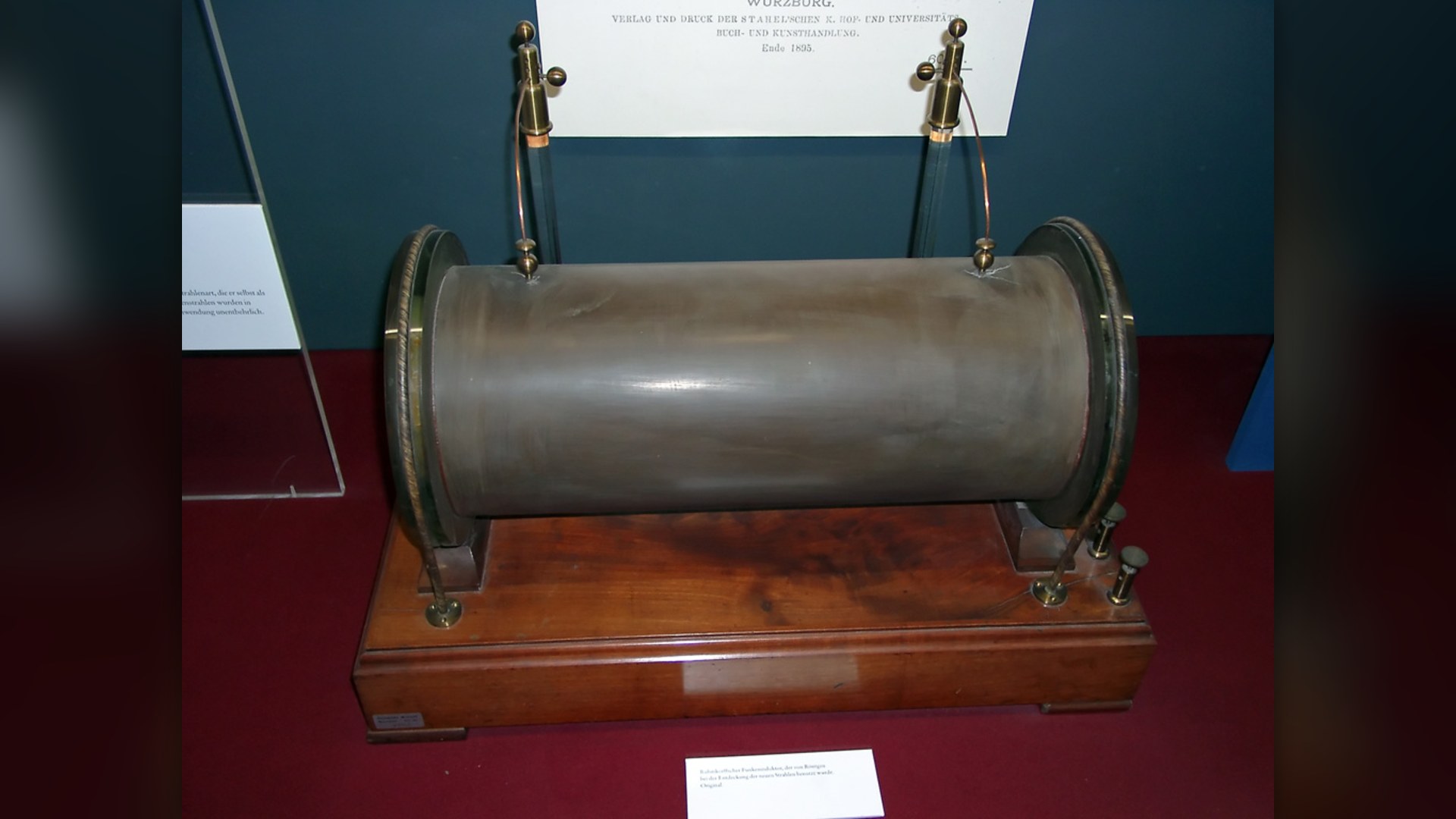
Patented by German instrument maker Heinrich Daniel Ruhmkorff in 1851, the induction coil used a magnetic interrupter and an iron core to generate tens of thousands of volts from a low-voltage battery. Wilhelm Rontgen, Heinrich Hertz, and Guglielmo Marconi all relied on Ruhmkorff coils.
24. Yerkes 40-Inch Great Refractor Telescope
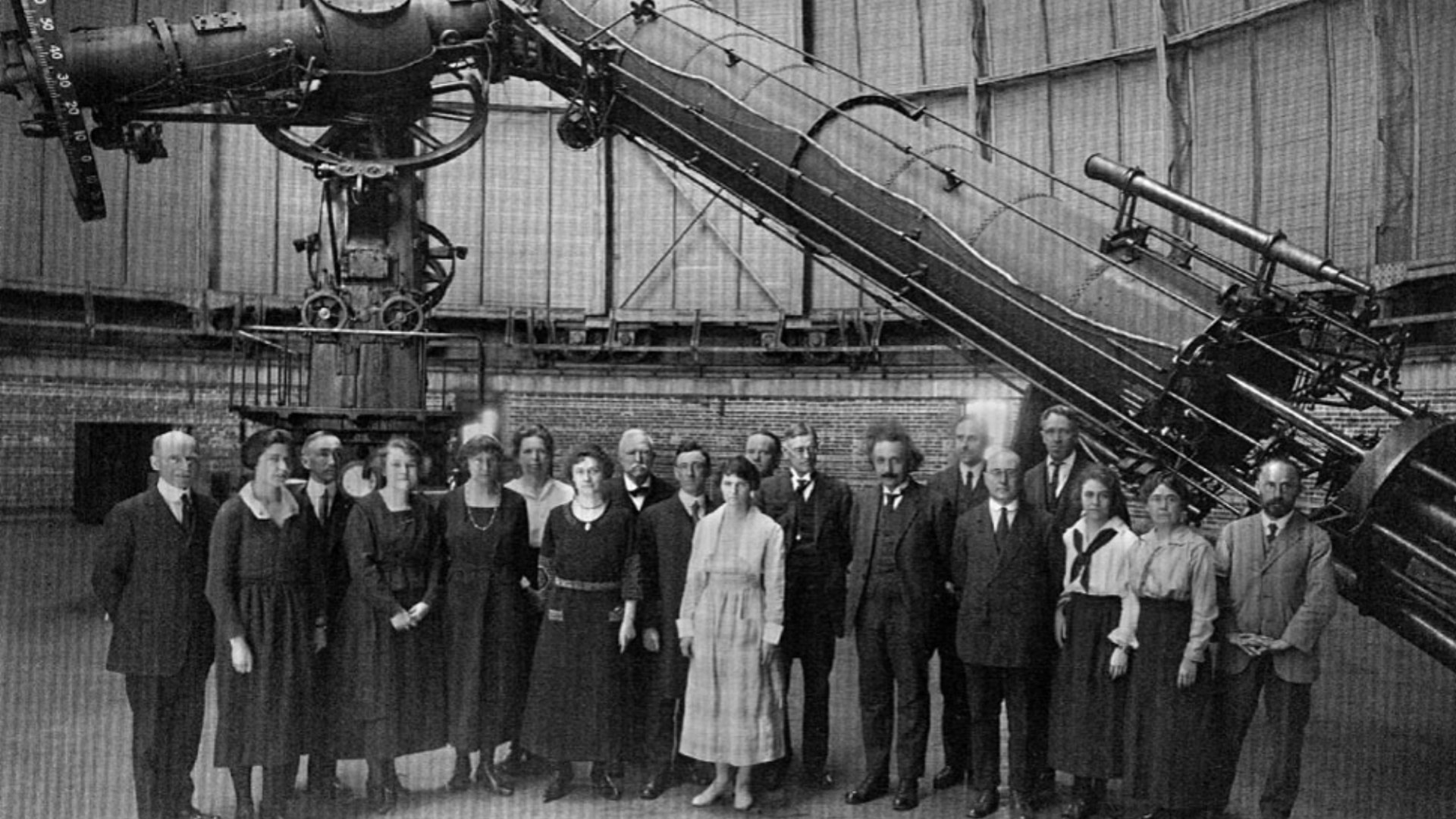
Photographed in 1921 during Albert Einstein's visit to Williams Bay, Wisconsin, the 40-inch Yerkes Observatory telescope marked the practical size limit of lens-based astronomy. Above one meter in diameter, glass lenses sag under their own weight, prompting astronomers to switch permanently to reflecting mirrors.
23. Wilhelm Rontgen's Crookes X-Ray Discharge Tube
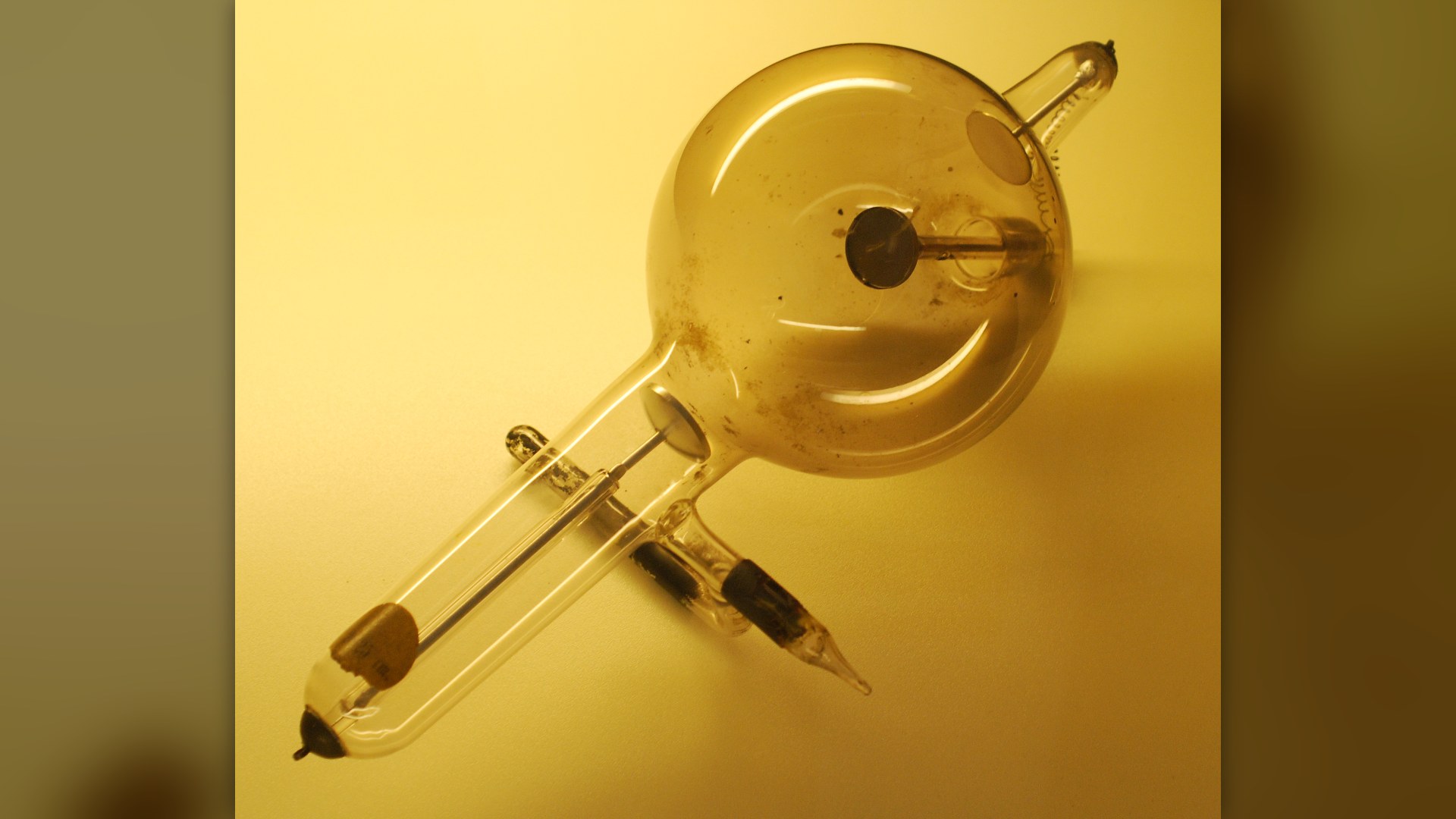
In November 1895, physicist Wilhelm Conrad Rontgen noticed that a barium platinocyanide screen glowed across his Wurzburg laboratory whenever high-voltage current passed through a shielded Crookes cathode-ray tube. Within weeks, X-ray tubes were imaging broken bones and foreign objects inside living patients.
22. Supersaturated Particle Cloud Chamber
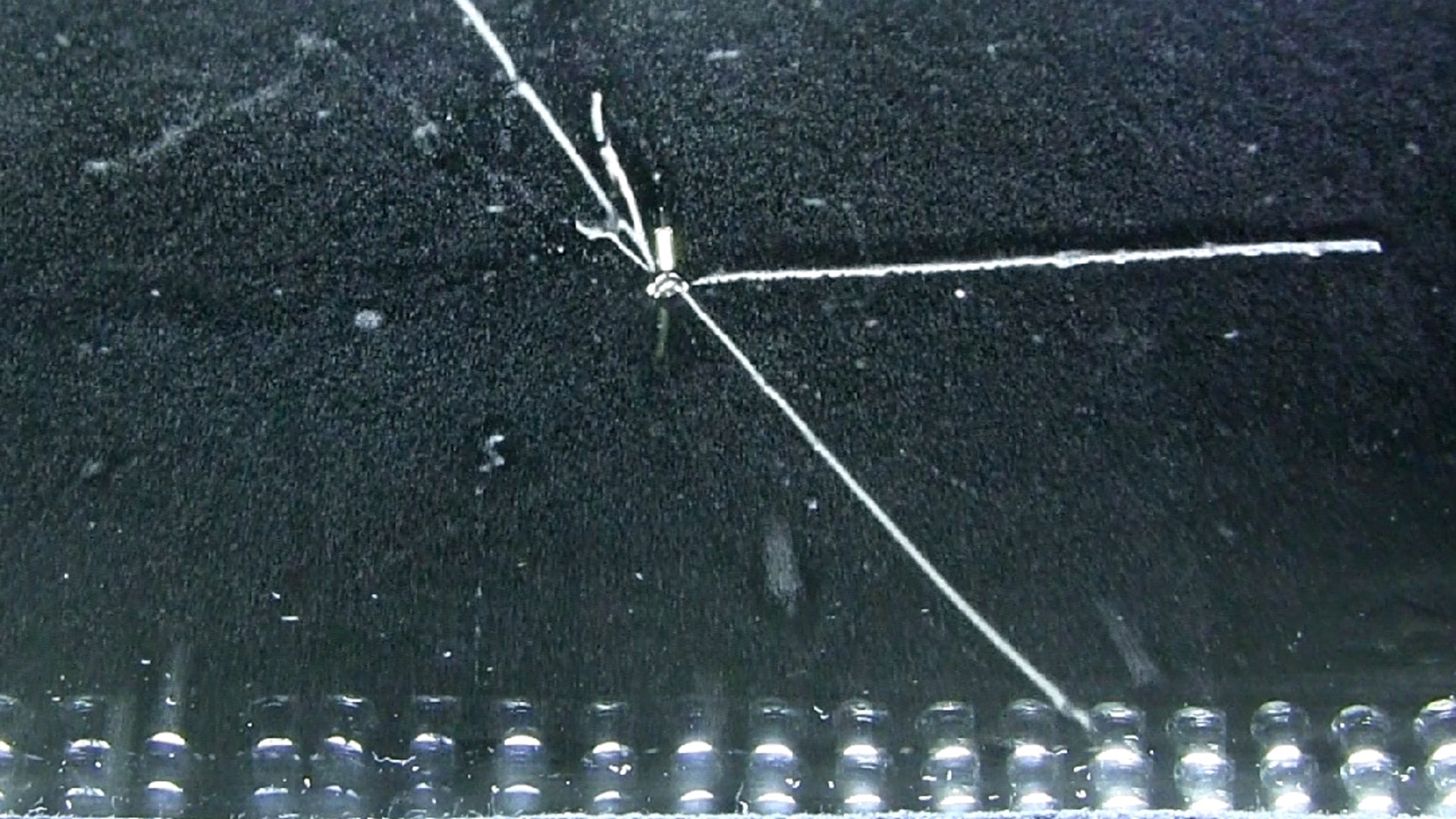
Invented by Scottish physicist C.T.R. Wilson in 1911 and refined into continuous diffusion chambers, the cloud chamber made invisible subatomic particles visible to the human eye. Photographing vapor tracks inside magnetic fields led to the discoveries of the positron in 1932 and the muon in 1936.
21. Ernest Lawrence's 27-Inch Cyclotron Particle Accelerator
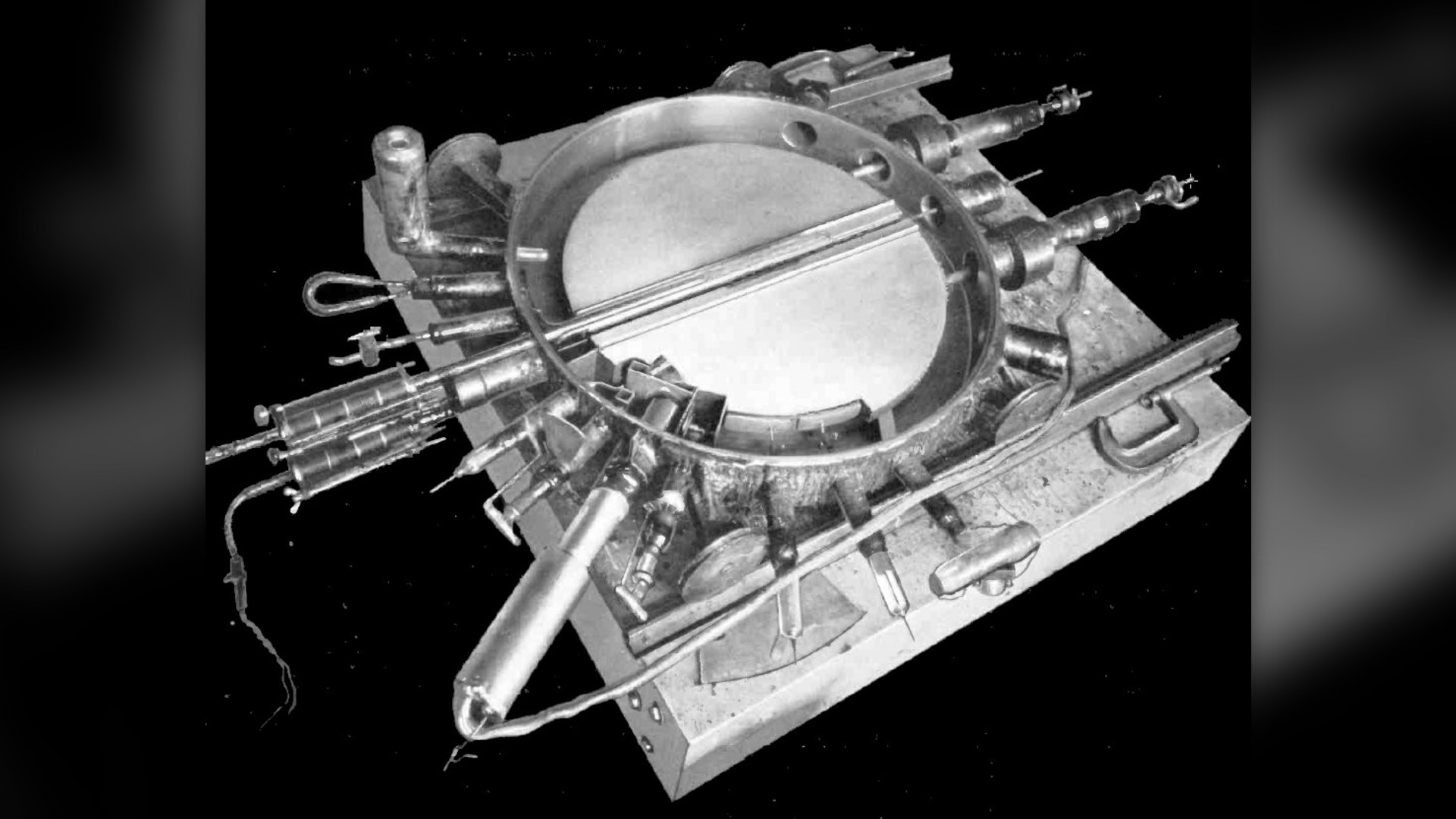
Built at the University of California, Berkeley in 1932 and upgraded to this 27-inch vacuum chamber by 1935, Ernest O. Lawrence's cyclotron accelerated ions to millions of electron volts without requiring mile-long high-voltage tubes. It produced medical radioisotopes and launched modern high-energy particle physics.
20. Geiger-Muller Ionizing Radiation Counter
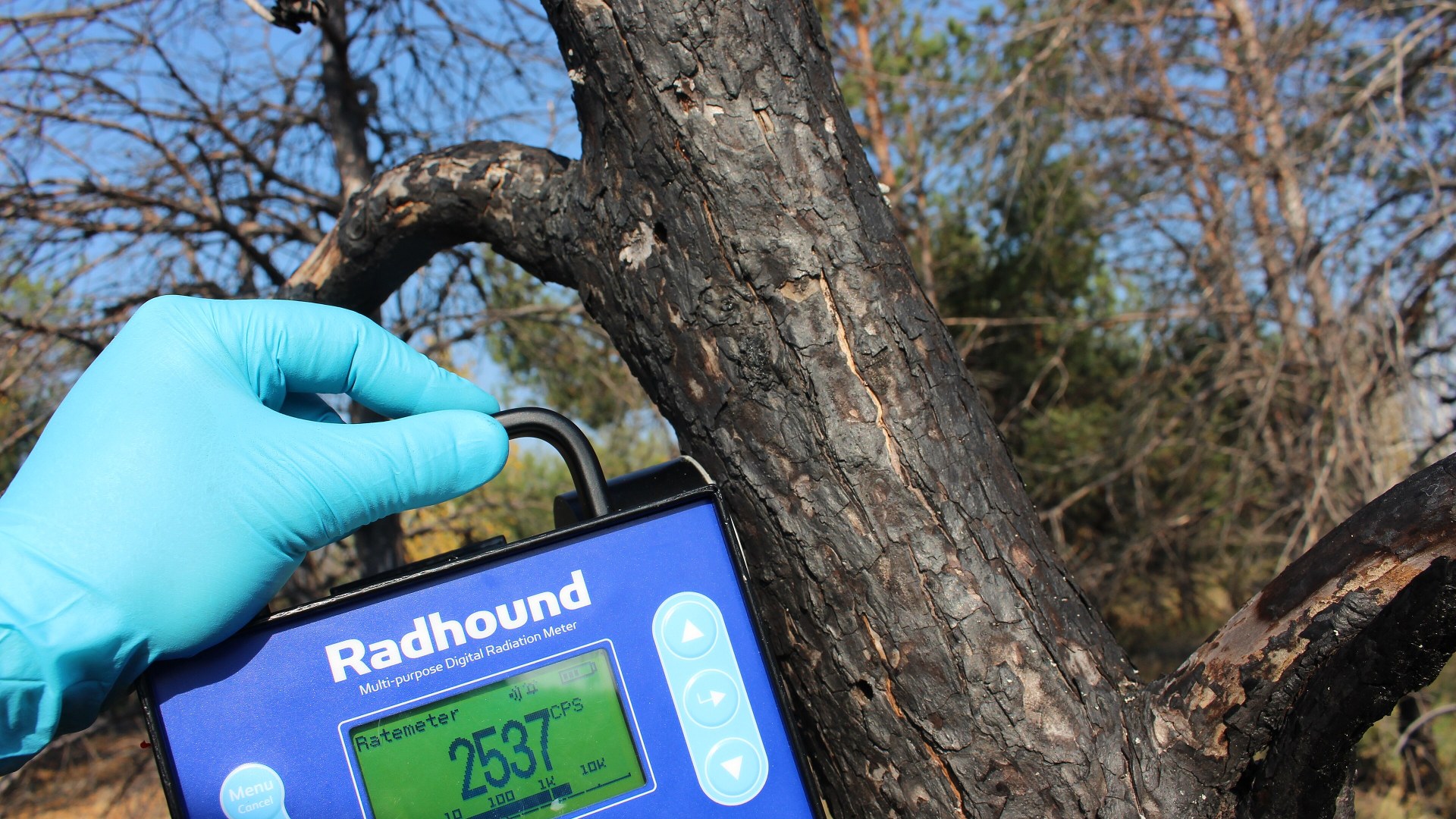
Developed by Hans Geiger and Walther Muller in 1928, the Geiger-Muller tube detects alpha, beta, and gamma radiation by ionizing low-pressure inert gas across a high-voltage central wire. Here a digital ratemeter records 2,537 counts per second against a tree trunk in the Chernobyl Exclusion Zone.
19. Four-Circle X-Ray Crystallography Diffractometer
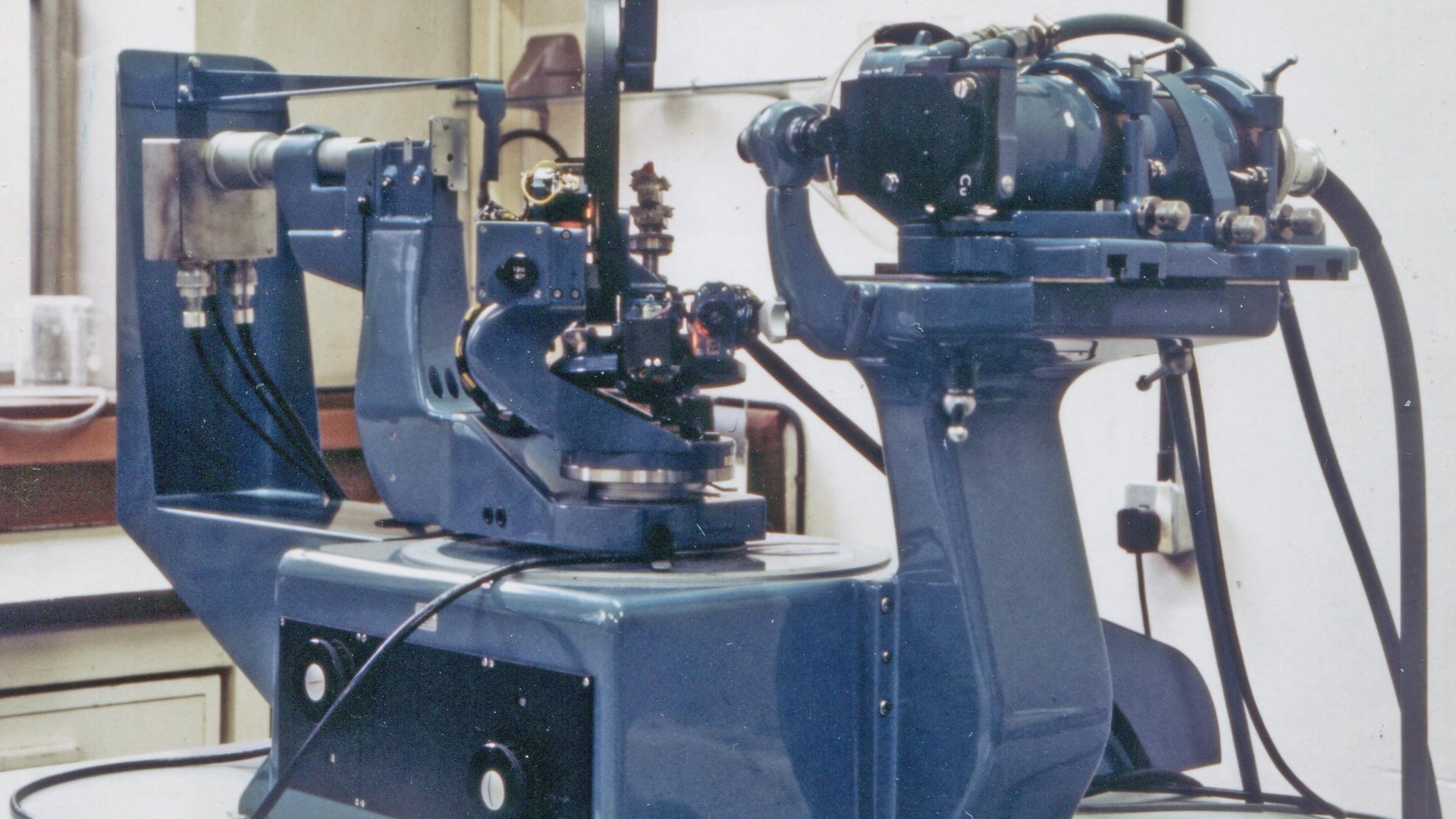
Installed at the University of Oxford's Chemical Crystallography Laboratory in 1969, this Hilger and Watts Y290 four-circle diffractometer automated the measurement of thousands of X-ray reflections. X-ray diffraction unlocked the three-dimensional structures of penicillin, vitamin B12, insulin, and DNA.
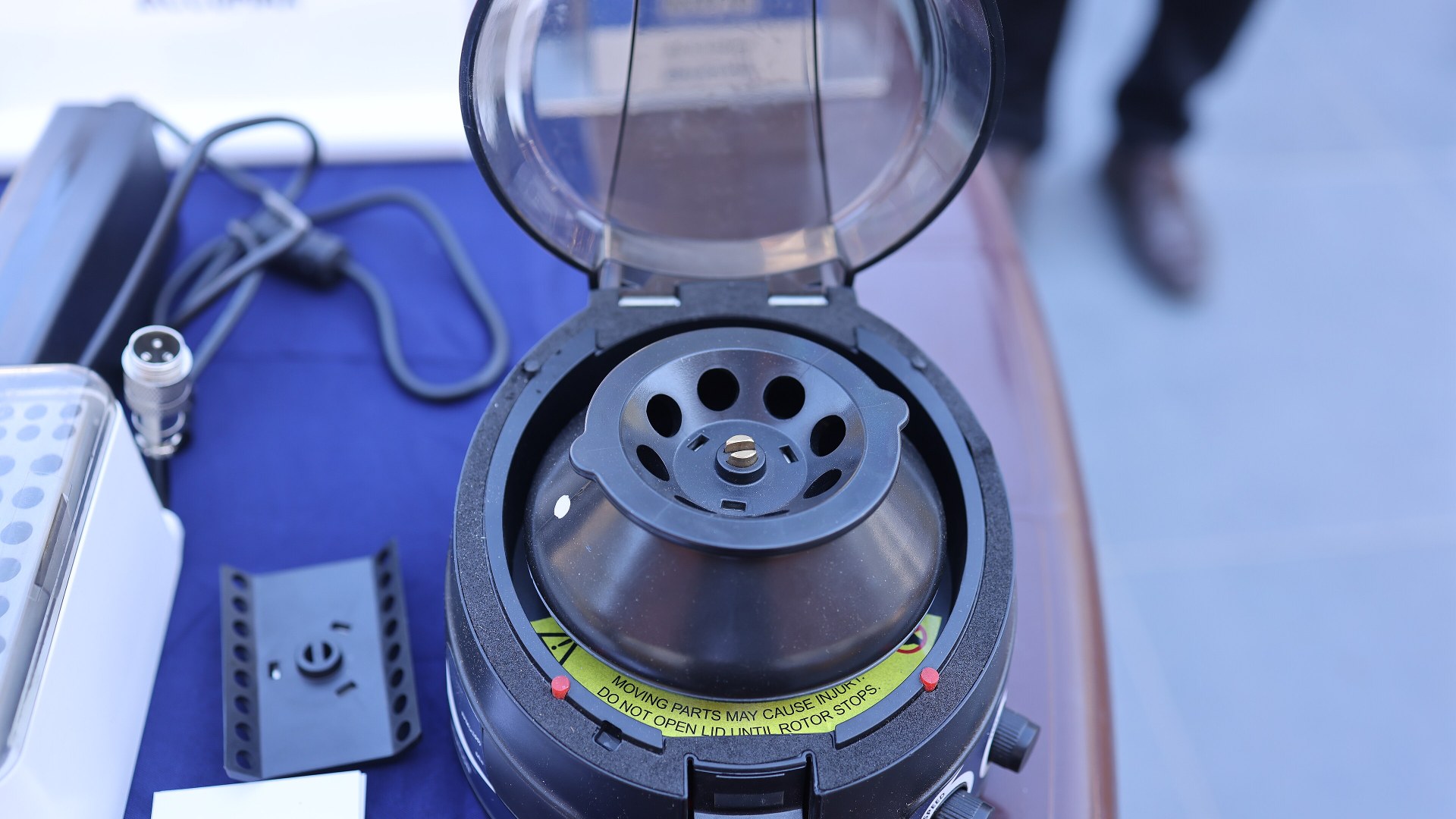
18. High-Speed Laboratory Microcentrifuge
Following Theodor Svedberg's Nobel Prize-winning invention of the analytical ultracentrifuge in the 1920s, benchtop high-speed microcentrifuges became indispensable to molecular biology. Balanced angled rotors spin micro-tubes at over 14,000 revolutions per minute to pellet nucleic acids for sequencing and PCR.
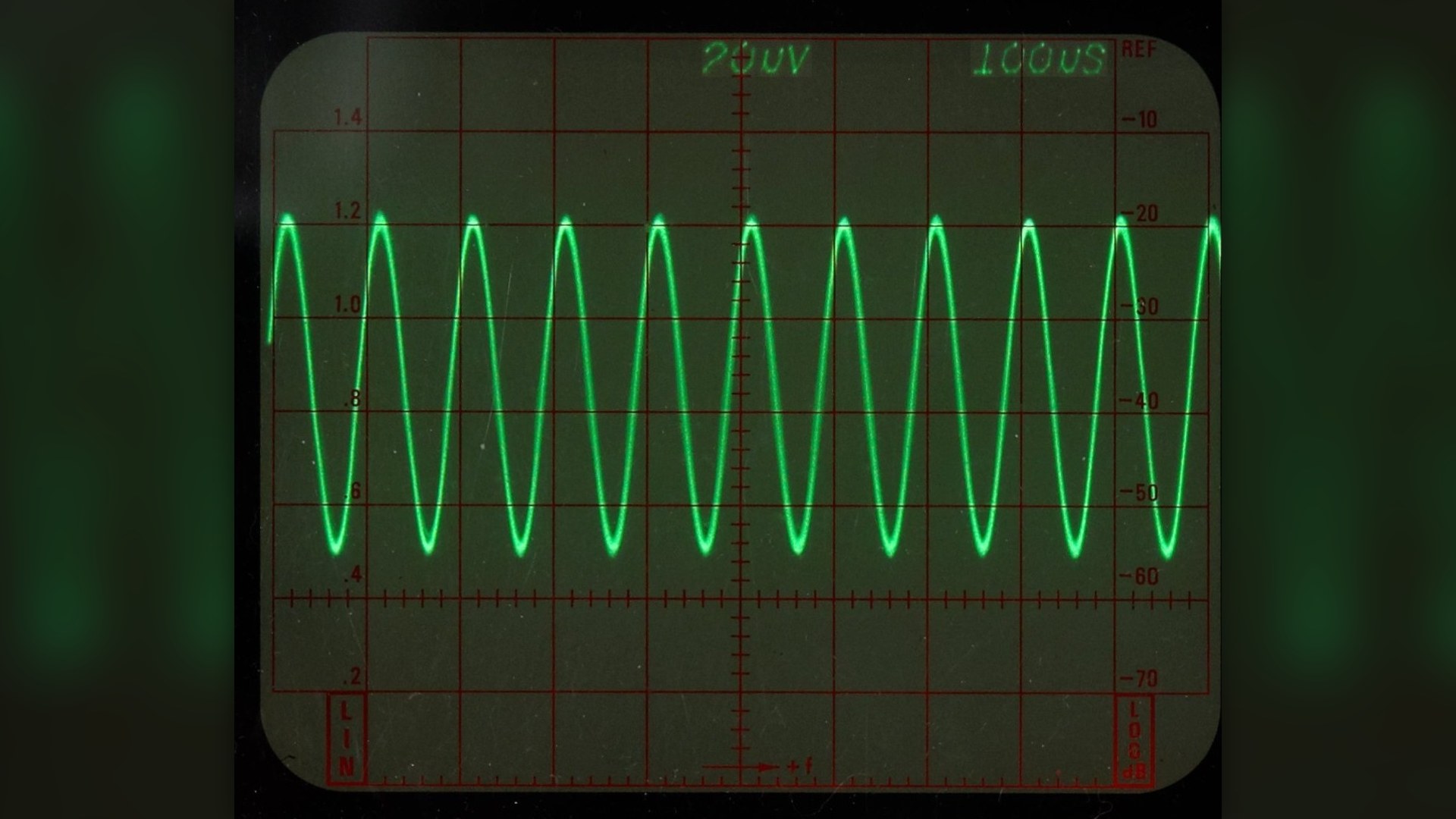
17. Analog Cathode-Ray Oscilloscope Displaying A Sine Wave
Evolving from Karl Ferdinand Braun's 1897 cathode-ray tube and perfected with triggered-sweep circuits in the late 1940s, the oscilloscope turned invisible electrical signals into crisp visual graphs. Every radar system, television circuit, computer clock, and nerve-impulse recording depended on oscilloscope traces.
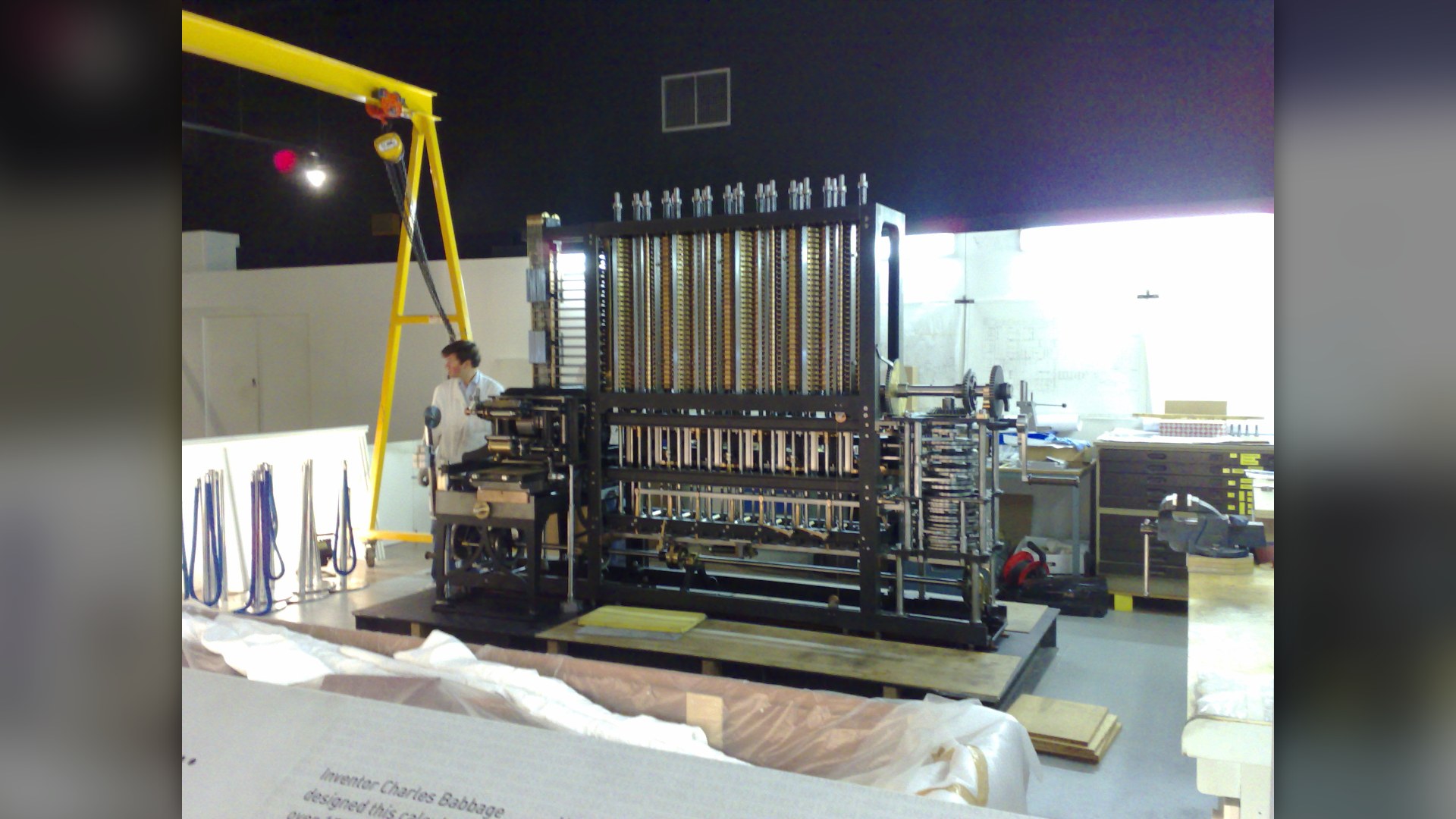
16. Charles Babbage's Difference Engine No. 2
Designed by English mathematician Charles Babbage between 1847 and 1849 to eliminate human transcription errors in mathematical and navigational tables, Difference Engine No. 2 was finally constructed by the London Science Museum in 1991. The five-ton machine operated flawlessly to 31-digit precision.
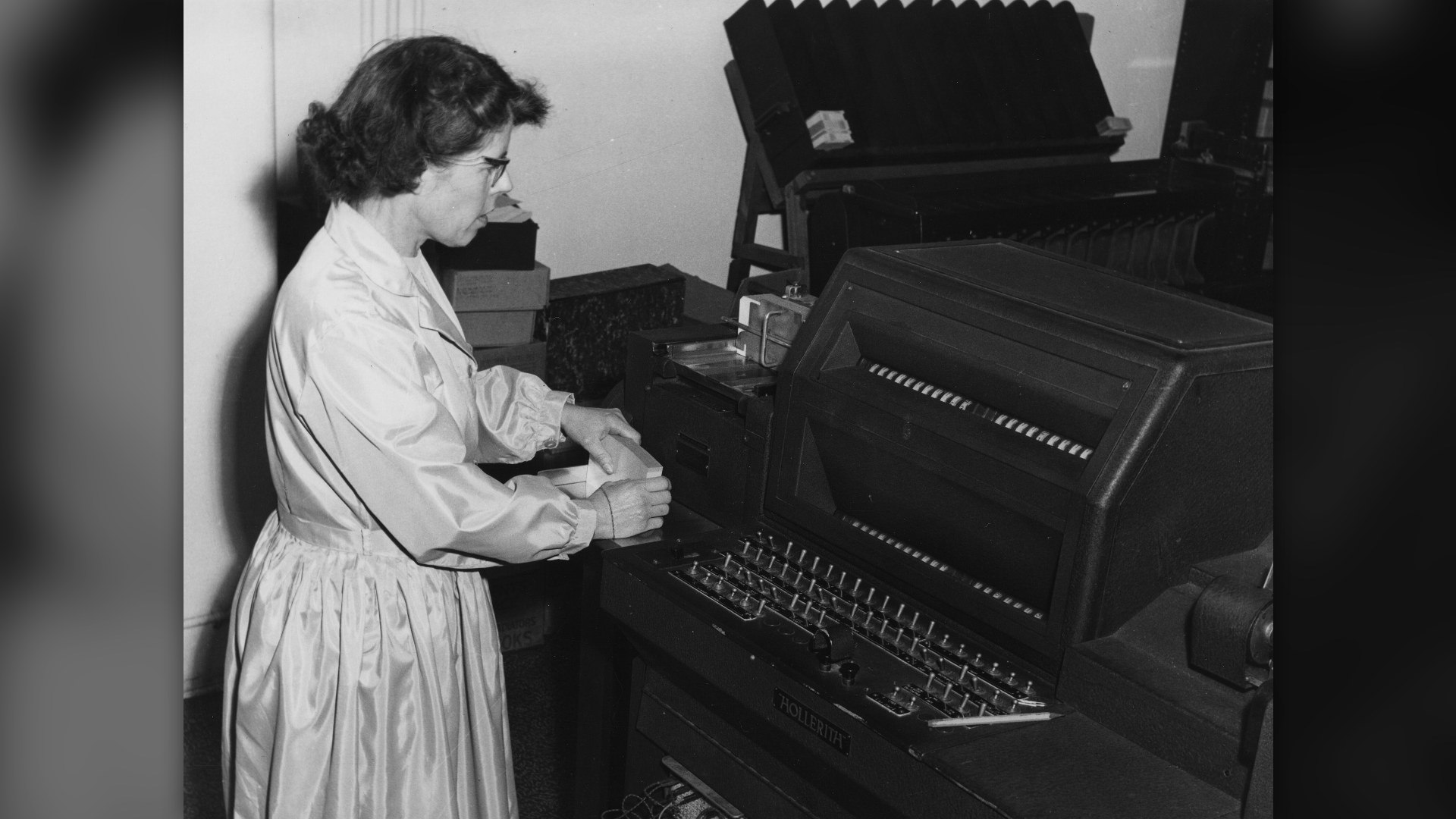
15. Herman Hollerith's Electromechanical Punched-Card Tabulator
Invented by Herman Hollerith to process the 1890 United States Census in a fraction of the time required by hand counting, punched-card tabulators birthed automated data processing. Hollerith's Tabulating Machine Company later merged with three other firms to form International Business Machines (IBM).
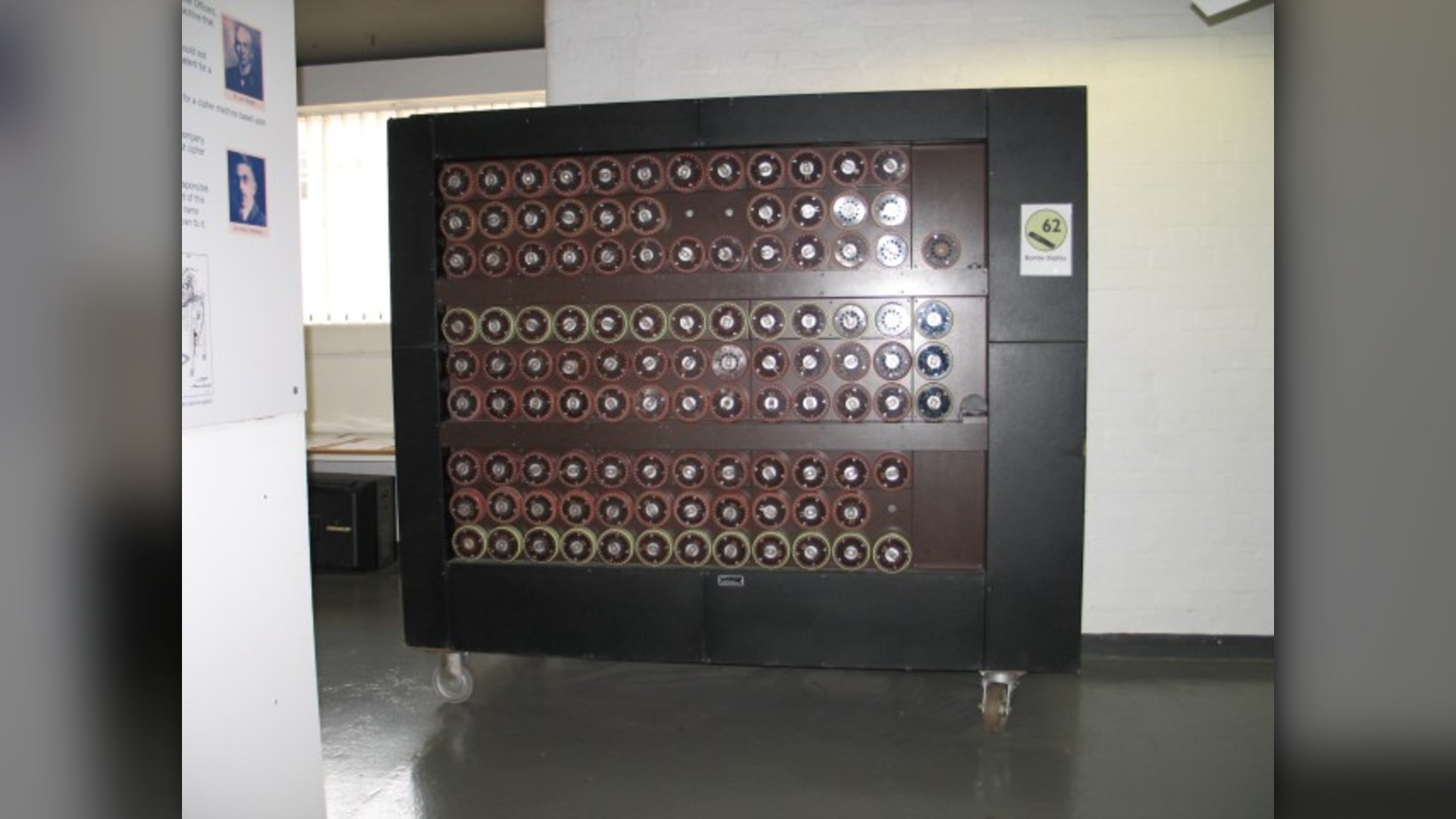
14. Alan Turing's Electromechanical Bombe At Bletchley Park
Designed by Alan Turing and Gordon Welchman in 1939 and 1940 at Bletchley Park, the British Bombe used high-speed rotating drums wired to replicate chains of German Enigma cipher machines. By eliminating contradictory rotor settings electrically, over 200 Bombes industrialized cryptanalysis during World War II.
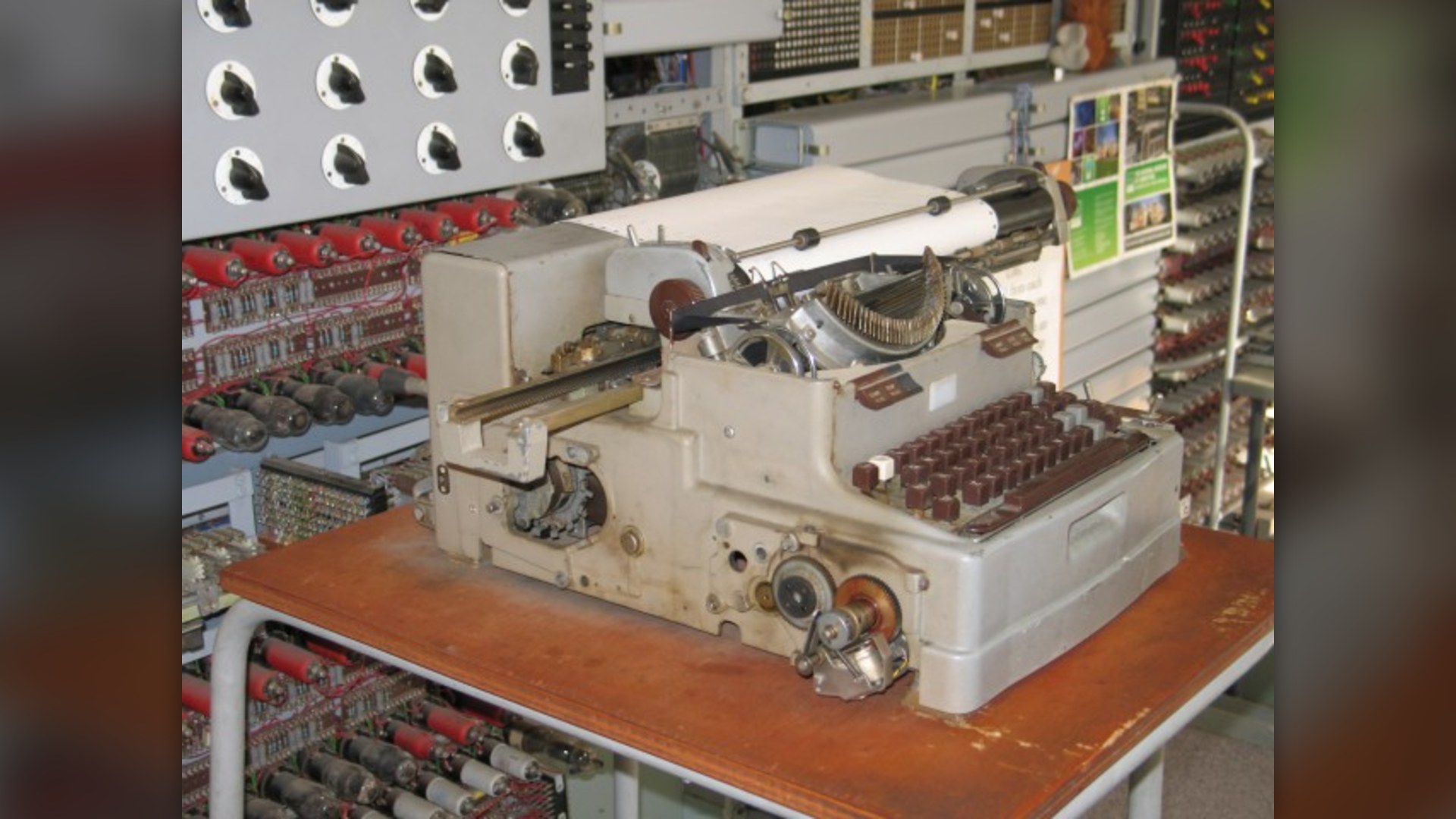
13. Colossus Mark 2 Electronic Codebreaking Computer
Engineered by Tommy Flowers and his Post Office Research Station team for Bletchley Park in 1943 and 1944, Colossus read punched paper tape optically at 5,000 characters per second to break Lorenz teleprinter ciphers. Its thyratron and vacuum-tube logic proved that large-scale electronic digital computing was reliable.
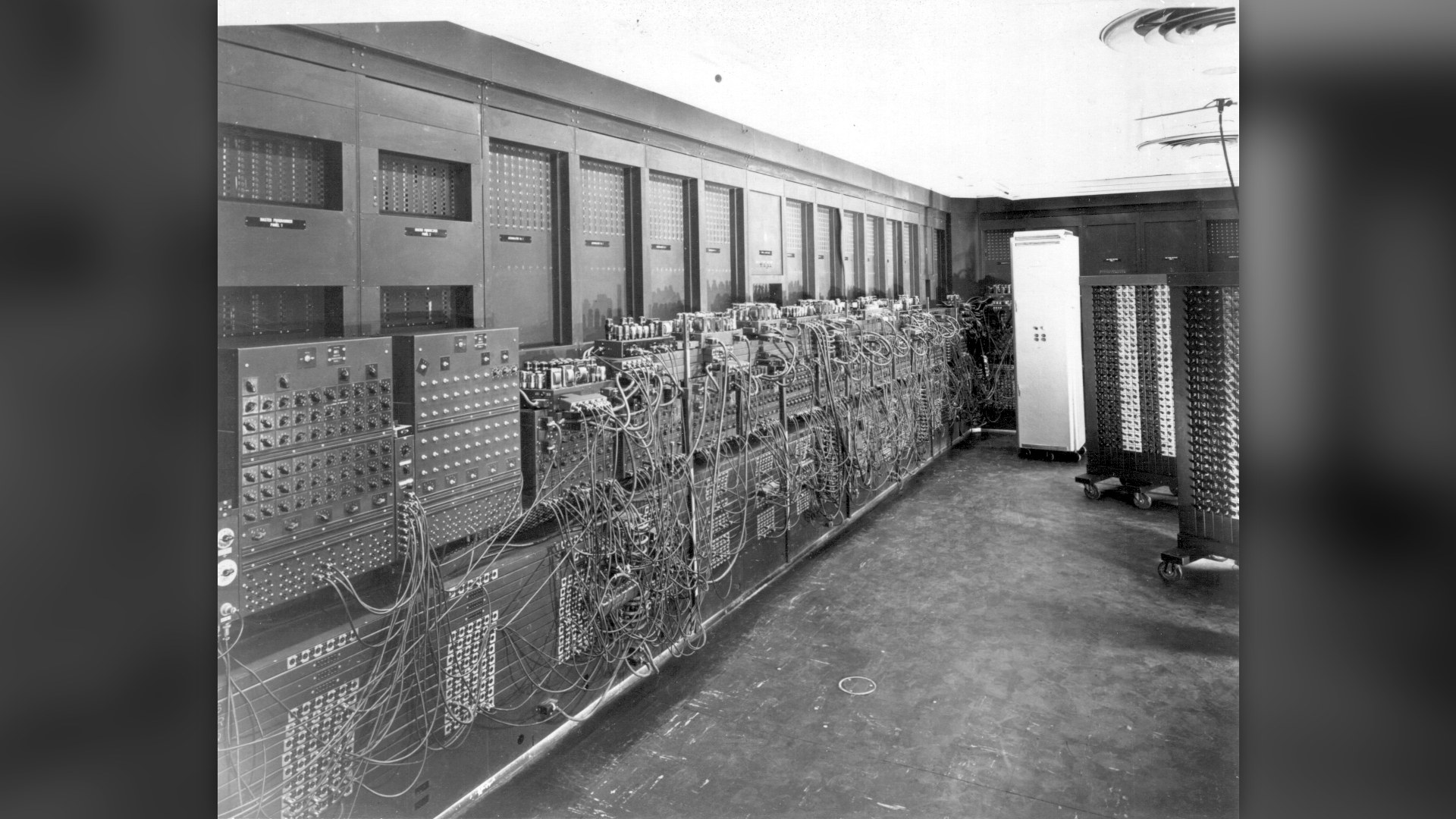
12. ENIAC, First General-Purpose Electronic Digital Computer
Completed in 1945 at the University of Pennsylvania by J. Presper Eckert and John Mauchly for the U.S. Army Ballistic Research Laboratory, ENIAC executed 5,000 additions per second. Programmed via plugboards and switches by a team of six women mathematicians, it calculated ballistic tables and nuclear simulations.
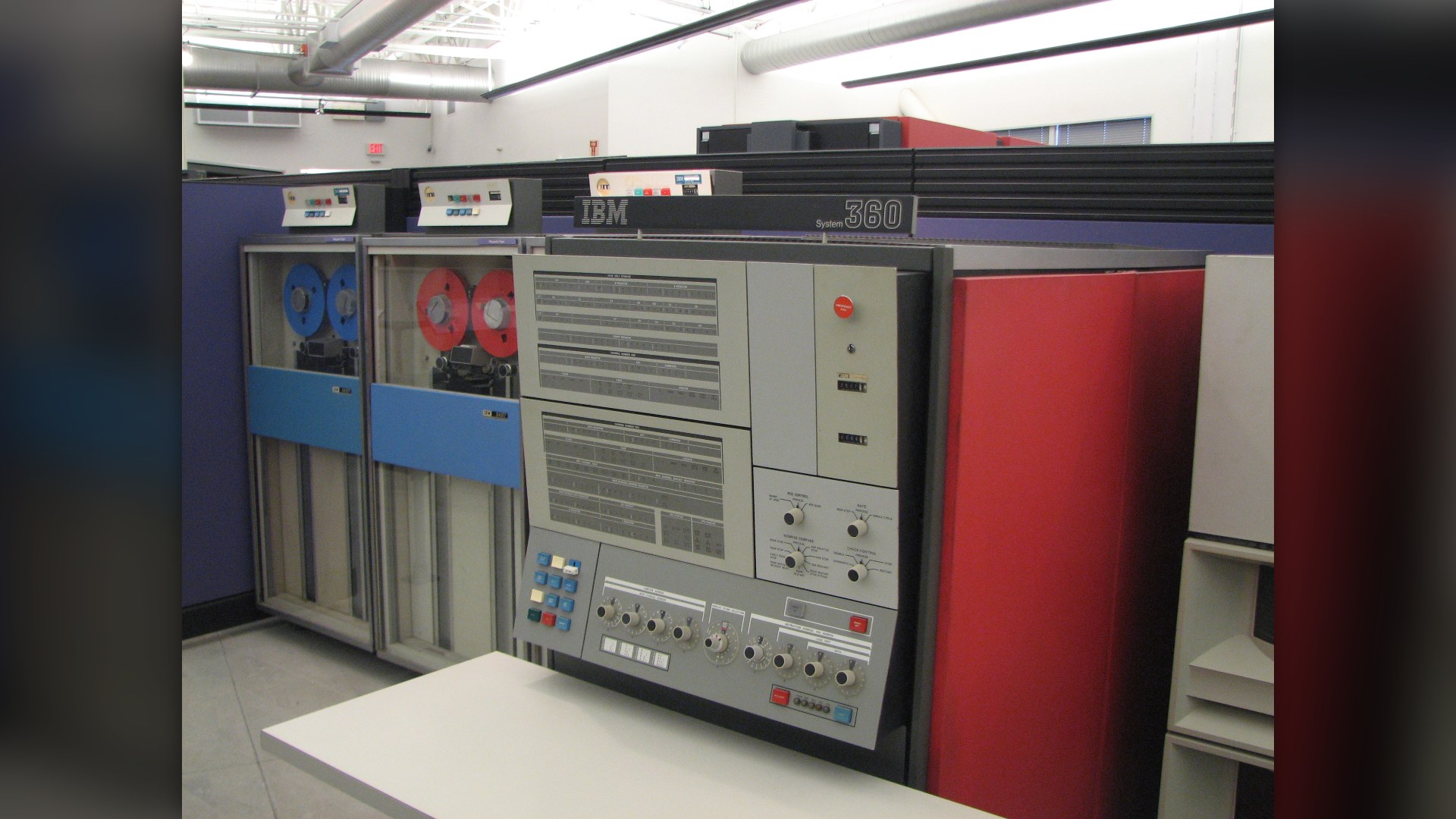
11. IBM System/360 Mainframe Computer
Before the IBM System/360, upgrading a computer meant rewriting every program from scratch. Led by Gene Amdahl and Fred Brooks, the System/360 introduced a unified instruction-set architecture, standardized 8-bit byte addressing, and powered both global banking networks and NASA's Apollo moon landings.
10. Cray-1 Vector Supercomputer
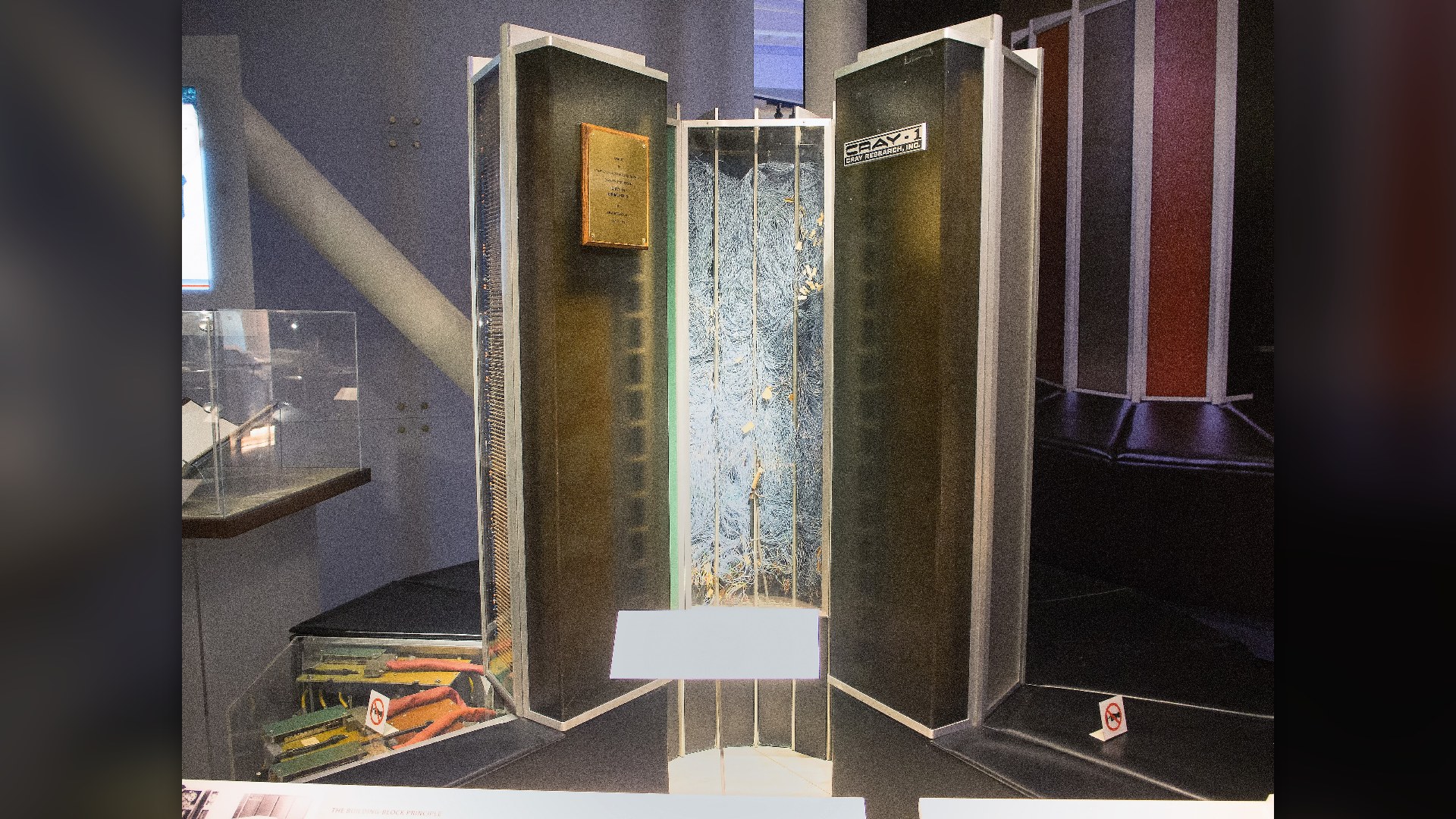
Designed by Seymour Cray and installed at Los Alamos National Laboratory in 1976, the Cray-1 used vector register processing and Freon cooling channels hidden beneath a padded perimeter bench. Clocking 160 million floating-point operations per second, it set the benchmark for scientific supercomputing for a decade.
9. Compound Optical Microscope And Laser Nanophotonics Bench
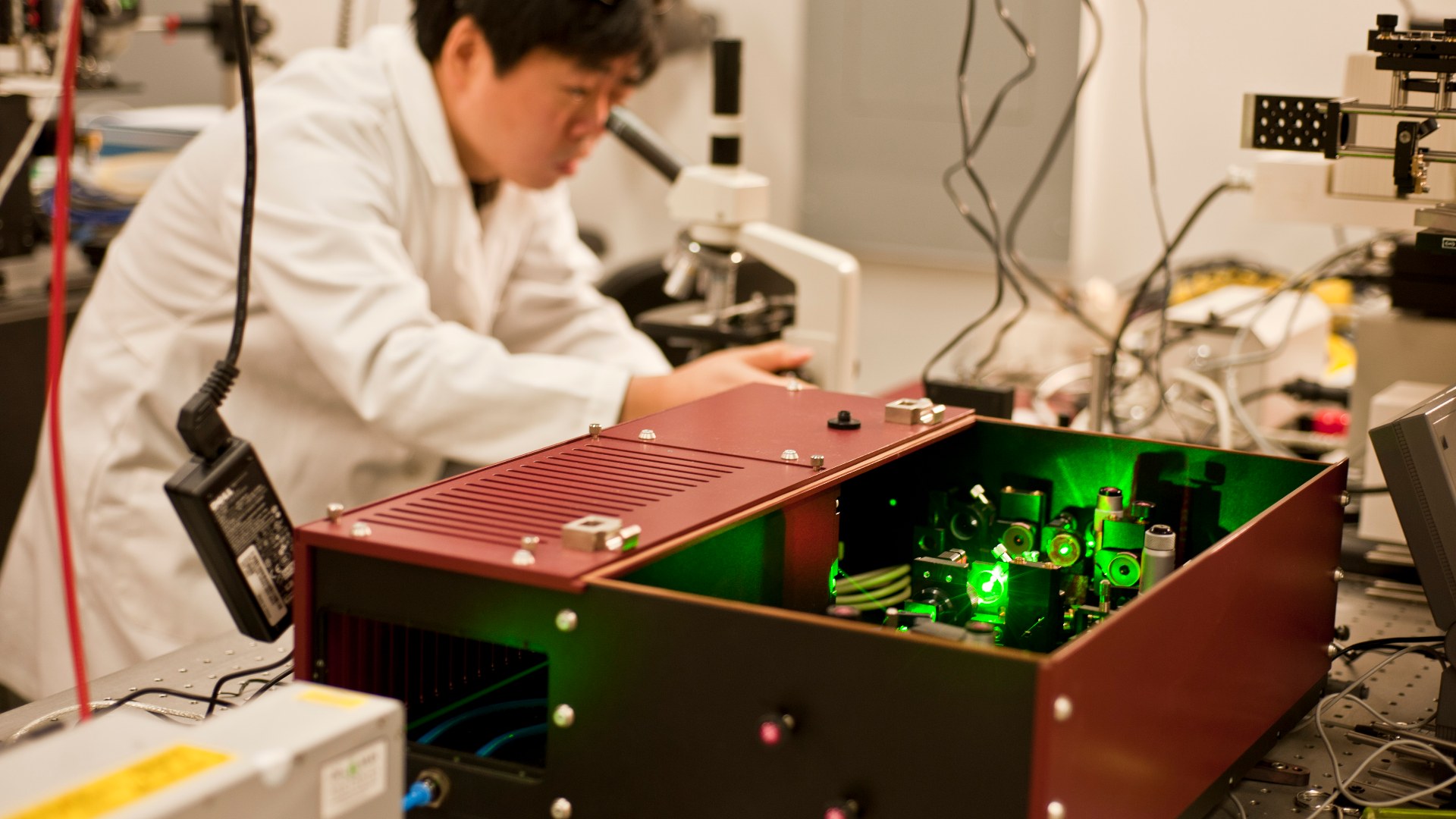
Perfected in the 19th century by Carl Zeiss, Ernst Abbe, and Otto Schott through diffraction-limited apochromatic lenses, the compound optical microscope remains the workhorse of biomedical science. Modern laboratories integrate compound microscopes with tunable lasers to track cellular diagnostics in real time.
8. Epifluorescence Optical Microscope
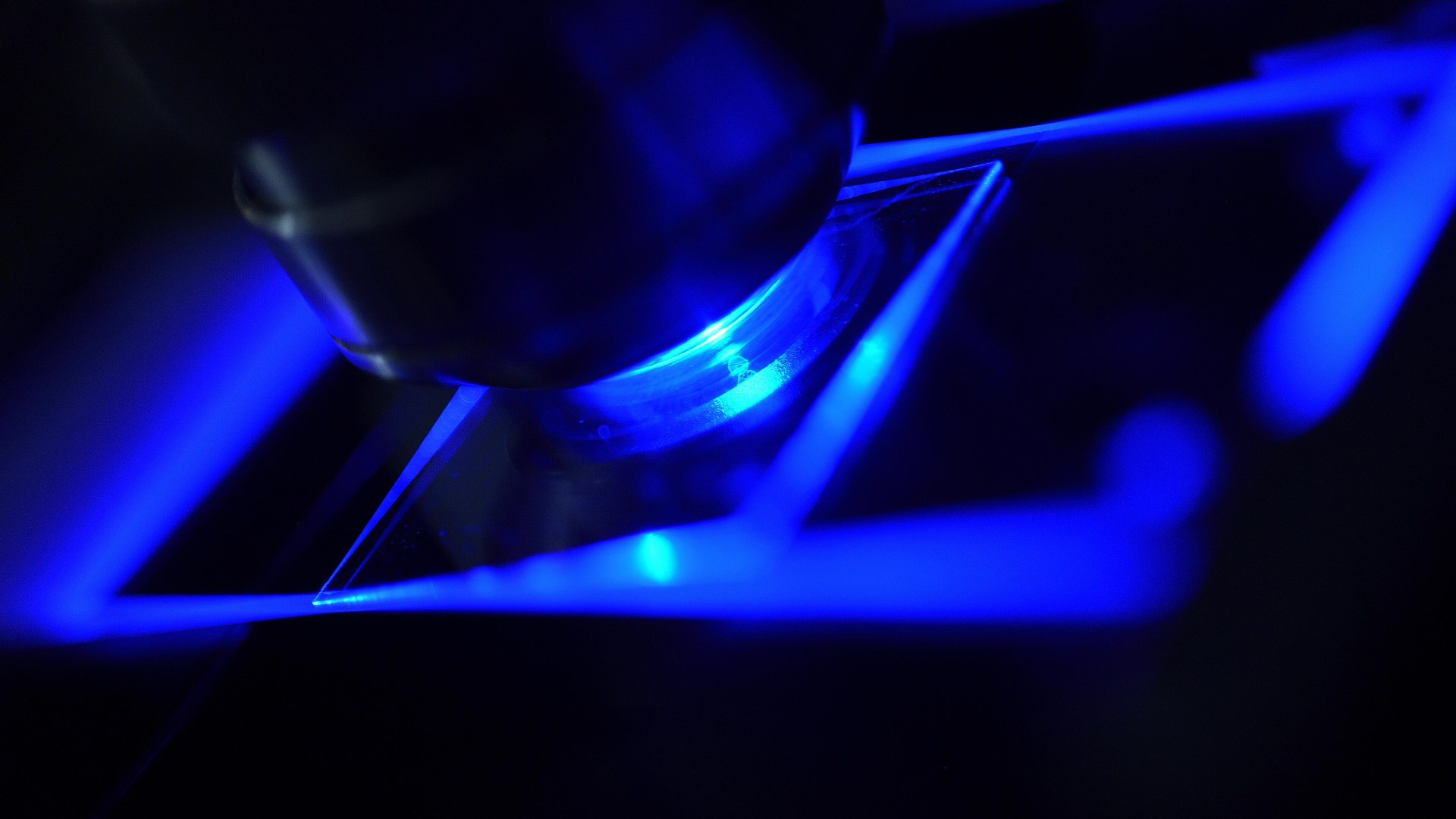
By filtering narrow-band excitation light through a dichroic mirror onto specimens labeled with fluorophores or green fluorescent protein (GFP), fluorescence microscopy achieved molecular specificity inside living cells. It laid the foundation for confocal and super-resolution nanoscopy.
7. Scanning Electron Microscope (SEM)
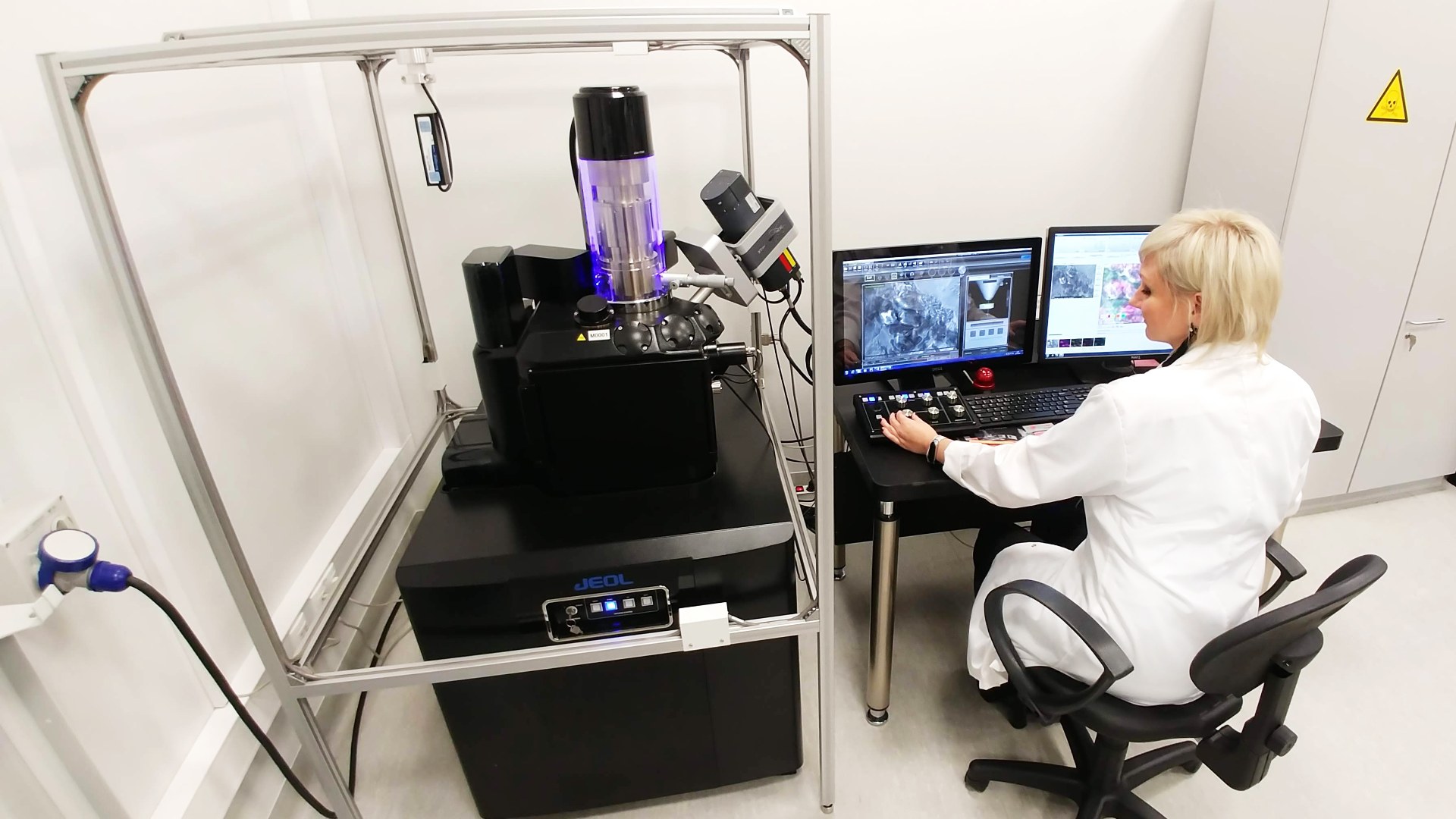
Because accelerated electrons have wavelengths thousands of times shorter than visible photons, the scanning electron microscope resolves surface topography down to a single nanometer. Magnetic lenses raster a fine electron beam across the sample in vacuum while detectors build three-dimensional micrographs.
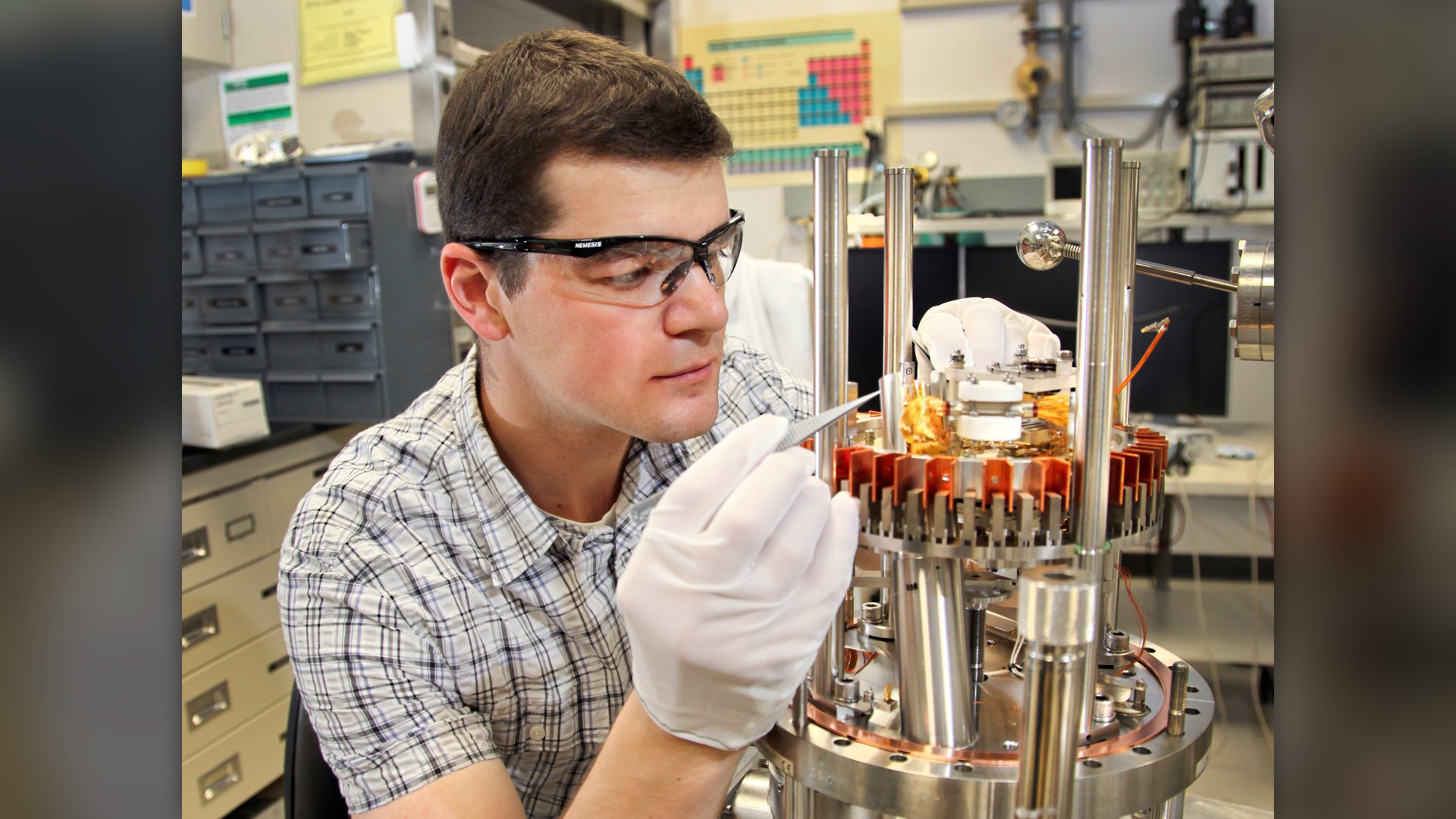
6. Scanning Probe And Tunneling Microscope
Invented by Gerd Binnig and Heinrich Rohrer at IBM Zurich in 1981, the scanning tunneling microscope (and its close relative, the atomic force microscope) allowed scientists to image and reposition single atoms on a surface. Here a researcher at Oak Ridge National Laboratory prepares a scanning probe stage.
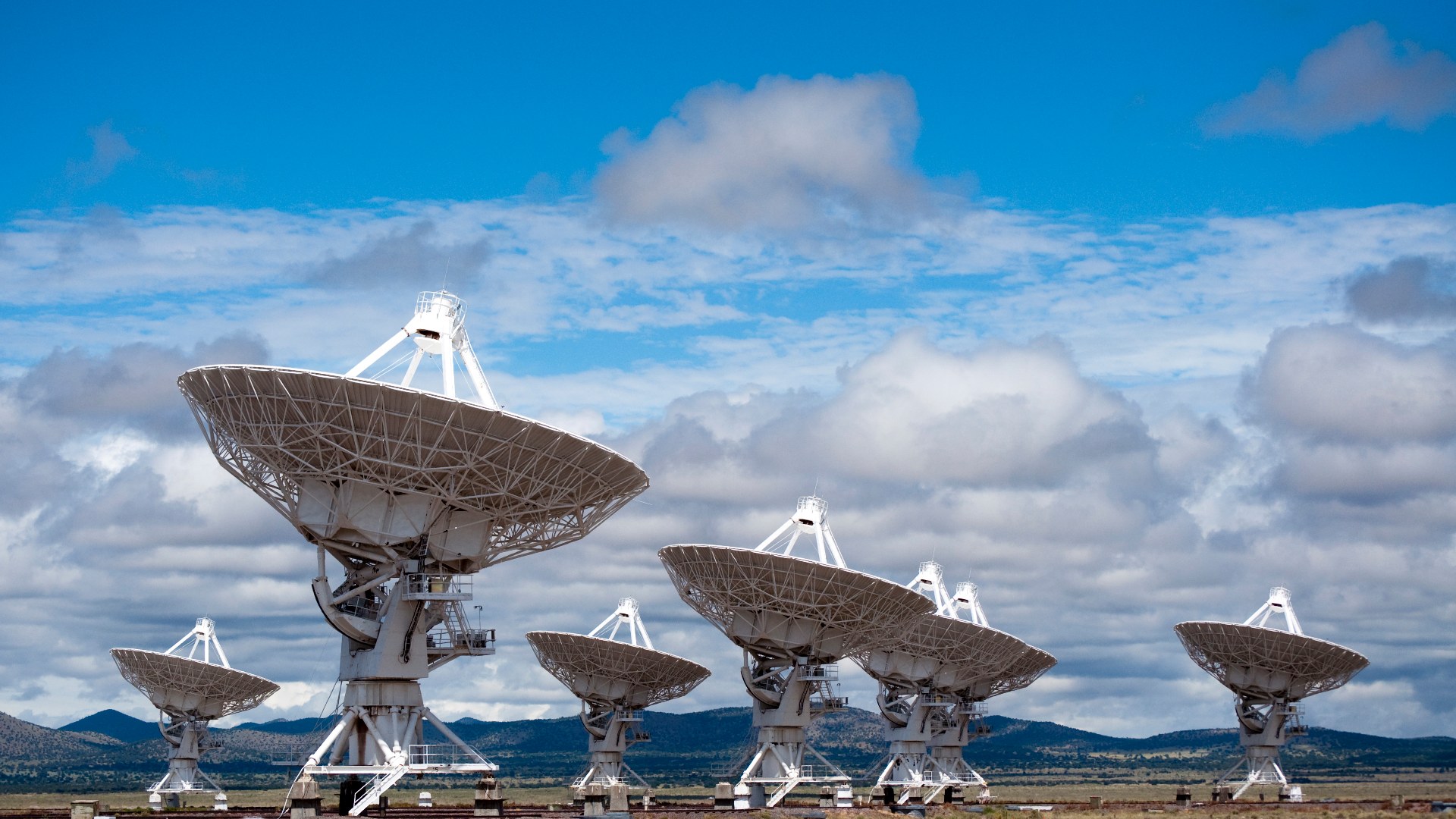
5. Karl G. Jansky Very Large Array Radio Interferometer
Dedicated in 1980 on the Plains of San Agustin in New Mexico, the Very Large Array combines radio signals from 27 Y-arranged antennas across up to 36 kilometers using interferometry. It mapped relativistic plasma jets from supermassive black holes, protoplanetary disks, and fast radio bursts.
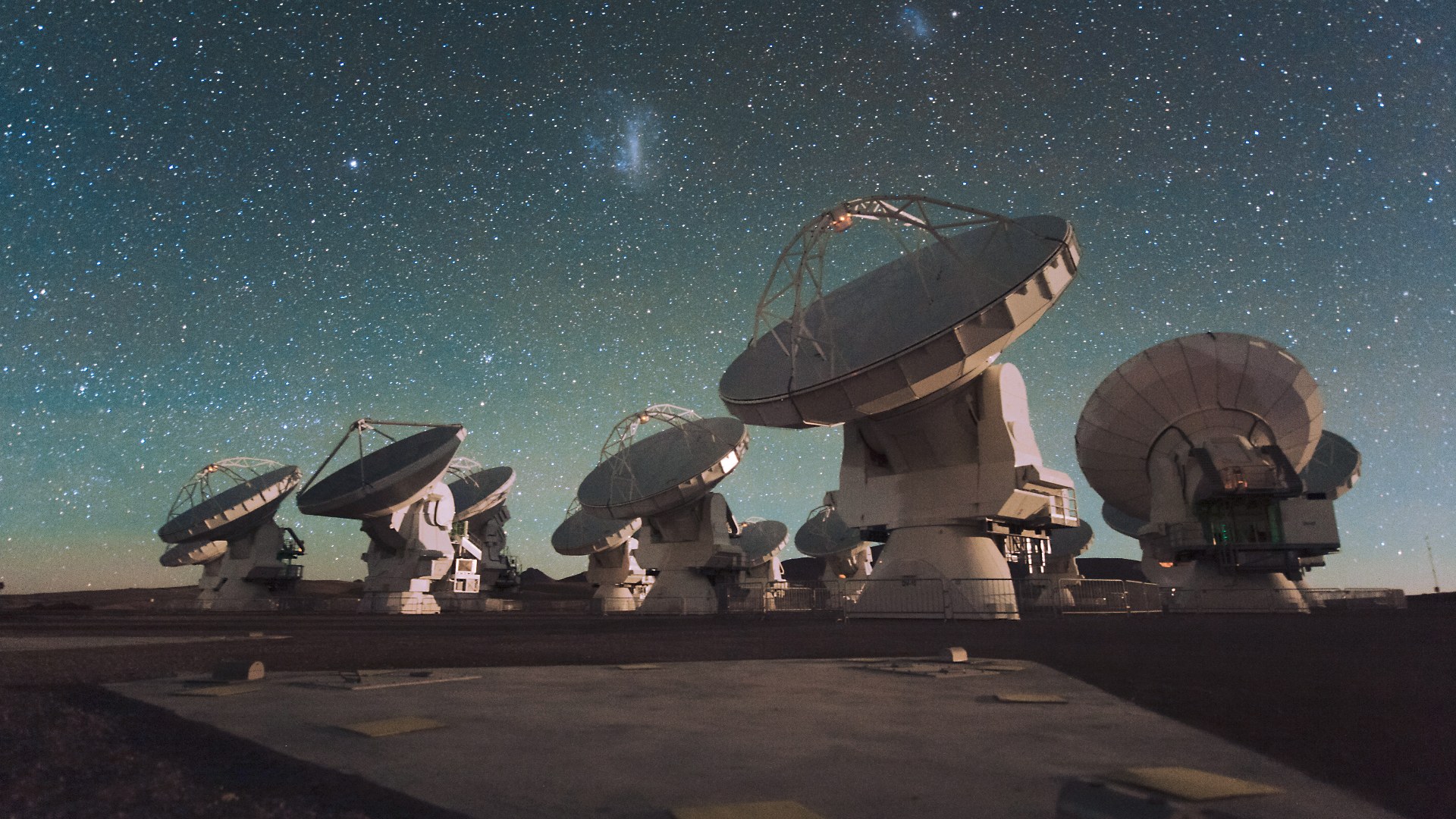
4. Atacama Large Millimeter And Submillimeter Array (ALMA)
Operating high on the Chajnantor Plateau under the Magellanic Clouds, ALMA links 66 millimeter-wavelength radio dishes across baselines up to 16 kilometers. Its submillimeter vision captured the first resolved images of planet-forming dust rings around young stars and contributed to imaging black hole shadows.
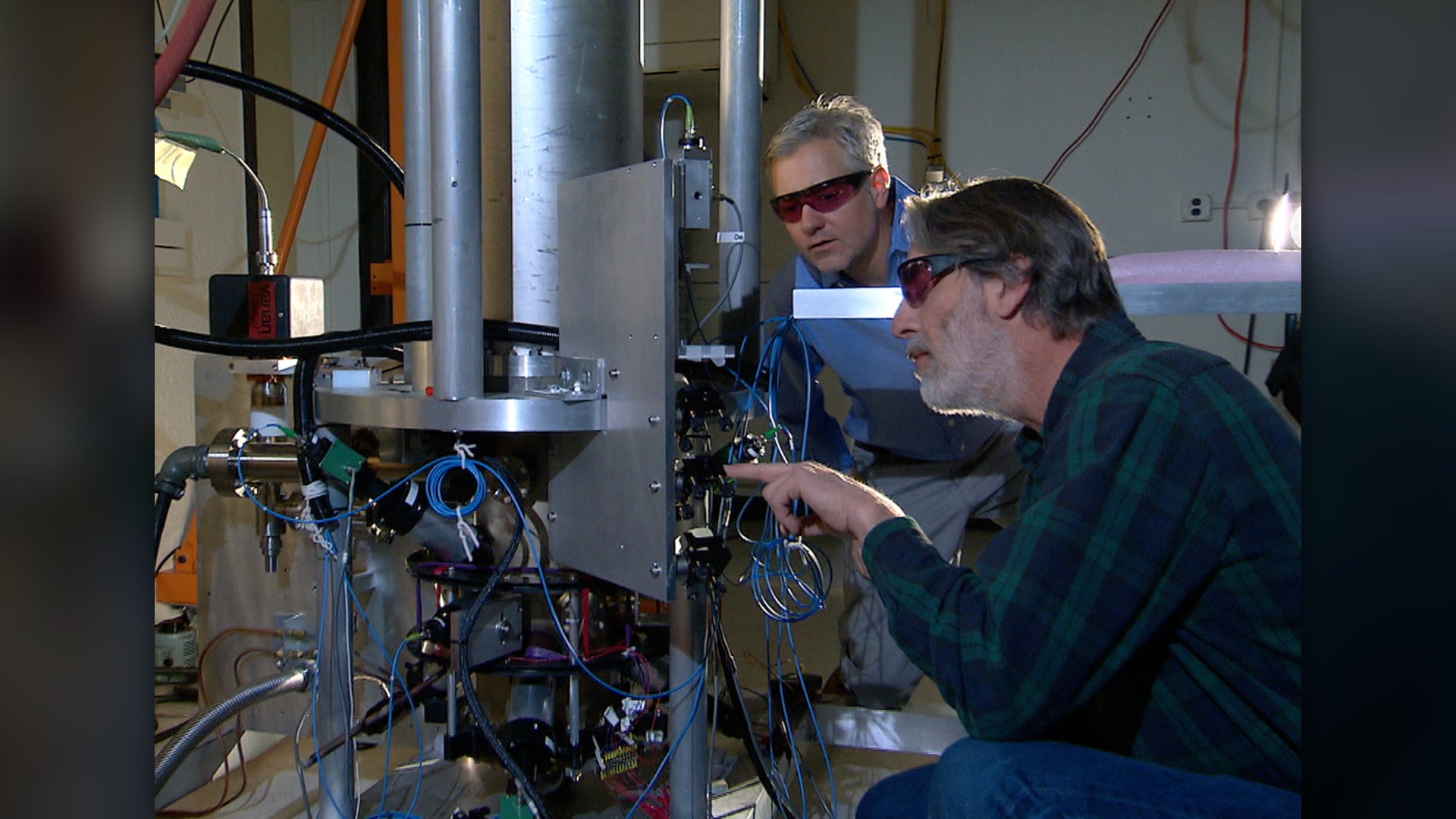
3. NIST-F2 Cryogenic Cesium Fountain Atomic Clock
Operated by the National Institute of Standards and Technology in Boulder, Colorado, the NIST-F2 atomic clock uses six infrared lasers to cool a cloud of cesium-133 atoms near absolute zero. Counting the exact 9,192,631,770 microwave oscillations per second makes GPS satellites and deep-space navigation possible.
2. LIGO Gravitational-Wave Laser Interferometer
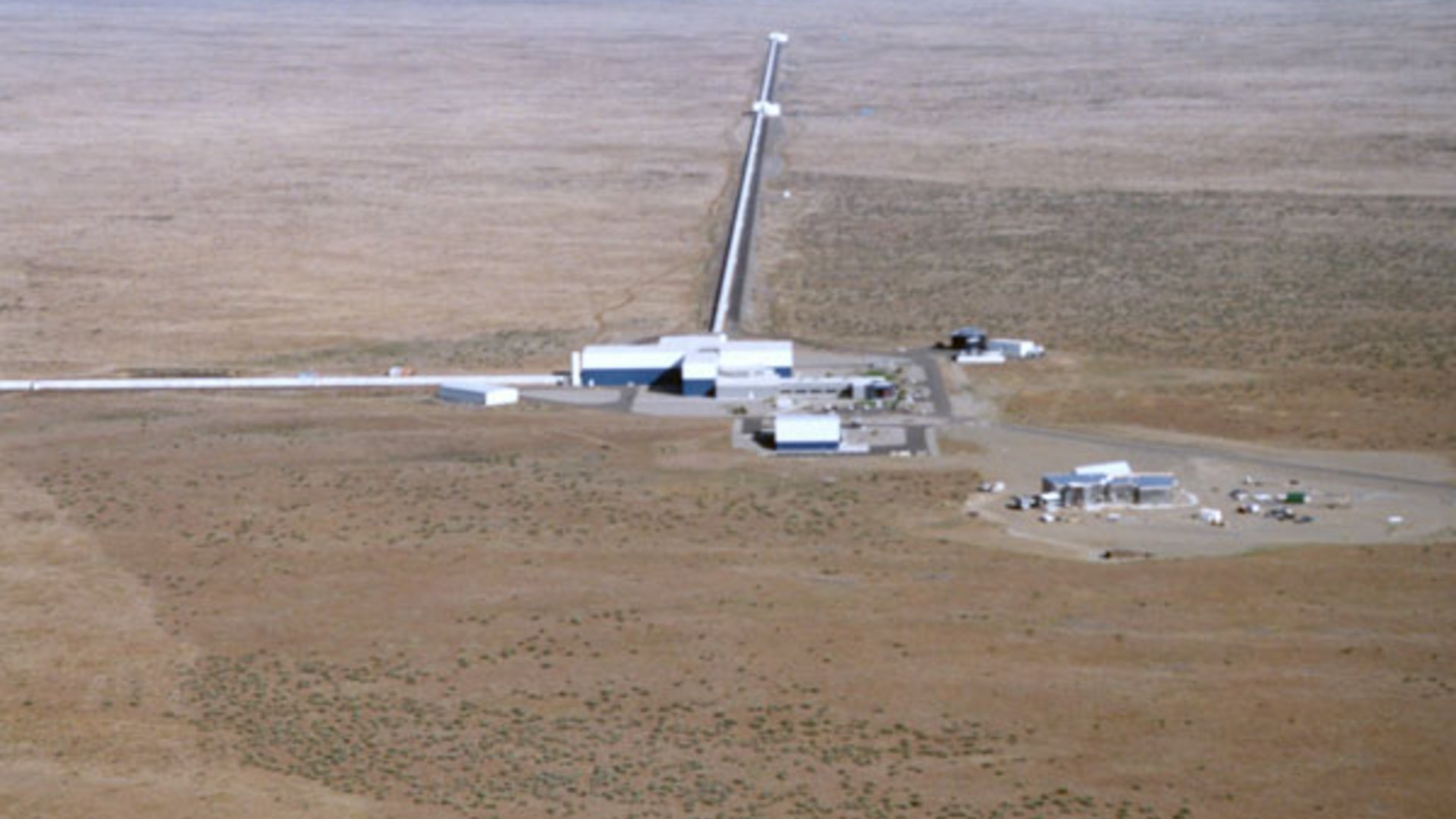
On September 14, 2015, the Laser Interferometer Gravitational-Wave Observatory (LIGO) detectors in Hanford, Washington (shown here from the air) and Livingston, Louisiana recorded gravitational waves from two colliding black holes 1.3 billion light-years away, confirming Albert Einstein's 1916 prediction.
1. James Webb Space Telescope 18-Segment Gold Primary Mirror
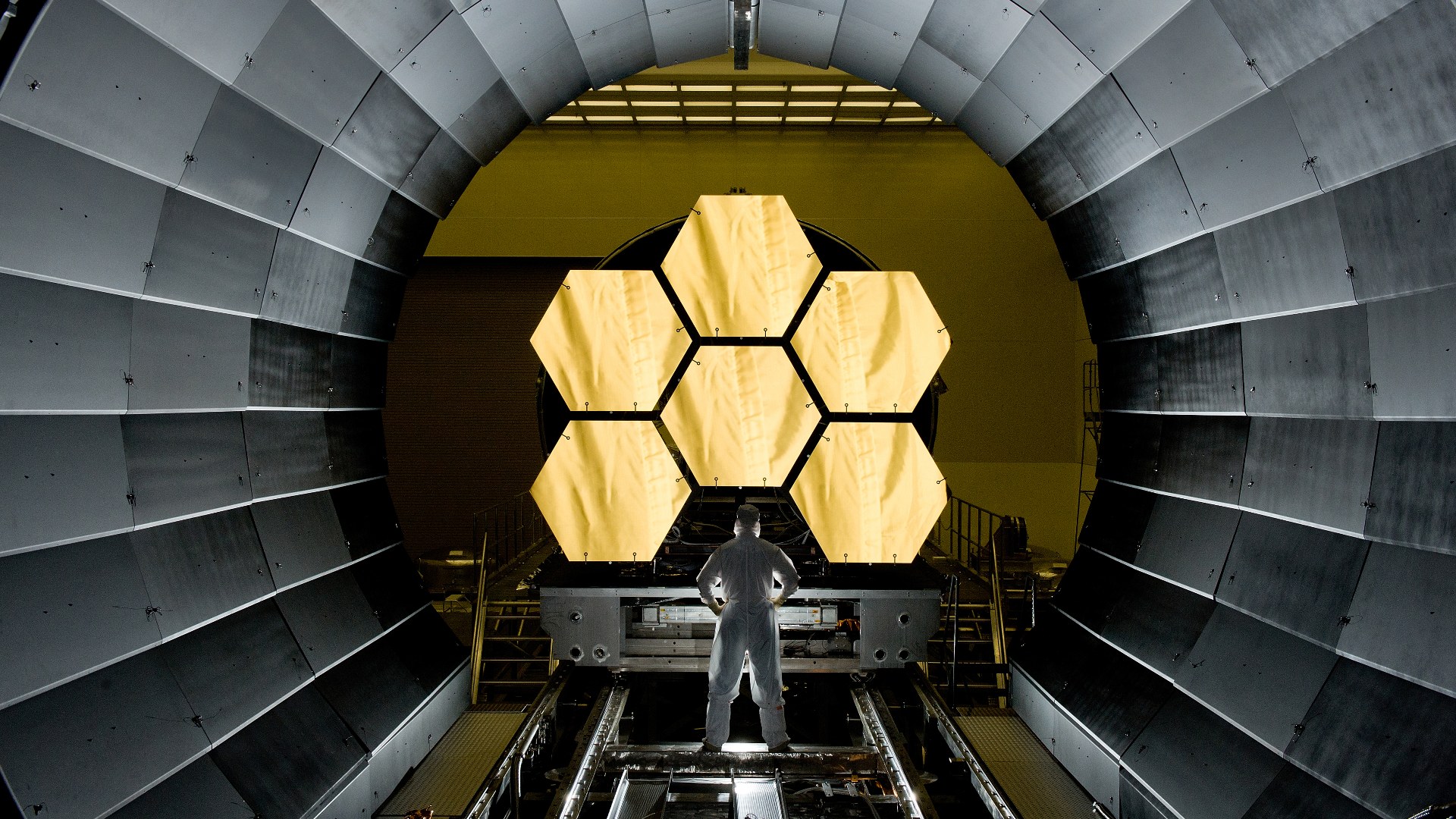
Photographed inside the cryogenic test chamber at NASA's Marshall Space Flight Center, six of the James Webb Space Telescope's 18 hexagonal beryllium mirror segments gleam with vapor-deposited gold. Operating 1.5 million kilometers from Earth since 2022, JWST images the earliest galaxies and exoplanet atmospheres.