Article · Planetary Science
Why the Magnetic Fields of Uranus and Neptune Baffle Scientists
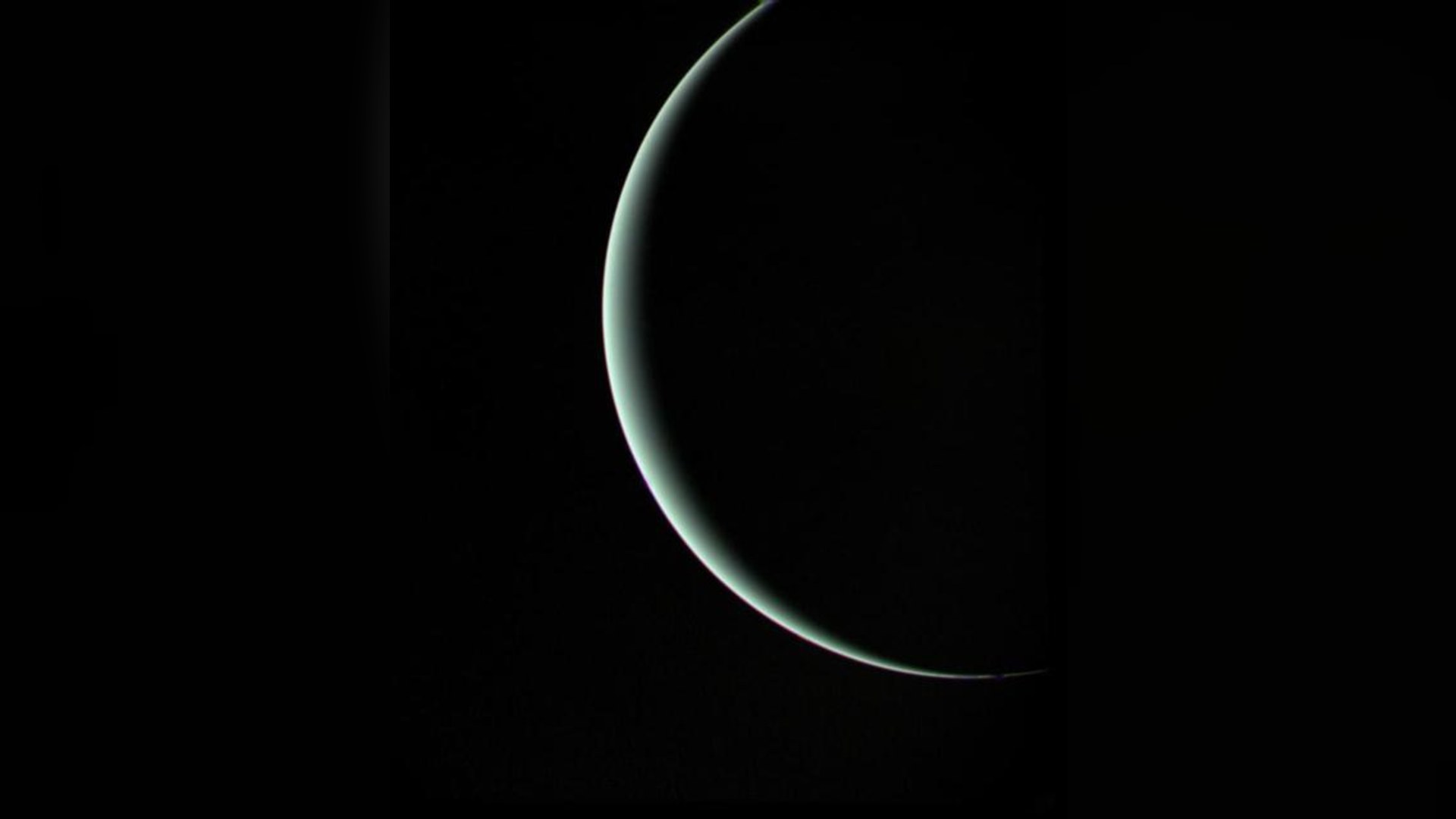
Decades after Voyager 2 flew past Uranus and Neptune, planetary scientists are discovering why the ice giants generate bizarre, off-center magnetic fields.
A Baffling Planetary Discovery
When the Voyager 2 spacecraft flew past Uranus and Neptune in the late 1980s, planetary physicists expected to record standard dipole magnetic fields aligned neatly with their rotational axes. What the robotic probe detected instead shocked mission scientists at NASA. The magnetic field of Uranus was tilted fifty-nine degrees from its spin axis and offset from the center of the planet by nearly a third of its radius. Neptune revealed an equally chaotic architecture, with its magnetic field tipped forty-seven degrees and displaced far to one side. The measurements shattered textbook expectations.
On Earth, molten iron churning in our outer metallic core generates a relatively symmetrical, stable magnetic field. Gas giants Jupiter and Saturn produce immense magnetic envelopes powered by metallic hydrogen circulating under intense central pressure. But Uranus and Neptune belong to a fundamentally different class of world called ice giants. The physics diverges. Their interior architecture behaves in ways that defy classical dynamo theory.
The Mystery of Superionic Water Mantles
Planetary geophysicists have spent decades trying to map what lies beneath the thick methane-rich atmospheres of the outer worlds. Deep inside these planets, extreme temperatures and crushing pressures prevent water, ammonia, and methane from freezing into solid ice. Laboratory experiments using high-powered lasers and diamond anvil cells reveal that water under millions of atmospheres of pressure acts like a molten metal.
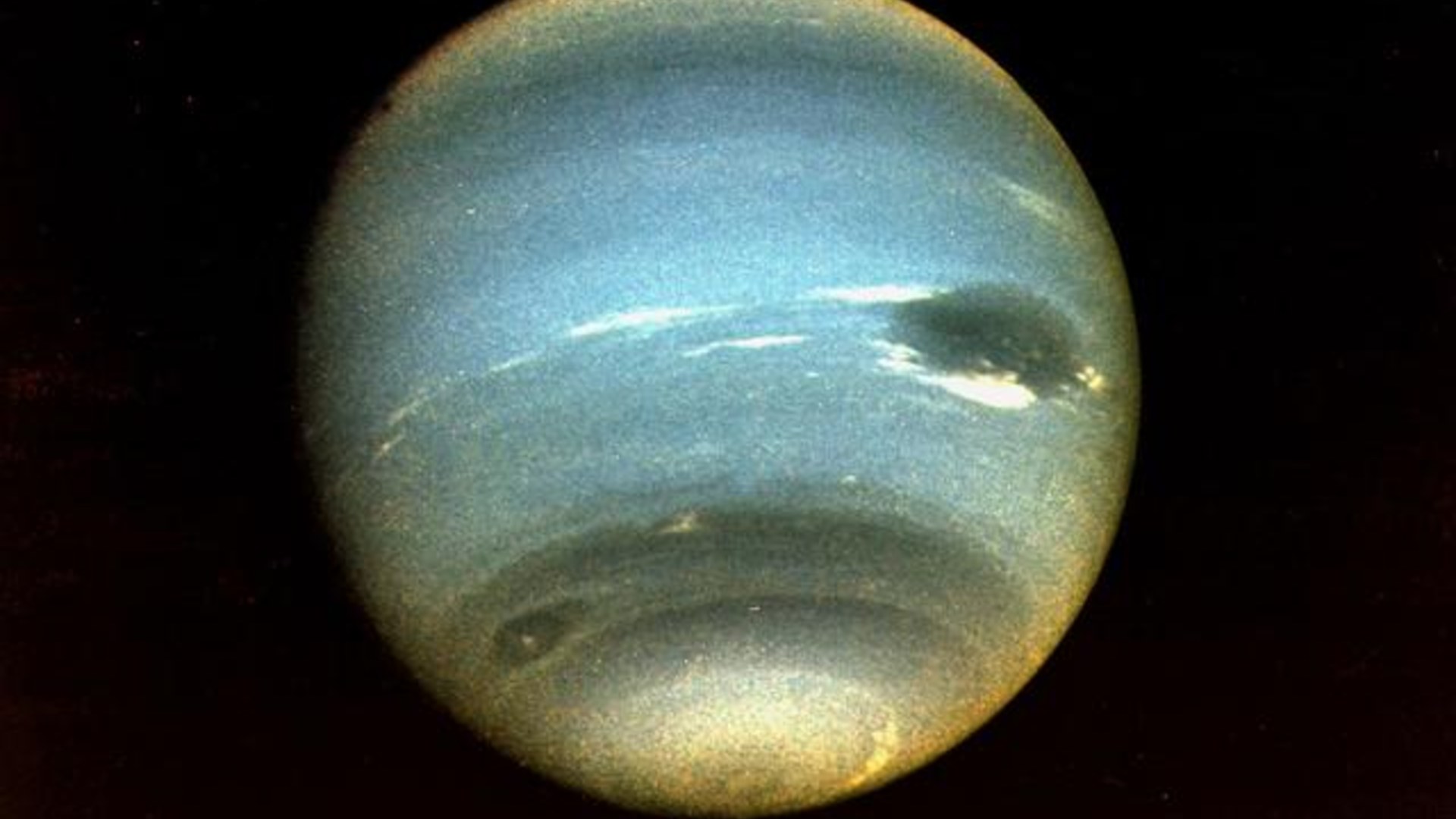
Instead, these compounds exist as dense, electrically conductive superionic fluids. Supercomputer models developed by computational astrophysicists suggest that the dynamos of the ice giants do not operate deep within rocky cores. Instead, their magnetic fields are generated in a relatively thin, turbulent outer fluid mantle. Chaos reigns. Because this convective shell sits close to the surface, magnetic field lines twist and tangle into disorderly multipolar shapes rather than clean north-south loops.
Rapid Fluctuations Across Human Lifetimes
The most intriguing insight from recent numerical modeling involves the speed at which these magnetic fields evolve. Earth's magnetic poles drift slowly over centuries, but the ice giants operate on far more frantic schedules. Computer simulations reveal that turbulent convection currents in the outer slush mantle can reorganize magnetic field lines within just a few decades.
Because the liquid water-ammonia layer experiences violent thermal convection and rapid zonal winds, the local magnetic currents shift across decades rather than geological epochs. Researchers believe that the magnetic fields Voyager 2 recorded in 1986 and 1989 have likely morphed into entirely different configurations today. The magnetic environment is fluid. Re-measuring those fields would show dramatic shifts.
The Urgent Case for a Dedicated Return Mission
No human spacecraft has visited Uranus or Neptune since Voyager 2 departed for interstellar space nearly forty years ago. Planetary scientists rely entirely on aging telemetry and sophisticated computer simulations to probe their mysterious envelopes. Modern ground-based telescopes and space observatories can track weather patterns on the cloud tops, but they cannot penetrate the hidden dynamo beneath.
International space agencies have designated a flagship Uranus Orbiter and Probe as a top scientific priority for the coming decade. The clock is ticking. Mission planners envision a launch window in the early 2030s to dispatch specialized magnetometers and atmospheric descent capsules.
Until dedicated probes arrive to pierce those frigid blue atmospheres, the chaotic magnetic shields of Uranus and Neptune will continue challenging fundamental rules about how planets protect themselves from the solar wind.