Slideshow · Science
15 Spookiest Things In Deep Space Ever Documented By NASA
From glowing X-ray hands and screaming galaxy clusters to a skull-shaped asteroid hurtling past Earth on Halloween, NASA telescopes have documented 15 eerie sights in space.
By Most Viral Today
28 Oct 2026

15 Spookiest Things In Deep Space Ever Documented By NASA 
15. Coffin Shaped Iceberg B 15T 
14. The Bootes Cosmic Supervoid 
13. Cygnus X 1 Devouring A Companion - AdvertisementSwipe or tap ▶ to continue countdown

12. Ghost Head Nebula NGC 2080 
11. The Black Widow Nebula 
10. The Ghost Nebula Sh2 136 
9. The Witch Head Nebula IC 2118 - AdvertisementSwipe or tap ▶ to continue countdown

8. The Jack O Lantern Nebula 
7. Colliding Galactic Ghoul Face 
6. The Face On Mars At Cydonia 
5. Perseus Cluster Screaming Skull - AdvertisementSwipe or tap ▶ to continue countdown

4. The Eye Of Sauron Helix Nebula 
3. The Halloween Skull Asteroid 
2. NASA Solar Dynamics Pumpkin Sun 
1. Hand Of God Pulsar Wind Nebula - Advertisement🔥 UP NEXT IN THIS SERIES◫ 23 Slides

22 Most Secret World War II Aircraft Tested Behind Closed Doors
Between 1939 and 1945, Allied and Axis engineers built jets, flying wings and rocket interceptors in deep wartime secrecy. Ranked from 22 to 1 by historical secrecy and technical leap, this countdown draws on archival records from the Smithsonian, U.S. Air Force Museum, RAF Museum and German Federal Archives.
Space is full of pareidolia and eerie cosmic structures that look straight out of a horror movie. From glowing X-ray hands and screaming galaxy clusters to skull-shaped asteroids, here are 15 spooky sights captured by NASA telescopes.
Swipe or tap ▶ to begin the countdown
©NASA / JPL, Viking 1 & Wikimedia / Goddard Space Flight
15. Coffin Shaped Iceberg B 15T
Calved from Antarctica's Ross Ice Shelf in early 2000, Iceberg B-15T drifted through the Southern Ocean for nearly 18 years. When NASA Earth Observatory photographed it between South Georgia and the South Sandwich Islands, ocean fractures had carved a coffin shape.
©Wikimedia / NOAA National Ice Center
14. The Bootes Cosmic Supervoid
Nicknamed the Great Nothing, the Bootes Void stretches roughly 330 million light-years wide yet holds only about 60 documented galaxies. NASA's Galaxy of Horrors highlights this vast desert because a typical cosmic region that size should contain thousands of galaxies.
©NASA / SAO / Chandra
13. Cygnus X 1 Devouring A Companion
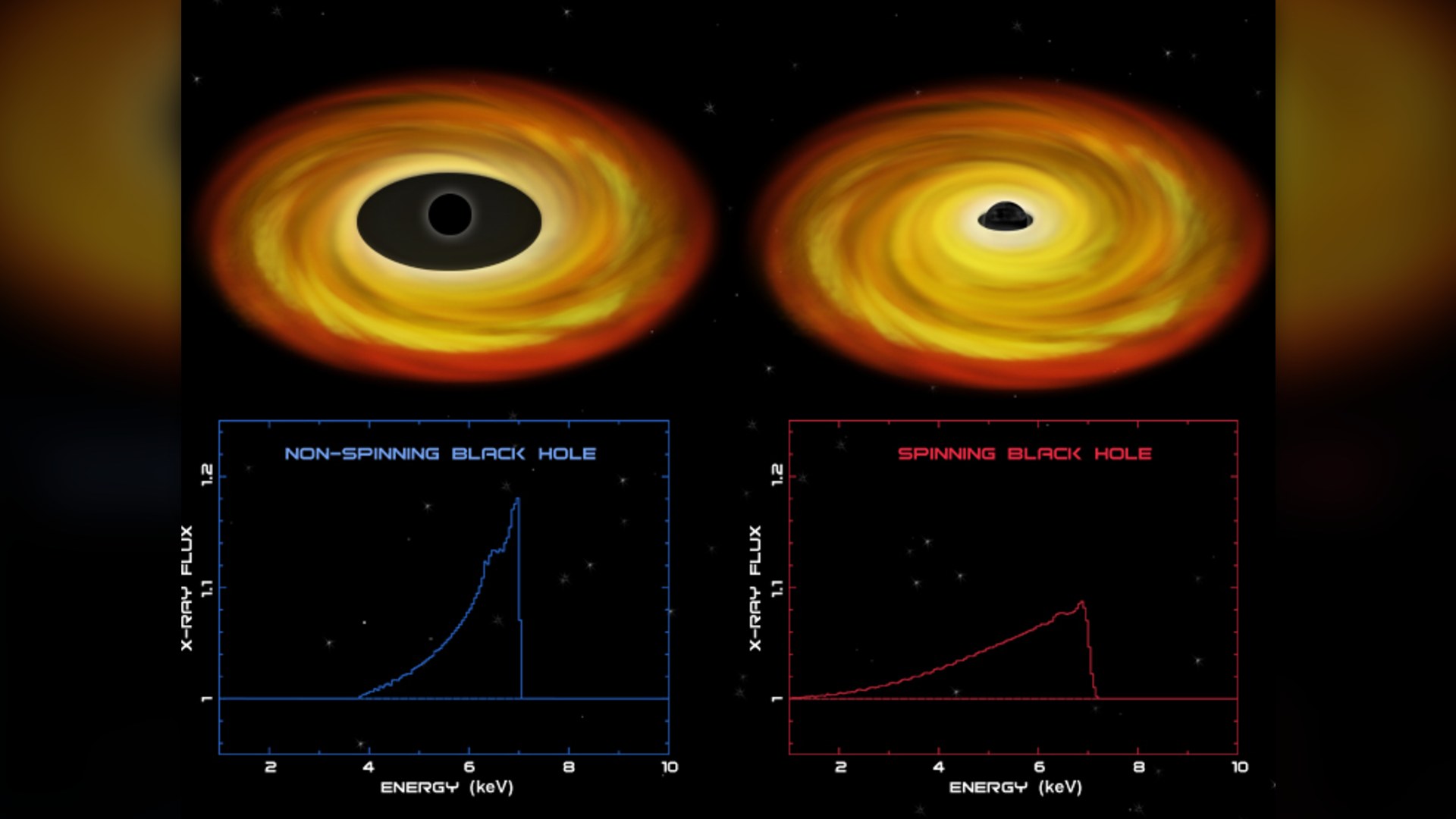
Featured in NASA's Galaxy of Horrors as a cosmic predator, Cygnus X-1 was the first widely accepted black hole candidate. Orbiting closely alongside a massive blue supergiant star, its relentless gravity pulls stellar material into a superheated, glowing X-ray accretion disk.
©NASA / CXC / M. Weiss
Advertisement
Swipe or tap ▶ to resume the countdown.
12. Ghost Head Nebula NGC 2080
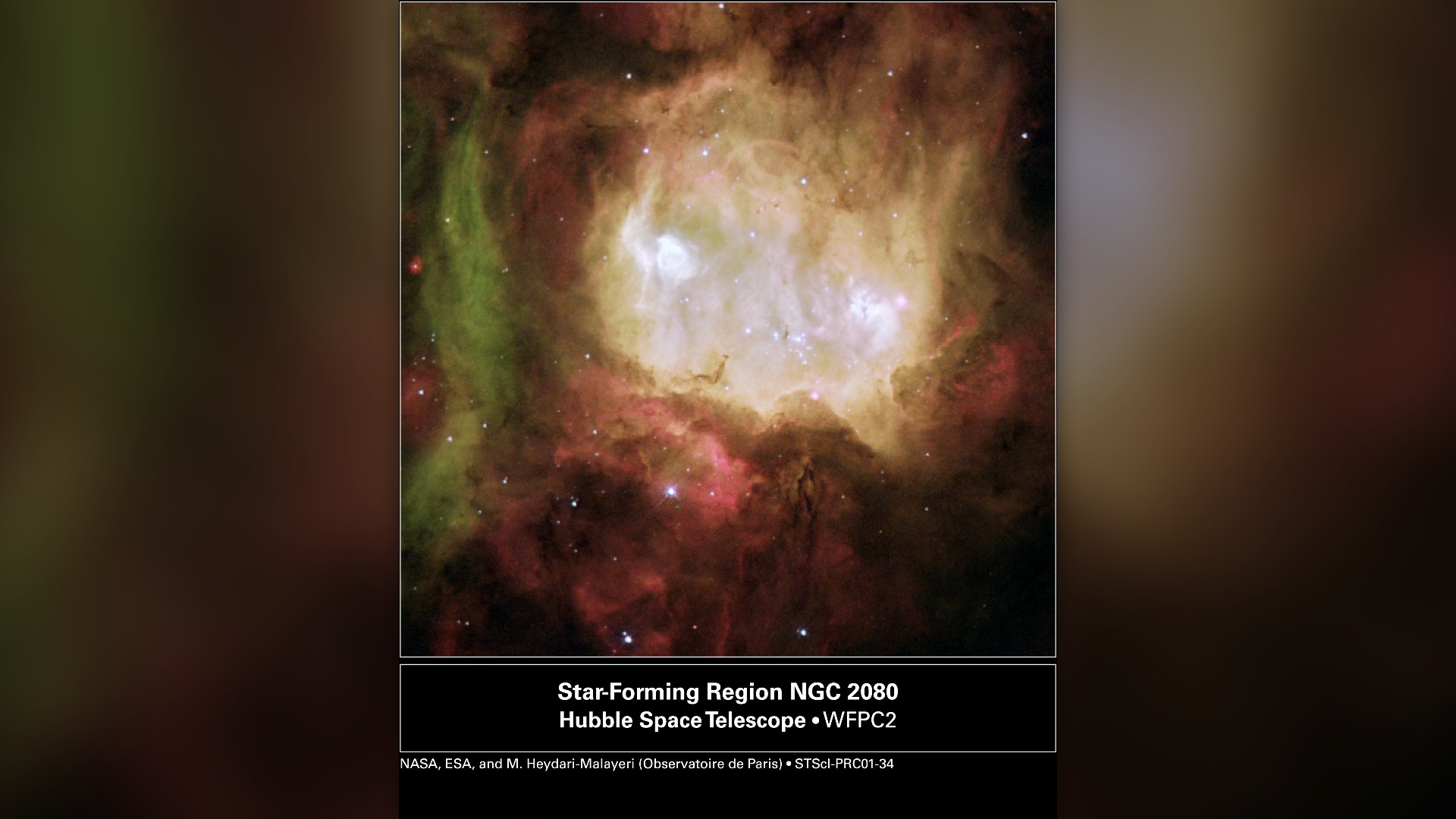
Captured by the Hubble Space Telescope inside the Large Magellanic Cloud, NGC 2080 spans about 50 light-years across. Astronomers nicknamed it the Ghost Head Nebula because two dense, superheated blobs of glowing hydrogen and oxygen gas look like piercing spectral eyes.
©NASA / Mohammad Heydari-Malayeri
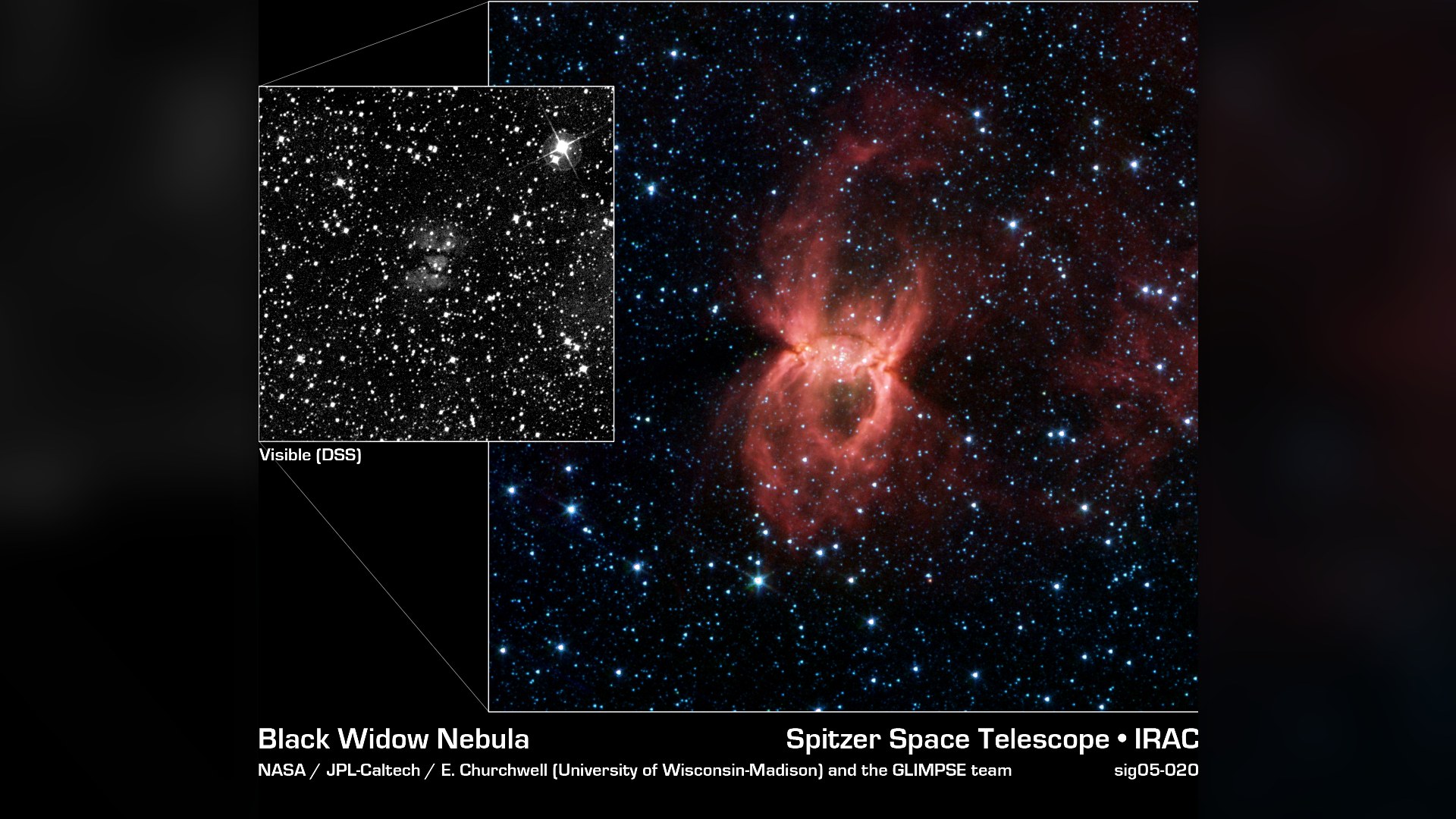
11. The Black Widow Nebula
Captured in infrared light by NASA's Spitzer Space Telescope, massive young stars at the center of the Black Widow Nebula are blasting radiation in two opposite directions, carving symmetrical cavities and long dark dust lanes that look like sprawling spider legs.
©NASA / JPL-Caltech / E. Churchwell
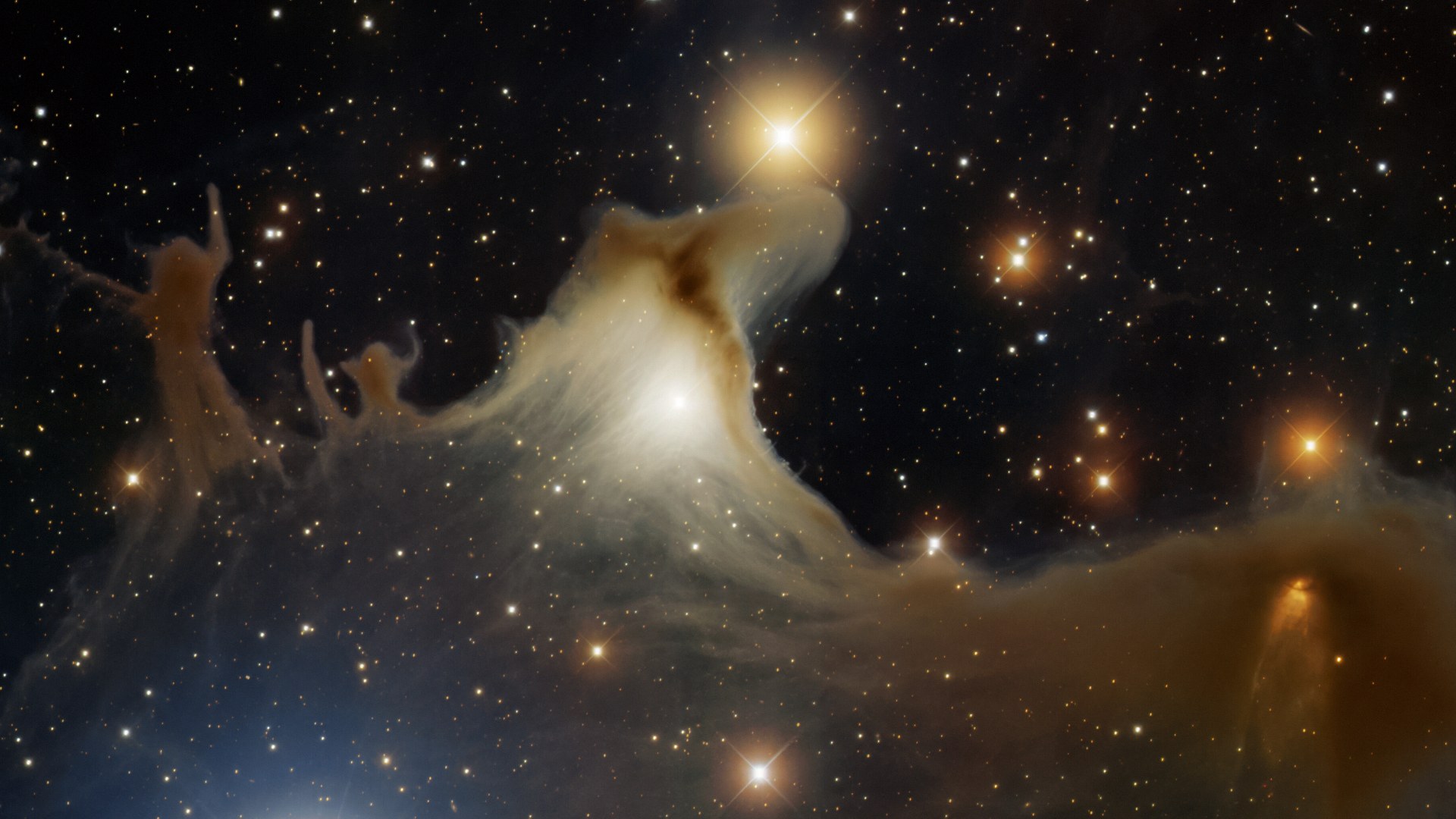
10. The Ghost Nebula Sh2 136
Cataloged as Sh2-136 and vdB 141, this reflection nebula in the constellation Cepheus earned the spotlight in NASA's Astronomy Picture of the Day. Faint starlight reflects off dense dust pillars, creating semi-transparent figures that look like ghosts raising their arms.
©NOAO / AURA / NSF / T.A. Rector
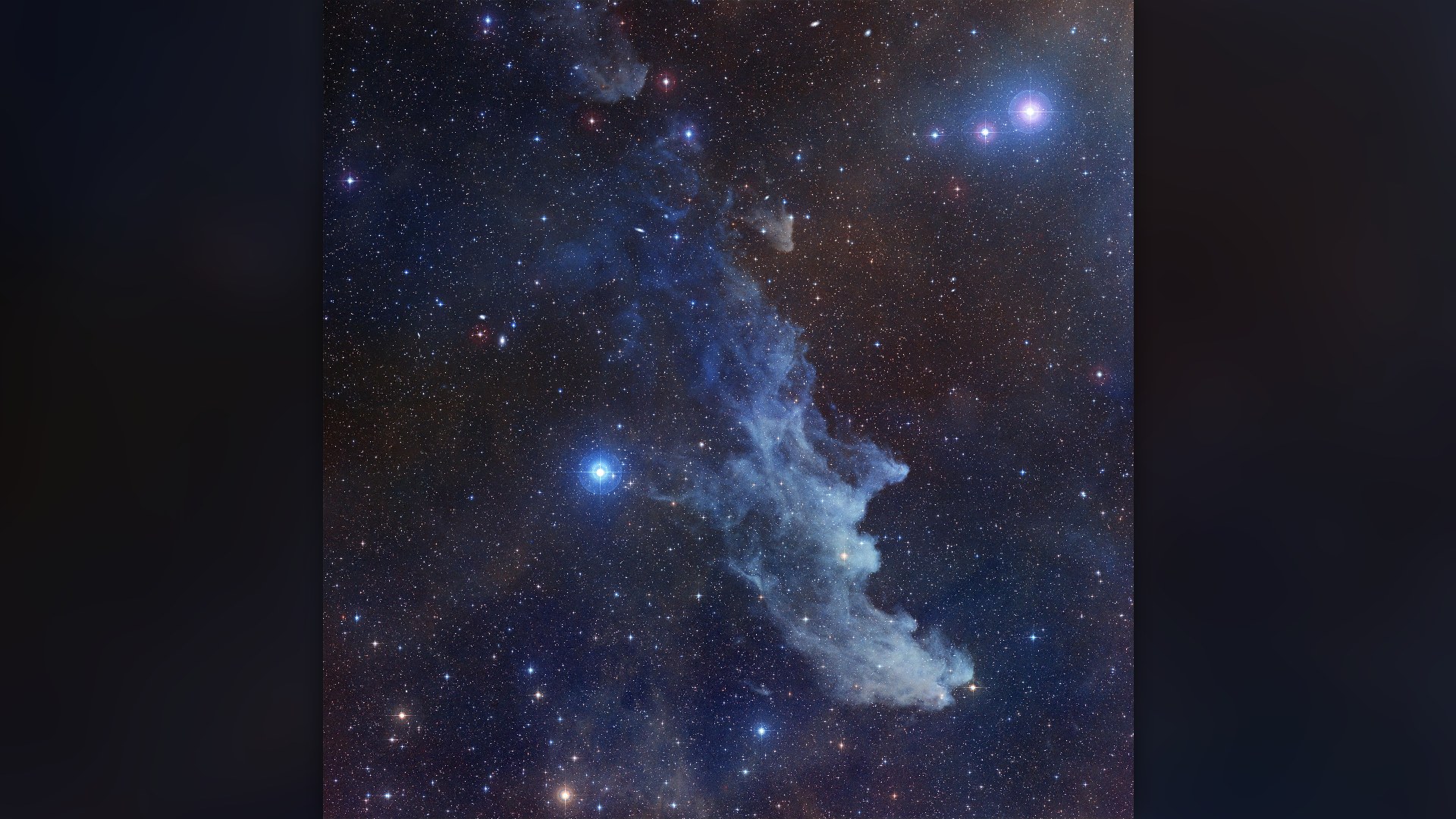
9. The Witch Head Nebula IC 2118
Illuminated by the bright blue supergiant star Rigel in the constellation Orion, IC 2118 looks strikingly like a wicked witch in profile. When NASA telescopes scanned the reflection cloud, the glowing dust billows revealed active star-forming nurseries brewing inside.
©NASA / STScI / Noel Carboni
Advertisement
Swipe or tap ▶ to resume the countdown.
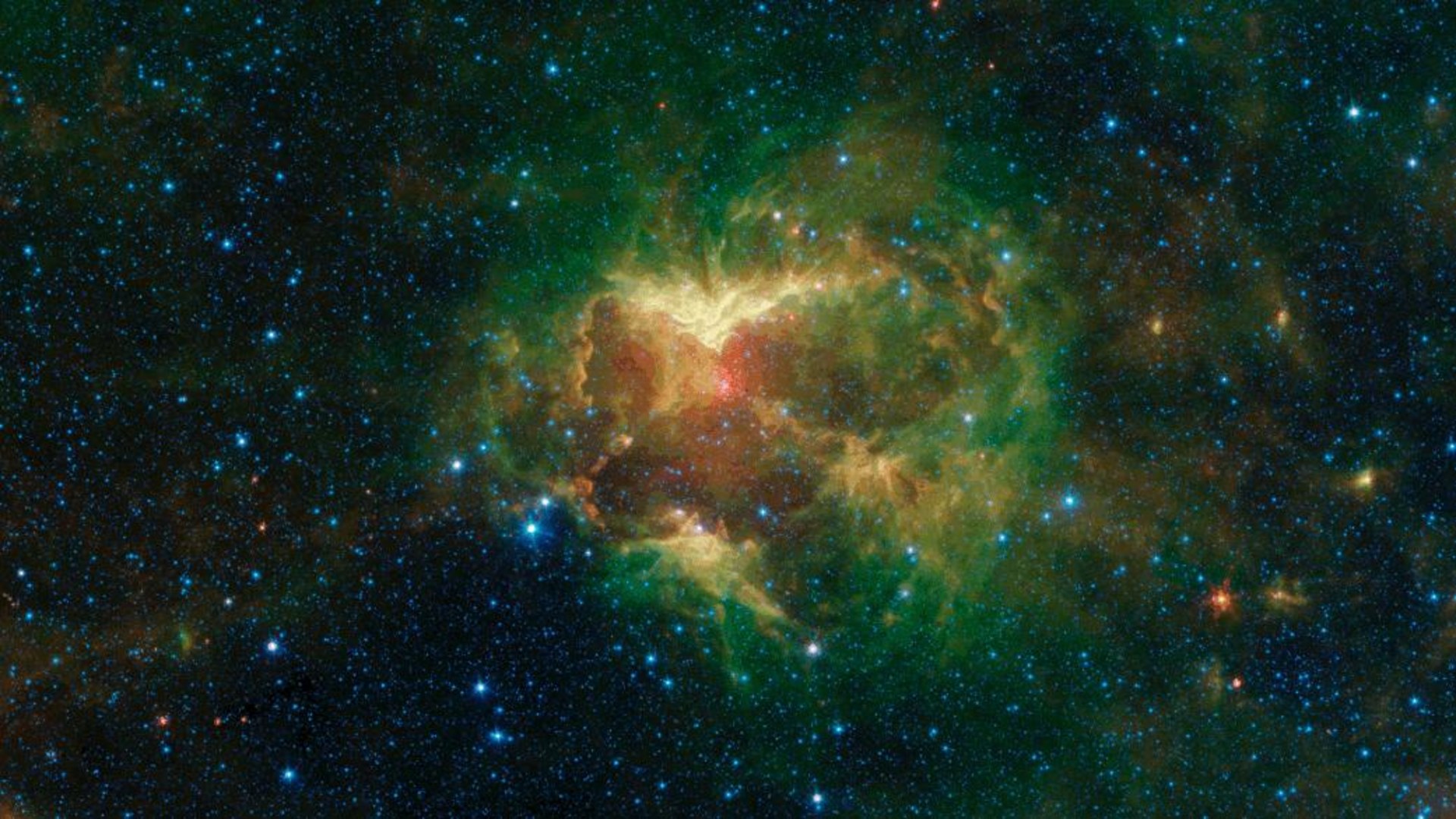
8. The Jack O Lantern Nebula
Using NASA's Spitzer Space Telescope, astronomers spotted a cosmic pumpkin carved by fierce stellar winds and radiation from a massive O-type star. Plotted in infrared wavelengths of green, red, and orange, the hollowed gas cloud forms a classic Halloween Jack-o'-Lantern.
©NASA / JPL-Caltech
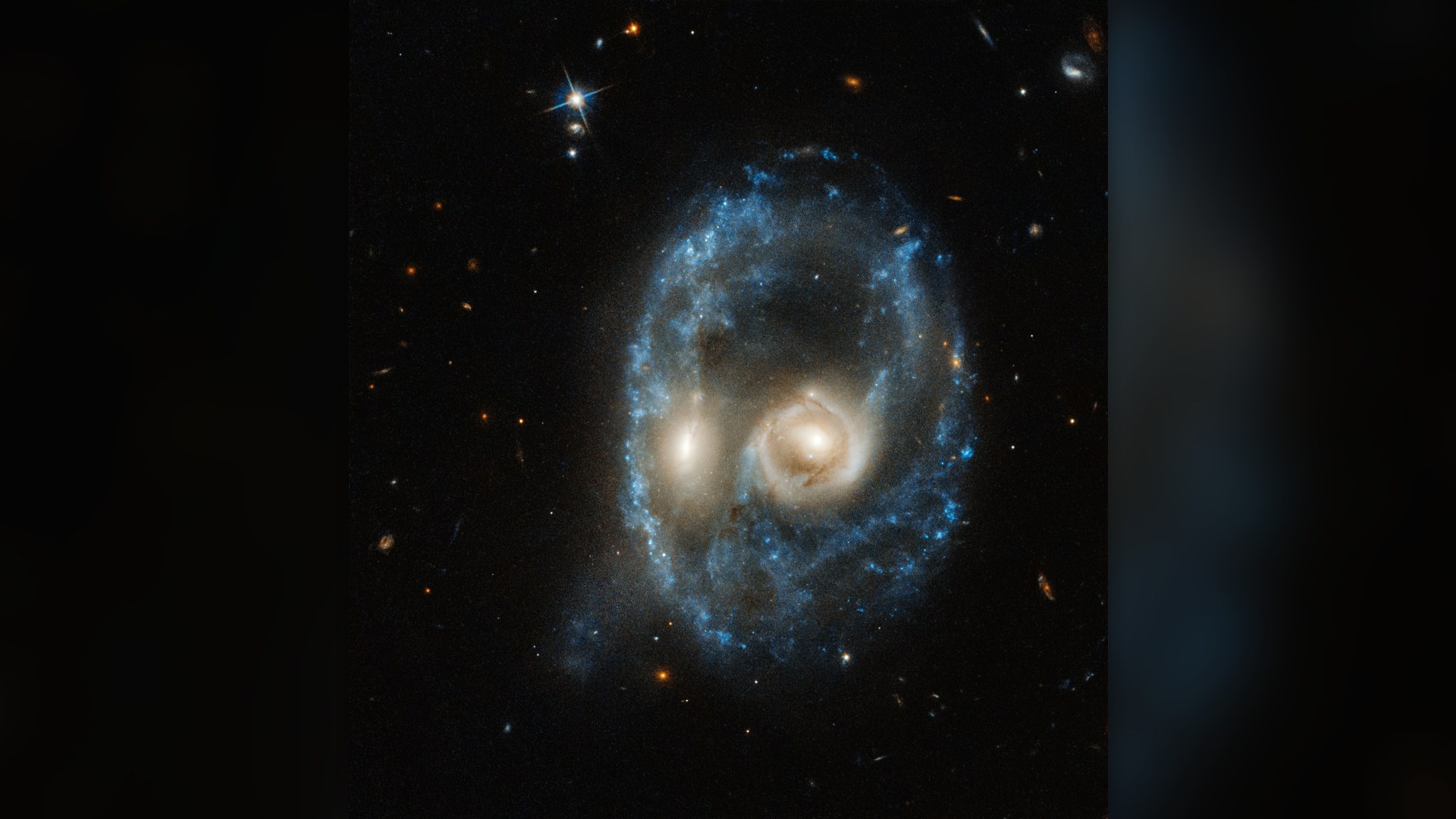
7. Colliding Galactic Ghoul Face
Cataloged as Arp-Madore 2026-424, this rare ring collision was photographed by the Hubble Space Telescope. The bright cores of two crashing galaxies sit side by side like bulging eyes, surrounded by a ring of young blue stars that outlines a ghostly face for 100 million years.
©NASA / Julianne Dalcanton
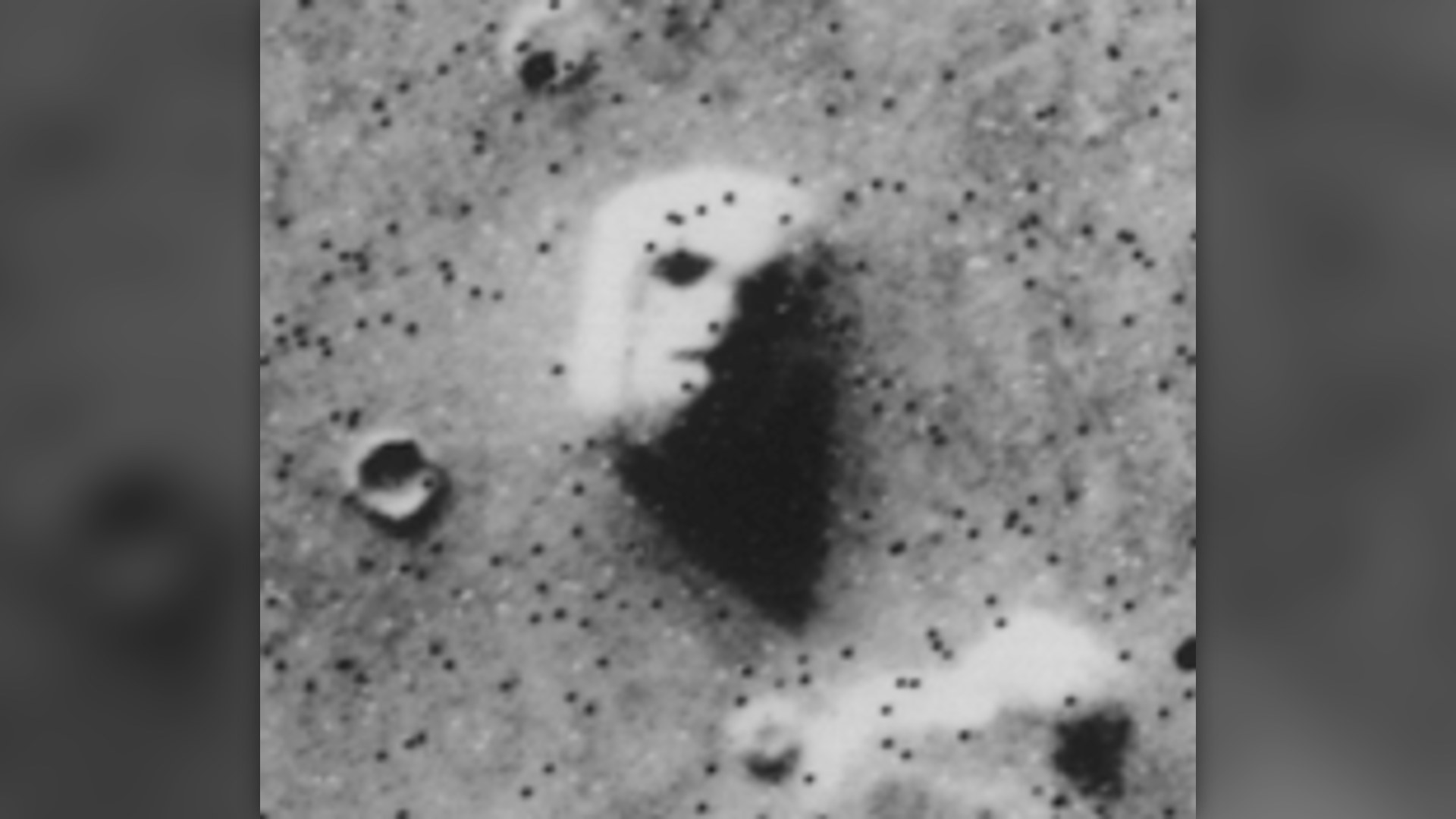
6. The Face On Mars At Cydonia
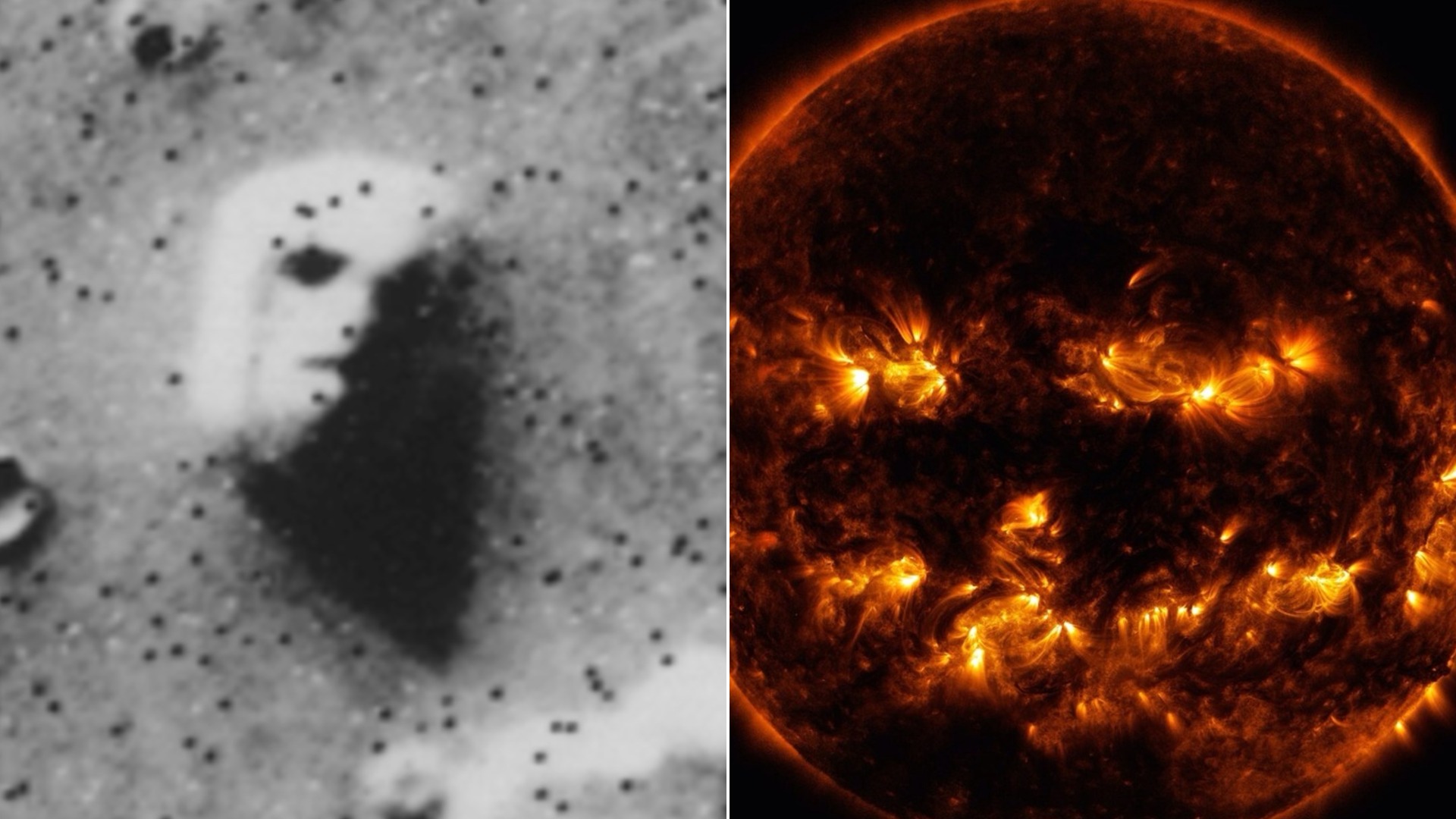
While scouting landing sites for Viking 2 in July 1976, NASA's Viking 1 orbiter snapped a two-kilometer-long mesa in the Cydonia region of Mars. Heavy shadows created eyes, a nose, and a mouth, sparking decades of fascination before later orbiters revealed natural rock hills.
©NASA / JPL / Viking 1
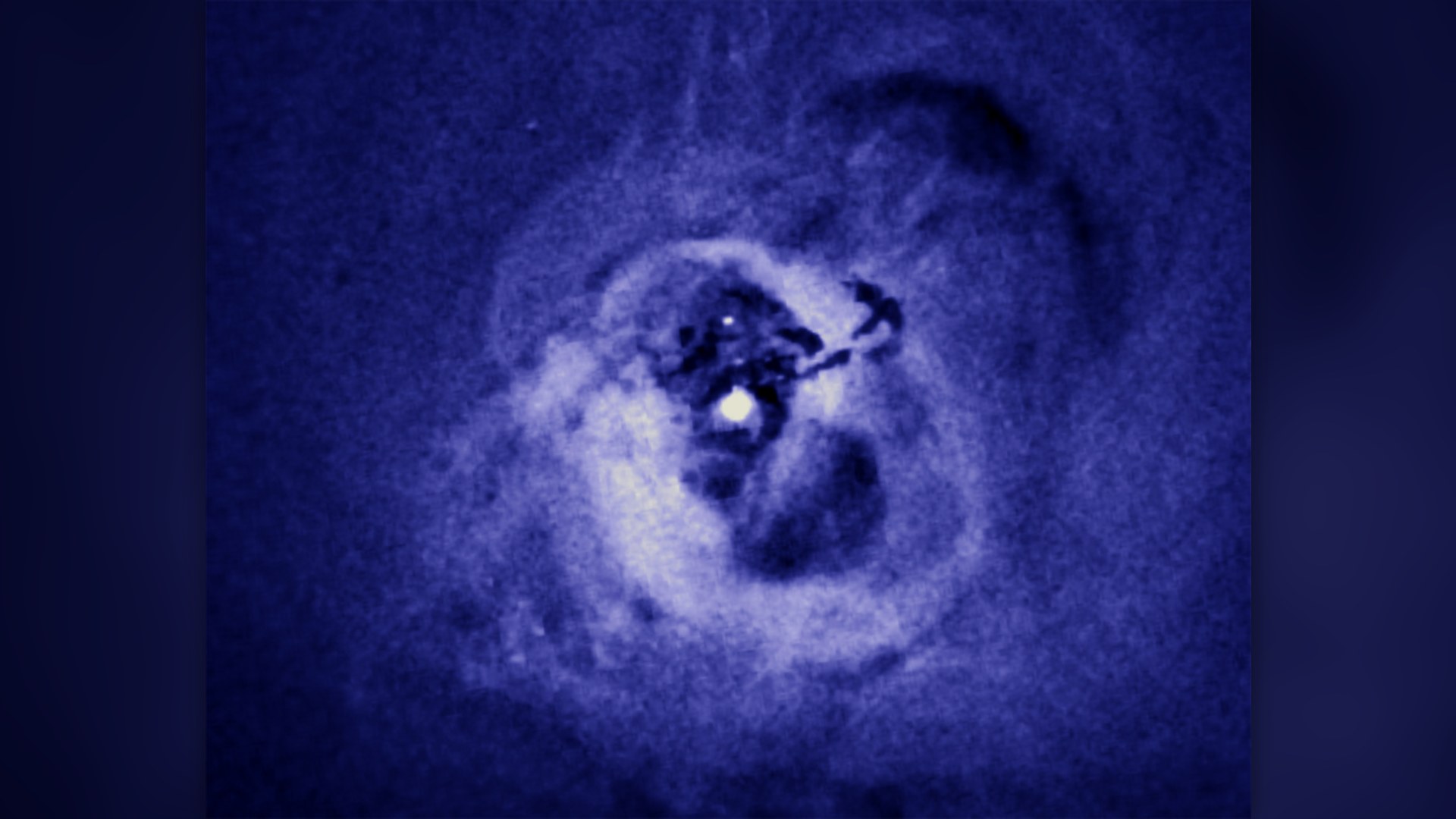
5. Perseus Cluster Screaming Skull
Observed by NASA's Chandra X-ray Observatory 250 million light-years away, the Perseus Cluster houses a supermassive black hole blowing giant bubbles into surrounding 50-million-degree gas. In X-ray light, those dark cavities form hollow eye sockets and a screaming mouth.
©NASA / CXC / IoA / A. Fabian et al.
Advertisement
Swipe or tap ▶ to resume the countdown.
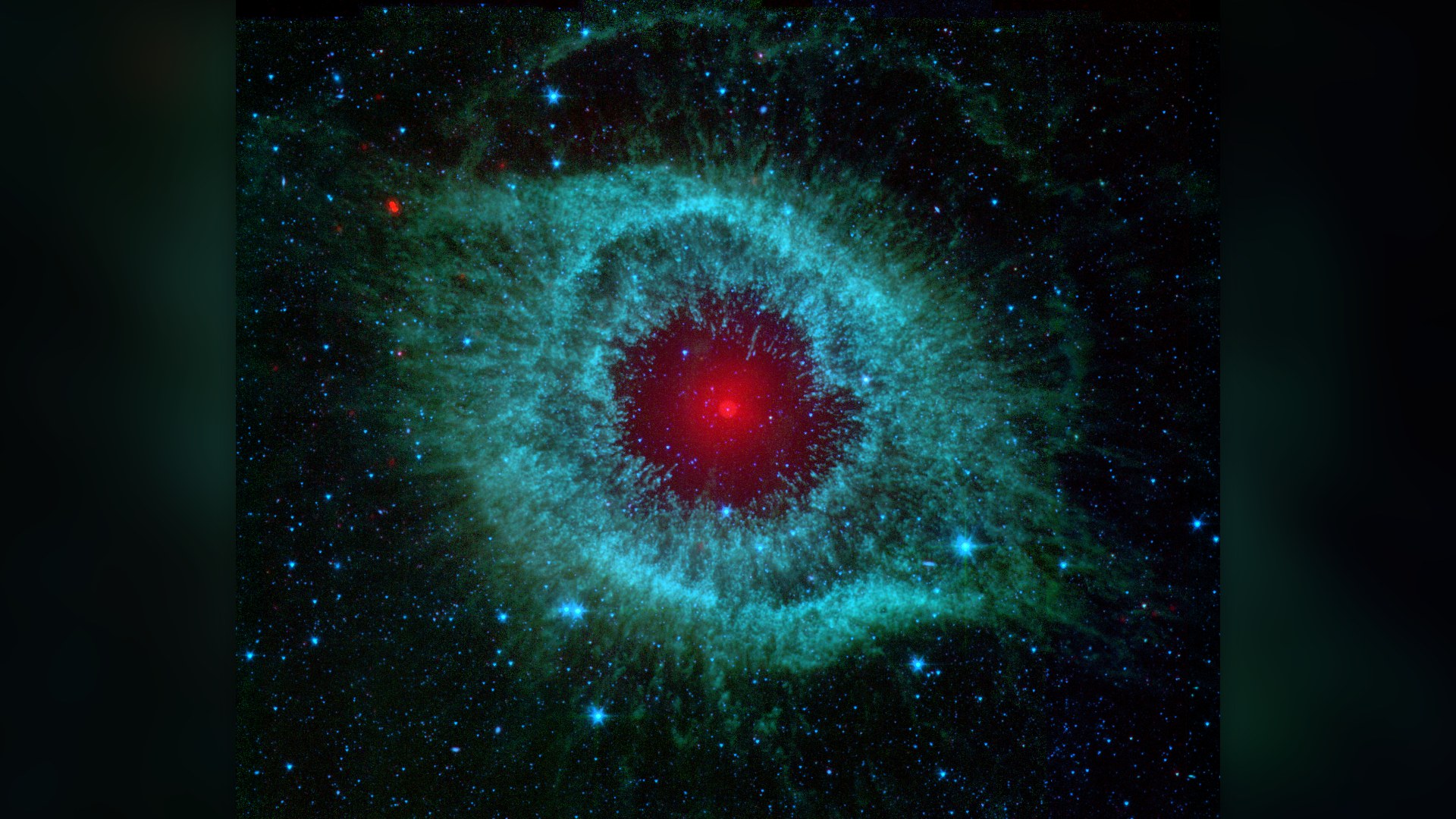
4. The Eye Of Sauron Helix Nebula
Located in the constellation Aquarius, the Helix Nebula (NGC 7293) is one of the closest planetary nebulae to Earth. In infrared views from NASA's Spitzer Space Telescope, a central white dwarf illuminates a crimson dust disk surrounded by emerald-green outer gas shells.
©NASA / JPL-Caltech / Univ. of Ariz.
3. The Halloween Skull Asteroid
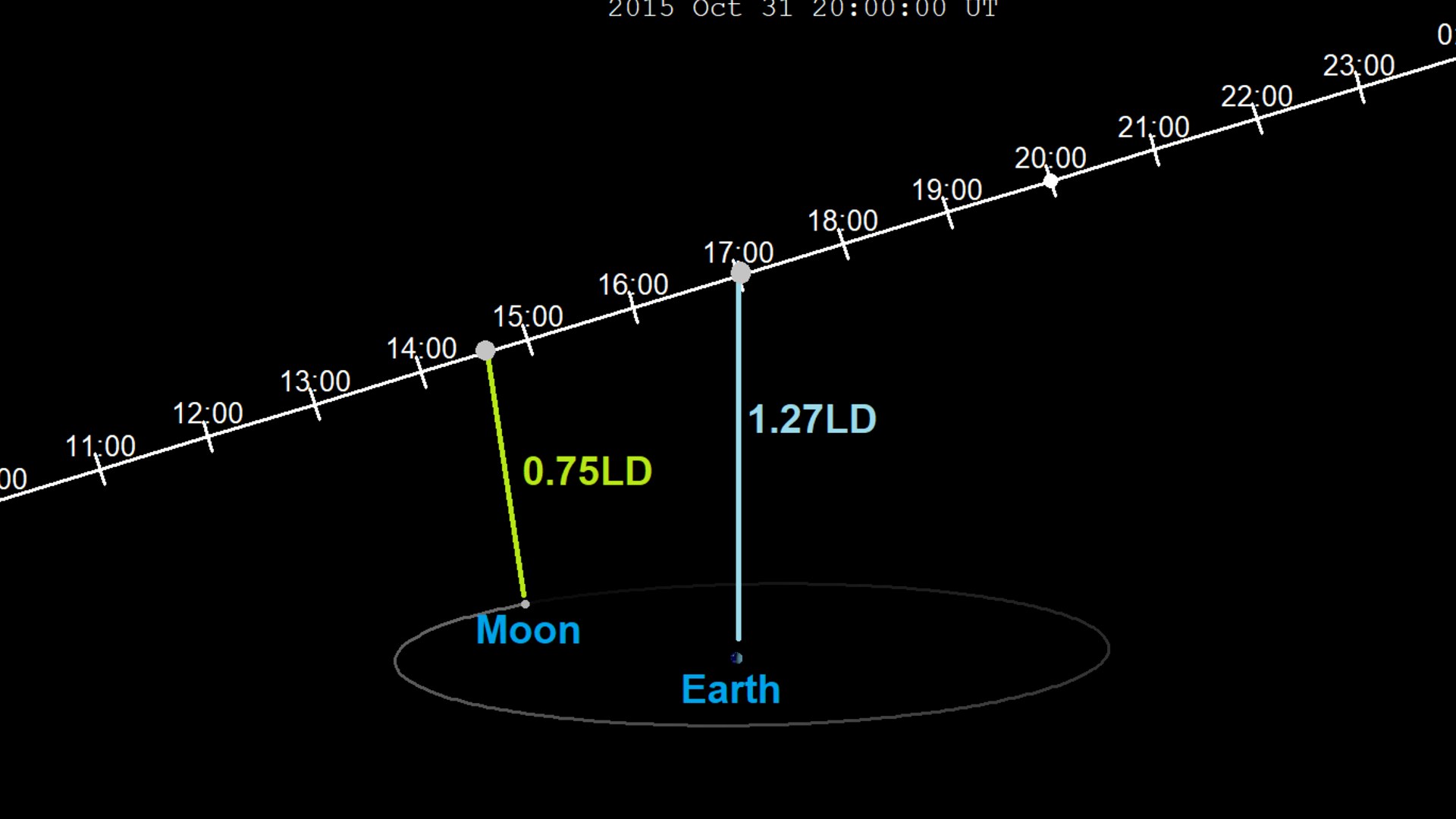
Discovered just weeks before flying past Earth on Halloween 2015, asteroid 2015 TB145 turned out to be a dead comet roughly 2,000 feet wide. When scientists bounced radar signals off its surface using the Arecibo dish, deep craters produced a rotating, grinning human skull.
©NASA / JPL / Arecibo
2. NASA Solar Dynamics Pumpkin Sun
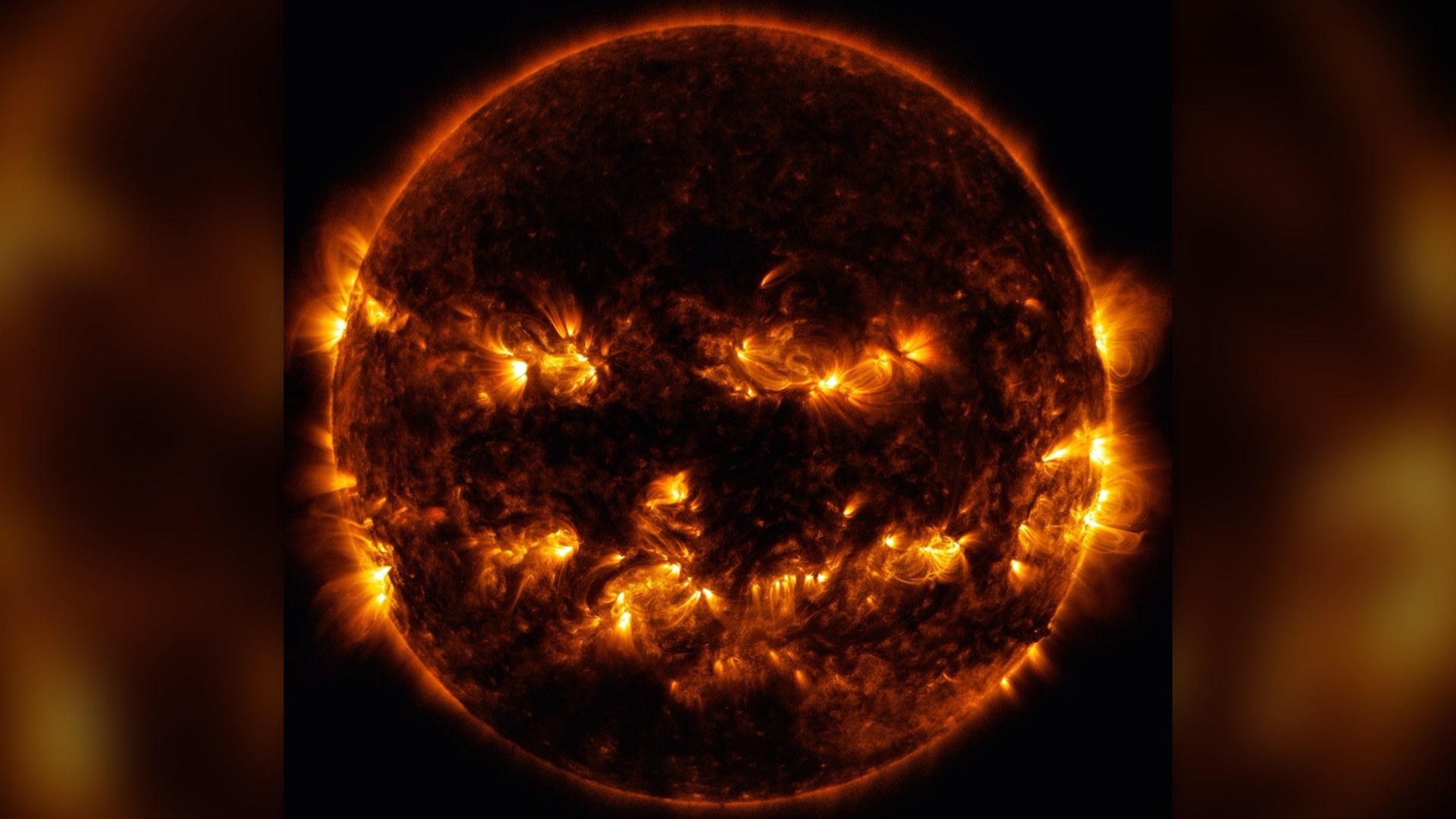
On October 8, 2014, NASA's Solar Dynamics Observatory captured active magnetic regions burning brightly across the solar atmosphere. By blending extreme ultraviolet wavelengths at 171 and 193 Angstroms into gold and yellow tones, the Sun flashed a giant Jack-o'-Lantern grin.
©NASA / Goddard Space Flight Center / SDO
1. Hand Of God Pulsar Wind Nebula
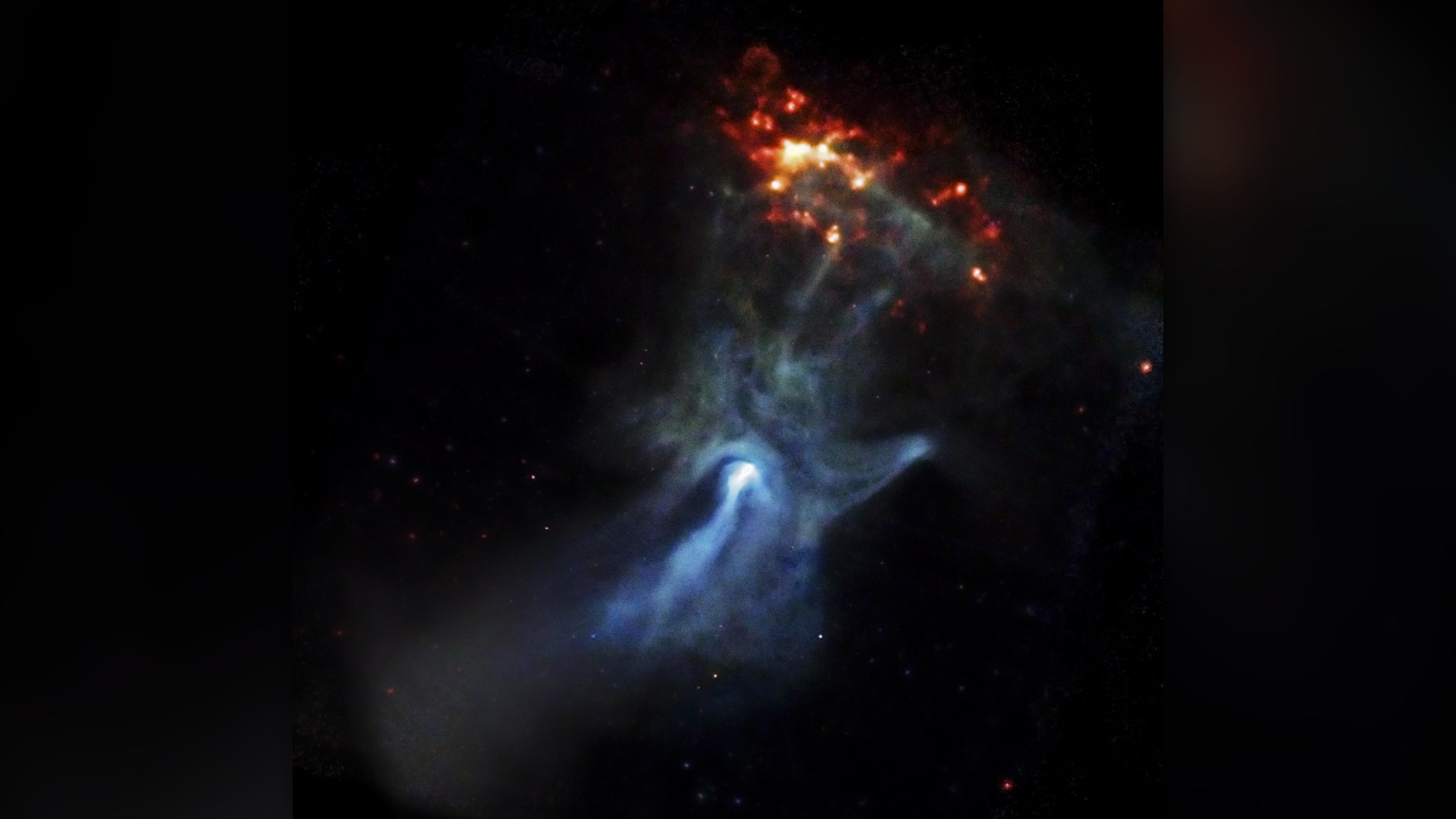
At the heart of nebula PSR B1509-58 sits a pulsar measuring just 12 miles across yet spinning seven times every second. Recorded by NASA's Chandra X-ray Observatory and NuSTAR telescope, the dead star's furious magnetic wind sculpts surrounding gas into fingers reaching for glow.

©NASA / CXC / CfA / P. Slane et al.
Advertisement
You've reached the end of the story. Thanks for reading!

22 Most Secret World War II Aircraft Tested Behind Closed Doors
Between 1939 and 1945, Allied and Axis engineers built jets, flying wings and rocket interceptors in deep wartime secrecy. Ranked from 22 to 1 by historical secrecy and technical leap, this countdown draws on archival records from the Smithsonian, U.S. Air Force Museum, RAF Museum and German Federal Archives.
All 15 Entries in this Story
15. Coffin Shaped Iceberg B 15T
Calved from Antarctica's Ross Ice Shelf in early 2000, Iceberg B-15T drifted through the Southern Ocean for nearly 18 years. When NASA Earth Observatory photographed it between South Georgia and the South Sandwich Islands, ocean fractures had carved a coffin shape.

14. The Bootes Cosmic Supervoid
Nicknamed the Great Nothing, the Bootes Void stretches roughly 330 million light-years wide yet holds only about 60 documented galaxies. NASA's Galaxy of Horrors highlights this vast desert because a typical cosmic region that size should contain thousands of galaxies.

13. Cygnus X 1 Devouring A Companion
Featured in NASA's Galaxy of Horrors as a cosmic predator, Cygnus X-1 was the first widely accepted black hole candidate. Orbiting closely alongside a massive blue supergiant star, its relentless gravity pulls stellar material into a superheated, glowing X-ray accretion disk.

12. Ghost Head Nebula NGC 2080
Captured by the Hubble Space Telescope inside the Large Magellanic Cloud, NGC 2080 spans about 50 light-years across. Astronomers nicknamed it the Ghost Head Nebula because two dense, superheated blobs of glowing hydrogen and oxygen gas look like piercing spectral eyes.

11. The Black Widow Nebula
Captured in infrared light by NASA's Spitzer Space Telescope, massive young stars at the center of the Black Widow Nebula are blasting radiation in two opposite directions, carving symmetrical cavities and long dark dust lanes that look like sprawling spider legs.

10. The Ghost Nebula Sh2 136
Cataloged as Sh2-136 and vdB 141, this reflection nebula in the constellation Cepheus earned the spotlight in NASA's Astronomy Picture of the Day. Faint starlight reflects off dense dust pillars, creating semi-transparent figures that look like ghosts raising their arms.

9. The Witch Head Nebula IC 2118
Illuminated by the bright blue supergiant star Rigel in the constellation Orion, IC 2118 looks strikingly like a wicked witch in profile. When NASA telescopes scanned the reflection cloud, the glowing dust billows revealed active star-forming nurseries brewing inside.

8. The Jack O Lantern Nebula
Using NASA's Spitzer Space Telescope, astronomers spotted a cosmic pumpkin carved by fierce stellar winds and radiation from a massive O-type star. Plotted in infrared wavelengths of green, red, and orange, the hollowed gas cloud forms a classic Halloween Jack-o'-Lantern.

7. Colliding Galactic Ghoul Face
Cataloged as Arp-Madore 2026-424, this rare ring collision was photographed by the Hubble Space Telescope. The bright cores of two crashing galaxies sit side by side like bulging eyes, surrounded by a ring of young blue stars that outlines a ghostly face for 100 million years.

6. The Face On Mars At Cydonia
While scouting landing sites for Viking 2 in July 1976, NASA's Viking 1 orbiter snapped a two-kilometer-long mesa in the Cydonia region of Mars. Heavy shadows created eyes, a nose, and a mouth, sparking decades of fascination before later orbiters revealed natural rock hills.

5. Perseus Cluster Screaming Skull
Observed by NASA's Chandra X-ray Observatory 250 million light-years away, the Perseus Cluster houses a supermassive black hole blowing giant bubbles into surrounding 50-million-degree gas. In X-ray light, those dark cavities form hollow eye sockets and a screaming mouth.

4. The Eye Of Sauron Helix Nebula
Located in the constellation Aquarius, the Helix Nebula (NGC 7293) is one of the closest planetary nebulae to Earth. In infrared views from NASA's Spitzer Space Telescope, a central white dwarf illuminates a crimson dust disk surrounded by emerald-green outer gas shells.

3. The Halloween Skull Asteroid
Discovered just weeks before flying past Earth on Halloween 2015, asteroid 2015 TB145 turned out to be a dead comet roughly 2,000 feet wide. When scientists bounced radar signals off its surface using the Arecibo dish, deep craters produced a rotating, grinning human skull.

2. NASA Solar Dynamics Pumpkin Sun
On October 8, 2014, NASA's Solar Dynamics Observatory captured active magnetic regions burning brightly across the solar atmosphere. By blending extreme ultraviolet wavelengths at 171 and 193 Angstroms into gold and yellow tones, the Sun flashed a giant Jack-o'-Lantern grin.

1. Hand Of God Pulsar Wind Nebula
At the heart of nebula PSR B1509-58 sits a pulsar measuring just 12 miles across yet spinning seven times every second. Recorded by NASA's Chandra X-ray Observatory and NuSTAR telescope, the dead star's furious magnetic wind sculpts surrounding gas into fingers reaching for glow.