Slideshow · Science
22 Most Secret World War II Aircraft Tested Behind Closed Doors
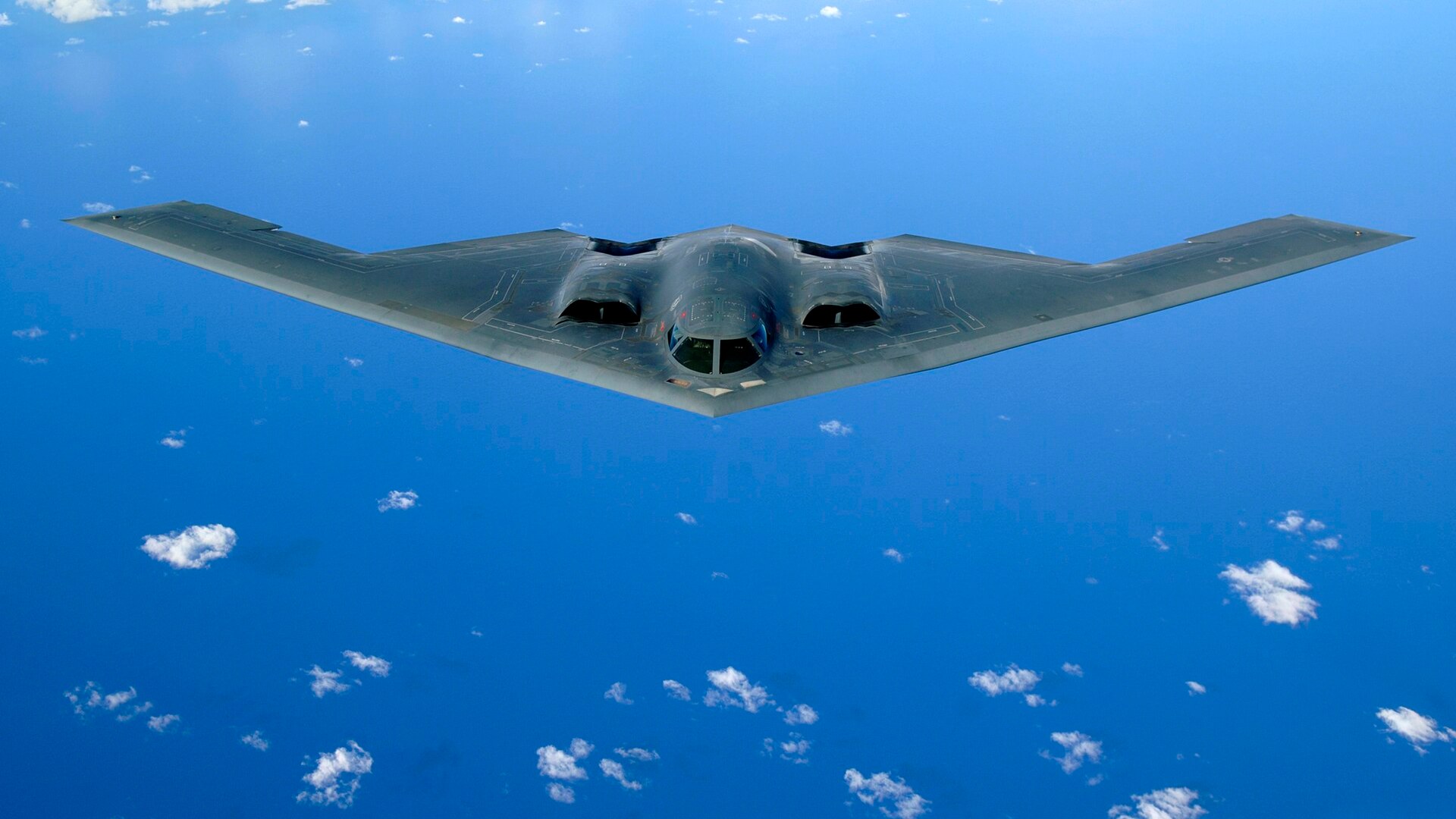
Between 1939 and 1945, Allied and Axis engineers built jets, flying wings and rocket interceptors in deep wartime secrecy. Ranked from 22 to 1 by historical secrecy and technical leap, this countdown draws on archival records from the Smithsonian, U.S. Air Force Museum, RAF Museum and German Federal Archives.

By Most Viral Today
7 min agopitch:cb5404b2-0841-40fb-b58d-472ac6be0e27

Fake Propellers, Flying Wings and Rocket Fighters Hidden Until Peace 
22. Heinkel He 162 Spatz 
21. Blohm & Voss BV 141 
20. Fisher P-75 Eagle - AdvertisementSwipe or tap ▶ to continue countdown

19. Bell XP-77 
18. Curtiss-Wright XP-55 Ascender 
17. Chance Vought V-173 Flying Pancake 
16. McDonnell XP-67 Moonbat - AdvertisementSwipe or tap ▶ to continue countdown

15. Northrop XP-56 Black Bullet 
14. Northrop N-1M 
13. Junkers Ju 287 
12. Ryan FR-1 Fireball - AdvertisementSwipe or tap ▶ to continue countdown

11. Kyushu J7W Shinden 
10. Nakajima Kikka 
9. Dornier Do 335 Pfeil 
8. Arado Ar 234 Blitz - AdvertisementSwipe or tap ▶ to continue countdown

7. Messerschmitt Me 163 Komet 
6. Messerschmitt Me 262 Schwalbe 
5. Heinkel He 178 
4. Gloster E.28/39 - AdvertisementSwipe or tap ▶ to continue countdown

3. Lockheed XP-80 Shooting Star 
2. Horten Ho 229 
1. Bell XP-59A Airacomet - Advertisement🔥 UP NEXT IN THIS SERIES◫ 23 Slides

22 Secret Warplanes Hidden From Public View Until Long After 1945
From captured 1945 prototypes shipped to American hangars to Cold War stealth demonstrators tested at Area 51, these 22 military aircraft spent years behind closed doors. Based on U.S. Air Force, CIA, NASA, and National Museum of the U.S. Air Force records, here are the warplanes that stayed out of sight.
Between 1939 and 1945, Allied and Axis engineers built jets, flying wings and rocket interceptors in deep wartime secrecy. Ranked from 22 to 1 by historical secrecy and technical leap, this countdown draws on archival records from the Smithsonian, U.S. Air Force Museum, RAF Museum and German Federal Archives.
Swipe or tap ▶ to begin the countdown
©Wikimedia / Tomás Del Coro from & wikimedia / Heinkel
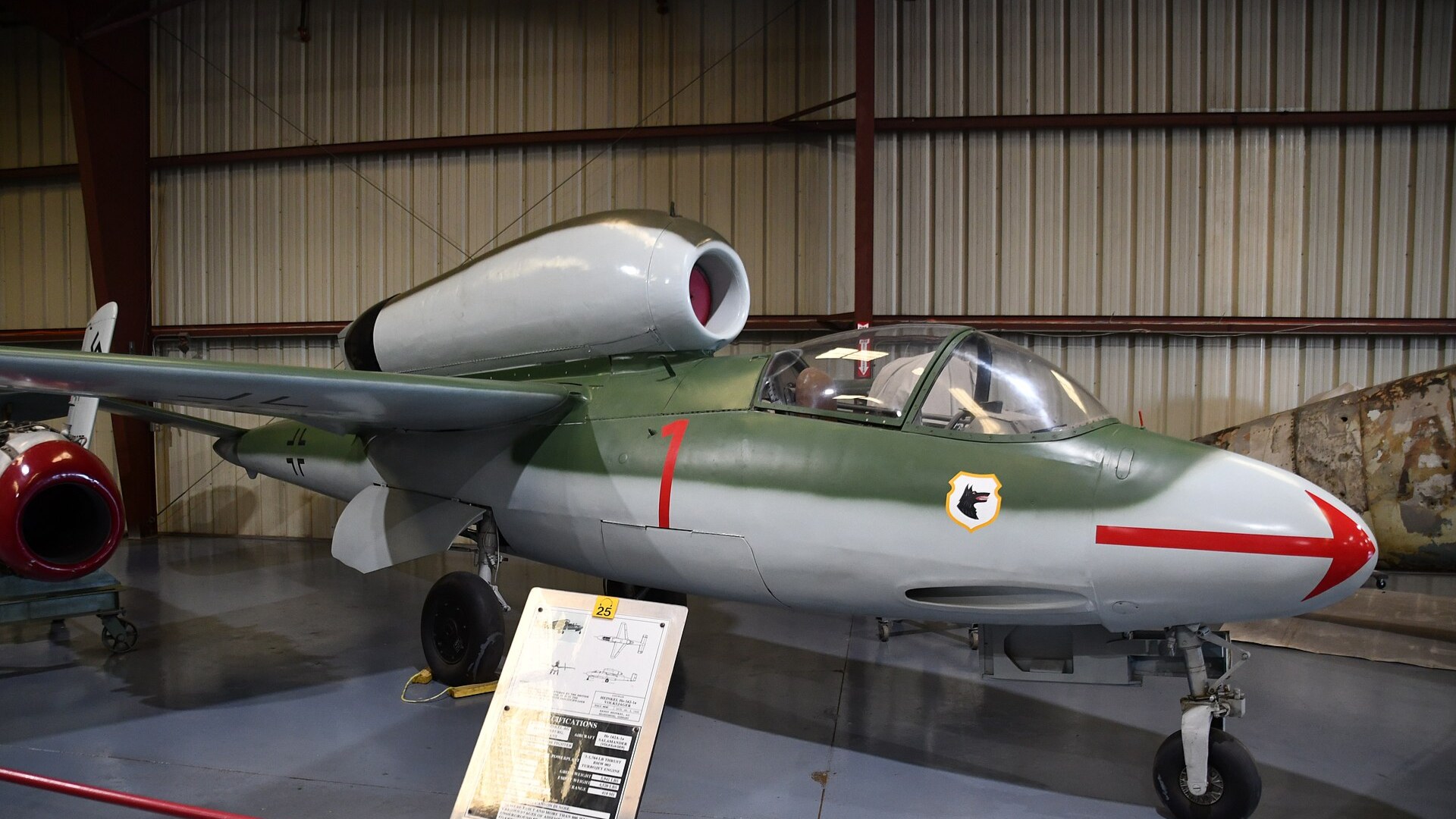
22. Heinkel He 162 Spatz
Ordered in September 1944 as the Volksjager emergency fighter, the He 162 first flew on December 6, 1944, in Vienna. To hide production from Allied bombers, Heinkel assembled airframes in underground factories such as the Seegrotte mine at Hinterbruhl, building wings largely from bonded wood.
©Wikimedia / Ducatipierre
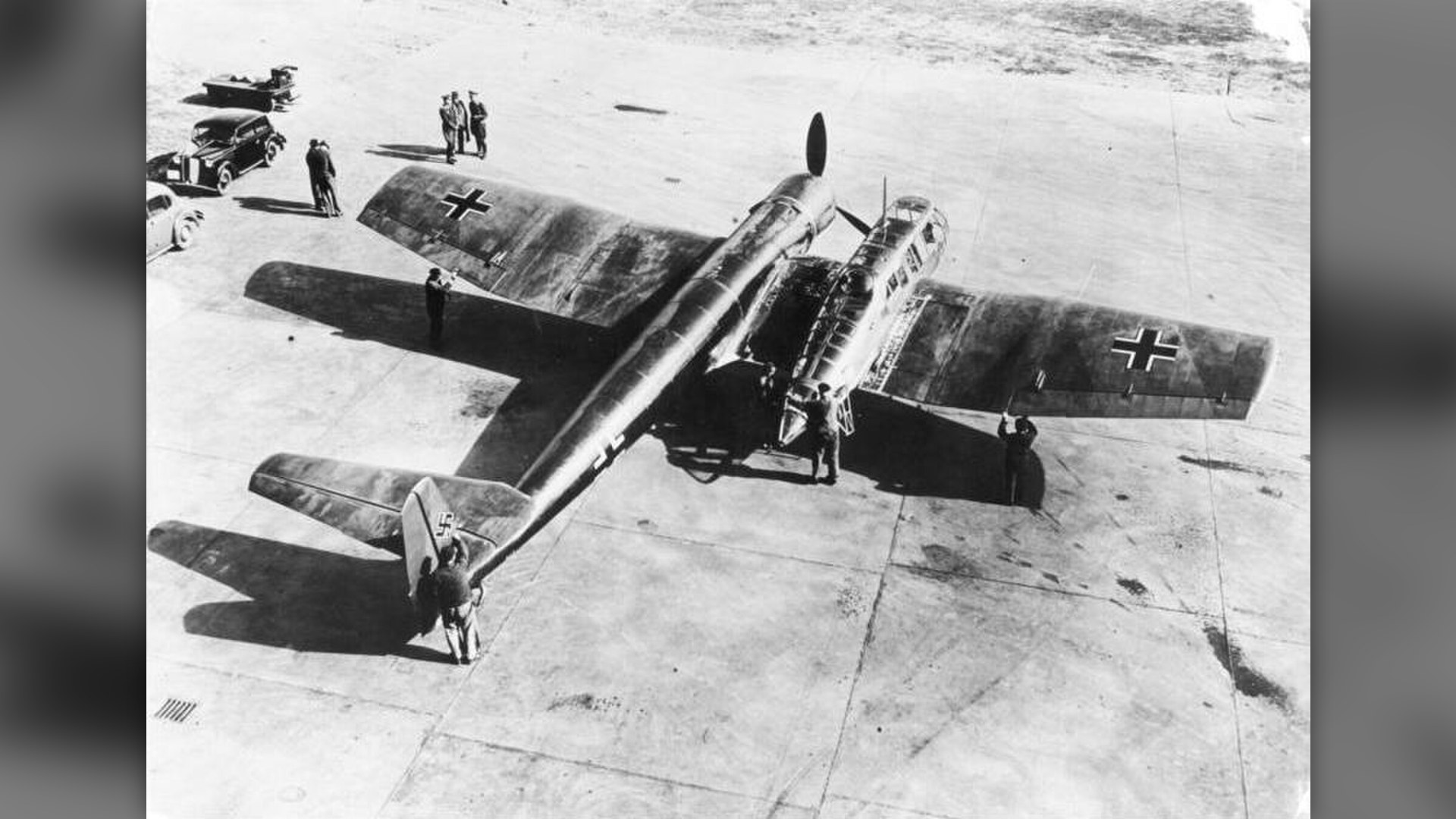
21. Blohm & Voss BV 141
Designer Richard Vogt offset the crew nacelle to the starboard wing in 1938 to give observers an unobstructed view while balancing propeller torque. Despite passing trials and reaching roughly 272 mph, the Luftwaffe built only about 28 aircraft before cancelling the program in 1943.
©Wikimedia / Stöcker
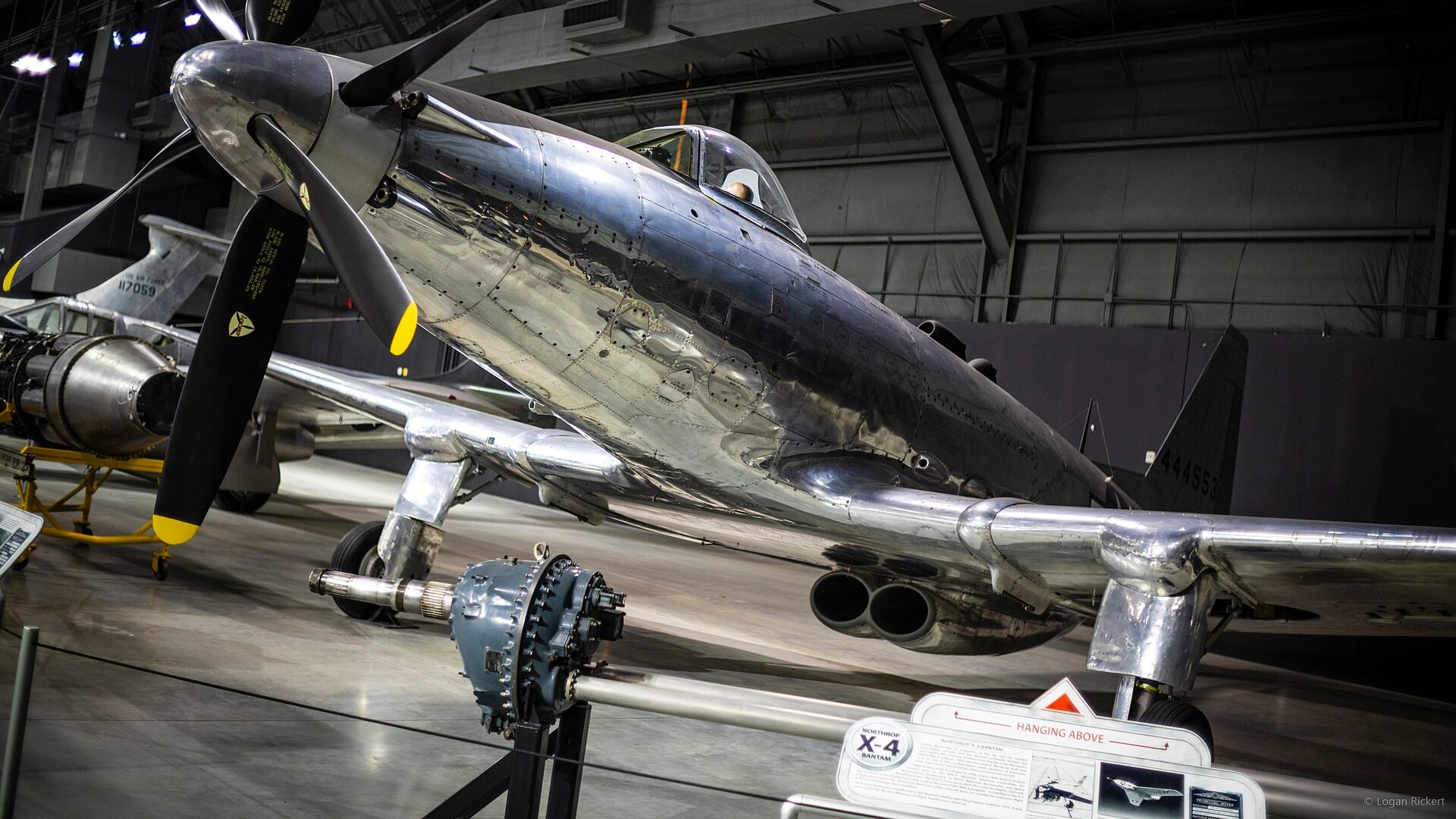
20. Fisher P-75 Eagle
Started in October 1942 under strict wartime secrecy, the Fisher Body Division mated P-40 outer wings, an SBD tail and an F4U landing gear around a 2,600-horsepower Allison V-3420 engine. Only 14 examples were built before the U.S. Army Air Forces cancelled the order in October 1944.
©Wikimedia / Logan Rickert
Advertisement
Swipe or tap ▶ to resume the countdown.
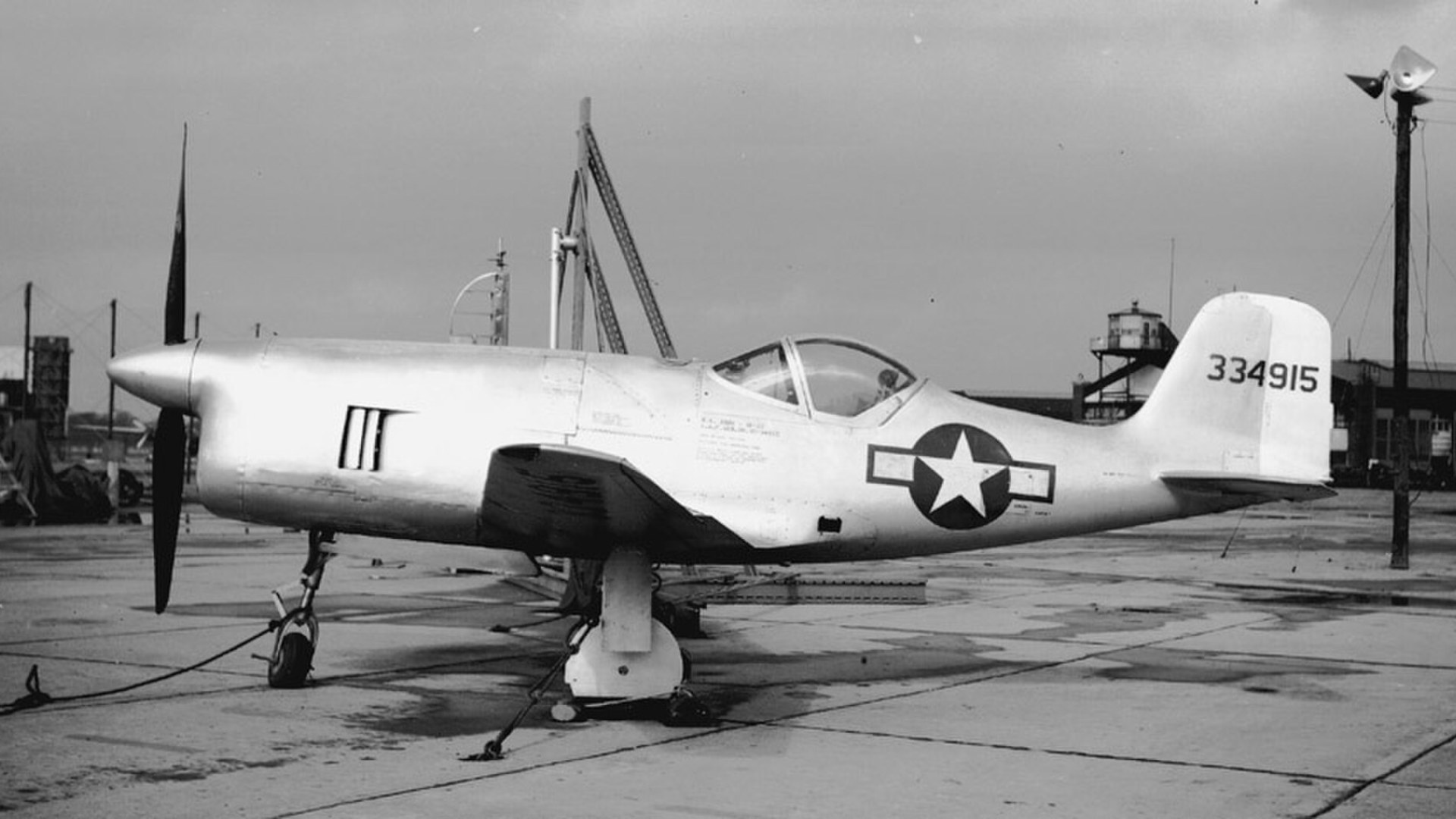
19. Bell XP-77
Weighing just 3,700 pounds loaded, the Bell XP-77 stretched only 22 feet 10 inches in length and flew on April 1, 1944. Built from Sitka spruce plywood around a single 520-horsepower Ranger V-770 engine, the two prototypes failed to meet speed targets and the project ended in December 1944.
©Wikimedia / Bill Larkins
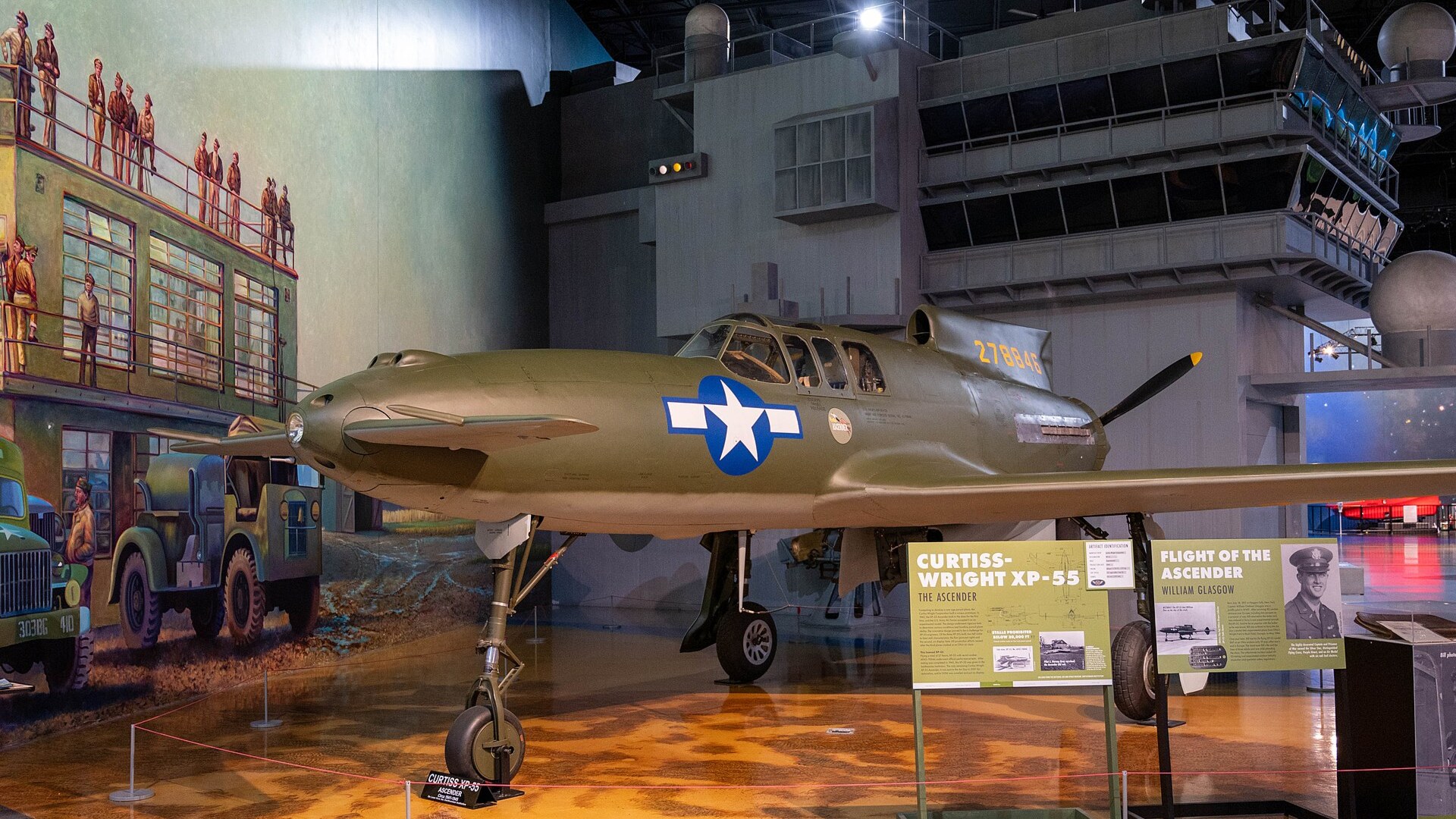
18. Curtiss-Wright XP-55 Ascender
First flown in July 1943, the XP-55 placed horizontal elevators on the nose and a 1,275-horsepower Allison engine at the rear. Pilots found its stall behavior unforgiving, and two of the three prototypes crashed during testing before the Army Air Forces ended development in 1944.
©Wikimedia / AirZoo.Collection
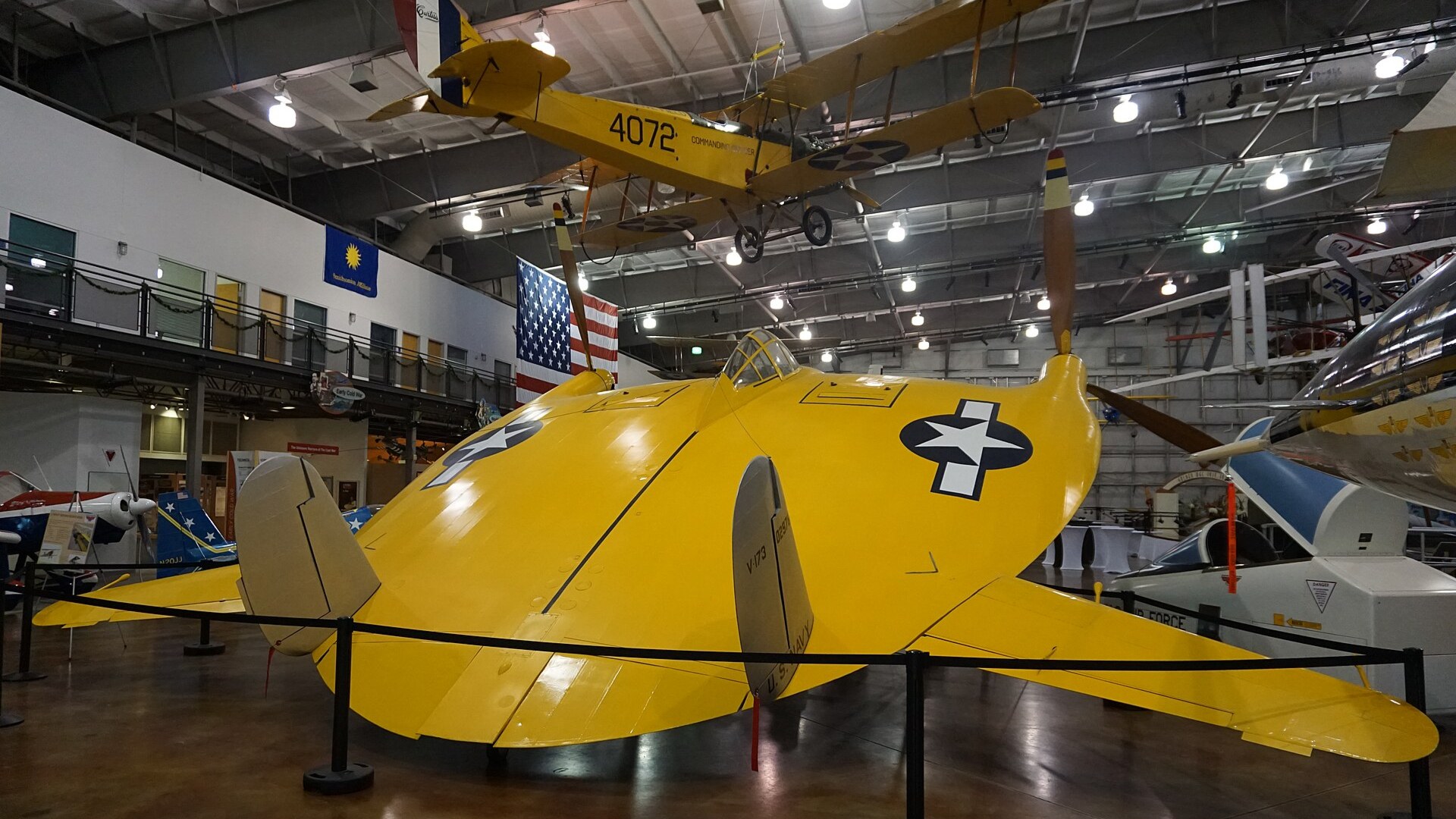
17. Chance Vought V-173 Flying Pancake
Charles Zimmerman's disc-shaped wing generated lift across its entire body, allowing the V-173 to land at under 30 mph when it first flew in November 1942. Test pilots logged 190 flights in Connecticut, though the follow-on XF5U-1 never flew before jets made piston fighters obsolete.
©Wikimedia / Michael Barera
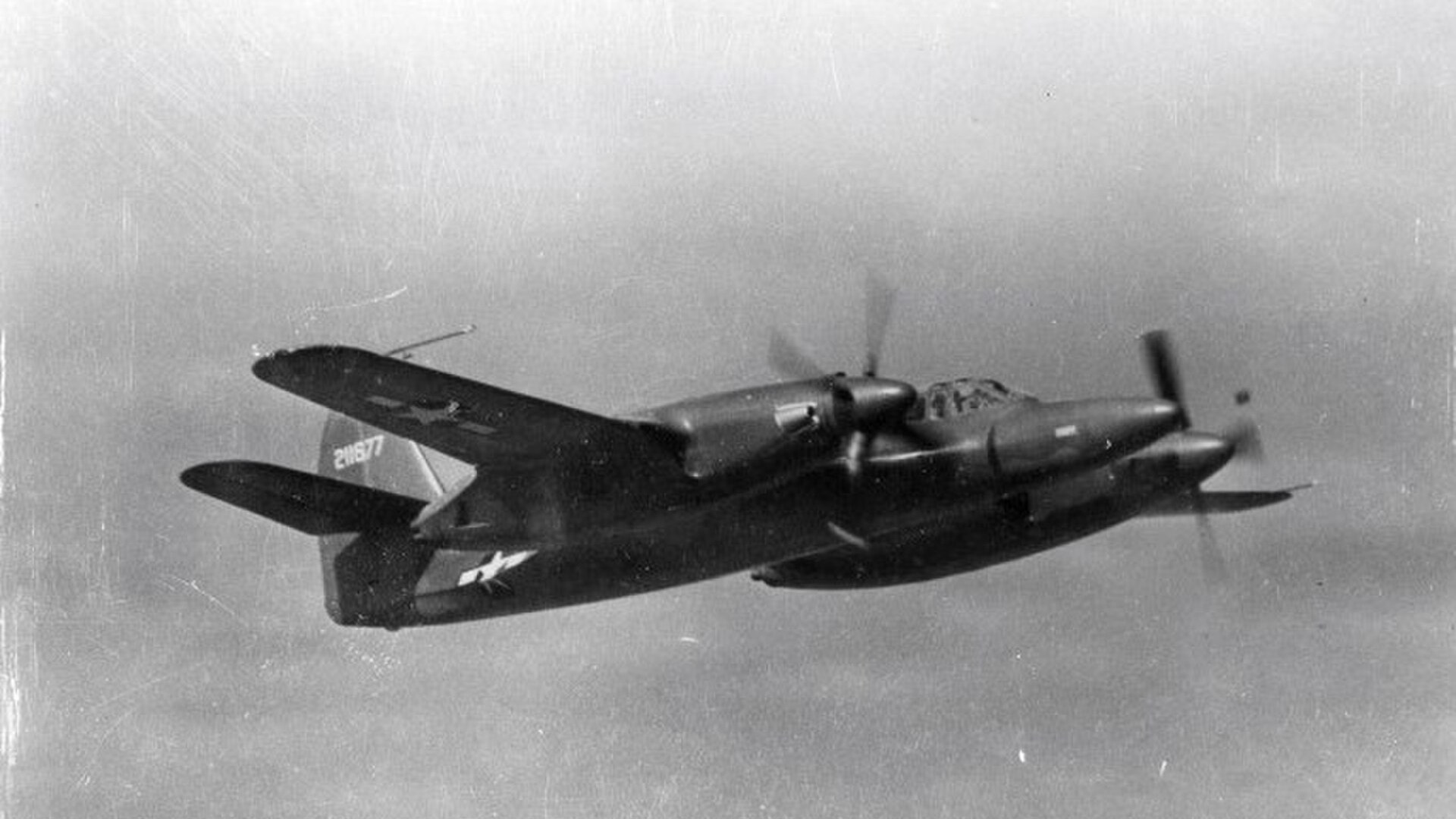
16. McDonnell XP-67 Moonbat
McDonnell Aircraft blended the fuselage smoothly into the wing roots to cut aerodynamic drag and house six 37-millimeter cannons. First flown in January 1944, the sole XP-67 suffered chronic engine overheating and was destroyed by an in-flight starboard engine fire on September 6, 1944.
©Wikimedia / Ray Wagner
Advertisement
Swipe or tap ▶ to resume the countdown.
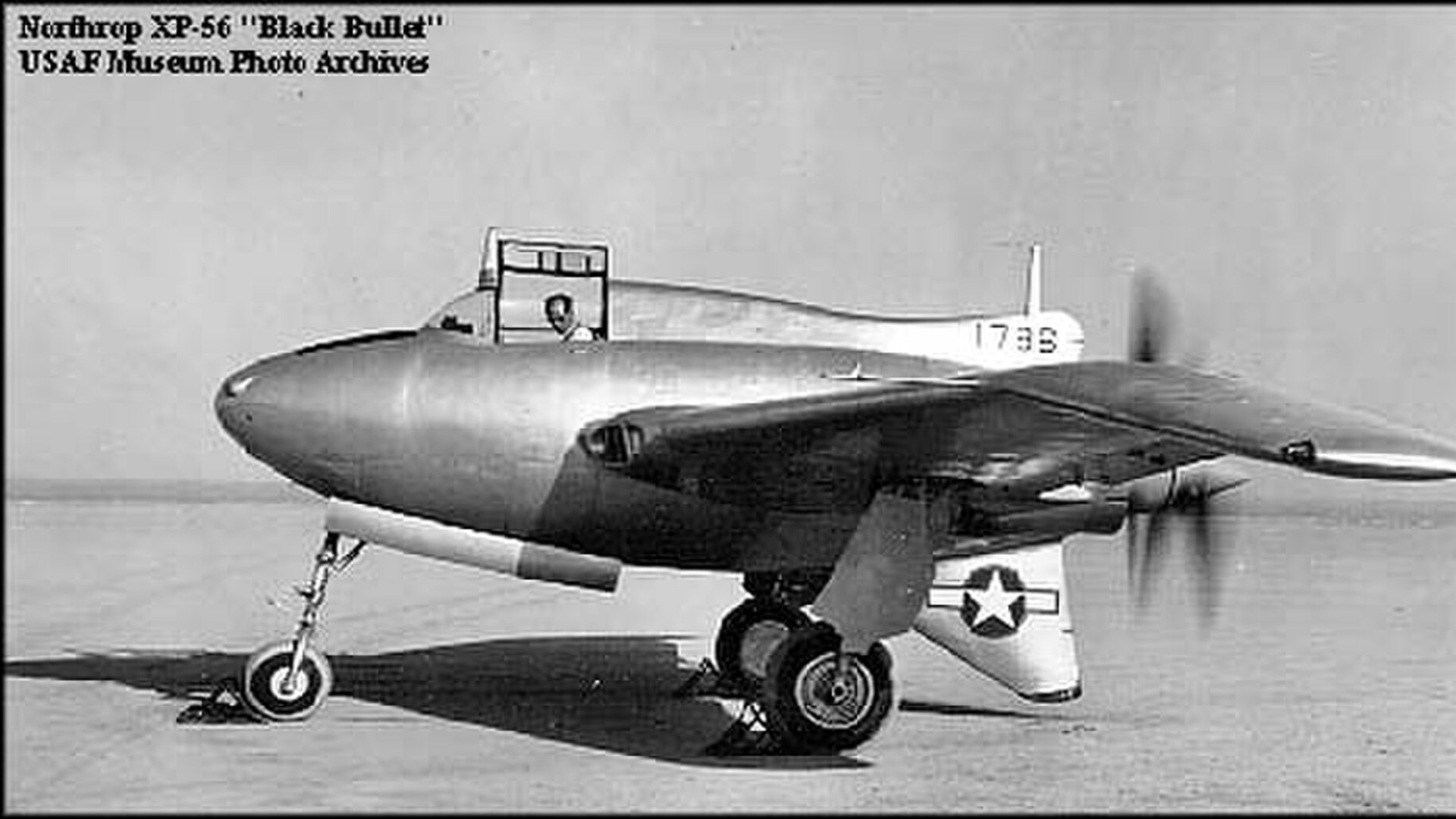
15. Northrop XP-56 Black Bullet
Jack Northrop built the XP-56 from welded magnesium alloy in 1943 with contra-rotating rear propellers and no horizontal tail. Tested at Muroc Army Air Field, the first prototype flipped on a runway run and the second proved unstable in pitch, ending the program after ten flights.
©Wikimedia / US Goverment
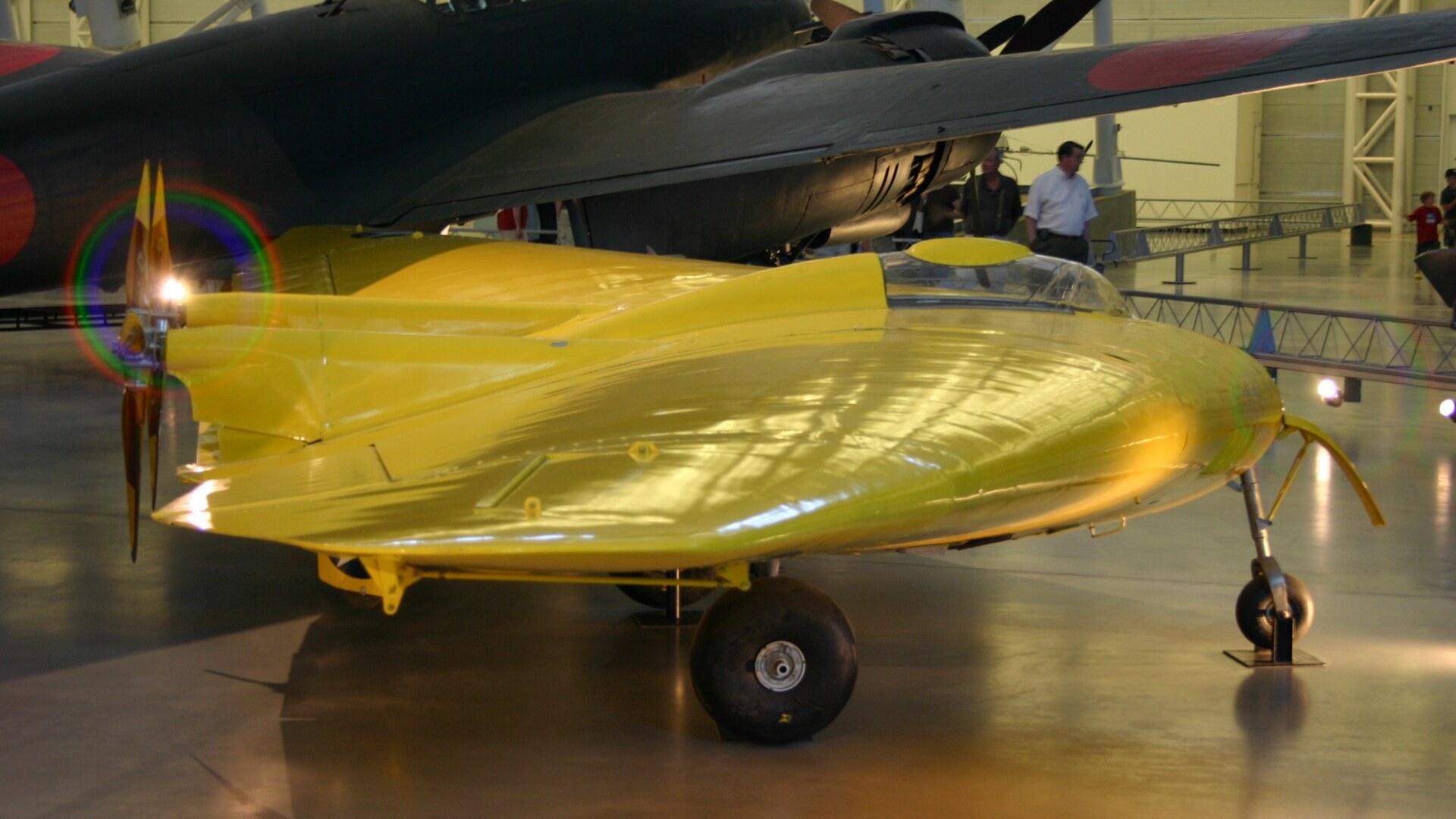
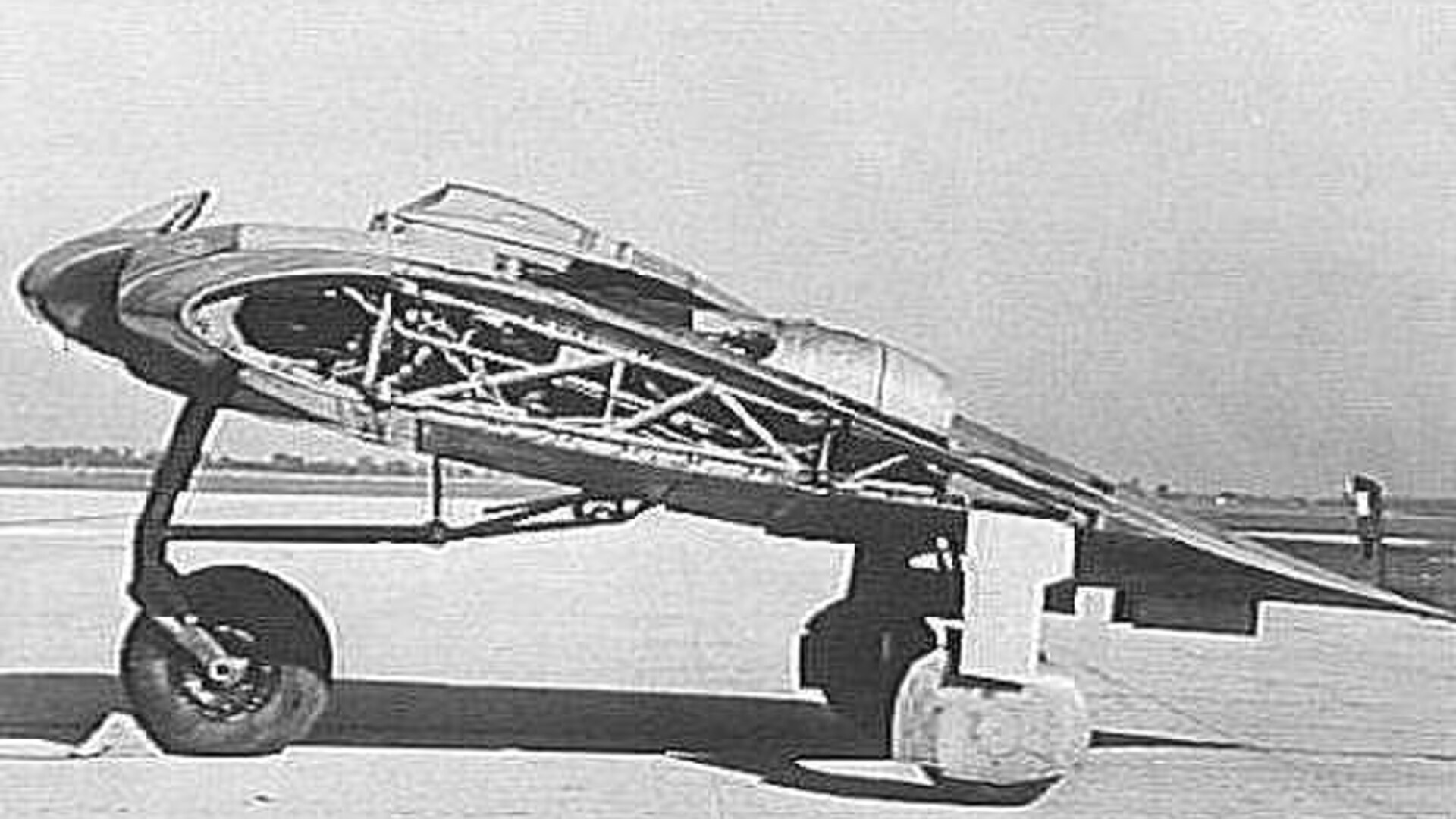
14. Northrop N-1M
Nicknamed the Jeep, the N-1M was built secretly in Hawthorne, California, and made its first hop at Baker Dry Lake in July 1940. Its 38-foot wood-and-steel airframe let engineers adjust wing sweep and dihedral on the ground, laying the foundation for later B-35 and B-2 bombers.
©Wikimedia / Ryan Somma
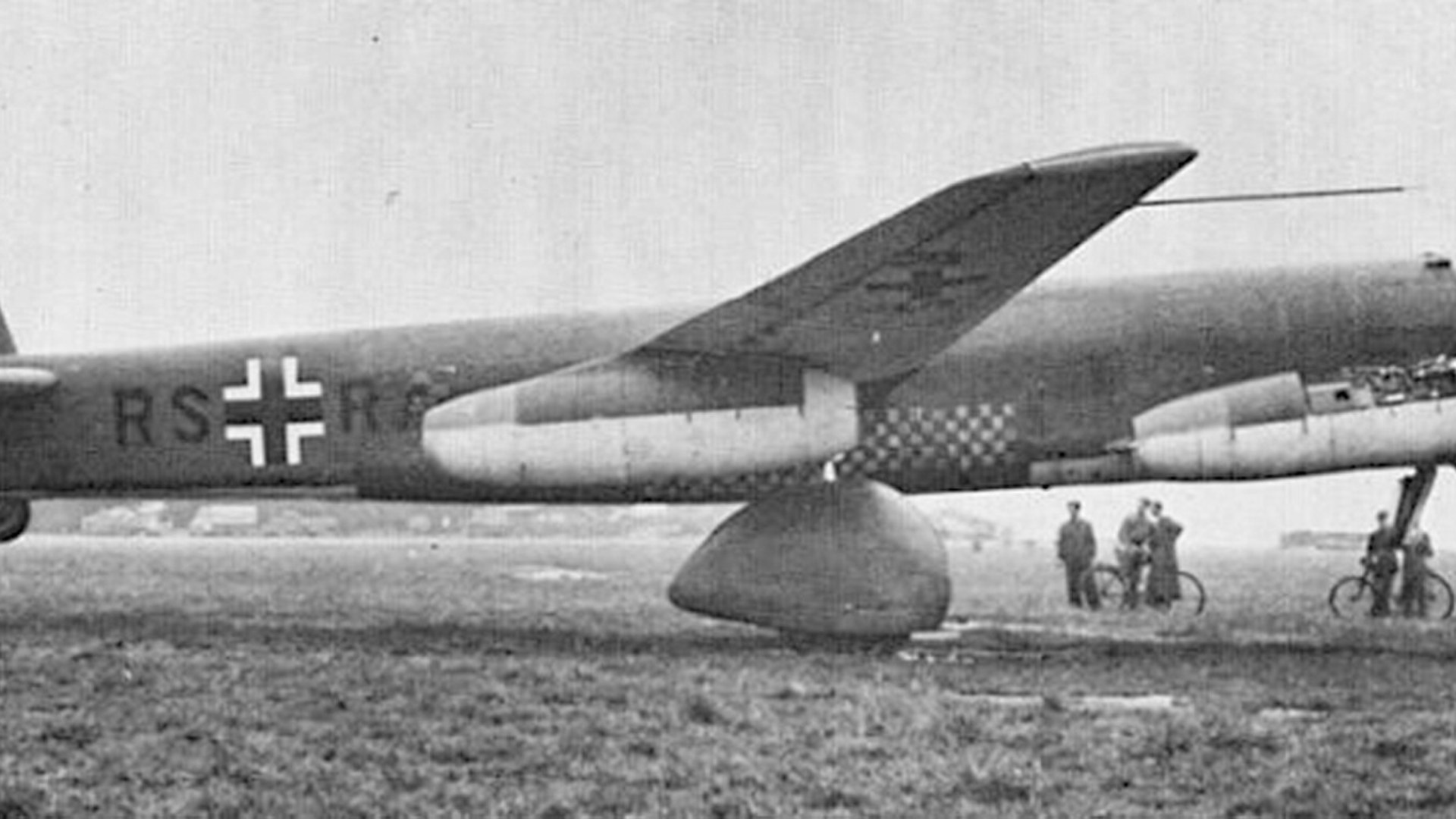
13. Junkers Ju 287
Designed to prevent wingtip stalls at low landing speeds, the Ju 287 V1 first flew on August 8, 1944, at Brandis airfield using a Heinkel He 177 fuselage and fixed B-24 nose gear. Soviet forces captured the unfinished V2 prototype and German engineers in 1945 to continue testing.
©Wikimedia / Unknown artist
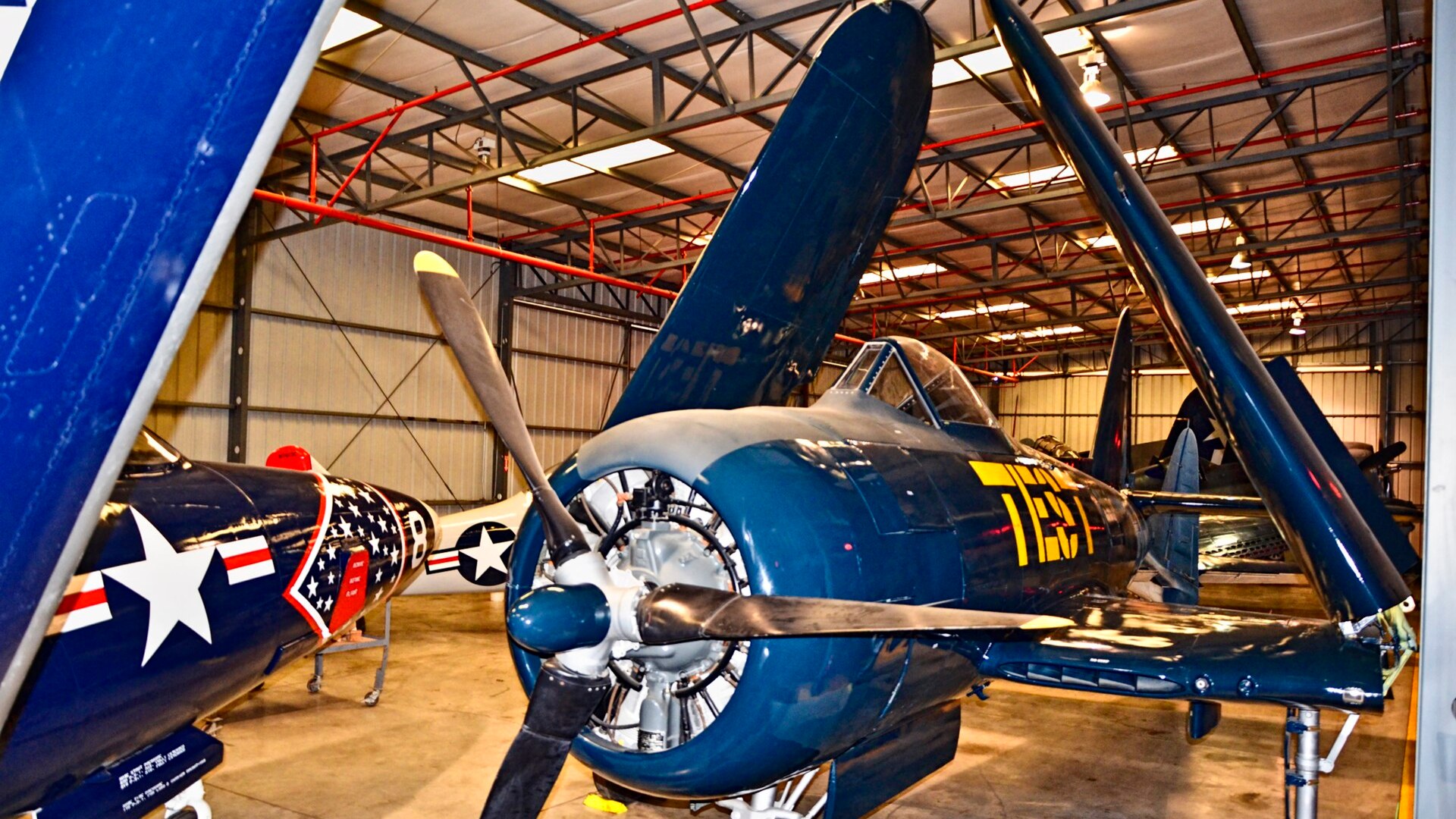
12. Ryan FR-1 Fireball
Because early turbojets spooled up too slowly for safe carrier wave-offs, the Navy paired a Wright Cyclone piston engine in front with a General Electric I-16 jet in the tail. First flown in June 1944, the Fireball equipped squadron VF-66 in 1945 just as the war ended.
©Wikimedia / Tomás Del Coro from Las Vegas, Nevada, USA
Advertisement
Swipe or tap ▶ to resume the countdown.
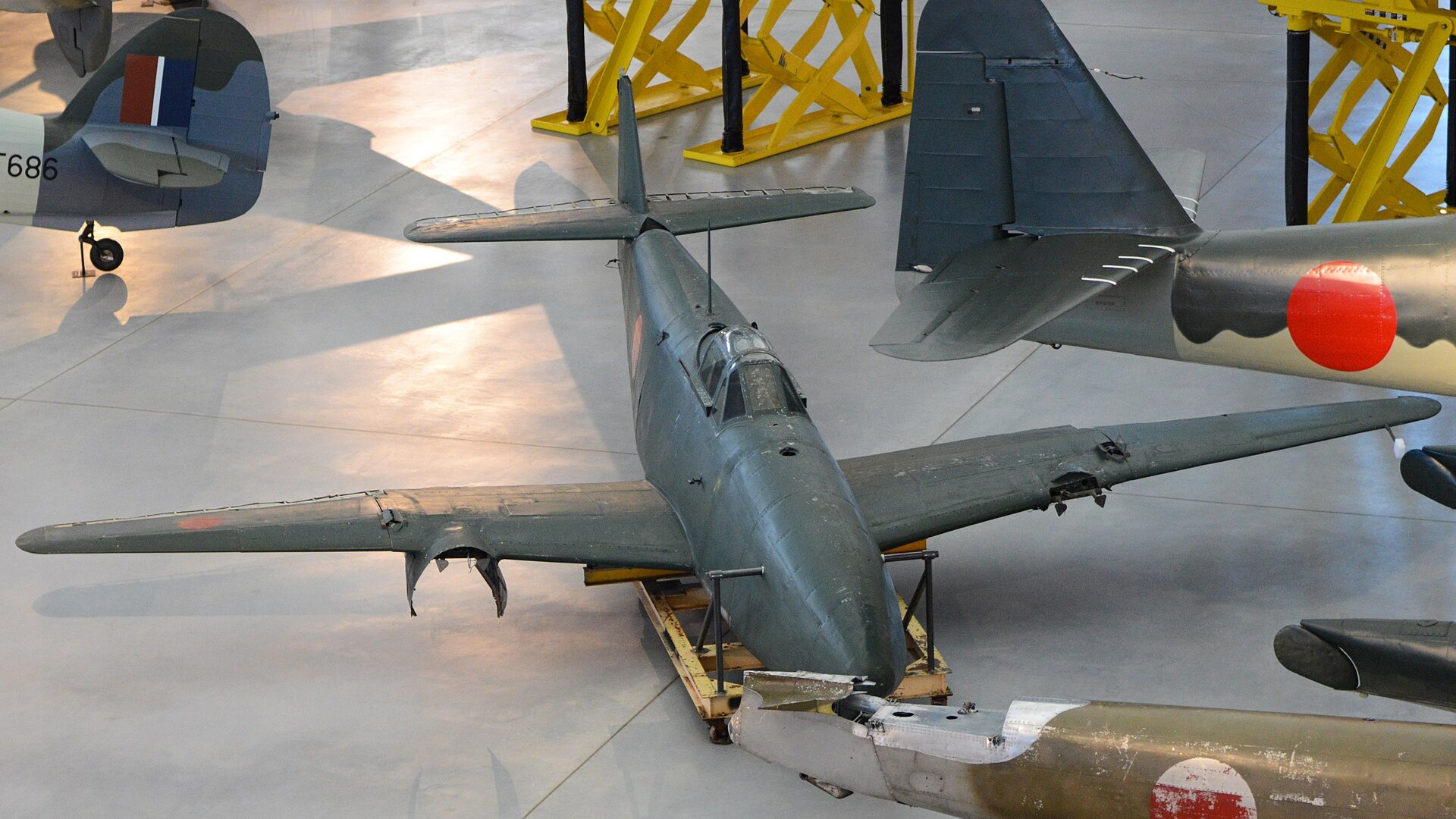
11. Kyushu J7W Shinden
Built to intercept high-altitude B-29 bombers, the Shinden placed its 2,130-horsepower radial engine behind the pilot driving a six-blade pusher propeller. It completed three brief test flights totaling 45 minutes in August 1945 before Japan surrendered and U.S. forces shipped one airframe home.
©Wikimedia / Sgt. J. R. O'Donnell
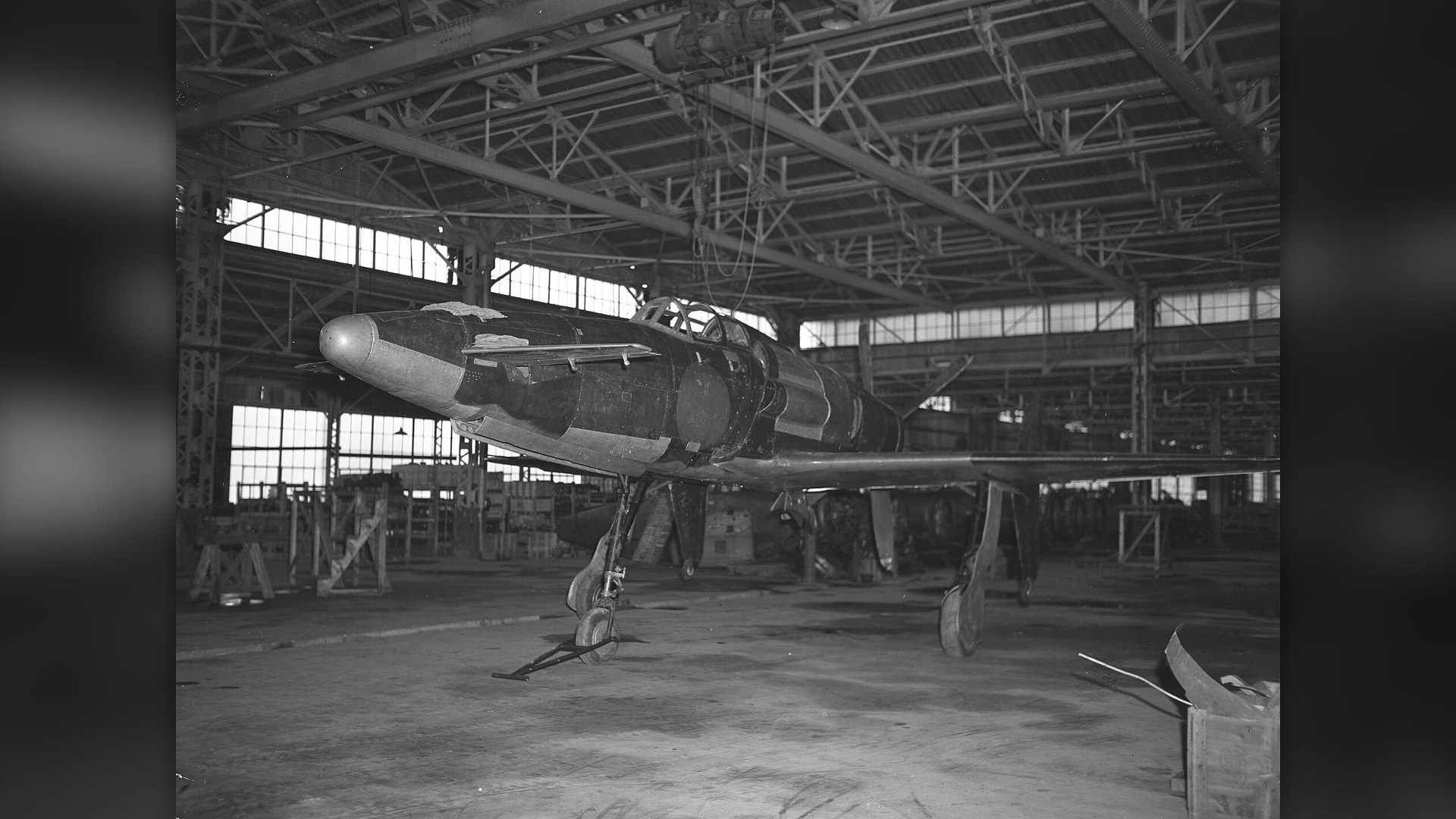
10. Nakajima Kikka
Developed from German technical sketches delivered in 1944, the twin-jet Kikka used folding wings sized to hide inside coastal caves and tunnels. Its sole flight took place at Kisarazu Naval Air Station on August 7, 1945, lasting 11 minutes before a second test aborted on August 11.
©Wikimedia / HawkeyeUK
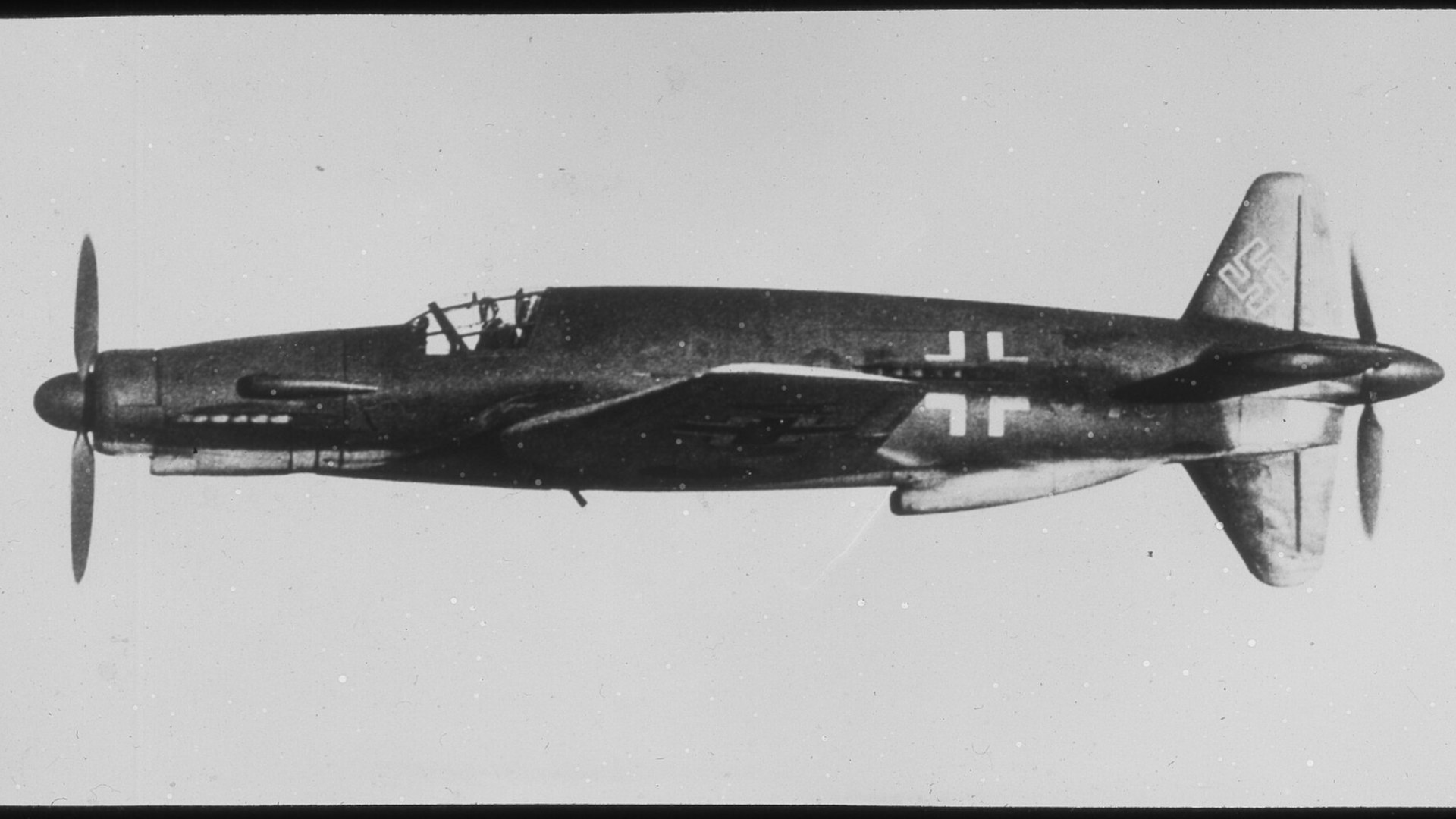
9. Dornier Do 335 Pfeil
Mounting two Daimler-Benz DB 603 engines in tandem cut frontal drag and gave the Do 335 a top speed near 474 mph, making it the fastest piston fighter of the war. It also featured an early compressed-air ejection seat and explosive bolts to blow off the rear propeller and upper fin.
©Wikimedia / ETH-Bibliothek Zürich, Bildarchiv / Fotograf: Un
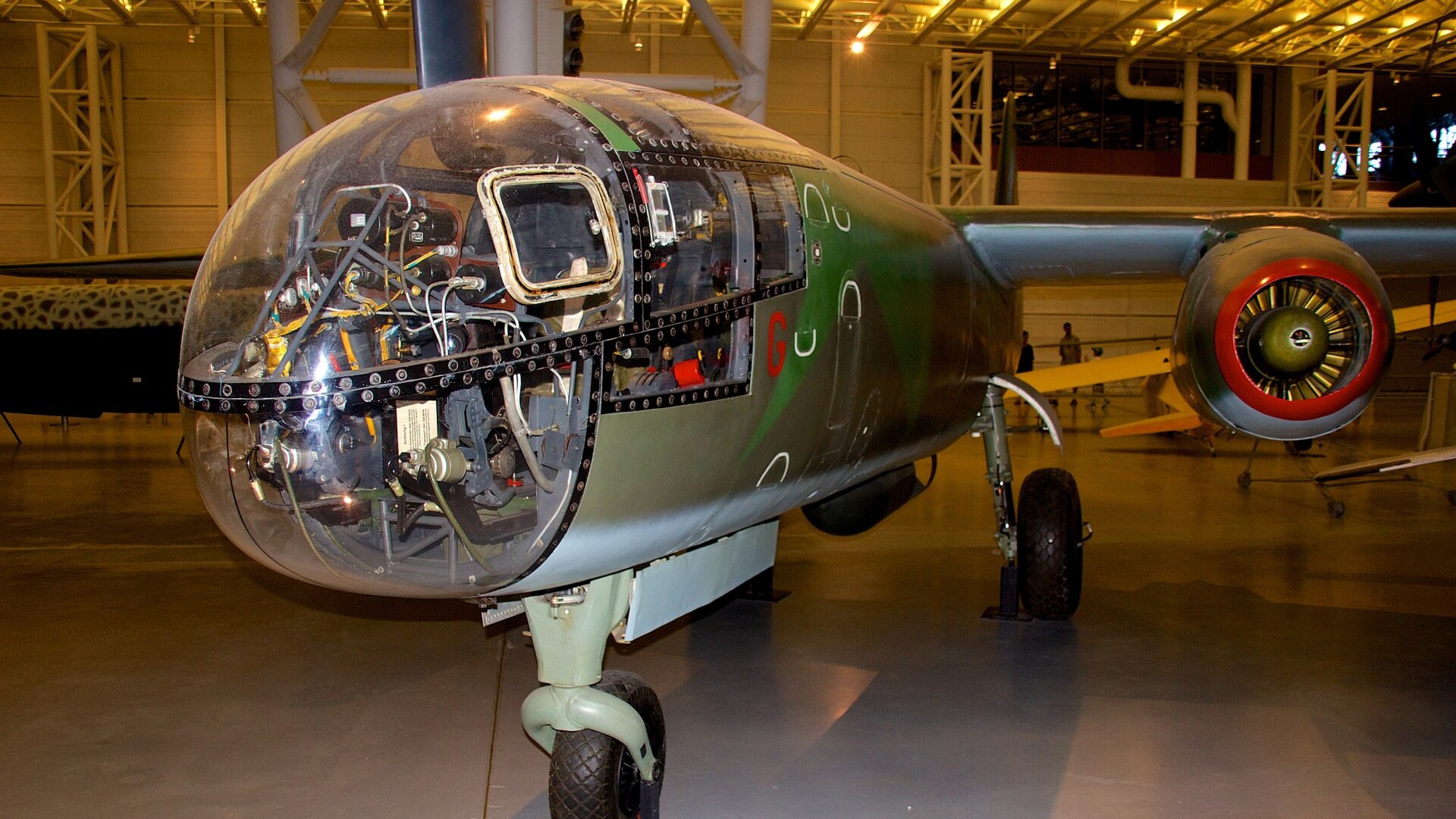
8. Arado Ar 234 Blitz
First flown in June 1943, the twin-jet Ar 234 flew so fast at over 460 mph that Allied fighters struggled to catch its reconnaissance flights over Normandy and Britain. Early prototypes discarded a wheeled dolly at takeoff and landed on a retractable central skid.
©Wikimedia / Photograph by Mike Peel ( www.mikepeel.net )
Advertisement
Swipe or tap ▶ to resume the countdown.
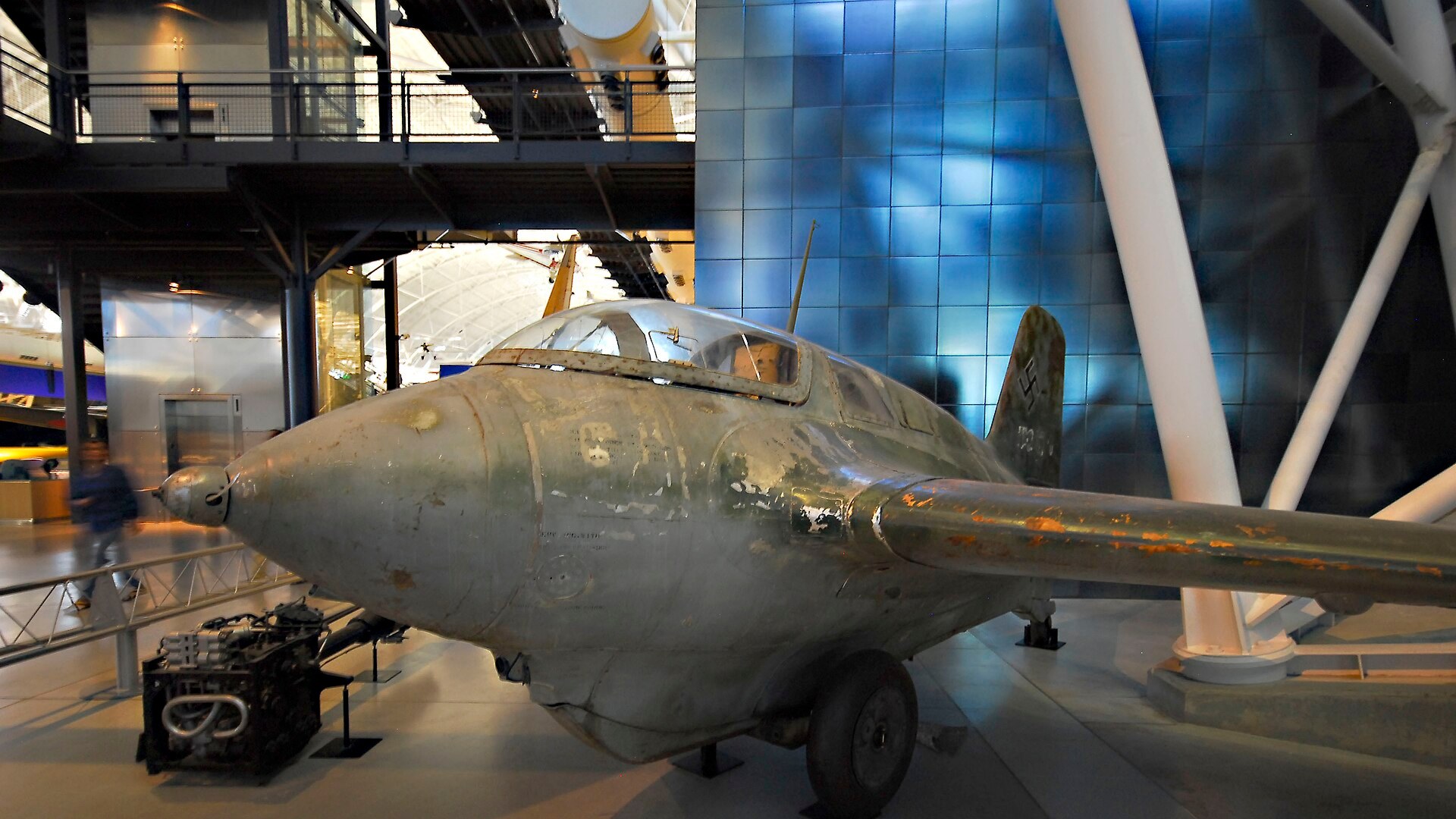
7. Messerschmitt Me 163 Komet
Powered by volatile T-Stoff and C-Stoff liquid propellants, the Me 163 reached 596 mph in level flight and became the only operational rocket-powered fighter in history. Pilots launched from a detachable wheeled trolley and glided back to land on a belly skid once fuel burned out.
©Wikimedia / Aaron Headly
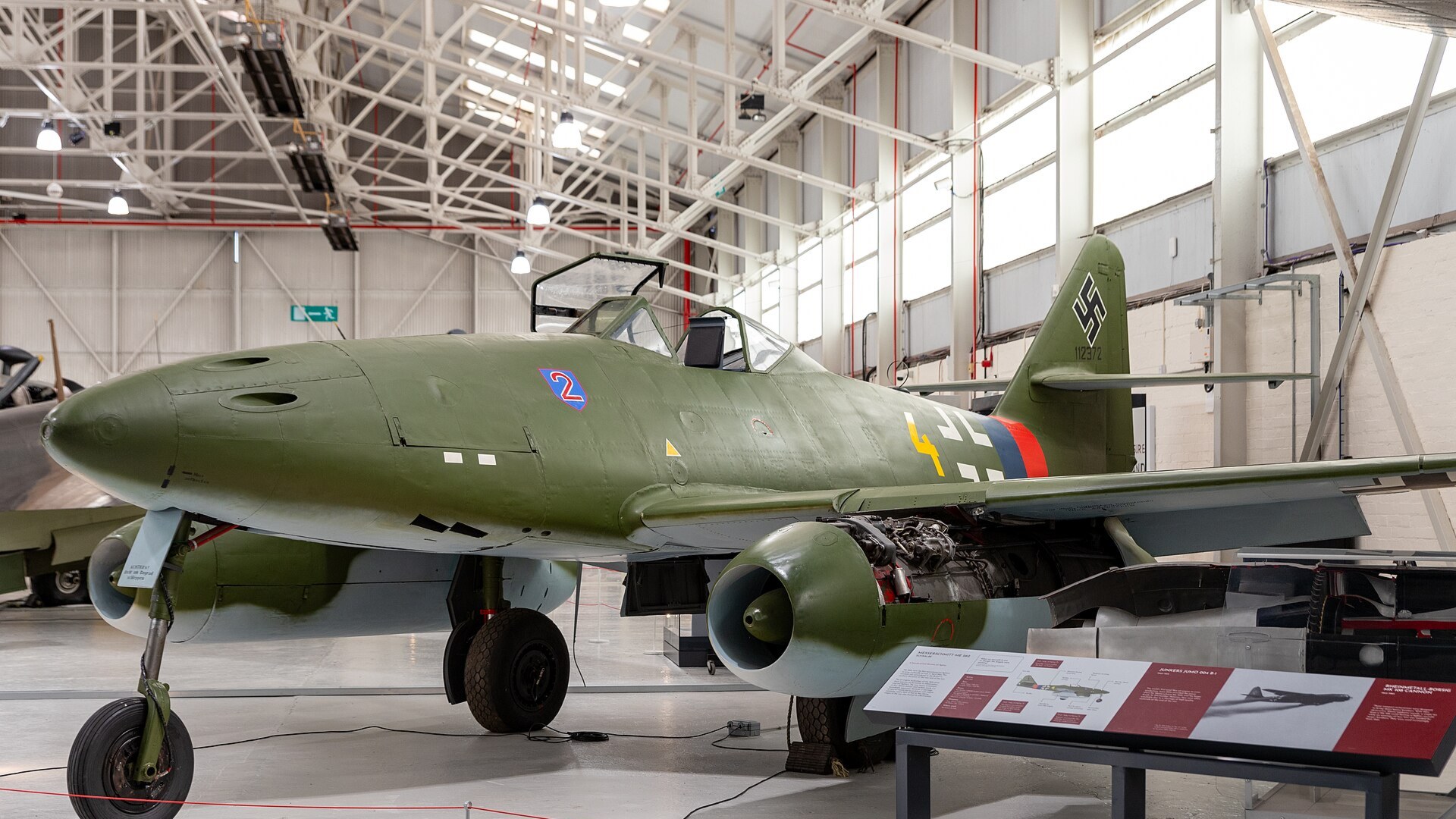
6. Messerschmitt Me 262 Schwalbe
Equipped with twin Junkers Jumo 004 axial-flow turbojets, the Me 262 flew its first all-jet test in July 1942 and outran every Allied piston escort by roughly 100 mph. To evade Allied strafing, the Luftwaffe dispersed assembly into camouflaged pine woods and highway strips.
©Wikimedia / Oren Rozen
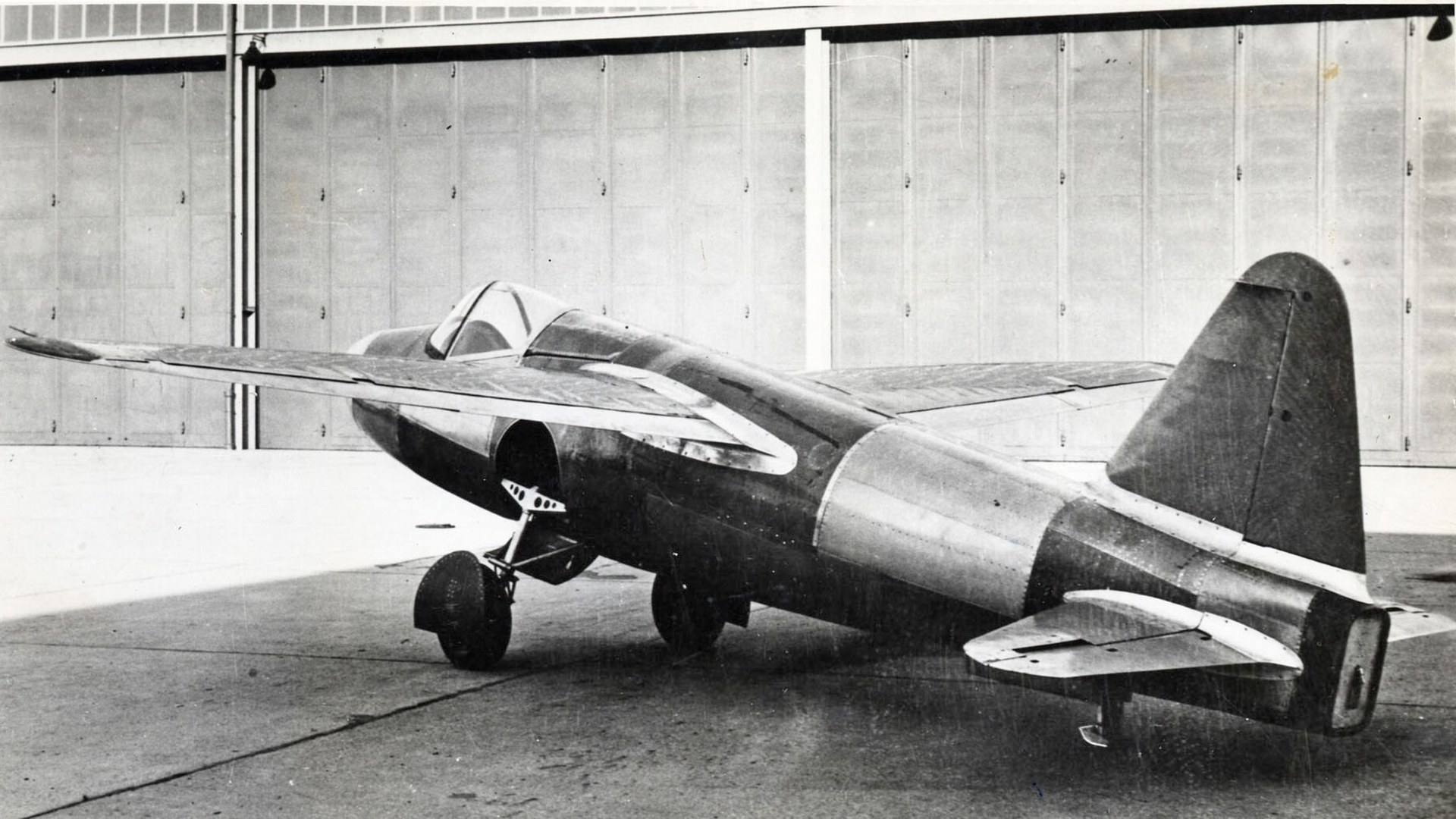
5. Heinkel He 178
On August 27, 1939, five days before Germany invaded Poland, test pilot Erich Warsitz flew the He 178 for six minutes over Rostock-Marienehe. Powered by Hans von Ohain's HeS 3b centrifugal turbojet, the tiny wooden-winged prototype launched the jet age without public notice.
©Wikimedia / Heinkel
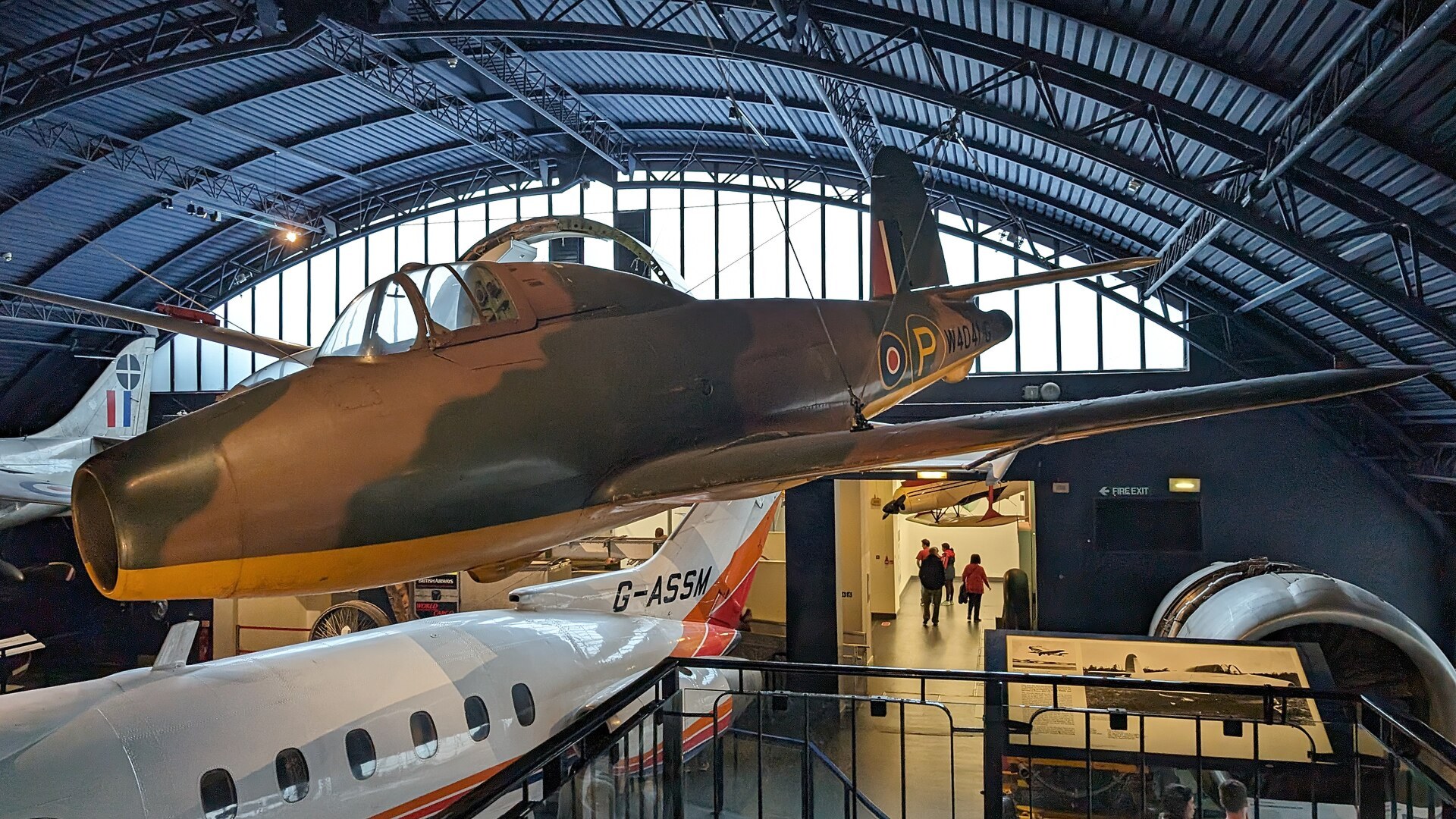
4. Gloster E.28/39
Built around Frank Whittle's W.1 turbojet engine at a quiet Gloucestershire workshop, the E.28/39 made its official 17-minute maiden flight from RAF Cranwell on May 15, 1941. Pilots climbed to 33,000 feet during secret trials that directly informed Allied jet engine sharing.
©Wikimedia / The wub
Advertisement
Swipe or tap ▶ to resume the countdown.
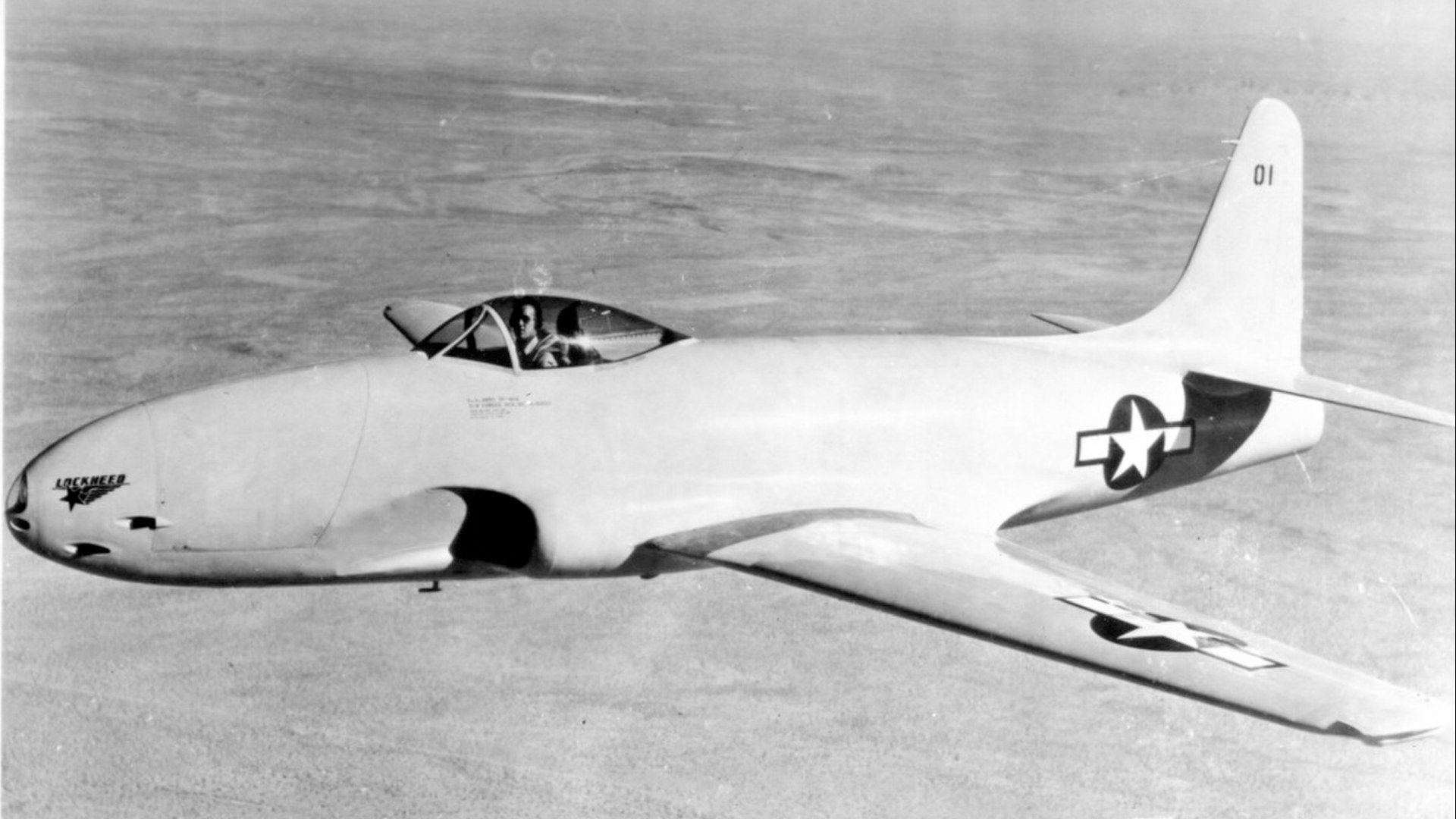
3. Lockheed XP-80 Shooting Star
Working behind locked doors next to a Burbank wind tunnel in 1943, Clarence "Kelly" Johnson and 23 engineers assembled the green-painted XP-80 prototype, nicknamed Lulu-Belle, in 143 days. It flew past 500 mph at Muroc in early 1944, becoming the first U.S. turbojet to exceed that mark.
©Wikimedia / SDASM Archives
2. Horten Ho 229
Designed by brothers Walter and Reimar Horten to carry two BMW 003 or Jumo 004 turbojets inside a smooth plywood-and-steel wing, the V3 prototype was seized at Friedrichroda in April 1945 under Operation Paperclip. Its low-drag profile inspired later stealth aviation studies.
©Wikimedia / US Army offical photographer
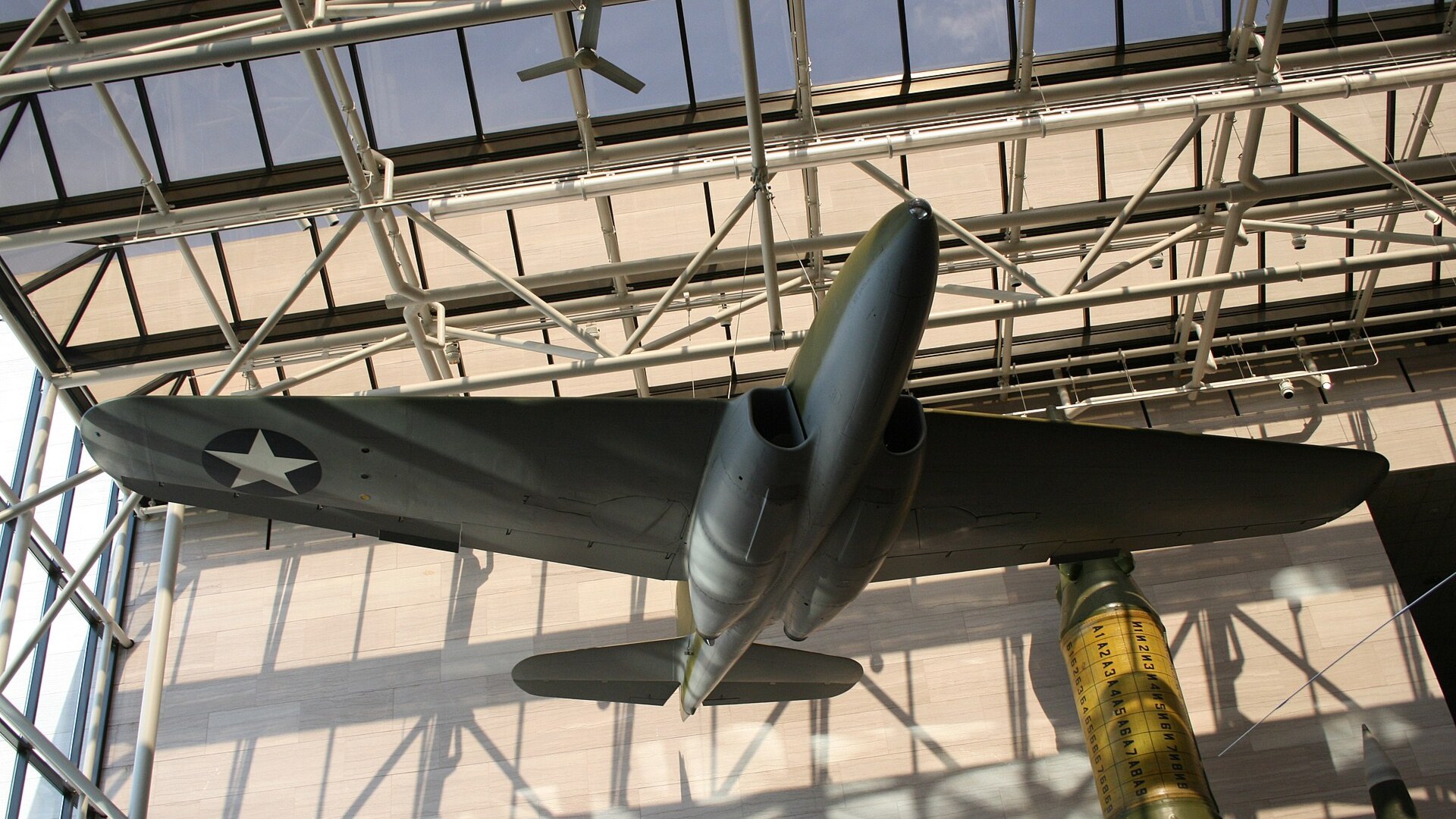
1. Bell XP-59A Airacomet
Moved by rail under canvas covers from Buffalo to Muroc Dry Lake in California, the XP-59A made its first secret flight on October 1, 1942. Whenever the twin-jet aircraft sat outside its hangar, ground crews bolted a dummy four-blade propeller to its nose to disguise the missing prop.
©Wikimedia / Gary Todd from Xinzheng, China
Advertisement
You've reached the end of the story. Thanks for reading!

22 Secret Warplanes Hidden From Public View Until Long After 1945
From captured 1945 prototypes shipped to American hangars to Cold War stealth demonstrators tested at Area 51, these 22 military aircraft spent years behind closed doors. Based on U.S. Air Force, CIA, NASA, and National Museum of the U.S. Air Force records, here are the warplanes that stayed out of sight.
All 22 Entries in this Story
22. Heinkel He 162 Spatz
Ordered in September 1944 as the Volksjager emergency fighter, the He 162 first flew on December 6, 1944, in Vienna. To hide production from Allied bombers, Heinkel assembled airframes in underground factories such as the Seegrotte mine at Hinterbruhl, building wings largely from bonded wood.

21. Blohm & Voss BV 141
Designer Richard Vogt offset the crew nacelle to the starboard wing in 1938 to give observers an unobstructed view while balancing propeller torque. Despite passing trials and reaching roughly 272 mph, the Luftwaffe built only about 28 aircraft before cancelling the program in 1943.

20. Fisher P-75 Eagle
Started in October 1942 under strict wartime secrecy, the Fisher Body Division mated P-40 outer wings, an SBD tail and an F4U landing gear around a 2,600-horsepower Allison V-3420 engine. Only 14 examples were built before the U.S. Army Air Forces cancelled the order in October 1944.

19. Bell XP-77
Weighing just 3,700 pounds loaded, the Bell XP-77 stretched only 22 feet 10 inches in length and flew on April 1, 1944. Built from Sitka spruce plywood around a single 520-horsepower Ranger V-770 engine, the two prototypes failed to meet speed targets and the project ended in December 1944.

18. Curtiss-Wright XP-55 Ascender
First flown in July 1943, the XP-55 placed horizontal elevators on the nose and a 1,275-horsepower Allison engine at the rear. Pilots found its stall behavior unforgiving, and two of the three prototypes crashed during testing before the Army Air Forces ended development in 1944.

17. Chance Vought V-173 Flying Pancake
Charles Zimmerman's disc-shaped wing generated lift across its entire body, allowing the V-173 to land at under 30 mph when it first flew in November 1942. Test pilots logged 190 flights in Connecticut, though the follow-on XF5U-1 never flew before jets made piston fighters obsolete.

16. McDonnell XP-67 Moonbat
McDonnell Aircraft blended the fuselage smoothly into the wing roots to cut aerodynamic drag and house six 37-millimeter cannons. First flown in January 1944, the sole XP-67 suffered chronic engine overheating and was destroyed by an in-flight starboard engine fire on September 6, 1944.

15. Northrop XP-56 Black Bullet
Jack Northrop built the XP-56 from welded magnesium alloy in 1943 with contra-rotating rear propellers and no horizontal tail. Tested at Muroc Army Air Field, the first prototype flipped on a runway run and the second proved unstable in pitch, ending the program after ten flights.

14. Northrop N-1M
Nicknamed the Jeep, the N-1M was built secretly in Hawthorne, California, and made its first hop at Baker Dry Lake in July 1940. Its 38-foot wood-and-steel airframe let engineers adjust wing sweep and dihedral on the ground, laying the foundation for later B-35 and B-2 bombers.

13. Junkers Ju 287
Designed to prevent wingtip stalls at low landing speeds, the Ju 287 V1 first flew on August 8, 1944, at Brandis airfield using a Heinkel He 177 fuselage and fixed B-24 nose gear. Soviet forces captured the unfinished V2 prototype and German engineers in 1945 to continue testing.

12. Ryan FR-1 Fireball
Because early turbojets spooled up too slowly for safe carrier wave-offs, the Navy paired a Wright Cyclone piston engine in front with a General Electric I-16 jet in the tail. First flown in June 1944, the Fireball equipped squadron VF-66 in 1945 just as the war ended.

11. Kyushu J7W Shinden
Built to intercept high-altitude B-29 bombers, the Shinden placed its 2,130-horsepower radial engine behind the pilot driving a six-blade pusher propeller. It completed three brief test flights totaling 45 minutes in August 1945 before Japan surrendered and U.S. forces shipped one airframe home.

10. Nakajima Kikka
Developed from German technical sketches delivered in 1944, the twin-jet Kikka used folding wings sized to hide inside coastal caves and tunnels. Its sole flight took place at Kisarazu Naval Air Station on August 7, 1945, lasting 11 minutes before a second test aborted on August 11.

9. Dornier Do 335 Pfeil
Mounting two Daimler-Benz DB 603 engines in tandem cut frontal drag and gave the Do 335 a top speed near 474 mph, making it the fastest piston fighter of the war. It also featured an early compressed-air ejection seat and explosive bolts to blow off the rear propeller and upper fin.

8. Arado Ar 234 Blitz
First flown in June 1943, the twin-jet Ar 234 flew so fast at over 460 mph that Allied fighters struggled to catch its reconnaissance flights over Normandy and Britain. Early prototypes discarded a wheeled dolly at takeoff and landed on a retractable central skid.

7. Messerschmitt Me 163 Komet
Powered by volatile T-Stoff and C-Stoff liquid propellants, the Me 163 reached 596 mph in level flight and became the only operational rocket-powered fighter in history. Pilots launched from a detachable wheeled trolley and glided back to land on a belly skid once fuel burned out.

6. Messerschmitt Me 262 Schwalbe
Equipped with twin Junkers Jumo 004 axial-flow turbojets, the Me 262 flew its first all-jet test in July 1942 and outran every Allied piston escort by roughly 100 mph. To evade Allied strafing, the Luftwaffe dispersed assembly into camouflaged pine woods and highway strips.

5. Heinkel He 178
On August 27, 1939, five days before Germany invaded Poland, test pilot Erich Warsitz flew the He 178 for six minutes over Rostock-Marienehe. Powered by Hans von Ohain's HeS 3b centrifugal turbojet, the tiny wooden-winged prototype launched the jet age without public notice.

4. Gloster E.28/39
Built around Frank Whittle's W.1 turbojet engine at a quiet Gloucestershire workshop, the E.28/39 made its official 17-minute maiden flight from RAF Cranwell on May 15, 1941. Pilots climbed to 33,000 feet during secret trials that directly informed Allied jet engine sharing.

3. Lockheed XP-80 Shooting Star
Working behind locked doors next to a Burbank wind tunnel in 1943, Clarence "Kelly" Johnson and 23 engineers assembled the green-painted XP-80 prototype, nicknamed Lulu-Belle, in 143 days. It flew past 500 mph at Muroc in early 1944, becoming the first U.S. turbojet to exceed that mark.

2. Horten Ho 229
Designed by brothers Walter and Reimar Horten to carry two BMW 003 or Jumo 004 turbojets inside a smooth plywood-and-steel wing, the V3 prototype was seized at Friedrichroda in April 1945 under Operation Paperclip. Its low-drag profile inspired later stealth aviation studies.

1. Bell XP-59A Airacomet
Moved by rail under canvas covers from Buffalo to Muroc Dry Lake in California, the XP-59A made its first secret flight on October 1, 1942. Whenever the twin-jet aircraft sat outside its hangar, ground crews bolted a dummy four-blade propeller to its nose to disguise the missing prop.