Slideshow · Science
25 Historic NASA Apollo Photos From Launch to the Lunar Surface
From November 1967 to December 1972, NASA crews carried Hasselblad cameras across nearly 384,000 kilometers of space to document every stage of Project Apollo. Drawing on NASA mission archives, Johnson Space Center logs, and Smithsonian records, these 25 frames capture launches, lunar walks, and crises.
By Most Viral Today
44 min agoimage-first:space-apollo:2026-11-22:25-apollo-photos-that-put-you-inside-the-moon-landings

Inside the Apollo missions from Pad 39A liftoff to the Moon and back. 
25. Saturn V Rollout On The Crawler-Transporter 
24. Apollo 4 First Saturn V Launch 
23. Apollo 7 Crew In Earth Orbit - AdvertisementSwipe or tap ▶ to continue countdown

22. Apollo 8 Earthrise Over The Lunar Horizon 
21. Apollo 9 Lunar Module Spider In Orbit 
20. Apollo 10 Lunar Module Snoopy Over The Moon 
19. Apollo 11 Saturn V Liftoff At Pad 39A - AdvertisementSwipe or tap ▶ to continue countdown

18. Apollo 11 Crew Walkout In Pressure Suits 
17. Lunar Module Eagle In Orbit Above The Moon 
16. Buzz Aldrin Descending The Eagle Ladder 
15. First Human Bootprint In Lunar Regolith - AdvertisementSwipe or tap ▶ to continue countdown

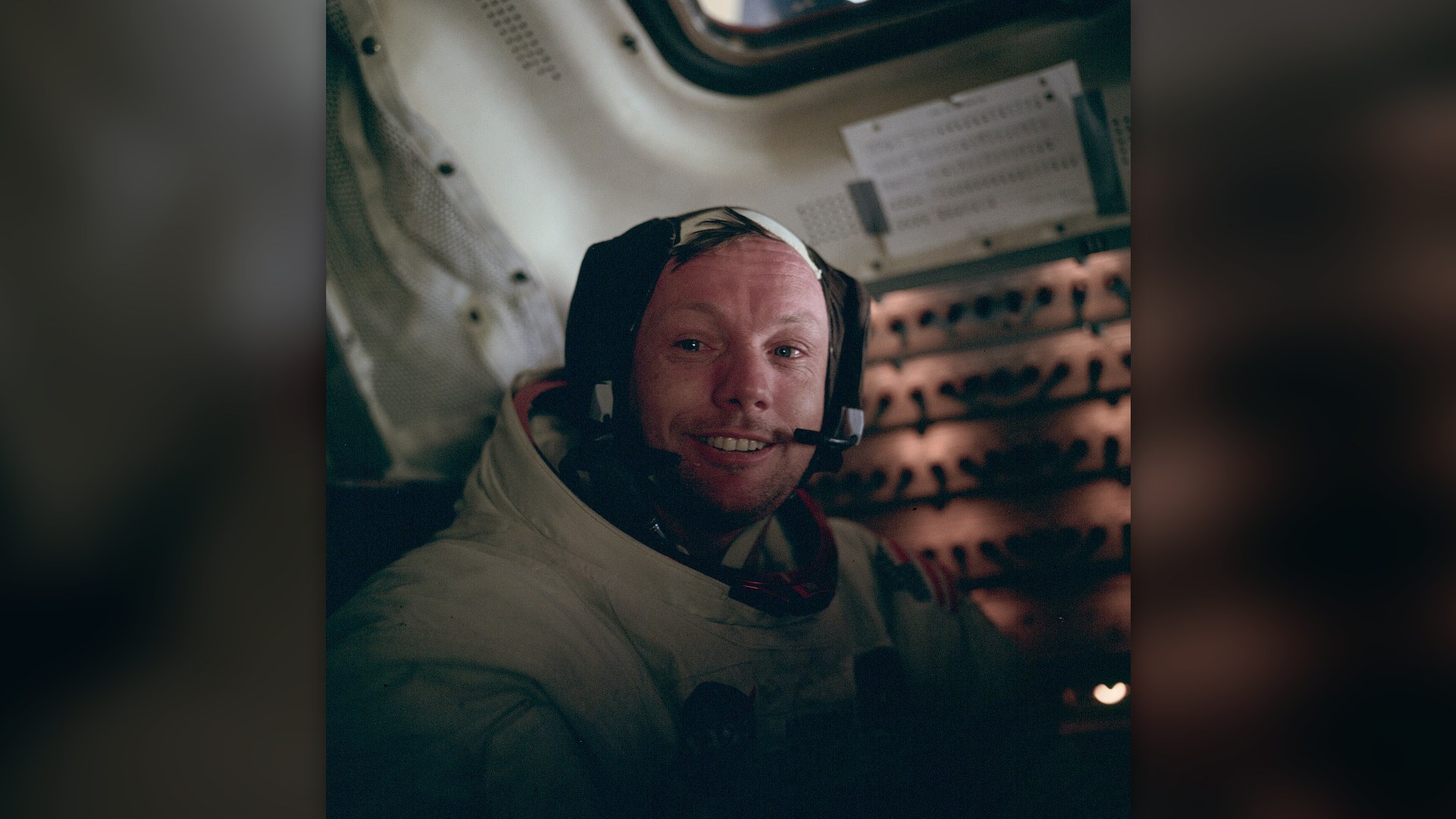
14. Neil Armstrong Inside Eagle After The Moonwalk 
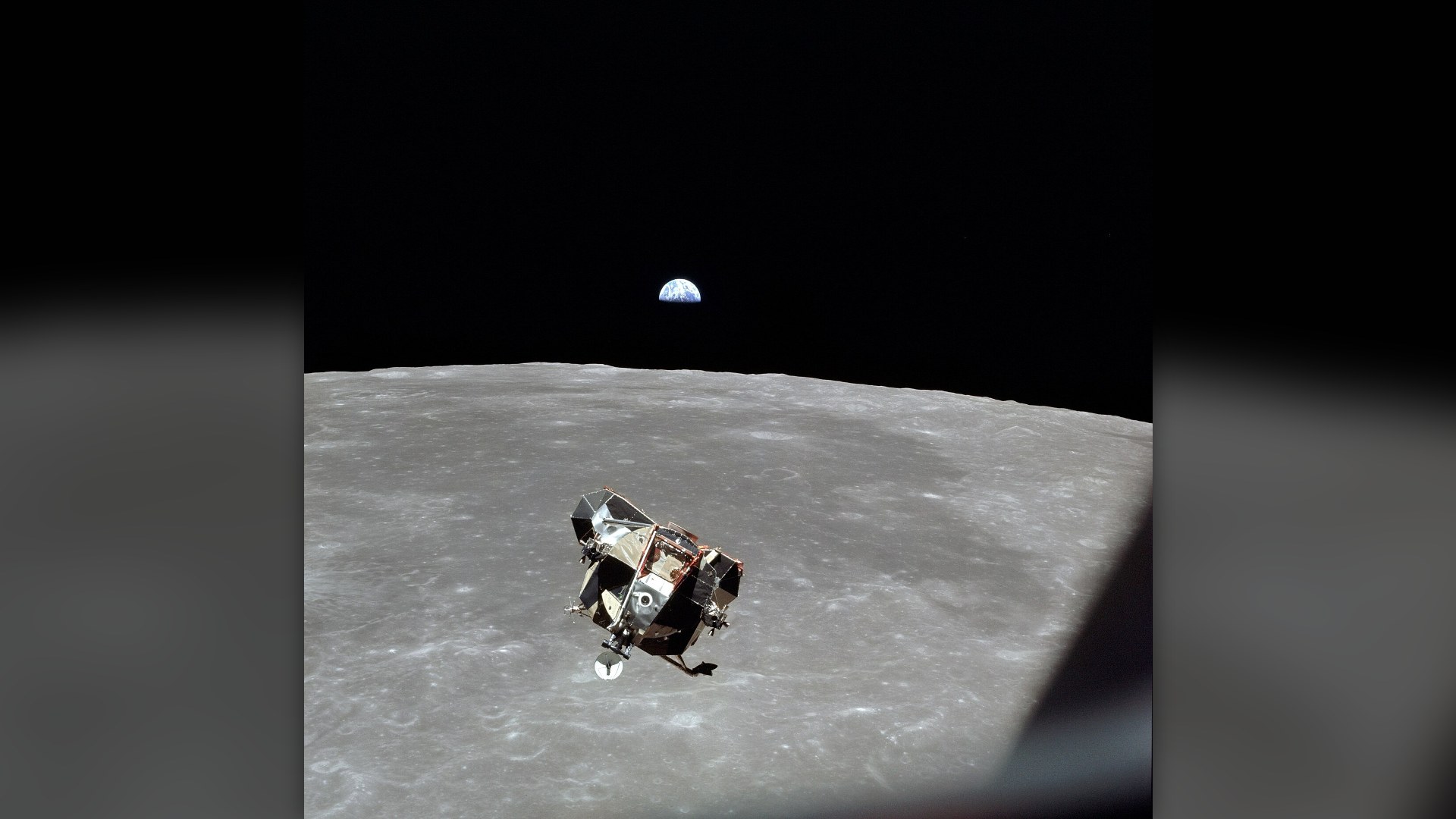
13. Eagle Ascent Stage Rising Past Earth 
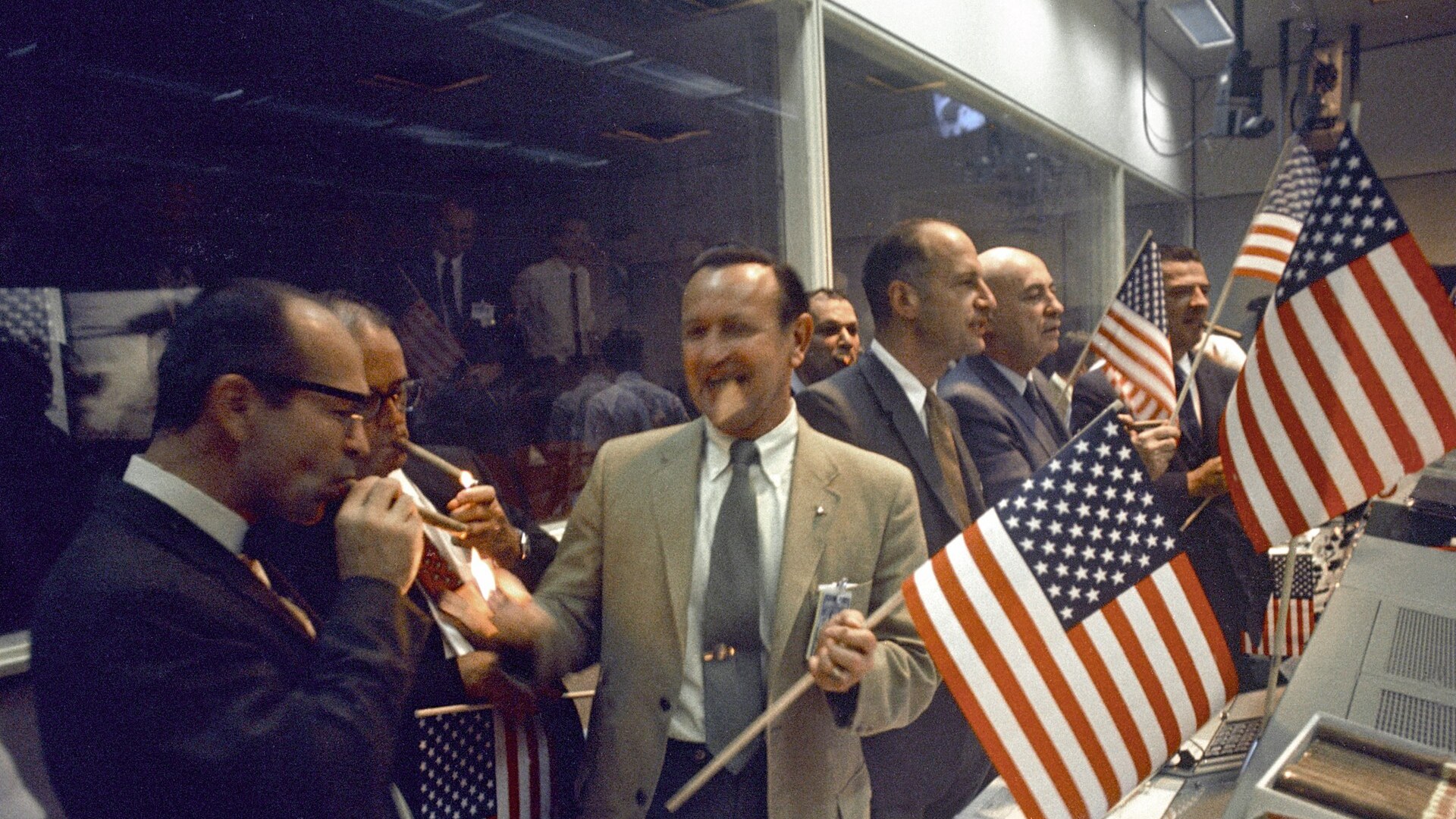
12. Houston Mission Control After Splashdown 
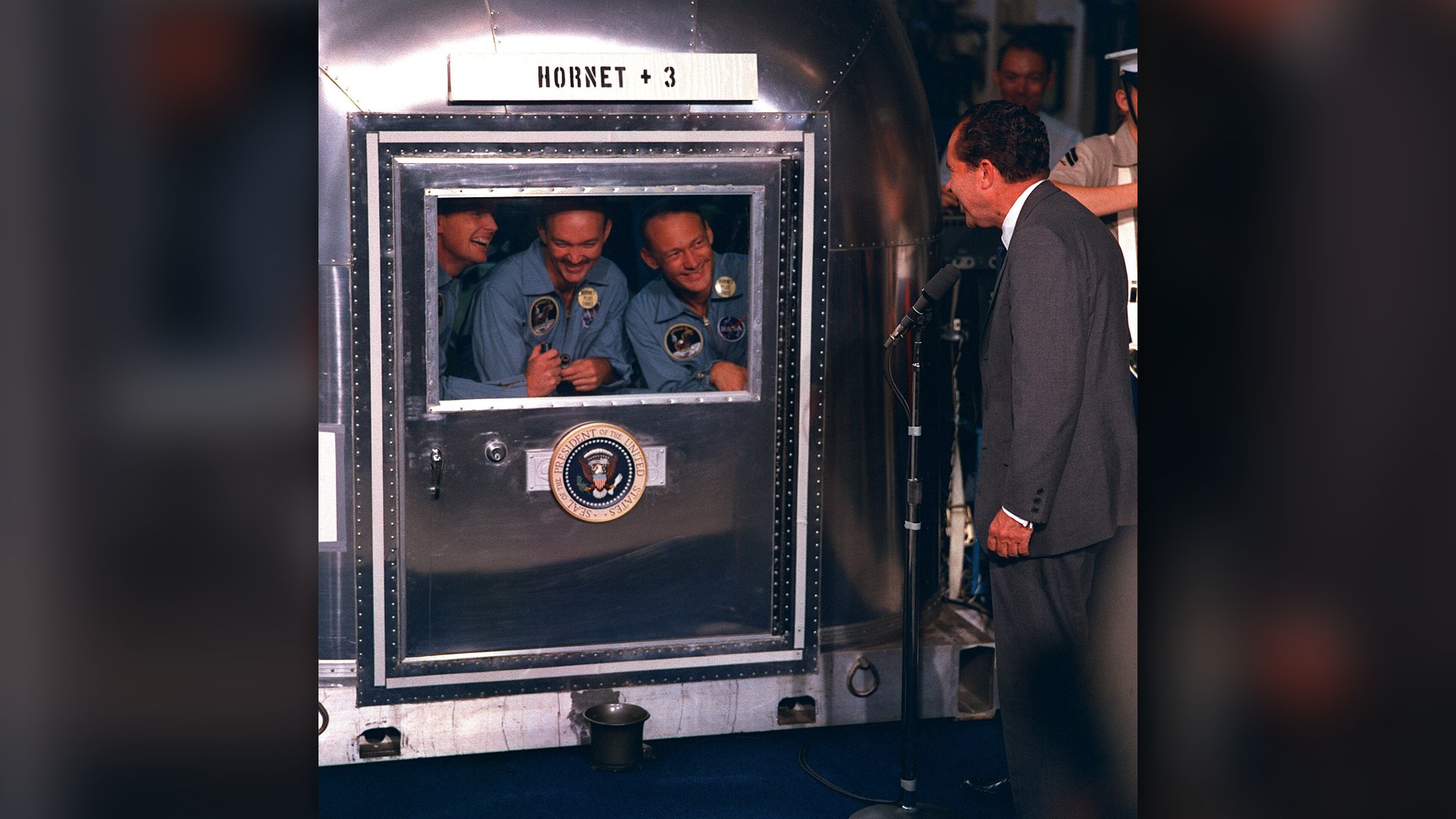
11. Apollo 11 Crew Inside Quarantine On USS Hornet - AdvertisementSwipe or tap ▶ to continue countdown

10. Pete Conrad Inspecting Surveyor 3 On The Moon 
9. Alan Bean Holding A Lunar Soil Container 
8. Apollo 13 Ruptured Service Module 
7. Apollo 13 Square To-Round Air Scrubber Fix - AdvertisementSwipe or tap ▶ to continue countdown

6. Apollo 14 Rickshaw Hauling Gear At Fra Mauro 
5. David Scott And The Rover At Hadley Rille 
4. Apollo 15 Splashdown On Two Main Parachutes 
3. Charles Duke Driving The Apollo 16 Lunar Rover - AdvertisementSwipe or tap ▶ to continue countdown

2. Geologist Harrison Schmitt At Station 6 Boulder 
1. The Blue Marble Earth Photograph From Apollo 17 - Advertisement🔥 UP NEXT IN THIS SERIES◫ 25 Slides

24 Historic Apollo Photos from Nasa's Race to the Moon
NASA's Apollo missions between 1967 and 1972 produced thousands of Hasselblad and pad photographs, from Saturn V rocket tests in Florida to crewed walks across the lunar surface. Based on NASA archives, the National Air and Space Museum and Wikimedia Commons records, these 24 shots trace the Moon race.
NASA astronauts documented Project Apollo from 1967 to 1972 using modified 70mm Hasselblad cameras and onboard film canisters. Based on NASA Johnson Space Center archives, Apollo Flight Journals, and Smithsonian records, this 25-slide sequence traces rocket rollouts, moonwalks, and historic deep-space views.
Swipe or tap ▶ to begin the countdown
©Wikimedia / NASA, Bill Anders & NASA, GSFC, Arizona State
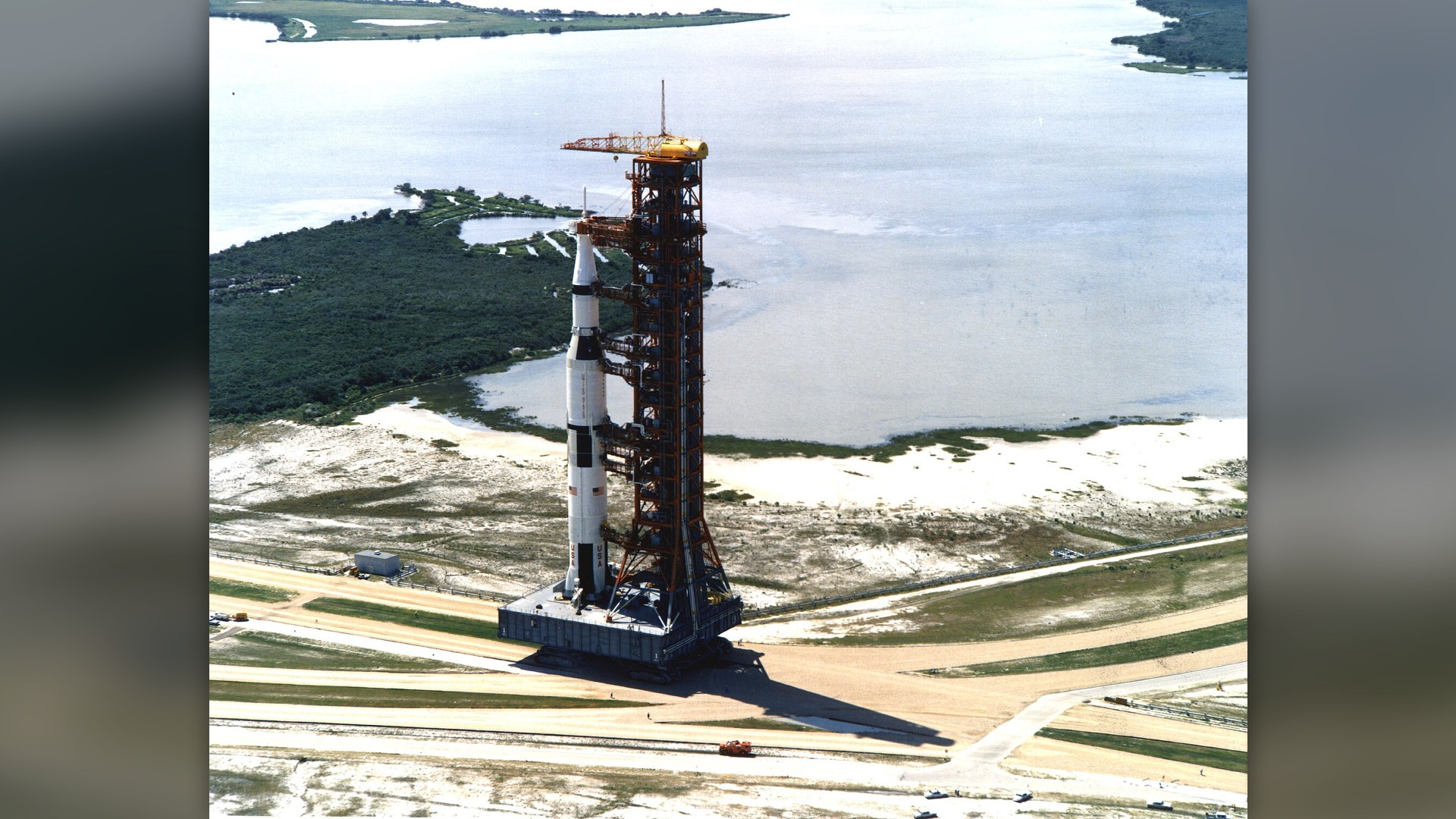
25. Saturn V Rollout On The Crawler-Transporter
On May 20, 1969, NASA's crawler-transporter carried the fully stacked Apollo 11 Saturn V and its mobile launch tower 5.6 kilometers from the Vehicle Assembly Building. The 2,700-metric-ton tracked vehicle took roughly six hours to reach Launch Complex 39A.
©Wikimedia / NASA/KSC
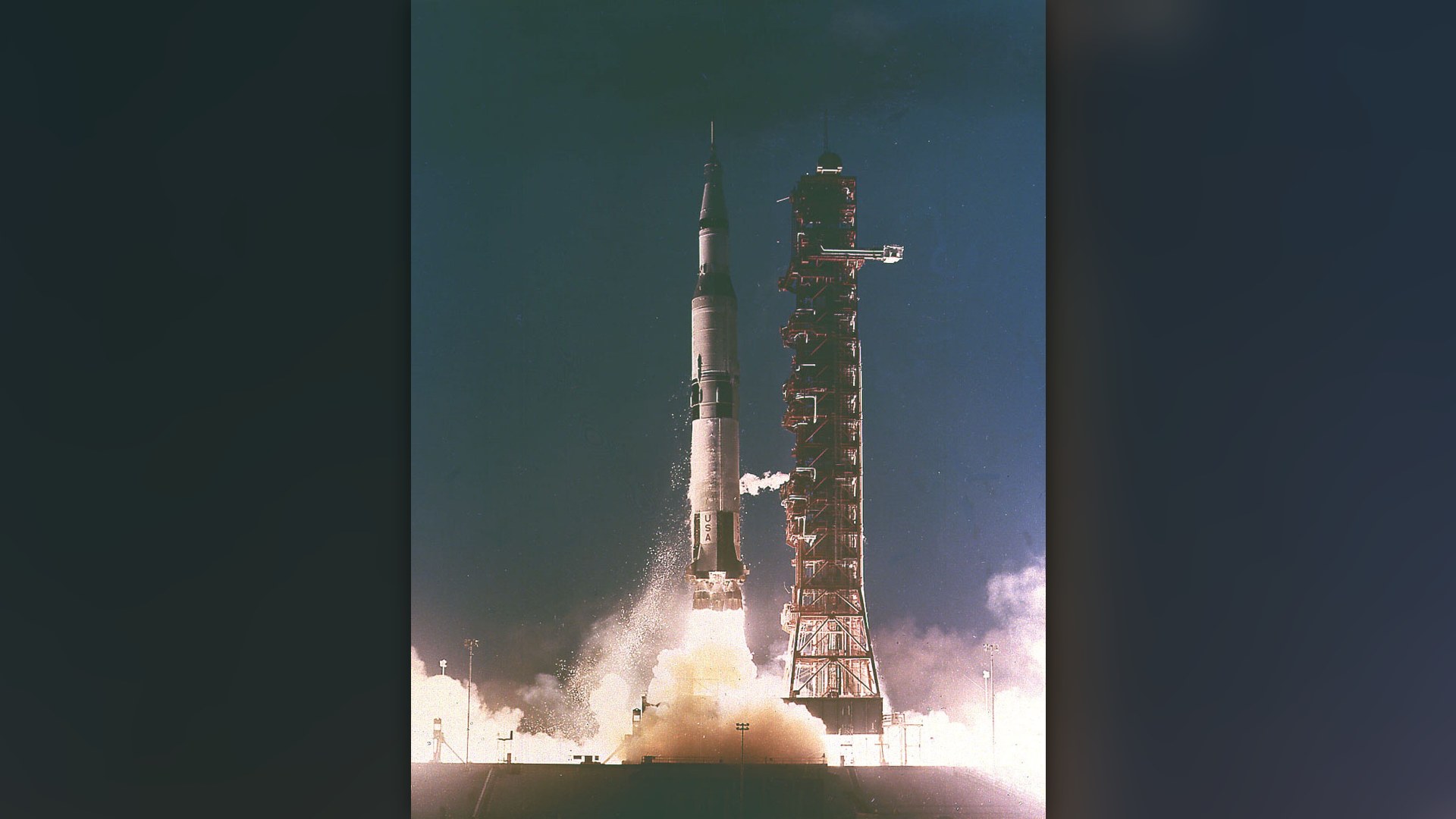
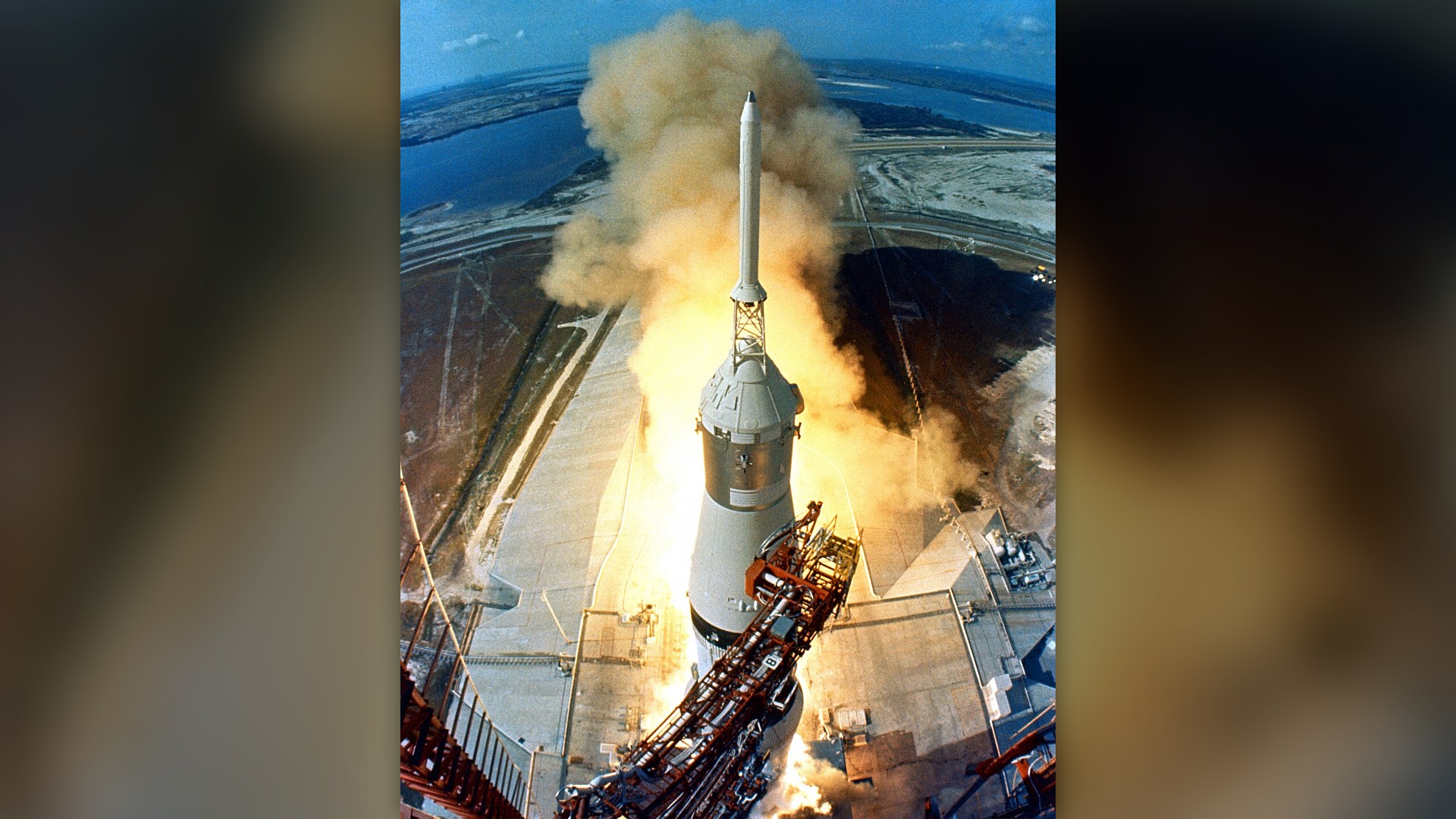
24. Apollo 4 First Saturn V Launch
Apollo 4 lifted off on November 9, 1967, marking the debut of the three-stage Saturn V rocket and the first launch from Kennedy Space Center's Pad 39A. Acoustic shockwaves shook launch viewing stands miles away as all five F-1 engines ignited together.
©Wikimedia / NASA Marshall Space Flight Center
23. Apollo 7 Crew In Earth Orbit
Launched in October 1968 aboard a Saturn IB, Apollo 7 spent nearly 11 days in Earth orbit testing the redesigned Block II Command and Service Module. The mission also delivered the first live television broadcasts from an American crewed spacecraft.
©Wikimedia / NASA
Advertisement
Swipe or tap ▶ to resume the countdown.
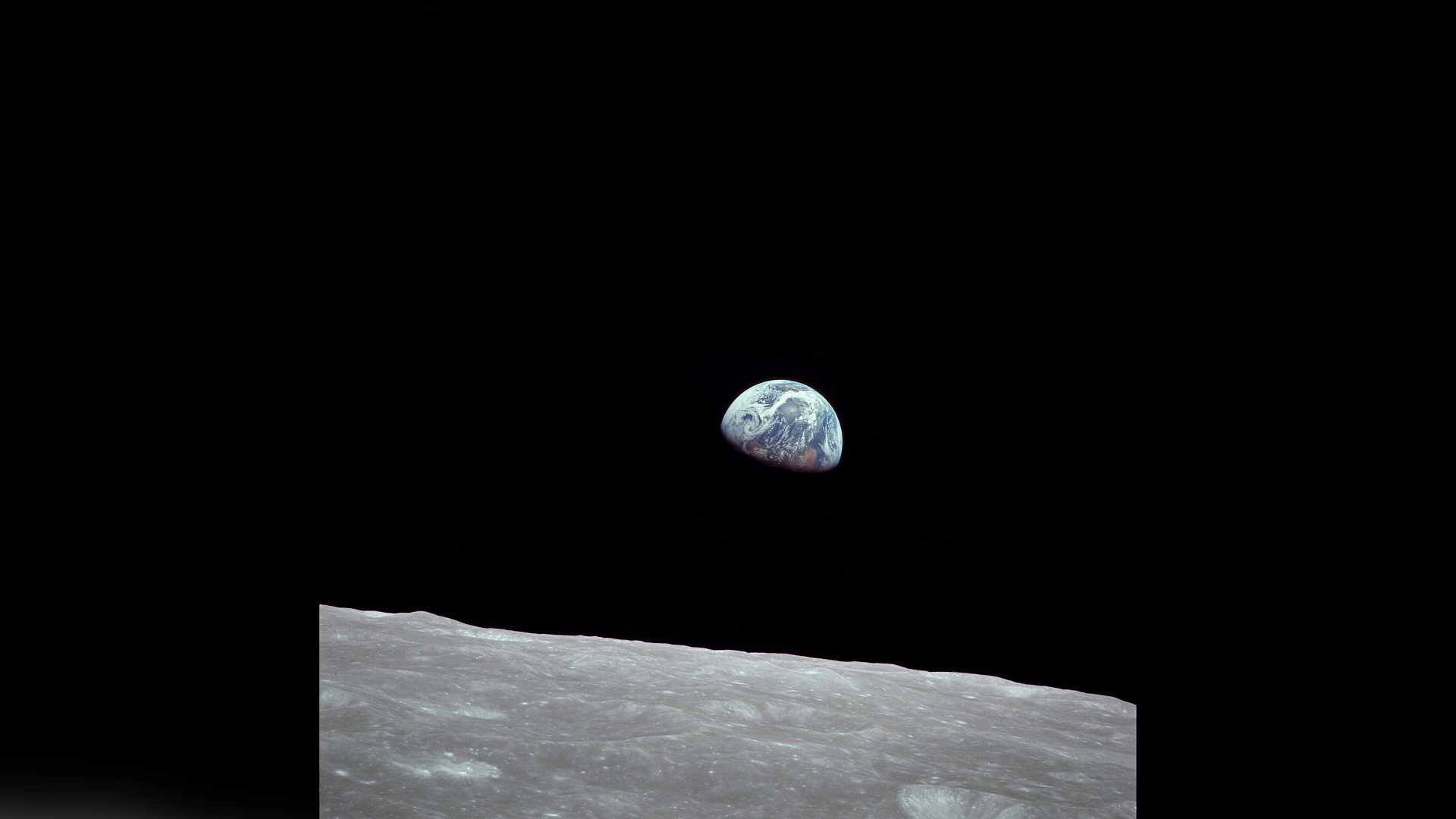
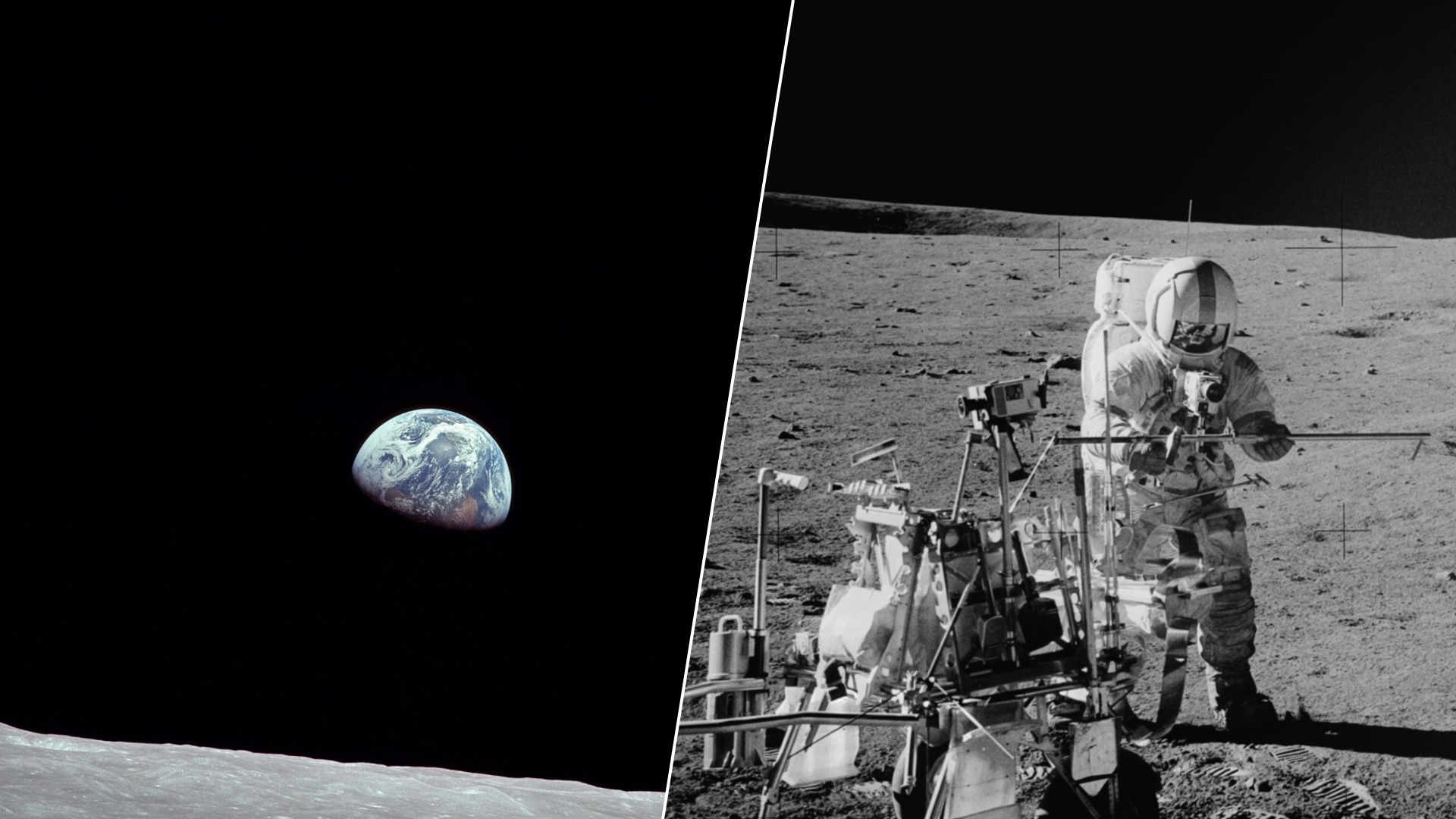
22. Apollo 8 Earthrise Over The Lunar Horizon
During Apollo 8's fourth orbit on December 24, 1968, lunar module pilot Bill Anders grabbed a Hasselblad loaded with 70mm color film as Earth emerged beyond the lunar rim. Frank Borman, Jim Lovell, and Anders became the first humans to see the Moon's far side.
©Wikimedia / NASA/Bill Anders
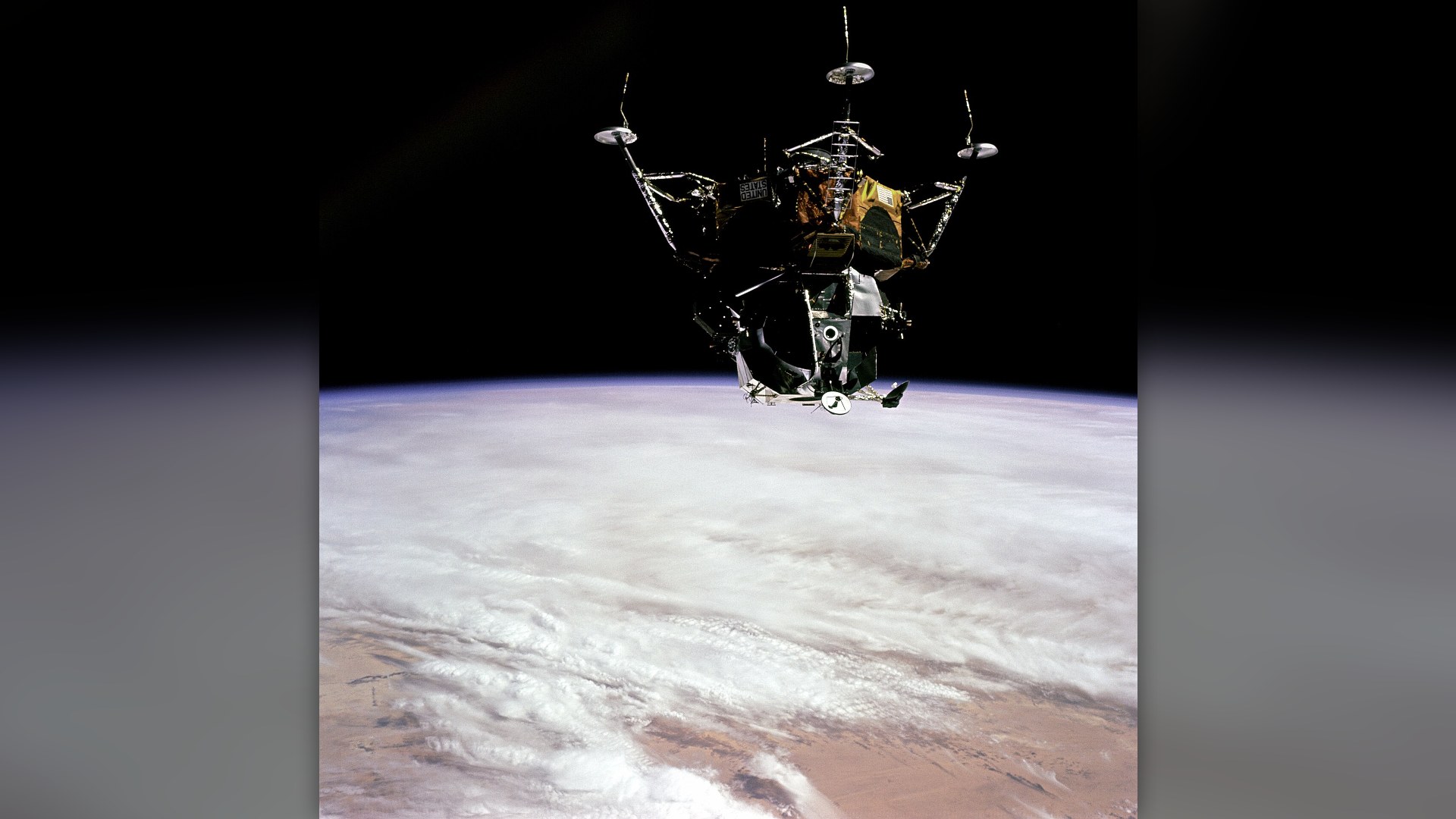
21. Apollo 9 Lunar Module Spider In Orbit
Command Module pilot David Scott photographed the Lunar Module Spider from Gumdrop on March 7, 1969. Rusty Schweickart and Jim McDivitt flew Spider more than 180 kilometers away in Earth orbit to verify the lander's ascent and descent engines before any Moon attempt.
©Wikimedia / NASA David Scott
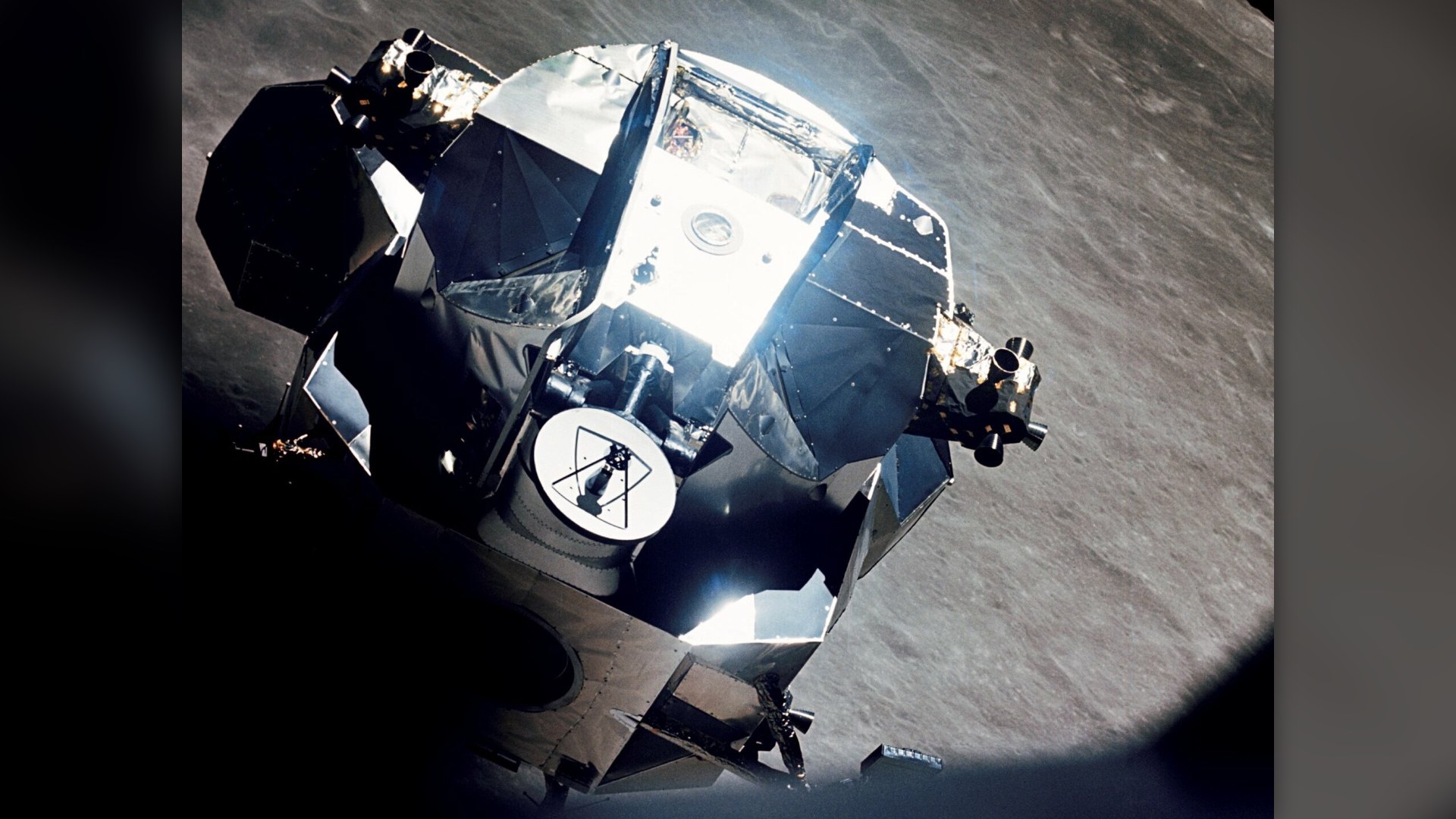
20. Apollo 10 Lunar Module Snoopy Over The Moon
In May 1969, Apollo 10 rehearsed every step of a lunar landing except touchdown. After descending over the Sea of Tranquility in Lunar Module Snoopy, Stafford and Cernan fired the ascent stage to rejoin John Young in Command Module Charlie Brown.
©Wikimedia / NASA
19. Apollo 11 Saturn V Liftoff At Pad 39A
Burning roughly 20 metric tons of fuel per second, the 111-meter Saturn V pushed Neil Armstrong, Buzz Aldrin, and Michael Collins off Pad 39A in front of an estimated million spectators along Florida's Space Coast. The rocket reached Earth orbit in under 12 minutes.
©Wikimedia / NASA; restored by Michel Vuijlsteke
Advertisement
Swipe or tap ▶ to resume the countdown.
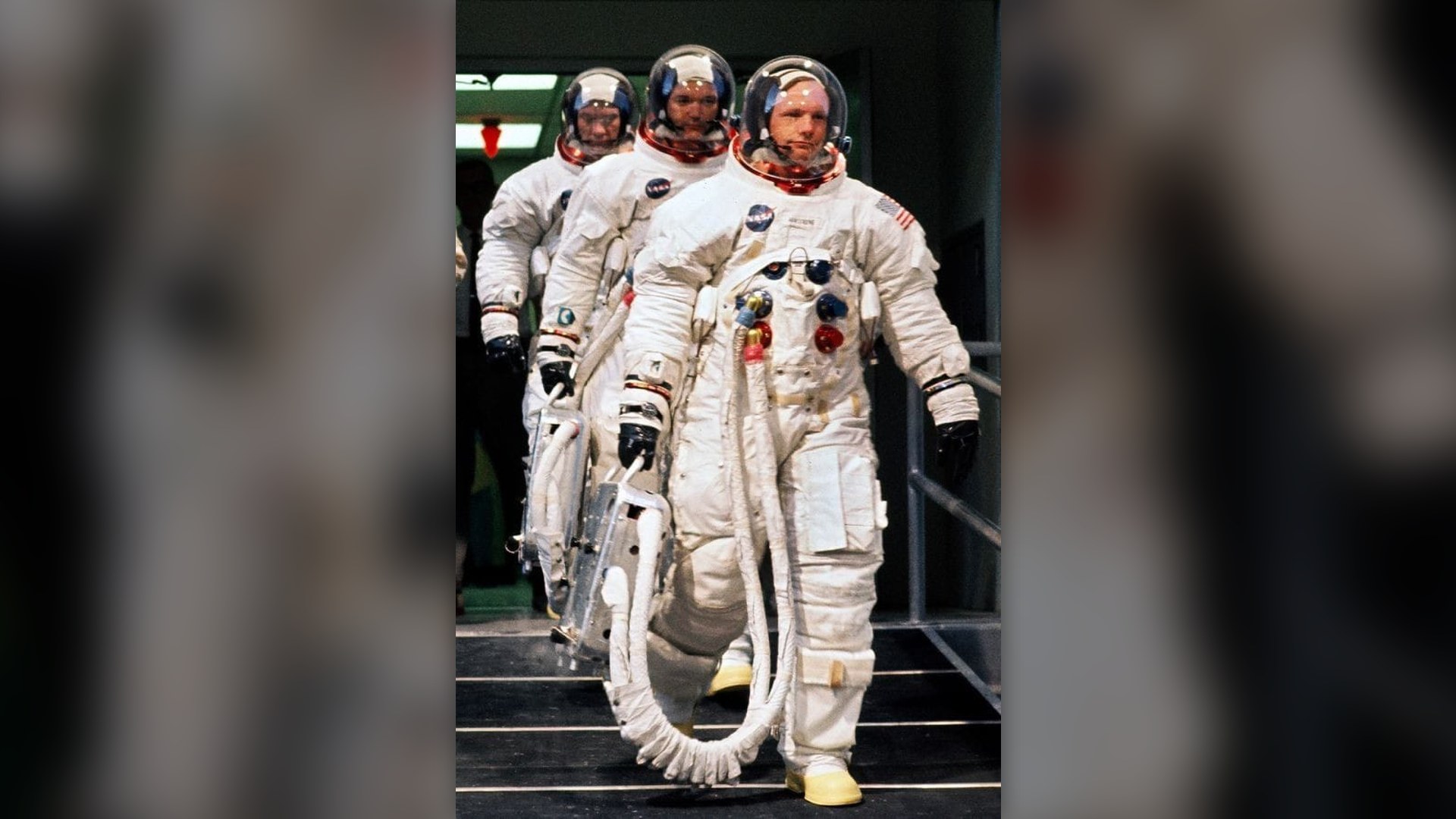
18. Apollo 11 Crew Walkout In Pressure Suits
Carrying portable air conditioners that kept their A7L pressure suits cool on the humid Florida morning, the Apollo 11 prime crew walked out of the Manned Spacecraft Operations Building toward the astrovan. Technicians checked every seal hours before ignition.
©Wikimedia / NASA
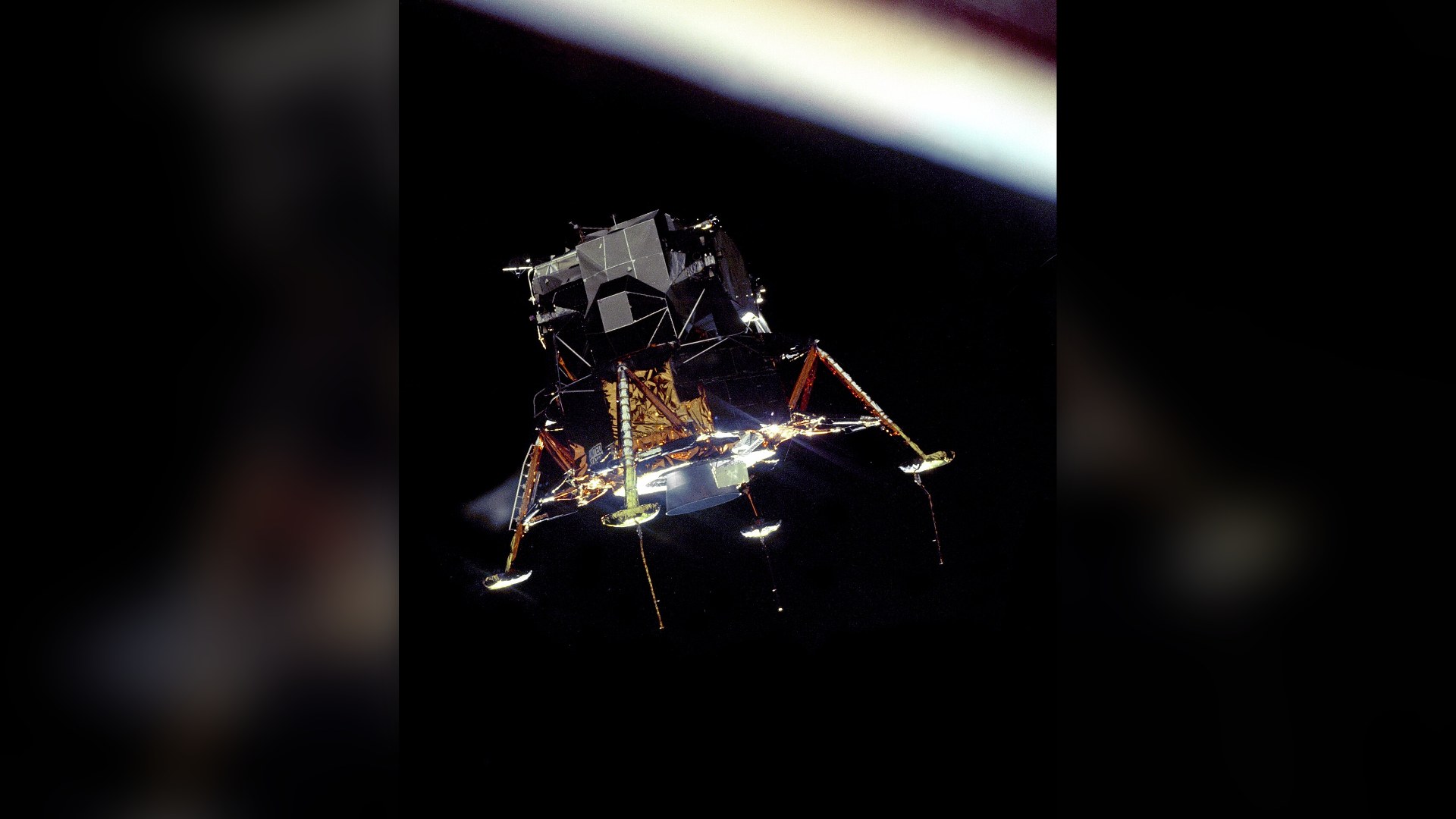
17. Lunar Module Eagle In Orbit Above The Moon
Once Armstrong and Aldrin separated Eagle from Command Module Columbia, Collins piloted Columbia around the lander to inspect its four extended landing legs. Contact probes hung beneath three footpads to signal touchdown on the dusty plain below.
©Wikimedia / NASA Michael Collins
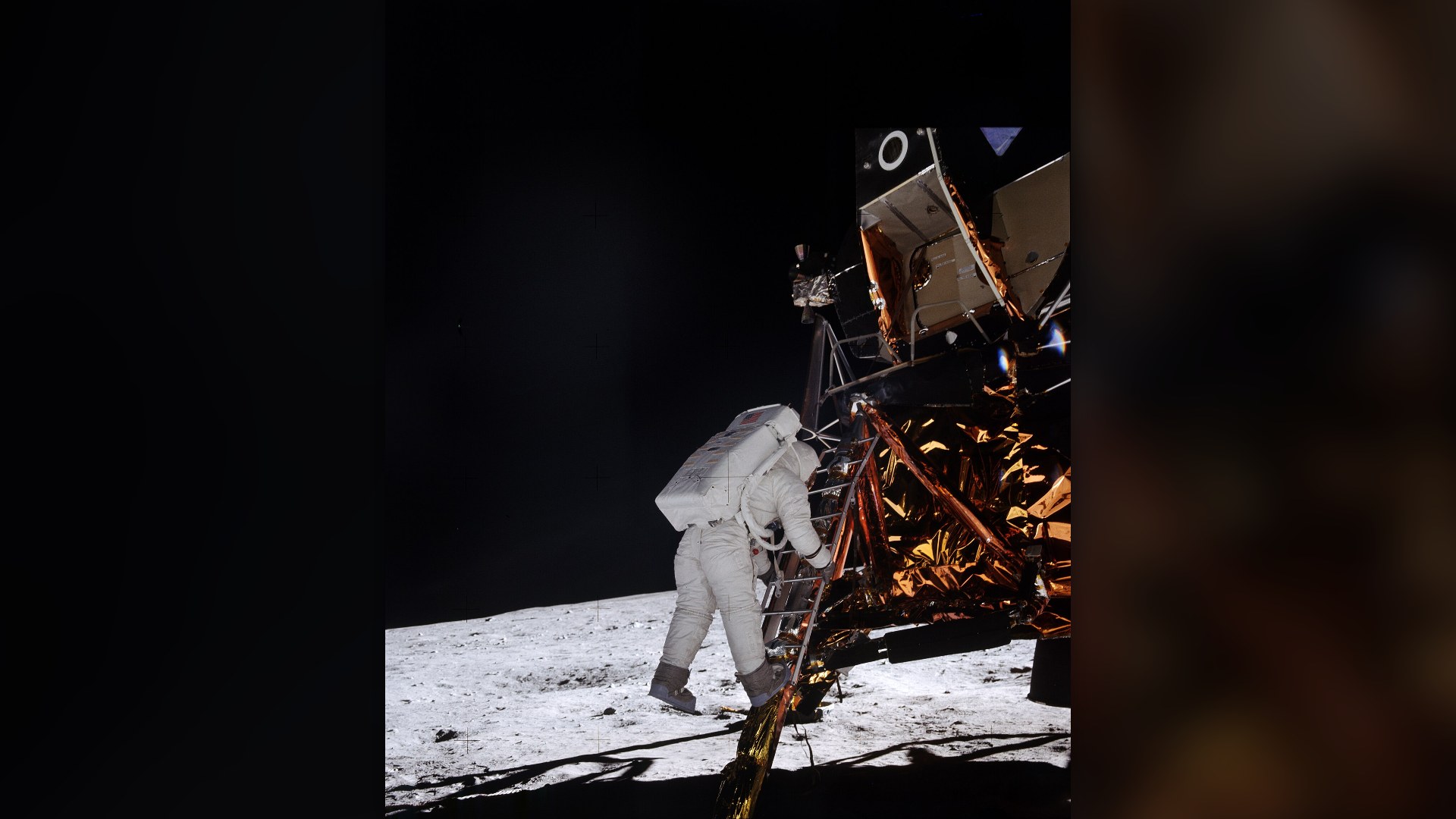
16. Buzz Aldrin Descending The Eagle Ladder
Armstrong stood beside Tranquility Base with a chest-mounted Hasselblad camera as Aldrin climbed out of Eagle's forward hatch on July 20, 1969. Because the life-support backpack blocked his view downward, Armstrong talked Aldrin onto the landing pad.
©Wikimedia / Neil A. Armstrong
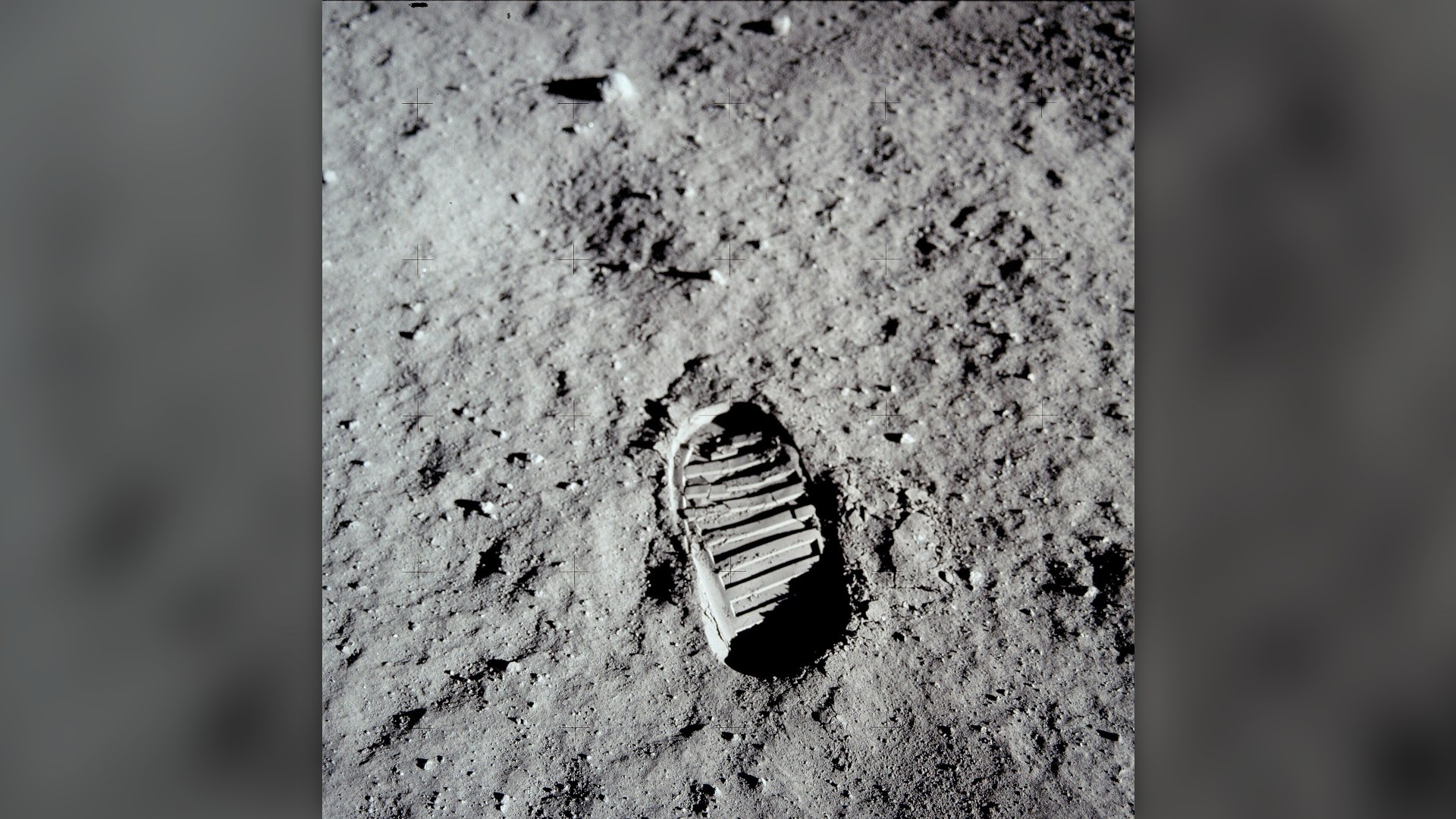
15. First Human Bootprint In Lunar Regolith
Taken about an hour into the Apollo 11 moonwalk, frame AS11-40-5877 was a deliberate soil-mechanics experiment rather than a casual souvenir. With no wind or rain on the Moon, astronaut bootprints from 1969 remain undisturbed on the Sea of Tranquility.
©Wikimedia / NASA / Buzz Aldrin
Advertisement
Swipe or tap ▶ to resume the countdown.
14. Neil Armstrong Inside Eagle After The Moonwalk
Only a handful of clear photos exist of Neil Armstrong on the lunar surface because he carried the primary Hasselblad camera. After they climbed back into Eagle and removed their helmets, Buzz Aldrin snapped this rare portrait of his commander.
©Wikimedia / NASA / Edwin E. Aldrin, Jr
13. Eagle Ascent Stage Rising Past Earth
On July 21, 1969, Armstrong and Aldrin fired Eagle's ascent engine off the descent stage left behind at Tranquility Base. Looking through Columbia's window, Michael Collins framed every human being except himself inside that single lunar-orbit shot.
©Wikimedia / Michael Collins
12. Houston Mission Control After Splashdown
Inside Building 30 at Houston's Manned Spacecraft Center, flight directors and NASA officials cheered once Apollo 11 splashed down safely in the Pacific Ocean. The control room had guided the crew through guidance alarms, low fuel warnings, and reentry.
©Wikimedia / NASA
11. Apollo 11 Crew Inside Quarantine On USS Hornet
Fearing unknown lunar microbes, NASA placed the Apollo 11 astronauts inside a converted Airstream trailer called the Mobile Quarantine Facility aboard the aircraft carrier USS Hornet. They stayed isolated until August 10, 1969, after tests cleared them.
©Wikimedia / NASA
Advertisement
Swipe or tap ▶ to resume the countdown.
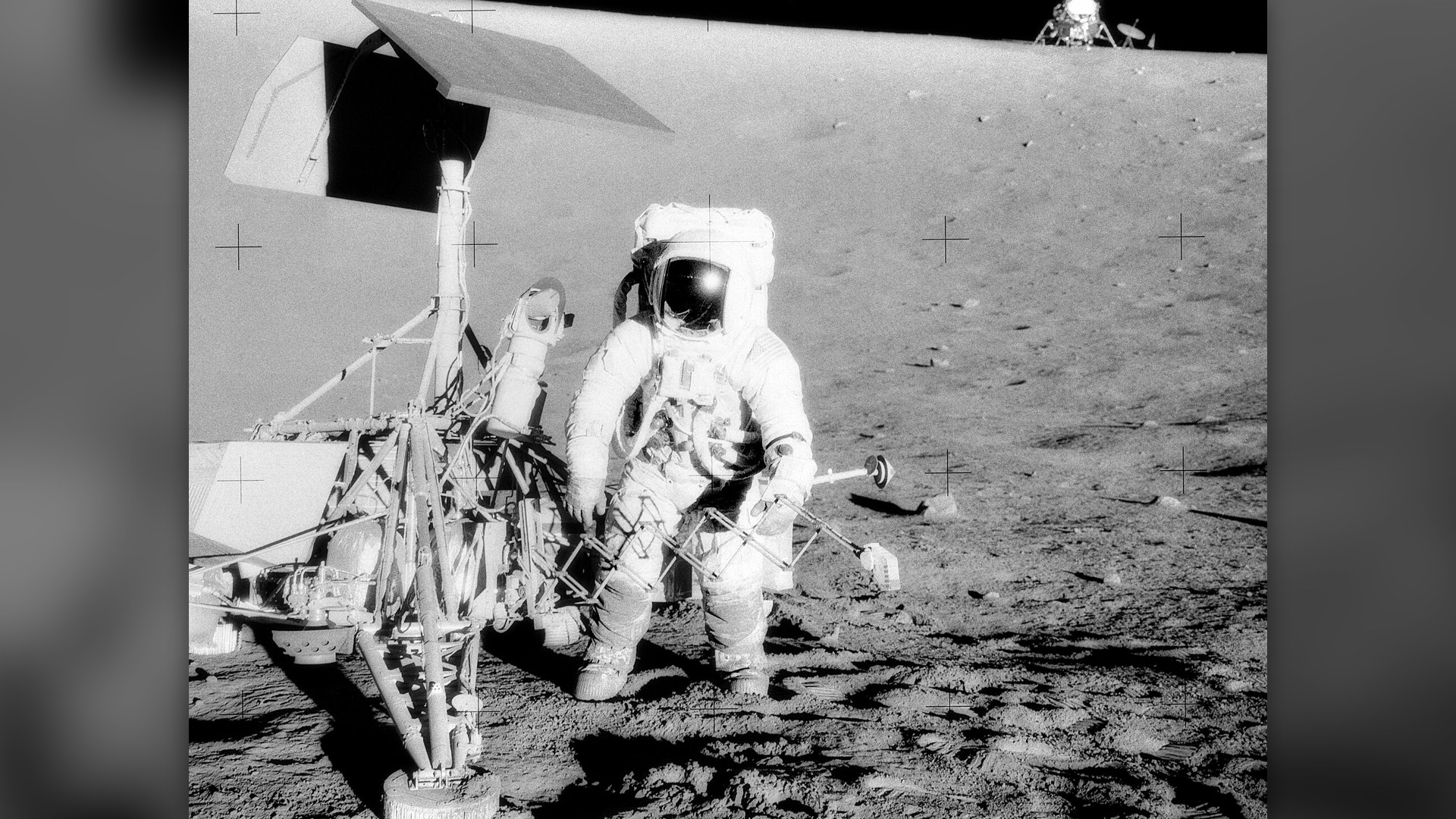
10. Pete Conrad Inspecting Surveyor 3 On The Moon
On November 19, 1969, commander Pete Conrad and lunar module pilot Alan Bean touched down Intrepid just 163 meters from the robotic Surveyor 3 lander in the Ocean of Storms. Conrad removed Surveyor's TV camera so scientists could study lunar weathering.
©Wikimedia / NASA, Alan L. Bean
9. Alan Bean Holding A Lunar Soil Container
During Apollo 12's second moonwalk, Alan Bean held a Special Environmental Sample Container packed with lunar regolith. You can spot Pete Conrad holding his Hasselblad camera and the long shadow of the astronauts in Bean's gold-coated visor.
©Wikimedia / NASA/Charles Conrad
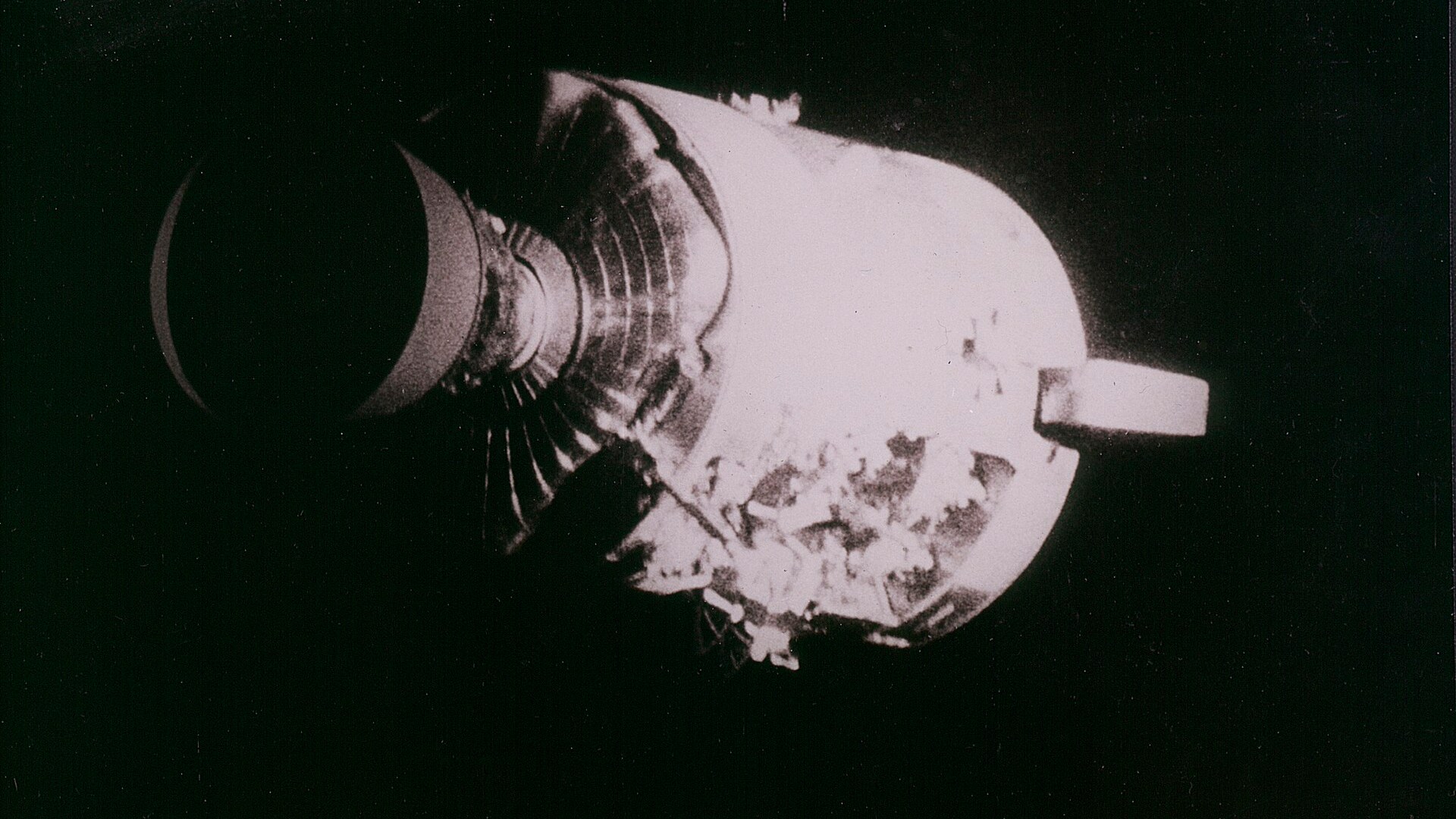
8. Apollo 13 Ruptured Service Module
On April 17, 1970, hours before splashdown, the Apollo 13 crew jettisoned their Service Module and finally saw what the oxygen tank explosion had done. An entire outer panel was ripped away, exposing tangled wiring and crushed fuel-cell bays.
©Wikimedia / NASA Marshall Space Flight Center
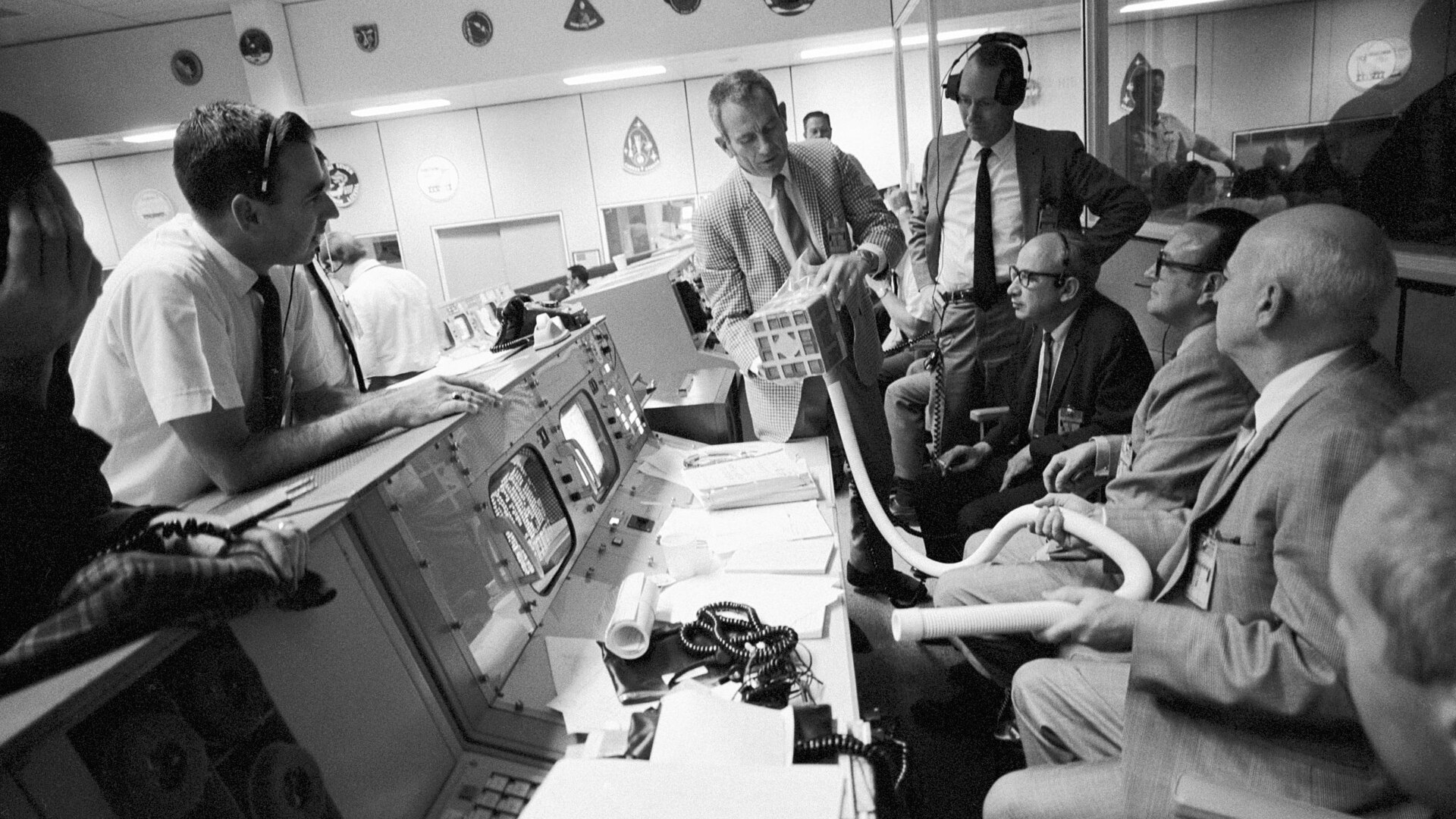
7. Apollo 13 Square To-Round Air Scrubber Fix
Square lithium hydroxide canisters from Command Module Odyssey did not fit the round air scrubbers inside Lunar Module Aquarius. Engineers in Houston built and tested this makeshift adapter called the mailbox using only materials the astronauts carried onboard.
©Wikimedia / NASA
Advertisement
Swipe or tap ▶ to resume the countdown.
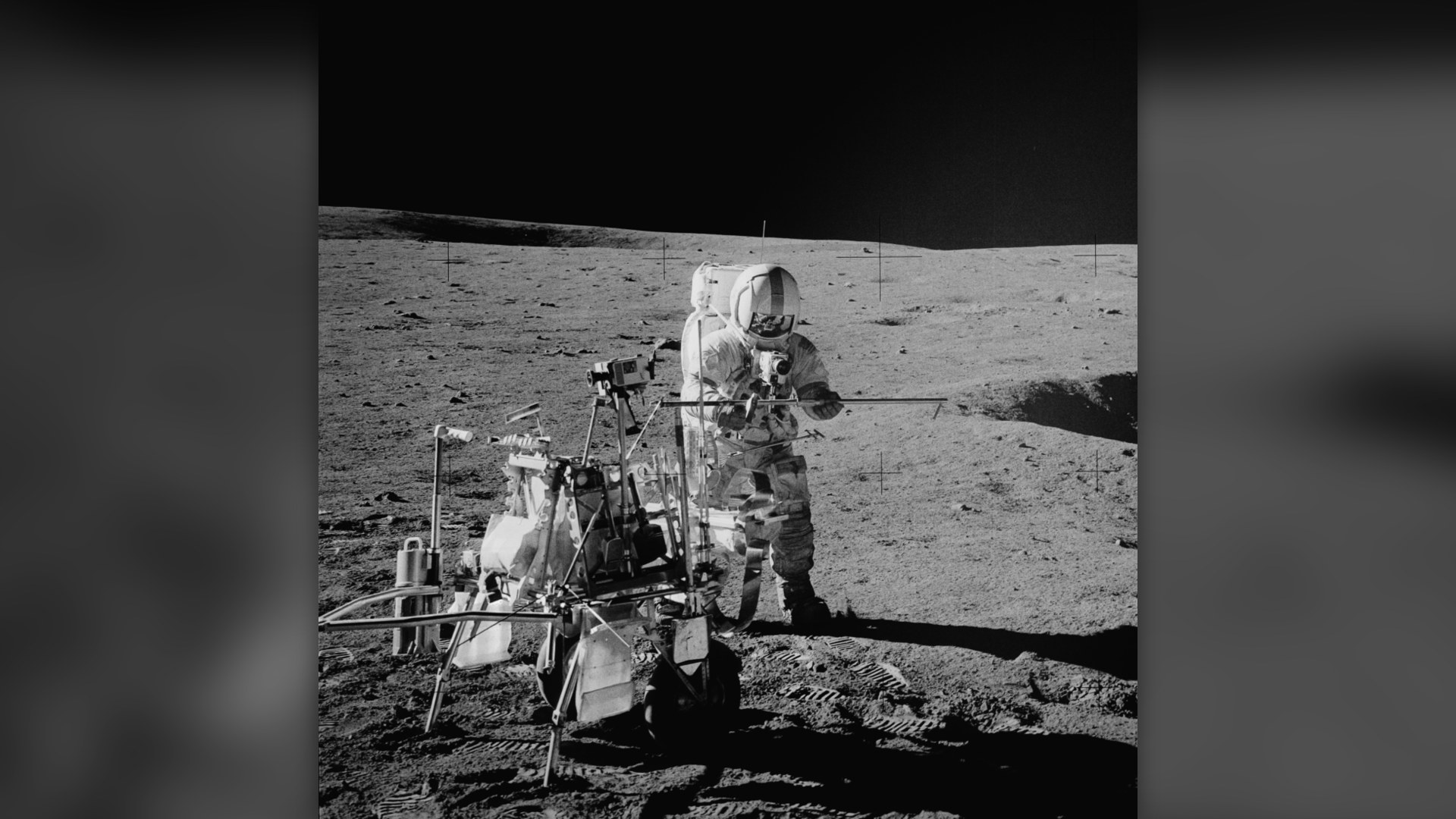
6. Apollo 14 Rickshaw Hauling Gear At Fra Mauro
Before NASA had an electric lunar rover, Apollo 14 tested a hand-pulled Modularized Equipment Transporter in February 1971. Carrying cameras, core tubes, and rock bags up the slopes toward Cone Crater, the two-wheeled cart helped double sample weight.
©Wikimedia / NASA/GSFC/Arizona State University
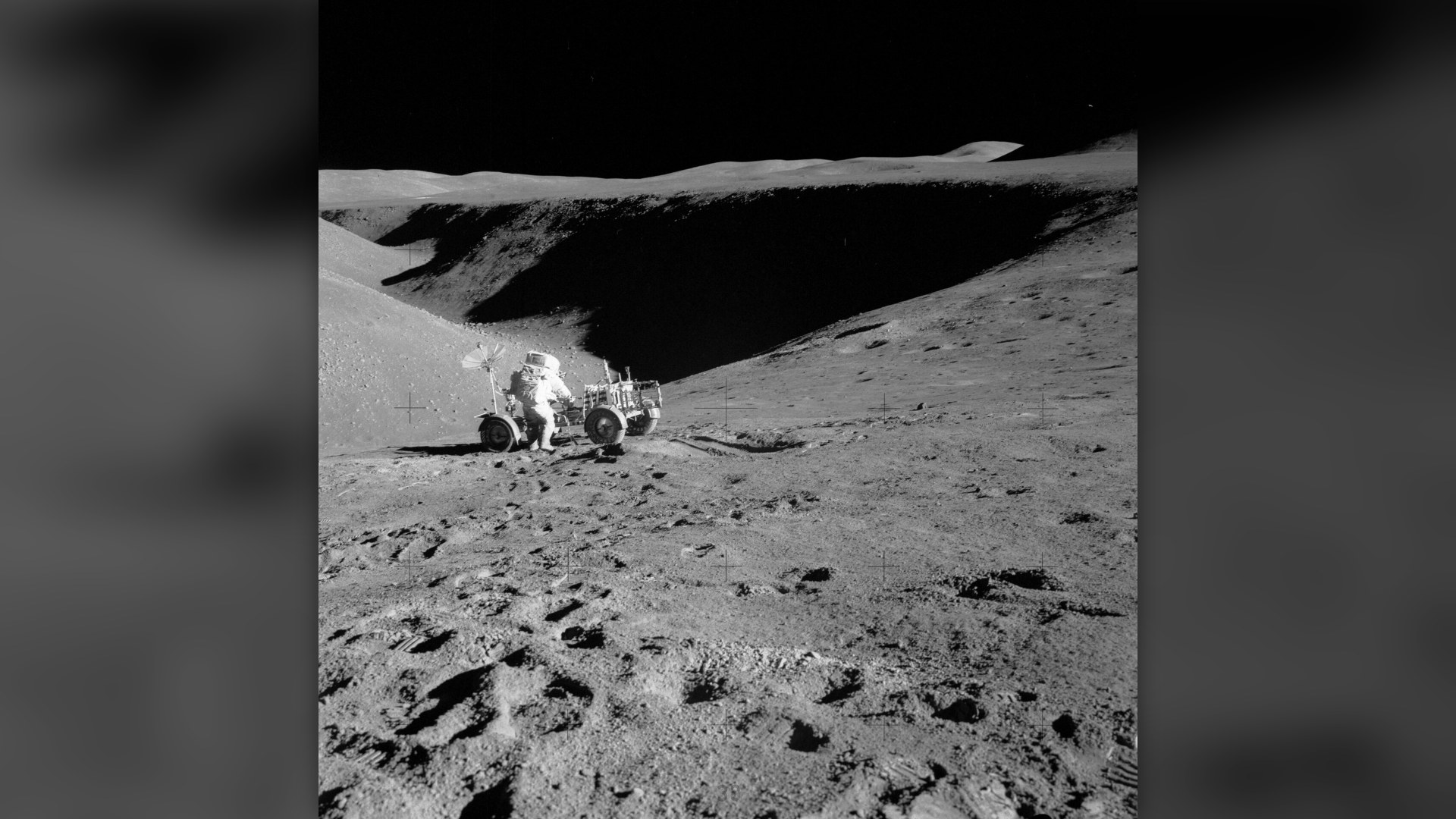
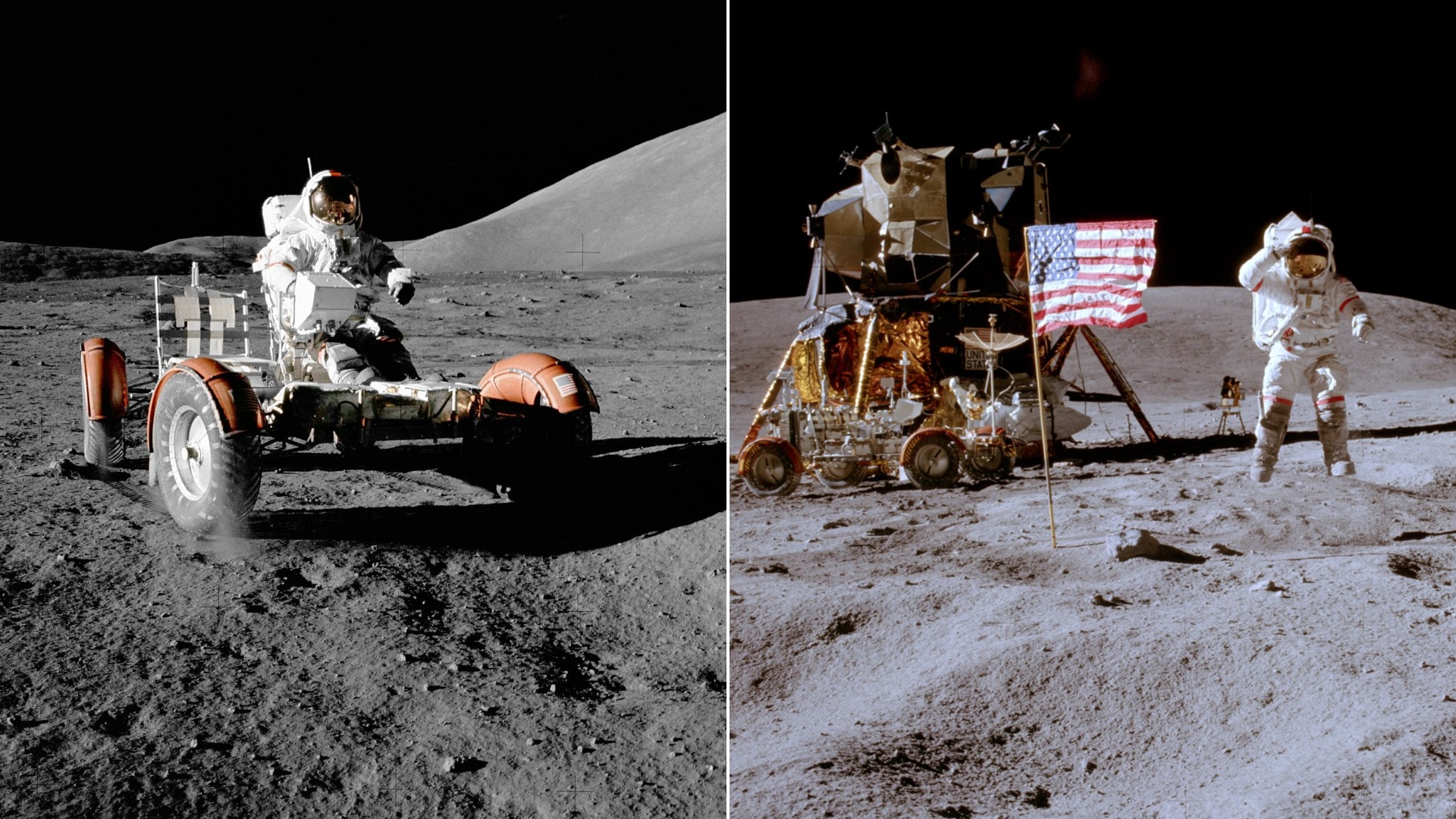
5. David Scott And The Rover At Hadley Rille
Folded inside the Lunar Module's quadrant bay, the 210-kilogram battery-powered buggy carried David Scott and Jim Irwin 27.9 kilometers across Hadley-Apennine. Driving up to the rim of Hadley Rille let them photograph layered bedrock for the first time.
©Wikimedia / NASA
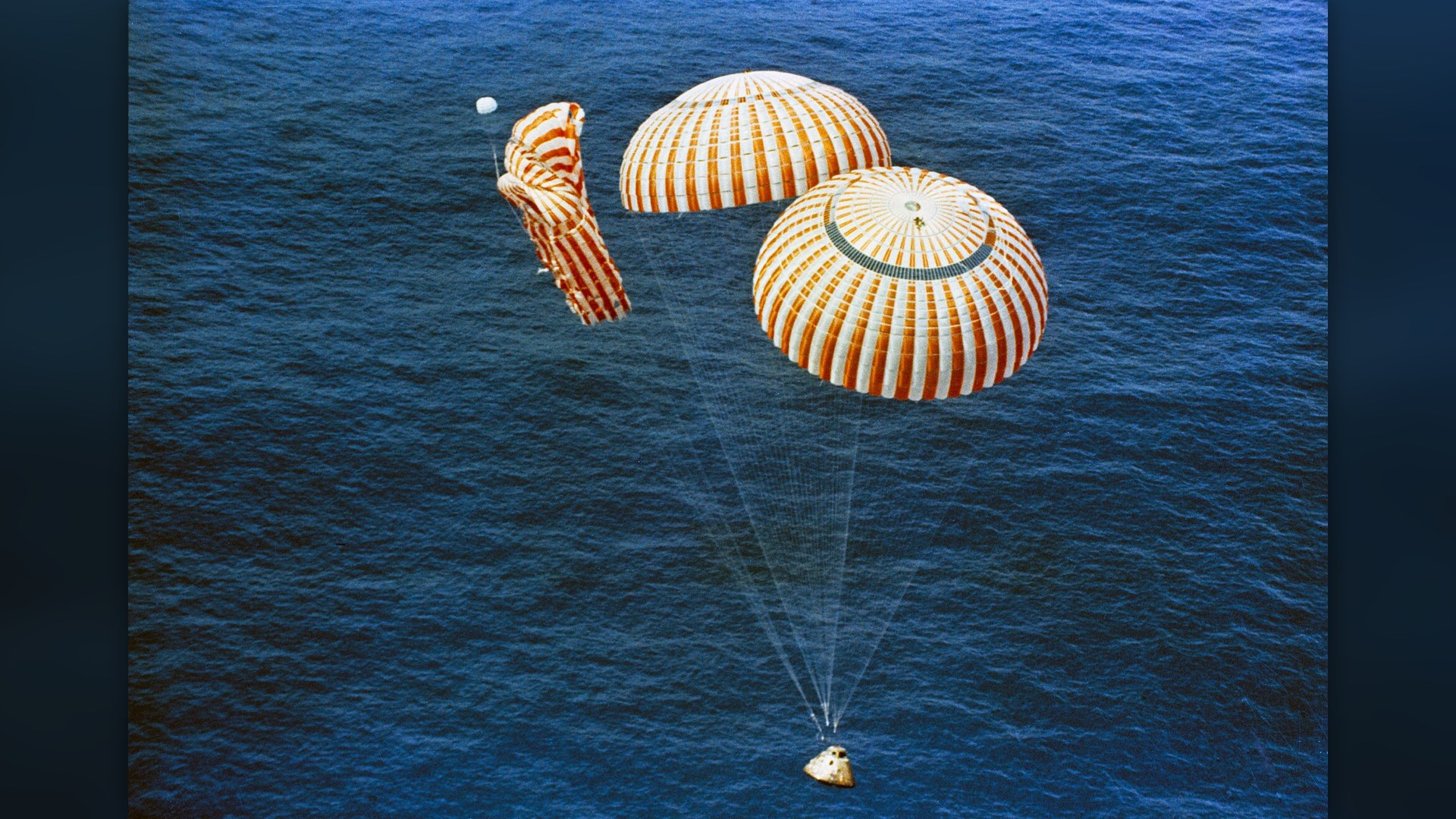
4. Apollo 15 Splashdown On Two Main Parachutes
On August 7, 1971, one of Endeavour's three main parachutes failed to inflate after jettisoned reaction-control fuel struck it. Because NASA designed the capsule to survive on two chutes, David Scott, Alfred Worden, and James Irwin landed safely near Hawaii.
©Wikimedia / NASA
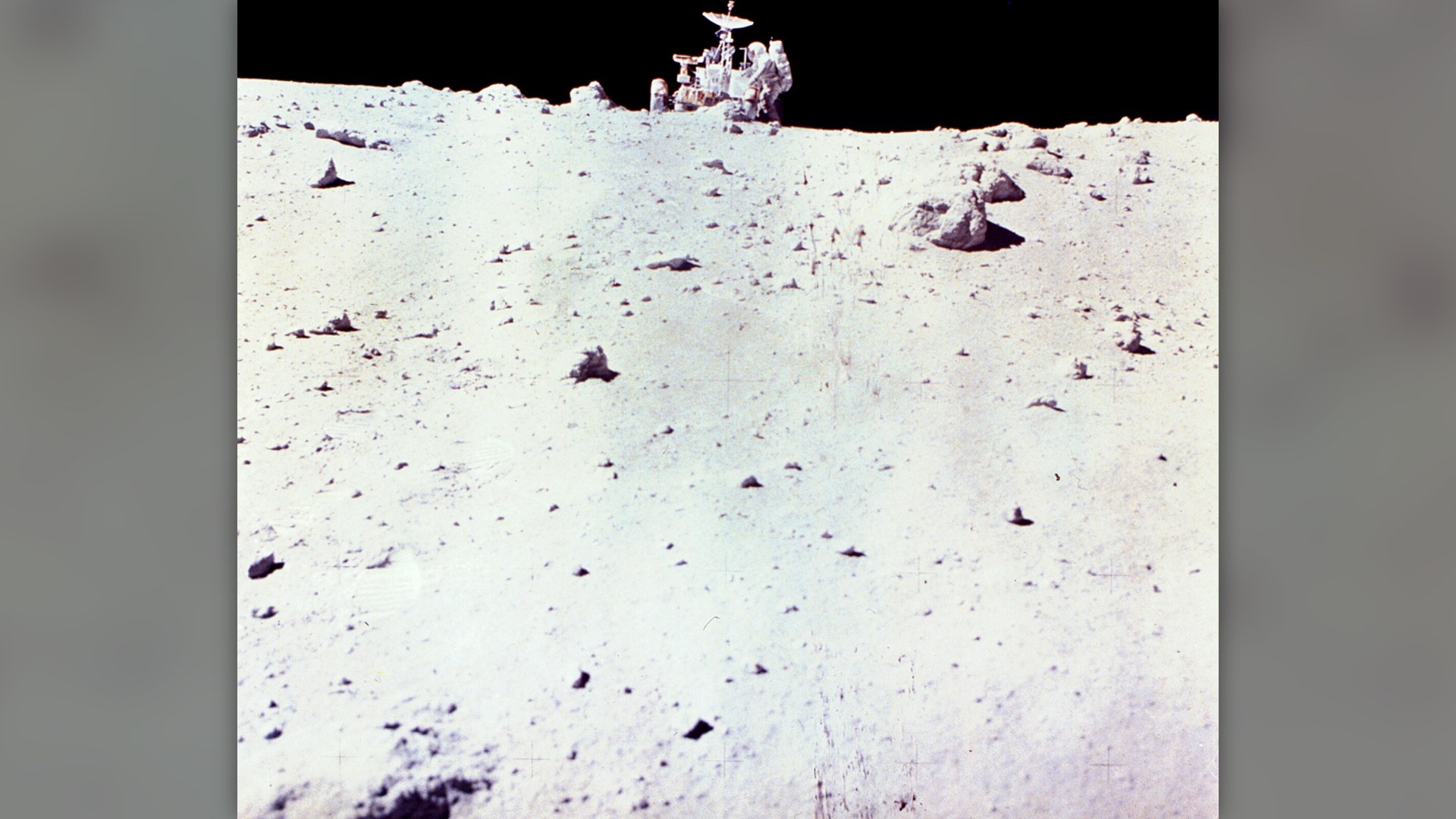
3. Charles Duke Driving The Apollo 16 Lunar Rover
In April 1972, Apollo 16 became the only mission to land in the rugged lunar highlands. While John Young set an unofficial lunar speed record of 18 kilometers per hour on the rover, Charles Duke collected 95 kilograms of highland rock samples.
©Wikimedia / NASA
Advertisement
Swipe or tap ▶ to resume the countdown.
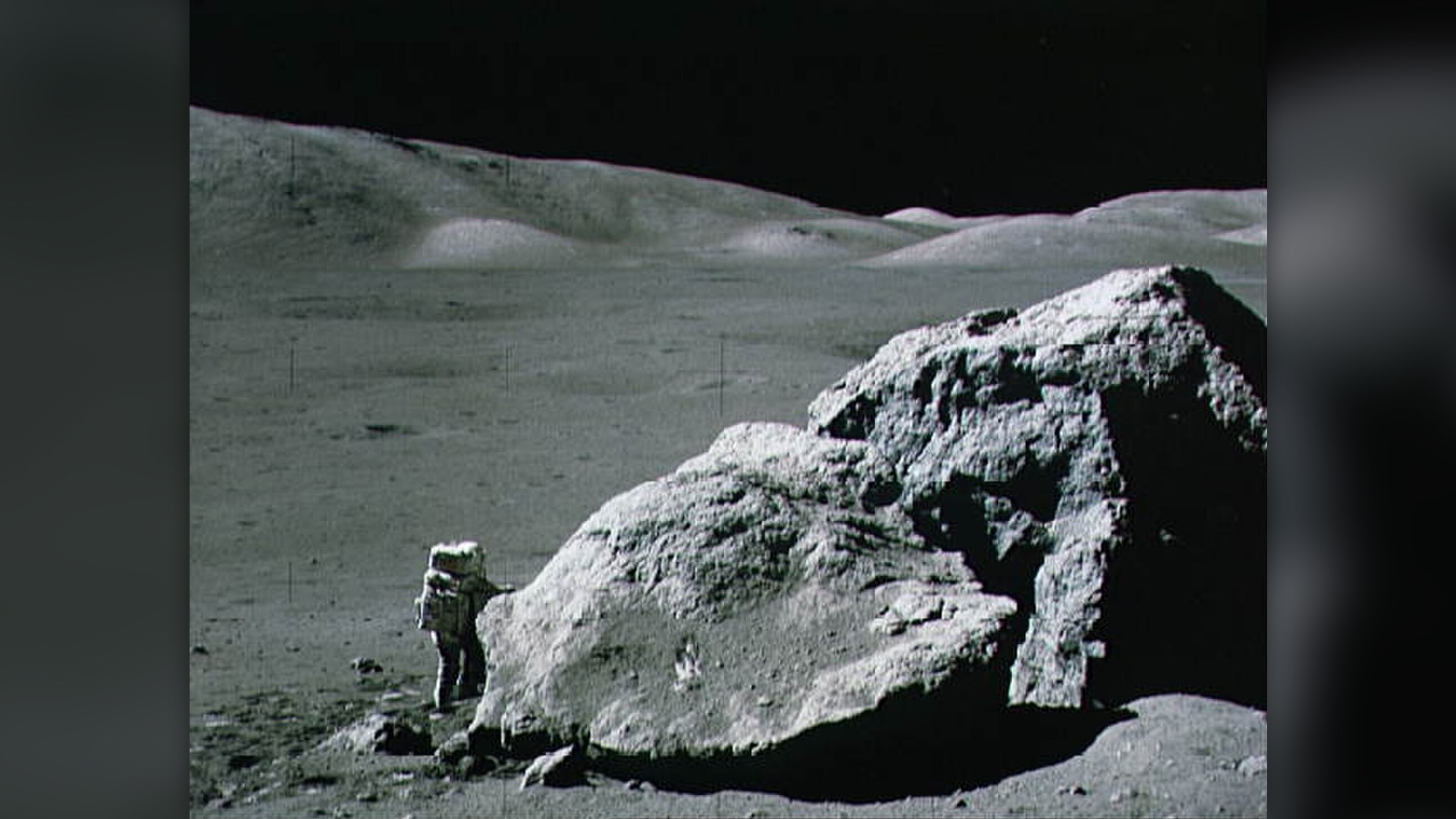
2. Geologist Harrison Schmitt At Station 6 Boulder
Standing beside a split house-sized boulder in the Taurus-Littrow valley on December 13, 1972, Harrison Schmitt chipped away samples with a geologist's hammer. Together with commander Gene Cernan, he completed the longest lunar surface stay at 75 hours.
©Wikimedia / NASA
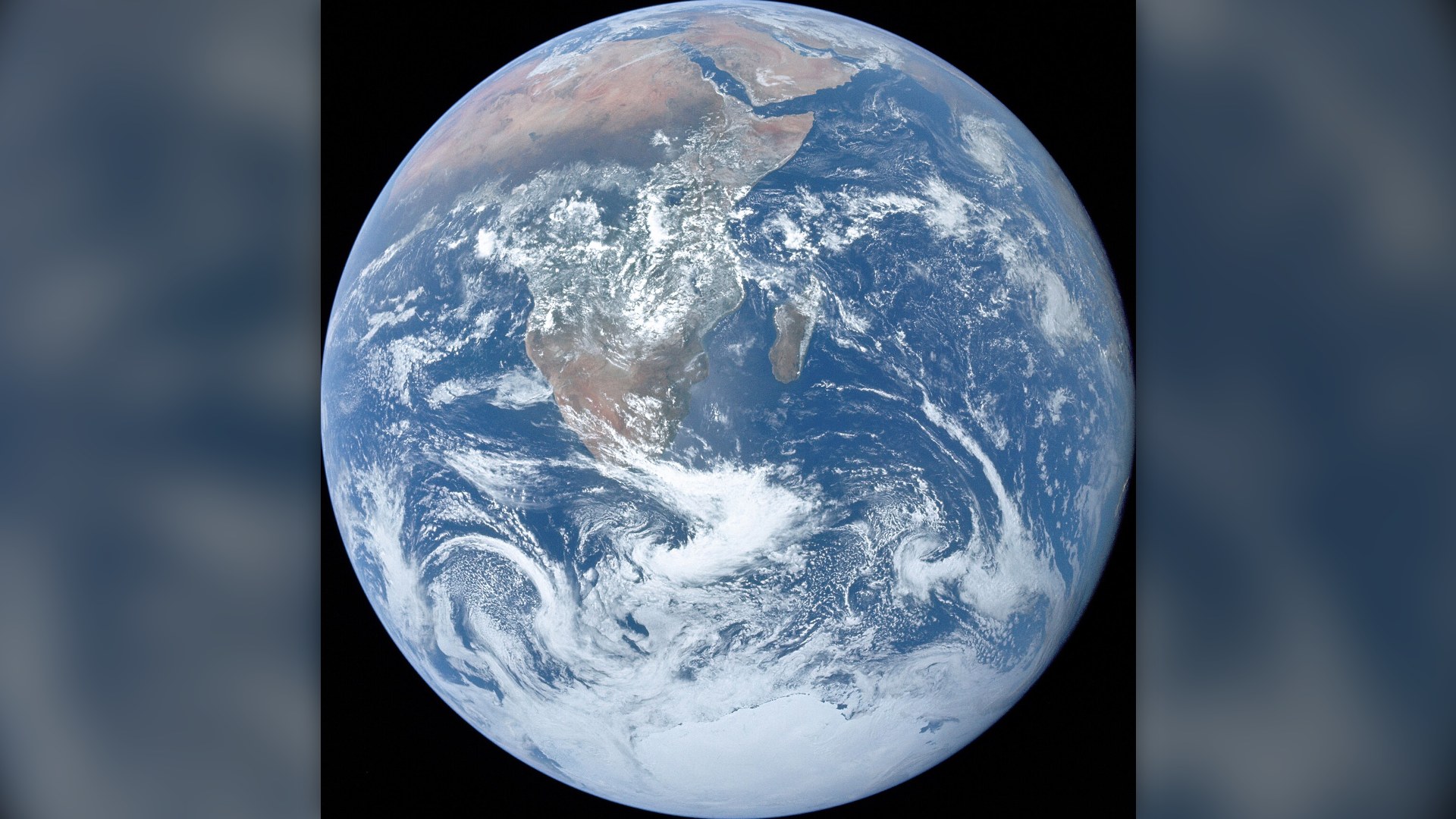
1. The Blue Marble Earth Photograph From Apollo 17
Taken on December 7, 1972, roughly five hours after Apollo 17 launched toward the Moon, AS17-148-22727 shows Africa, the Arabian Peninsula, and Antarctica's ice cap under bright sunlight. It remains one of the most widely reproduced photographs in history.
©Wikimedia / NASA/Apollo 17 crew; taken by either Harrison Sc
Advertisement
You've reached the end of the story. Thanks for reading!

24 Historic Apollo Photos from Nasa's Race to the Moon
NASA's Apollo missions between 1967 and 1972 produced thousands of Hasselblad and pad photographs, from Saturn V rocket tests in Florida to crewed walks across the lunar surface. Based on NASA archives, the National Air and Space Museum and Wikimedia Commons records, these 24 shots trace the Moon race.
All 25 Entries in this Story
25. Saturn V Rollout On The Crawler-Transporter
On May 20, 1969, NASA's crawler-transporter carried the fully stacked Apollo 11 Saturn V and its mobile launch tower 5.6 kilometers from the Vehicle Assembly Building. The 2,700-metric-ton tracked vehicle took roughly six hours to reach Launch Complex 39A.

24. Apollo 4 First Saturn V Launch
Apollo 4 lifted off on November 9, 1967, marking the debut of the three-stage Saturn V rocket and the first launch from Kennedy Space Center's Pad 39A. Acoustic shockwaves shook launch viewing stands miles away as all five F-1 engines ignited together.

23. Apollo 7 Crew In Earth Orbit
Launched in October 1968 aboard a Saturn IB, Apollo 7 spent nearly 11 days in Earth orbit testing the redesigned Block II Command and Service Module. The mission also delivered the first live television broadcasts from an American crewed spacecraft.

22. Apollo 8 Earthrise Over The Lunar Horizon
During Apollo 8's fourth orbit on December 24, 1968, lunar module pilot Bill Anders grabbed a Hasselblad loaded with 70mm color film as Earth emerged beyond the lunar rim. Frank Borman, Jim Lovell, and Anders became the first humans to see the Moon's far side.

21. Apollo 9 Lunar Module Spider In Orbit
Command Module pilot David Scott photographed the Lunar Module Spider from Gumdrop on March 7, 1969. Rusty Schweickart and Jim McDivitt flew Spider more than 180 kilometers away in Earth orbit to verify the lander's ascent and descent engines before any Moon attempt.

20. Apollo 10 Lunar Module Snoopy Over The Moon
In May 1969, Apollo 10 rehearsed every step of a lunar landing except touchdown. After descending over the Sea of Tranquility in Lunar Module Snoopy, Stafford and Cernan fired the ascent stage to rejoin John Young in Command Module Charlie Brown.

19. Apollo 11 Saturn V Liftoff At Pad 39A
Burning roughly 20 metric tons of fuel per second, the 111-meter Saturn V pushed Neil Armstrong, Buzz Aldrin, and Michael Collins off Pad 39A in front of an estimated million spectators along Florida's Space Coast. The rocket reached Earth orbit in under 12 minutes.

18. Apollo 11 Crew Walkout In Pressure Suits
Carrying portable air conditioners that kept their A7L pressure suits cool on the humid Florida morning, the Apollo 11 prime crew walked out of the Manned Spacecraft Operations Building toward the astrovan. Technicians checked every seal hours before ignition.

17. Lunar Module Eagle In Orbit Above The Moon
Once Armstrong and Aldrin separated Eagle from Command Module Columbia, Collins piloted Columbia around the lander to inspect its four extended landing legs. Contact probes hung beneath three footpads to signal touchdown on the dusty plain below.

16. Buzz Aldrin Descending The Eagle Ladder
Armstrong stood beside Tranquility Base with a chest-mounted Hasselblad camera as Aldrin climbed out of Eagle's forward hatch on July 20, 1969. Because the life-support backpack blocked his view downward, Armstrong talked Aldrin onto the landing pad.

15. First Human Bootprint In Lunar Regolith
Taken about an hour into the Apollo 11 moonwalk, frame AS11-40-5877 was a deliberate soil-mechanics experiment rather than a casual souvenir. With no wind or rain on the Moon, astronaut bootprints from 1969 remain undisturbed on the Sea of Tranquility.

14. Neil Armstrong Inside Eagle After The Moonwalk
Only a handful of clear photos exist of Neil Armstrong on the lunar surface because he carried the primary Hasselblad camera. After they climbed back into Eagle and removed their helmets, Buzz Aldrin snapped this rare portrait of his commander.

13. Eagle Ascent Stage Rising Past Earth
On July 21, 1969, Armstrong and Aldrin fired Eagle's ascent engine off the descent stage left behind at Tranquility Base. Looking through Columbia's window, Michael Collins framed every human being except himself inside that single lunar-orbit shot.

12. Houston Mission Control After Splashdown
Inside Building 30 at Houston's Manned Spacecraft Center, flight directors and NASA officials cheered once Apollo 11 splashed down safely in the Pacific Ocean. The control room had guided the crew through guidance alarms, low fuel warnings, and reentry.

11. Apollo 11 Crew Inside Quarantine On USS Hornet
Fearing unknown lunar microbes, NASA placed the Apollo 11 astronauts inside a converted Airstream trailer called the Mobile Quarantine Facility aboard the aircraft carrier USS Hornet. They stayed isolated until August 10, 1969, after tests cleared them.

10. Pete Conrad Inspecting Surveyor 3 On The Moon
On November 19, 1969, commander Pete Conrad and lunar module pilot Alan Bean touched down Intrepid just 163 meters from the robotic Surveyor 3 lander in the Ocean of Storms. Conrad removed Surveyor's TV camera so scientists could study lunar weathering.

9. Alan Bean Holding A Lunar Soil Container
During Apollo 12's second moonwalk, Alan Bean held a Special Environmental Sample Container packed with lunar regolith. You can spot Pete Conrad holding his Hasselblad camera and the long shadow of the astronauts in Bean's gold-coated visor.

8. Apollo 13 Ruptured Service Module
On April 17, 1970, hours before splashdown, the Apollo 13 crew jettisoned their Service Module and finally saw what the oxygen tank explosion had done. An entire outer panel was ripped away, exposing tangled wiring and crushed fuel-cell bays.

7. Apollo 13 Square To-Round Air Scrubber Fix
Square lithium hydroxide canisters from Command Module Odyssey did not fit the round air scrubbers inside Lunar Module Aquarius. Engineers in Houston built and tested this makeshift adapter called the mailbox using only materials the astronauts carried onboard.

6. Apollo 14 Rickshaw Hauling Gear At Fra Mauro
Before NASA had an electric lunar rover, Apollo 14 tested a hand-pulled Modularized Equipment Transporter in February 1971. Carrying cameras, core tubes, and rock bags up the slopes toward Cone Crater, the two-wheeled cart helped double sample weight.

5. David Scott And The Rover At Hadley Rille
Folded inside the Lunar Module's quadrant bay, the 210-kilogram battery-powered buggy carried David Scott and Jim Irwin 27.9 kilometers across Hadley-Apennine. Driving up to the rim of Hadley Rille let them photograph layered bedrock for the first time.

4. Apollo 15 Splashdown On Two Main Parachutes
On August 7, 1971, one of Endeavour's three main parachutes failed to inflate after jettisoned reaction-control fuel struck it. Because NASA designed the capsule to survive on two chutes, David Scott, Alfred Worden, and James Irwin landed safely near Hawaii.

3. Charles Duke Driving The Apollo 16 Lunar Rover
In April 1972, Apollo 16 became the only mission to land in the rugged lunar highlands. While John Young set an unofficial lunar speed record of 18 kilometers per hour on the rover, Charles Duke collected 95 kilograms of highland rock samples.

2. Geologist Harrison Schmitt At Station 6 Boulder
Standing beside a split house-sized boulder in the Taurus-Littrow valley on December 13, 1972, Harrison Schmitt chipped away samples with a geologist's hammer. Together with commander Gene Cernan, he completed the longest lunar surface stay at 75 hours.

1. The Blue Marble Earth Photograph From Apollo 17
Taken on December 7, 1972, roughly five hours after Apollo 17 launched toward the Moon, AS17-148-22727 shows Africa, the Arabian Peninsula, and Antarctica's ice cap under bright sunlight. It remains one of the most widely reproduced photographs in history.