Slideshow · Science
24 Historic Apollo Photos from Nasa's Race to the Moon
NASA's Apollo missions between 1967 and 1972 produced thousands of Hasselblad and pad photographs, from Saturn V rocket tests in Florida to crewed walks across the lunar surface. Based on NASA archives, the National Air and Space Museum and Wikimedia Commons records, these 24 shots trace the Moon race.
By Most Viral Today
12 min agoimage-first:space-apollo:2026-11-21:24-apollo-photos-that-put-you-inside-the-moon-race

From Saturn V Ignition to Lunar Dust Inside NASA's Apollo Archive 
24. Vehicle Assembly Building At Kennedy Space Center 
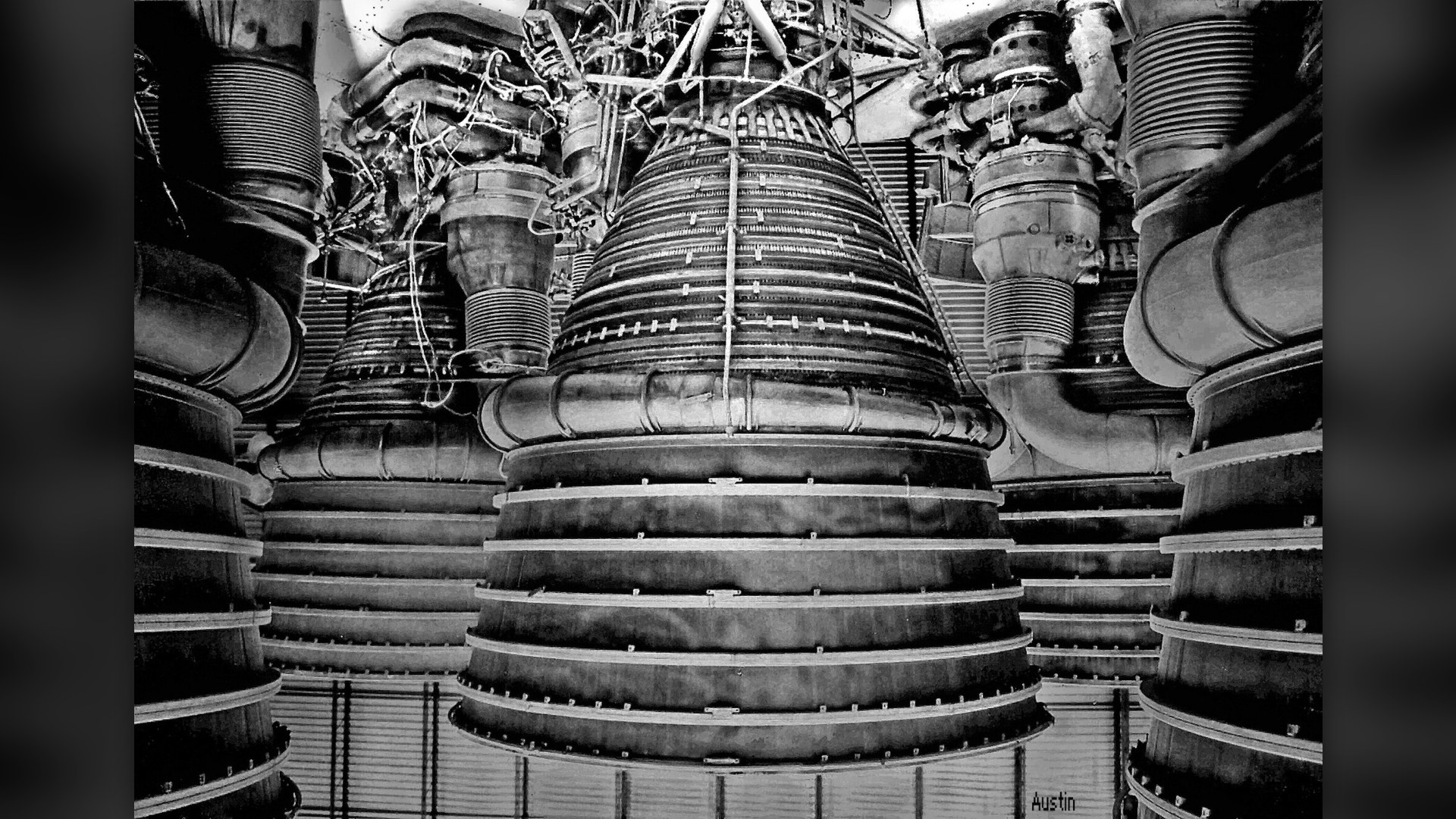
23. Five Rocketdyne F-1 Engines On Saturn V 
22. Apollo 1 Crew En Route To Launch Pad 34 - AdvertisementSwipe or tap ▶ to continue countdown

21. Apollo 7 Saturn IB Liftoff In October 1968 
20. Apollo 8 Earthrise Above The Lunar Horizon 
19. Apollo 9 Spider Lunar Module In Earth Orbit 
18. Apollo 10 Snoopy Lunar Module Approach - AdvertisementSwipe or tap ▶ to continue countdown

17. Apollo 11 Saturn V Liftoff From Pad 39A 
16. Houston Mission Control During Apollo 11 
15. Lunar Module Eagle Returning To Orbit 
14. First Footprints Left In Tranquility Base Dust - AdvertisementSwipe or tap ▶ to continue countdown

13. Neil Armstrong Inside Lunar Module Eagle 
12. Stainless Steel Apollo 11 Lunar Plaque 
11. USS Hornet Crew Recovering Apollo 11 Capsule 
10. Pete Conrad Inspecting Surveyor 3 On Apollo 12 - AdvertisementSwipe or tap ▶ to continue countdown

9. Apollo 13 Damaged Service Module After Blast 
8. Apollo 13 Crew Improvised Carbon Dioxide Scrubber 
7. Alan Shepard On The Moon During Apollo 14 
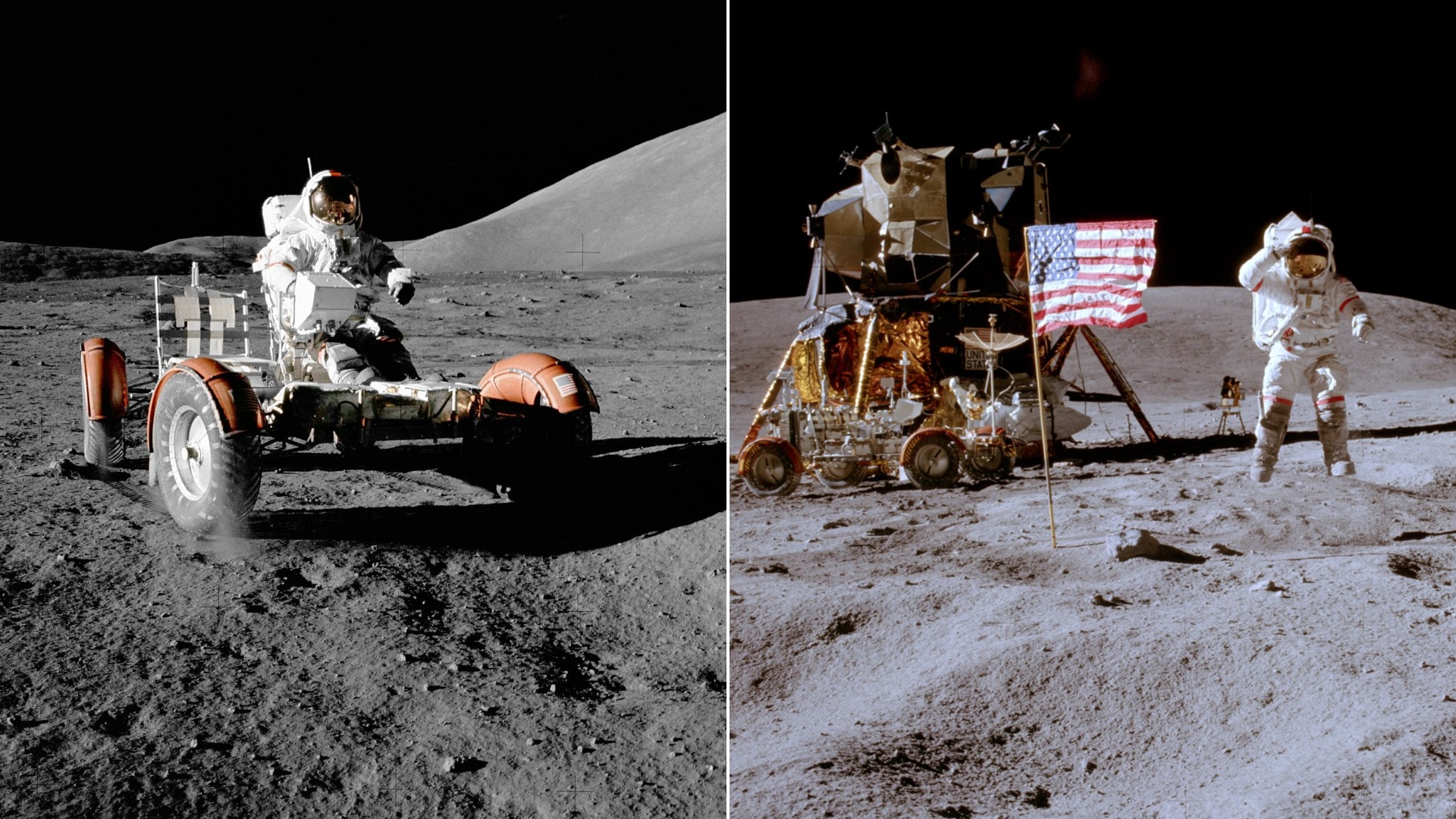
6. Apollo 15 Flag, Rover And Lander At Hadley - AdvertisementSwipe or tap ▶ to continue countdown

5. John Young Lunar Salute On Apollo 16 
4. Apollo 17 Blue Marble View Of Earth 
3. Geologist Harrison Schmitt At Split Rock 
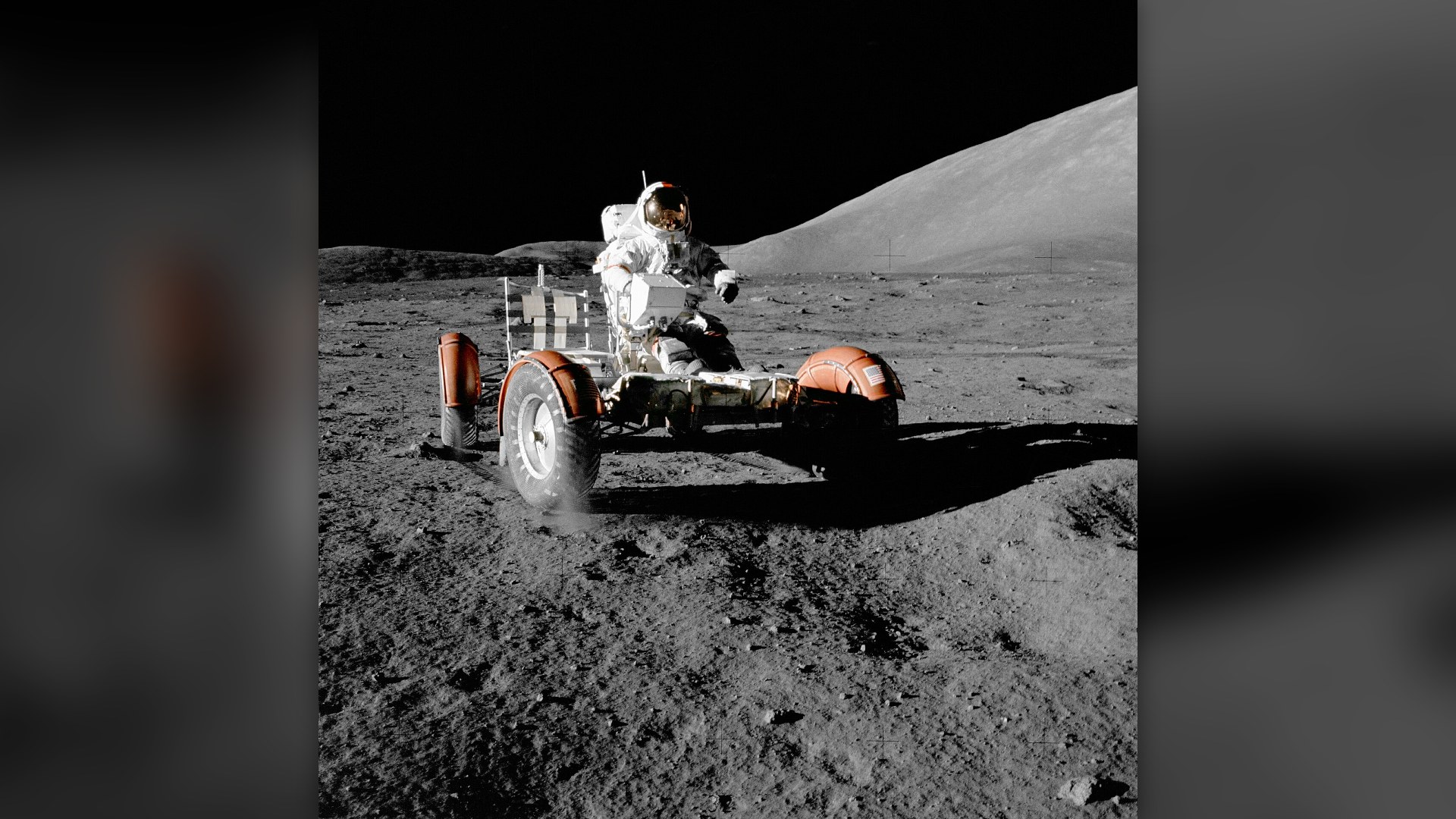
2. Eugene Cernan Driving The Apollo 17 Rover - AdvertisementSwipe or tap ▶ to continue countdown

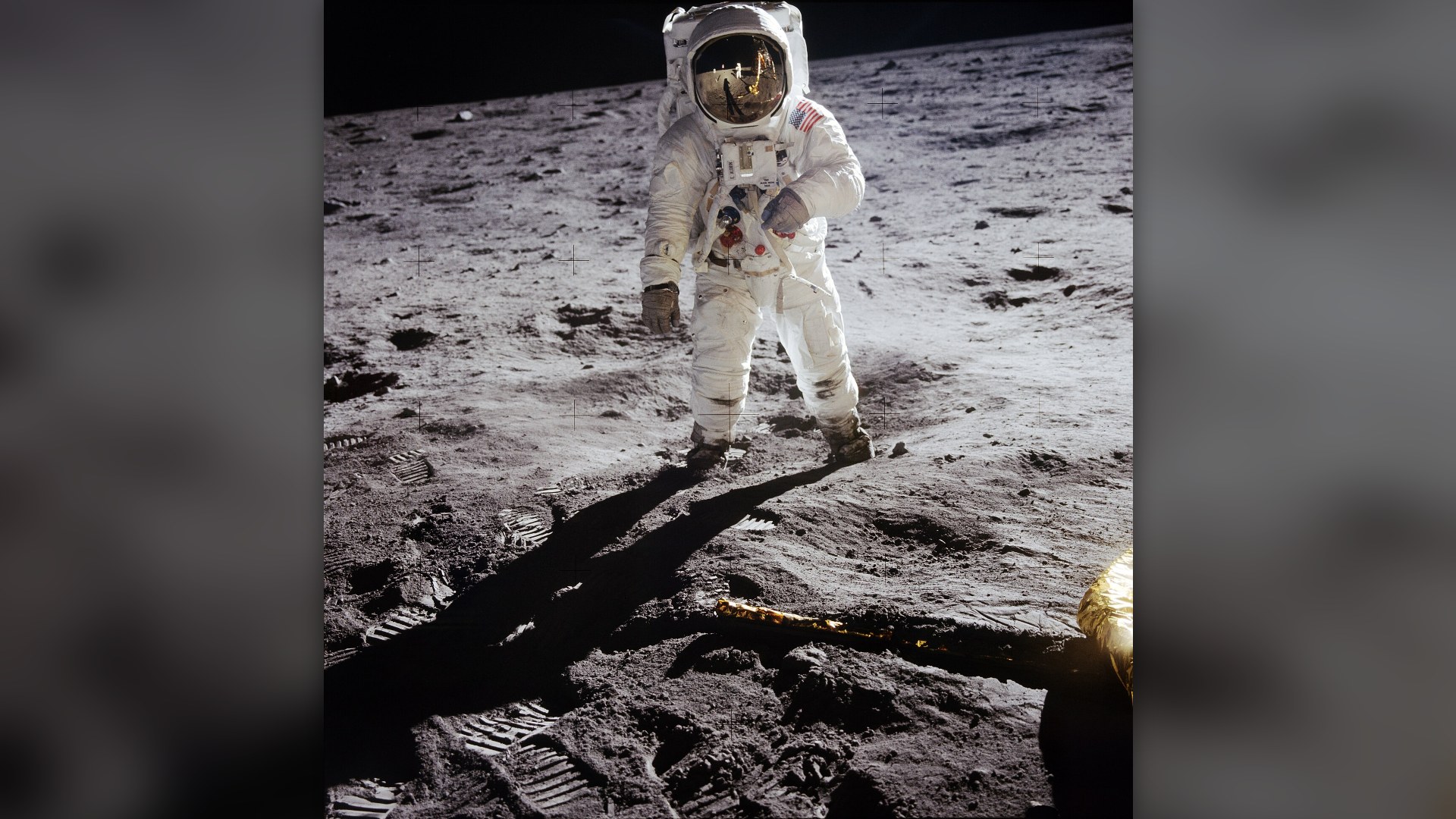
1. Buzz Aldrin And Armstrong In The Gold Visor - Advertisement🔥 UP NEXT IN THIS SERIES◫ 23 Slides

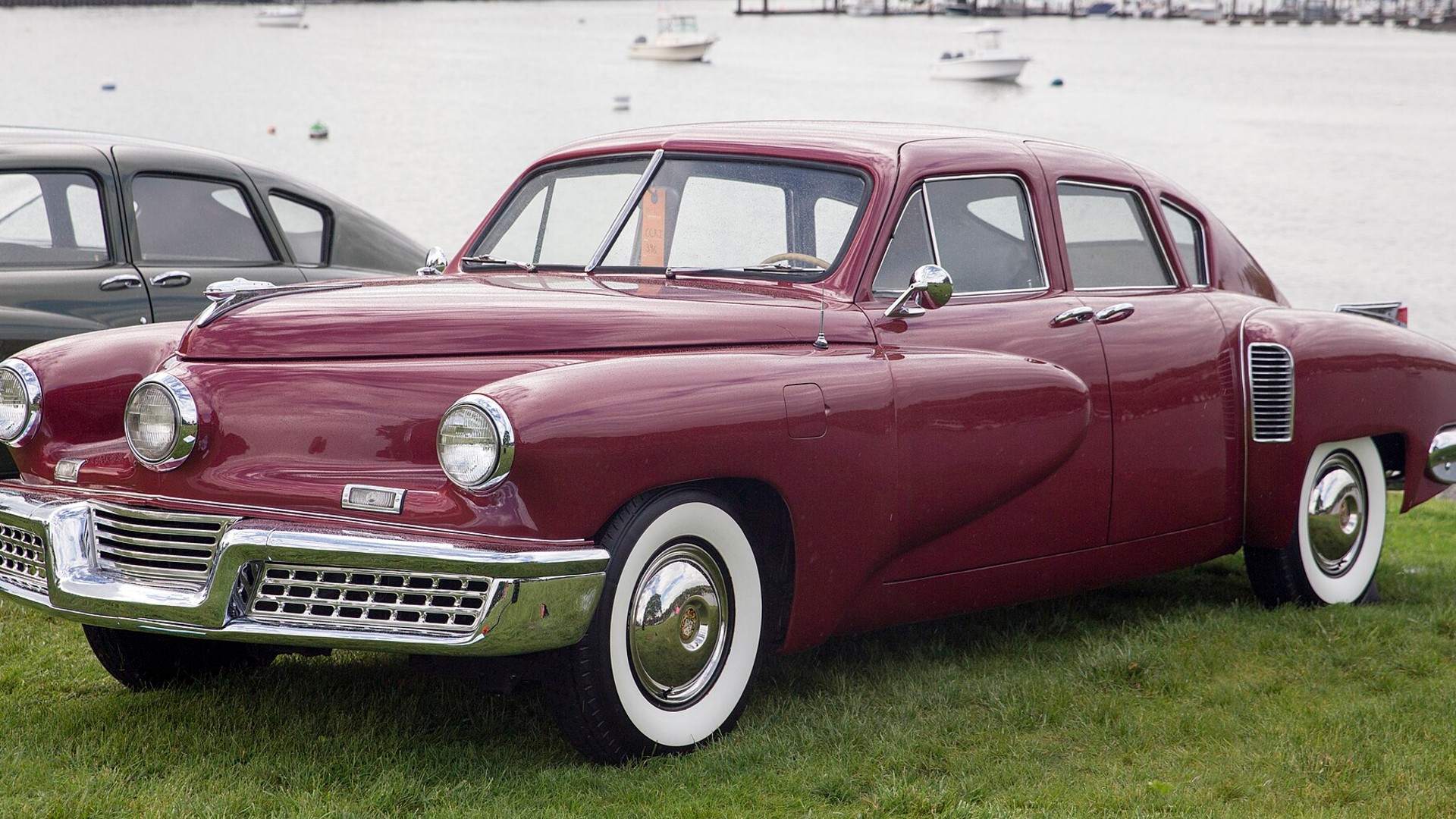
22 Short-Lived Cars Drivers Still Wish Automakers Made Today
Some of history's boldest cars lasted just one to five model years before vanishing from showrooms. Counting down from 22 to 1, these discontinued coupes, wagons, pickups and supercars still command loyal followings today, based on automaker production records, automotive museum archives and Car and Driver.
NASA's Apollo missions between 1967 and 1972 produced thousands of Hasselblad and pad photographs, from Saturn V rocket tests in Florida to crewed walks across the lunar surface. Based on NASA archives, the National Air and Space Museum and Wikimedia Commons records, these 24 shots trace the Moon race.
Swipe or tap ▶ to begin the countdown
©Wikimedia / NASA, Harrison H. Schmitt & NASA, Charlie Duke
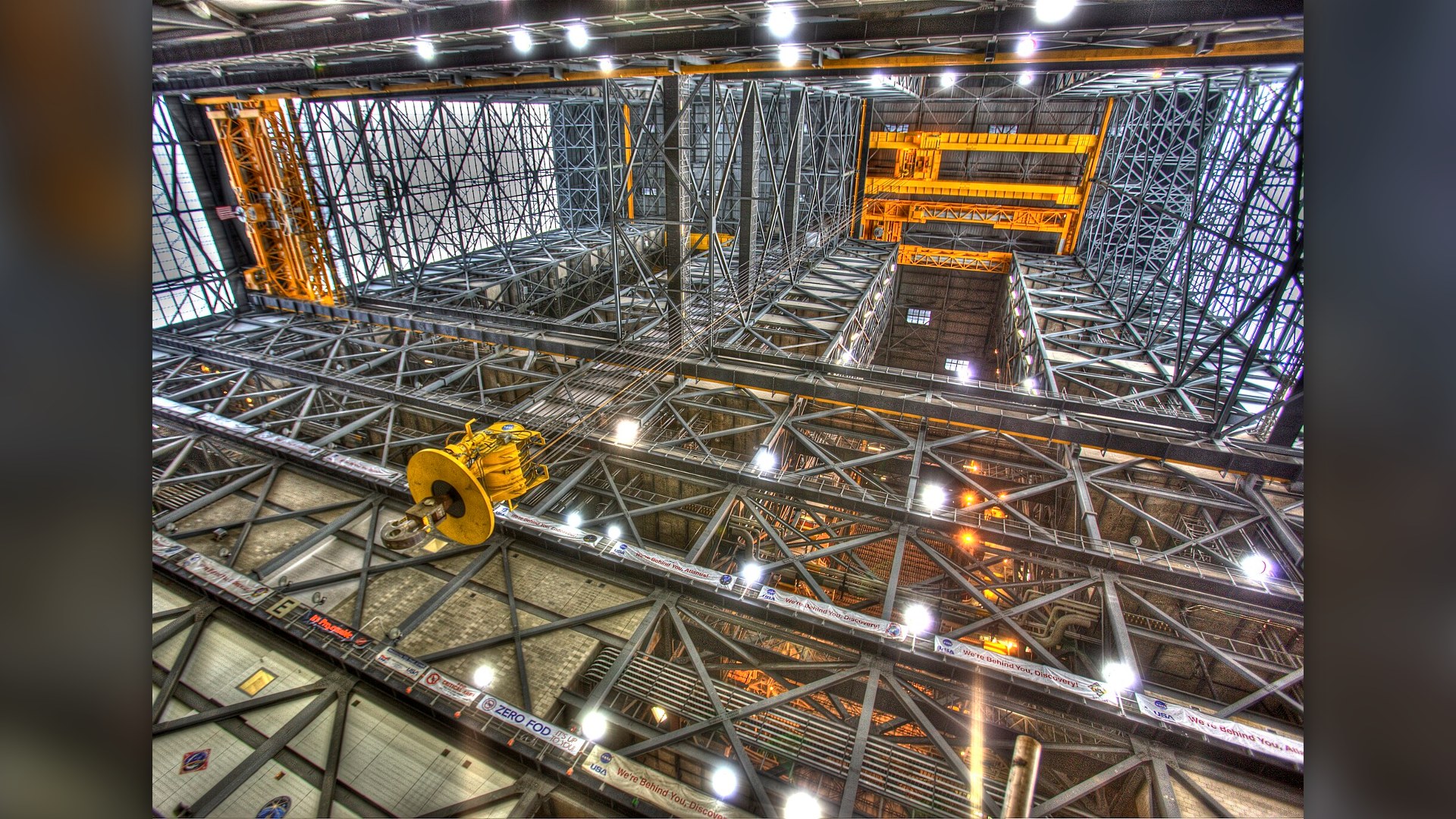
24. Vehicle Assembly Building At Kennedy Space Center
Completed in 1966 at Launch Complex 39, the Vehicle Assembly Building enclosed 129 million cubic feet of space to shield towering rockets from coastal storms. Inside its four high bays, engineers stacked the 363-foot Saturn V upright on mobile launchers before crawlers carried them to the pad.
©Wikimedia / Steve Jurvetson
23. Five Rocketdyne F-1 Engines On Saturn V
Each Rocketdyne F-1 engine stood 19 feet tall and produced 1.5 million pounds of thrust at sea level, giving the S-IC first stage 7.5 million pounds combined. During the first 160 seconds of flight, those five nozzles consumed roughly 20 metric tons of propellant every single second.
©Wikimedia / Austinstephens
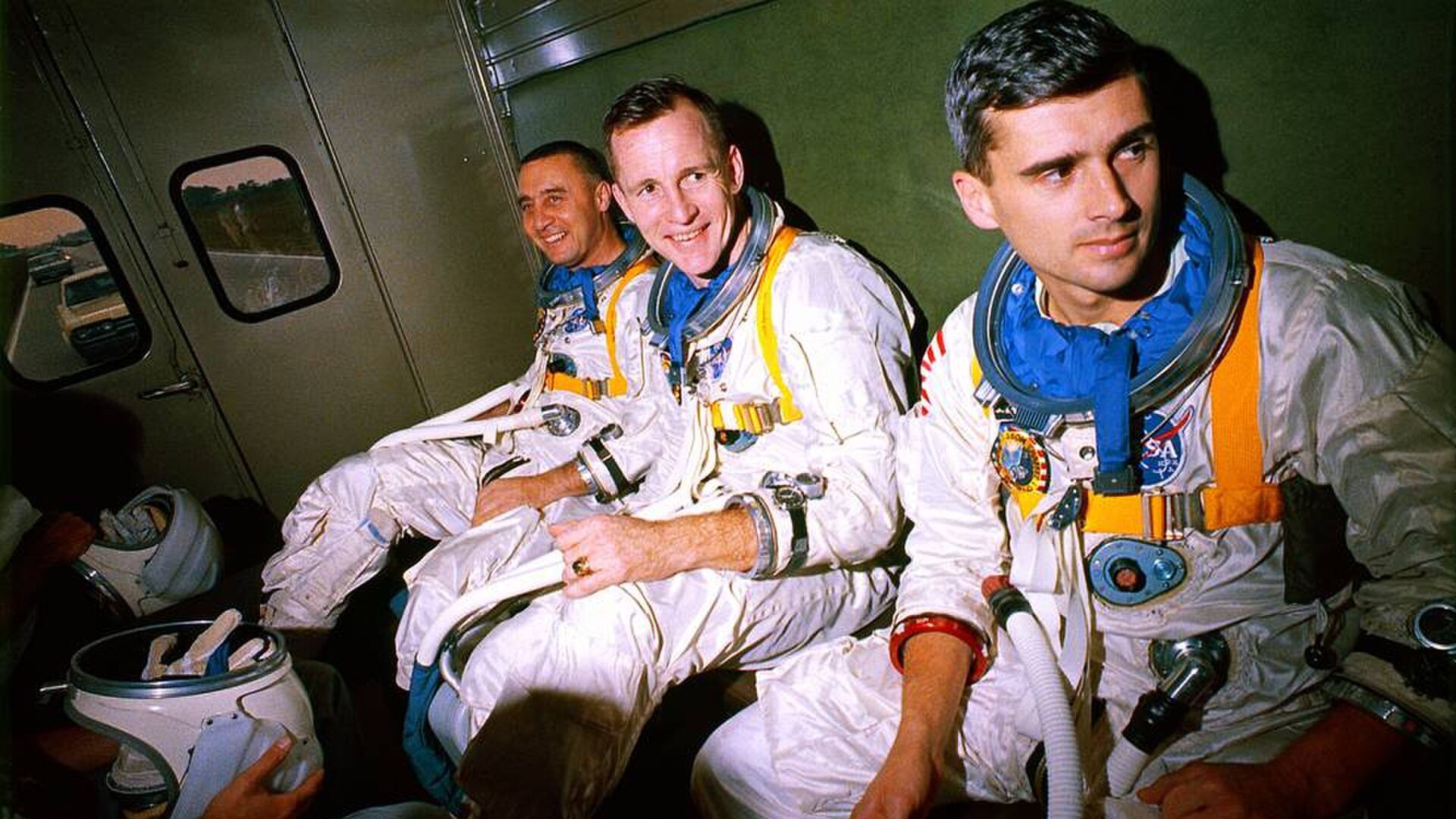
22. Apollo 1 Crew En Route To Launch Pad 34
On January 17, 1967, astronauts Virgil Grissom, Edward White and Roger Chaffee traveled to Launch Complex 34 for spacecraft testing. Ten days later, a cabin fire during a plugs-out test killed all three crewmen, prompting NASA to overhaul the Block II Command Module hatch and wiring.
©Wikimedia / NASA
Advertisement
Swipe or tap ▶ to resume the countdown.
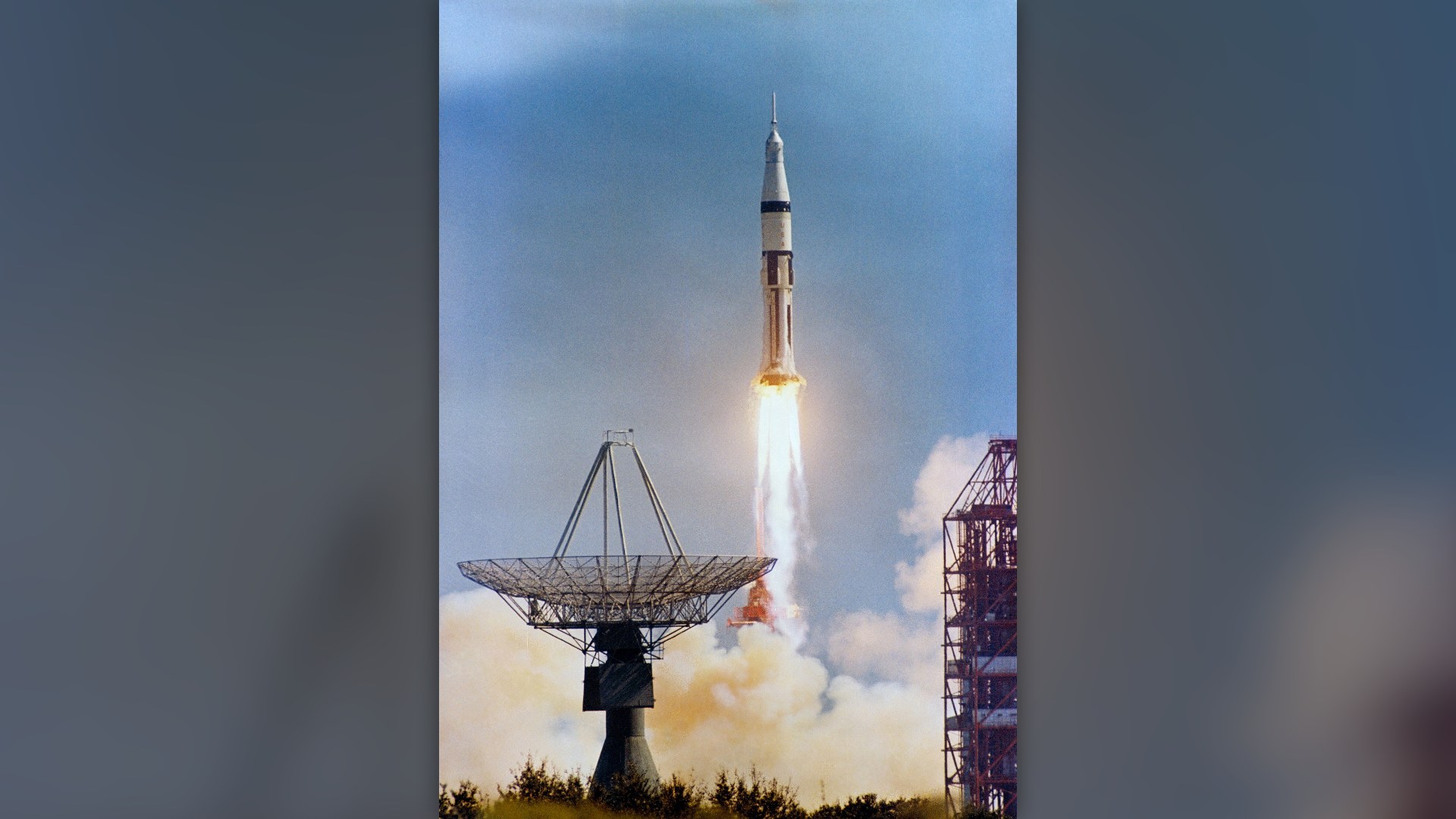
21. Apollo 7 Saturn IB Liftoff In October 1968
Commander Wally Schirra, Donn Eisele and Walter Cunningham spent nearly 11 days in Earth orbit testing the redesigned Block II Command Module. Their flight from Launch Complex 34 also delivered the first live television broadcasts from an American crewed spacecraft, clearing the path to the Moon.
©Wikimedia / NASA
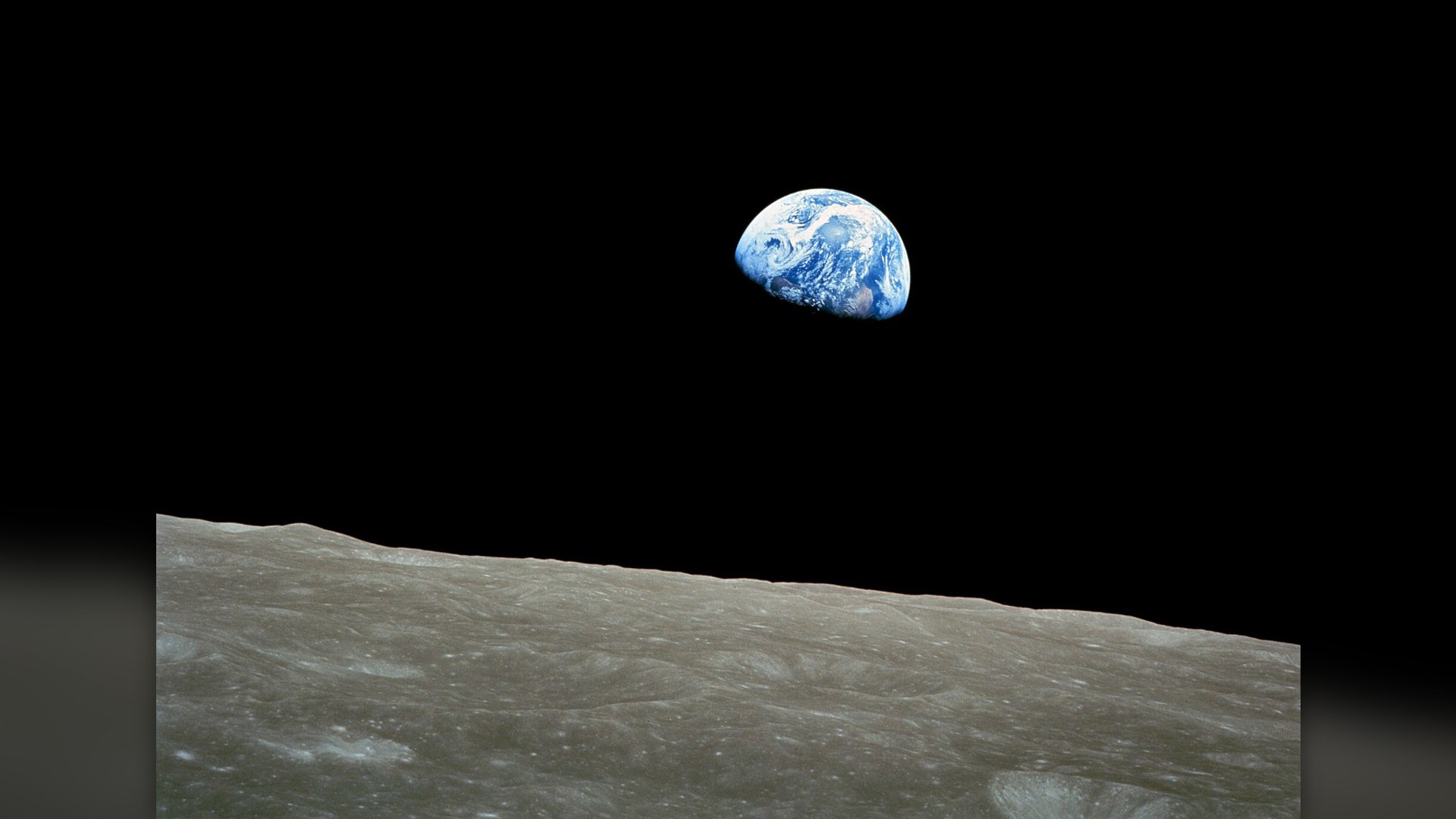
20. Apollo 8 Earthrise Above The Lunar Horizon
Frank Borman, Jim Lovell and Bill Anders became the first humans to leave low Earth orbit and circle the Moon in December 1968. As their Command Module rolled during its fourth lunar orbit, Anders switched to color 70mm film and snapped frame AS08-14-2383 through a side window.
©Wikimedia / NASA / Bill Anders
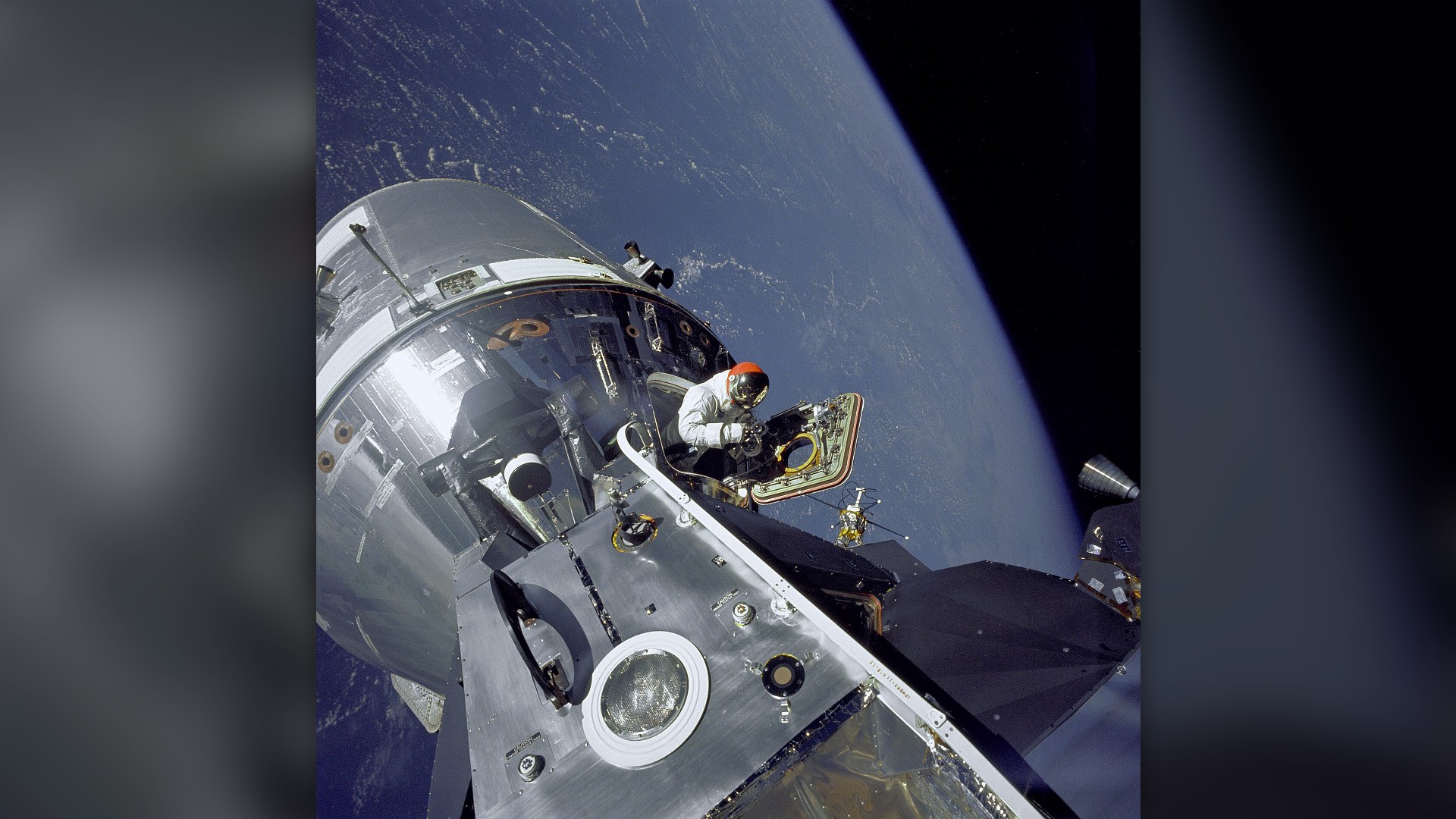
19. Apollo 9 Spider Lunar Module In Earth Orbit
Launched in March 1969, Jim McDivitt, Dave Scott and Rusty Schweickart spent ten days proving the Lunar Module could fly, undock and redock in space. Schweickart photographed Spider and Command Module Gumdrop while standing in open space during a 46-minute test of the portable life-support backpack.
©Wikimedia / NASA / Russell L. Schweickart
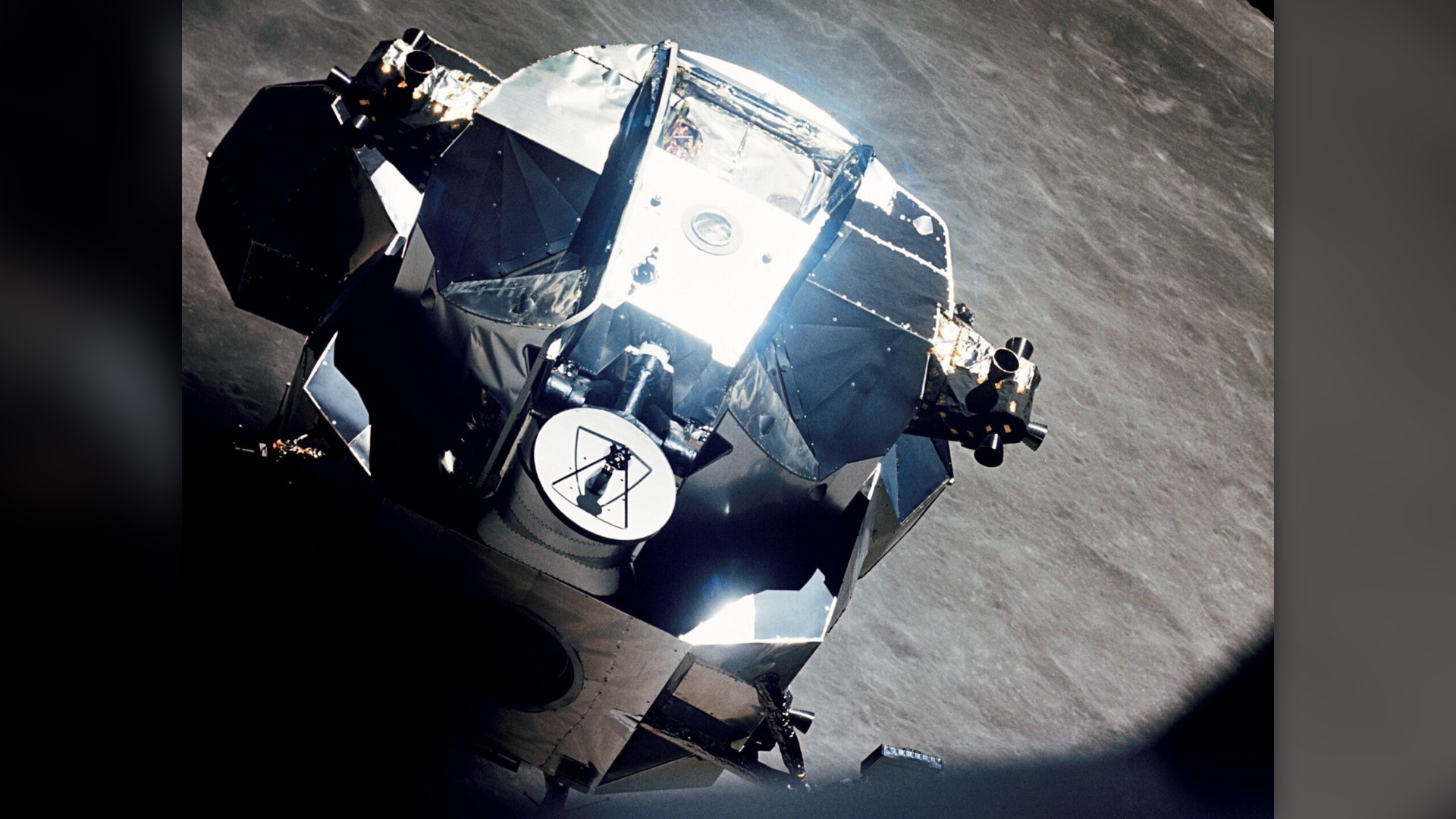
18. Apollo 10 Snoopy Lunar Module Approach
Serving as the final dress rehearsal before Apollo 11, Apollo 10 sent Snoopy down toward the Sea of Tranquility while John Young piloted Command Module Charlie Brown overhead. Stafford and Cernan checked radar, lighting and staging before firing the ascent engine to rejoin Young in lunar orbit.
©Wikimedia / NASA
Advertisement
Swipe or tap ▶ to resume the countdown.
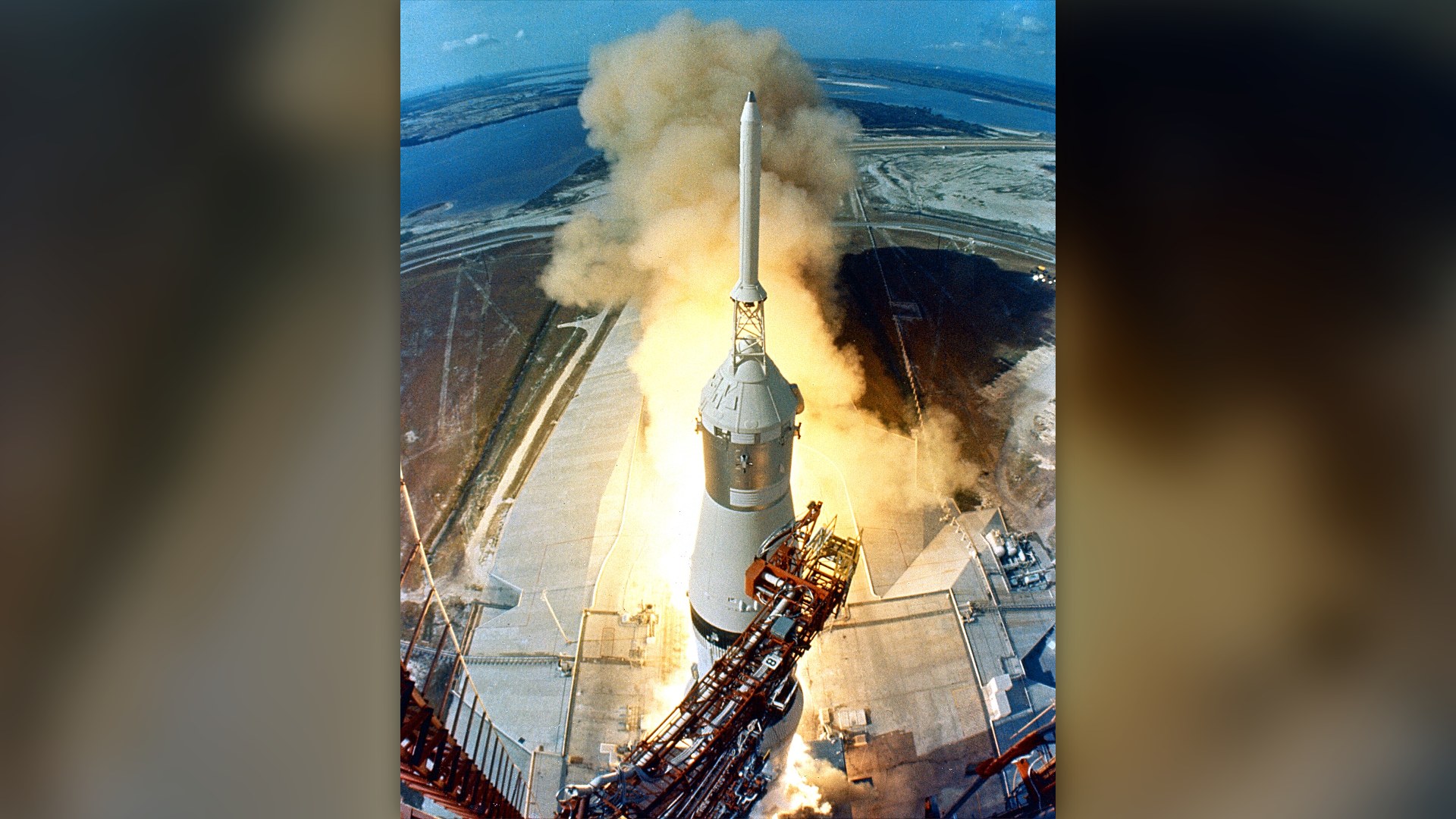
17. Apollo 11 Saturn V Liftoff From Pad 39A
Hundreds of thousands of spectators lined Florida beaches as swing arms retracted from the 363-foot rocket carrying Neil Armstrong, Buzz Aldrin and Michael Collins. Twelve minutes after ignition, the S-IVB third stage placed the stack into Earth parking orbit before firing toward lunar trajectory.
©Wikimedia / NASA
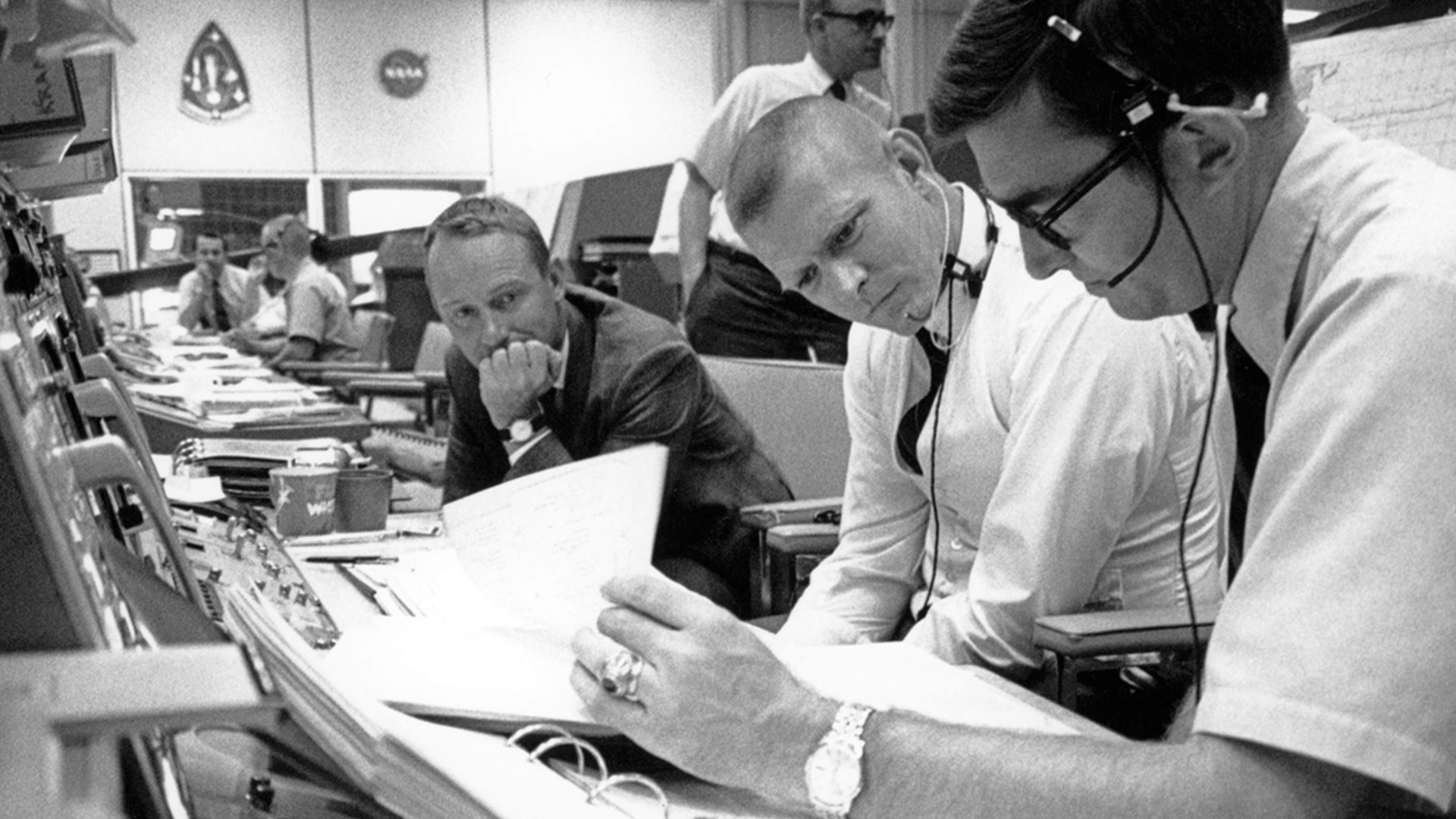
16. Houston Mission Control During Apollo 11
Inside Mission Operations Control Room 2 at the Manned Spacecraft Center, flight controllers monitored telemetry around the clock during July 1969. When 1202 and 1201 computer alarms sounded during Eagle's descent, guidance officer Steve Bales and backroom engineers confirmed the landing was safe to continue.
©Wikimedia / NASA
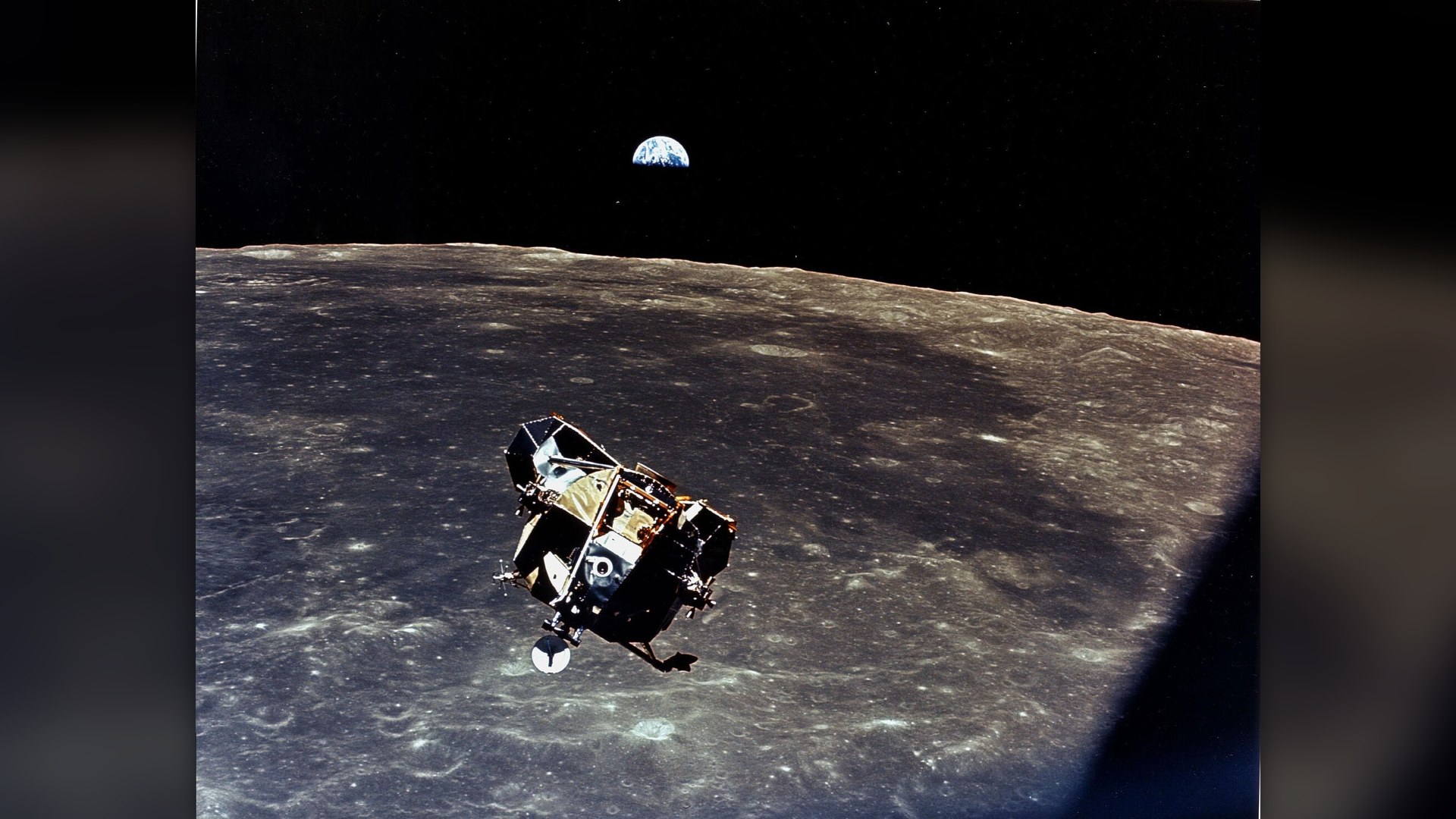
15. Lunar Module Eagle Returning To Orbit
After spending 21 hours and 36 minutes on the lunar surface, Armstrong and Aldrin fired Eagle's ascent engine on July 21, 1969, leaving the descent stage behind. Collins captured frame AS11-44-6642 from Command Module Columbia over Mare Smythii moments before docking the two craft.
©Wikimedia / NASA Kennedy Space Center
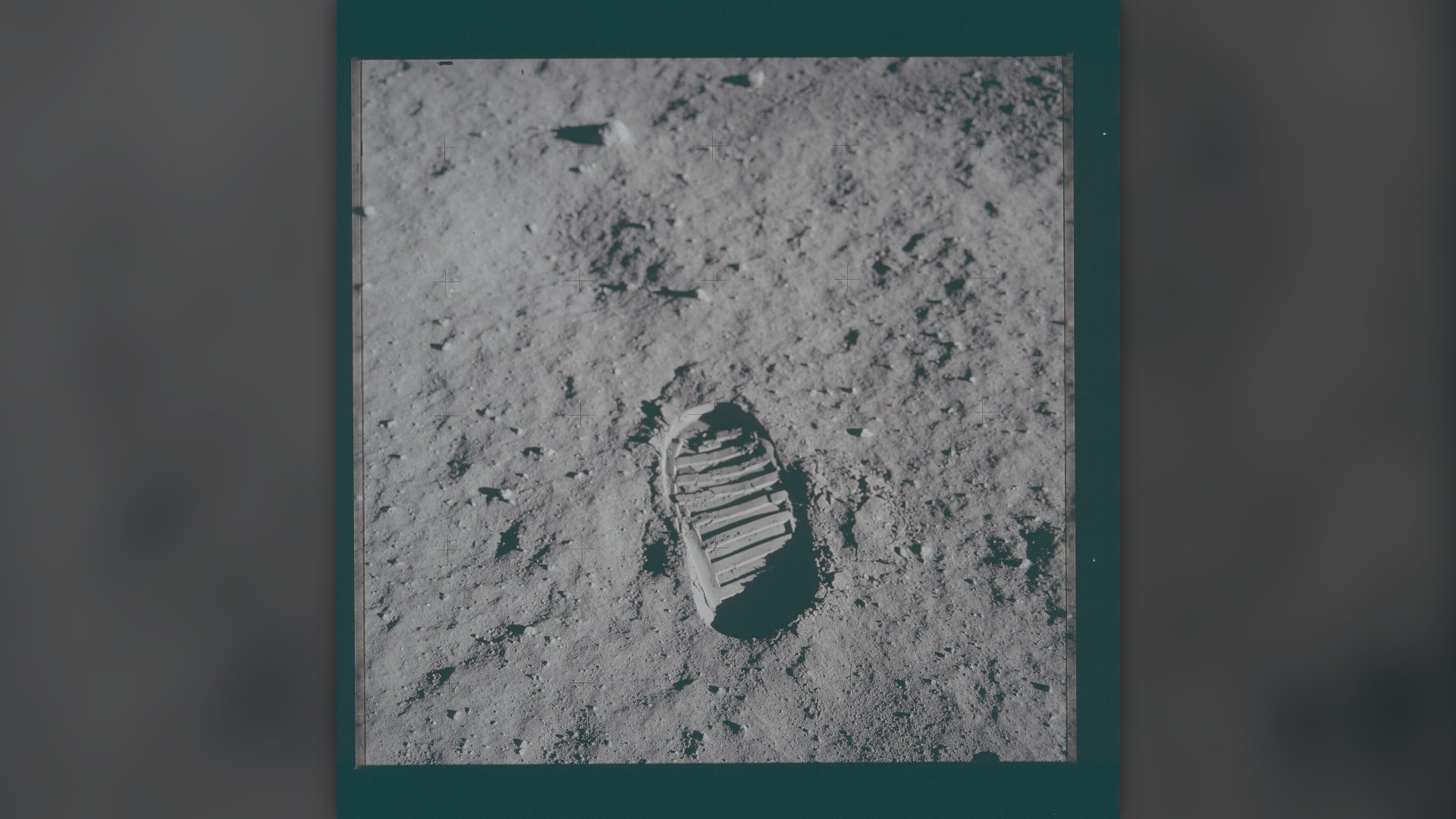
14. First Footprints Left In Tranquility Base Dust
About an hour into the July 20, 1969 moonwalk, Aldrin aimed a 70mm Hasselblad camera down at the fine gray regolith to measure soil mechanics. The ribbed tread of his lunar overshoe pressed cleanly into airless dust, leaving frame AS11-40-5877 as a scientific record of surface bearing strength.
©Wikimedia / Buzz Aldrin
Advertisement
Swipe or tap ▶ to resume the countdown.
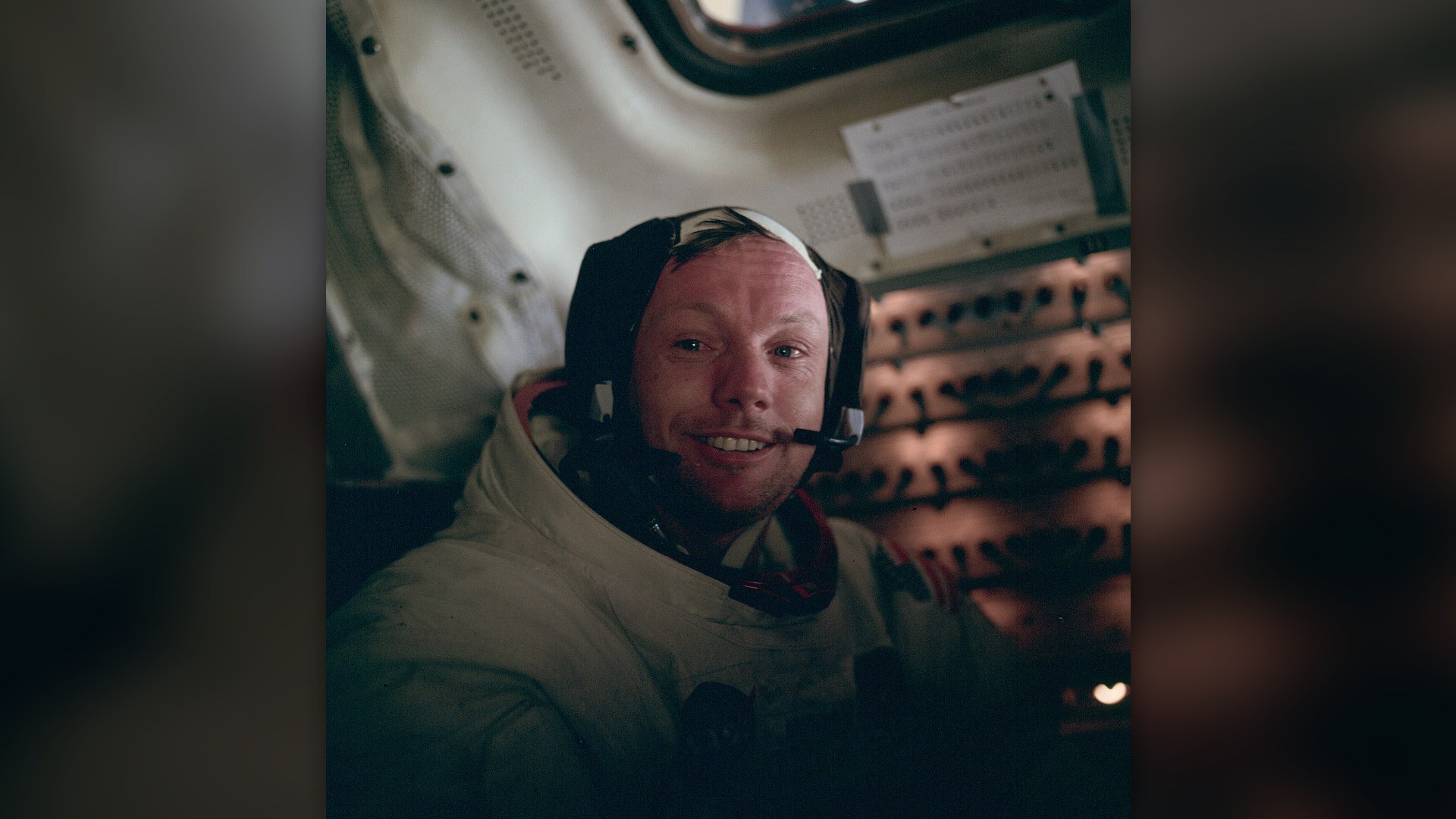
13. Neil Armstrong Inside Lunar Module Eagle
Buzz Aldrin snapped frame AS11-37-5528 inside the cramped Lunar Module cabin shortly after the two astronauts climbed back through the hatch and removed their helmets. Because Armstrong held the primary surface camera during most of the EVA, this candid shot remains one of the clearest photos of him from the day.
©Wikimedia / NASA / Edwin E. Aldrin, Jr
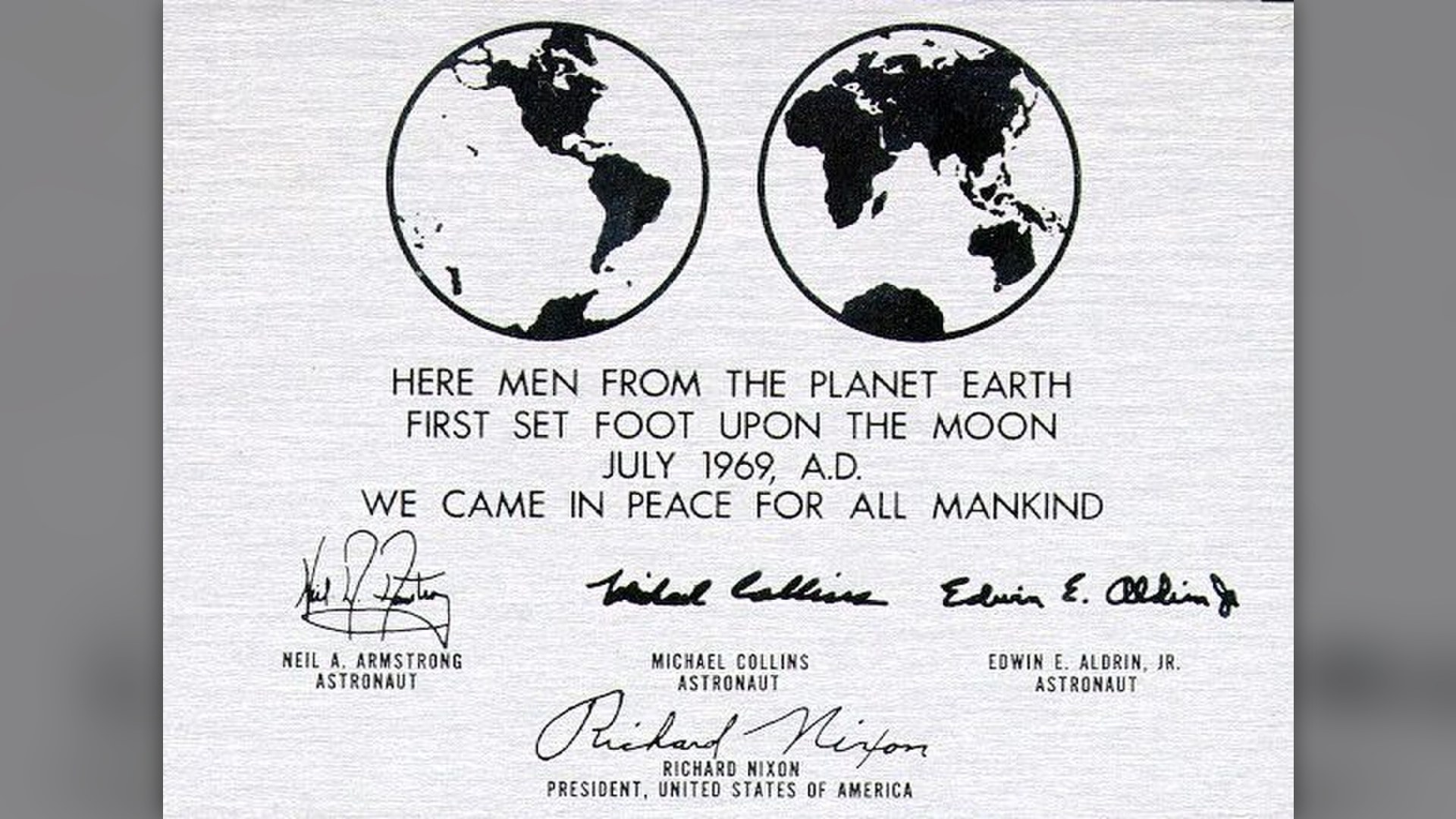
12. Stainless Steel Apollo 11 Lunar Plaque
Measuring nine by seven and a half inches, the engraved stainless steel plaque remained on the Moon aboard Eagle's descent stage. It displays both hemispheres, the launch month July 1969, signatures from all three crewmen and President Richard Nixon, and the line: We came in peace for all mankind.
©Wikimedia / NASA
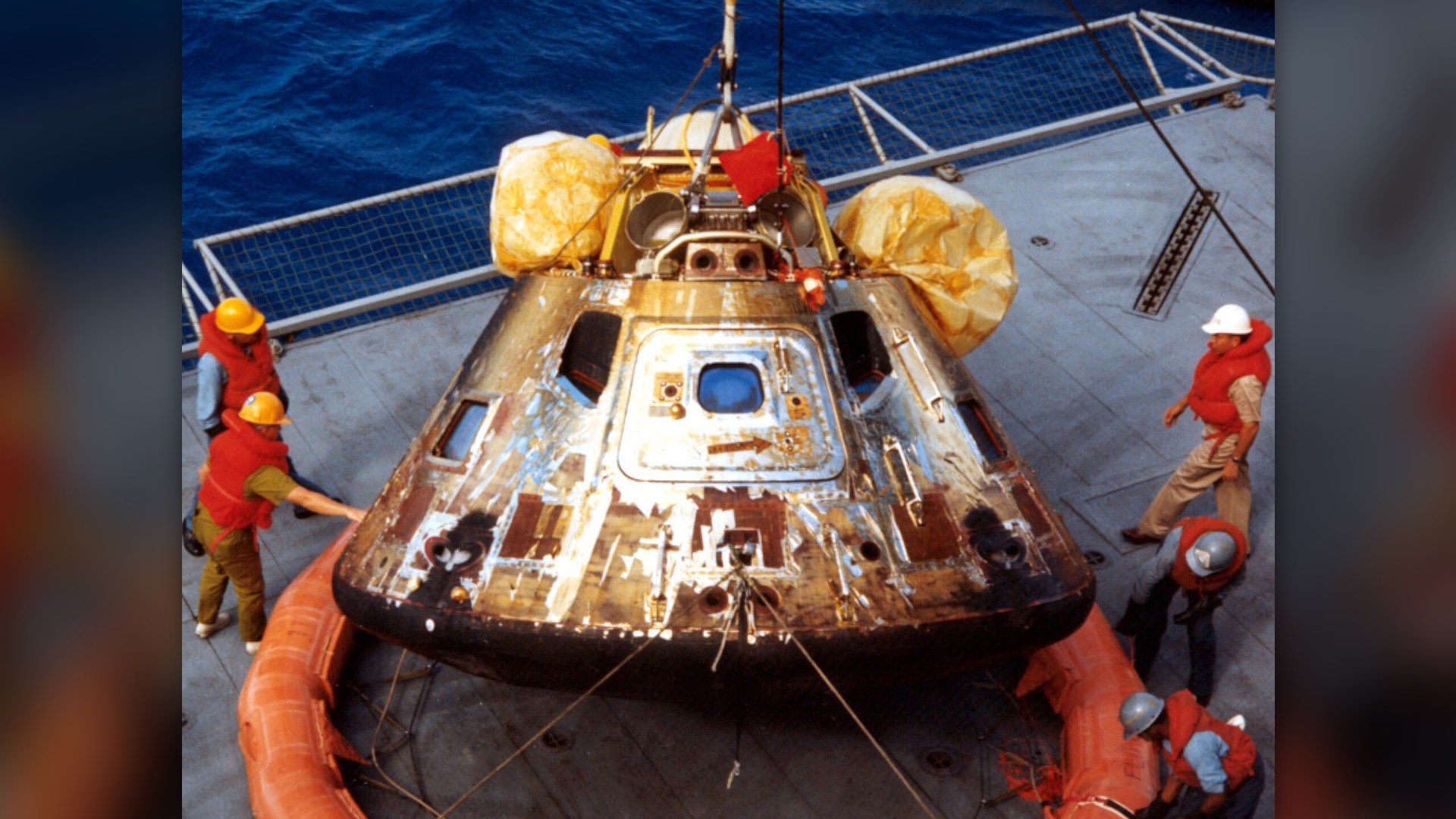
11. USS Hornet Crew Recovering Apollo 11 Capsule
Columbia splashed down roughly 900 miles southwest of Hawaii after an eight-day journey to the Moon and back. Sailors aboard the aircraft carrier USS Hornet hoisted the scorched capsule onto the hangar deck while Armstrong, Aldrin and Collins entered a mobile quarantine van for 21 days.
©Wikimedia / NASA
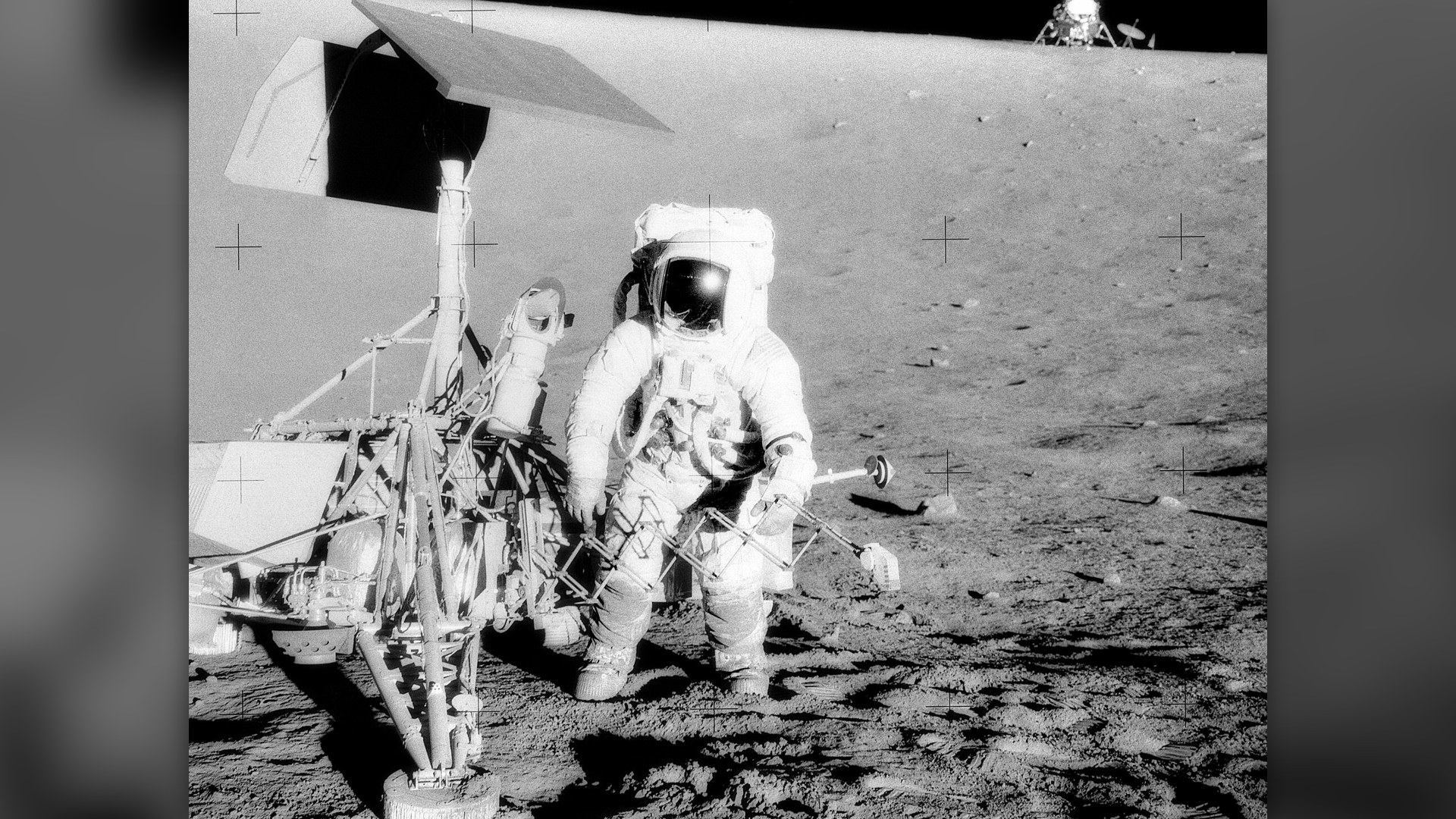
10. Pete Conrad Inspecting Surveyor 3 On Apollo 12
Touching down in Oceanus Procellarum in November 1969, Lunar Module Intrepid settled just 535 feet from the Surveyor 3 probe that had landed there in April 1967. Conrad and Alan Bean removed its television camera and soil scoop, bringing weathered parts back to Earth for engineering study.
©Wikimedia / NASA, Alan L. Bean
Advertisement
Swipe or tap ▶ to resume the countdown.
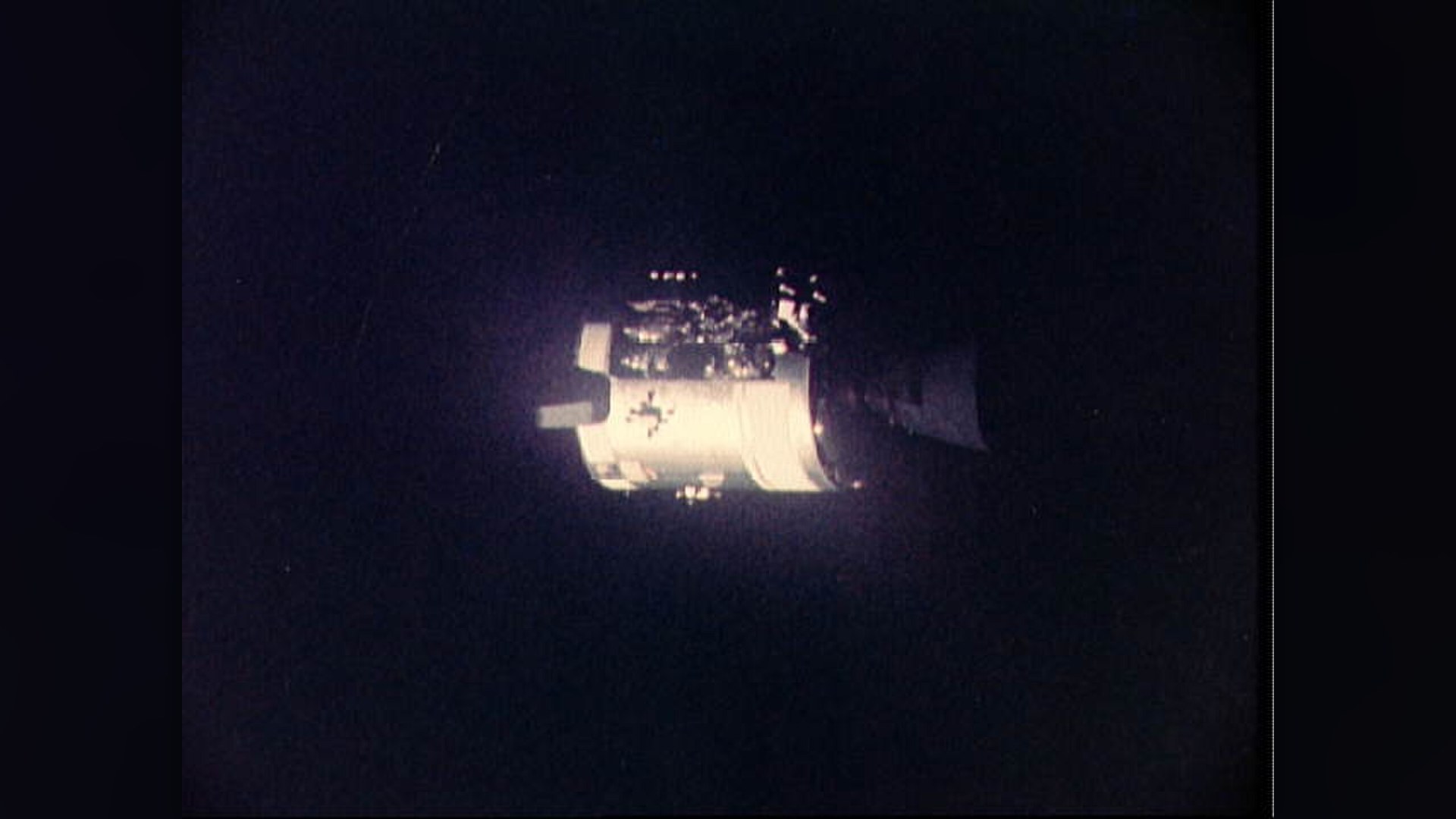
9. Apollo 13 Damaged Service Module After Blast
Hours before re-entry on April 17, 1970, Jim Lovell, Jack Swigert and Fred Haise finally saw what had crippled their spacecraft 200,000 miles from Earth. Oxygen Tank No. 2 had ruptured inside Bay 4, stripping away the outer skin and leaving fuel cells and wiring exposed to space.
©Wikimedia / NASA/Apollo 13
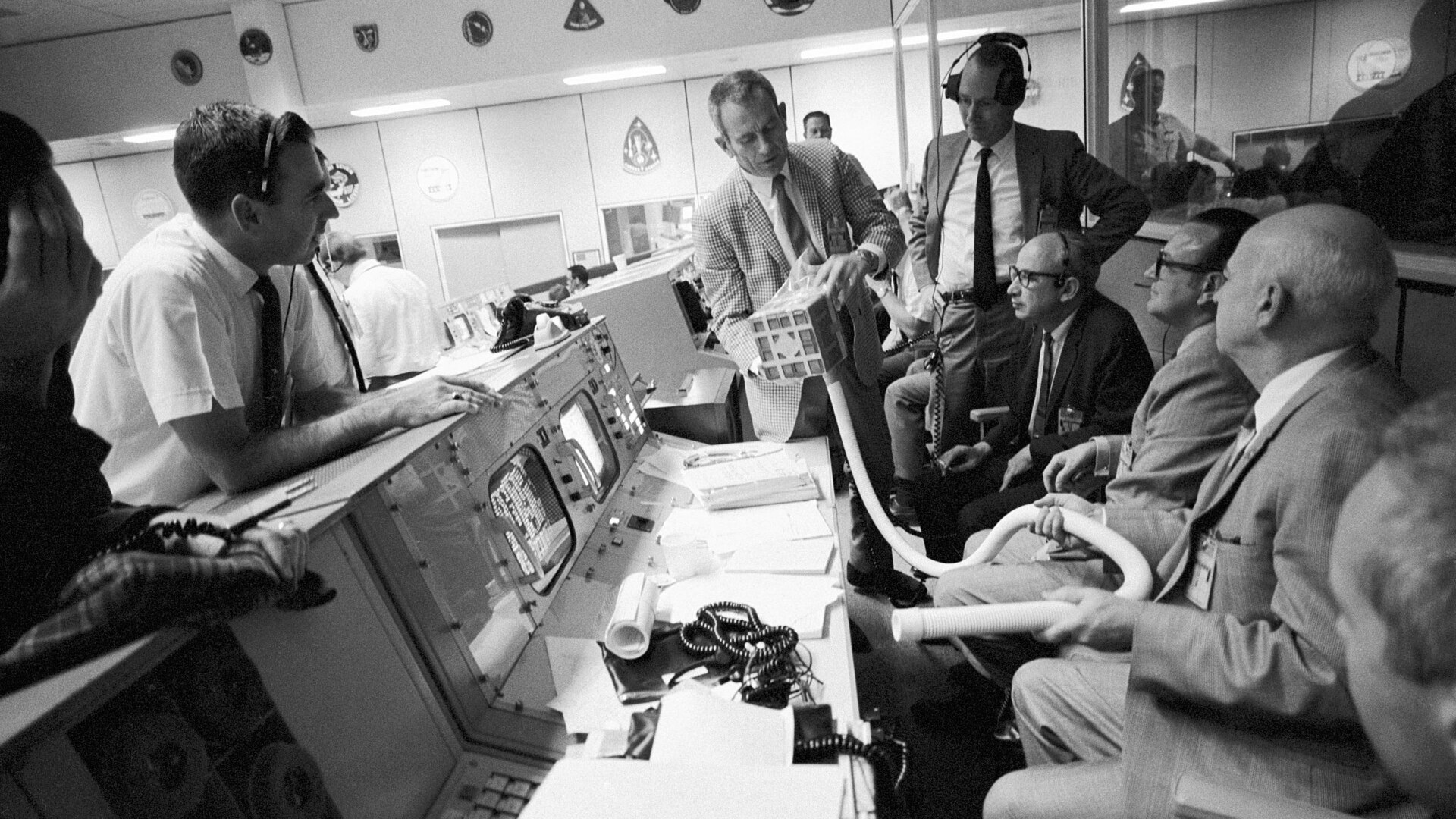
8. Apollo 13 Crew Improvised Carbon Dioxide Scrubber
With carbon dioxide climbing inside Lunar Module Aquarius, Houston flight controllers tested a makeshift adapter dubbed the mailbox using plastic bags, cardboard flight manuals and grey duct tape. Instructions were read up by radio so the three astronauts could fit square Command Module canisters to round hoses.
©Wikimedia / NASA
7. Alan Shepard On The Moon During Apollo 14
Ten years after becoming the first American in space aboard Freedom 7, Shepard commanded Apollo 14 at age 47 following surgery for an inner-ear disorder. Beside Lunar Module Antares, he and Edgar Mitchell collected 94 pounds of lunar rock, and Shepard famously struck two golf balls across the dust.
©Wikimedia / Project Apollo Archive
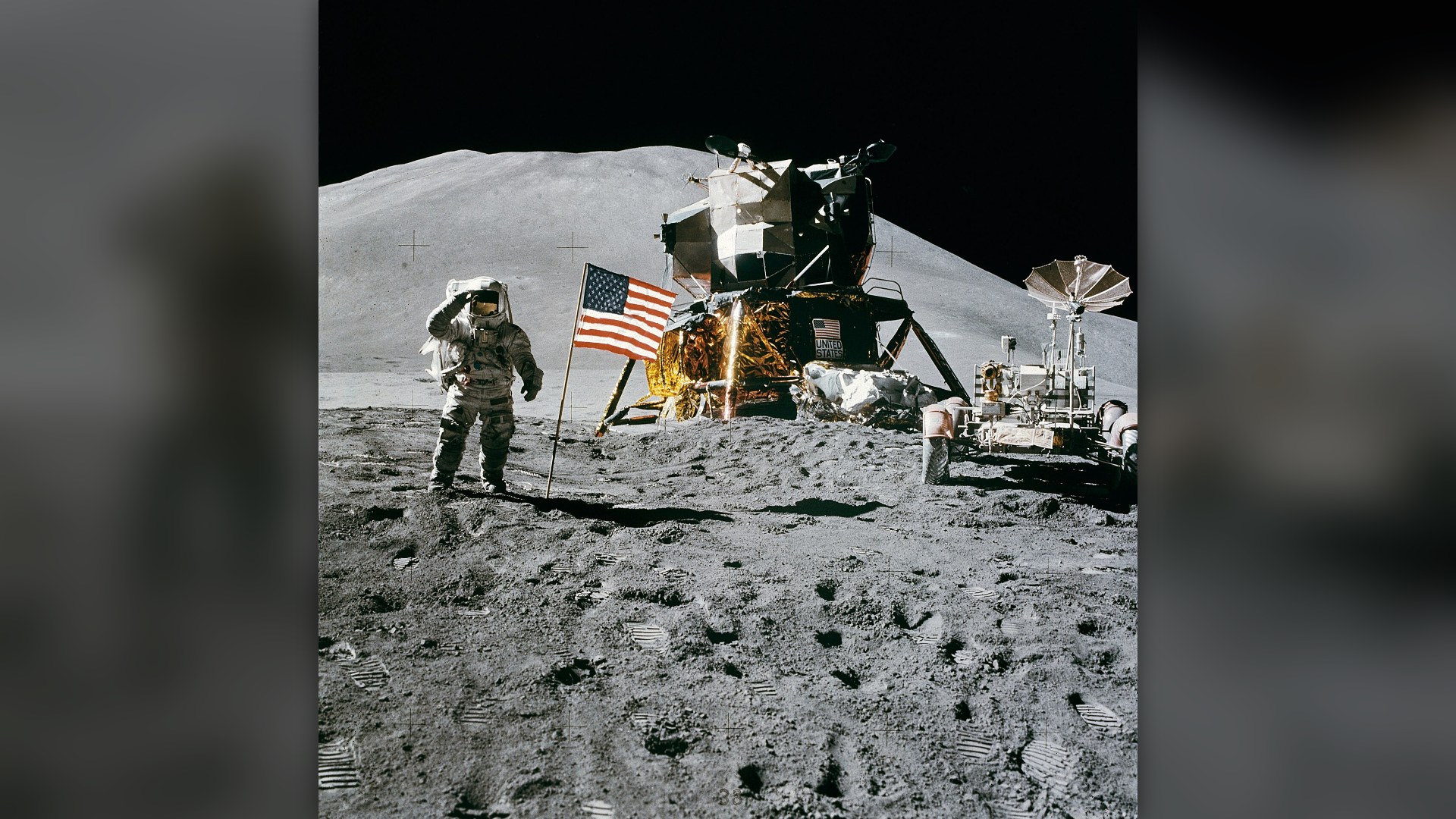
6. Apollo 15 Flag, Rover And Lander At Hadley
Landing beside Mons Hadley Delta in July 1971, Dave Scott and Jim Irwin unpacked the folding 462-pound rover from Lunar Module Falcon. Over three excursions totaling 17.3 miles, they climbed steep valley slopes and discovered the Genesis Rock, an anorthosite sample from the early lunar crust.
©Wikimedia / Astronaut David R. Scott, Apollo 15 commander
Advertisement
Swipe or tap ▶ to resume the countdown.
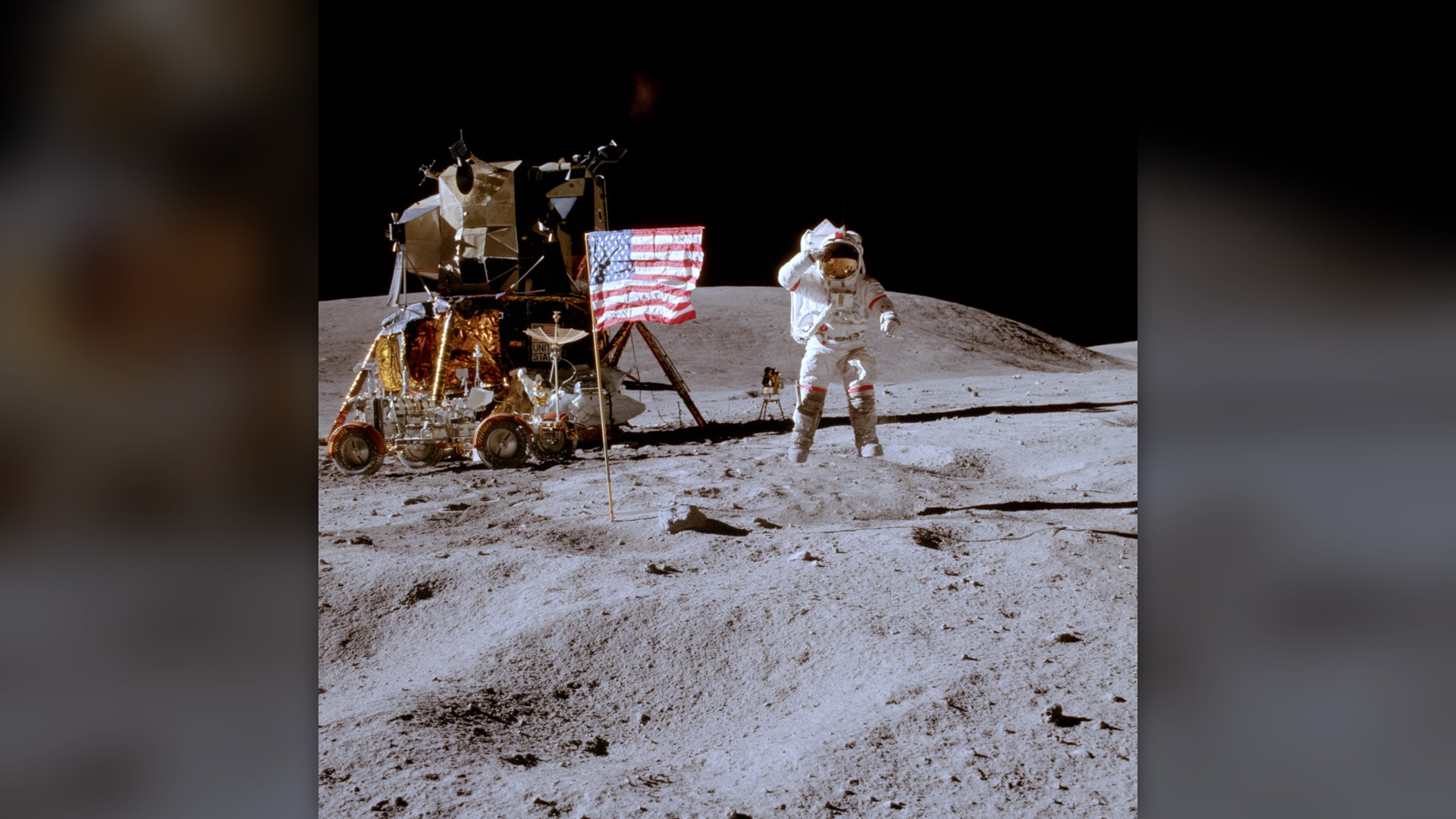
5. John Young Lunar Salute On Apollo 16
On April 21, 1972, Commander John Young jumped straight up while saluting the flag in the Descartes Highlands, rising roughly 18 inches despite wearing a bulky pressurized suit and life-support pack. Apollo 16 became the only mission to land in the Moon's rugged central highlands, returning 211 pounds of samples.
©Wikimedia / NASA/Charlie Duke
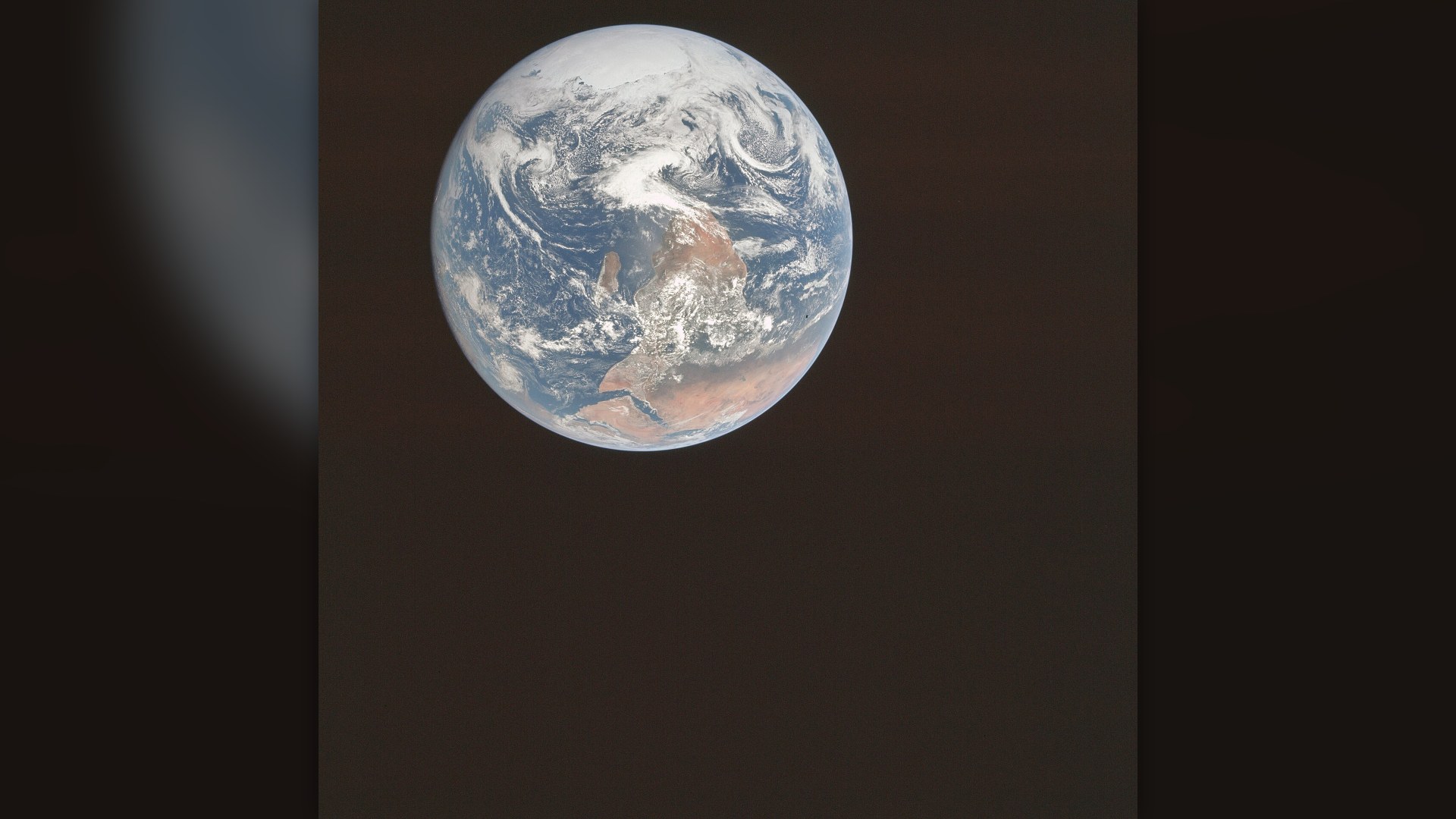
4. Apollo 17 Blue Marble View Of Earth
Because Apollo 17 lifted off just after midnight with the Sun behind the spacecraft, its crew saw the entire globe illuminated from Africa to Antarctica. Cataloged as frame AS17-148-22727, the original Hasselblad negative showed Earth inverted before NASA rotated the print for public release.
©Wikimedia / NASA
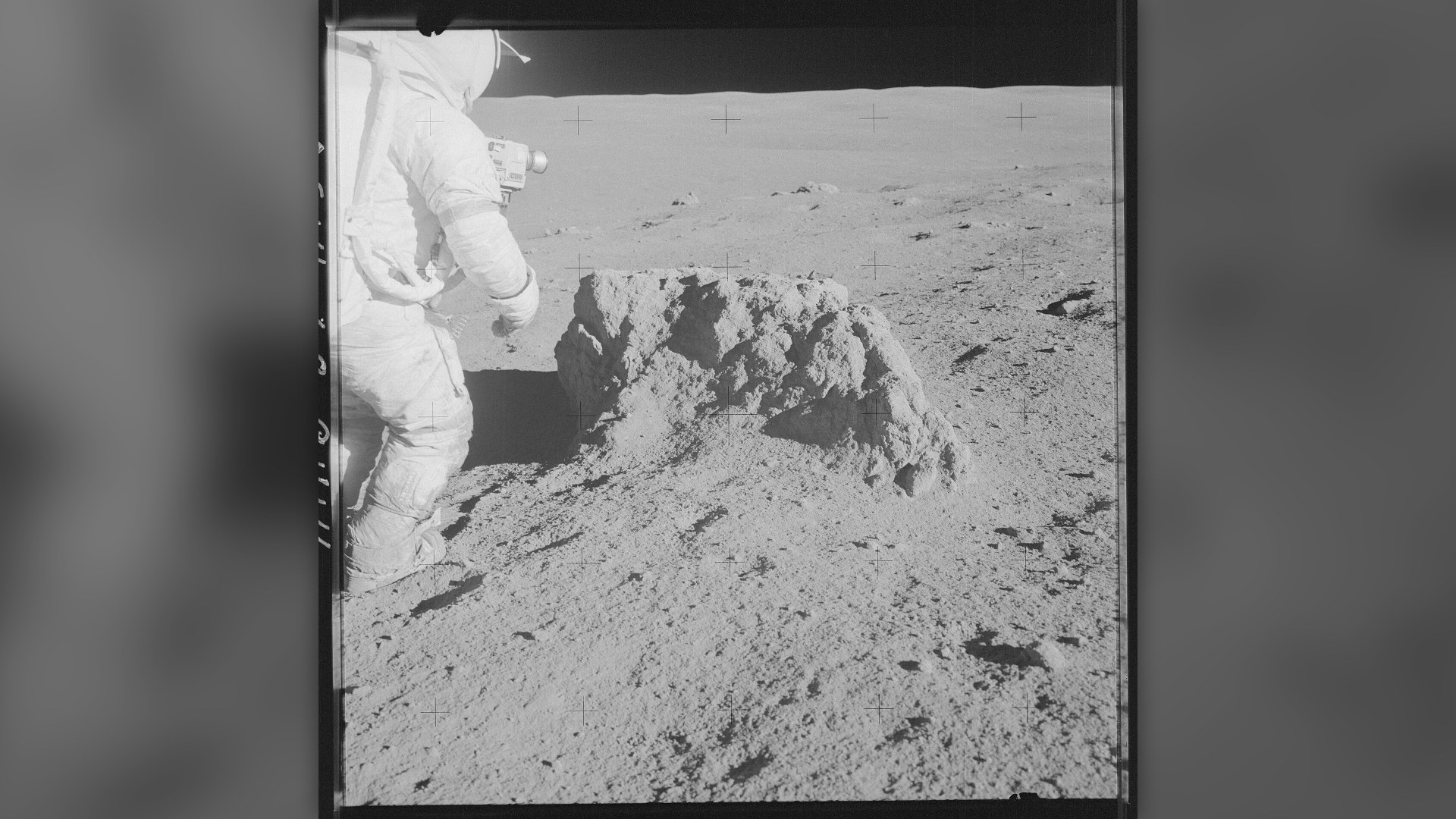
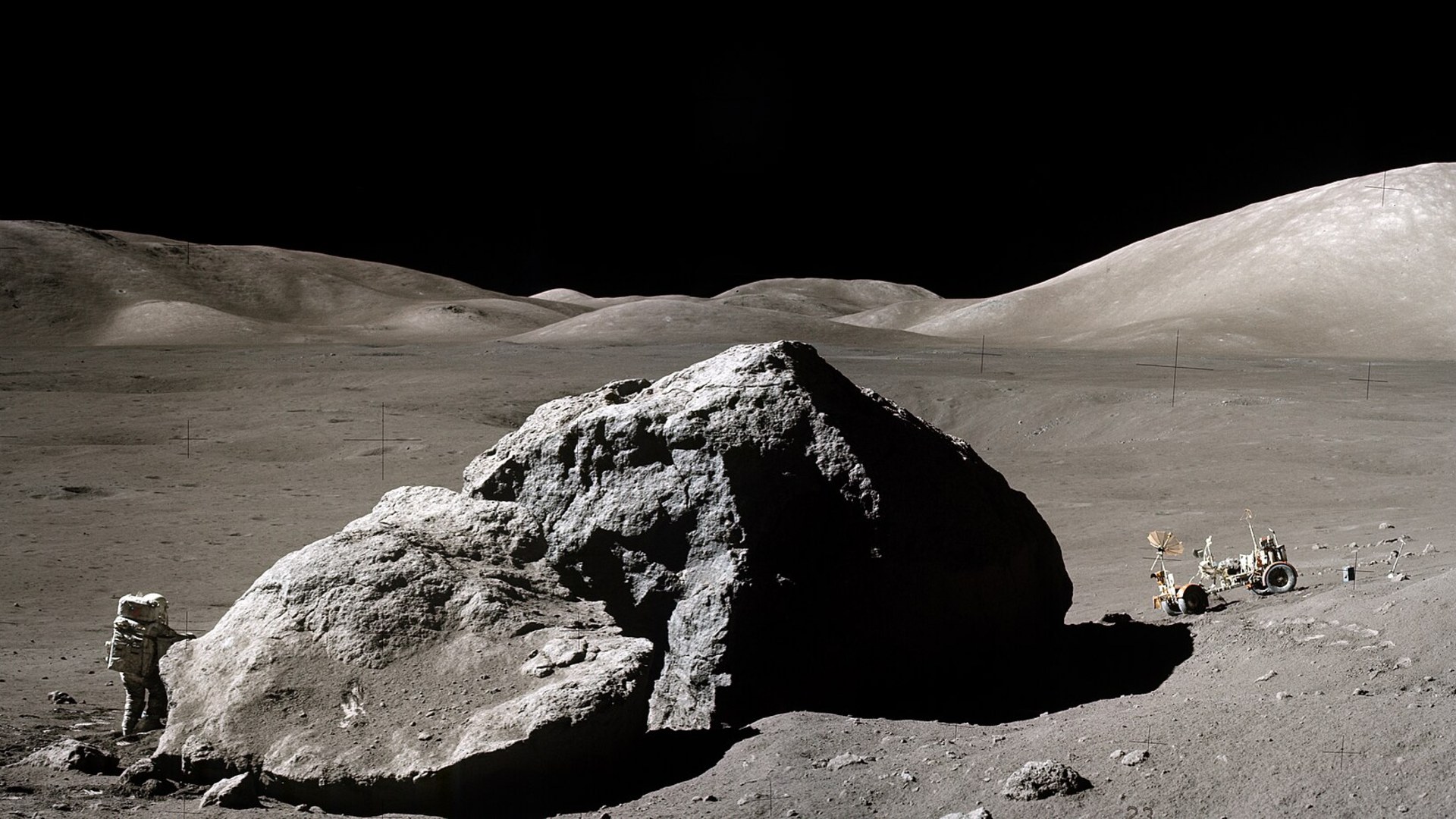
3. Geologist Harrison Schmitt At Split Rock
Holding a PhD in geology from Harvard, Schmitt became the first trained scientist to walk on the Moon in December 1972. Near North Massif at Station 6, Commander Eugene Cernan stitched frames of Schmitt beside the fractured Split Rock boulder, which had rolled down the mountain wall.
©Wikimedia / Eugene A. Cernan Photomontage by User:Grunpfnul
2. Eugene Cernan Driving The Apollo 17 Rover
During three moonwalks in December 1972, Cernan and Schmitt used the battery-powered rover to collect 243 pounds of rock and soil, the largest haul of any Apollo flight. After a fender broke on the first drive, astronauts taped laminated lunar maps together to keep dust off their suits.
©Wikimedia / NASA / Harrison H. Schmitt
Advertisement
Swipe or tap ▶ to resume the countdown.
1. Buzz Aldrin And Armstrong In The Gold Visor
Taken on the Tranquility Base plain, frame AS11-40-5903 shows Buzz Aldrin standing tall with Eagle's landing leg and Neil Armstrong mirrored across his gold-plated sunshield. Armstrong later noted he cropped almost no margin at the top, making the square Hasselblad portrait the defining image of Apollo 11.
©Wikimedia / Neil A. Armstrong
Advertisement
You've reached the end of the story. Thanks for reading!

22 Short-Lived Cars Drivers Still Wish Automakers Made Today
Some of history's boldest cars lasted just one to five model years before vanishing from showrooms. Counting down from 22 to 1, these discontinued coupes, wagons, pickups and supercars still command loyal followings today, based on automaker production records, automotive museum archives and Car and Driver.
All 24 Entries in this Story
24. Vehicle Assembly Building At Kennedy Space Center
Completed in 1966 at Launch Complex 39, the Vehicle Assembly Building enclosed 129 million cubic feet of space to shield towering rockets from coastal storms. Inside its four high bays, engineers stacked the 363-foot Saturn V upright on mobile launchers before crawlers carried them to the pad.

23. Five Rocketdyne F-1 Engines On Saturn V
Each Rocketdyne F-1 engine stood 19 feet tall and produced 1.5 million pounds of thrust at sea level, giving the S-IC first stage 7.5 million pounds combined. During the first 160 seconds of flight, those five nozzles consumed roughly 20 metric tons of propellant every single second.

22. Apollo 1 Crew En Route To Launch Pad 34
On January 17, 1967, astronauts Virgil Grissom, Edward White and Roger Chaffee traveled to Launch Complex 34 for spacecraft testing. Ten days later, a cabin fire during a plugs-out test killed all three crewmen, prompting NASA to overhaul the Block II Command Module hatch and wiring.

21. Apollo 7 Saturn IB Liftoff In October 1968
Commander Wally Schirra, Donn Eisele and Walter Cunningham spent nearly 11 days in Earth orbit testing the redesigned Block II Command Module. Their flight from Launch Complex 34 also delivered the first live television broadcasts from an American crewed spacecraft, clearing the path to the Moon.

20. Apollo 8 Earthrise Above The Lunar Horizon
Frank Borman, Jim Lovell and Bill Anders became the first humans to leave low Earth orbit and circle the Moon in December 1968. As their Command Module rolled during its fourth lunar orbit, Anders switched to color 70mm film and snapped frame AS08-14-2383 through a side window.

19. Apollo 9 Spider Lunar Module In Earth Orbit
Launched in March 1969, Jim McDivitt, Dave Scott and Rusty Schweickart spent ten days proving the Lunar Module could fly, undock and redock in space. Schweickart photographed Spider and Command Module Gumdrop while standing in open space during a 46-minute test of the portable life-support backpack.

18. Apollo 10 Snoopy Lunar Module Approach
Serving as the final dress rehearsal before Apollo 11, Apollo 10 sent Snoopy down toward the Sea of Tranquility while John Young piloted Command Module Charlie Brown overhead. Stafford and Cernan checked radar, lighting and staging before firing the ascent engine to rejoin Young in lunar orbit.

17. Apollo 11 Saturn V Liftoff From Pad 39A
Hundreds of thousands of spectators lined Florida beaches as swing arms retracted from the 363-foot rocket carrying Neil Armstrong, Buzz Aldrin and Michael Collins. Twelve minutes after ignition, the S-IVB third stage placed the stack into Earth parking orbit before firing toward lunar trajectory.

16. Houston Mission Control During Apollo 11
Inside Mission Operations Control Room 2 at the Manned Spacecraft Center, flight controllers monitored telemetry around the clock during July 1969. When 1202 and 1201 computer alarms sounded during Eagle's descent, guidance officer Steve Bales and backroom engineers confirmed the landing was safe to continue.

15. Lunar Module Eagle Returning To Orbit
After spending 21 hours and 36 minutes on the lunar surface, Armstrong and Aldrin fired Eagle's ascent engine on July 21, 1969, leaving the descent stage behind. Collins captured frame AS11-44-6642 from Command Module Columbia over Mare Smythii moments before docking the two craft.

14. First Footprints Left In Tranquility Base Dust
About an hour into the July 20, 1969 moonwalk, Aldrin aimed a 70mm Hasselblad camera down at the fine gray regolith to measure soil mechanics. The ribbed tread of his lunar overshoe pressed cleanly into airless dust, leaving frame AS11-40-5877 as a scientific record of surface bearing strength.

13. Neil Armstrong Inside Lunar Module Eagle
Buzz Aldrin snapped frame AS11-37-5528 inside the cramped Lunar Module cabin shortly after the two astronauts climbed back through the hatch and removed their helmets. Because Armstrong held the primary surface camera during most of the EVA, this candid shot remains one of the clearest photos of him from the day.

12. Stainless Steel Apollo 11 Lunar Plaque
Measuring nine by seven and a half inches, the engraved stainless steel plaque remained on the Moon aboard Eagle's descent stage. It displays both hemispheres, the launch month July 1969, signatures from all three crewmen and President Richard Nixon, and the line: We came in peace for all mankind.

11. USS Hornet Crew Recovering Apollo 11 Capsule
Columbia splashed down roughly 900 miles southwest of Hawaii after an eight-day journey to the Moon and back. Sailors aboard the aircraft carrier USS Hornet hoisted the scorched capsule onto the hangar deck while Armstrong, Aldrin and Collins entered a mobile quarantine van for 21 days.

10. Pete Conrad Inspecting Surveyor 3 On Apollo 12
Touching down in Oceanus Procellarum in November 1969, Lunar Module Intrepid settled just 535 feet from the Surveyor 3 probe that had landed there in April 1967. Conrad and Alan Bean removed its television camera and soil scoop, bringing weathered parts back to Earth for engineering study.

9. Apollo 13 Damaged Service Module After Blast
Hours before re-entry on April 17, 1970, Jim Lovell, Jack Swigert and Fred Haise finally saw what had crippled their spacecraft 200,000 miles from Earth. Oxygen Tank No. 2 had ruptured inside Bay 4, stripping away the outer skin and leaving fuel cells and wiring exposed to space.

8. Apollo 13 Crew Improvised Carbon Dioxide Scrubber
With carbon dioxide climbing inside Lunar Module Aquarius, Houston flight controllers tested a makeshift adapter dubbed the mailbox using plastic bags, cardboard flight manuals and grey duct tape. Instructions were read up by radio so the three astronauts could fit square Command Module canisters to round hoses.

7. Alan Shepard On The Moon During Apollo 14
Ten years after becoming the first American in space aboard Freedom 7, Shepard commanded Apollo 14 at age 47 following surgery for an inner-ear disorder. Beside Lunar Module Antares, he and Edgar Mitchell collected 94 pounds of lunar rock, and Shepard famously struck two golf balls across the dust.

6. Apollo 15 Flag, Rover And Lander At Hadley
Landing beside Mons Hadley Delta in July 1971, Dave Scott and Jim Irwin unpacked the folding 462-pound rover from Lunar Module Falcon. Over three excursions totaling 17.3 miles, they climbed steep valley slopes and discovered the Genesis Rock, an anorthosite sample from the early lunar crust.

5. John Young Lunar Salute On Apollo 16
On April 21, 1972, Commander John Young jumped straight up while saluting the flag in the Descartes Highlands, rising roughly 18 inches despite wearing a bulky pressurized suit and life-support pack. Apollo 16 became the only mission to land in the Moon's rugged central highlands, returning 211 pounds of samples.

4. Apollo 17 Blue Marble View Of Earth
Because Apollo 17 lifted off just after midnight with the Sun behind the spacecraft, its crew saw the entire globe illuminated from Africa to Antarctica. Cataloged as frame AS17-148-22727, the original Hasselblad negative showed Earth inverted before NASA rotated the print for public release.

3. Geologist Harrison Schmitt At Split Rock
Holding a PhD in geology from Harvard, Schmitt became the first trained scientist to walk on the Moon in December 1972. Near North Massif at Station 6, Commander Eugene Cernan stitched frames of Schmitt beside the fractured Split Rock boulder, which had rolled down the mountain wall.

2. Eugene Cernan Driving The Apollo 17 Rover
During three moonwalks in December 1972, Cernan and Schmitt used the battery-powered rover to collect 243 pounds of rock and soil, the largest haul of any Apollo flight. After a fender broke on the first drive, astronauts taped laminated lunar maps together to keep dust off their suits.

1. Buzz Aldrin And Armstrong In The Gold Visor
Taken on the Tranquility Base plain, frame AS11-40-5903 shows Buzz Aldrin standing tall with Eagle's landing leg and Neil Armstrong mirrored across his gold-plated sunshield. Armstrong later noted he cropped almost no margin at the top, making the square Hasselblad portrait the defining image of Apollo 11.