Slideshow · Animals
20 Venomous and Nonvenomous Snakes Native to Texas Habitats
Texas supports more native snake species than any other state, spanning pine forests, coastal prairies, and arid desert canyons. Based on Texas Parks and Wildlife Department field guides and Smithsonian records, this countdown profiles 20 venomous and nonvenomous snakes from wetlands to western plains.

All 20 Entries in this Story
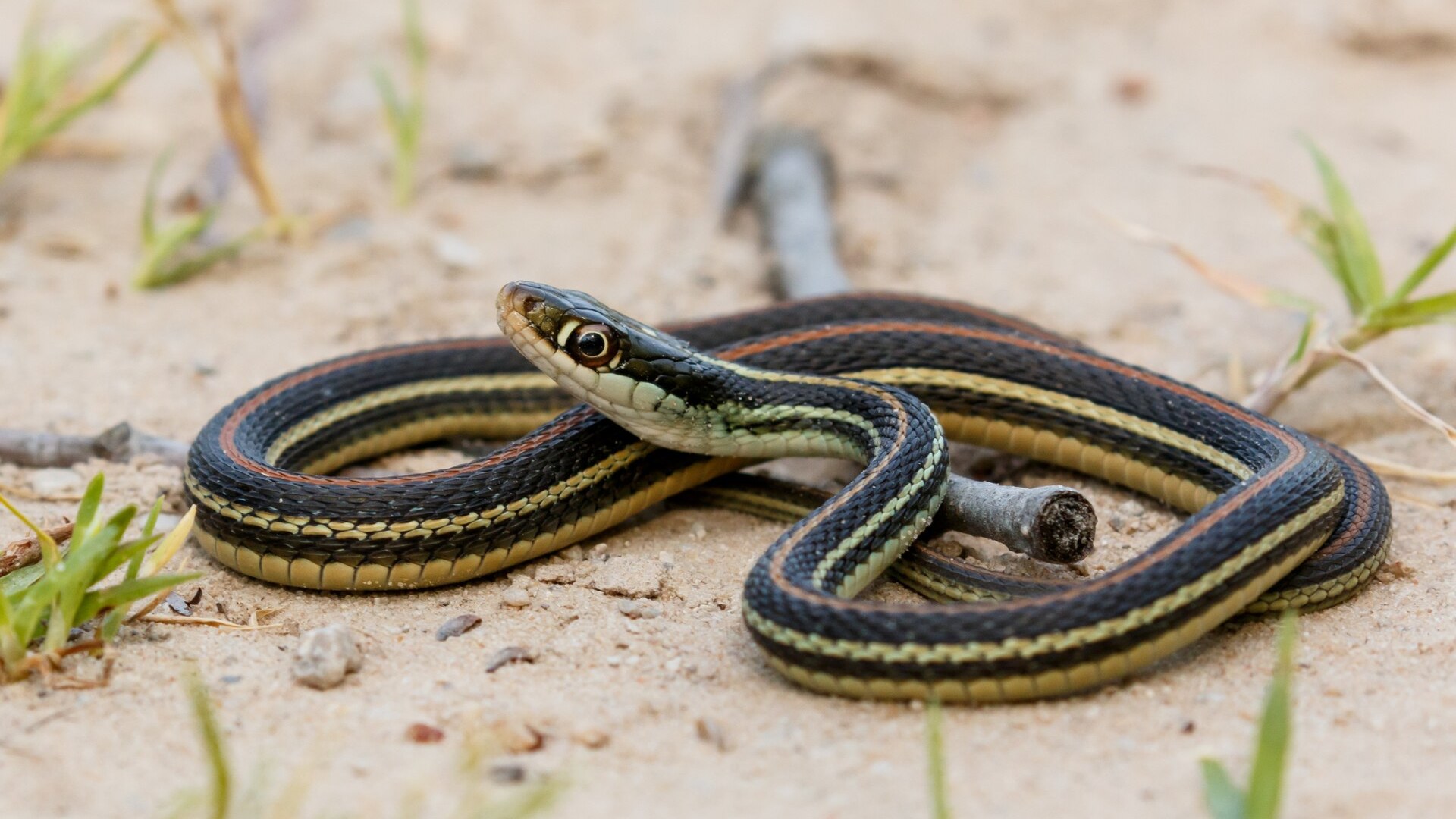
20. Western Ribbon Snake
Thamnophis proximus is a slender, semiaquatic snake found across central and eastern Texas. Adults typically measure 20 to 30 inches long and hunt frogs, tadpoles, and small fish along shallow shorelines. When startled near water, they often swim smoothly across the surface or dive under vegetation.
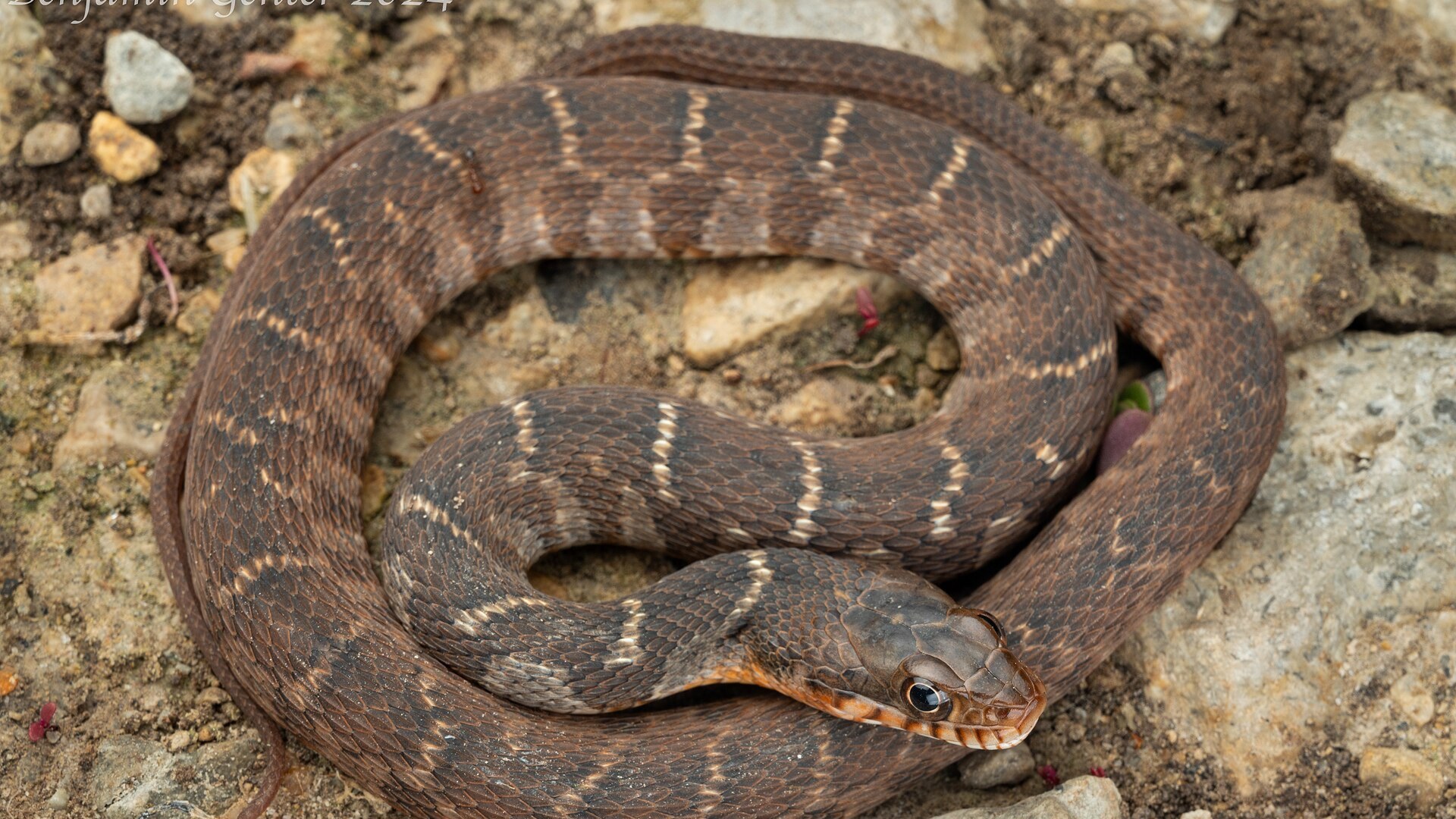
19. Plain-Bellied Watersnake
Nerodia erythrogaster ranges across most of Texas except the far western desert corners. Adults grow 30 to 48 inches long and feed heavily on frogs, salamanders, and slow-moving fish in creeks and stock tanks. Dark adults are frequently mistaken for cottonmouths when basking on shoreline logs.
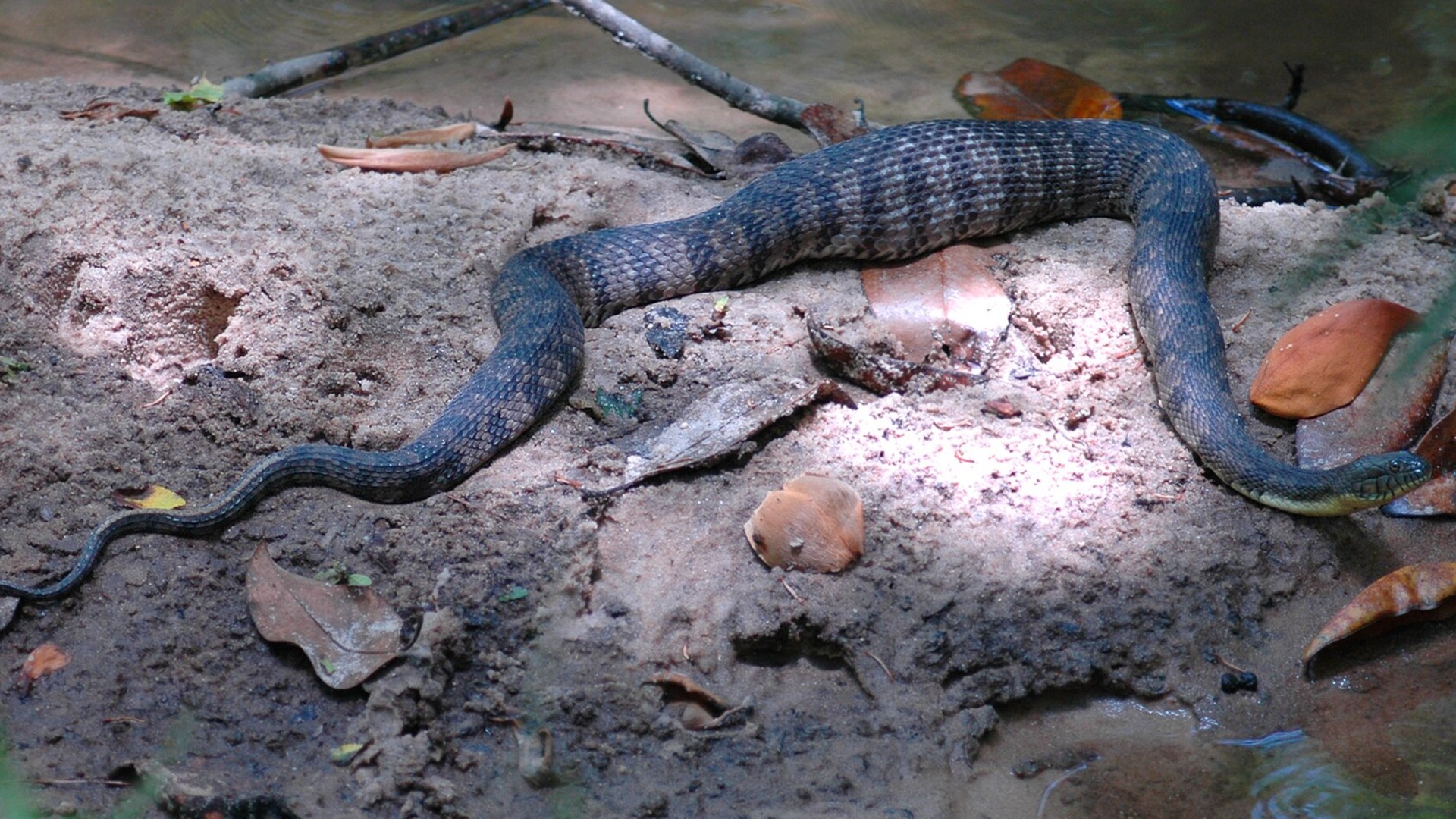
18. Diamondback Watersnake
Nerodia rhombifer inhabits rivers, marshes, and lakes throughout central, eastern, and coastal Texas. Females can exceed 50 inches in length, making it one of the state's largest watersnakes. Though it flattens its head and strikes readily if cornered, its bite carries no venom and is harmless.
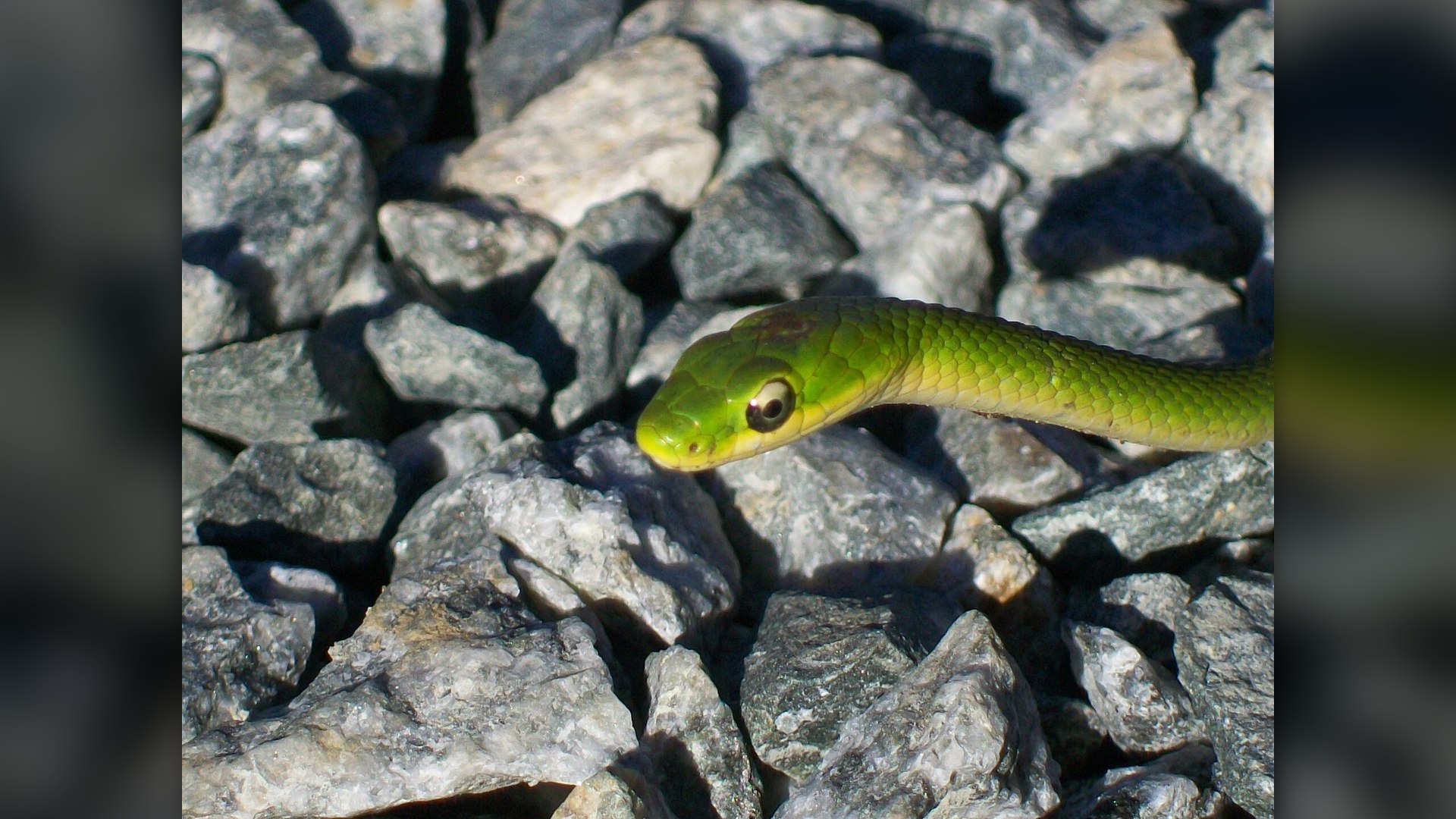
17. Rough Green Snake
Opheodrys aestivus spends most of its active hours high in bushes, vines, and streamside branches across the eastern half of Texas. Its keeled green scales blend almost invisibly into foliage while it stalks caterpillars, crickets, and spiders. Adults rarely exceed 32 inches and almost never bite.
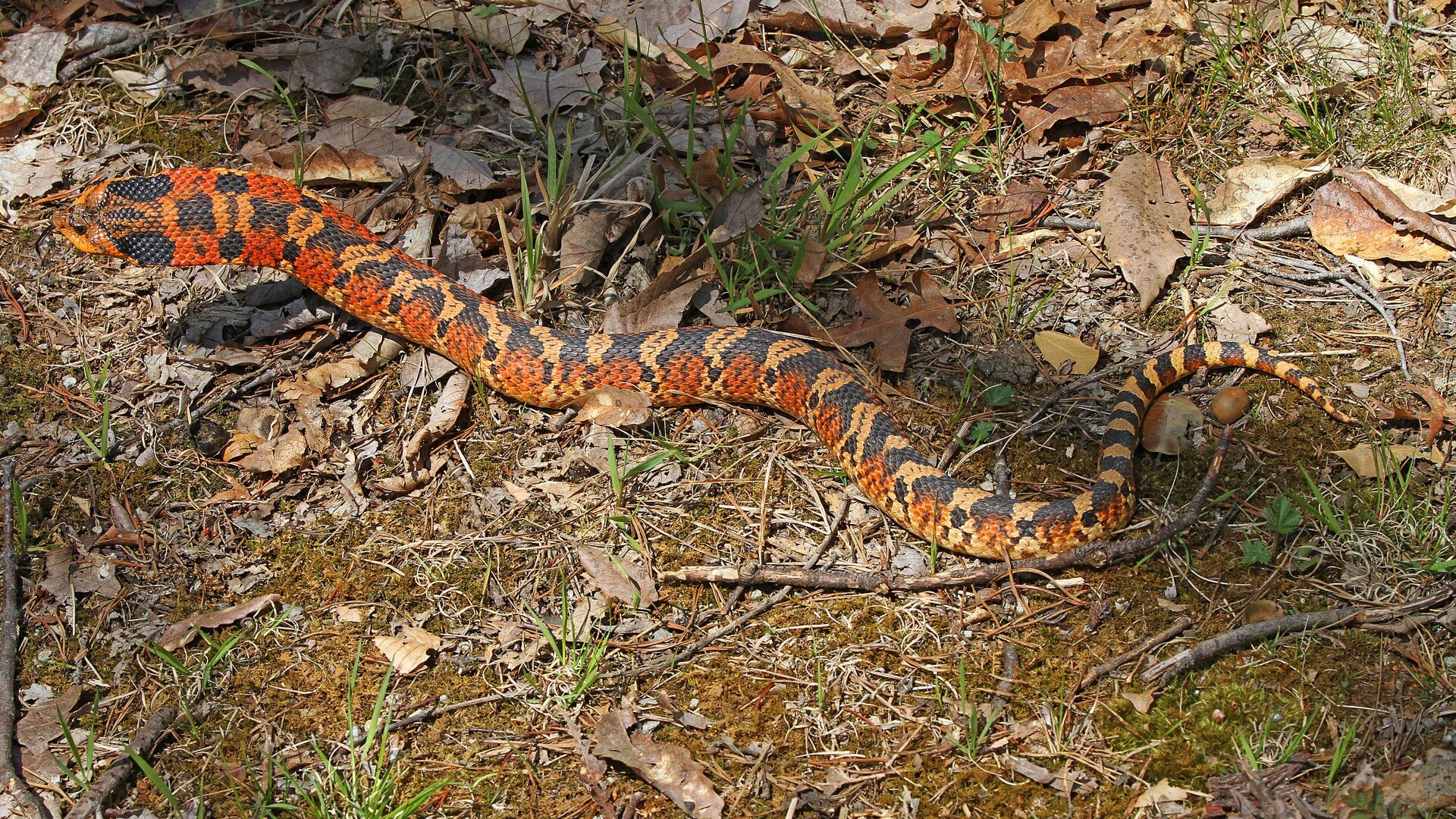
16. Eastern Hog-Nosed Snake
Heterodon platirhinos uses its shovel-like rostral scale to dig toads out of sandy East and Central Texas soils. When threatened, it spreads its ribs like a cobra, hisses loudly, and then rolls onto its back with an open mouth. Its mild rear-fanged saliva helps subdue amphibians but poses no danger to people.
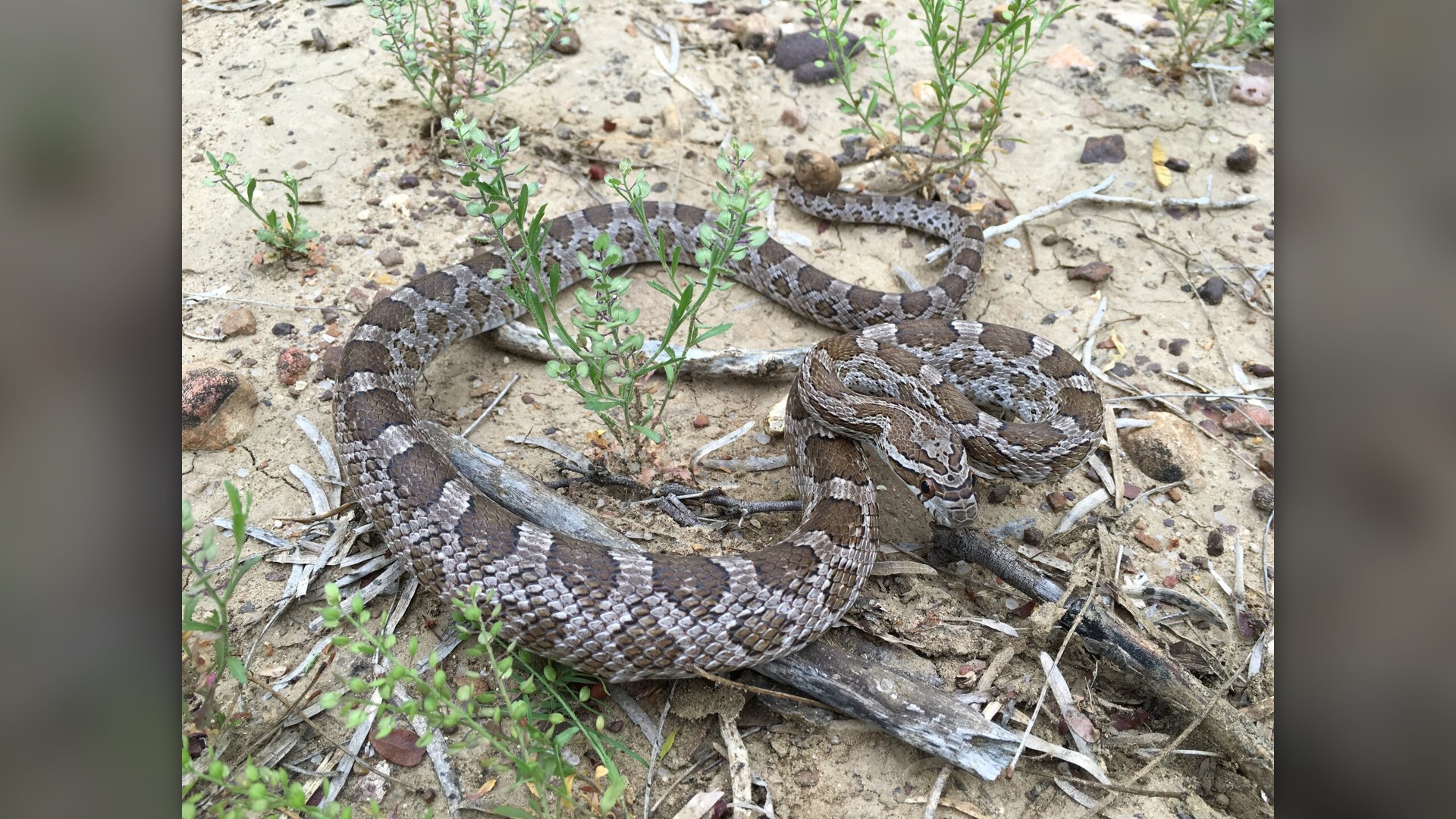
15. Great Plains Ratsnake
Pantherophis emoryi lives from the High Plains and Trans-Pecos across Central Texas down to the coastal prairie. Adults average 24 to 48 inches long and forage for rodents, birds, and bats around rocky ledges and caves. A forward-pointing spearhead mark between its eyes helps separate it from corn snakes.
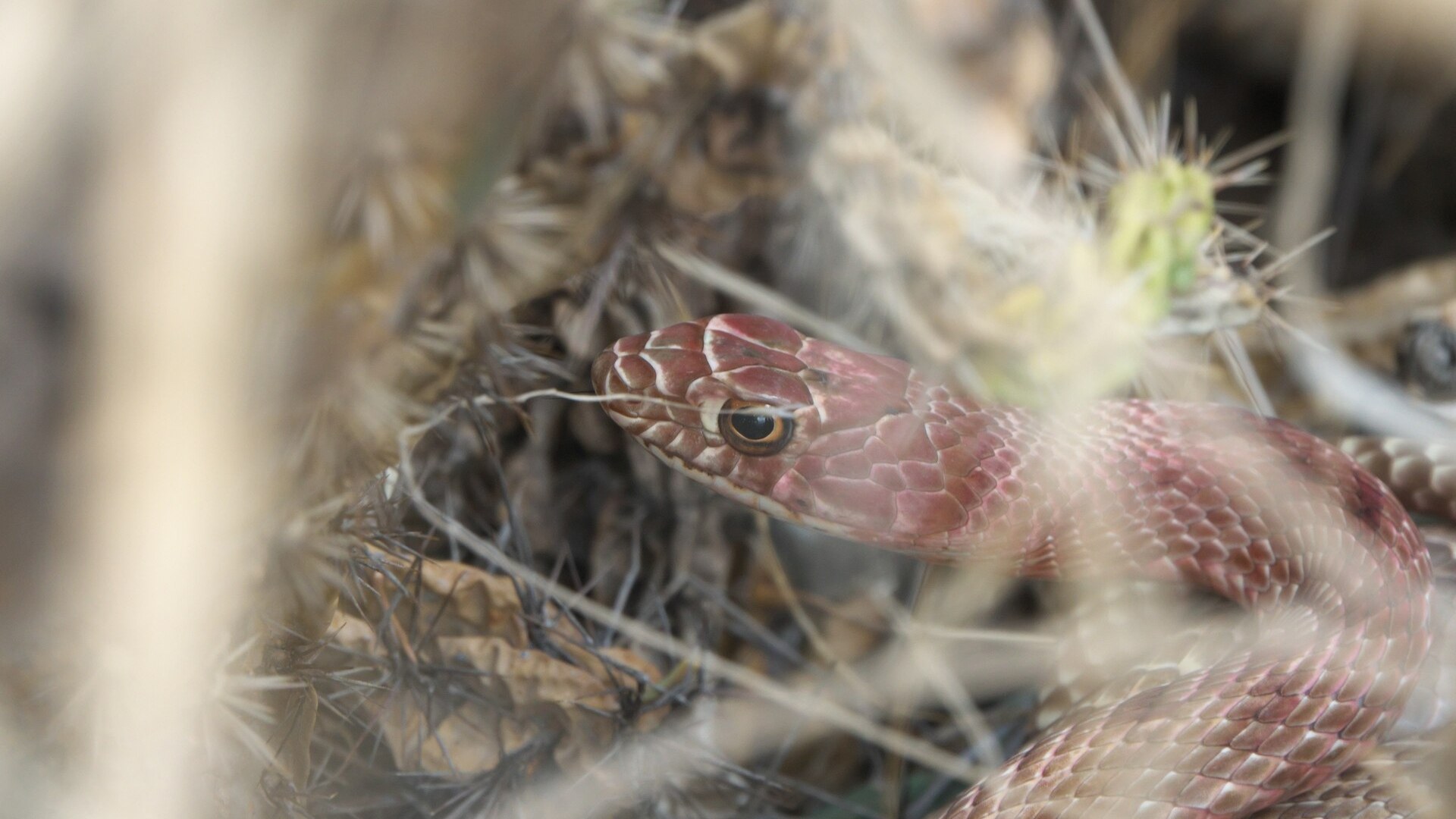
14. Coachwhip
Masticophis flagellum is found statewide in Texas and hunts by sight during warm daylight hours, often raising its head above grass to scan for lizards, rodents, and small snakes. Adults can top 60 inches in length. When cornered in open scrub, coachwhips flee rapidly or climb low mesquite branches.
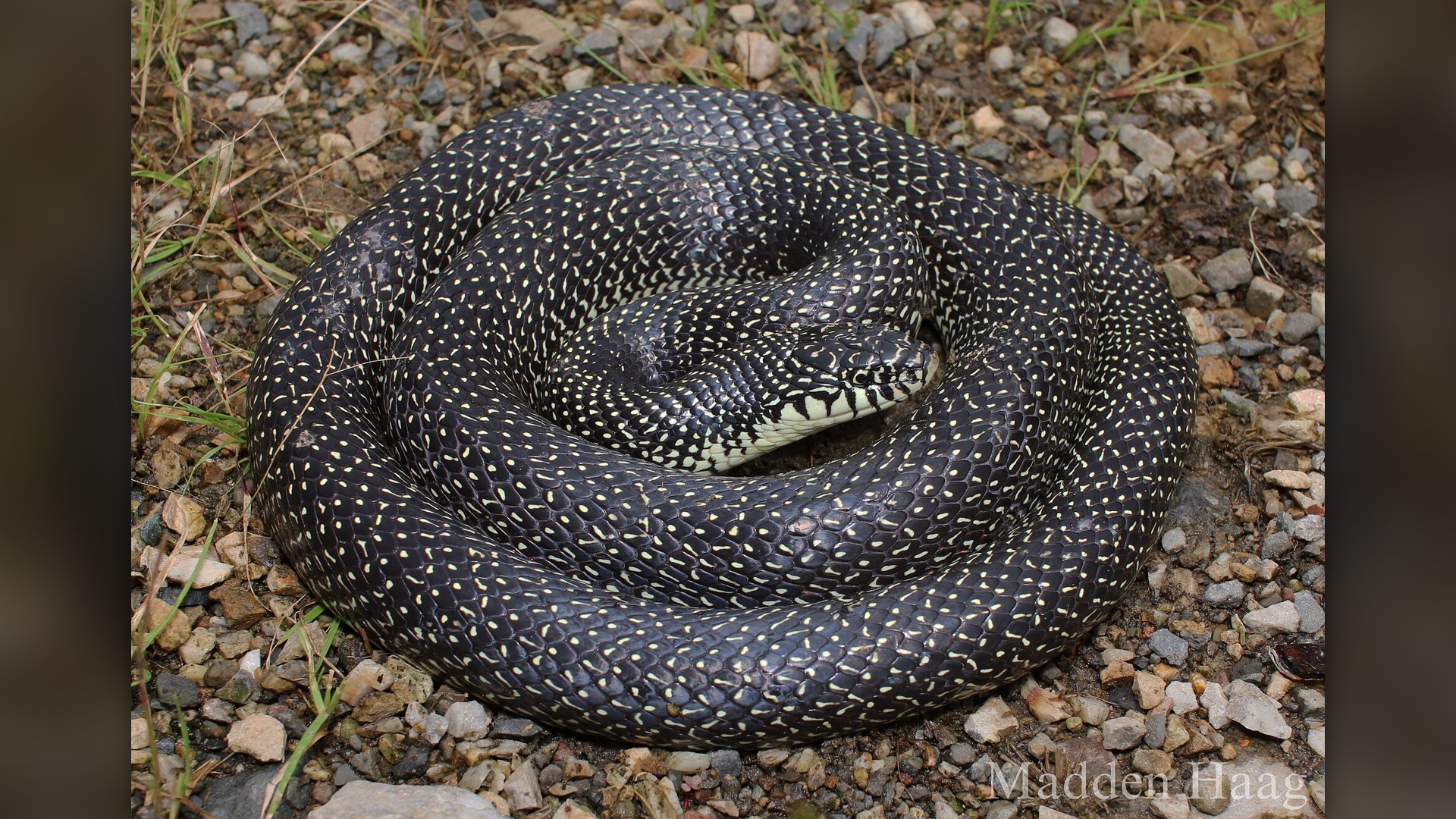
13. Speckled Kingsnake
Lampropeltis holbrooki inhabits prairies, floodplains, and woodlands across the eastern half of Texas. Known colloquially as the salt-and-pepper snake, it has natural resistance to pit viper venom and regularly preys on copperheads and young rattlesnakes alongside rodents, lizards, and bird eggs.
12. Bullsnake
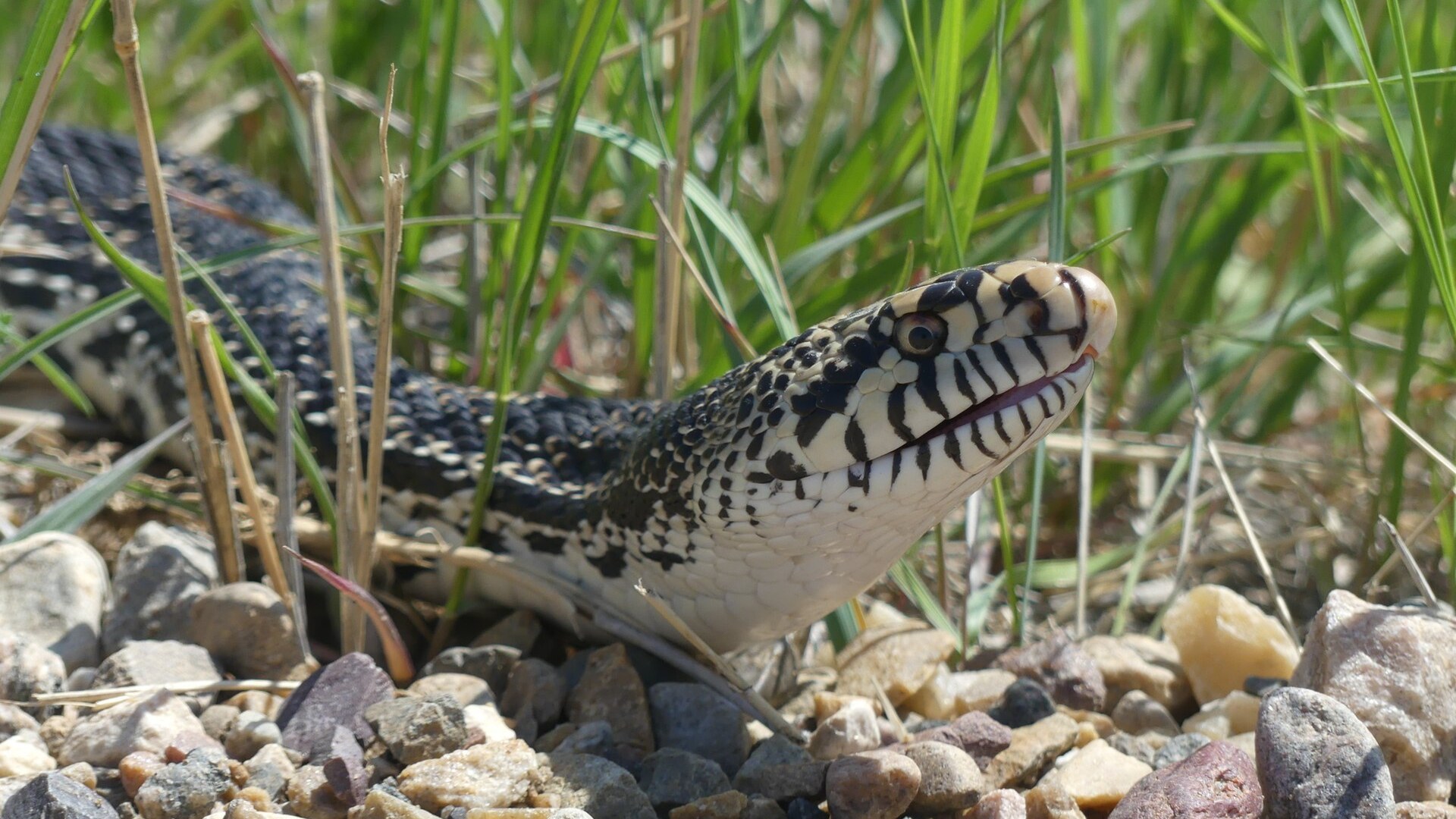
Pituophis catenifer sayi is one of Texas's longest snakes, routinely reaching 50 to 72 inches across central and western grasslands. A specialized flap in its windpipe amplifies a sharp, rattling hiss while it coils and vibrates its tail in dry leaves. Farmers value bullsnakes for heavy rodent control.
11. Western Ratsnake
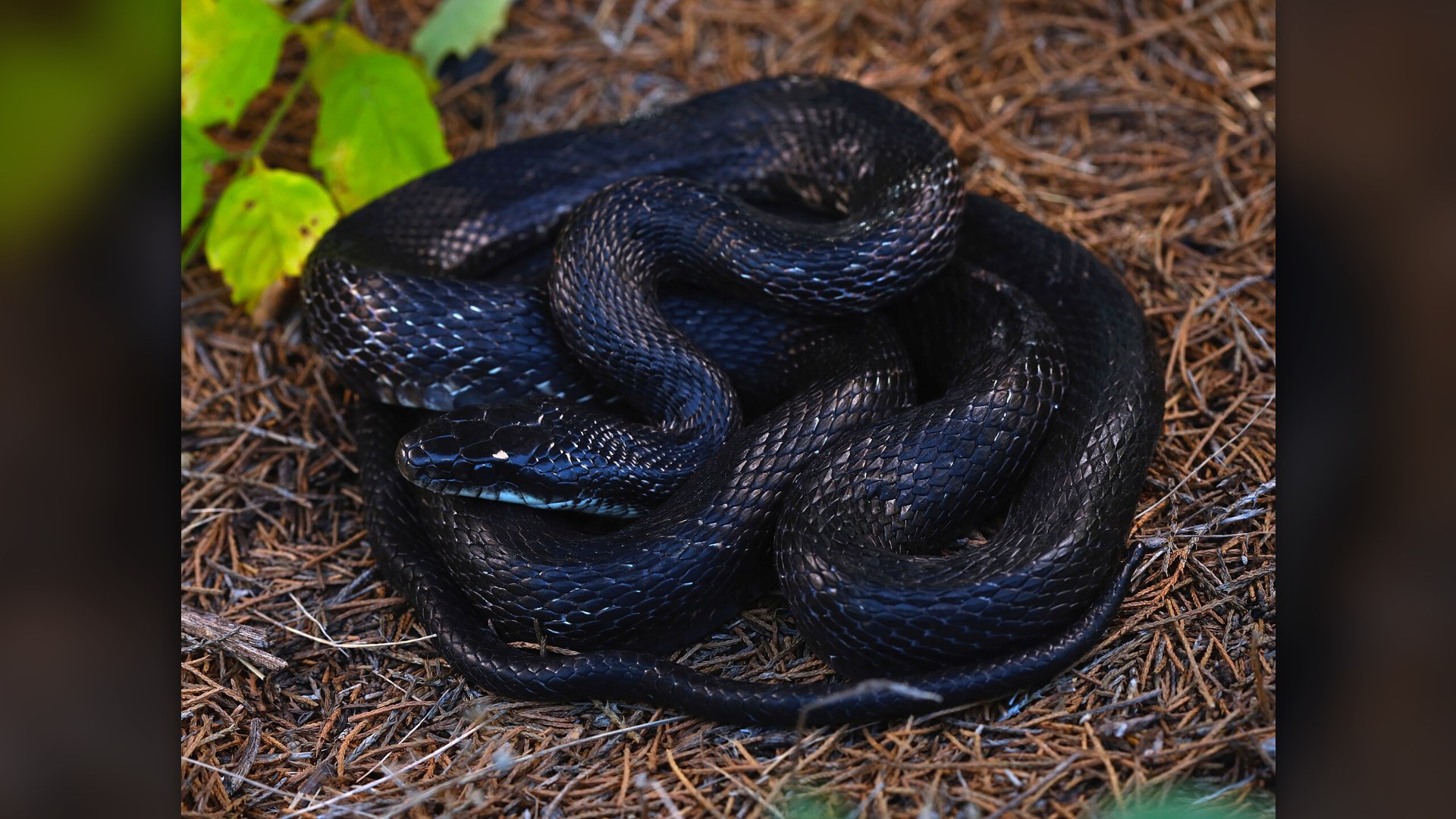
Pantherophis obsoletus ranges from East Texas woodlands west onto the Edwards Plateau, frequently entering attics, chicken coops, and outbuildings in search of mice, rats, and birds. Its flat belly scales grip rough tree bark easily. Adults grow 42 to 72 inches long and constrict prey tightly.
10. Texas Indigo Snake
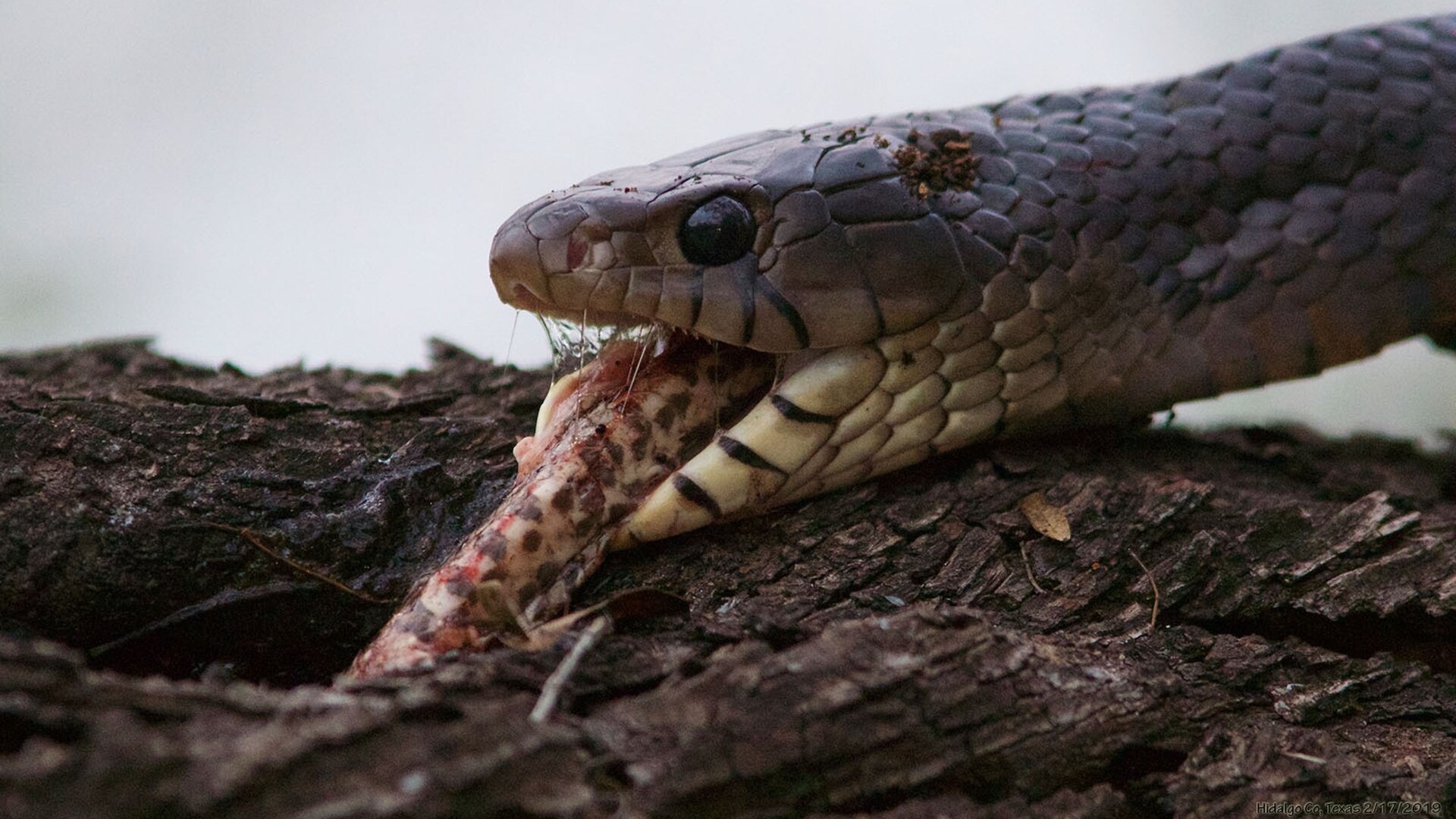
Drymarchon melanurus erebennus is listed as a threatened species by the Texas Parks and Wildlife Department and lives mainly in the South Texas Plains. Reaching up to 8 feet long, it is nonvenomous and feeds on rodents, frogs, birds, and even venomous snakes including western diamondback rattlesnakes.
9. Western Massasauga
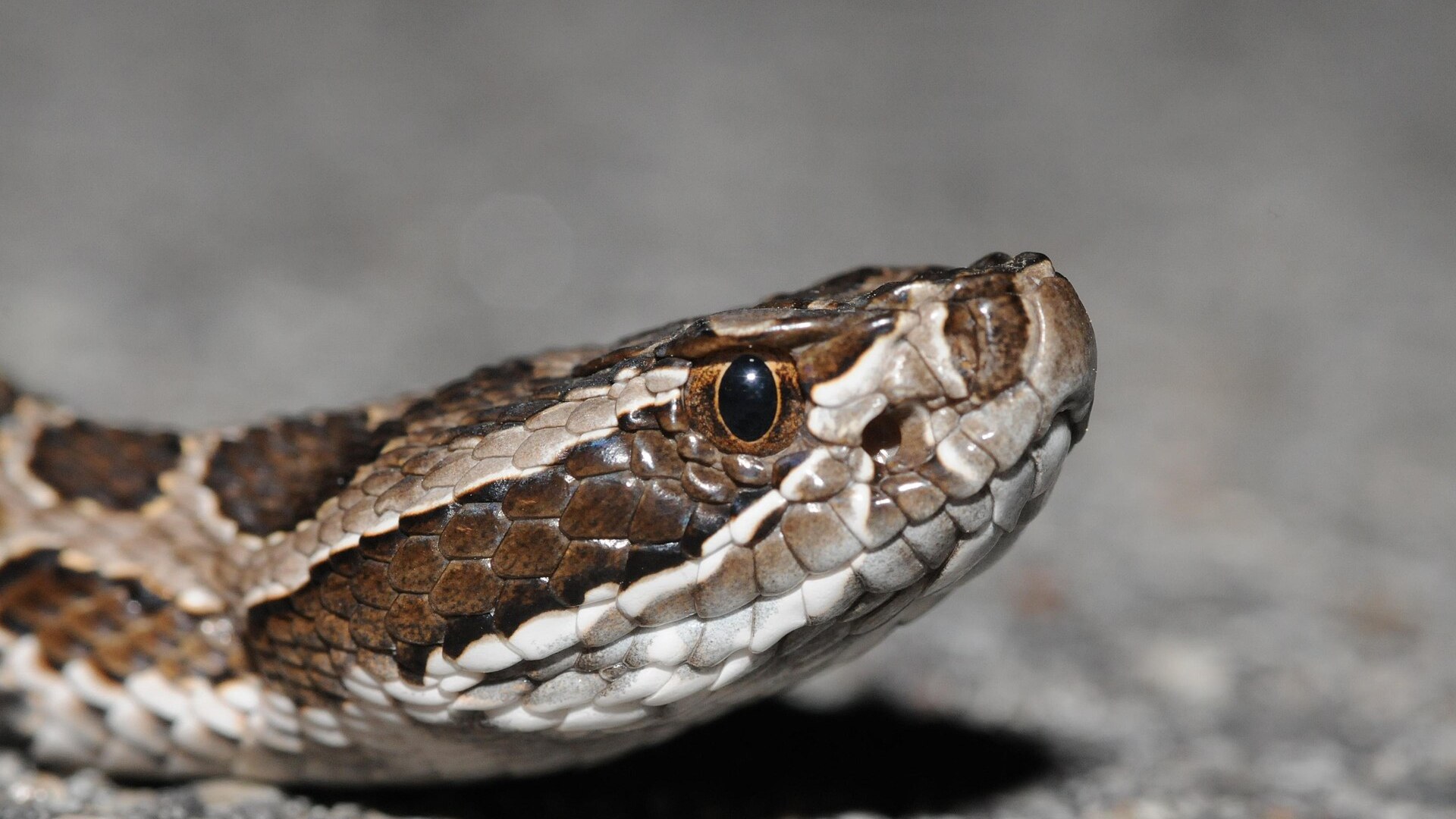
Sistrurus tergeminus inhabits native prairies, coastal marshes, and desert grasslands from the Panhandle to the Gulf Coast. Rarely exceeding 28 inches, it produces a high, buzzing rattle that sounds like a cicada in tall grass. Unlike larger rattlesnakes, it retains nine large symmetrical scales on top of its head.
8. Black-Tailed Rattlesnake
Crotalus molossus occupies rocky limestone hills of the Edwards Plateau and mountain canyons of the Trans-Pecos. Olive, yellow, or gray crossbands contrast sharply with the velvety black tail just ahead of its rattle. Compared with many desert vipers, it often stays calm when encountered along trails.
7. Prairie Rattlesnake
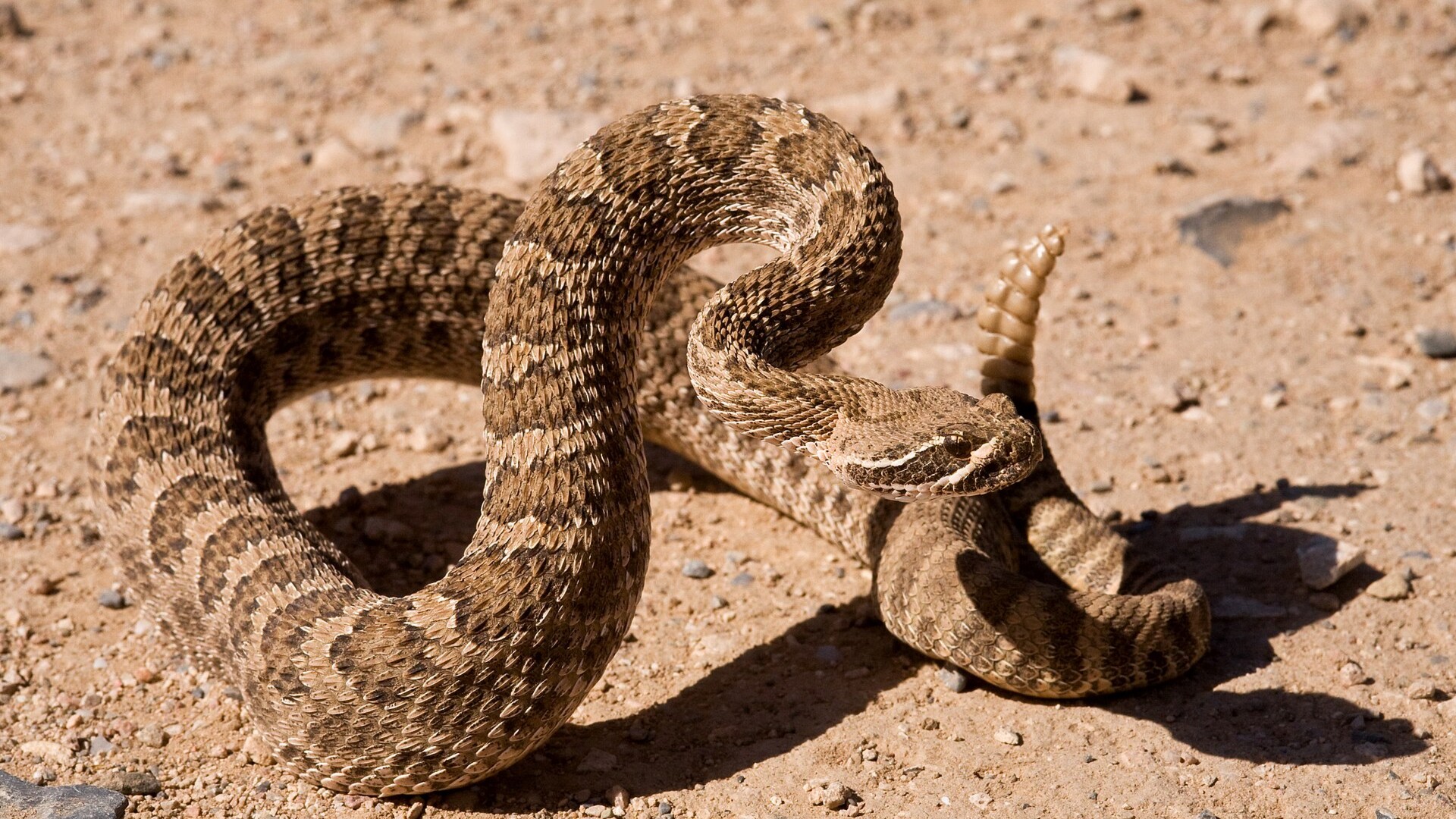
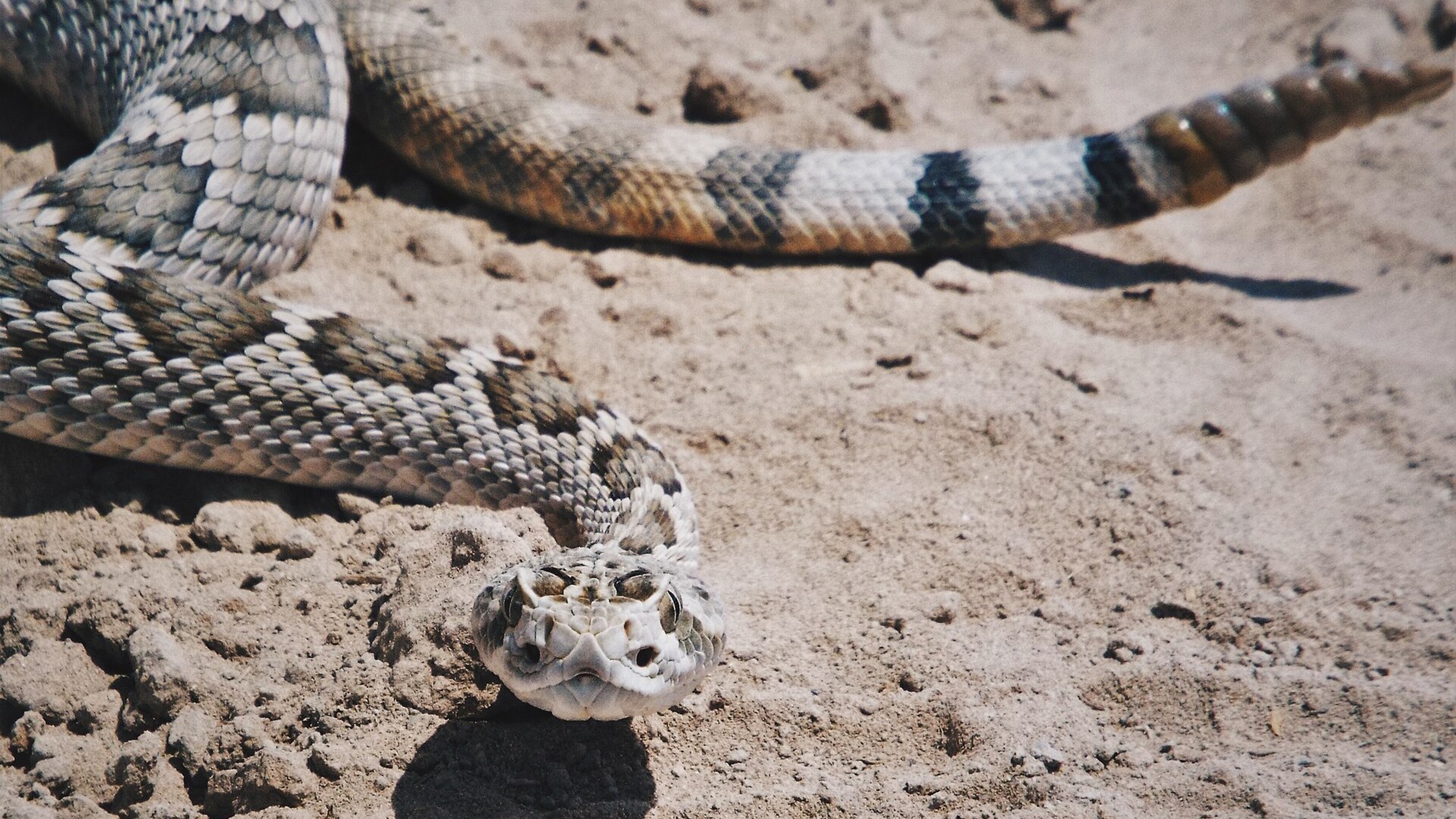
Crotalus viridis ranges across the Texas Panhandle and western rolling plains, often sheltering inside abandoned prairie dog burrows during winter and midday heat. Adults average 30 to 45 inches long and show greenish-gray to brown blotches with white borders, using heat-sensing facial pits to hunt.
6. Eastern Copperhead
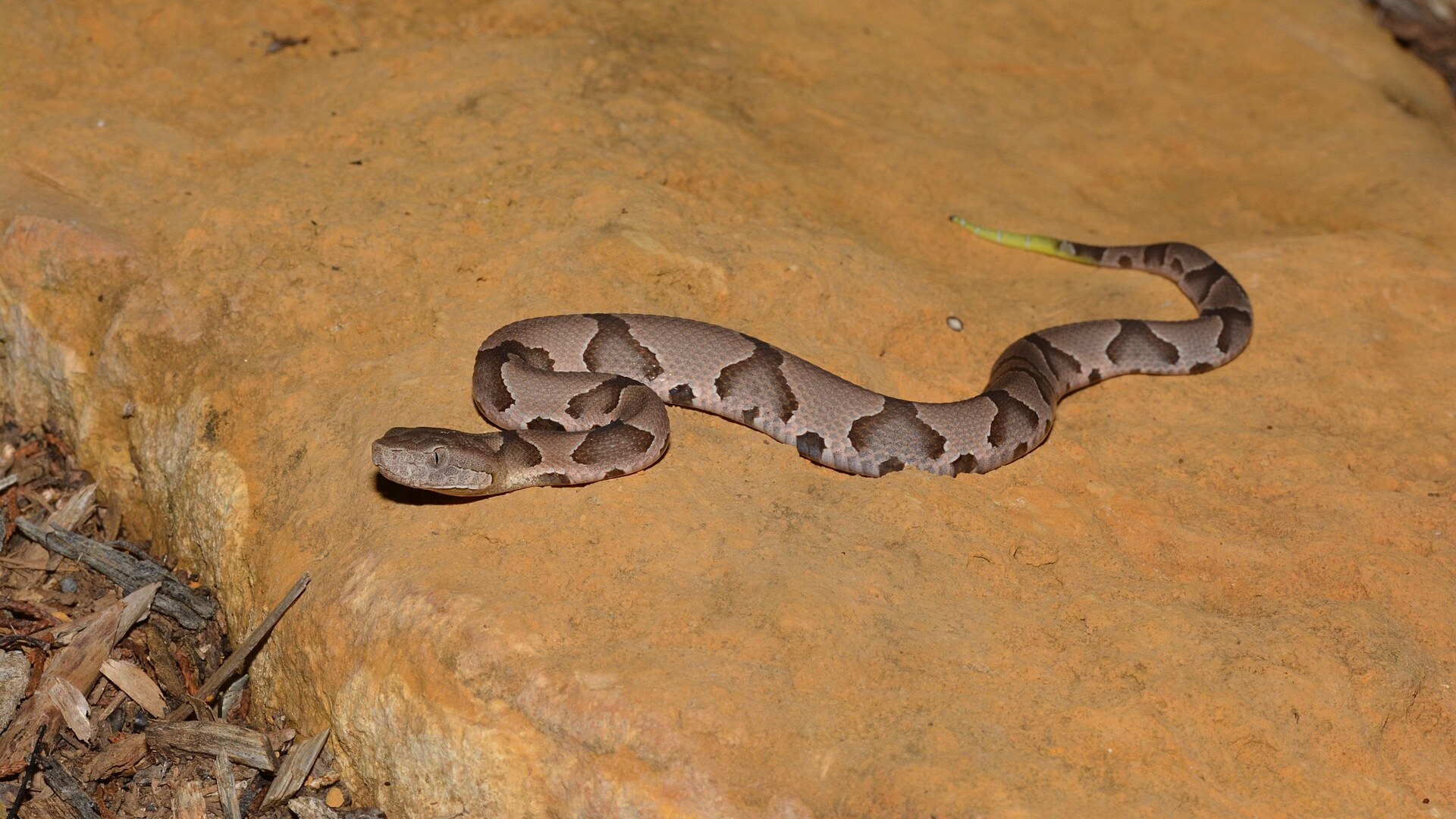
Agkistrodon contortrix lives across East Texas pine and hardwood forests, often lying motionless on leaf litter where its tan and chestnut hourglass pattern disappears. Juveniles hatch with bright sulfur-yellow tail tips used as lures for frogs and lizards. Its venom is potent though rarely fatal to adults.
5. Northern Cottonmouth
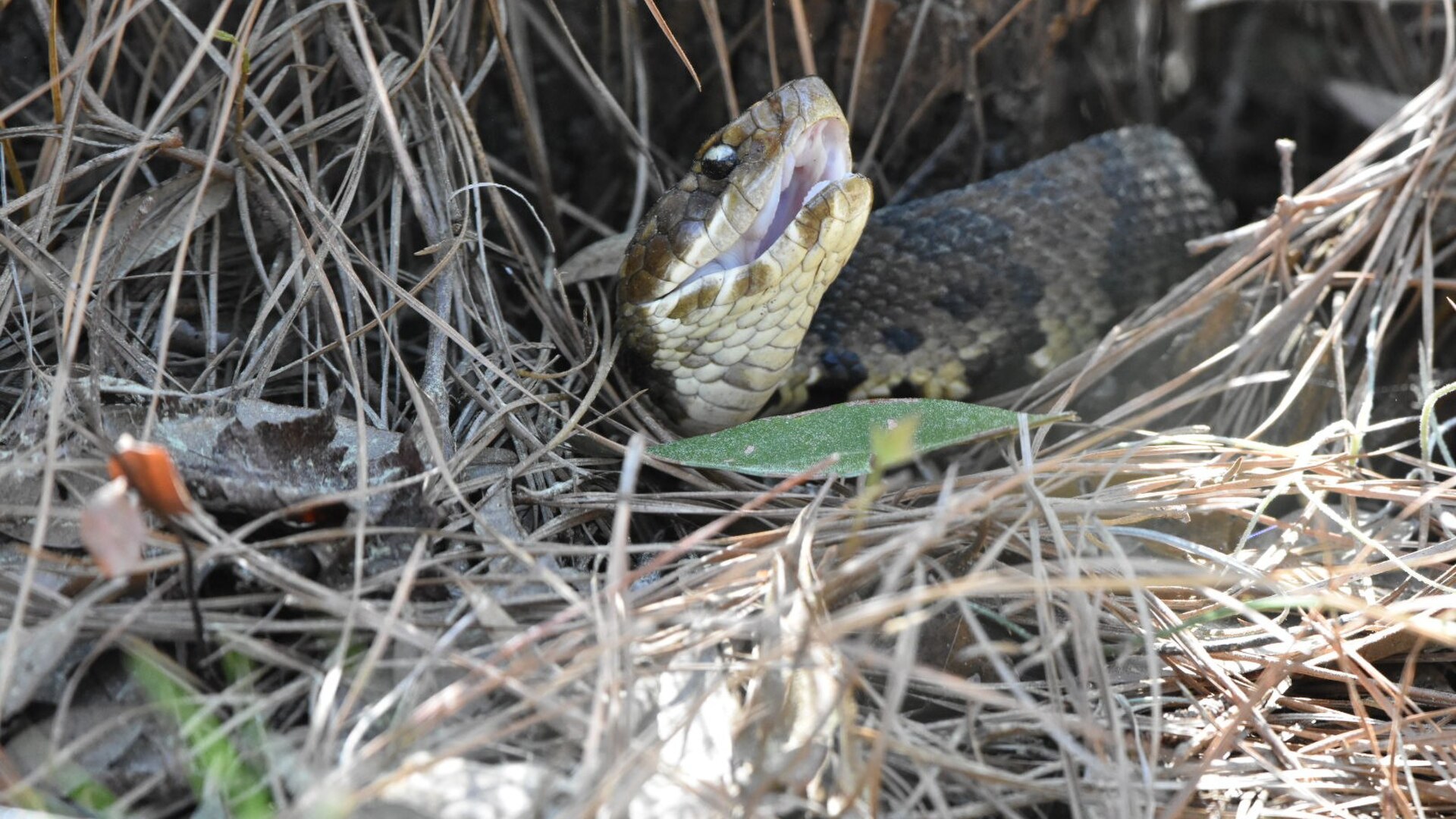
Agkistrodon piscivorus thrives in East and Central Texas bayous, swamps, and slow creeks. When cornered, it coils and opens its mouth wide to flash pale white tissue before striking. Unlike nonvenomous watersnakes, cottonmouths show heavy triangular heads, vertical pupils, and facial heat-sensing pits.
4. Mojave Rattlesnake
Crotalus scutulatus occurs in the arid Trans-Pecos region of far West Texas, especially creosote flats and desert scrub. Many populations carry Mojave toxin, a neurotoxin that can impair breathing alongside tissue-damaging venom components. Broad white bands at the tail base help distinguish it from diamondbacks.
3. Timber Rattlesnake
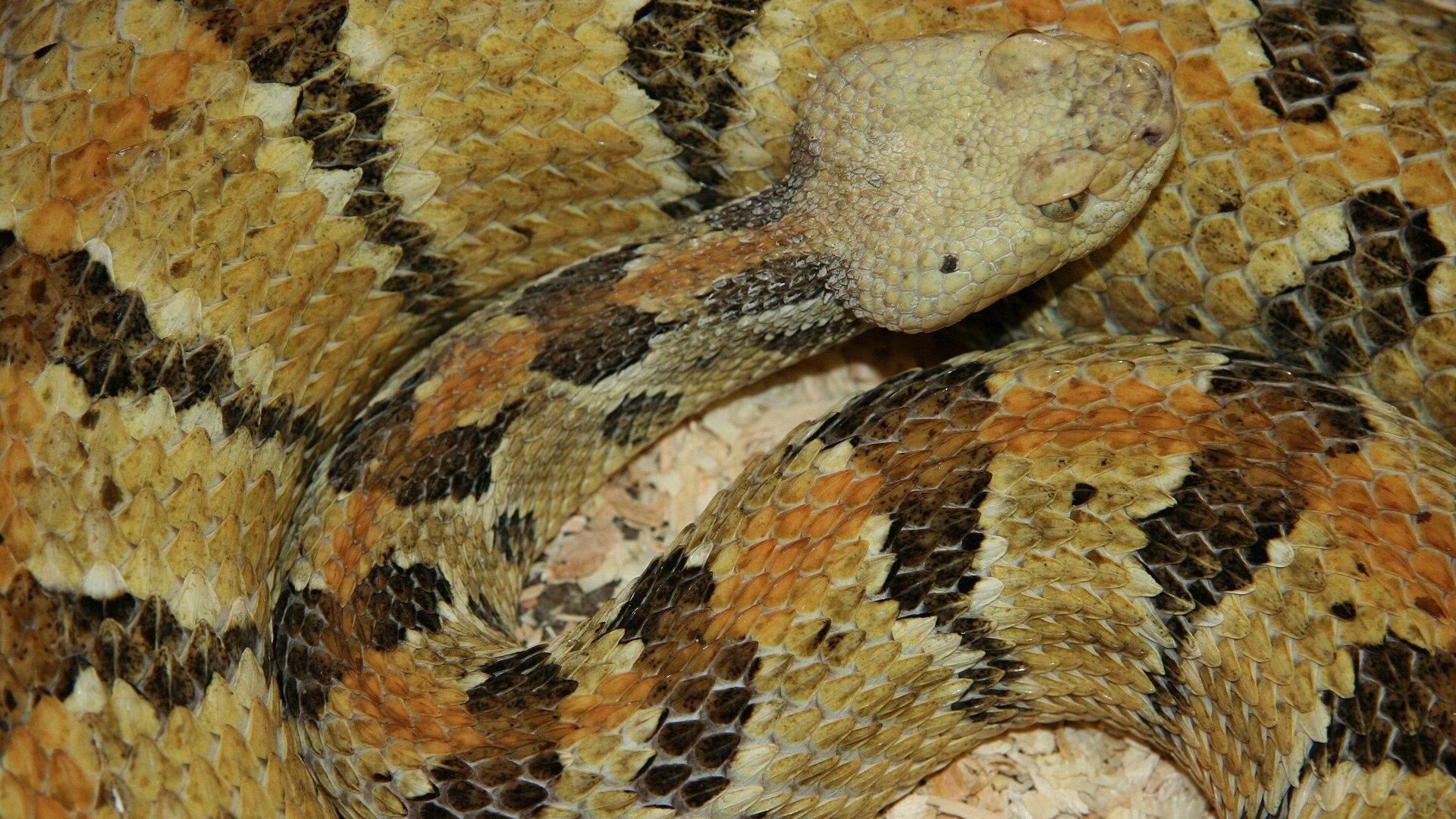
Crotalus horridus is protected as a state-threatened species in Texas and inhabits dense bottomland forests and river corridors in the eastern third of the state. Known locally as the canebrake rattlesnake, adults grow 36 to 60 inches long and ambush squirrels, rabbits, and mice beside fallen logs.
2. Texas Coral Snake
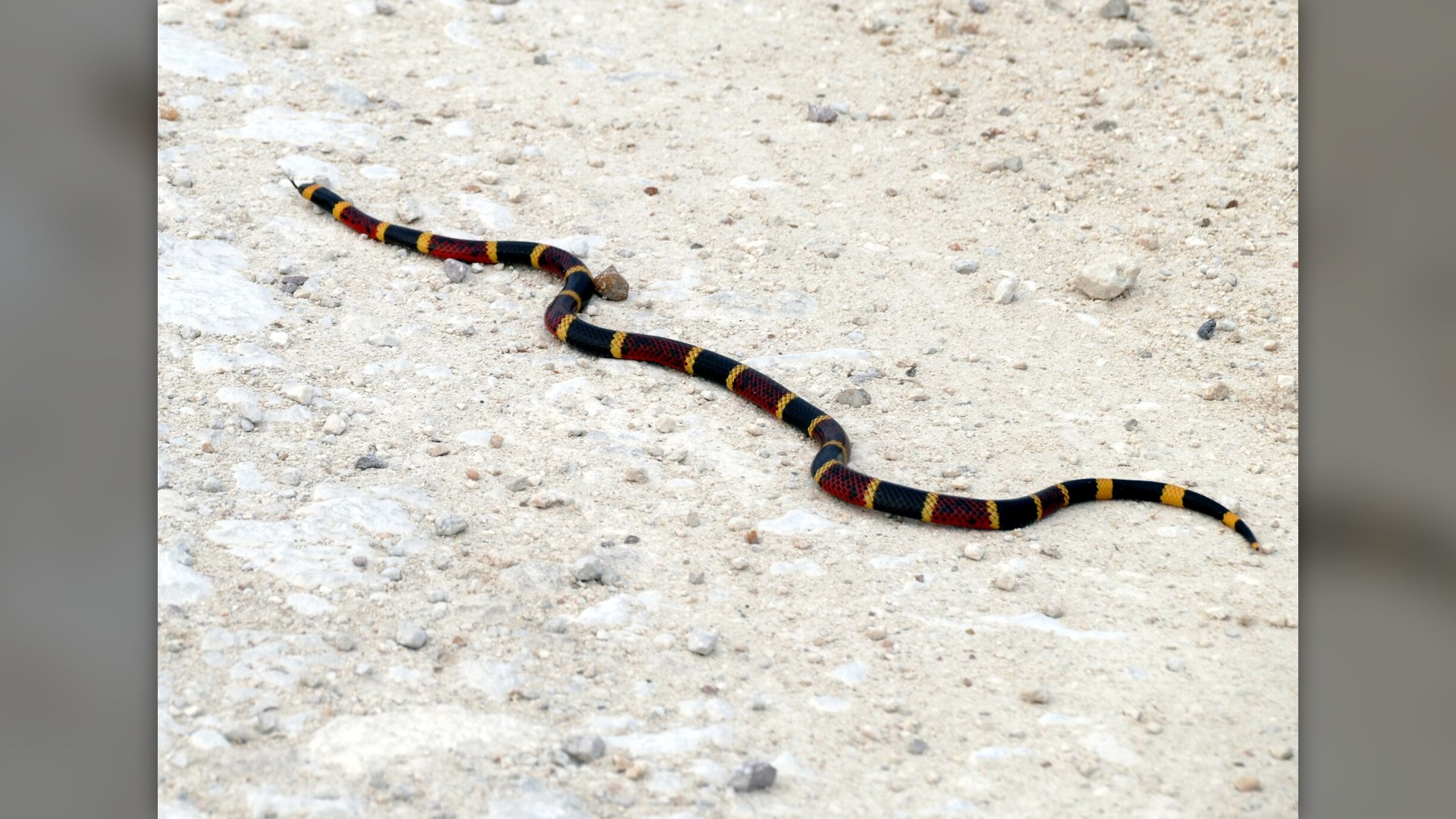
Micrurus tener inhabits wooded neighborhoods, piney woods, and scrub across eastern and central Texas. Unlike pit vipers, it is a secretive member of the cobra family with fixed front fangs and neurotoxic venom. On native US coral snakes, bright red rings touch yellow rings rather than black ones.
1. Western Diamondback Rattlesnake
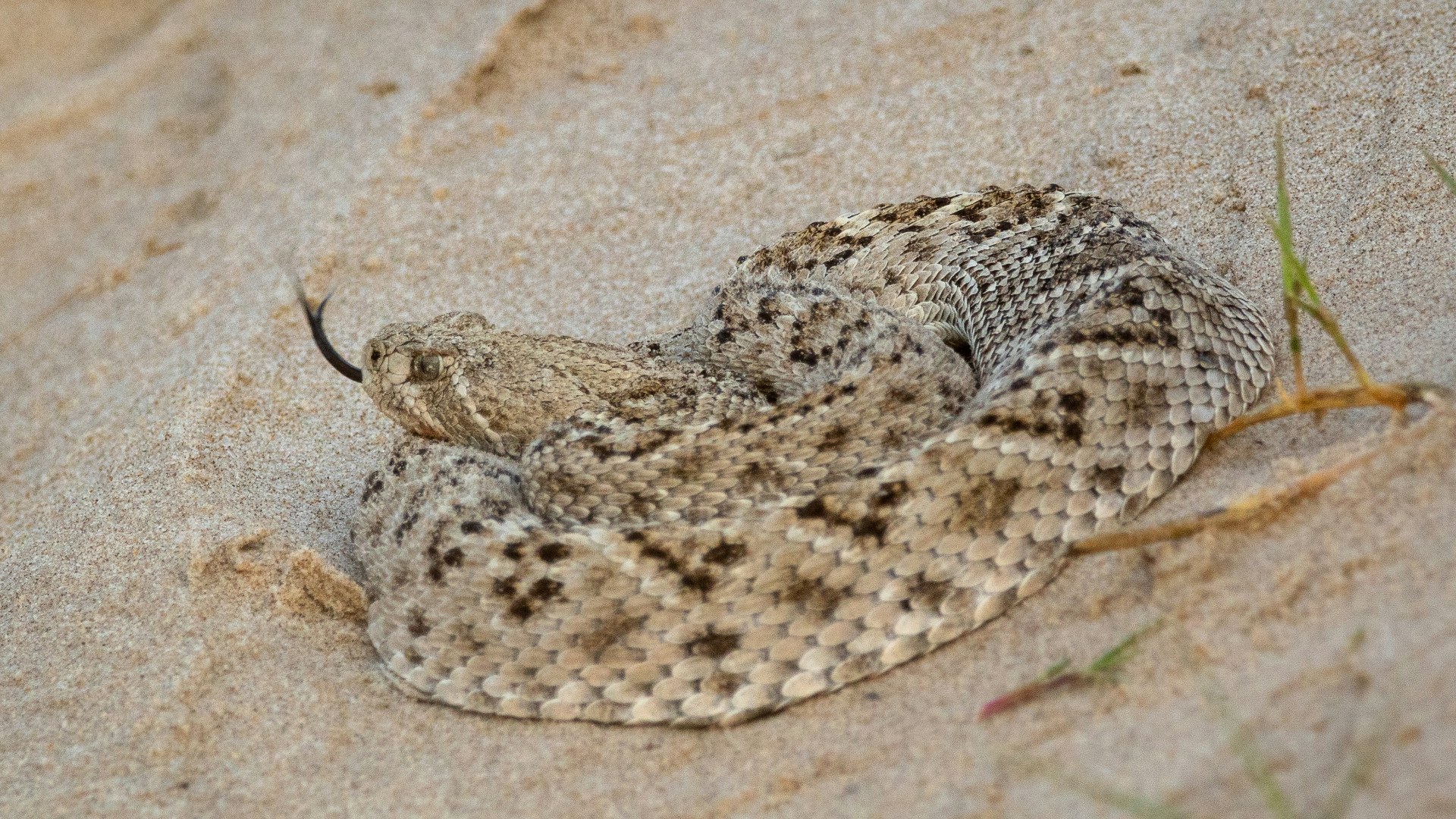
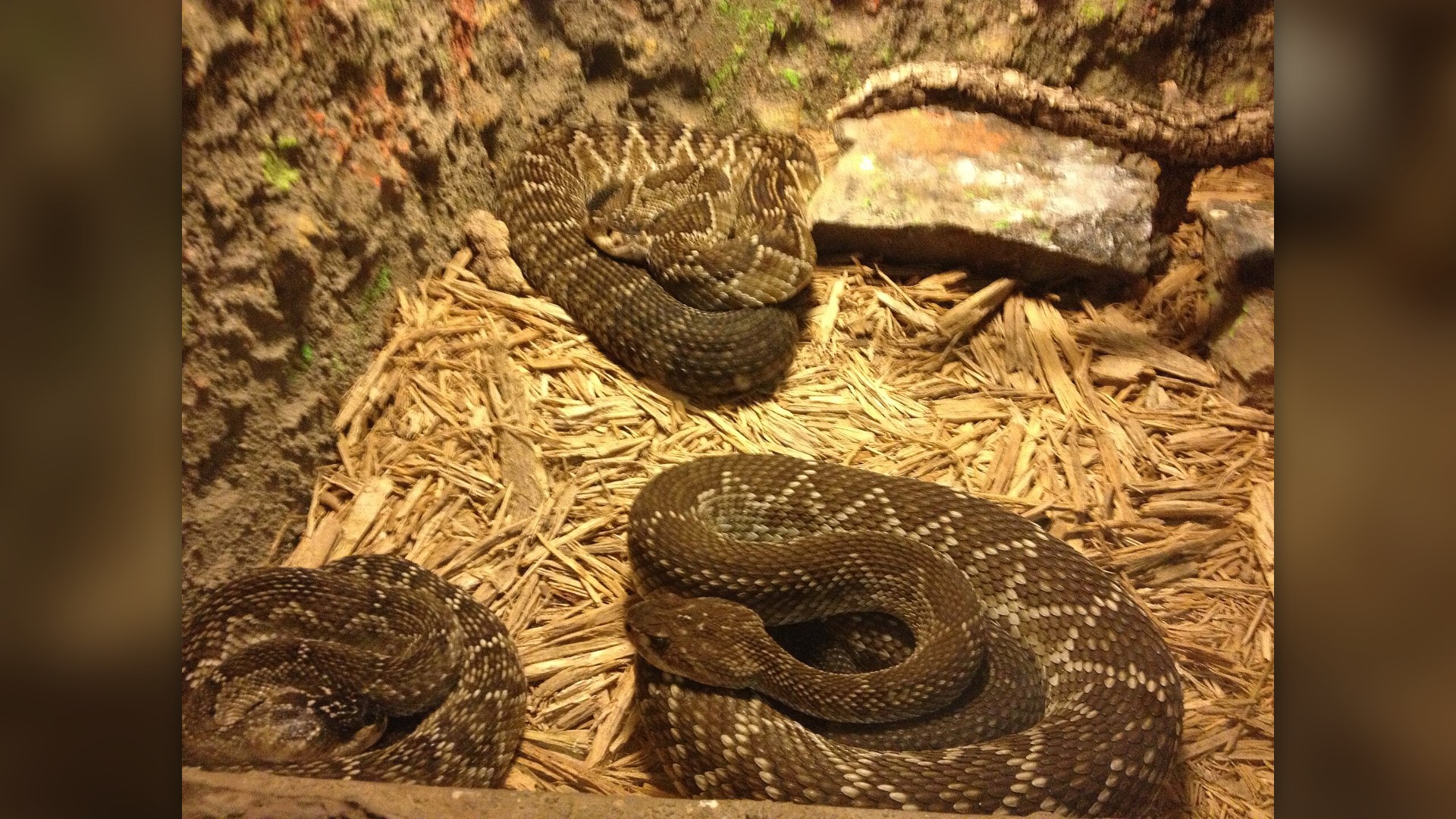
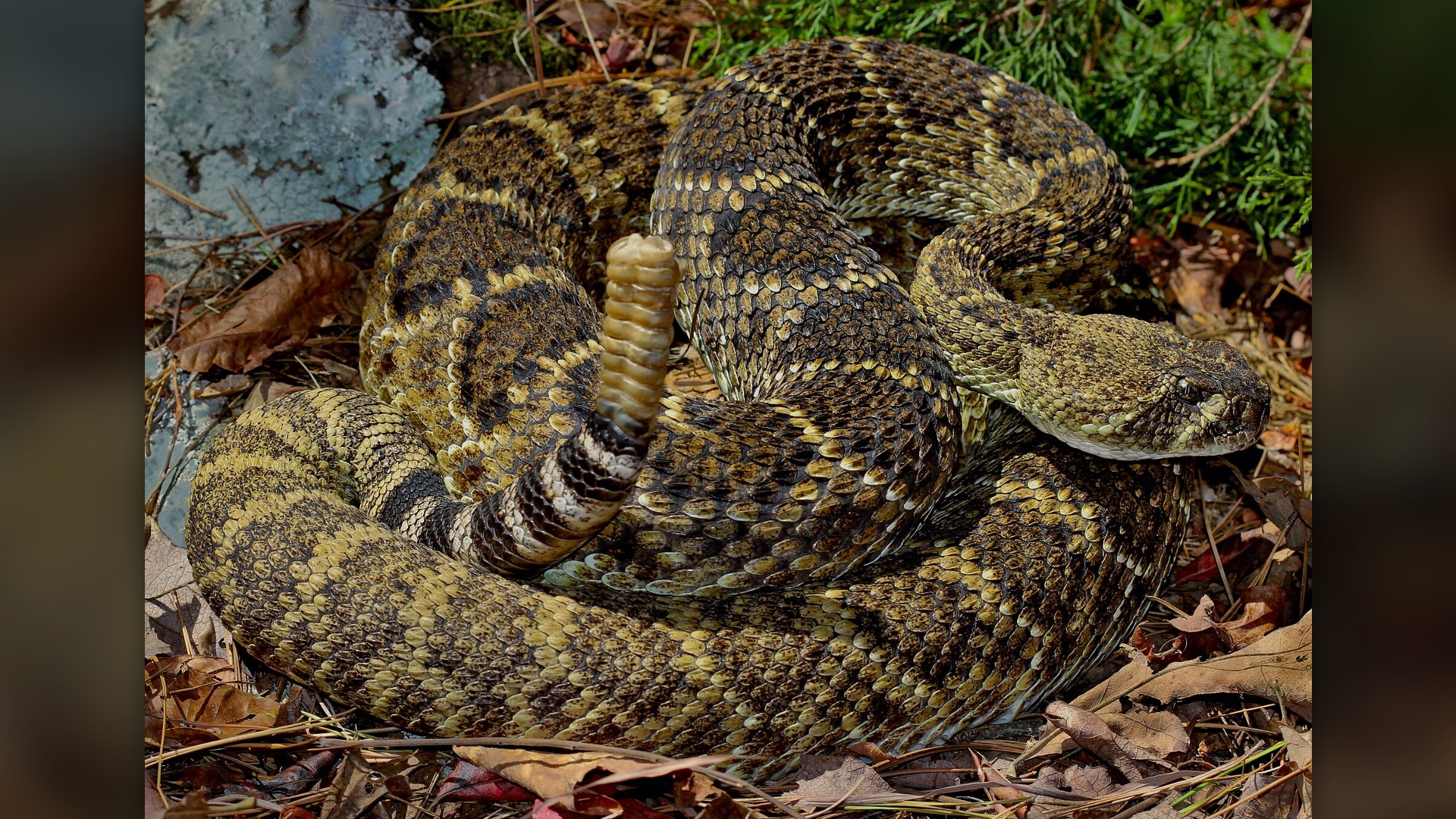
Crotalus atrox ranges across nearly the western two-thirds of Texas and accounts for more serious snakebite hospitalizations in the state than any other species. Adults commonly reach 4 to 5 feet long, using heat-sensing loreal pits to strike rodents and rabbits across scrubland, canyons, and ranches.