Article · News
Can Democrats Really Start a Process to Remove Trump?
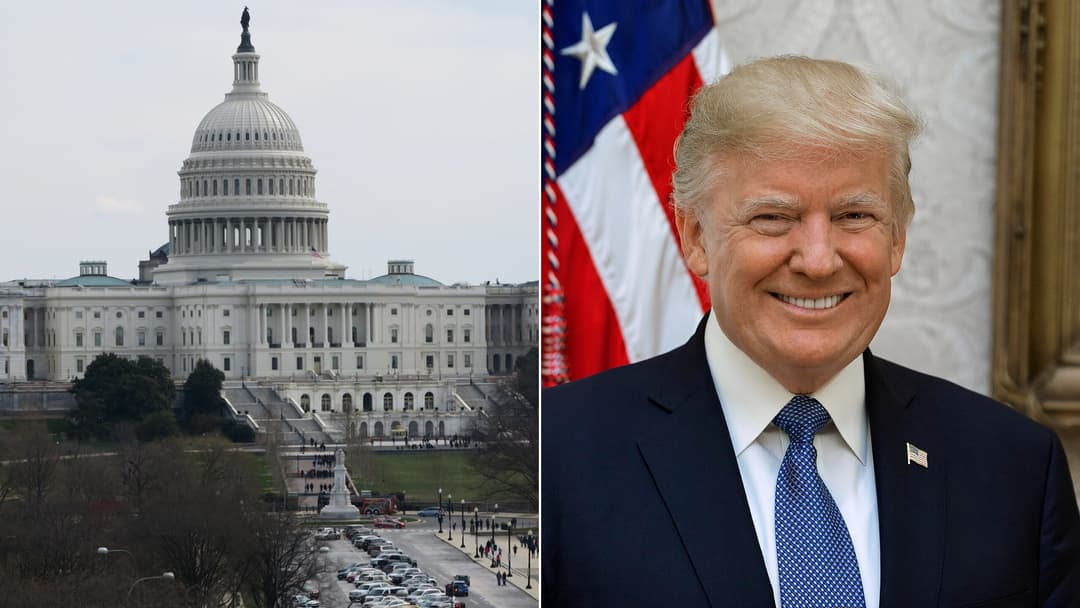
Viral headlines claim Congress found a secret loophole in the 25th Amendment to remove Donald Trump. Whether lawmakers actually try remains to be seen, but succeeding is virtually impossible.
The short answer to whether Democrats can realistically remove Donald Trump through the 25th Amendment is no. While only the future will tell whether lawmakers actually attempt to introduce bills or hold hearings to pull this procedural trigger, succeeding is virtually impossible. Viral headlines claim that Congress found a secret, never-before-used loophole in the Constitution to kick Donald Trump out of the White House, but the actual legal and political reality makes that outcome practically unachievable.
The sensational stories point to the 25th Amendment, arguing that Congress can set up a special committee of doctors and experts to declare the president unfit for office.
On paper, the idea sounds simple enough to generate millions of clicks. Whether congressional Democrats ultimately introduce legislation or hold committee hearings remains an open debate. What is clear is that any real-world push faces three insurmountable constitutional roadblocks. Here is how the rule actually works, and why the viral claims do not hold up.
What Is the 25th Amendment Anyway?
Back in 1967, after John F. Kennedy was assassinated, America realized it had a huge problem. What happens if a president does not die, but suffers a massive stroke, falls into a coma, or becomes completely incapacitated?
To solve this, Congress created the 25th Amendment. Most people know about the main rule in Section 4. If a president becomes too sick to do the job, the vice president and a majority of the cabinet can sign a letter saying the president cannot serve. When they do, the vice president immediately steps in as acting president.
The amendment also includes a tiny backup rule. It says that instead of the cabinet, Congress can create 'such other body as Congress may by law provide.' The authors included that line just in case a president was incapacitated and the cabinet refused to admit it out of personal loyalty. It gave Congress the power to set up an independent panel to make the call.
The 25th Amendment was designed for medical paralysis and physical incapacitation, not as a political shortcut around the impeachment clause.
— Congressional Research Service and 1965 Senate Records
The First Big Problem: Passing the Law
This brings us to the first reason the viral plan falls apart. To create this panel of doctors and experts, Congress cannot just hold a press conference. The Constitution says the panel must be created 'by law.'
That means the House and the Senate have to write a bill, debate it, and pass it. Then that bill goes straight to the president's desk for a signature.
Ask yourself one simple question: would any sitting president sign a law creating a panel whose only job is to evaluate their fitness and remove them from power? The president would veto the bill within minutes.
To override a presidential veto, Congress needs a two-thirds majority in both the House and the Senate. In an evenly divided Washington, getting two-thirds of politicians to agree on lunch is tough enough. Getting them to override a presidential veto on this bill is a mathematical fantasy.
The Vice President Must Agree
Even if lawmakers pulled off a miracle and created the panel, they immediately run into a second brick wall. The panel cannot do anything on its own.
The Constitution is crystal clear on this point. Any declaration declaring the president unfit must come from the vice president and the panel together.
Think about what that means. Vice President JD Vance would have to sit down with this outside panel and voluntarily sign a document stripping Donald Trump of his presidential powers.
Running mates do not turn on their own bosses over political arguments, unpopular executive orders, or controversial speeches. Unless a president is in a severe medical emergency, no vice president is going to sign that paper.
It Is Harder Than Impeachment
What if the absolute unthinkable happened, and both the panel and the vice president signed the letter? The drama still would not be over.
Under the 25th Amendment, the president can send a letter right back to Congress saying, 'I am totally fine.' The moment that letter lands, the president instantly gets all executive powers back.
If the vice president and the panel want to fight it, Congress has to step in and vote. To permanently remove the president, two-thirds of the House and two-thirds of the Senate must vote against him.
That is actually a higher bar than standard impeachment. Impeachment only needs a simple majority in the House before a Senate trial. The 25th Amendment demands supermajorities in both chambers.
Built for Medical Crises, Not Politics
When lawmakers created the 25th Amendment sixty years ago, they made it very clear that this rule was never meant for politics. It was built for genuine medical disasters, like a heart attack, an assassination attempt, or severe brain damage. Using it to overturn an election or punish an unpopular leader was never the plan.
The internet loves a good political shortcut. When you look at how the Constitution is actually written, there are no secret buttons to push. Removing a president remains one of the hardest things to do in American government, and no viral headline is going to change that.
Quick Facts: Key Takeaways
- The Backup Rule: The 25th Amendment lets Congress create an outside panel to evaluate a president, but Congress has never passed a law to create one since 1967.
- The Presidential Veto: Setting up the panel requires passing a law. Any president would veto it, requiring an impossible two-thirds vote in both chambers to override.
- The Vice President Rule: The panel cannot act by itself. The sitting vice president must co-sign the declaration.
- The High Bar: If the president disputes the finding, two-thirds of both the House and Senate must vote to remove him, which is even stricter than impeachment.