Slideshow · Animals
Amazing Animals That Have Their Own Light, Ranked
15 Extraordinary Animals That Manufacture Their Own Living Light, Ranked
By Most Viral Today
27 Oct 2026

Amazing Animals That Have Their Own Light, Ranked 
15. Green Bomber Worm (Deep Ocean) 
14. Flashlight Fish (Indo-Pacific Reefs) 
13. Cookiecutter Shark (Warm Oceans) - AdvertisementSwipe or tap ▶ to continue countdown

12. Motyxia Millipede (California, USA) 
11. Vampire Squid (Deep Ocean) 
10. Bioluminescent Click Beetle (The Americas) 
9. Firefly And Lightning Bug (Global Land) - AdvertisementSwipe or tap ▶ to continue countdown

8. Hawaiian Bobtail Squid (Pacific Ocean) 
7. Bioluminescent Plankton (Global Oceans) 
6. Waitomo Glowworm Larvae (New Zealand Caves) 
5. Stoplight Loosejaw (Deep Ocean) - AdvertisementSwipe or tap ▶ to continue countdown

4. Crystal Jellyfish (Pacific Ocean) 
3. Firefly Squid (Japan Coast) 
2. Railroad Worm (South America) 
1. Deep-Sea Anglerfish (Deep Ocean) - Advertisement🔥 UP NEXT IN THIS SERIES◫ 22 Slides

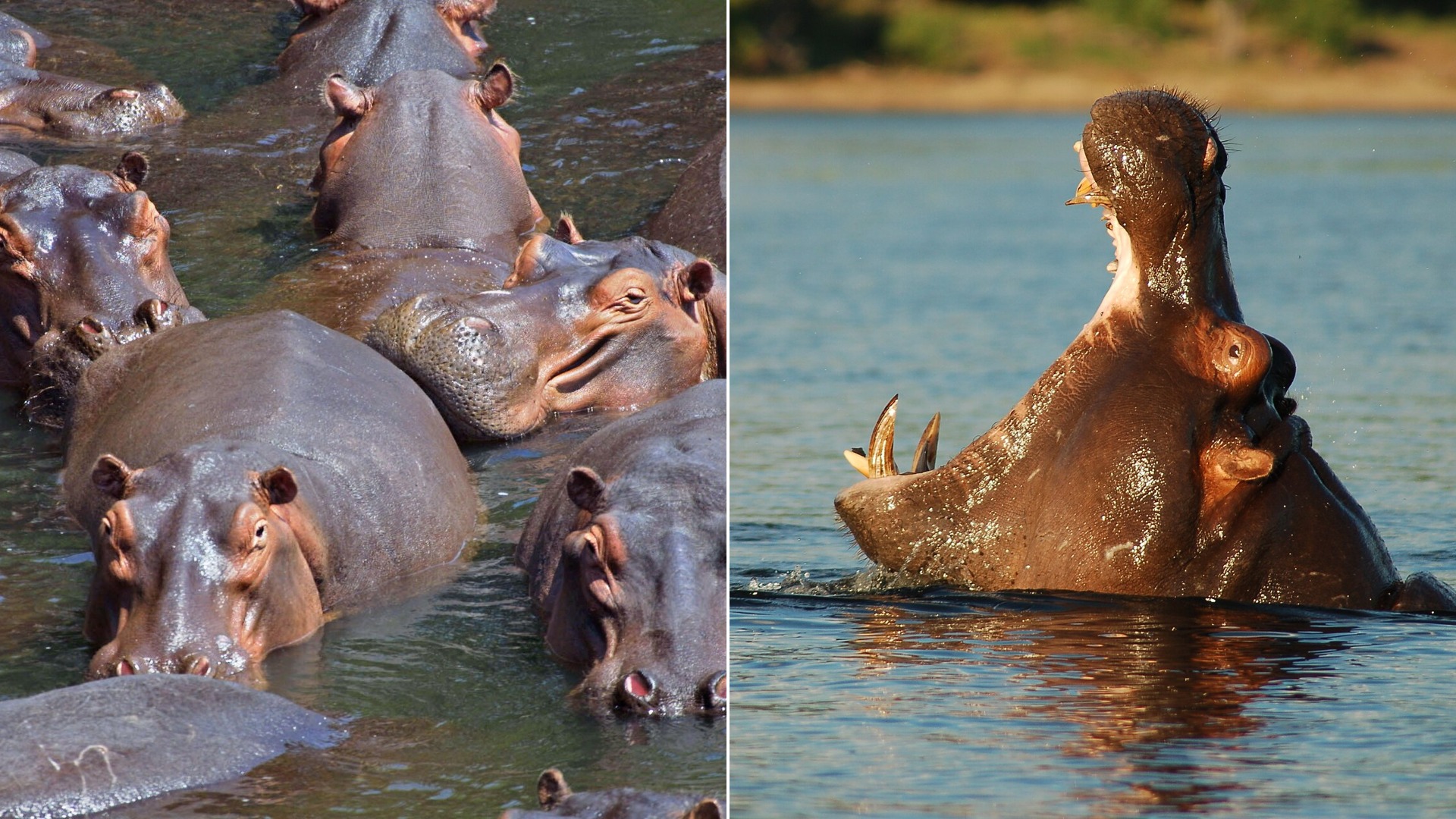
How Long Do Hippos Live? 20 Other Facts About Hippos
From sixty-year lifespans to whale cousins, discover secrets of river giants
From the pitch-black abyss of the ocean to damp subterranean caves and tropical forests, living creatures have evolved extraordinary ways to manufacture their own light. Using chemical reactions or symbiotic glowing bacteria, here are the 15 most amazing glowing creatures on Earth, ranked.
Swipe or tap ▶ to begin the countdown
©Wikimedia / Hugo Hulsberg & Wikimedia / Eden Janine and Jim
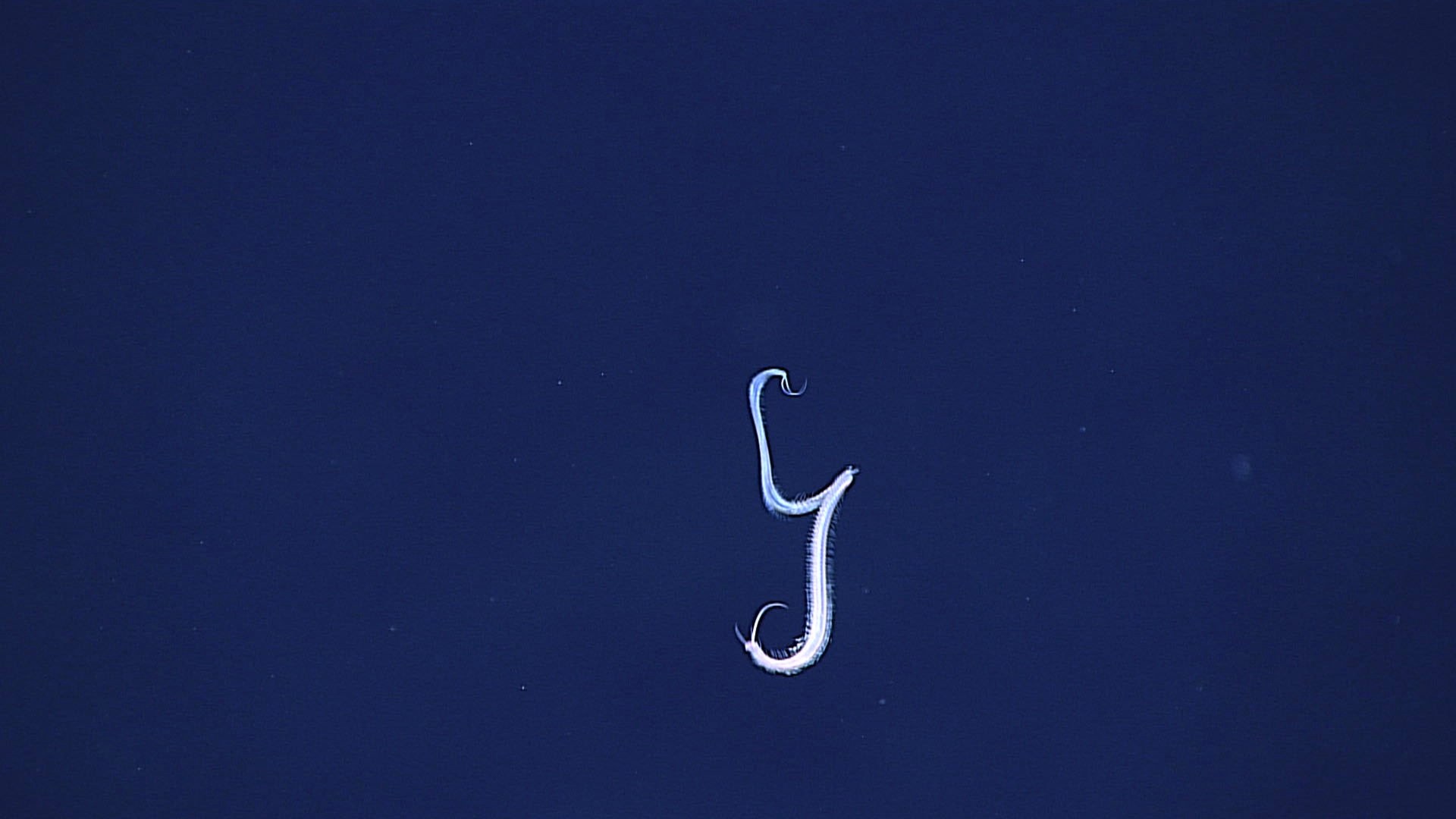
15. Green Bomber Worm (Deep Ocean)
Discovered in the deep Pacific Ocean by researchers at the Scripps Institution of Oceanography, the green bomber worm (Swima bombiviridis) uses an explosive defense. When threatened, this swimming worm detaches fluid-filled sacs that burst into brilliant green light like flares while it swims away.
©Wikimedia / NOAA Photo Library
14. Flashlight Fish (Indo-Pacific Reefs)
Navigating dark coral reefs at night, the flashlight fish carries a pair of bean-shaped light organs beneath its eyes packed with glowing symbiotic bacteria. Using dark muscular skin flaps like shutters, the fish blinks its lights to school with neighbors, spot planktonic prey, and confuse predators.
©Wikimedia / James Kurrle
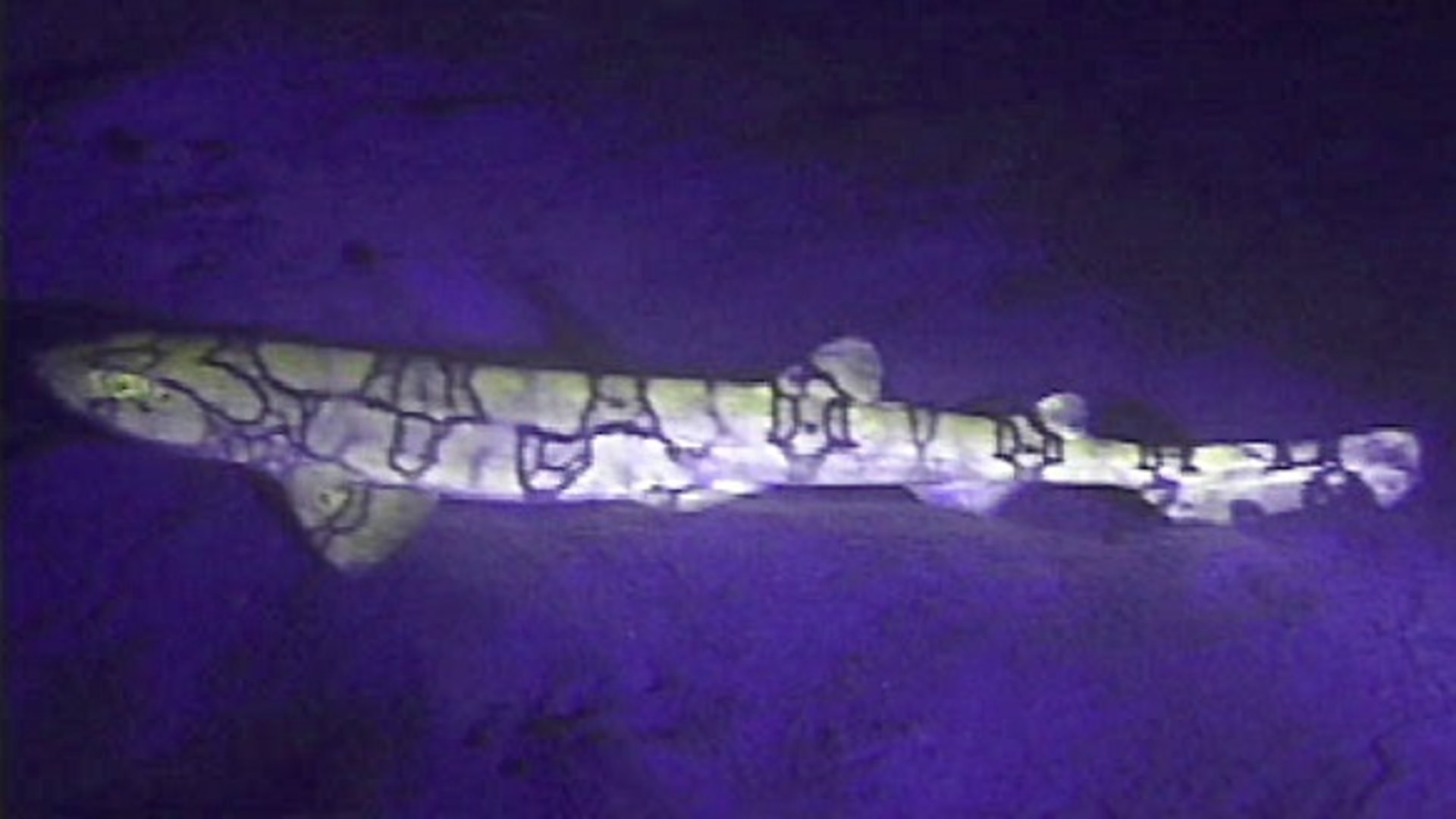
13. Cookiecutter Shark (Warm Oceans)
Barely 20 inches long, the cookiecutter shark (Isistius brasiliensis) uses deceptive bioluminescence across warm oceans. Its belly glows soft green to match downwelling moonlight and erase its shadow from below, while a dark non-glowing collar mimics a small fish to lure tuna and whales close.
©Wikimedia / Mikhail Matz NOAA Ocean Explorer
Advertisement
Swipe or tap ▶ to resume the countdown.
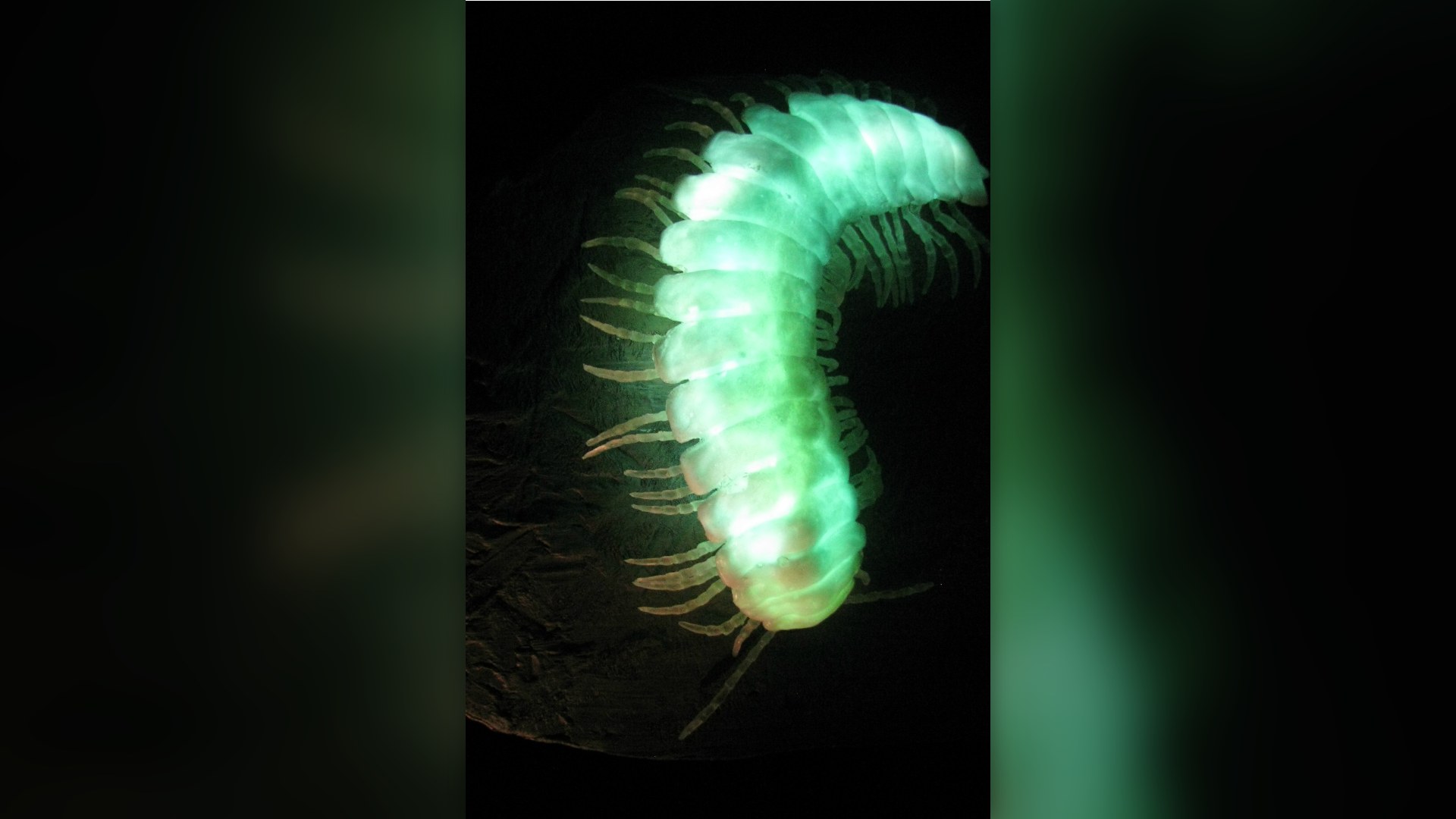
12. Motyxia Millipede (California, USA)
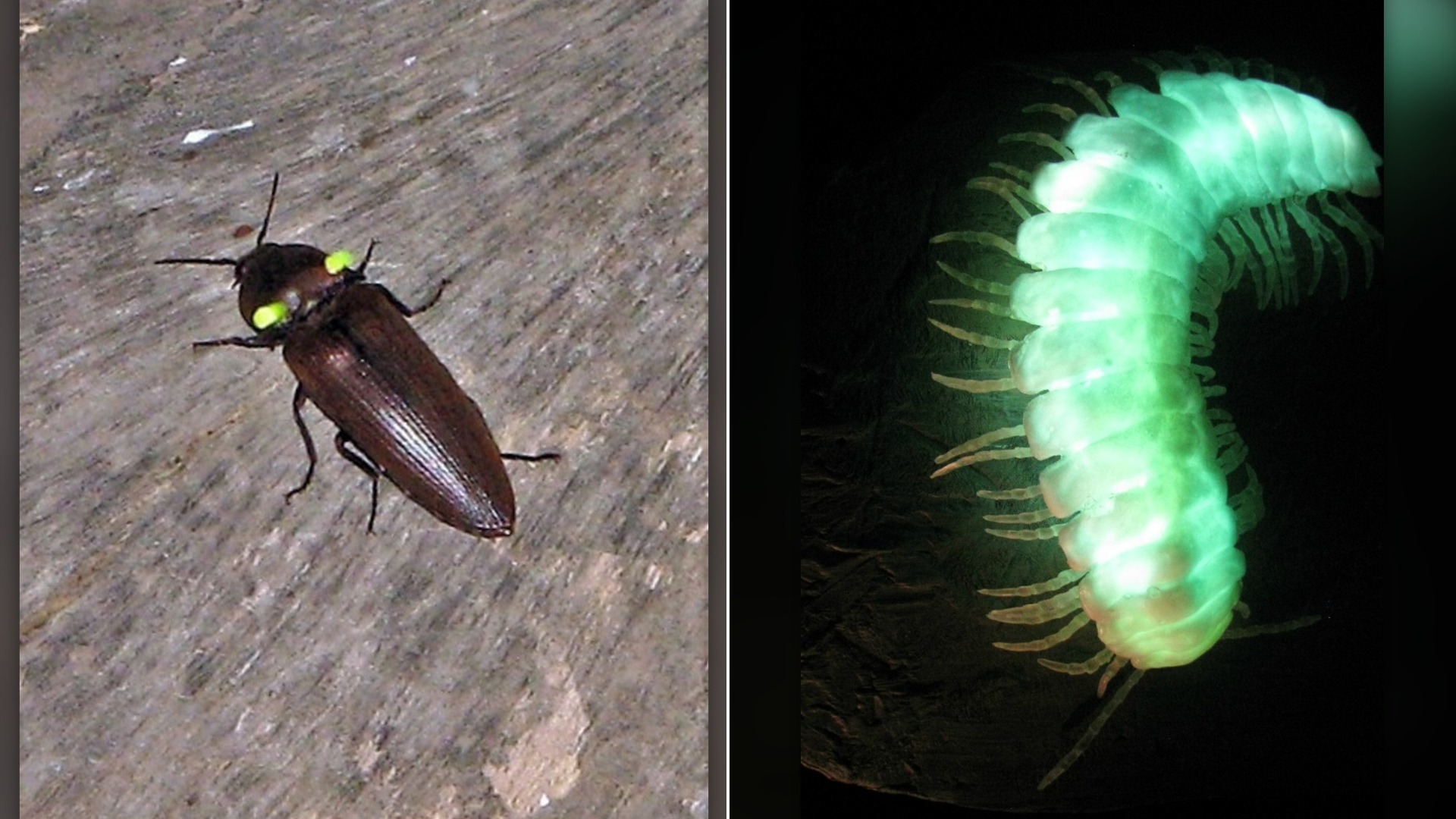
Native to the mountain forests of southern California, Motyxia millipedes are completely blind and cannot see their own light. Yet at night, their exoskeletons emit a fierce neon blue-green glow that warns nocturnal rodents that the millipede's body is packed with toxic hydrogen cyanide.
©Wikimedia / Eden Janine and Jim
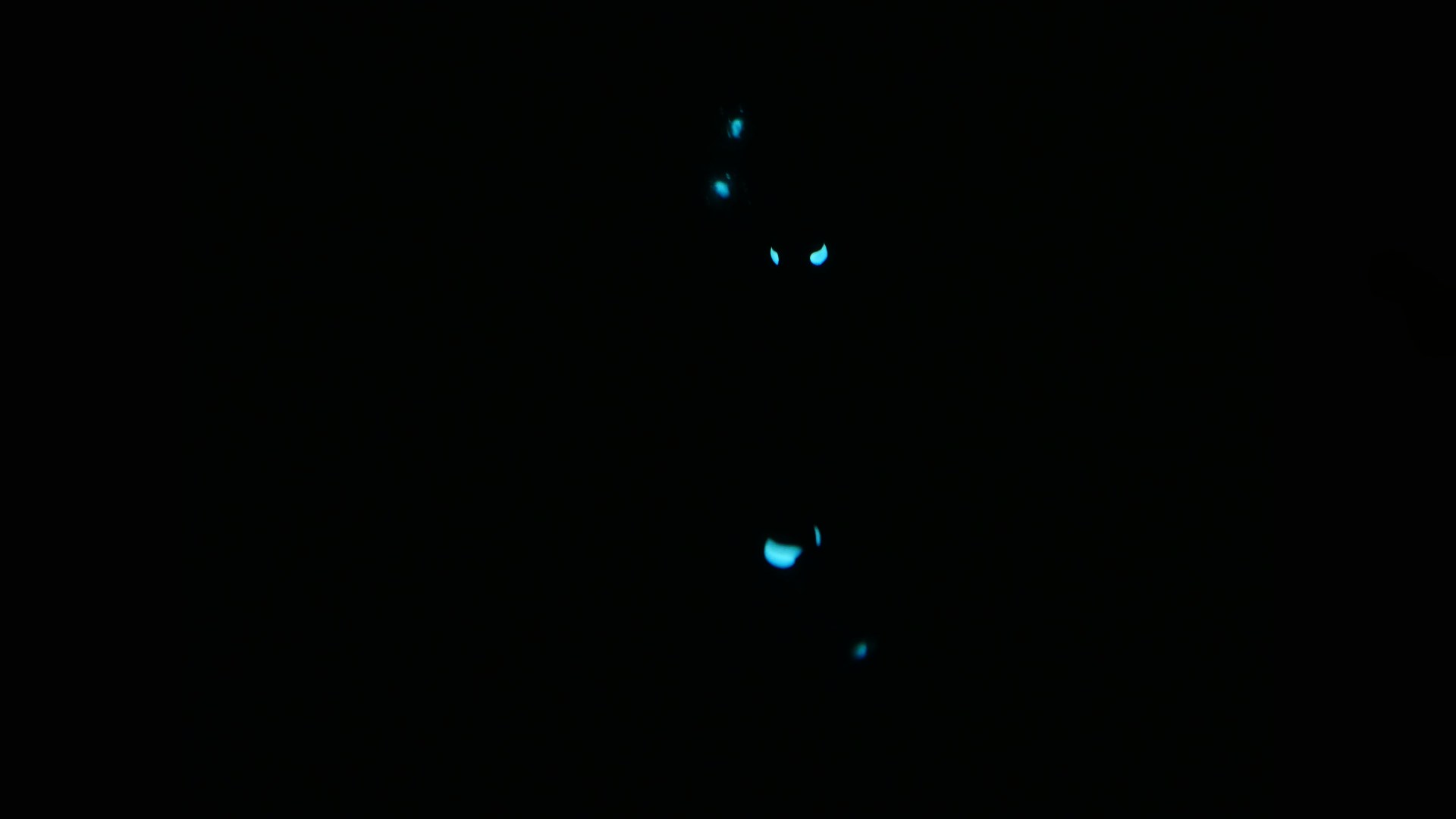
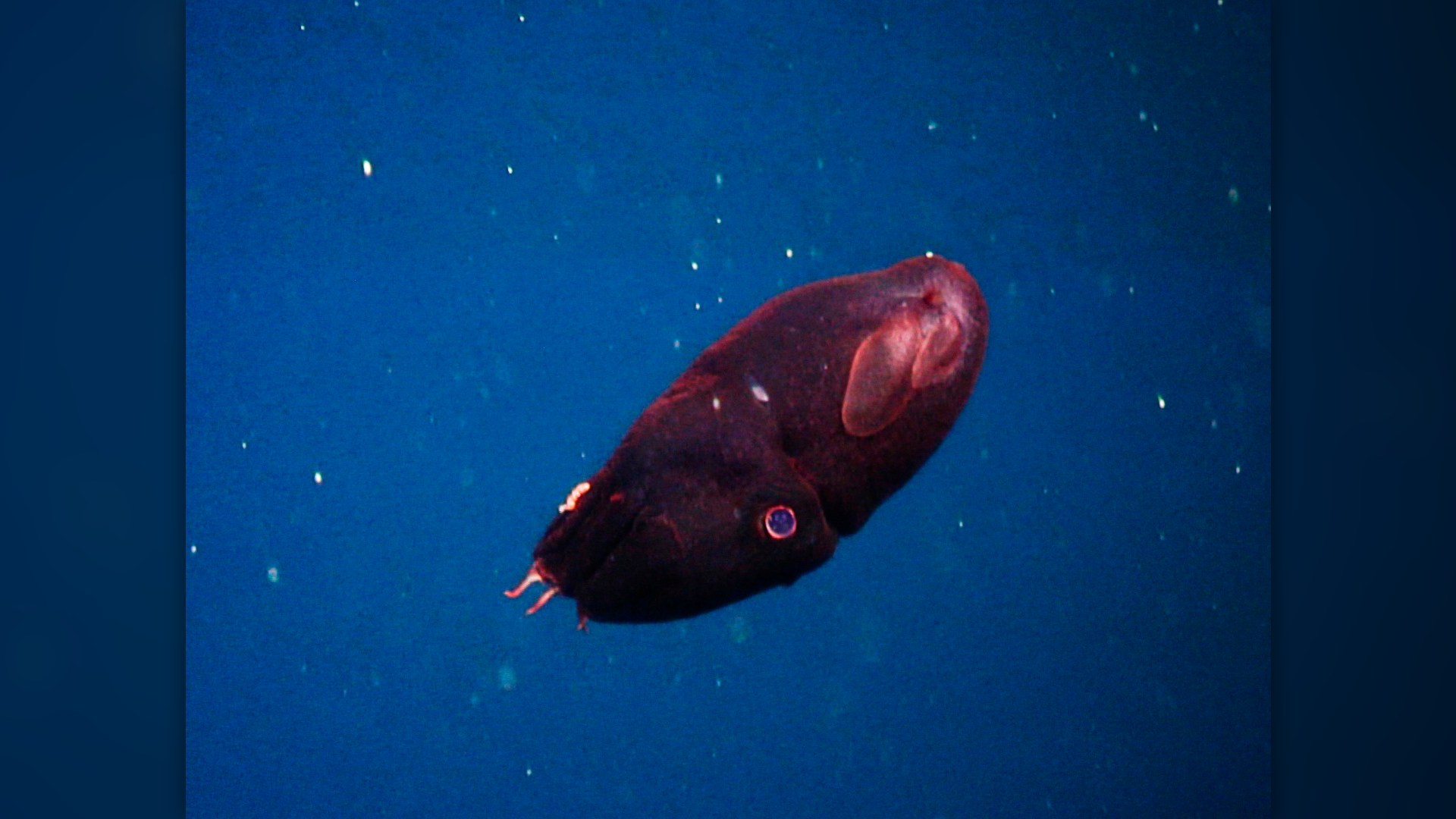
11. Vampire Squid (Deep Ocean)
Drifting through the oxygen-minimum zone up to 3,000 feet deep, the vampire squid (Vampyroteuthis infernalis) lives in permanent darkness where black ink would be invisible. Instead, it ejects a cloud of sticky, glowing blue mucus from its arm tips that dazzles predators for up to ten minutes.
©Wikimedia / National Marine Sanctuaries
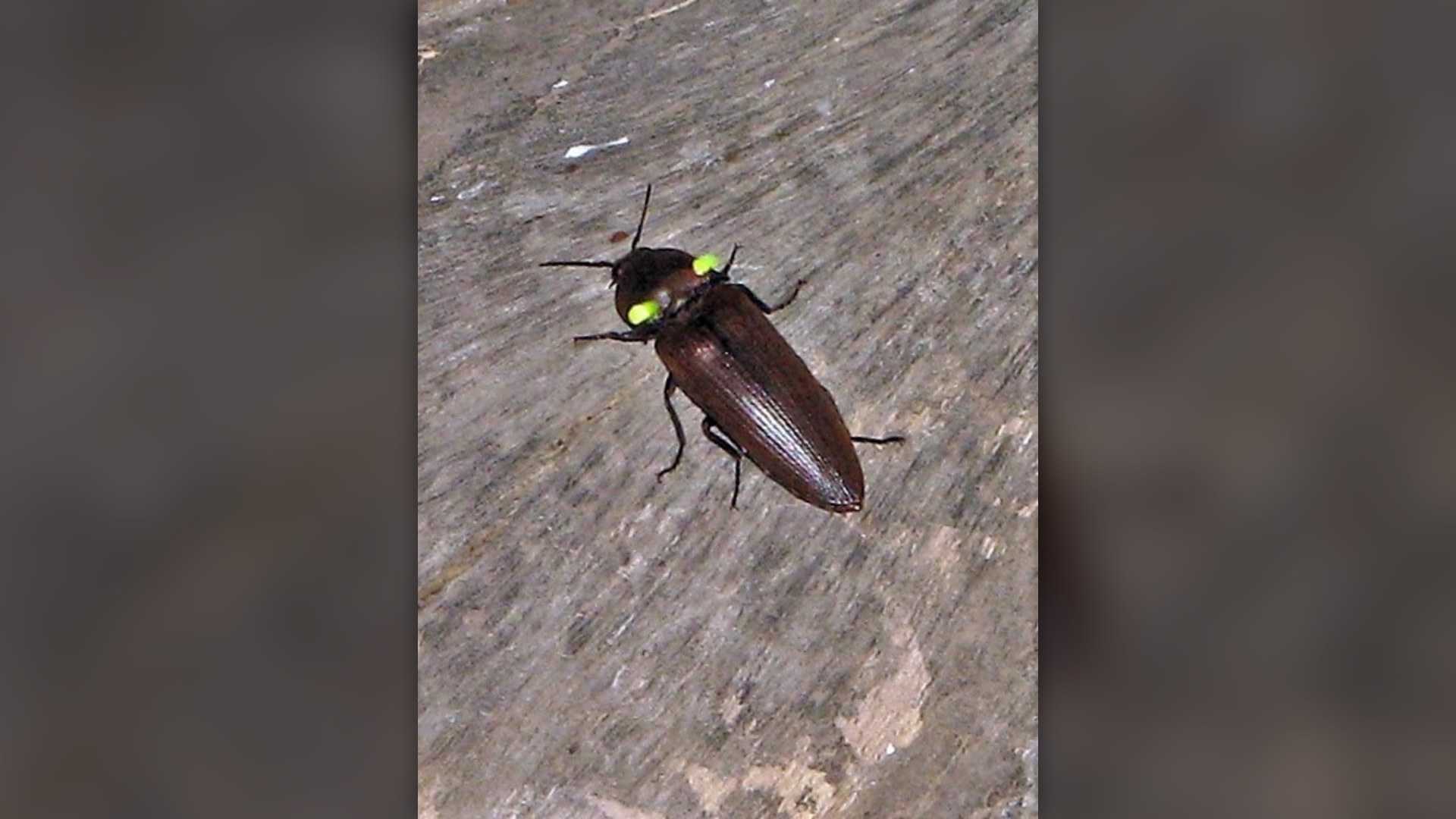
10. Bioluminescent Click Beetle (The Americas)
Found across the tropical Americas, bioluminescent click beetles of the genus Pyrophorus shine far more steadily than fireflies. Each beetle carries two convex, glowing green headlight organs on its thorax, plus a third orange-green abdominal light organ that illuminates the ground during flight.
©Wikimedia / Hugo Hulsberg
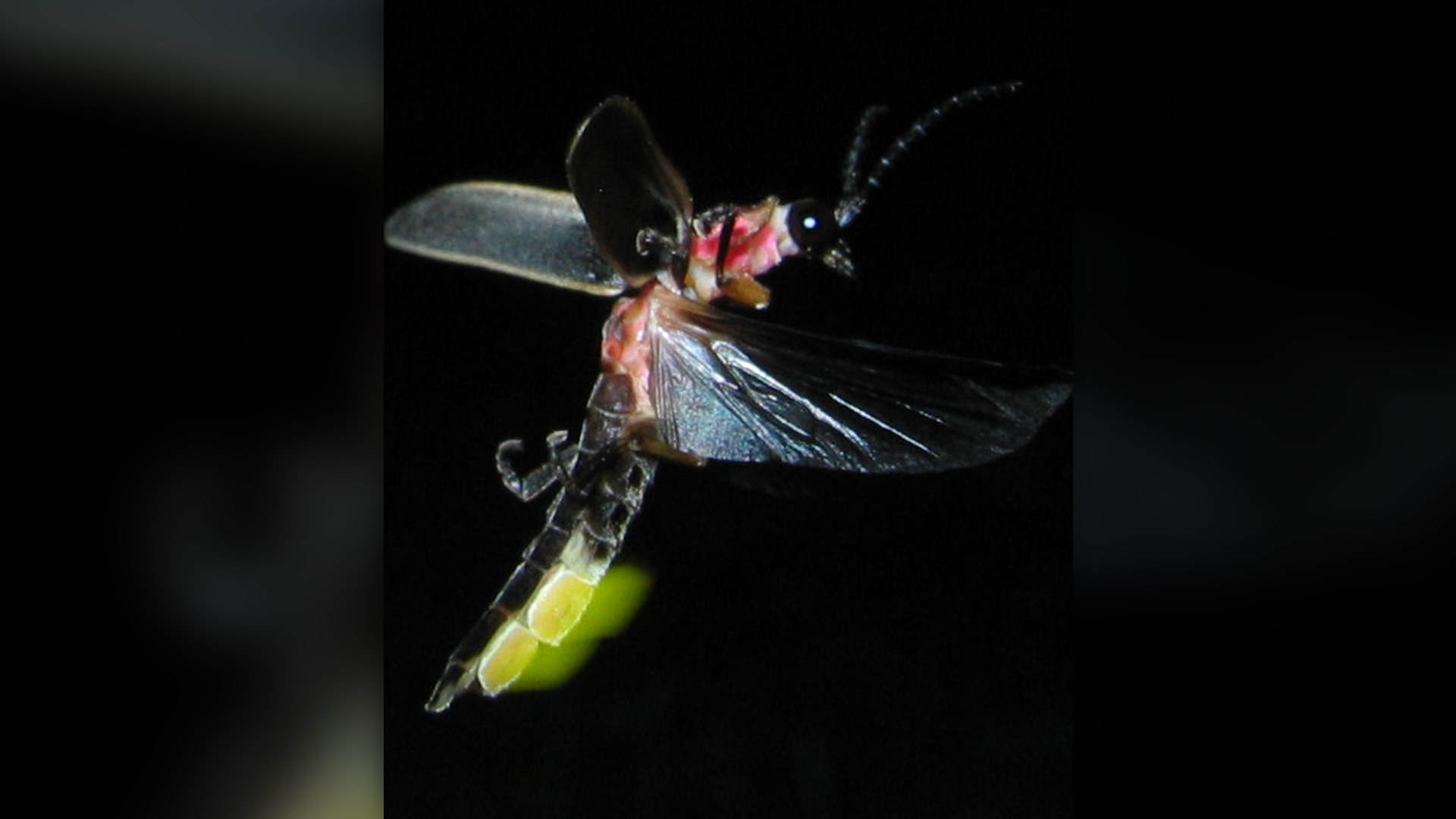
9. Firefly And Lightning Bug (Global Land)
With more than 2,000 species in the family Lampyridae, fireflies are the undisputed masters of land bioluminescence. Inside light organs on their lower abdomens, oxygen combines with calcium, ATP, and luciferin to produce nearly 100 percent efficient cold light pulsed in species-specific codes.
©Wikimedia / Art Farmer
Advertisement
Swipe or tap ▶ to resume the countdown.
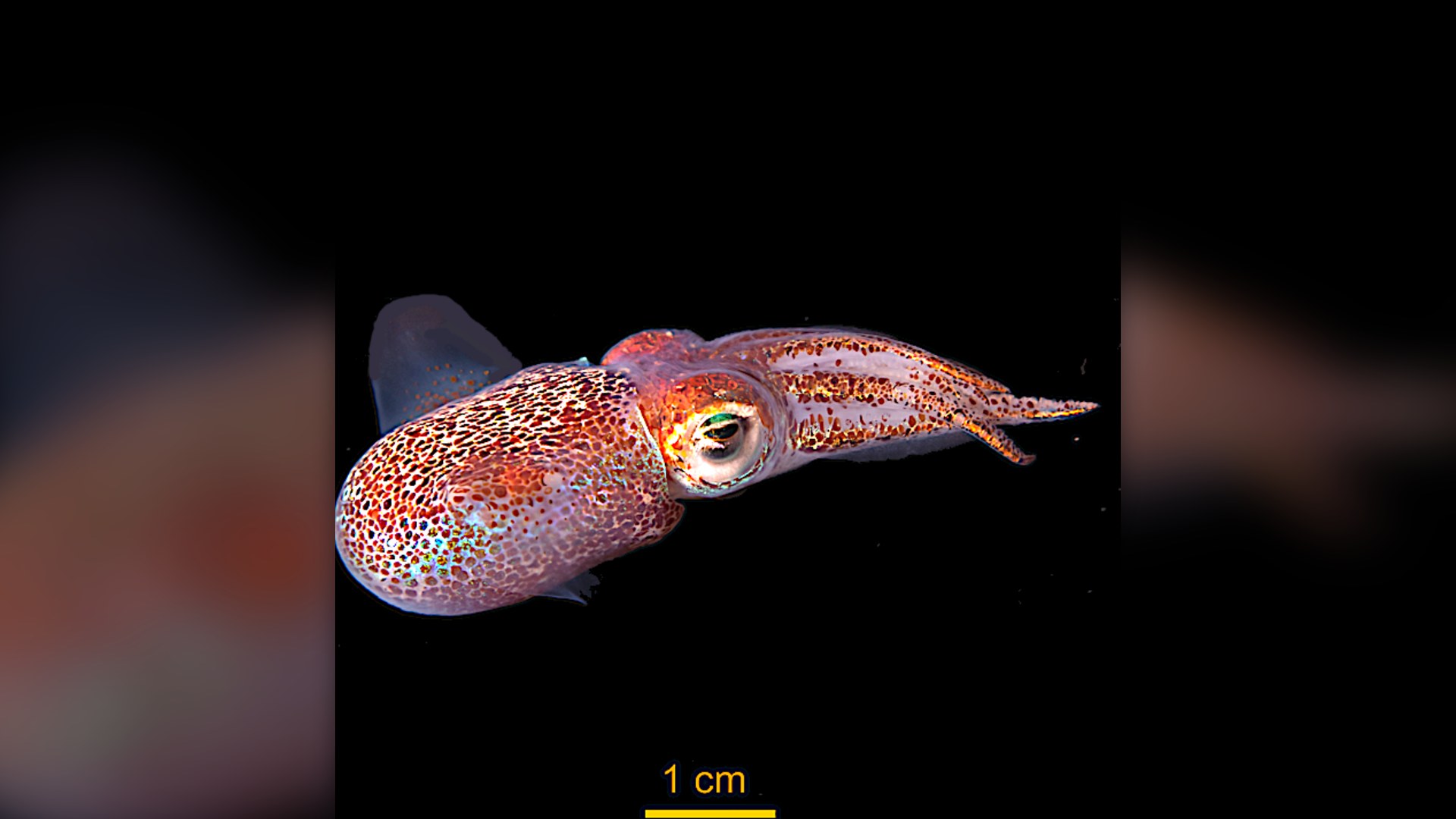
8. Hawaiian Bobtail Squid (Pacific Ocean)
Scant inches long, the nocturnal Hawaiian bobtail squid (Euprymna scolopes) partners with the glowing bacterium Vibrio fischeri. Housed inside a specialized ventral light organ with a lens and reflectors, the bacteria emit a downward glow matching moonlight to hide the squid's shadow from predators.
©Wikimedia / Margaret McFall-Ngai
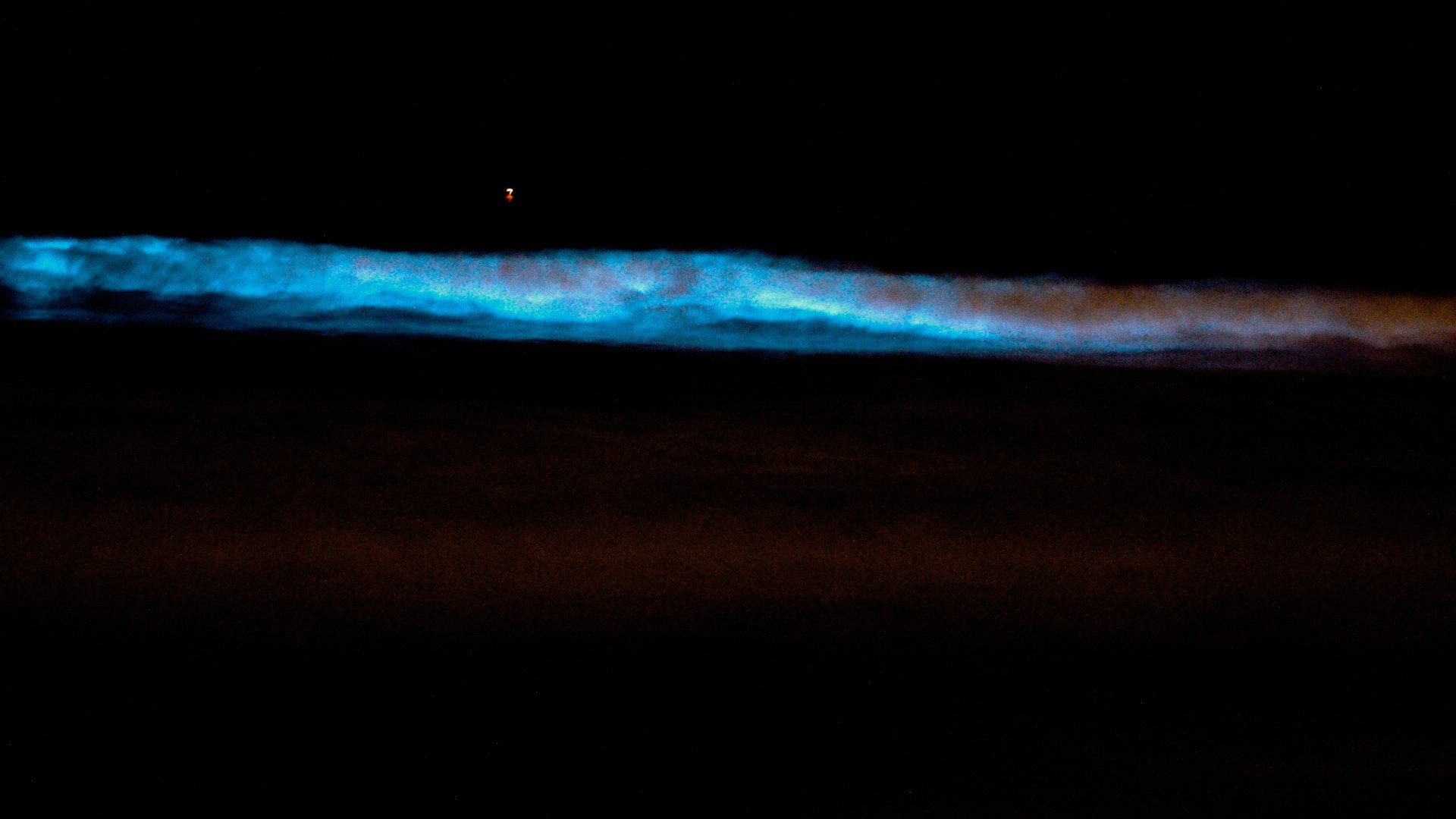
7. Bioluminescent Plankton (Global Oceans)
Across coastal waters worldwide, blooms of single-celled dinoflagellates such as Noctiluca scintillans and Lingulodinium polyedra turn the sea into liquid neon at night. When crashing waves, dolphins, or kayak oars agitate their cell membranes, millions of cells flash electric blue at once.
©Wikimedia / Niels Olson
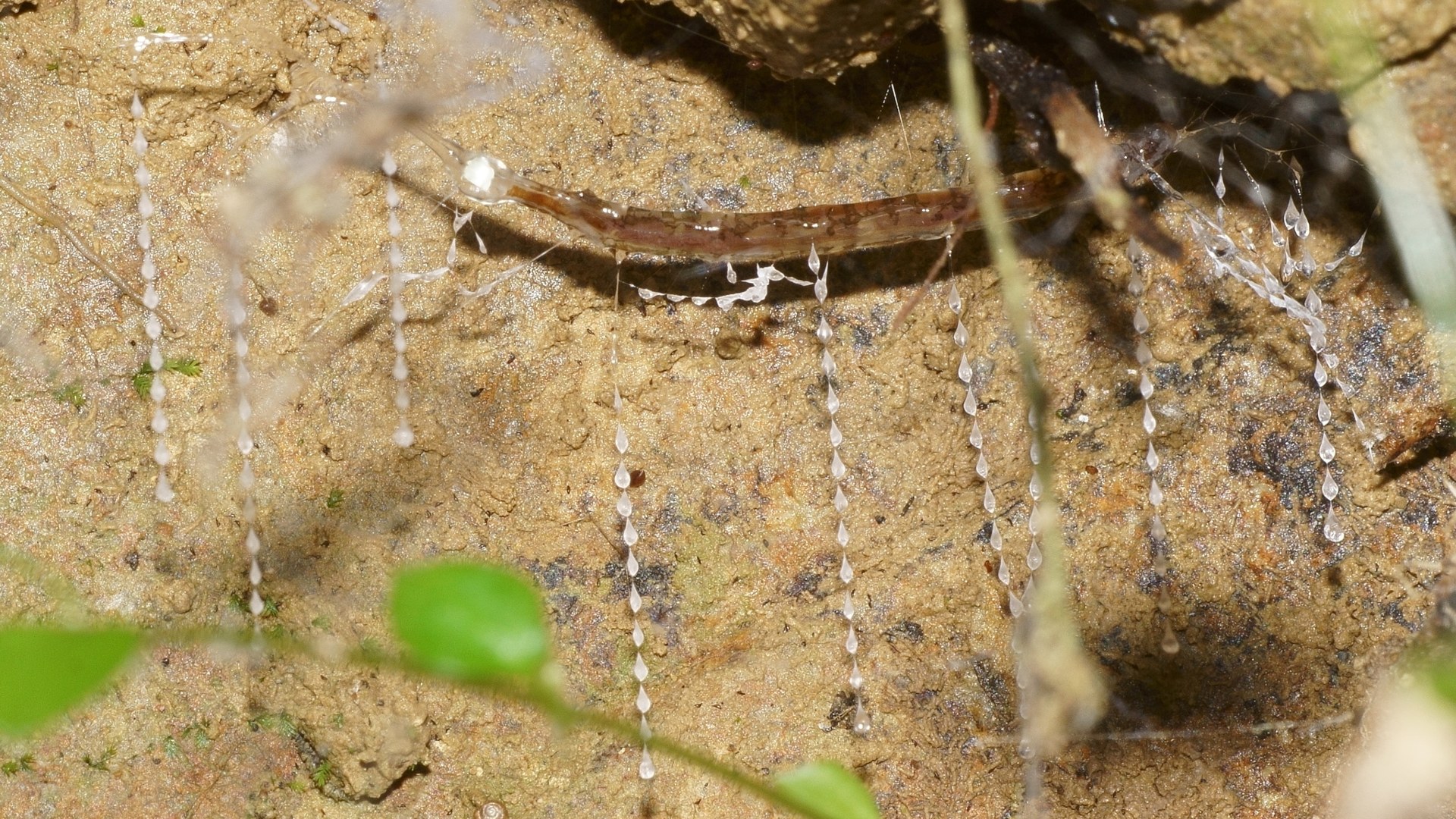
6. Waitomo Glowworm Larvae (New Zealand Caves)
High on the damp limestone ceilings of New Zealand's Waitomo Caves, thousands of Arachnocampa luminosa fungus gnat larvae create a subterranean starry sky. Each larva spins sticky, mucus-coated silk snare lines and glows vivid blue-green from its tail to trick cave insects into flying upward.
©Wikimedia / Uwe Schneehagen
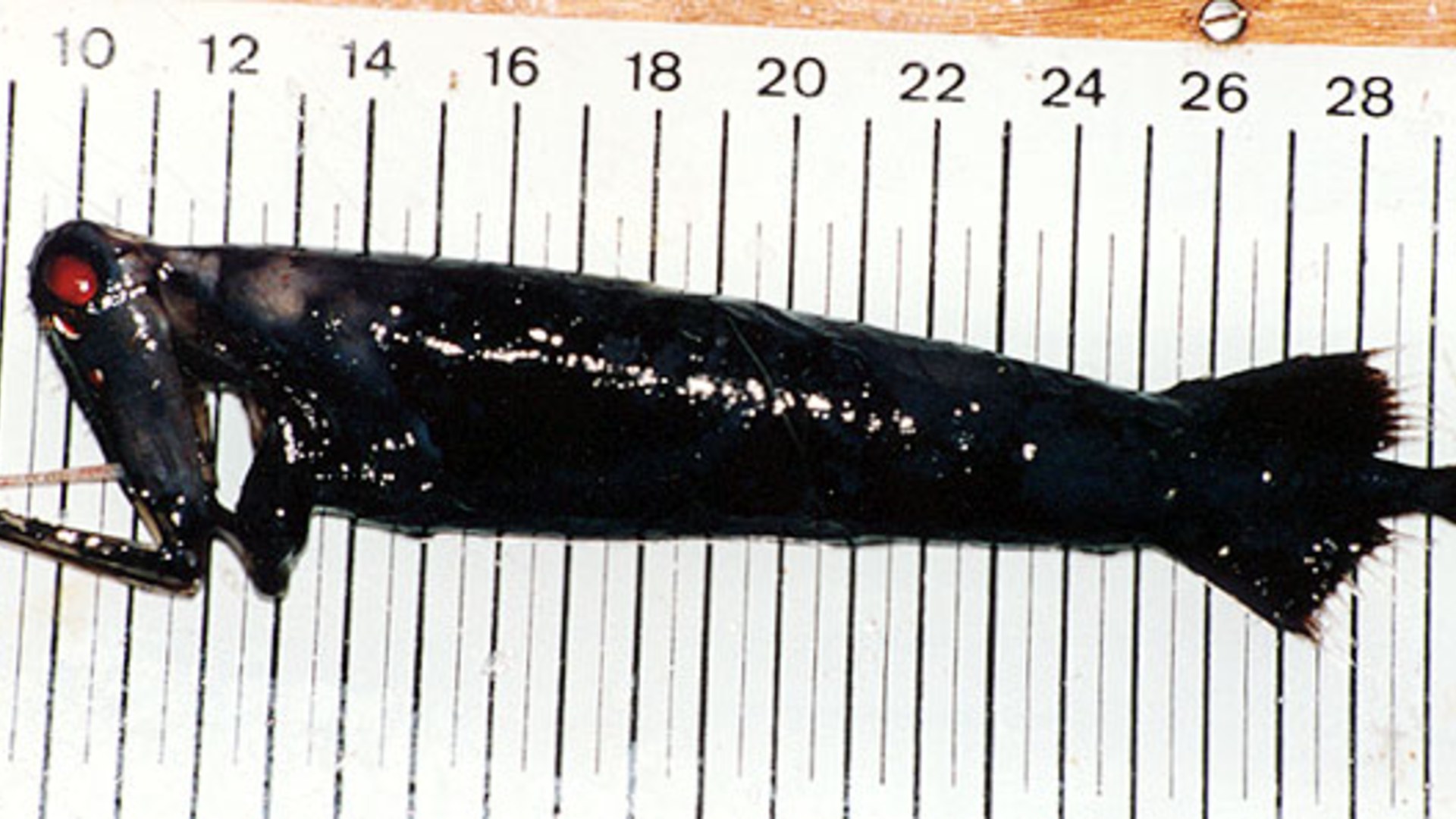
5. Stoplight Loosejaw (Deep Ocean)
Almost all deep-sea animals produce and perceive only blue or green light. The stoplight loosejaw (Malacosteus niger) breaks this rule with dual photophores beneath its eyes that emit both green and far-red light, illuminating unsuspecting prey with a private red spotlight they cannot see.
©Wikimedia / Rafael Banon
Advertisement
Swipe or tap ▶ to resume the countdown.
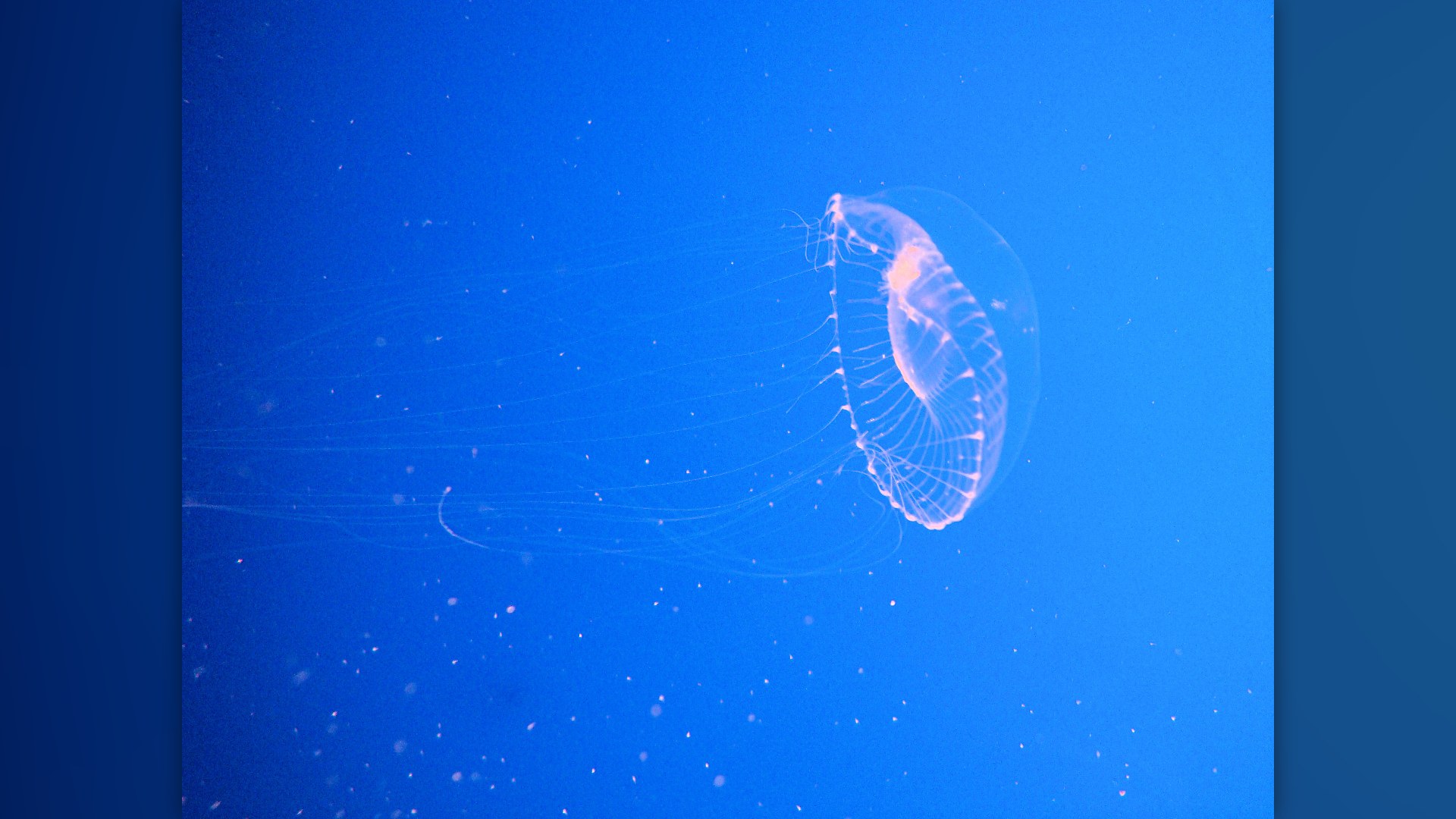
4. Crystal Jellyfish (Pacific Ocean)
Floating off the western coast of North America, the translucent crystal jellyfish (Aequorea victoria) carries more than 100 tiny light organs along the rim of its bell. Its photoprotein aequorin triggers Green Fluorescent Protein (GFP), which earned the 2008 Nobel Prize for transforming cell biology.
©Wikimedia / Jim G
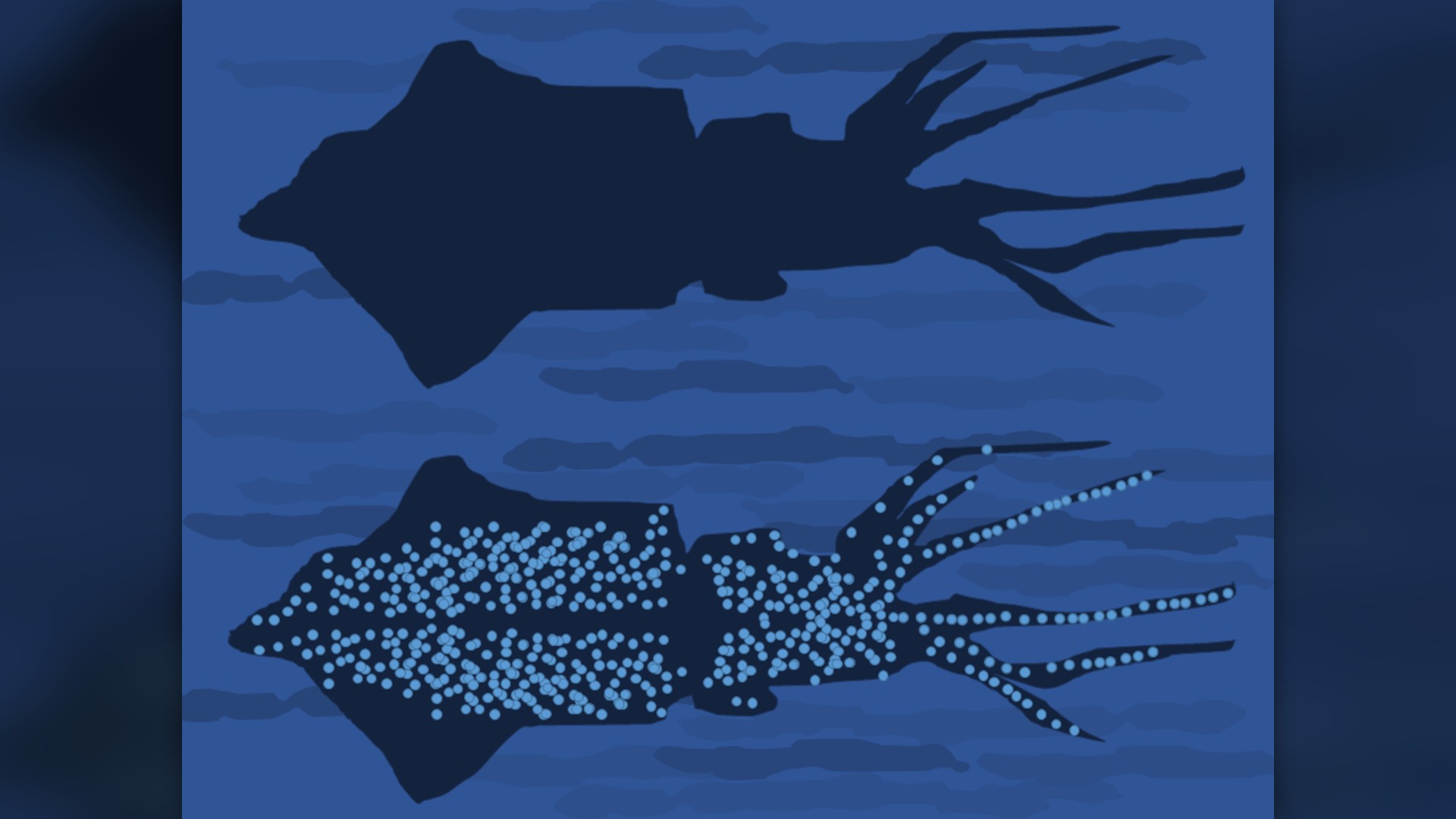
3. Firefly Squid (Japan Coast)
Measuring just three inches long, the firefly squid (Watasenia scintillans) is covered in hundreds of light-producing photophores concentrated at its arm tips and around its eyes. Every spring, millions migrate into Japan's Toyama Bay to spawn, lighting up entire coastlines in vibrant neon blue.
©Wikimedia / Ian Alexander
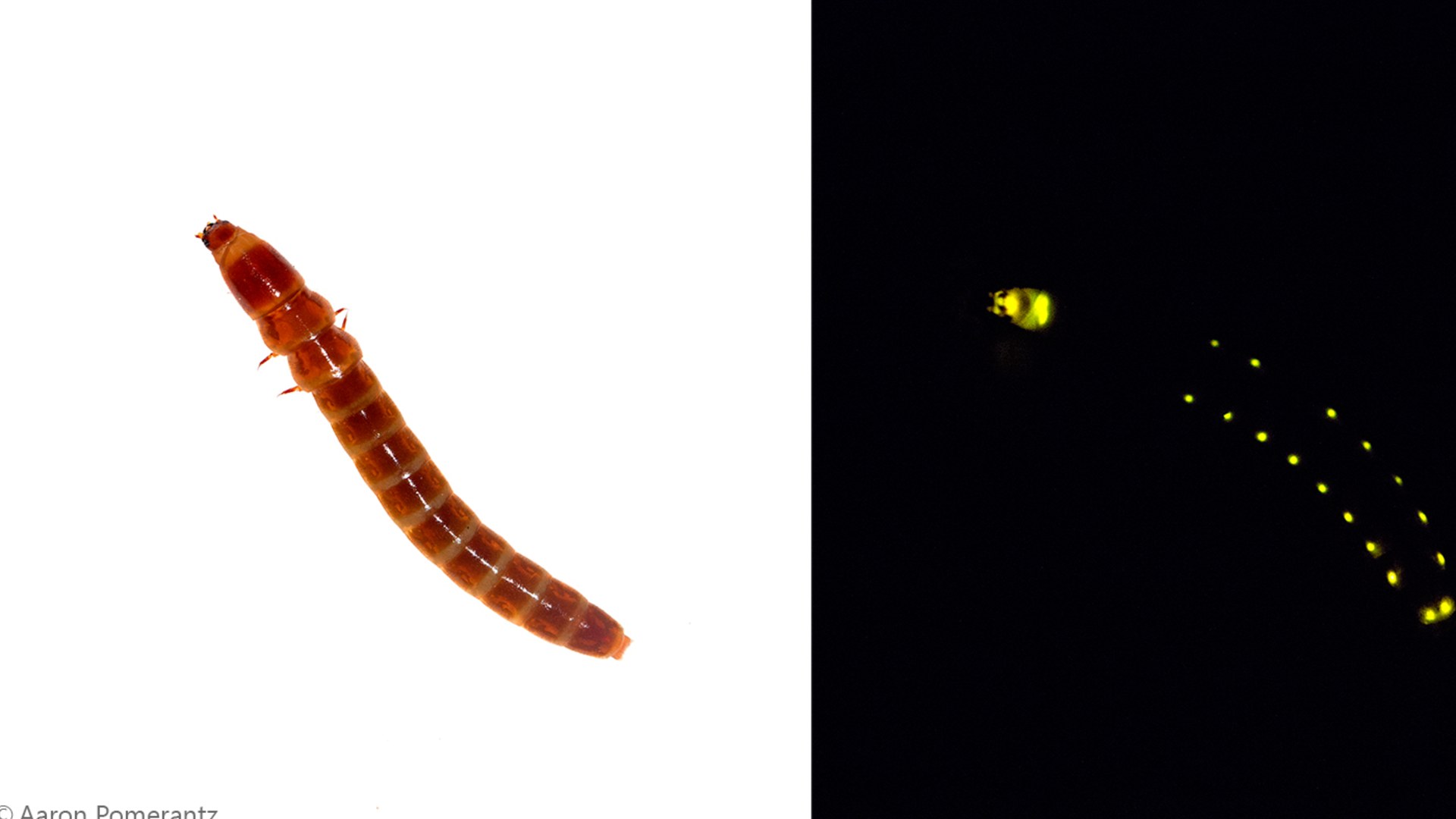
2. Railroad Worm (South America)
Native to Central and South America, the railroad worm is the larviform female or larva of the beetle genus Phrixothrix. Eleven pairs of photophores along the sides of its body shine yellowish-green like train windows, while a pair of head organs blazes red to warn predators of its toxicity.
©Wikimedia / Public Contributor
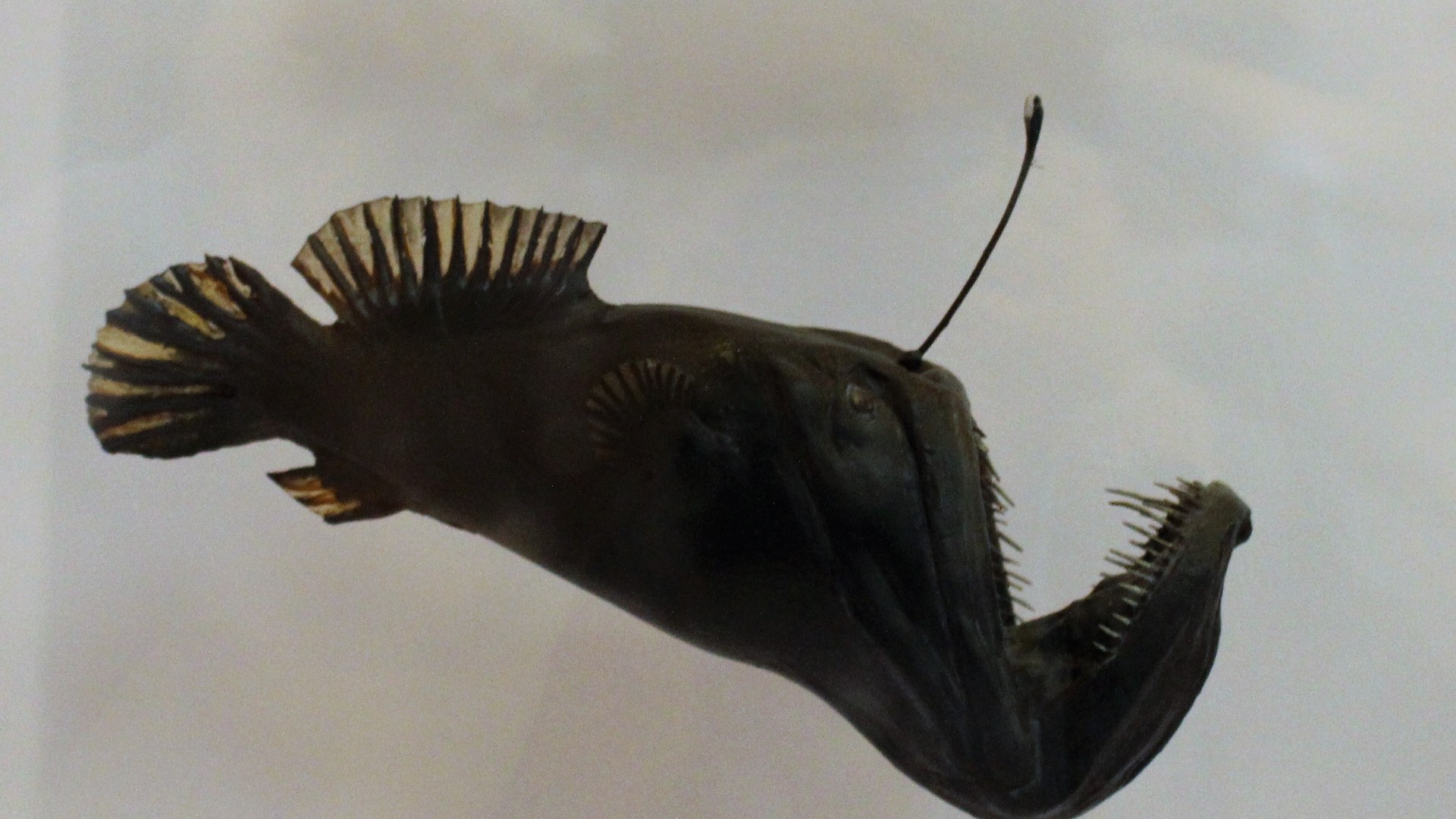
1. Deep-Sea Anglerfish (Deep Ocean)
Ruling the midnight zone thousands of feet below the surface, the female deep-sea anglerfish wields the most iconic bioluminescent weapon on Earth. A modified dorsal spine extends over her jaws, tipped with a glowing bacterial bulb called the esca that lures curious prey into her inward-angled teeth.

©Wikimedia / Emoke Denes
Advertisement
You've reached the end of the story. Thanks for reading!

How Long Do Hippos Live? 20 Other Facts About Hippos
From sixty-year lifespans to whale cousins, discover secrets of river giants
All 15 Entries in this Story
15. Green Bomber Worm (Deep Ocean)
Discovered in the deep Pacific Ocean by researchers at the Scripps Institution of Oceanography, the green bomber worm (Swima bombiviridis) uses an explosive defense. When threatened, this swimming worm detaches fluid-filled sacs that burst into brilliant green light like flares while it swims away.

14. Flashlight Fish (Indo-Pacific Reefs)
Navigating dark coral reefs at night, the flashlight fish carries a pair of bean-shaped light organs beneath its eyes packed with glowing symbiotic bacteria. Using dark muscular skin flaps like shutters, the fish blinks its lights to school with neighbors, spot planktonic prey, and confuse predators.

13. Cookiecutter Shark (Warm Oceans)
Barely 20 inches long, the cookiecutter shark (Isistius brasiliensis) uses deceptive bioluminescence across warm oceans. Its belly glows soft green to match downwelling moonlight and erase its shadow from below, while a dark non-glowing collar mimics a small fish to lure tuna and whales close.

12. Motyxia Millipede (California, USA)
Native to the mountain forests of southern California, Motyxia millipedes are completely blind and cannot see their own light. Yet at night, their exoskeletons emit a fierce neon blue-green glow that warns nocturnal rodents that the millipede's body is packed with toxic hydrogen cyanide.

11. Vampire Squid (Deep Ocean)
Drifting through the oxygen-minimum zone up to 3,000 feet deep, the vampire squid (Vampyroteuthis infernalis) lives in permanent darkness where black ink would be invisible. Instead, it ejects a cloud of sticky, glowing blue mucus from its arm tips that dazzles predators for up to ten minutes.

10. Bioluminescent Click Beetle (The Americas)
Found across the tropical Americas, bioluminescent click beetles of the genus Pyrophorus shine far more steadily than fireflies. Each beetle carries two convex, glowing green headlight organs on its thorax, plus a third orange-green abdominal light organ that illuminates the ground during flight.

9. Firefly And Lightning Bug (Global Land)
With more than 2,000 species in the family Lampyridae, fireflies are the undisputed masters of land bioluminescence. Inside light organs on their lower abdomens, oxygen combines with calcium, ATP, and luciferin to produce nearly 100 percent efficient cold light pulsed in species-specific codes.

8. Hawaiian Bobtail Squid (Pacific Ocean)
Scant inches long, the nocturnal Hawaiian bobtail squid (Euprymna scolopes) partners with the glowing bacterium Vibrio fischeri. Housed inside a specialized ventral light organ with a lens and reflectors, the bacteria emit a downward glow matching moonlight to hide the squid's shadow from predators.

7. Bioluminescent Plankton (Global Oceans)
Across coastal waters worldwide, blooms of single-celled dinoflagellates such as Noctiluca scintillans and Lingulodinium polyedra turn the sea into liquid neon at night. When crashing waves, dolphins, or kayak oars agitate their cell membranes, millions of cells flash electric blue at once.

6. Waitomo Glowworm Larvae (New Zealand Caves)
High on the damp limestone ceilings of New Zealand's Waitomo Caves, thousands of Arachnocampa luminosa fungus gnat larvae create a subterranean starry sky. Each larva spins sticky, mucus-coated silk snare lines and glows vivid blue-green from its tail to trick cave insects into flying upward.

5. Stoplight Loosejaw (Deep Ocean)
Almost all deep-sea animals produce and perceive only blue or green light. The stoplight loosejaw (Malacosteus niger) breaks this rule with dual photophores beneath its eyes that emit both green and far-red light, illuminating unsuspecting prey with a private red spotlight they cannot see.

4. Crystal Jellyfish (Pacific Ocean)
Floating off the western coast of North America, the translucent crystal jellyfish (Aequorea victoria) carries more than 100 tiny light organs along the rim of its bell. Its photoprotein aequorin triggers Green Fluorescent Protein (GFP), which earned the 2008 Nobel Prize for transforming cell biology.

3. Firefly Squid (Japan Coast)
Measuring just three inches long, the firefly squid (Watasenia scintillans) is covered in hundreds of light-producing photophores concentrated at its arm tips and around its eyes. Every spring, millions migrate into Japan's Toyama Bay to spawn, lighting up entire coastlines in vibrant neon blue.

2. Railroad Worm (South America)
Native to Central and South America, the railroad worm is the larviform female or larva of the beetle genus Phrixothrix. Eleven pairs of photophores along the sides of its body shine yellowish-green like train windows, while a pair of head organs blazes red to warn predators of its toxicity.

1. Deep-Sea Anglerfish (Deep Ocean)
Ruling the midnight zone thousands of feet below the surface, the female deep-sea anglerfish wields the most iconic bioluminescent weapon on Earth. A modified dorsal spine extends over her jaws, tipped with a glowing bacterial bulb called the esca that lures curious prey into her inward-angled teeth.