Slideshow · Science
20 Deep-Sea Creatures With Remarkable Survival Strategies
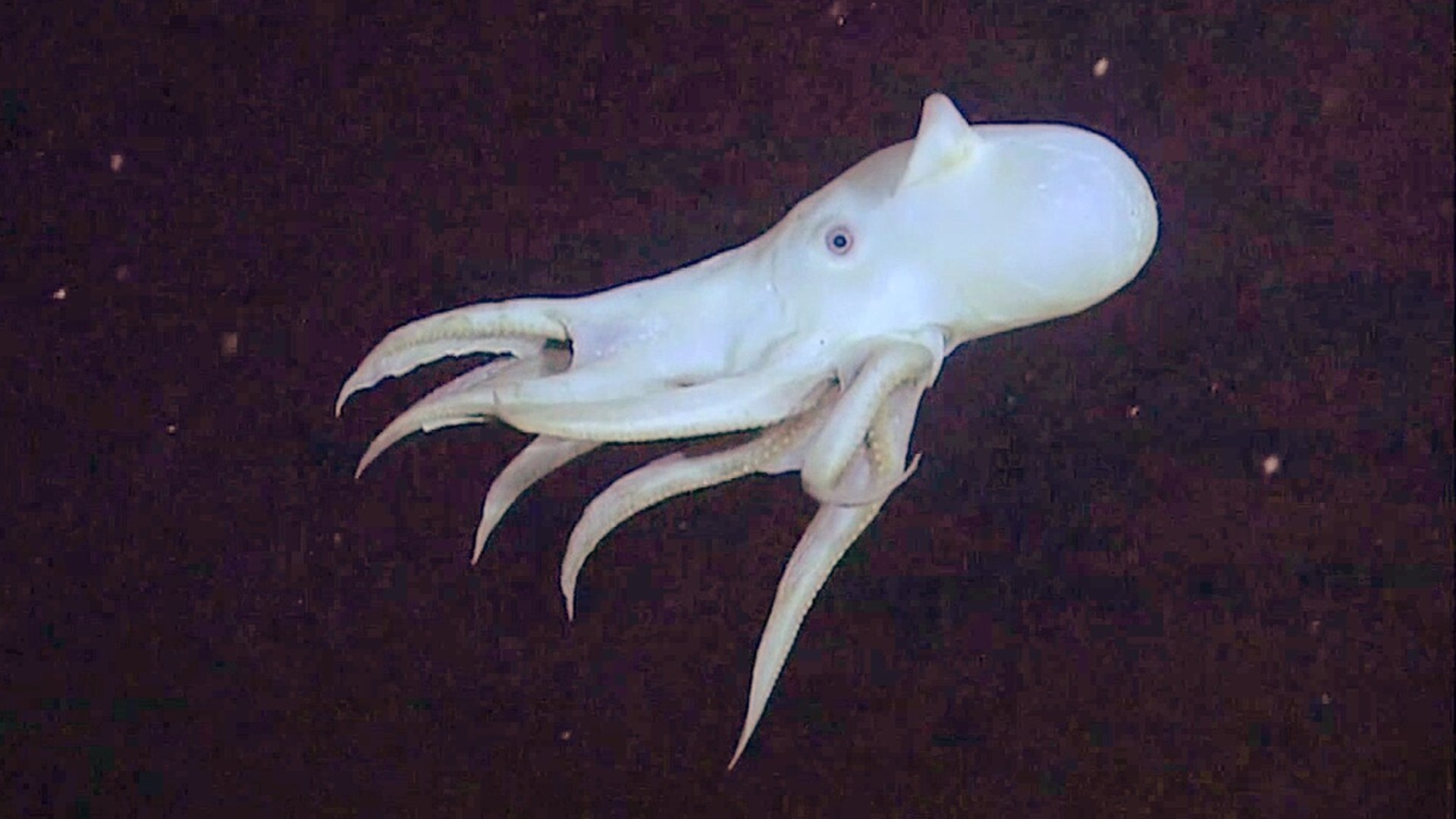
Life in the ocean abyss faces near-freezing temperatures, bone-crushing hydrostatic pressure, and total blackness. From glowing bacterial lures to blood vessels infused with natural antifreeze, these twenty deep-sea organisms developed extreme biological adaptations to dominate Earth's most hostile waters.
By Most Viral Today
43 min ago

How Marine Animals Survive Crushing Abyssal Depths and Pitch Black Water 
20. Giant Isopod 
19. Vampire Squid 
18. Atlantic Hagfish - AdvertisementSwipe or tap ▶ to continue countdown

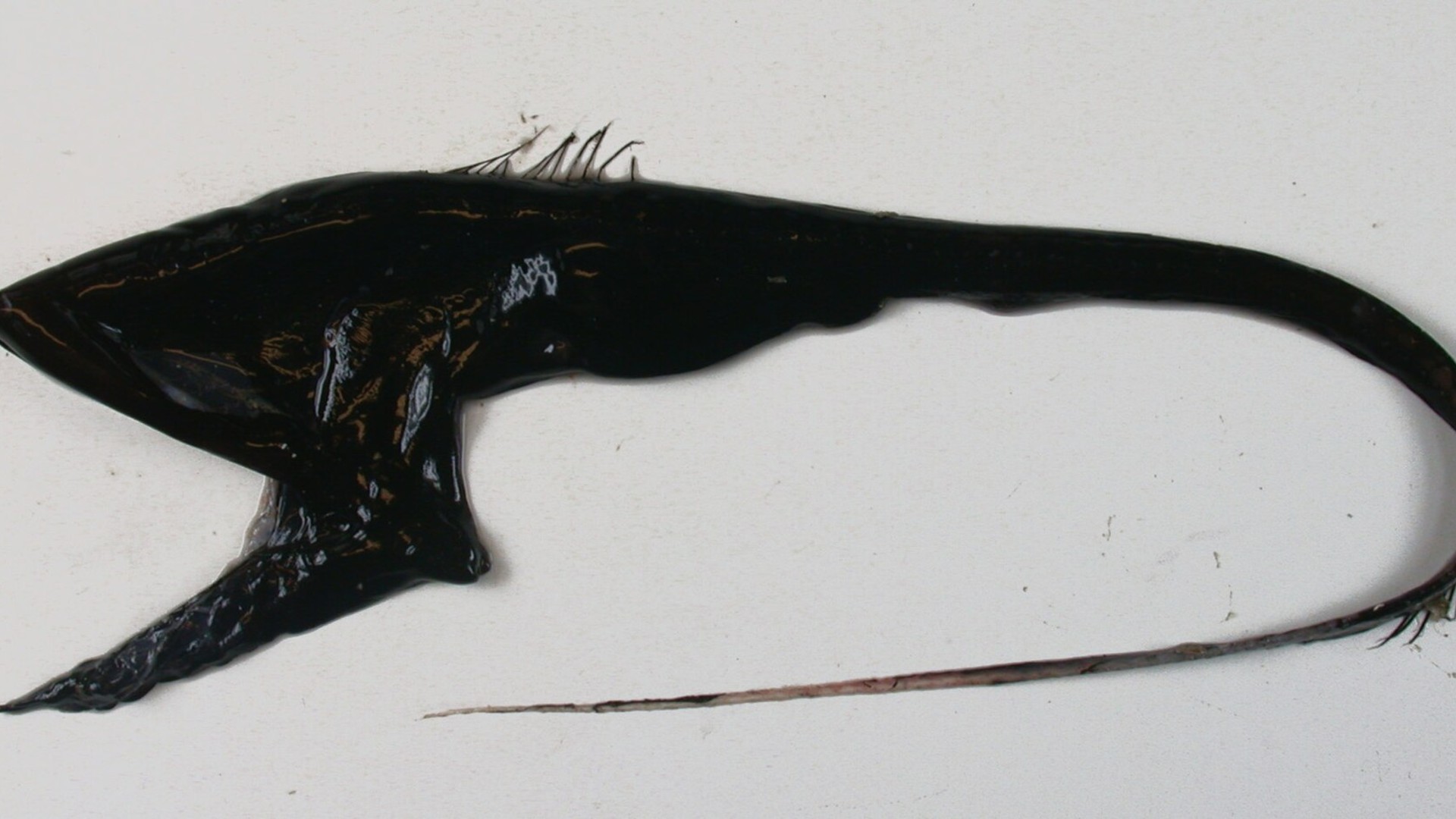
17. Pelican Eel 
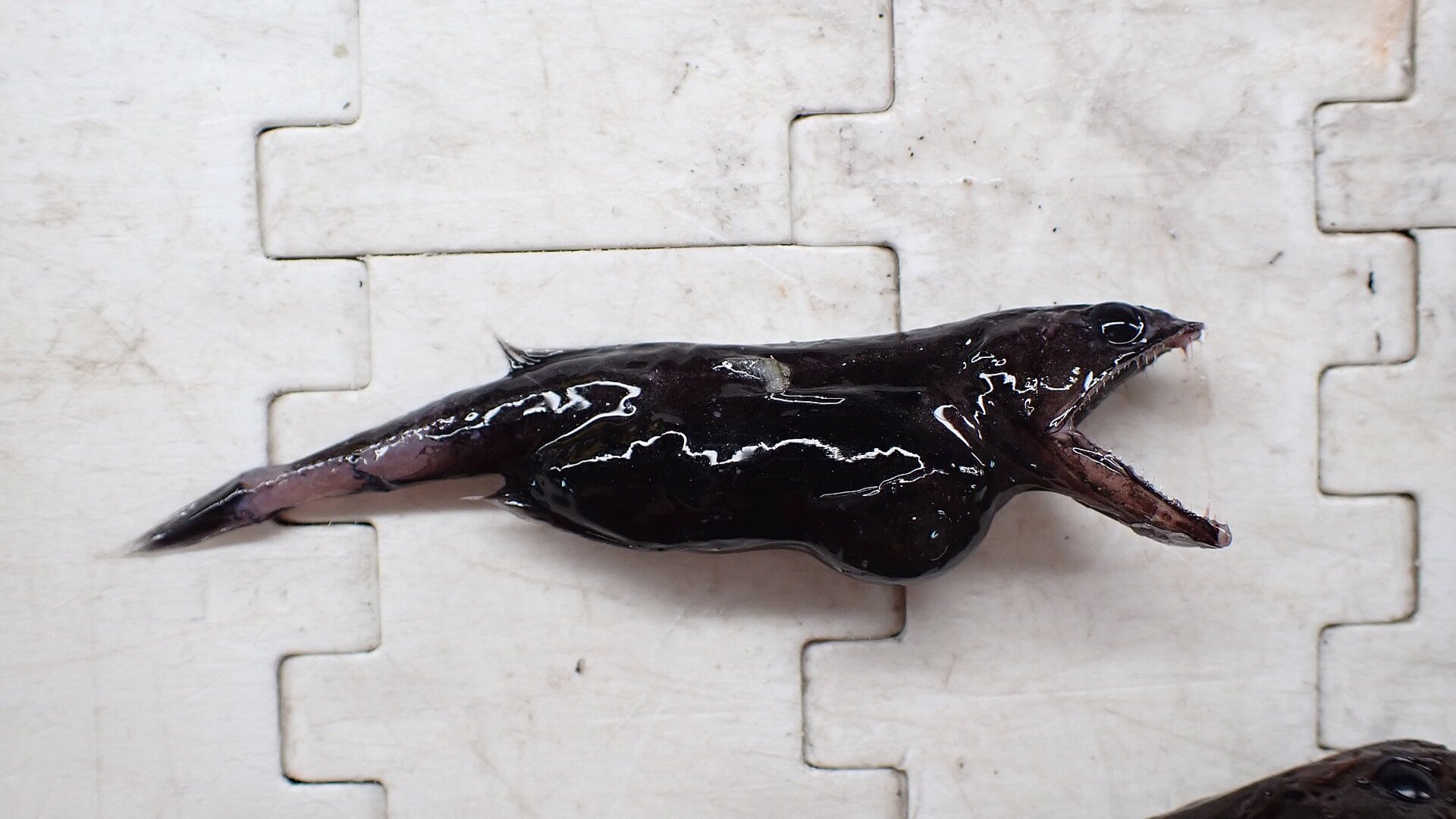
16. Black Swallower 
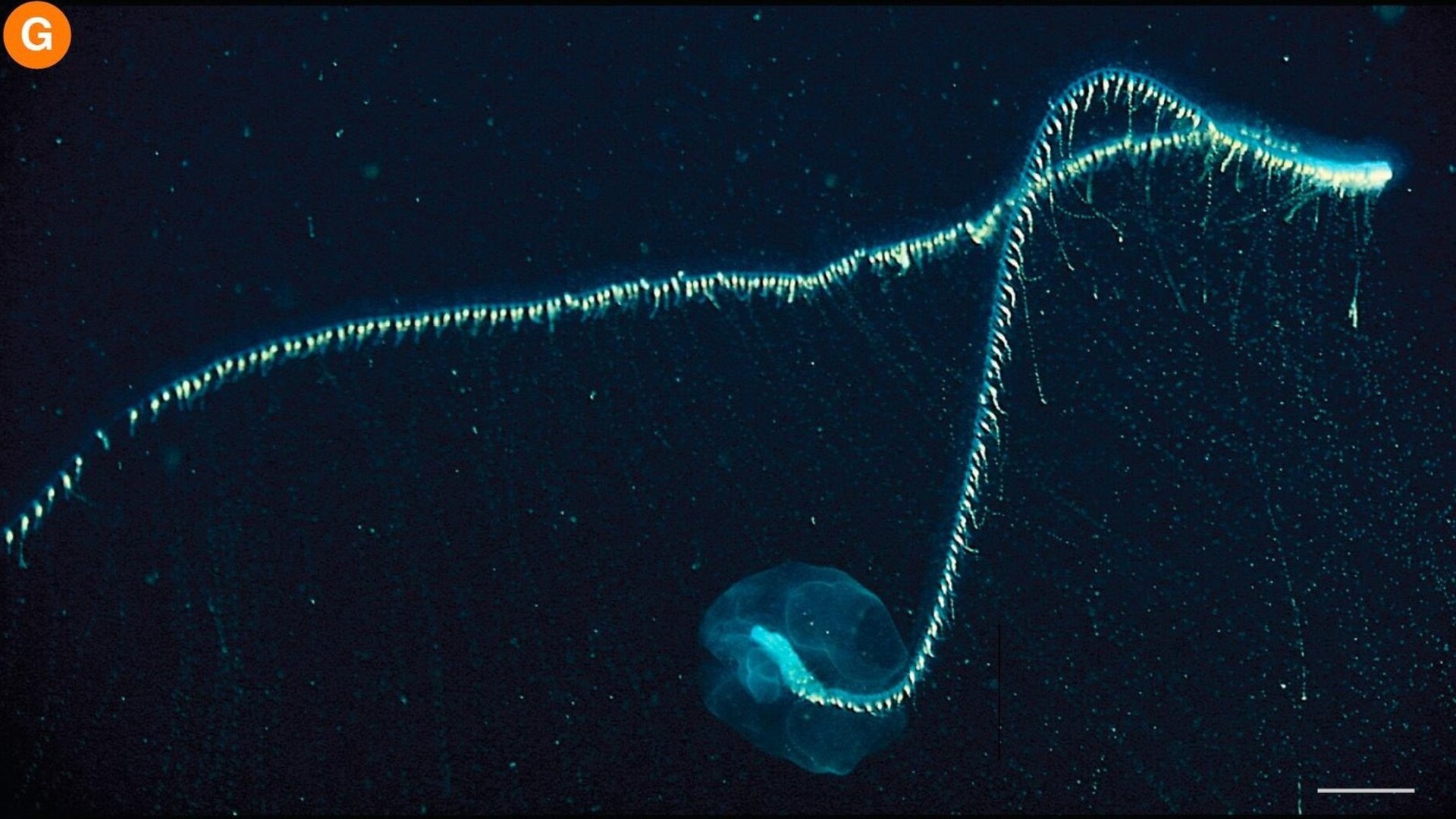
15. Giant Siphonophore 
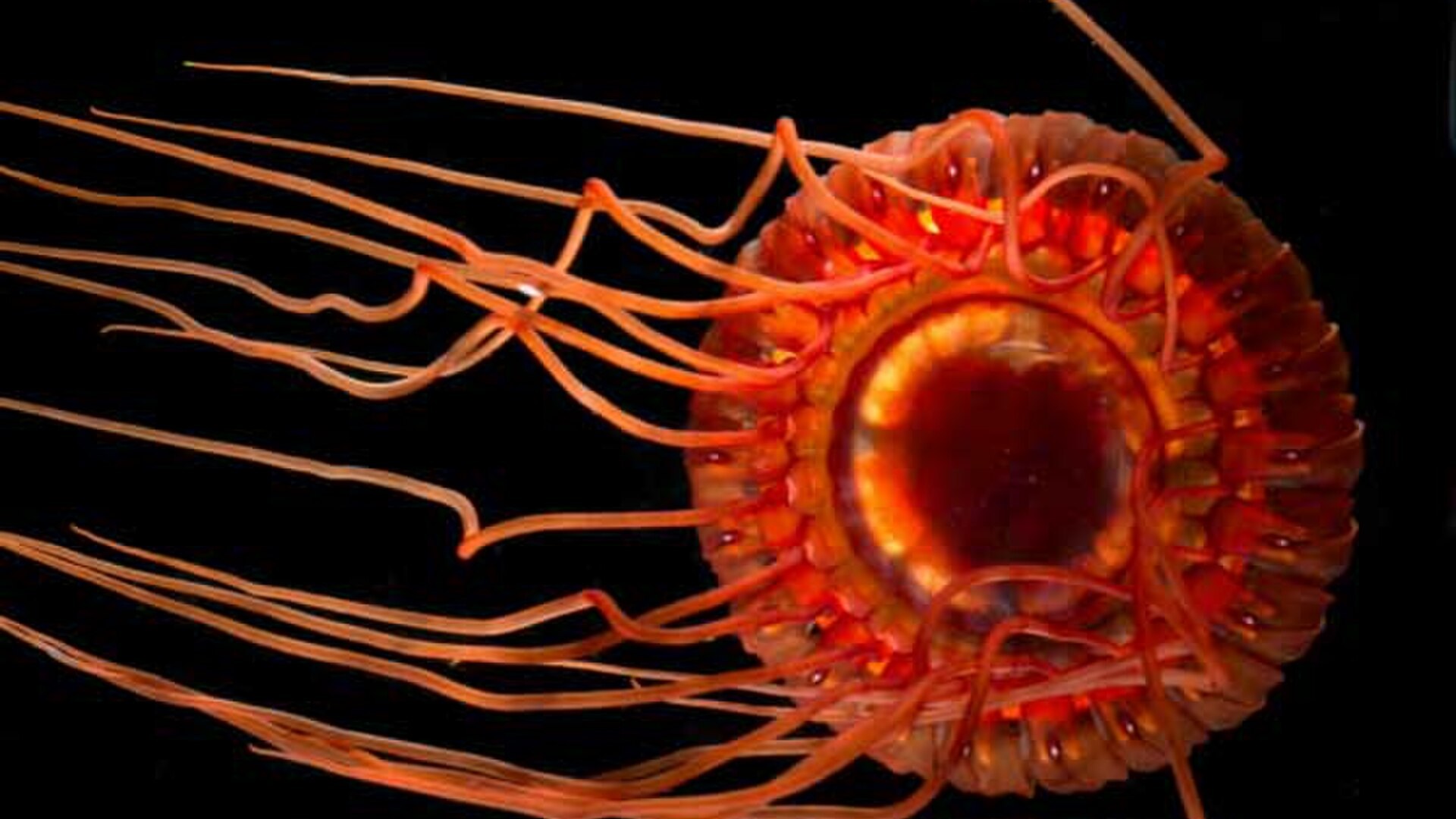
14. Atolla Jellyfish - AdvertisementSwipe or tap ▶ to continue countdown

13. Scaly-Foot Snail 
12. Pompeii Worm 
11. Zombie Worm 
10. Glass Squid - AdvertisementSwipe or tap ▶ to continue countdown

9. Stoplight Loosejaw 
8. Yeti Crab 
7. Frilled Shark 
6. Giant Tube Worm - AdvertisementSwipe or tap ▶ to continue countdown

5. Mariana Snailfish 
4. Colossal Squid 
3. Barreleye Fish 
2. Deep-Sea Anglerfish - AdvertisementSwipe or tap ▶ to continue countdown

1. Dumbo Octopus - Advertisement🔥 UP NEXT IN THIS SERIES◫ 21 Slides

20 Brightest Stars in the Night Sky Ranked by Magnitude
Stargazers have looked to the night sky for millennia to navigate oceans and chart constellations. Apparent visual magnitude measures how luminous a celestial body appears from Earth, with lower and negative numbers indicating brighter beacons. Here is the definitive countdown of the twenty brightest stars visible from Earth.
Surviving in oceanic trenches requires radical evolutionary tactics, including expandable stomachs and biological immortality. This verified countdown ranks twenty extreme deep-sea survival mechanisms. Based on marine biology studies from NOAA Ocean Exploration, MBARI, and Woods Hole Oceanographic Institution.
Swipe or tap ▶ to begin the countdown
©Openverse / NOAA Ocean Exploration & Research from USA
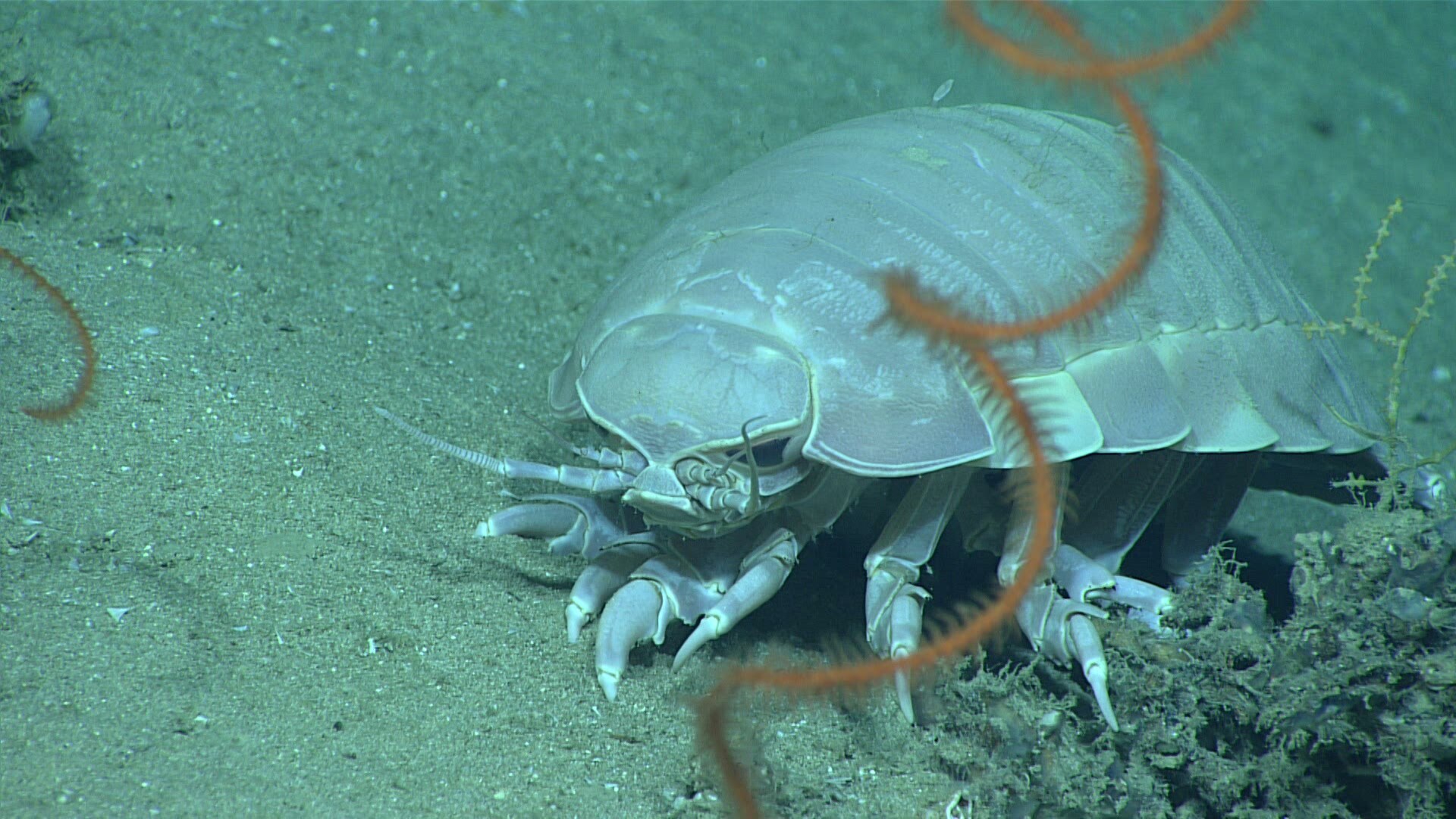
20. Giant Isopod
Reaching up to 50 centimetres in length, Bathynomus giganteus scavenges fallen carcasses on the seabed at depths down to 2,140 metres. Their slow metabolic rate lets them survive over five years without feeding when food is scarce, curling into an armored ball when threatened by larger predators.
©Wikimedia / NOAA
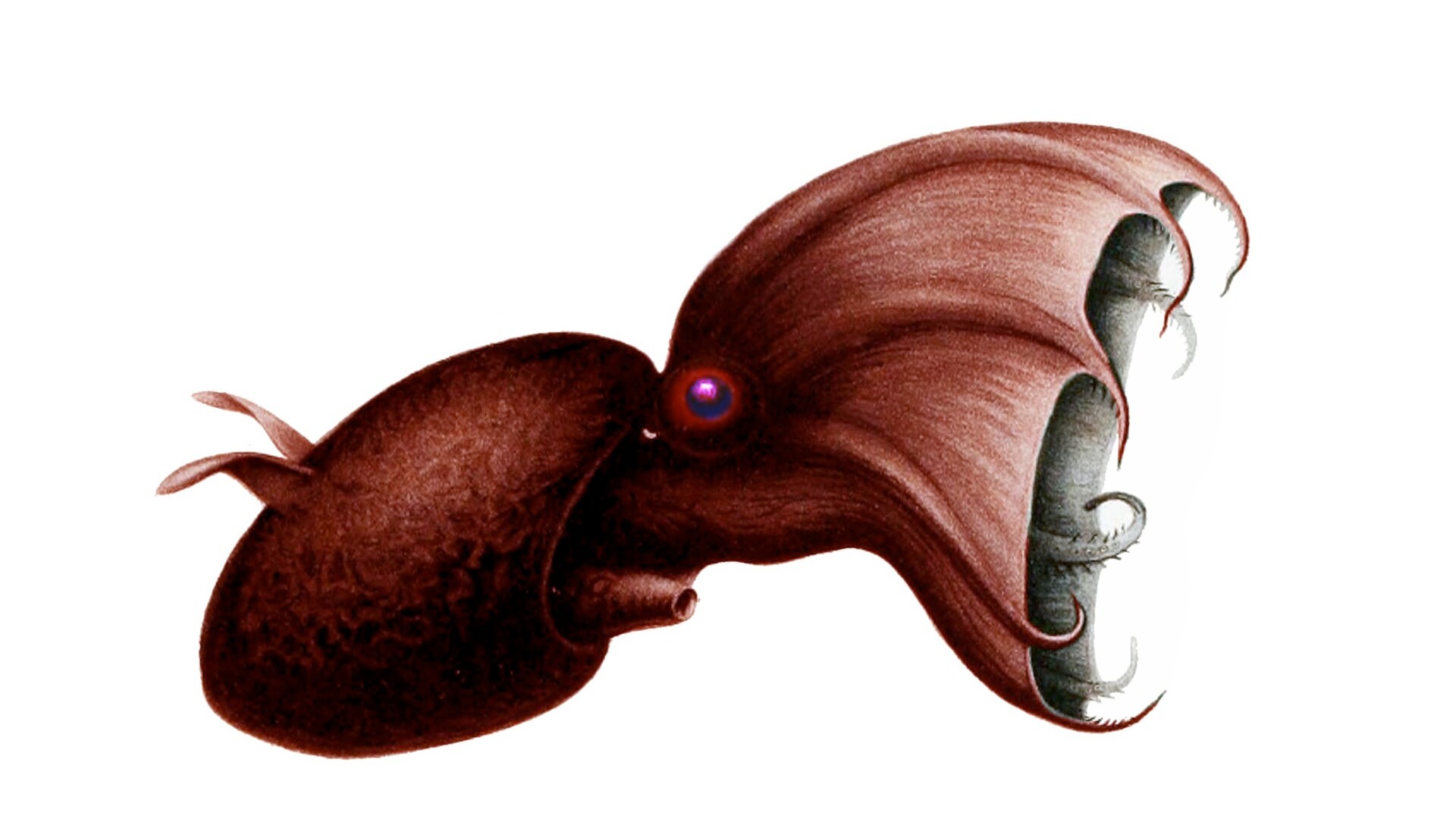
19. Vampire Squid
Despite its formidable scientific name Vampyroteuthis infernalis, this cephalopod lives peacefully in oxygen-minimum zones below 600 metres. It deploys two thin retractile filaments coated in mucus to catch drifting marine snow, turning its dark cloak inside out to reveal soft spines if disturbed.
©Wikimedia / Carl Chun
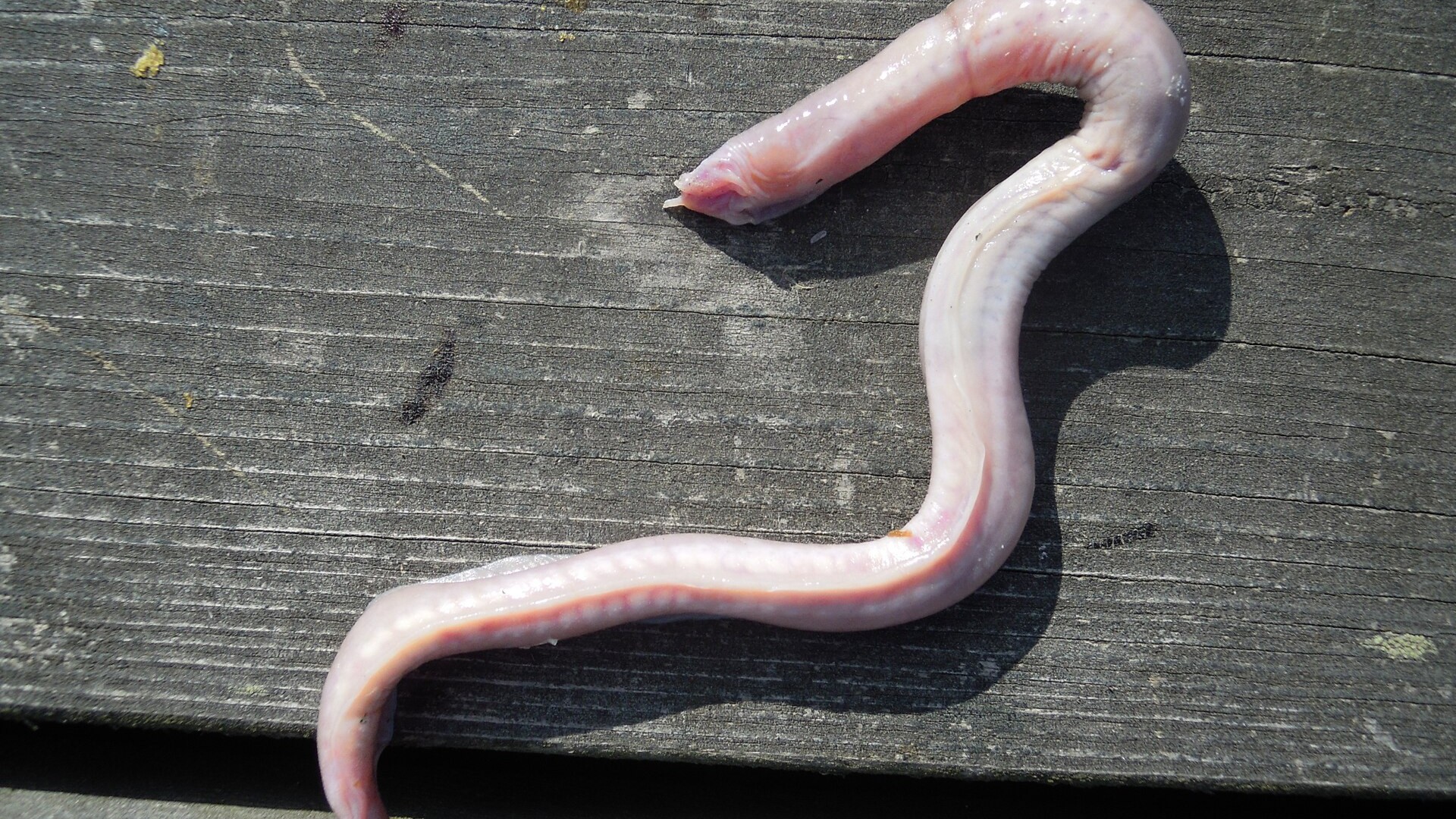
18. Atlantic Hagfish
When grabbed by a shark, Myxine glutinosa releases protein threads and mucin from 100 slime glands along its body. The substance mixes with seawater in under 400 milliseconds, expanding into litres of suffocating slime. The hagfish then ties itself into an overhand knot to scrape the gel off its own skin.
©Wikimedia / Arnstein Rønning
Advertisement
Swipe or tap ▶ to resume the countdown.
17. Pelican Eel
Also known as the gulper eel, Eurypharynx pelecanoides lives between 500 and 3,000 metres below the surface. Its hinged jaw operates like a pelican pouch, expanding instantly to scoop up large crustacean swarms or fish. A glowing pink photophore on its slender whip-like tail serves as a curiosity lure.
©Wikimedia / Alexei Orlov
16. Black Swallower
Measuring only 25 centimetres long, Chiasmodon niger resides in the twilight and midnight zones down to 2,745 metres. Its highly distensible gut allows it to consume bony fish over twice its length and ten times its mass. This strategy prevents starvation during months of sparse encounters.
©Wikimedia / HulloThere
15. Giant Siphonophore
Praya dubia is not a single animal, but a floating colony composed of thousands of specialized zooids acting in unison. Reaching lengths over 40 metres in midwater depths from 700 to 1,000 metres, its curtain of stinging tentacles paralyzes passing fish while glowing blue lures attract curious crustaceans.
©Wikimedia / Praya dubia
14. Atolla Jellyfish
When attacked at depths down to 4,000 metres, Atolla wyvillei produces a pinwheel of flashing blue light across its bell. This burglar alarm display does not blind the attacker. Instead, it illuminates the predator to invite even larger hunters into the area, enabling the jellyfish to escape in the chaos.
©Wikimedia / NOAA Ocean Explorer from USA
Advertisement
Swipe or tap ▶ to resume the countdown.
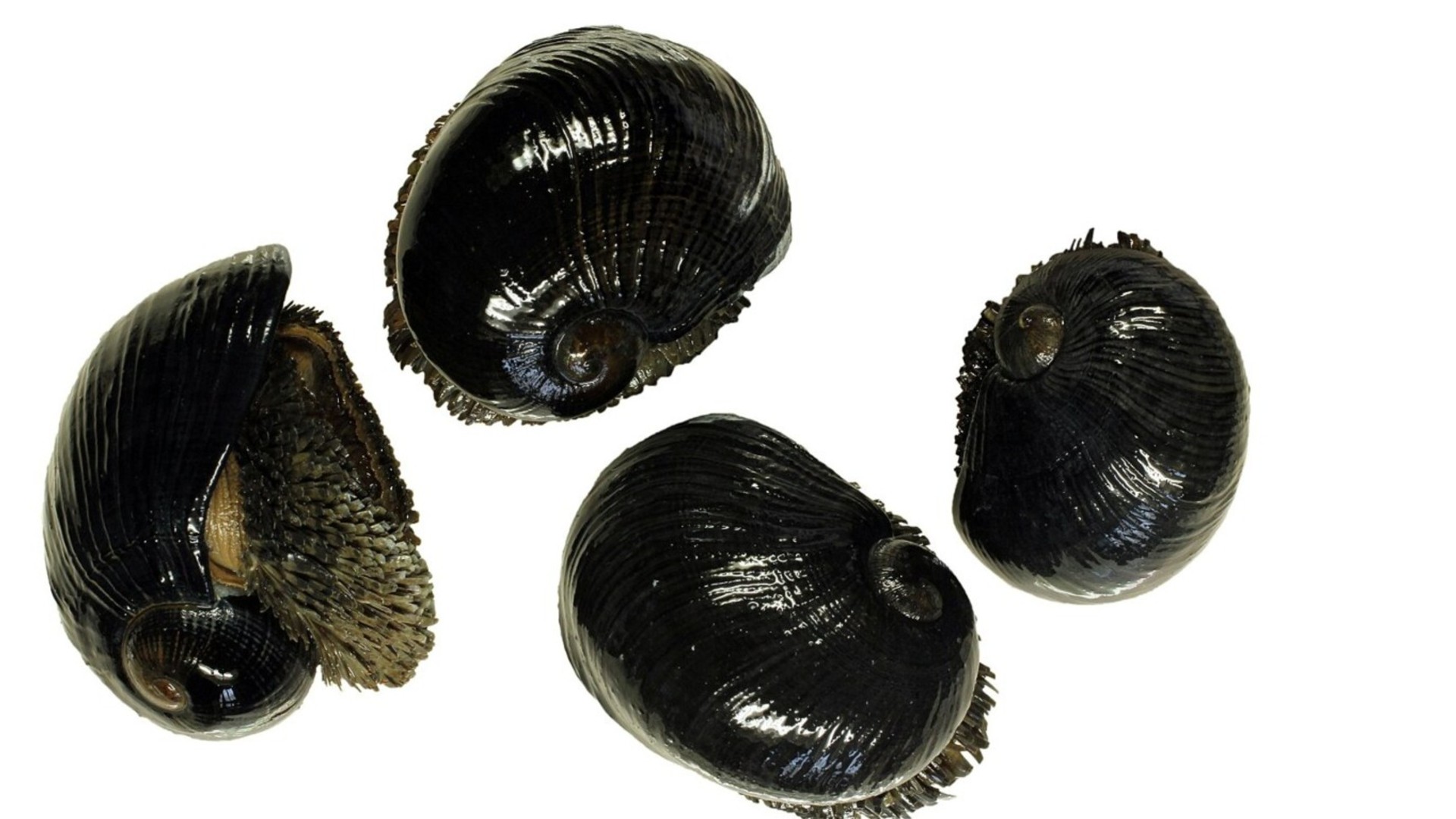
13. Scaly-Foot Snail
Living on hydrothermal vent chimneys at depths of 2,400 metres in the Indian Ocean, Chrysomallon squamiferum deposits iron sulfide mineral plates on its foot. The shell incorporates pyrite and greigite, creating a magnetic shield against crab claws and 300C acidic vent water plumes.
©Wikimedia / Marie HENNION
12. Pompeii Worm
Alvinella pompejana thrives inside the active chimneys of deep Pacific hydrothermal vents, withstanding sustained water temperatures near 80C. A thick fleece of symbiotic epibiotic bacteria covers its back, acting as thermal insulation while feeding on minerals spewing from the boiling vent fluids.
©Wikimedia / Olivier Dugornay
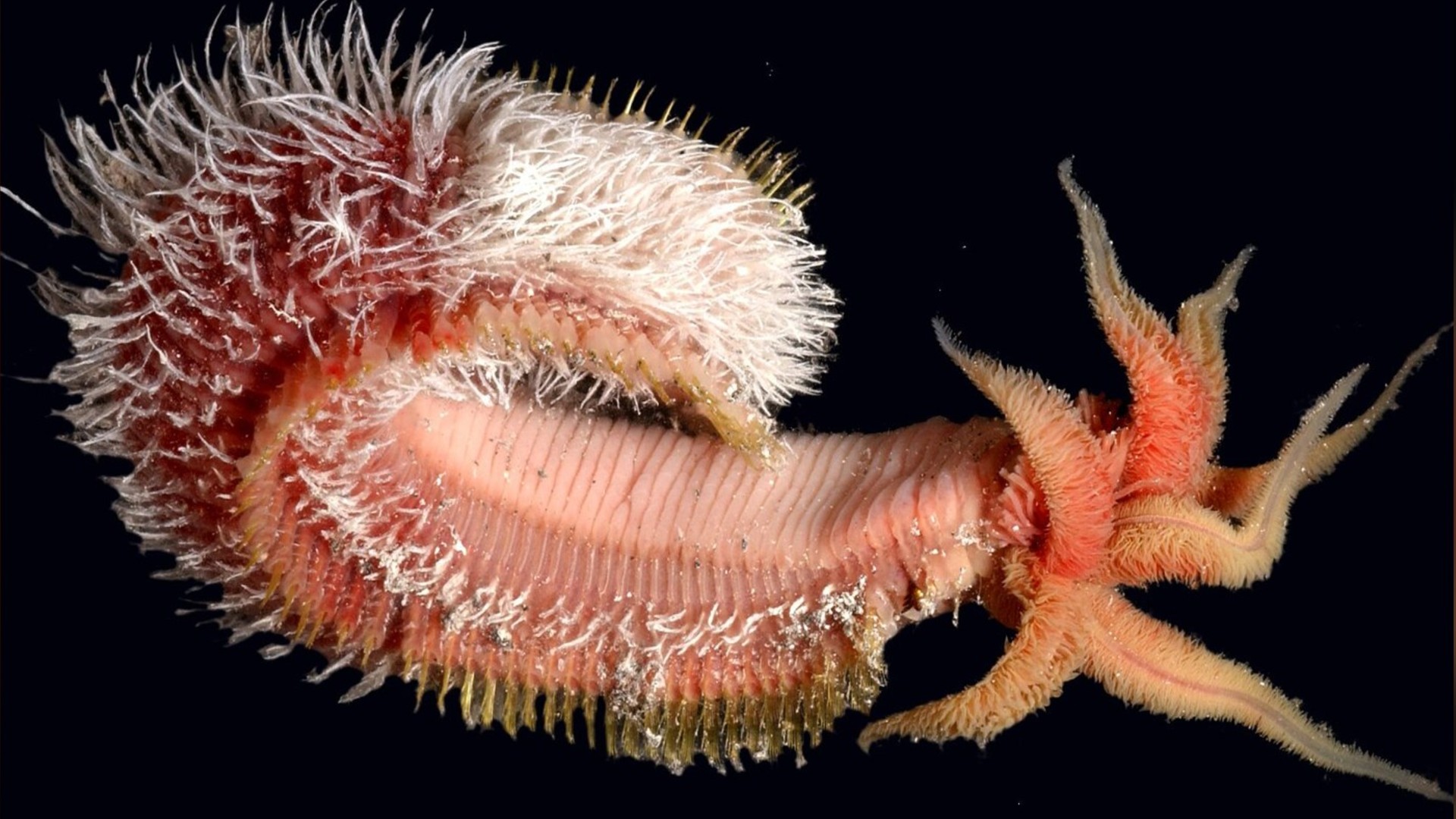
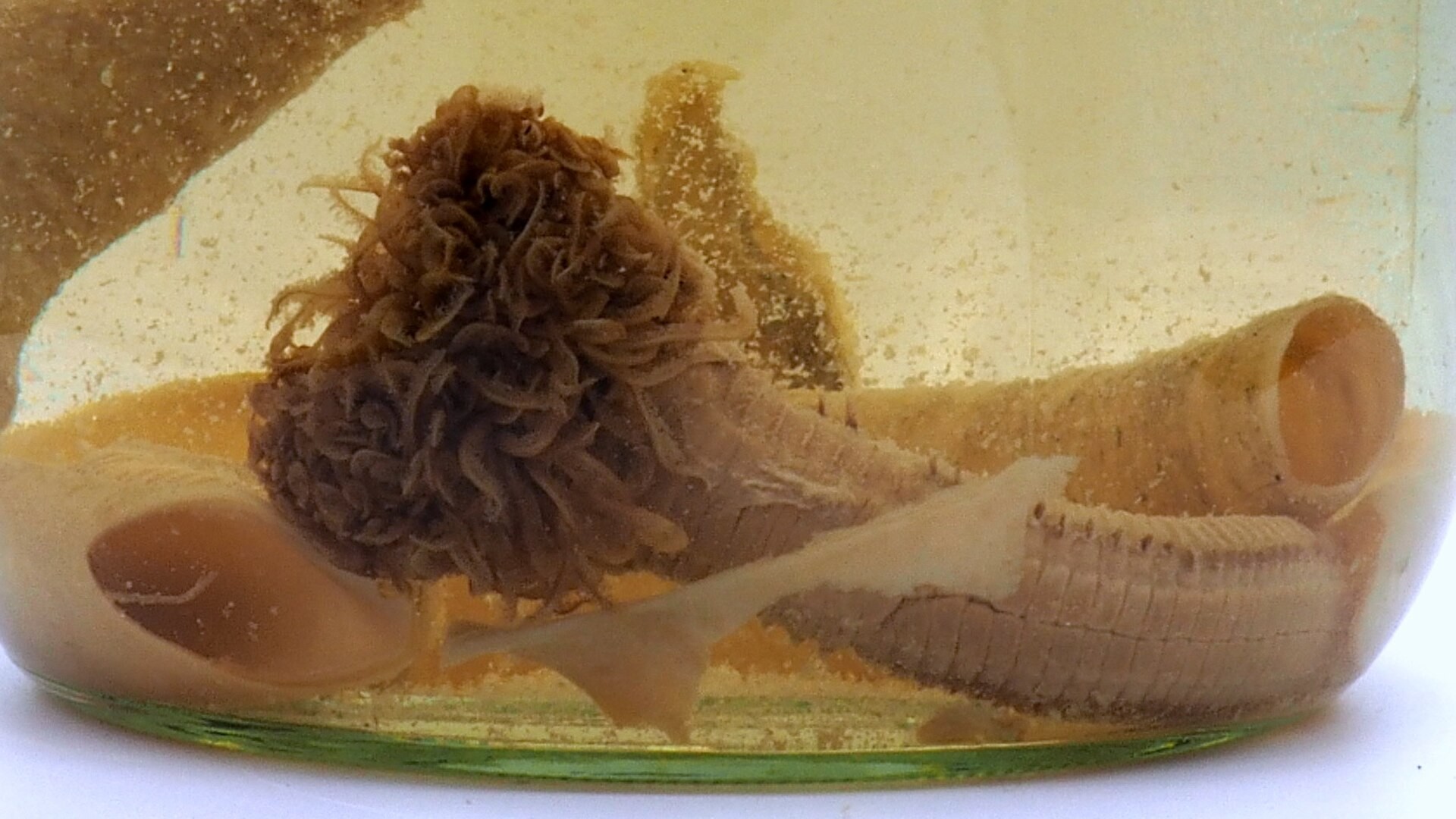
11. Zombie Worm
Discovered by MBARI in 2002, Osedax worms possess no mouth, gut, or digestive tract. They bore into whale falls by secreting acid from green root-like tissues. Symbiotic ocean bacteria living inside the root organs then break down collagen and lipid compounds into usable nutrients for the worm.
©Wikimedia / Robert C. Vrijenhoek, Shannon B. Johnson & Greg
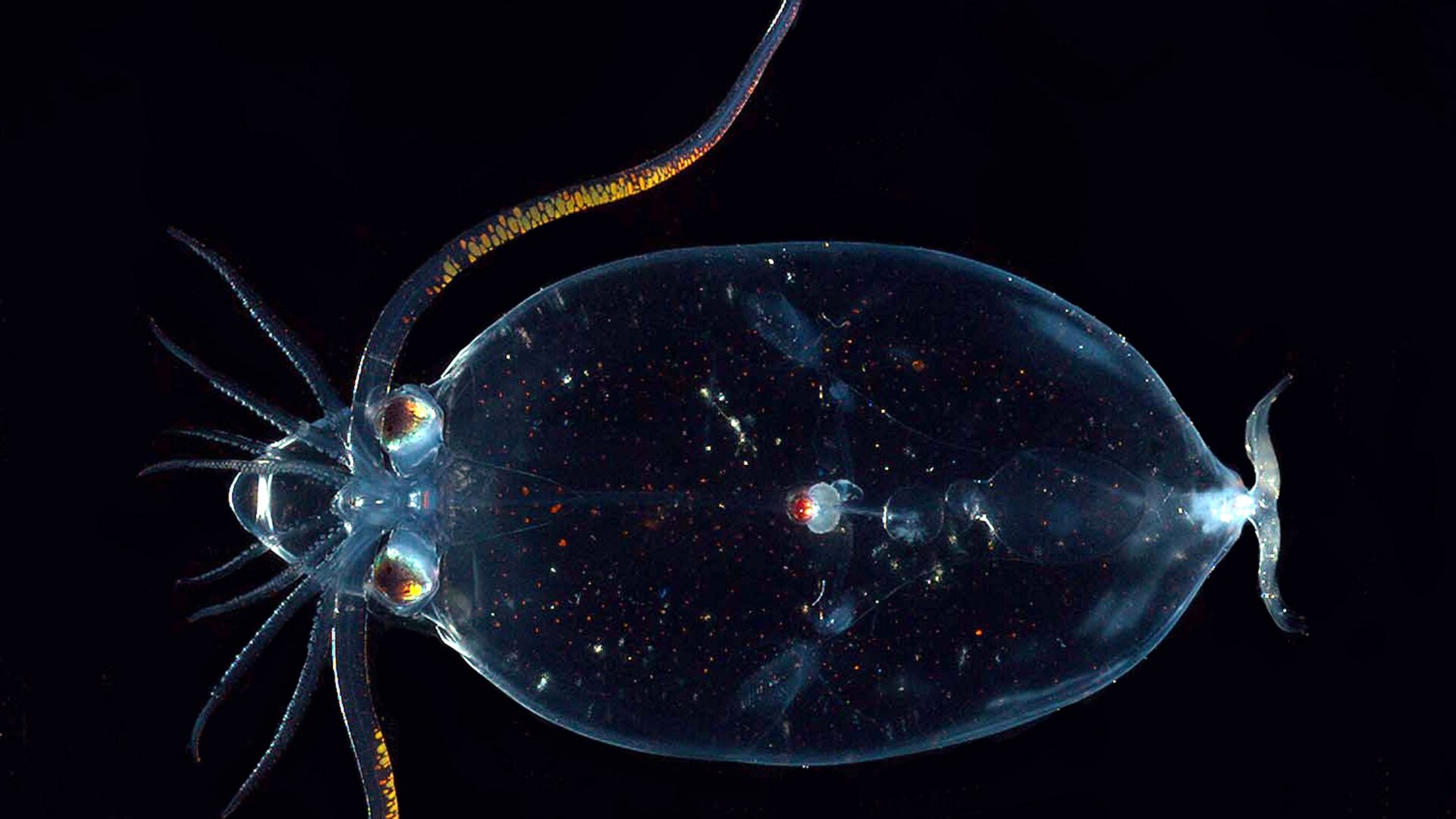
10. Glass Squid
Taonius borealis drifts between 500 and 1,000 metres, maintaining an almost entirely invisible body to evade visual hunters. It balances its buoyancy by filling its body cavity with a lightweight ammonium chloride solution, while photophores beneath its eyes project light to erase its downward shadow.
©Wikimedia / Edie Widder
Advertisement
Swipe or tap ▶ to resume the countdown.
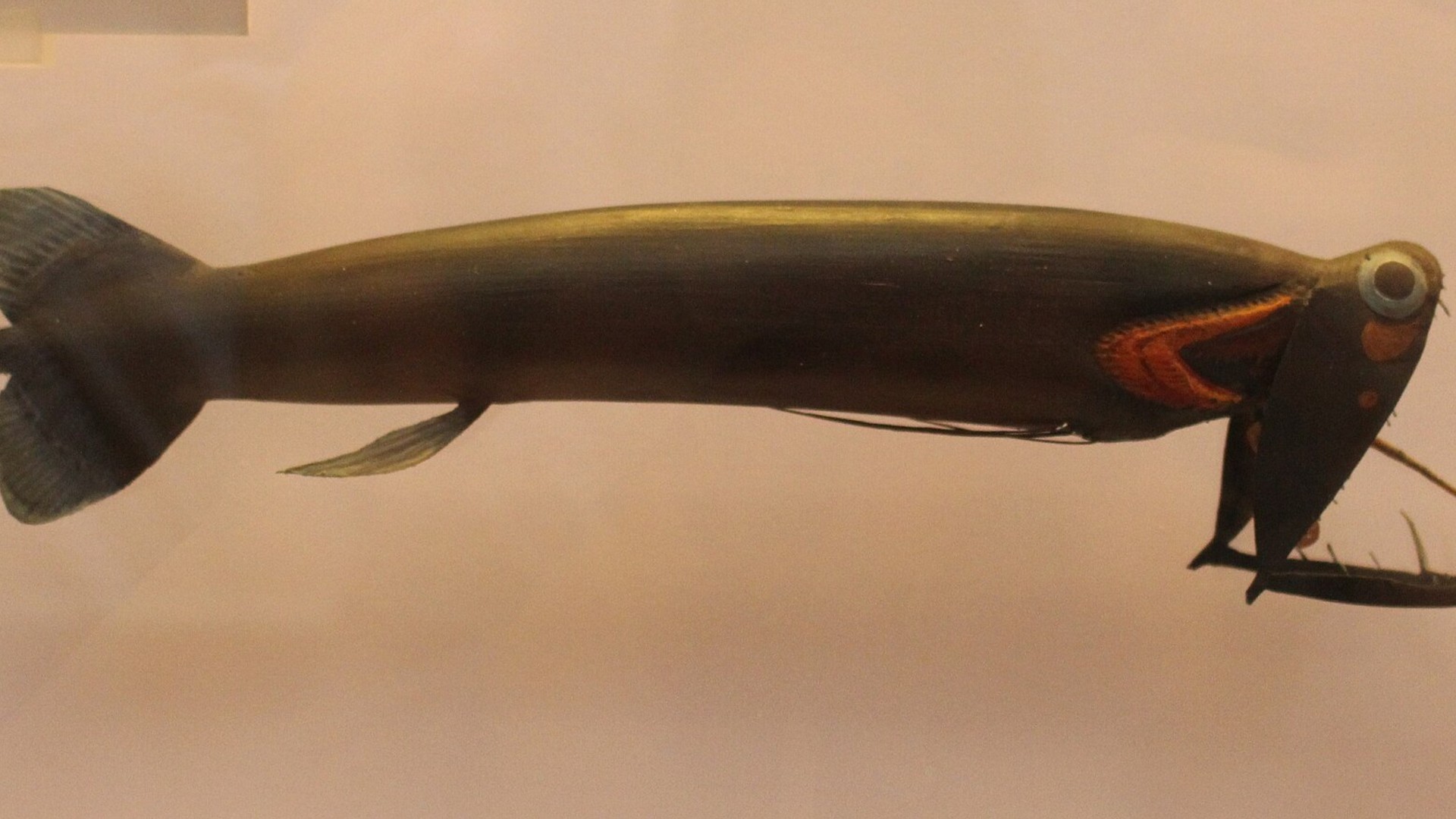
9. Stoplight Loosejaw
Most deep-sea animals can only perceive blue and green light wavelengths. Malacosteus niger produces a red beam from photophores beneath its eyes. This optical adaptation illuminates prey without revealing the fish's own presence, while its floorless lower jaw reduces water drag during strikes.
©Wikimedia / Emőke Dénes
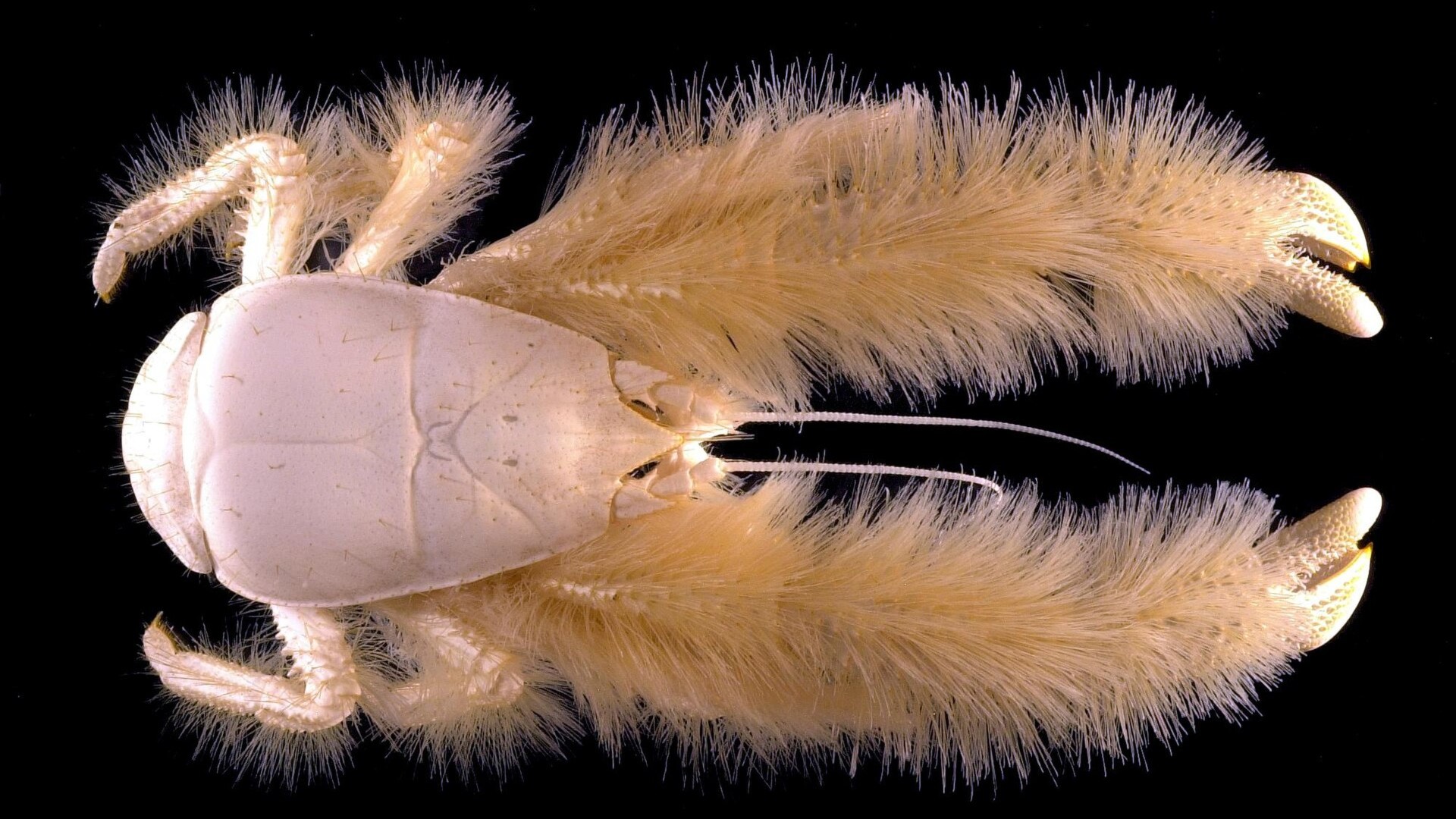
8. Yeti Crab
Discovered along the Pacific-Antarctic Ridge at 2,200 metres, Kiwa hirsuta has claws blanketed in dense filamentous setae. The crab waves its arms over hydrothermal vents to bathe symbiotic bacteria in methane and hydrogen sulfide, then harvests the microbial colonies with comb-like mouthparts.
©Wikimedia / Kiwa (crustacean)
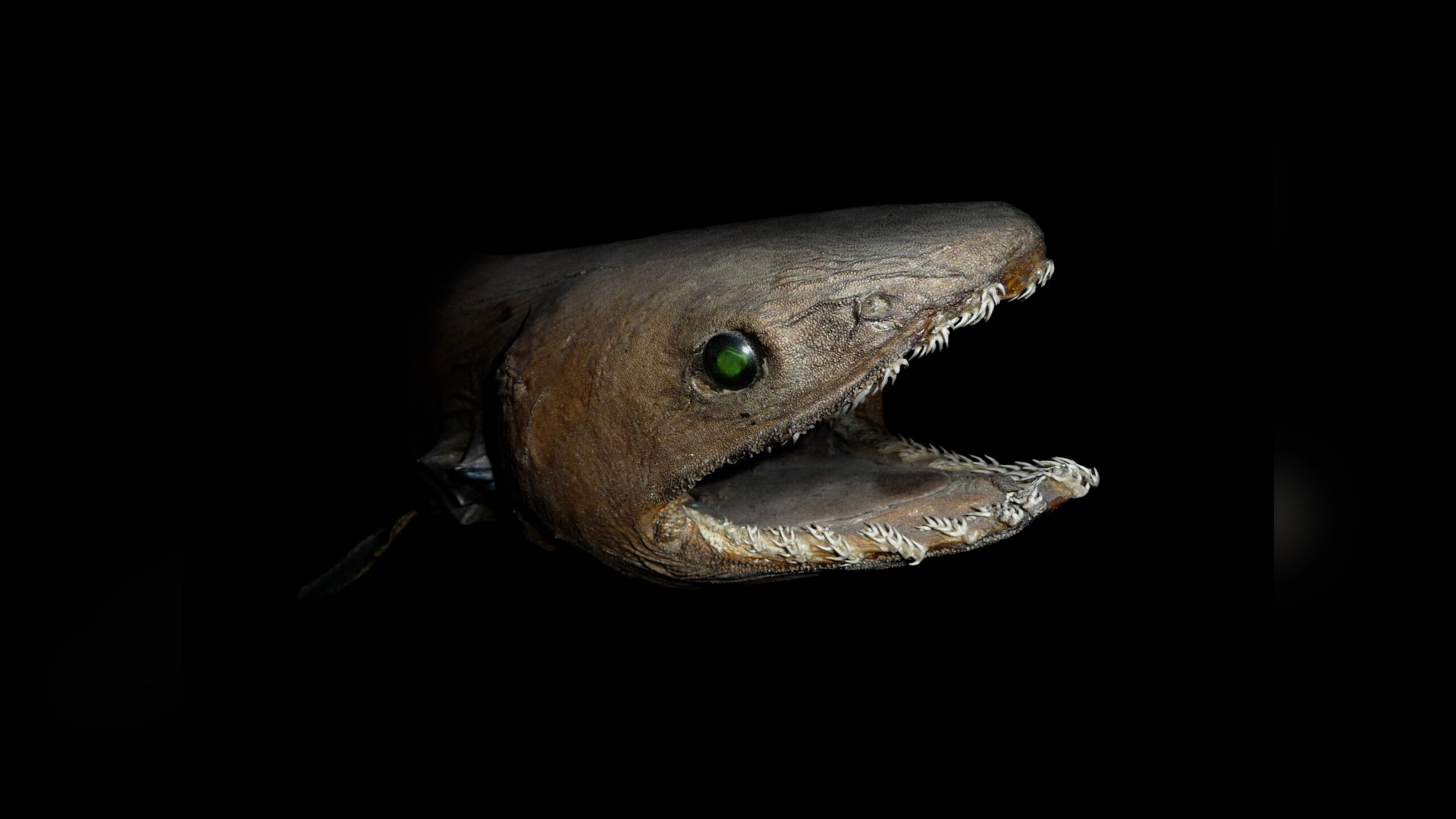
7. Frilled Shark
Chlamydoselachus anguineus resembles an ancient sea serpent with six pairs of frilly gill slits along its neck. Inhabiting continental slopes down to 1,500 metres, its flexible jaws open wide to engulf squids whole, locking prey in place with 25 rows of inward-curving, three-pronged teeth.
©Wikimedia / This illustration was made by Citron You must cr
6. Giant Tube Worm
Growing up to two metres tall near hydrothermal vents, Riftia pachyptila lacks a mouth and digestive tract. Its bright red plume extracts hydrogen sulfide and oxygen from the water, feeding dense colonies of chemotrophic bacteria in an organ called the trophosome that convert sulfur into glucose.
©Wikimedia / YVC Biology Department
Advertisement
Swipe or tap ▶ to resume the countdown.
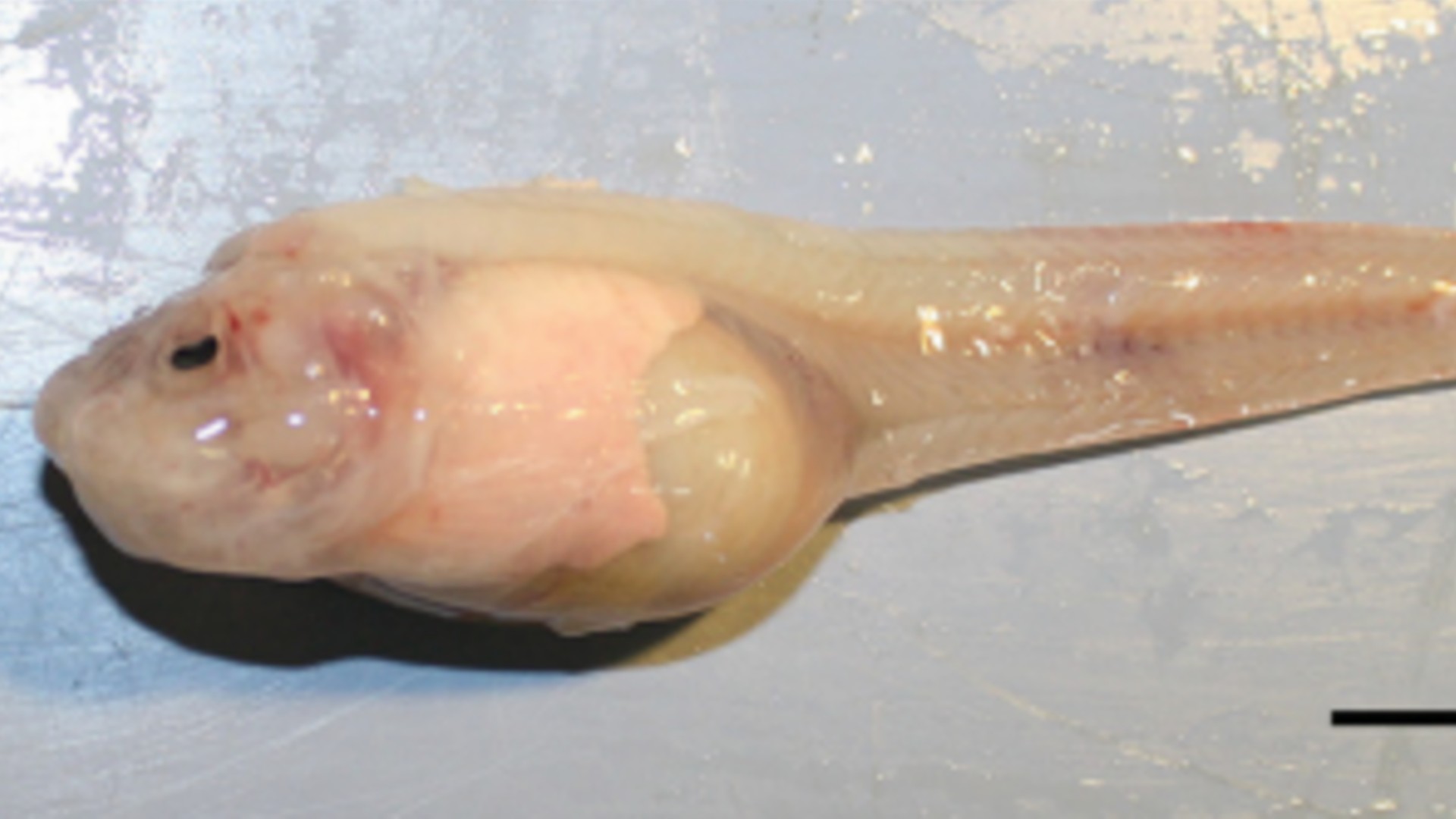
5. Mariana Snailfish
Pseudoliparis swirei survives in the Mariana Trench at depths approaching 8,000 metres. To function under immense hydrostatic pressure, its cells produce high levels of trimethylamine N-oxide to stabilize proteins, while its partially cartilage skull prevents crushing damage in the hadal zone.
©Wikimedia / Pseudoliparis swirei
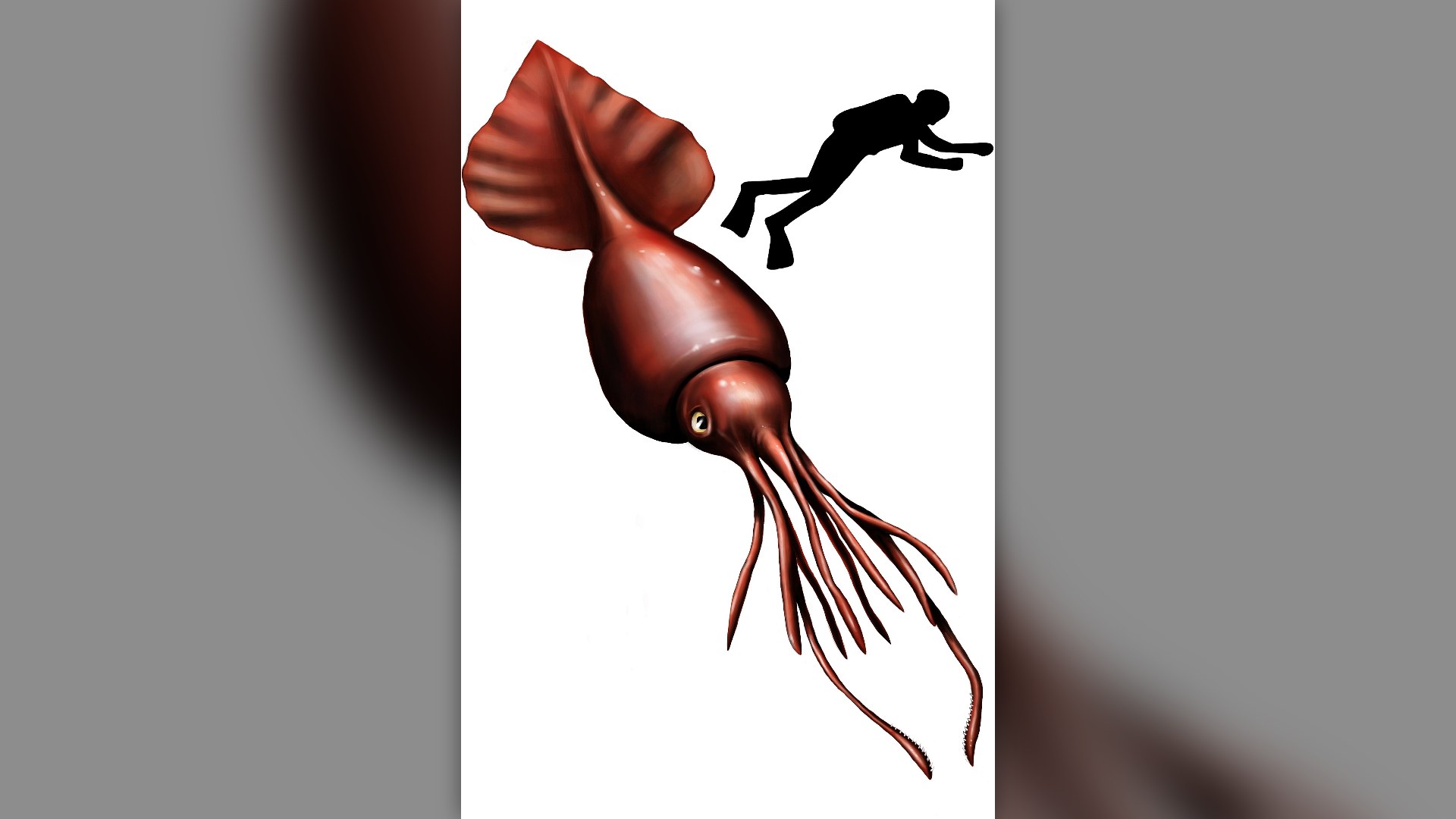
4. Colossal Squid
Weighing up to 500 kilograms in Southern Ocean depths, Mesonychoteuthis hamiltoni possesses the largest eyes in the animal kingdom at 27 centimetres wide. Its tentacle clubs feature rotating swiveling hooks that latch onto toothfish and defend against diving sperm whales in the dark.
©Wikimedia / This illustration was made by Citron You must cr
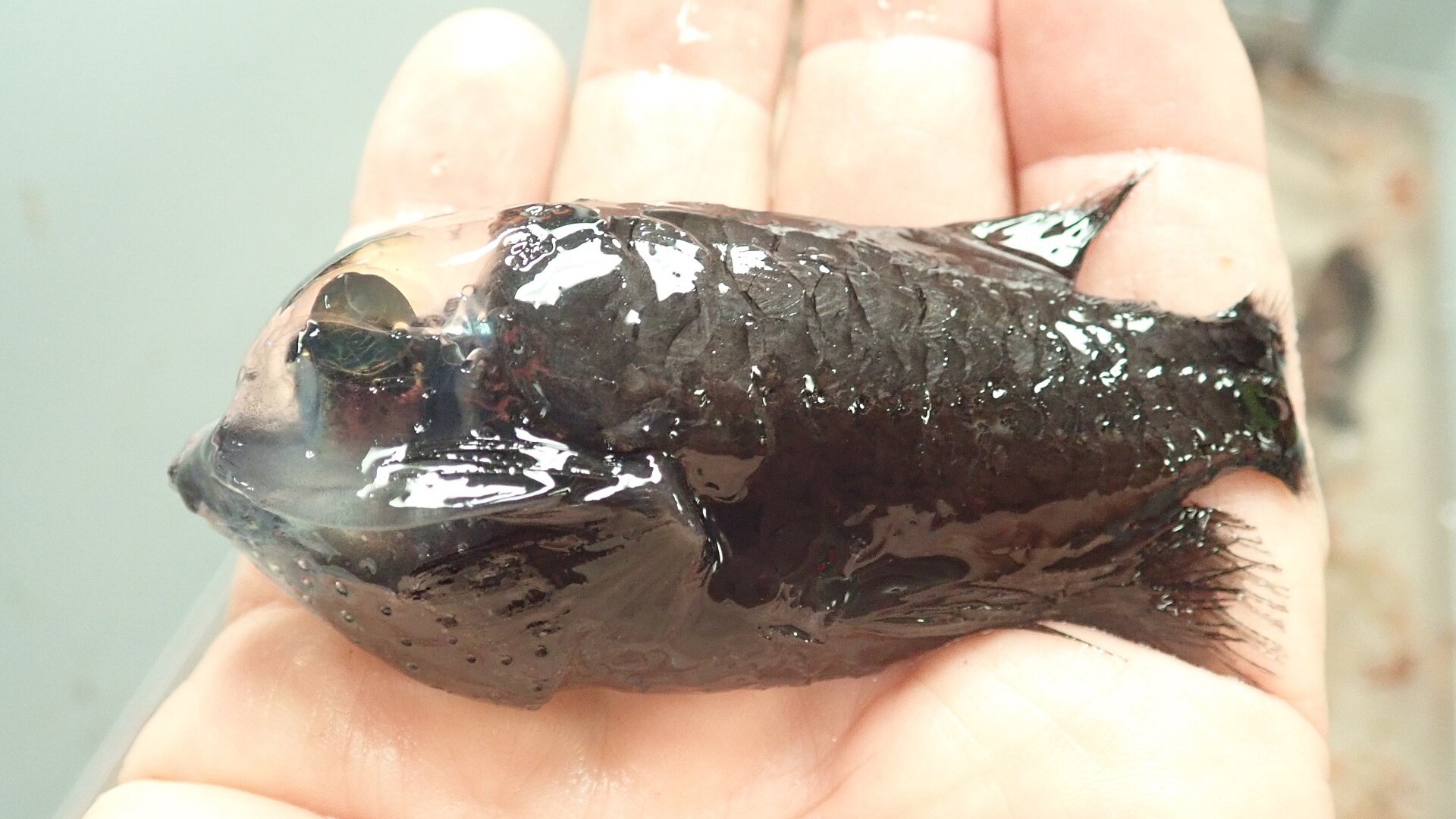
3. Barreleye Fish
Macropinna microstoma floats motionless between 600 and 800 metres under a transparent fluid-filled head canopy. Its tubular green eyes rotate inside this dome, allowing the fish to look upward to silhouette prey against dim surface light or peer forward to steal food from siphonophore tentacles.
©Wikimedia / Unknown author
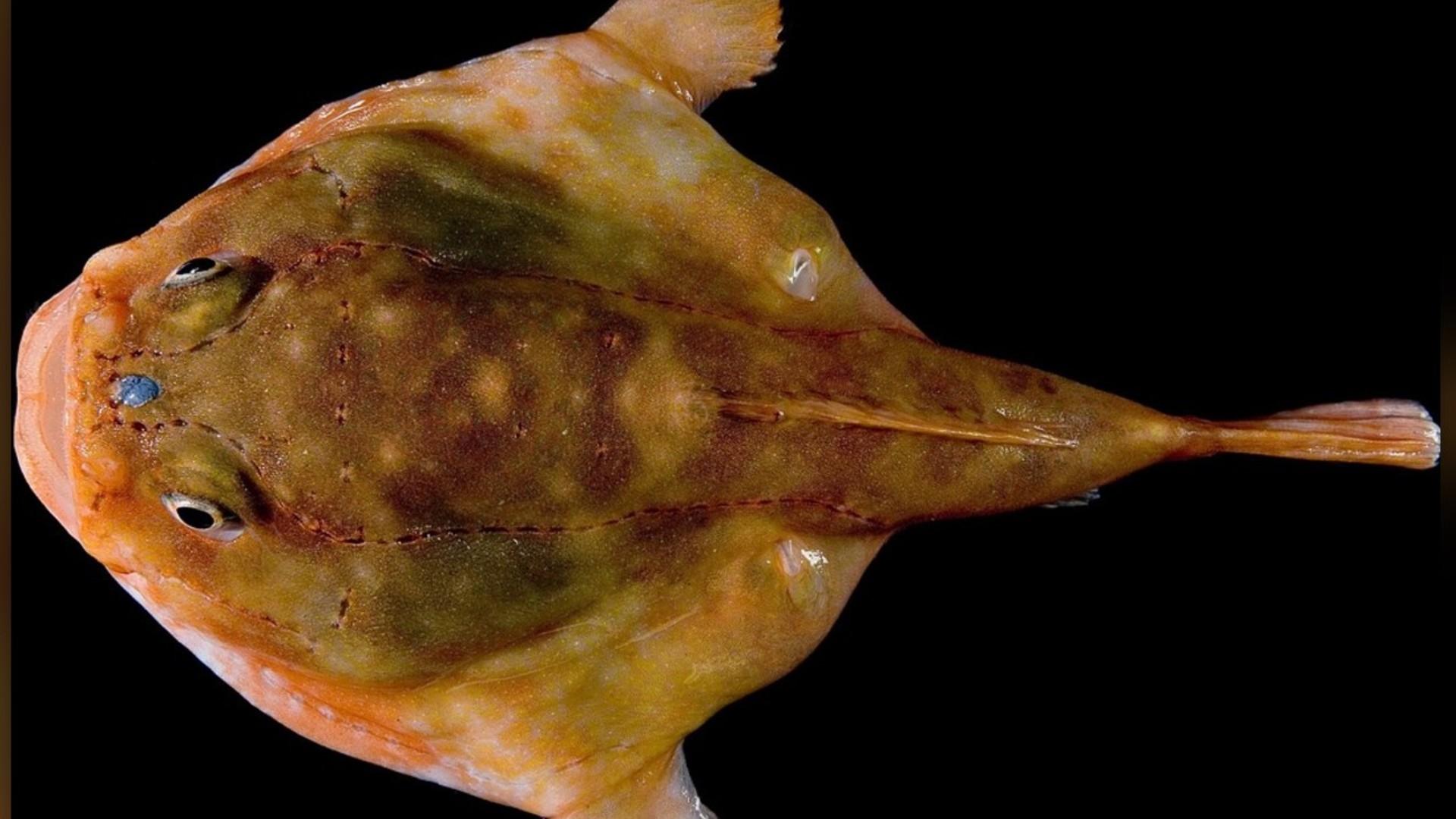
2. Deep-Sea Anglerfish
In the pitch-black waters below 1,000 metres, finding a mate is nearly impossible. Ceratias holboelli males bite into a female, permanently fusing their skin and circulatory systems. The male atrophies into a sperm-producing organ, nourished by her blood while she hunts using a glowing escas lure.
©Pixabay / WikiImages
Advertisement
Swipe or tap ▶ to resume the countdown.
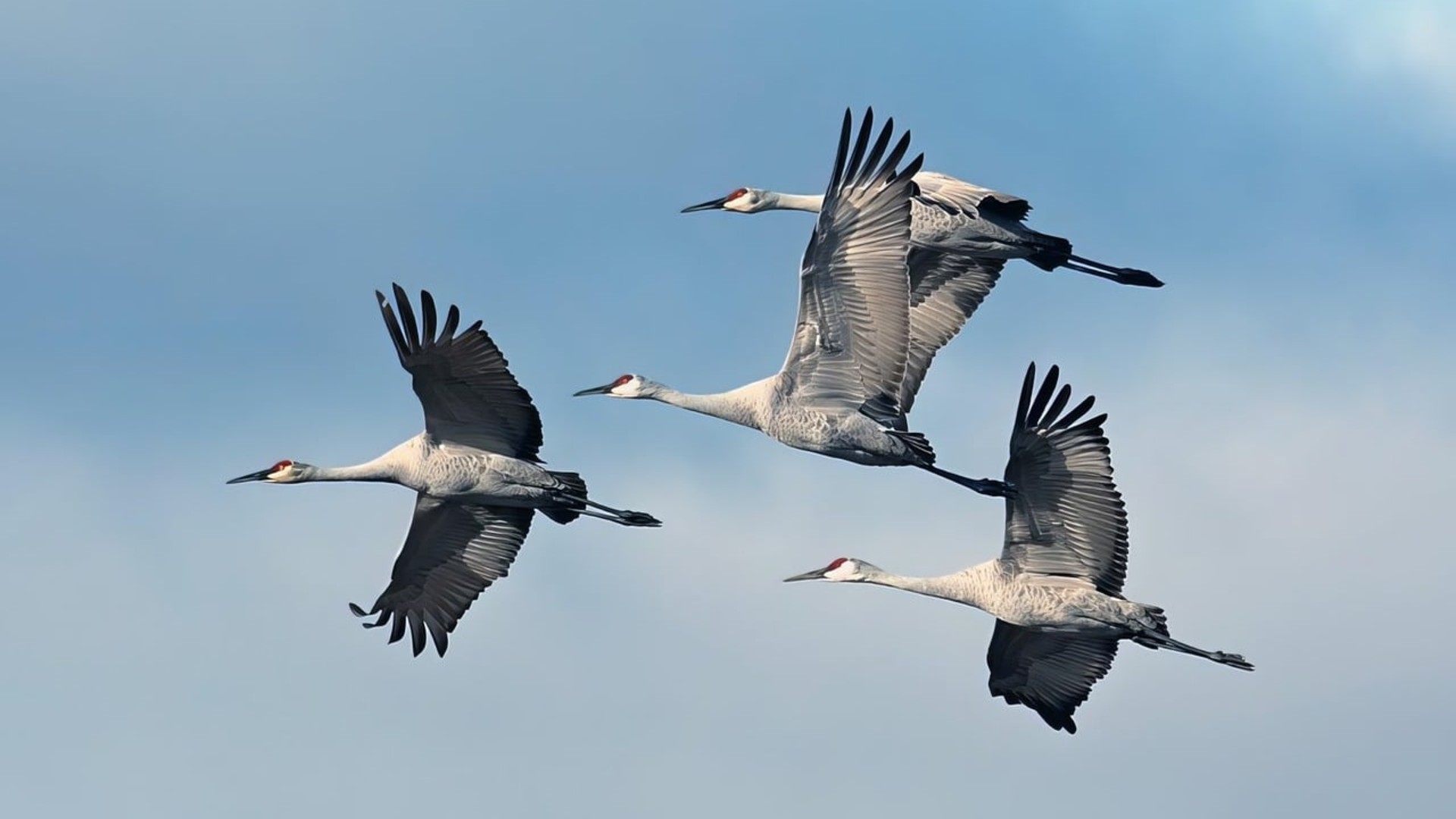
1. Dumbo Octopus
Grimpoteuthis octopuses inhabit depths exceeding 4,000 metres, making them the deepest-dwelling cephalopods known to science. By flapping the paddle-like fins protruding from their mantles rather than expelling water through jet propulsion, they conserve valuable metabolic energy while foraging.
©Wikimedia / NOAA Okeanos Explorer
Advertisement
You've reached the end of the story. Thanks for reading!

20 Brightest Stars in the Night Sky Ranked by Magnitude
Stargazers have looked to the night sky for millennia to navigate oceans and chart constellations. Apparent visual magnitude measures how luminous a celestial body appears from Earth, with lower and negative numbers indicating brighter beacons. Here is the definitive countdown of the twenty brightest stars visible from Earth.
All 20 Entries in this Story
20. Giant Isopod
Reaching up to 50 centimetres in length, Bathynomus giganteus scavenges fallen carcasses on the seabed at depths down to 2,140 metres. Their slow metabolic rate lets them survive over five years without feeding when food is scarce, curling into an armored ball when threatened by larger predators.

19. Vampire Squid
Despite its formidable scientific name Vampyroteuthis infernalis, this cephalopod lives peacefully in oxygen-minimum zones below 600 metres. It deploys two thin retractile filaments coated in mucus to catch drifting marine snow, turning its dark cloak inside out to reveal soft spines if disturbed.

18. Atlantic Hagfish
When grabbed by a shark, Myxine glutinosa releases protein threads and mucin from 100 slime glands along its body. The substance mixes with seawater in under 400 milliseconds, expanding into litres of suffocating slime. The hagfish then ties itself into an overhand knot to scrape the gel off its own skin.

17. Pelican Eel
Also known as the gulper eel, Eurypharynx pelecanoides lives between 500 and 3,000 metres below the surface. Its hinged jaw operates like a pelican pouch, expanding instantly to scoop up large crustacean swarms or fish. A glowing pink photophore on its slender whip-like tail serves as a curiosity lure.

16. Black Swallower
Measuring only 25 centimetres long, Chiasmodon niger resides in the twilight and midnight zones down to 2,745 metres. Its highly distensible gut allows it to consume bony fish over twice its length and ten times its mass. This strategy prevents starvation during months of sparse encounters.

15. Giant Siphonophore
Praya dubia is not a single animal, but a floating colony composed of thousands of specialized zooids acting in unison. Reaching lengths over 40 metres in midwater depths from 700 to 1,000 metres, its curtain of stinging tentacles paralyzes passing fish while glowing blue lures attract curious crustaceans.

14. Atolla Jellyfish
When attacked at depths down to 4,000 metres, Atolla wyvillei produces a pinwheel of flashing blue light across its bell. This burglar alarm display does not blind the attacker. Instead, it illuminates the predator to invite even larger hunters into the area, enabling the jellyfish to escape in the chaos.

13. Scaly-Foot Snail
Living on hydrothermal vent chimneys at depths of 2,400 metres in the Indian Ocean, Chrysomallon squamiferum deposits iron sulfide mineral plates on its foot. The shell incorporates pyrite and greigite, creating a magnetic shield against crab claws and 300C acidic vent water plumes.

12. Pompeii Worm
Alvinella pompejana thrives inside the active chimneys of deep Pacific hydrothermal vents, withstanding sustained water temperatures near 80C. A thick fleece of symbiotic epibiotic bacteria covers its back, acting as thermal insulation while feeding on minerals spewing from the boiling vent fluids.

11. Zombie Worm
Discovered by MBARI in 2002, Osedax worms possess no mouth, gut, or digestive tract. They bore into whale falls by secreting acid from green root-like tissues. Symbiotic ocean bacteria living inside the root organs then break down collagen and lipid compounds into usable nutrients for the worm.

10. Glass Squid
Taonius borealis drifts between 500 and 1,000 metres, maintaining an almost entirely invisible body to evade visual hunters. It balances its buoyancy by filling its body cavity with a lightweight ammonium chloride solution, while photophores beneath its eyes project light to erase its downward shadow.

9. Stoplight Loosejaw
Most deep-sea animals can only perceive blue and green light wavelengths. Malacosteus niger produces a red beam from photophores beneath its eyes. This optical adaptation illuminates prey without revealing the fish's own presence, while its floorless lower jaw reduces water drag during strikes.

8. Yeti Crab
Discovered along the Pacific-Antarctic Ridge at 2,200 metres, Kiwa hirsuta has claws blanketed in dense filamentous setae. The crab waves its arms over hydrothermal vents to bathe symbiotic bacteria in methane and hydrogen sulfide, then harvests the microbial colonies with comb-like mouthparts.

7. Frilled Shark
Chlamydoselachus anguineus resembles an ancient sea serpent with six pairs of frilly gill slits along its neck. Inhabiting continental slopes down to 1,500 metres, its flexible jaws open wide to engulf squids whole, locking prey in place with 25 rows of inward-curving, three-pronged teeth.

6. Giant Tube Worm
Growing up to two metres tall near hydrothermal vents, Riftia pachyptila lacks a mouth and digestive tract. Its bright red plume extracts hydrogen sulfide and oxygen from the water, feeding dense colonies of chemotrophic bacteria in an organ called the trophosome that convert sulfur into glucose.

5. Mariana Snailfish
Pseudoliparis swirei survives in the Mariana Trench at depths approaching 8,000 metres. To function under immense hydrostatic pressure, its cells produce high levels of trimethylamine N-oxide to stabilize proteins, while its partially cartilage skull prevents crushing damage in the hadal zone.

4. Colossal Squid
Weighing up to 500 kilograms in Southern Ocean depths, Mesonychoteuthis hamiltoni possesses the largest eyes in the animal kingdom at 27 centimetres wide. Its tentacle clubs feature rotating swiveling hooks that latch onto toothfish and defend against diving sperm whales in the dark.

3. Barreleye Fish
Macropinna microstoma floats motionless between 600 and 800 metres under a transparent fluid-filled head canopy. Its tubular green eyes rotate inside this dome, allowing the fish to look upward to silhouette prey against dim surface light or peer forward to steal food from siphonophore tentacles.

2. Deep-Sea Anglerfish
In the pitch-black waters below 1,000 metres, finding a mate is nearly impossible. Ceratias holboelli males bite into a female, permanently fusing their skin and circulatory systems. The male atrophies into a sperm-producing organ, nourished by her blood while she hunts using a glowing escas lure.

1. Dumbo Octopus
Grimpoteuthis octopuses inhabit depths exceeding 4,000 metres, making them the deepest-dwelling cephalopods known to science. By flapping the paddle-like fins protruding from their mantles rather than expelling water through jet propulsion, they conserve valuable metabolic energy while foraging.